2027 Post-Master's NP Gap Analysis: Pharmacology, Assessment, and Pathophysiology Courses
Audited and Verified:
Our Editorial and Data Verification Process
Research.com uses government datasets, official education statistics and primary institutional information to support its career and degree guides. Our review process checks factual accuracy, occupational definitions, source dates and the requirements associated with the credentials discussed.
How This Article Was Fact-Checked
Our editorial team verifies salary estimates, employment projections, education requirements and program information against original data providers and official organizations. Salary figures are checked against the relevant occupational definitions and reporting periods. Information about licensure, accreditation and required in-person training is reviewed separately.
Fact-checked and verified on:

Co-Founder and Chief Data Scientist
A post-master's nurse practitioner certificate may let you build on graduate nursing coursework, but it does not automatically waive the advanced "three Ps": pharmacology, health assessment, and pathophysiology. A formal gap analysis determines which courses and supervised clinical experiences still fit your intended NP population focus. For experienced RNs, current APRNs changing focus, and graduates of non-APRN master's programs, that decision can substantially change the schedule and cost of a certificate. This guide explains what programs review, which records to gather, and how to compare written evaluations before enrolling.
Key Things You Should Know
- A gap analysis reviews three distinct advanced subjects - pharmacology, health assessment, and pathophysiology - alongside population-focused courses and supervised clinical preparation; a graduate degree alone does not establish equivalency.
- The receiving program decides what prior work counts toward its certificate. A syllabus showing graduate-level content and records of supervised hours are more useful than a transcript or job title alone.
- Before paying a deposit, obtain a written plan identifying accepted courses, required clinical experiences, expected terms, and the program's basis for your intended certification and state APRN eligibility.
What Is a Post-Master's NP Gap Analysis?
A post-master's NP gap analysis is the receiving nursing program's documented comparison of your prior graduate education and supervised clinical preparation with the requirements of a specific NP certificate track. Its result is an individualized plan: what the school accepts, what you must complete, and which competencies need further evaluation.
The starting point matters. An already-certified family NP seeking psychiatric-mental health NP preparation may have relevant advanced core courses but need a new population-focused curriculum and clinical experiences. An MSN-prepared nurse educator may have graduate nursing credits yet lack NP-level clinical courses altogether. Years of RN practice can inform the review, but they do not automatically replace supervised NP education.
Ask whether the decision is a preliminary admissions estimate or an approved, final study plan. If you are still considering master's nursing study after an ADN, that is an earlier educational step, not a substitute for the NP certificate gap analysis performed after graduate study.
Which Courses Are Evaluated in an NP Gap Analysis?
Programs typically examine the advanced three Ps first, then compare population-focused diagnosis and management courses, clinical hours, and demonstrated competencies with the new track. The course title is a starting point, not proof that its content, academic level, or patient population matches.
The table shows why apparently similar prior coursework can lead to different decisions. These are review considerations, not universal rules for accepting credit.
| Prior learning | What the receiving program examines | Possible gap |
| Advanced pharmacology | Graduate-level prescribing content, scope, assessment methods, and course recency | A repeat or additional pharmacology course if content or currency does not meet track policy |
| Advanced health assessment | Across-the-lifespan or population-specific assessment, hands-on evaluation, and documented proficiency | An assessment course or evaluated skills experience |
| Advanced pathophysiology | Graduate-level mechanisms of disease and applicability to the intended patient population | Additional content or a full course when the prior course is insufficient |
| NP specialty courses and clinical work | Population focus, faculty supervision, patient-care activities, documented hours, and competencies | New specialty coursework and approved direct-care clinical experiences |
Even a graduate who completed the three Ps may have a substantial gap when changing NP population focus. Conversely, a course may be accepted without shortening the program if specialty courses run in a fixed sequence. A BSN completion pathway with alternative practice experiences follows a different curriculum; it does not establish that NP clinical requirements can be waived.
What Requirements Do Post-Master's NP Programs Have?
Entry requirements vary by school and track, but applicants generally need an eligible graduate nursing degree and an active RN license. A program may also require a particular prior NP certification, clinical experience, minimum grades, or an RN license in the state where clinical training will occur. Admission to the institution is not the same as approval of a particular NP study plan.
Check the exact certificate track's nursing program accreditation status, enrollment authorization in your location, clinical-site rules, and intended certification pathway. Ask who secures preceptors, whether the school must approve your employer as a site, and whether required experiences must involve patient populations you do not currently see. A school may admit you academically yet be unable to arrange an eligible clinical placement where you live.
Admission comparisons deserve context: exploring less competitive nursing programs does not answer whether a post-master's NP track accepts your graduate courses or can support your clinical placement. Request those determinations from the specific track before treating an offer of admission as a feasible route to completion.
Advanced pathophysiology examines how disease processes alter function and shape clinical reasoning. Advanced health assessment develops the history-taking, examination, and interpretation needed to recognize findings and evaluate patients. Advanced pharmacology addresses drug actions, treatment selection, monitoring, interactions, and prescribing-related judgment within the intended role and applicable law.
The subjects work together but are not interchangeable: understanding a disease mechanism does not demonstrate examination proficiency, and medication-administration experience as an RN does not by itself establish graduate prescribing preparation. Programs may assess both course content and observed skills. For a nurse moving into a new population focus, the issue is not simply whether all three course titles appear on a transcript, but whether the preparation supports the intended NP curriculum.
If your immediate goal is to finish an MSN rather than qualify as an NP, affordable graduate study after a nursing bachelor's is a separate comparison. Confirm whether any prospective MSN is actually an APRN-preparation track before assuming its three-P courses will satisfy a later certificate.
Online delivery can reduce routine travel for coursework, but it does not make supervised patient care, assessed skills, or scheduled meetings optional. Campus-based study may offer more predictable in-person instruction while requiring travel or relocation. Neither format guarantees a local clinical site.
These format differences matter most when you compare your written gap-analysis plan with work and caregiving commitments.
| Feature | Online or hybrid certificate | Campus-based certificate |
| Course schedule | May mix asynchronous work with fixed live sessions | Typically has scheduled in-person classes |
| Skills evaluation | May require campus visits, intensives, or approved local assessments | May incorporate evaluations into on-campus sessions |
| Clinical training | Requires approved sites and supervision despite online coursework | Also requires approved sites and supervision |
| Geographic constraints | Enrollment and placement availability may differ by state | Commute and local placement capacity may limit access |
Compare actual calendars, not the word "online." For example, comparing online PMHNP certificate schedules is useful only after checking required live sessions, on-site visits, placement responsibility, and the individualized courses you would still need.
Gather records that let faculty verify both academic content and supervised practice. Schools set their own submission rules, so request the track's document checklist before ordering records.
- Official graduate transcripts, degree information, and, if requested, evidence of nursing program accreditation during your enrollment.
- Full syllabi for the advanced three Ps and any NP specialty courses, including objectives, topics, credit or contact hours, and assessment methods.
- Clinical logs or school-verified summaries identifying supervised hours, patient populations, settings, preceptors, and evaluated competencies.
- Current RN license details and, if applicable, APRN license and national certification records.
- A statement naming the NP population focus you intend to enter and the states where you expect to complete clinical work and seek authorization.
Keep copies of the school's written decision and ask how to submit missing syllabi or request reconsideration. Employment records may add context, but they are not the same as faculty-verified educational hours. Similarly, exploring less competitive DNP admissions addresses a different question from documenting equivalency for a particular post-master's NP track.
There is no reliable duration based on the certificate label alone. Your timeline depends on accepted coursework, required clinical experiences, course sequencing, term availability, enrollment intensity, and how quickly an approved placement can begin. Repeating one advanced core course may delay a specialty sequence if it is a prerequisite, even when the course itself occupies only one term.
Ask for a term-by-term plan showing prerequisites, clinical start dates, on-site requirements, and what happens if a placement falls through. An advertised short program may describe a student whose prior preparation matches the track closely, not your individual gap analysis. Family NP programs organized by duration can provide comparison points, but the receiving school's approved plan is the meaningful estimate for a post-master's applicant.
The relevant price is the cost of your approved gap-analysis plan, not just an advertised certificate tuition figure. Schools may charge by credit or term, while additional required coursework, delayed clinical placement, or part-time enrollment can change the total.
Request an itemized estimate covering tuition for all assigned courses; mandatory university and clinical fees; books and equipment; background checks and health requirements; travel or lodging for campus visits; and certification and licensing application expenses. Include lost earnings if clinical days require reduced work hours. Ask whether employer tuition assistance covers certificates and whether reimbursement depends on grades, continued employment, or annual limits.
Compare estimates using the same assumed course load and completion schedule. Comparing accelerated LPN training schedules is not a useful price benchmark for an already-licensed RN seeking NP preparation: it leads to a different nursing role and credential.
A post-master's certificate is an educational award, not an NP license or national certification. The intended certifying organization determines examination eligibility under its rules; the state board determines APRN authorization under state law. Program completion, examination eligibility, passing an exam, and permission to practice are separate steps.
Before enrollment, identify the exact NP population focus and certification examination you intend to pursue. Ask the program for written confirmation of how its curriculum and supervised clinical preparation address that certifier's requirements, then verify the applicable state board's degree, certification, license, and practice requirements. This matters especially when an existing NP changes population focus: current certification does not automatically authorize practice in the new one.
A DNP is not inherently required for every NP pathway, nor does a non-APRN doctorate replace specialty preparation. If you are also weighing accelerated DNP admissions and requirements, compare the degree's actual NP track and eligibility outcome with those of the proposed certificate - not their degree titles alone.
What Career Outcomes and Salaries Can Post-Master's NPs Expect?
For an already-certified NP, a certificate can support a move into another population focus after the required certification and state authorization are obtained. For a graduate of a non-APRN MSN program, it can provide the formal NP preparation missing from that degree. Neither outcome guarantees a job, a pay increase, or immediate independent readiness in a new setting; employers may expect relevant experience and role-specific onboarding.
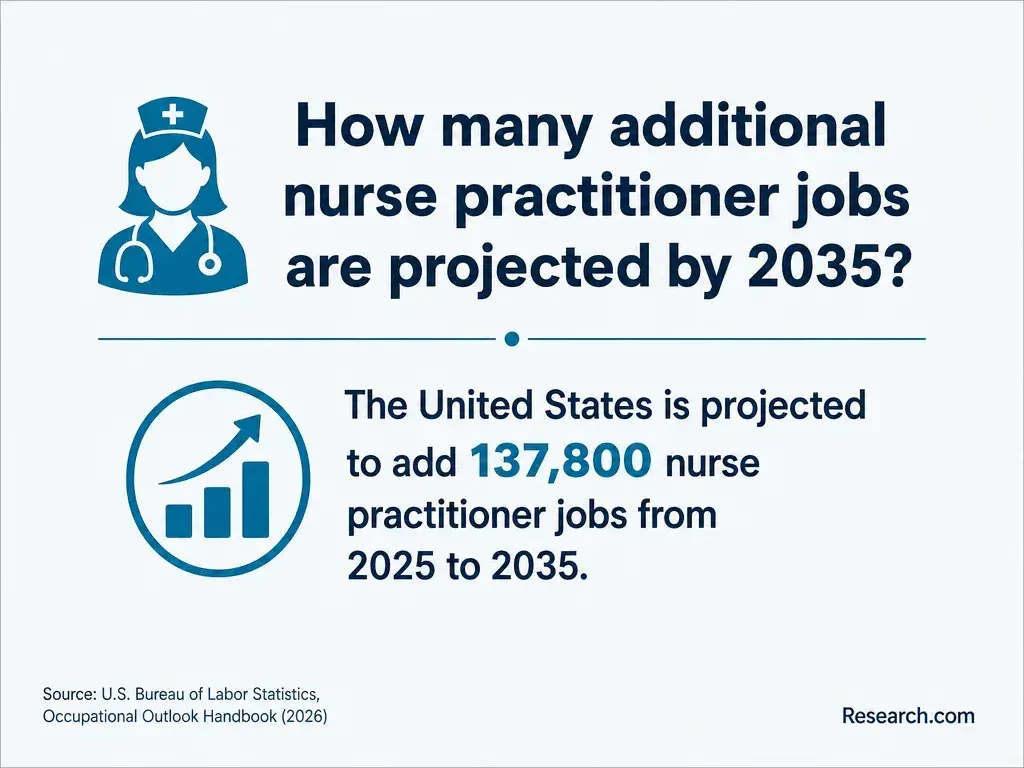
The U.S. Bureau of Labor Statistics reports nurse practitioner wages and employment projections for the occupation, not for post-master's certificate graduates or individual NP specialties. Use its current nurse practitioner figures as broad labor-market context rather than a forecast of your earnings. Local offers depend on population focus, location, employer, schedule, experience, and scope of duties. To assess a proposed career change, compare actual job postings with your target certification, expected clinical experience, and total education cost.
If your goal is family practice, online FNP certificate routes after an MSN may be worth comparing. The strongest option is the one whose approved gap analysis, clinical placements, and eligibility pathway fit your intended work - not necessarily the one advertising the fastest completion.
Other Things You Should Know About Nursing
Not automatically. Ask the receiving program whether it accepts continuing education to address course recency or requires a graduate course. The intended certifier and state board may have separate requirements.
You can ask schools about their application policies, but each focus needs its own eligibility review. Do not assume courses or clinical experiences approved for one certificate satisfy another.
Contact its registrar or nursing department for an archived description, catalog, or faculty-verified course record. Ask the receiving program what alternative evidence it will consider before assuming the course is lost.
First ask what remains provisional and whether enrollment or deposit deadlines allow time for review. A written final plan gives you a sounder basis for comparing cost and scheduling than an informal estimate.
- Advanced health assessment in nurse practitioner programs | PubMed https://pubmed.ncbi.nlm.nih.gov/17540316/
- APRN Practice FAQ - Texas Board of Nursing https://www.bon.texas.gov/faq_practice_aprn.asp.html
- Post-Graduate Nursing Certificate Programs | Georgetown https://nursing.georgetown.edu/non-degree-certificates/post-graduate-certificate-in-nursing/
- Online Graduate Certificate: Family Nurse Practitioner | Cedar Crest College https://www.cedarcrest.edu/program/nursing-family-individual-across-the-lifespan-nurse-practitioner/graduate-certificate/
- Graduate Certificates - Ross and Carol Nese College of Nursing https://www.nursing.psu.edu/graduate-certificates/
- Standards of Practice for Nurse Practitioners | American Association of Nurse Practitioners https://www.aanp.org/advocacy/advocacy-resource/position-statements/standards-of-practice-for-nurse-practitioners
- AACN Essentials FAQs | aacnnursing.org https://www.aacnnursing.org/essentials/tool-kit/faqs