2027 Post-Master's AGPCNP Certificates for Nurses in Delaware: Gap Analysis and Primary Care Clinicals
Audited and Verified:
Our Editorial and Data Verification Process
Research.com uses government datasets, official education statistics and primary institutional information to support its career and degree guides. Our review process checks factual accuracy, occupational definitions, source dates and the requirements associated with the credentials discussed.
How This Article Was Fact-Checked
Our editorial team verifies salary estimates, employment projections, education requirements and program information against original data providers and official organizations. Salary figures are checked against the relevant occupational definitions and reporting periods. Information about licensure, accreditation and required in-person training is reviewed separately.
Fact-checked and verified on:

Co-Founder and Chief Data Scientist
A Delaware nurse with a master's degree may not need another full degree to become an adult-gerontology primary care nurse practitioner (AGPCNP). The deciding factor is a program's formal review of prior coursework and clinical preparation—not the degree title alone. This guide explains how to assess certificate options, arrange appropriate primary care clinicals, and check the separate requirements for national certification and Delaware APRN licensure. It is intended for experienced RNs and APRNs who want a defensible path into this specific population focus without repeating education unnecessarily.
Key Things You Should Know
- A post-master's certificate can prepare an eligible nurse for AGPCNP certification, but the school must determine which prior courses and supervised clinical experiences count.
- Expect review of three advanced-practice foundations—pathophysiology, pharmacology, and health assessment—plus adult-gerontology primary care competencies and program-approved direct patient care clinicals.
- There are two relevant national primary care certification routes, through ANCC and AANPCB; certificate completion, national certification, and Delaware APRN licensure are separate steps.
What is a post-master's AGPCNP certificate in Delaware?
A post-master's AGPCNP certificate is graduate-level preparation for an RN who already holds a qualifying graduate nursing degree and wants the nurse practitioner role focused on primary care across the adult and older-adult lifespans. It is not a second master's degree, an RN-entry program, or an automatic APRN license. The curriculum and its length depend on what the receiving school accepts from the nurse's previous education.
Starting position matters. An FNP may have advanced assessment and primary care experience but still need documented adult-gerontology population-focus preparation. An acute care NP needs primary care preparation even if their patients are adults. A nurse with an MSN in education or leadership may need substantially more NP coursework and supervised care. Employment experience supports a competency review; it does not automatically replace academic or clinical requirements. Nurses without an RN license need a different starting route, such as online graduate-entry MSN pathways, rather than a post-master's NP certificate.
What are Delaware's requirements for AGPCNP certification and APRN licensure?
Delaware APRN practice requires more than a school-issued certificate. The nurse must meet the Delaware Board of Nursing's applicable APRN requirements, including the required RN license status, qualifying graduate-level preparation, and national certification aligned with the NP role and population focus. The board—not a school advertisement—determines whether an applicant may practice as an APRN in Delaware.
For adult-gerontology primary care, the relevant national credentials are ANCC's AGPCNP-BC and AANPCB's AGNP-C. Applicants should compare the certifier's current educational and clinical eligibility rules with their program's written plan before enrolling. An adult-gerontology acute care credential is not a substitute for primary care certification. Likewise, shorter psychiatric-mental health nursing master's pathways prepare for a different population focus and role.
Before applying for licensure, confirm the Delaware board's current application, verification, and practice requirements. Holding an RN multistate privilege does not itself grant Delaware APRN authority.
Which Delaware schools offer post-master's AGPCNP certificate programs?
Do not assume that a Delaware school offering an NP degree also offers an open, stand-alone post-master's AGPCNP certificate. The University of Delaware and Wilmington University are reasonable Delaware-based schools to investigate for graduate nursing and NP offerings, but their current certificate availability, exact population-focus title, admission status, and clinical-placement policies must be confirmed directly with each school. Without those confirmations, neither should be treated as a verified AGPCNP certificate option.
Ask each graduate nursing office for the current certificate catalog page and a written answer to whether the award specifically prepares graduates for adult-gerontology primary care national certification. If neither school offers a suitable intake, an out-of-state program authorized to enroll Delaware residents may be more practical than choosing a different NP focus solely to stay local. A person changing careers without prior nursing education should instead investigate nursing entry pathways for career changers.
Online delivery can reduce travel to class, but it cannot turn supervised NP patient care into independent online work. A campus-based option may offer easier access to local faculty and clinical relationships; an online option may offer more choices when Delaware certificate availability is limited. Neither format guarantees a Delaware clinical placement.
The comparison below focuses on obligations that commonly change a working nurse's schedule. Policies vary by school and entry term.
| Decision factor | Online or hybrid certificate | Campus-based certificate |
| Course attendance | May include live sessions, exams, skills assessments, or campus visits | Usually has recurring travel and scheduled in-person classes |
| Primary care clinicals | In person at school-approved sites, potentially near home | In person at approved sites; proximity to campus does not guarantee placement |
| Placement risk | Check Delaware enrollment authorization and who secures preceptors | Check site capacity, commuting distance, and school placement support |
Get the required on-site dates, clinical-day expectations, and placement responsibilities in writing. This distinction applies well beyond graduate study: LPN programs combining online learning and clinical training also require in-person patient-care education, although they prepare for an entirely different license.
The receiving program's gap analysis maps transcripts, syllabi, prior supervised hours, and documented competencies against its AGPCNP curriculum. It should identify accepted work, remaining courses, required clinical experiences, and any conditions on prior coursework. Ask for that determination in writing before relying on an estimated completion date.
Potential requirements include advanced pathophysiology, advanced pharmacology, advanced health assessment, diagnostic reasoning, health promotion, and management of common and complex conditions in adults and older adults. Primary care clinicals must provide suitable patient encounters, qualified preceptors, faculty oversight, and documented evaluation. A nurse's existing job, acute care hours, simulation, or self-arranged preceptor counts only if the program accepts the experience under its rules. An RN-to-BSN pathway using applied projects serves a different educational purpose and cannot substitute for supervised NP direct patient care.
A useful pre-enrollment question is not simply "How many hours?" but "Which adult-gerontology primary care competencies and patient encounters must I still demonstrate, and who will approve my site and preceptor?"
There is no dependable Delaware-wide certificate length or price: an FNP with accepted graduate courses may receive a different study plan from a non-APRN MSN graduate. Course sequencing, clinical site availability, and whether a school permits part-time enrollment can extend completion even when few credits remain.
Request an individualized estimate that separates tuition per remaining credit from mandatory university and clinical fees, books, travel or campus visits, background checks, and certification and licensure expenses. Ask what an extra term would cost if a clinical placement is delayed. Comparing sticker prices before a gap analysis can make the shorter-looking program the more expensive choice. For context, PMHNP certificate programs by duration illustrate how another NP focus can have different sequencing; their advertised timelines should not be applied to AGPCNP preparation.
Programs commonly assess an applicant's graduate nursing credential, active RN license, academic record, professional experience, and readiness for NP-level work. Schools may also request recommendations, a statement of goals, and documentation needed for clinical placement. The decisive question is whether the applicant's prior degree and coursework satisfy that specific certificate's entry and progression rules.
Send admissions staff transcripts, relevant syllabi, clinical-hour records, and any existing APRN certification. Ask whether the school admits non-APRN MSN graduates, whether advanced courses must meet recency rules, and when a formal gap analysis becomes binding. A nurse whose highest nursing credential is an associate degree needs a different graduate-entry plan first; an ADN-to-MSN bridge program guide addresses that earlier educational step, not direct entry into a post-master's certificate.
Verify three separate questions: whether the institution is appropriately accredited, whether its nursing program has the applicable nursing accreditation, and whether the specific certificate and population focus meet the intended certifier's eligibility requirements. Then confirm that the school may enroll a Delaware resident and can support Delaware clinical placements. General university accreditation or an NP program in another specialty does not settle those questions.
Check the institution's and nursing accreditor's current records, then ask the program director to identify the certificate's accreditation scope and the national AGPCNP exam or exams for which graduates are prepared. Compare that answer with ANCC or AANPCB's current eligibility instructions and, separately, Delaware Board of Nursing requirements. Retain the written responses for your intended entry term. Online DNP programs emphasizing organizational practice may be appropriately accredited for their own purpose, but a non-APRN track does not establish AGPCNP certification eligibility.
After obtaining the required national certification and Delaware APRN authority, an AGPCNP may pursue adult primary care work in outpatient practices, geriatric services, community clinics, or other settings serving adult and older-adult patients. Duties may include assessment, diagnosis, treatment planning, prevention, and management of ongoing conditions, subject to Delaware law, employer privileges, and demonstrated competence.
Match the credential to the actual job description. A vacancy centered on inpatient acute care or psychiatric specialty treatment may call for different preparation; affordable PMHNP education pathways, for example, address a different clinical role. Even an experienced RN or APRN changing focus should assess the employer's orientation, consultation access, patient mix, and expectations before accepting an independent caseload.
What salary and job outlook can Delaware AGPCNPs expect?
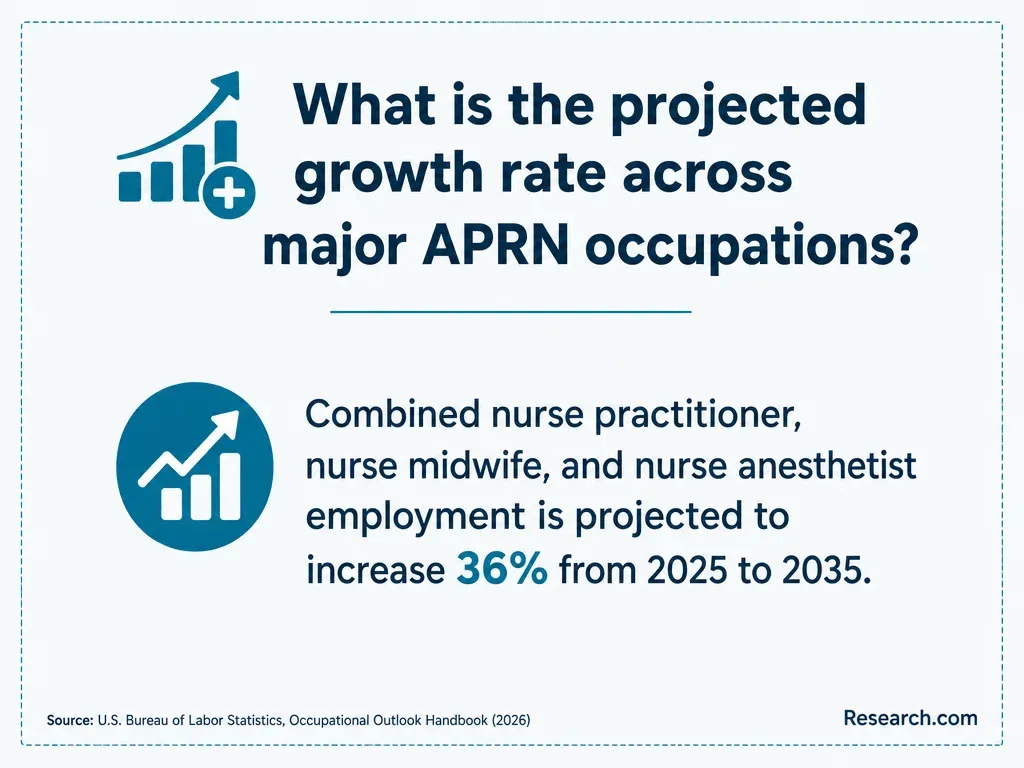
The U.S. Bureau of Labor Statistics reports pay and employment projections for the broad nurse practitioner occupation, not a separate Delaware AGPCNP category. Those national figures can establish that NP practice is a substantial labor-market category, but they cannot predict a new certificate graduate's offer or isolate adult-gerontology primary care demand in Delaware.
For a useful local estimate, compare actual Delaware job postings and offers by setting required experience, schedule, benefits, and patient responsibilities. Calculate the certificate's full cost and any reduced earnings during clinical terms against a realistic offer—not the national occupation-wide median. Nurses considering an MSN before any post-master's study can use budget planning for BSN-to-MSN study to assess that separate earlier investment. If an employer will fund part of the AGPCNP certificate, verify reimbursement limits and service commitments before counting the assistance.
Other Things You Should Know About Nursing
Often, but clinical days, scheduled classes, and site hours may conflict with a full-time shift pattern. Request a term-by-term schedule before committing.
Potentially, within the nurse's authorized scope and employer policies. Patient-location licensure rules still apply; a Delaware APRN license alone does not authorize practice everywhere patients reside.
Some may help, but employment does not guarantee an approved placement. The school must accept the site and preceptor before hours begin.
Yes. Follow the issuing organization's current renewal requirements and separately maintain Delaware licenses; renewing one credential does not renew the others.
- Delaware Regulations - Title 24 1900 https://regulations.delaware.gov/AdminCode/title24/1900.shtml
- Post Master's Certificate Program | School of Nursing | University of Delaware https://www.udel.edu/academics/colleges/chs/departments/son/graduate-programs/certificate-programs
- Admissions, Expenses, Financial Aid | delval.edu https://catalog.delval.edu/content.php
- Tuition & Fees | Delaware State https://www.desu.edu/admissions/financial-aid/tuition-fees
- Academics: College of Nursing: Post-Master's Certificate in Adult Gerontology Primary Care Nurse Practitioner https://academics.waldenu.edu/catalog/nursing/post-masters-certificate/adult-gerontology-primary-care-nurse-practictioner
- Adult-Gerontology Nurse Practitioner Concentration, Advanced Nursing Practice Degree, DNP | ASU https://degrees.asu.edu/masters-phd/major/ASU00/NUANPAGDNP/advanced-nursing-practice-adult-gerontology-nurse-practitioner-dnp
- Nursing Field Experience: Find a Preceptor and Site | Academics at Walden University https://academicguides.waldenu.edu/nursing-field/find-preceptor
- Tuition & Fees | Delaware Technical Community College https://www.dtcc.edu/admissions-financial-aid/tuition-fees/
- Get Prepared for AGPCNP-BC Certification With WP Online | WPUNJ https://online.wpunj.edu/degrees/healthcare/msn/agnp/eligibility-and-requirements/
- Costs, Billing, and Financial Aid - University of Delaware https://catalog.udel.edu/content.php