2027 Post-Master's AGPCNP Certificates for Nurses in Arkansas: Gap Analysis and Primary Care Clinicals
Audited and Verified:
Our Editorial and Data Verification Process
Research.com uses government datasets, official education statistics and primary institutional information to support its career and degree guides. Our review process checks factual accuracy, occupational definitions, source dates and the requirements associated with the credentials discussed.
How This Article Was Fact-Checked
Our editorial team verifies salary estimates, employment projections, education requirements and program information against original data providers and official organizations. Salary figures are checked against the relevant occupational definitions and reporting periods. Information about licensure, accreditation and required in-person training is reviewed separately.
Fact-checked and verified on:

Co-Founder and Chief Data Scientist
An Arkansas nurse who already holds a graduate degree may not need another full degree to prepare for adult-gerontology primary care—but a post-master's certificate is not automatically a short route. The receiving program must determine which prior courses and supervised experiences meet its requirements, and an Arkansas clinical placement must be workable before enrollment.
This guide explains how to evaluate that gap analysis, verify primary care clinicals and program eligibility, and plan for certification and state licensure. The goal is to help you compare your actual path to practice, not an advertised minimum number of credits.
Key Things You Should Know
- A post-master's AGPCNP certificate prepares an already graduate-educated nurse for adult-gerontology primary care; the school determines the remaining coursework and clinical hours through an individualized review.
- Ask the program to assess your three advanced core subjects—pathophysiology, pharmacology, and health assessment—and your documented, population-appropriate supervised care before relying on a quoted timeline or price.
- Certificate completion is separate from national certification and Arkansas APRN licensure. Two certification routes to investigate are the ANCC AGPCNP-BC and AANPCB AGNP-C; confirm current eligibility with the certifier and the Arkansas State Board of Nursing.
What is a post-master's AGPCNP certificate in Arkansas?
A post-master's adult-gerontology primary care nurse practitioner (AGPCNP) certificate is graduate-level preparation for a nurse who already has an MSN or other qualifying graduate nursing education and wants to add this NP role and population focus. It generally leads to a school-issued certificate, not another master's degree. Its purpose is to supply the academic and supervised clinical preparation needed to pursue the appropriate national certification and, separately, Arkansas APRN licensure.
Adult-gerontology primary care spans care for adults, including older adults, across the adult lifespan. Its emphasis is longitudinal assessment, prevention, chronic-condition management, and coordination of care. It is not interchangeable with adult-gerontology acute care preparation, even when a nurse's prior hospital experience is extensive. Likewise, a certificate is not an entry-to-nursing program: someone without an RN background needs an initial nursing pathway, such as those discussed in this guide to nursing degrees without an RN background.
"In Arkansas" may describe where the student lives and completes clinicals rather than where the university is located. Before applying to an out-of-state program, confirm that it enrolls Arkansas residents, permits the required Arkansas placements, and can document that its track supports the certification and licensure route you intend to use.
Who qualifies for an AGPCNP post-master's certificate?
Programs commonly expect an active, unencumbered RN license, qualifying graduate nursing credentials, and the ability to meet clinical-site requirements. Exact admissions rules vary. A school may also review graduate GPA, professional experience, prior advanced-practice preparation, references, and the state in which the applicant will complete clinicals. Admission does not mean every previous graduate course will satisfy the AGPCNP track.
Your starting point changes the likely gap. An FNP or other certified NP may have relevant advanced core coursework but still needs the school to evaluate adult-gerontology primary care competencies and supervised experiences. A nurse with an MSN in education, leadership, or informatics may need substantially more NP-specific courses and clinicals. An experienced RN without a graduate degree generally needs a graduate pathway first; associate-to-master's nursing pathways are a separate decision for an associate-prepared RN, not a substitute for NP specialty preparation.
Request an eligibility review using official transcripts and, if you have APRN preparation, course syllabi, clinical-hour logs, population and setting descriptions, and certification records. Ask whether the answer is a preliminary admissions opinion or the faculty-approved degree audit that will govern your study plan.
How does gap analysis determine AGPCNP certificate coursework?
A gap analysis is the receiving program's documented comparison of your prior graduate education and supervised practice with its AGPCNP curriculum and intended certification pathway. It determines what you must still complete; it does not simply subtract previously earned credits from a published certificate total.
The review should separate three questions: whether earlier courses cover advanced pathophysiology, advanced pharmacology, and advanced health assessment at the required level; whether earlier NP coursework addresses adult-gerontology primary care competencies; and whether documented supervised experiences meet the program's requirements for patient population, setting, hours, and evaluation. Course age, grade, content, and the program's transfer or residency policies can also matter. Paid employment and prior APRN hours are evidence for review, not automatic replacements for required education.
Ask for a written plan showing courses accepted, courses still required, clinical hours still required, and the sequence in which they are offered. An applicant with a non-APRN DNP should not assume the doctoral title closes an NP gap; if the desired outcome is instead a doctoral degree, shorter routes to a DNP degree answer a different question. The useful comparison here is the approved AGPCNP plan, not the shortest certificate advertised to another applicant.
Check accreditation at both the institution and nursing-program level, and verify that the specific post-graduate AGPCNP track is covered where applicable. Institutional accreditation, nursing accreditation—commonly through CCNE or ACEN—and state authorization serve different purposes. None alone establishes that an Arkansas resident can complete local clinicals or qualify for a particular certification examination.
Ask the program to identify its nursing accreditor and the scope of accreditation covering the certificate, its authority to enroll Arkansas students, and the certification examination or examinations for which the AGPCNP track is designed. Confirm the answers with the accreditor's and certifier's current official records, then ask the Arkansas State Board of Nursing what it requires for your intended APRN application. A broad statement that a university is "accredited" is not enough.
Entrance-test policies are another distinct issue. Comparisons of nursing application competitiveness concern admission, not whether an advanced-practice track has appropriate accreditation or produces certification-eligible graduates.
Expect faculty-supervised, evaluated NP clinical practice involving adult and older-adult patients in settings appropriate to primary care. The exact hours and distribution depend on the program's curriculum, your approved gap analysis, and the requirements applicable to your certification route. Do not assume that hours from another specialty, your current job, or simulation will count as direct primary care clinical hours.
Placement feasibility often determines whether the advertised schedule is realistic. Before paying a deposit, establish who identifies preceptors, who secures site agreements, what qualifications supervisors need, whether your employer's clinic can be approved, and when faculty must authorize a site. Ask how the program handles a placement that falls through and whether it requires specific adult, older-adult, or clinical-condition exposure. Existing workplace access helps only if the program approves the experience and can evaluate it appropriately.
This is why comparing RN-to-BSN practice expectations does not answer the AGPCNP clinical question: a postlicensure BSN completion program and an NP certificate prepare nurses for different responsibilities. Protect patient privacy when collecting encounter logs, and use only the school's approved documentation process.
Online instruction can reduce travel for classes, but it does not make supervised clinicals remote or self-paced. Compare the actual attendance and placement obligations rather than the delivery label. This table identifies the differences most likely to affect an Arkansas nurse's schedule:
| Feature | Online or hybrid track | Campus-based track |
| Course participation | May combine asynchronous work with scheduled live classes and exams | Usually requires scheduled travel for instruction and assessments |
| Skills or intensive sessions | May still require campus visits | More on-site access, with recurring travel commitments |
| Primary care clinicals | In-person, program-approved placements remain necessary | In-person, program-approved placements remain necessary |
| Best practical fit | Works when Arkansas enrollment, placement support, and required travel are feasible | Works when campus access and its clinical arrangements fit the student's location |
Request a term-by-term calendar showing live sessions, intensives, and expected clinical days. A nurse comparing online specialty changes may also encounter postgraduate PMHNP certificate comparisons, but psychiatric-mental health and adult-gerontology primary care have different population-focus competencies and placements. Choose by the role you intend to practice, not by whichever online track appears shortest.
The curriculum depends on the written gap analysis. A nurse whose prior advanced core courses are accepted may concentrate on adult-gerontology primary care content and clinical practica; another applicant may need the core courses as well. Common areas include advanced assessment and diagnostic reasoning, pharmacotherapeutics, adult and older-adult health management, prevention, chronic care, and role-specific supervised practice.
Look beyond course titles. Request descriptions or syllabi showing which courses address aging, complex chronic conditions, primary care decision-making, and the clinical competencies expected of graduates. Also check prerequisites and course sequencing: a required course offered only once a year can matter more to completion time than the number of credits.
An FNP track may share some advanced foundations, but its broader family population focus does not automatically replace the receiving school's AGPCNP requirements. Similarly, planning a one-year FNP pathway is useful only if family practice—not adult-gerontology primary care—is your intended role. The certificate's course list should follow the role and your approved prior learning.
There is no reliable single Arkansas-wide duration or price. An applicant's remaining courses, clinical hours, course rotation, placement timing, and permitted enrollment load determine the calendar; tuition rates and fees determine the bill. Obtain a personalized, term-by-term estimate rather than multiplying an advertised minimum credit count by a tuition rate.
For a transparent illustration, not a quoted program price, 15 credits at an assumed $800 per credit would produce $12,000 in tuition; 24 credits at the same assumed rate would produce $19,200. Neither figure includes fees, travel, required visits, clinical compliance, certification, licensure, or reduced work hours. A gap-analysis difference of nine credits would change tuition by $7,200 under those assumptions, before accounting for any extra term needed to obtain a placement.
Ask each school for the same written cost categories: approved credits remaining, tuition by term, mandatory fees, travel and site costs, and charges if clinicals extend enrollment. Employer assistance may change your net cost, but check eligibility and repayment conditions first. For an RN who still needs graduate education, affordable online BSN-to-MSN bridge programs address an earlier step; their listed costs should not be mistaken for the additional cost of AGPCNP preparation.
A school certificate, national NP certification, and an Arkansas APRN license are separate milestones. After completing an eligible AGPCNP program, a graduate applies for and passes the appropriate national certification examination under the certifier's current rules. The ANCC AGPCNP-BC and AANPCB AGNP-C are routes to investigate; eligibility is determined by the selected certifying organization, not by the certificate's name alone.
To practice as an APRN in Arkansas, follow the Arkansas State Board of Nursing's current application requirements for the NP role and relevant population focus, including its requirements concerning an RN license, graduate preparation, national certification, and any other application materials. Confirm the state's rules for prescriptive authority and collaborative or practice arrangements separately before taking on duties that require them. An RN multistate privilege does not, by itself, grant Arkansas APRN authority.
If an applicant has only an LPN license, this is not the next licensure step: LPN-to-RN programs with online coursework concern progression toward RN licensure, whereas AGPCNP preparation presumes substantially later graduate nursing education. Employers may additionally require credentialing and orientation even after the Board issues a license.
What careers, salaries, and job outlook follow AGPCNP certification?
An Arkansas-licensed AGPCNP may seek roles in adult primary care, geriatrics, outpatient specialty clinics, community health, or long-term-care-related services, subject to the position's duties, employer requirements, and state practice rules. The work commonly emphasizes assessment, diagnosis and management within scope, prevention, patient education, and coordination across settings. A primary care certificate is a poor substitute for acute care preparation if the target job requires that population-focus credential.
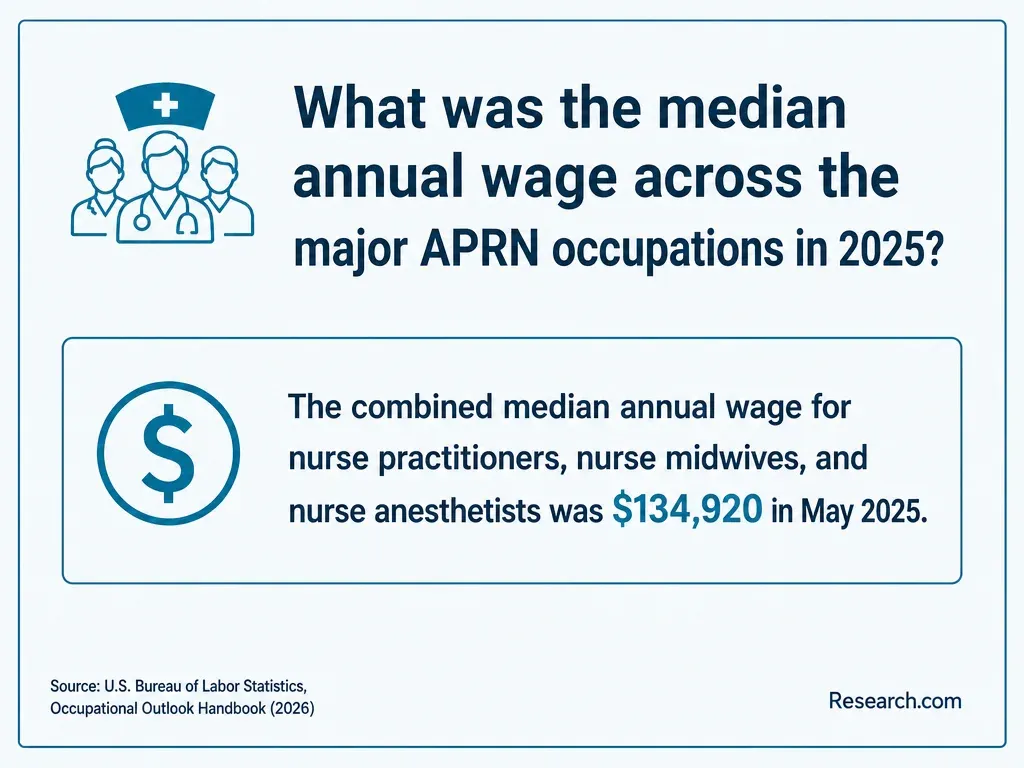
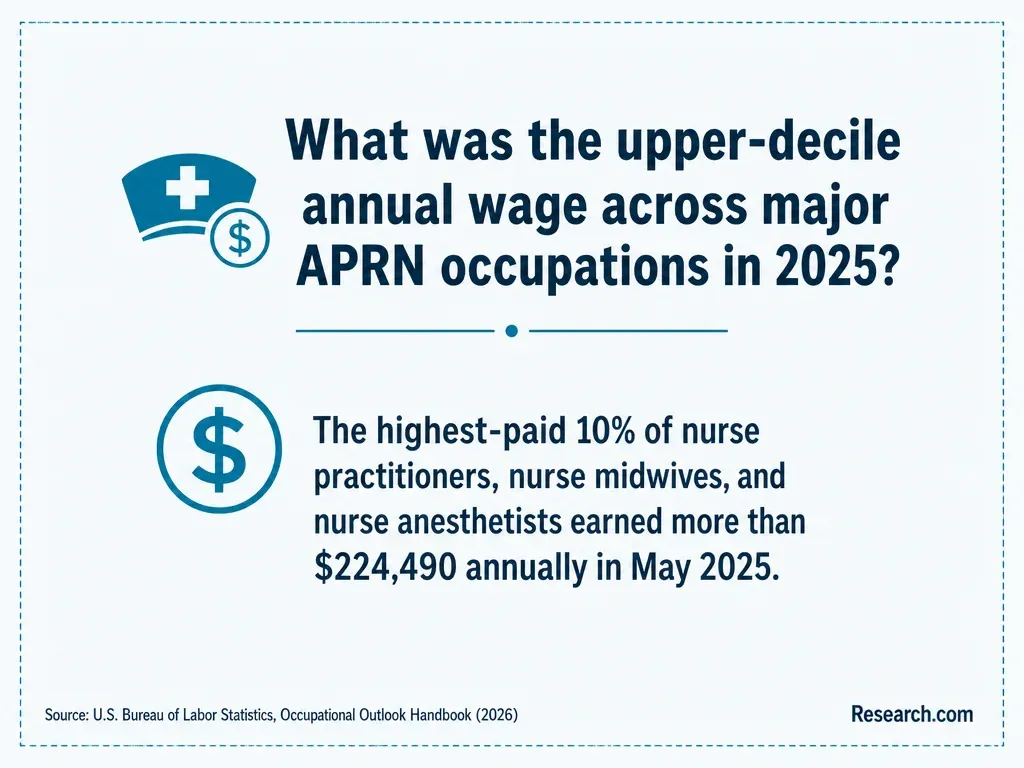
The U.S. Bureau of Labor Statistics reports wages and employment projections for the broader nurse practitioner occupation, not a distinct Arkansas AGPCNP salary or a certificate-graduate pay rate. Its May 2025 wage reference and 2025-2035 projection period therefore offer labor-market context, not a forecast of your offer. Compare actual Arkansas postings and offers by population served, setting, schedule, experience requirement, benefits, and any productivity expectations. A current employer's pay scale may provide a more useful financial comparison than a national occupational median.
Before committing, identify two or three jobs you would realistically pursue and check whether they specify AGPCNP certification, accept another NP population focus, or require experience you have not yet gained. If the goal is a different nursing role rather than adult primary care, revisit that role's preparation requirements first; another certificate is worthwhile only if it closes a real qualification gap.
Nurses who are weighing doctoral study alongside these job-market checks may consult a guide to DNP program admission accessibility, which can show how prior degrees, licensure, clinical experience, and application requirements differ across programs before they decide where to apply.
Other Things You Should Know About Nursing
Often, but build your plan around scheduled clinical days, live classes, and any campus visits. Ask your employer about predictable scheduling before assuming a full-time workload will remain feasible.
Possibly. The program must approve the site, preceptor, patient encounters, supervision, and evaluation arrangement. Employment there alone does not make its hours eligible.
Ask the school, before enrollment, what placement support it provides, whether it guarantees a placement, and what happens to tuition and progression if a site is delayed. Do not assume you can substitute another setting without approval.
Not automatically. National certification and a school certificate do not replace another state's APRN authorization. Check that state's licensing, population-focus, and practice requirements before accepting a position there.
- ASBN - Approved Nursing Programs - Arkansas Department of Health https://healthy.arkansas.gov/boards-commissions/boards/nursing-arkansas-state-board/education/approved-nursing-programs/
- Cost of Attendance (Budget) | 2025-2026 Federal Student Aid Handbook https://fsapartners.ed.gov/knowledge-center/fsa-handbook/2025-2026/vol3/ch2-cost-attendance-budget
- Nursing (MSN) - Graduate Admissions | Stockton University https://www.stockton.edu/graduate/nursing.html
- ANCC vs. AANPCB: Your Guide to NP Certification Boards | The University of Tulsa https://online.utulsa.edu/blog/ancc-vs-aanpcb/
- Post-Master's Certificate AGPCNP Program | Spring Arbor University https://online.springarbor.edu/programs/post-masters-certificate-agpcnp
- 067.00.00 Ark. Code R. 004 - Advanced Practice Nursing | LII / Legal Information Institute https://www.law.cornell.edu/regulations/arkansas/067-00-00-Ark-Code-R-004
- Plans of Study for Post-Graduate Certificates | UAMS College of Nursing https://nursing.uams.edu/programs/completion-certificate-program/plans-of-study-for-post-graduate-certificates/
- Adult Gerontology Primary Care Nurse Practitioner (AGPCNP) (Post-Master's Certificate) | Bradley University Catalog https://catalog.bradley.edu/graduate/programs/adult-gerontology-primary-care-nurse-practitioner-agpcnp-postmasters-certificate-online-postmasters-certificate-online/