2027 Part-Time vs. Full-Time Educational Technology Degree Programs

Co-Founder and Chief Data Scientist
Choosing between part-time and full-time study in educational technology can be challenging, especially for those juggling work, finances, and academic goals. About 45% of educational technology students opt for flexible schedules to better manage these demands, reflecting a growing trend toward customizable learning paths that accommodate diverse lifestyles and responsibilities.
This article clarifies the key differences in workload, pacing, and career impact between part-time and full-time educational technology programs. Understanding these factors will help prospective students align their choice with personal circumstances and professional aspirations, ensuring a more informed decision about their educational journey.
Key Benefits of Part-Time vs. Full-Time Educational Technology Degree Programs
- Part-time programs enhance work-life balance, allowing students to integrate studies with ongoing employment, supporting practical application of educational technology concepts in real-time.
- They offer financial flexibility by spreading tuition over a longer period, reducing immediate debt and enabling students to maintain steady income streams while studying.
- Extended study duration fosters deeper comprehension and gradual skill acquisition, benefiting career progression through sustained professional and academic engagement in educational technology.
How Are Part-Time Educational Technology Programs Structured Compared to Full-Time Programs?
Choosing between part-time and full-time study formats in educational technology impacts how students manage their learning pace and balance other life commitments. These scheduling differences influence both the academic experience and progression, making it important for students to understand program structure before enrolling.
Part-Time Program
- Course Load: Typically 1-2 courses per semester, allowing for a lighter academic commitment.
- Weekly Time Commitment: Approximately 10-20 hours of study weekly, which accommodates work and family schedules.
- Scheduling Flexibility: Evening, weekend, and online classes are commonly offered to help professionals balance responsibilities.
- Learning Pace: Extended support services including asynchronous lectures enable students to learn at their own pace.
Full-Time Program
- Course Load: Usually 3-5 courses per semester, requiring a more intensive semester schedule.
- Weekly Time Commitment: Students typically dedicate 30-40 hours weekly to coursework, similar to a full workweek.
- Scheduling Flexibility: Primarily daytime classes with scheduled on-campus or synchronous sessions.
- Learning Environment: A more immersive setting with synchronous classes fosters peer interaction and quicker curriculum completion.
Understanding how part-time educational technology degrees are structured is essential for students weighing their options. The differences between full-time versus part-time educational technology program differences often come down to flexibility and time commitment, which can affect overall success. Many working professionals seek out 6 month online courses that pay well as a way to gain skills efficiently while accommodating their busy lives.
How Long Does It Take to Earn a Part-Time vs Full-Time Educational Technology Degree?
Understanding the time to complete part-time educational technology degree programs is crucial for students planning their academic and career timelines. Duration varies widely between full-time and part-time study, influencing both cost and personal scheduling. Prospective students often weigh these factors carefully to find the right balance.
- Full-time: Typically requires about two years to complete a master's degree, with students enrolling in 9 to 12 credit hours per semester. Some programs offer accelerated tracks or stackable certificates that can shorten this timeframe.
- Part-time: Can extend from three to five years as students usually take 3 to 6 credit hours per term. Transfer credits and program formats, such as online options, may speed up completion.
- Influencing factors: Course load variations, transfer credits, online versus on-campus delivery, and accelerated options all affect the overall duration. According to NCES, part-time education students often take up to twice as long as full-time peers.
Choosing between full-time vs part-time educational technology program duration depends on personal commitments and career goals. Many students explore online college open enrollment options for more flexible pathways.
Are Admission Requirements Different for Part-Time vs Full-Time Educational Technology Programs?
Admission requirements for part-time and full-time educational technology programs share some common elements but also present distinct differences based on the program's format and intended audience. Candidates considering either option should carefully evaluate how these factors align with their academic background and professional goals.
For those weighing the admission criteria for part-time educational technology programs versus full-time educational technology degree admission requirements, the distinctions often revolve around flexibility and experience.
- GPA Requirements: Full-time programs generally require a competitive minimum undergraduate GPA around 3.0 to ensure academic readiness. Part-time programs tend to have more flexible GPA thresholds, accommodating working professionals who offer relevant experience.
- Prerequisite Coursework: Both program types expect foundational knowledge in education, technology, or related fields. Full-time students usually face stricter prerequisite enforcement due to accelerated pacing, whereas part-time students might complete some coursework concurrently with their degree.
- Professional Experience: Experience in educational or technology roles is often a significant factor in part-time admissions, with programs valuing workplace learning. Full-time programs commonly focus more on academic preparation than prior work experience.
- Standardized Tests: GRE or other standardized test submissions vary but are frequently waived for part-time candidates, especially those demonstrating substantial professional experience. Full-time applicants may be required to submit test scores more consistently.
- Supporting Documents: Both admission formats require letters of recommendation and statements of purpose. Part-time applicants typically emphasize their career objectives and how the program supports professional growth.
Choosing between part-time and full-time study can influence your admission profile as well as your career trajectory. For professionals focused on advancing within education or technology fields, part-time programs may better reflect their experience and goals. Additionally, for those exploring which degrees offer strong financial outcomes, resources highlighting the highest paid bachelor's degree can provide valuable guidance.
Tuition for part-time and full-time educational technology programs differs mainly in payment timing and financial aid opportunities rather than cost per credit hour. Most institutions charge the same tuition rate for each credit whether students enroll part-time or full-time, but the total expense per semester varies based on credit load.
Full-time students face larger upfront fees each term, while part-time students spread payments over a longer period, which can affect overall budget planning.
- Per-credit tuition consistency: The cost per credit hour usually remains unchanged regardless of enrollment status, ensuring fairness but impacting semester bills differently.
- Extended duration and indirect costs: Part-time students take longer to finish programs, which can lead to additional expenses such as repeated semester fees and extended living costs.
- Financial aid access: Full-time students often qualify for more extensive financial aid packages, while part-time learners may have limited funding options, affecting affordability.
- Fixed semester fees: Certain fees-like technology or service fees-are charged each term regardless of credit load, making part-time study relatively less cost-efficient per semester.
When asking a graduate from a part-time educational technology program about tuition differences, she noted the steady financial commitment as both challenging and manageable. "Paying per semester was easier to handle than a lump sum, but the extra fees each term added up surprisingly fast," she recalled.
Balancing coursework and expenses over several years required careful budgeting. Still, she appreciated the flexibility to continue working while studying. Reflecting on her journey, she mentioned, "It wasn't just about tuition-it was about pacing myself and making education fit into my life without overwhelming debt." This experience highlights how part-time tuition structures demand both financial and time management strategies.
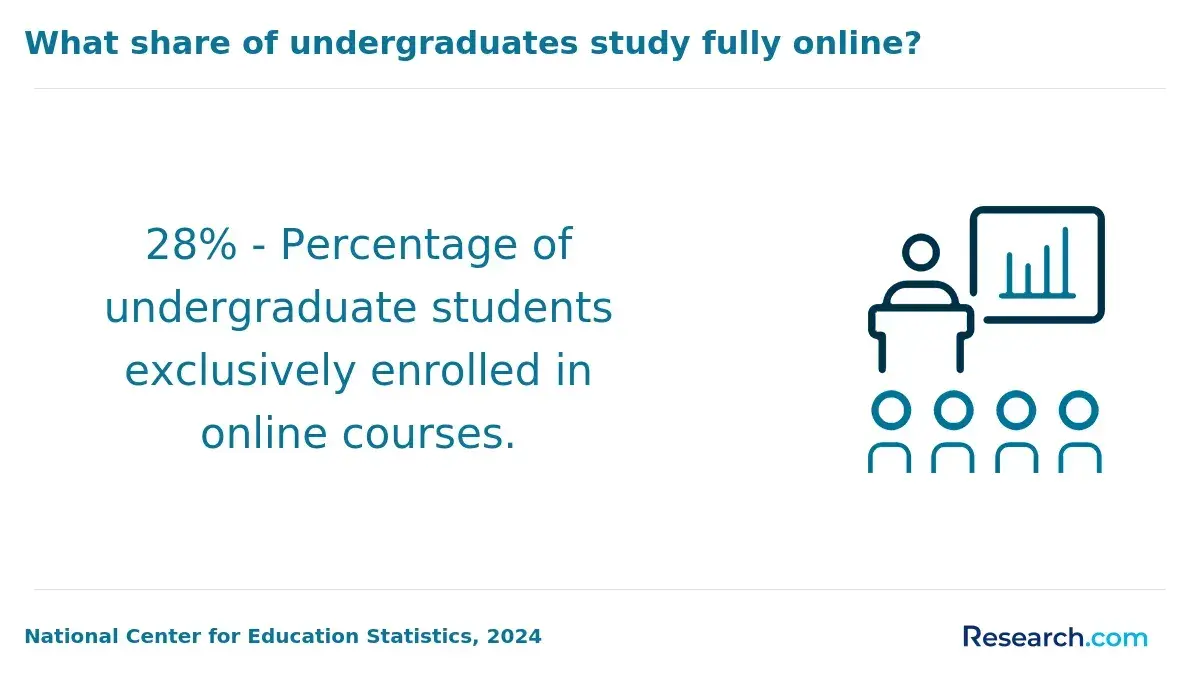
Part-time educational technology degree programs generally provide more online and hybrid course options than full-time programs. This is designed to support working professionals who need greater flexibility. Below is an overview of how each format commonly offers course delivery options, influenced by various factors.
- Program Design: Part-time tracks emphasize flexibility, often featuring asynchronous online classes, evening, or weekend options. Full-time programs prioritize immersive, in-person learning with fewer online courses to promote group collaboration.
- Institutional Policies: Schools adopt policies for part-time formats that increase accessibility for non-traditional students, encouraging remote learning options. Full-time formats attract traditional students and thus maintain structured campus-based schedules.
- Student Demographics: Part-time students frequently balance work, family, and school, creating demand for more online and hybrid courses. Full-time students typically have fewer outside commitments and prefer on-campus experiences.
- University Offerings: To meet working adult needs, universities tailor part-time programs with hybrid formats mixing limited face-to-face sessions and online coursework. Full-time programs, by contrast, rely heavily on classroom attendance and hands-on activities.
Students enrolled in educational technology programs can usually transition between part-time and full-time study, but the process involves institutional policies and formal approvals. Most schools require consultation with academic advisors to assess how the change might influence degree progress.
Getting authorization from program coordinators and the registrar's office is commonly part of the procedure. Key considerations before switching include the impact on financial aid eligibility, the availability of required courses in the chosen enrollment format, and adjustments to the expected graduation timeline. It's important for students to weigh these factors carefully to ensure their academic goals remain attainable.
Limitations on switching enrollment status often depend on a student's academic standing, with probation or suspension potentially restricting eligibility. Financial aid packages may also be modified since full- and part-time statuses affect disbursement rules.
Course schedules might be less flexible when enrolling full-time, necessitating early planning with advisors to secure necessary classes. Switching enrollment can either shorten or extend time to degree completion, so students must plan accordingly. Open communication with school officials is essential for navigating these requirements smoothly.
A graduate I spoke with recalled his own transition from part-time to full-time educational technology study as both challenging and rewarding. He described feeling uncertain at first but found thorough advising sessions helpful in clarifying expectations and requirements.
"The hardest part was adjusting my work-life balance," he shared, emphasizing how full-time enrollment demanded more rigorous time management. Yet, he valued the faster pace and felt more immersed in the academic community. "Switching allowed me to complete my degree sooner and take on projects that wouldn't have fit a part-time schedule," he explained, highlighting the benefits of making the change when ready.
Delivery format significantly shapes students' learning experience by determining flexibility and engagement. Part-time and full-time study options vary in how they accommodate scheduling, workload, and access to resources in educational technology degree formats.
- Scheduling Flexibility: Online programs provide maximum flexibility, allowing part-time and full-time students to access coursework anytime, which suits those balancing family or work. Hybrid formats combine scheduled campus sessions with online work, offering moderate flexibility. Fully on-campus formats require fixed class times, posing challenges particularly for part-time students managing other obligations.
- Workload and Pace: Full-time students usually progress faster by taking heavier course loads each semester. Part-time students benefit from online and hybrid programs by distributing their workload over a longer period, reducing stress and supporting deeper material engagement, as seen in studies of online educational technology degree formats.
- Accessibility and Resources: Online delivery broadens access for students across geographic locations and eliminates commuting time, a major advantage for part-time learners. Hybrid and campus-based formats provide better access to physical resources like labs and libraries, with full-time on-campus learners gaining more immediate academic support.
- Student Support Services: Full-time students often enjoy more direct access to tutoring, career counseling, and networking, generally available on campus. Part-time learners using predominantly online formats may find fewer live services but can utilize virtual resources that are available 24/7. Hybrid programs vary in combining these support options.
Choosing between formats also depends on budget considerations; many students seek low tuition online colleges to balance costs with flexibility and program quality. Overall, familiarity with hybrid and campus learning options in educational technology can help students select the best fit for their schedules and goals.
Employers do not universally prefer full-time educational technology degrees over part-time ones, but certain factors shape their perceptions. Full-time degrees often signal greater rigor due to concentrated coursework over a shorter period, which some employers equate with a dedicated focus and mastery of the subject. However, part-time degrees frequently showcase a candidate's ability to balance professional work and academic responsibilities, demonstrating strong time management skills.
This balance is especially valued in educational technology roles, where practical experience and multitasking capabilities can be as critical as academic credentials. Therefore, employer preference often depends on the combined assessment of degree rigor and relevant work experience rather than just the mode of study.
Industry trends increasingly reflect acceptance of flexible learning pathways, emphasizing career readiness alongside formal education. Recent surveys reveal many employers in technology-driven fields prioritize professional experience, which many part-time students gain concurrently with their studies.
For those evaluating the part-time vs full-time educational technology degree value, it is essential to consider that continuous engagement in the workforce can enhance resumes and demonstrate applicable skills. Prospective students interested in affordability may also explore options such as the cheapest online college bachelor degree programs, which often offer both flexible scheduling and cost-effective pathways to degree completion.
Return on investment (ROI) is essential when deciding between part-time and full-time educational technology degree programs. It assesses the balance between expenses like tuition and income lost during study against the financial gains after graduation, such as increased salaries and career growth.
Full-time programs often involve higher upfront costs and reduced work hours, leading to greater opportunity costs, but they generally finish faster, allowing quicker access to career benefits. Part-time options spread costs over time and permit continued employment, easing immediate financial pressure but potentially delaying salary improvements tied to the degree.
- Tuition and Costs: Full-time study usually demands a larger initial investment, while part-time spreads payments, easing short-term financial strain.
- Opportunity Cost: Full-time students often pause or reduce work, losing income temporarily; part-time learners maintain earnings by studying alongside their jobs.
- Time to Completion: Full-time programs typically finish in 1-2 years, enabling faster degree attainment compared to 3-5 years for part-time.
- Salary Potential: Graduates with master's degrees in educational technology earn roughly 15-20% more annually than those with bachelor's degrees, benefiting quicker from full-time study.
- Career Advancement: Faster graduation through full-time study may accelerate promotions, while part-time study suits professionals balancing work and study over a longer period.
Choosing the right program format is essential to align academic progress with career ambitions and personal life. Selecting full-time or part-time study shapes not only the pace of earning a degree but also impacts daily schedules and financial planning.
- Time availability: Full-time study demands a heavier course load, often 12-18 credit hours per semester, which might overwhelm those with jobs or family obligations. Part-time options reduce weekly commitment to 6-9 credit hours, allowing for better manageability.
- Financial resources: Full-time students may access scholarships or financial aid unavailable to part-time learners, but part-time enrollment spreads tuition payments over a longer period, easing immediate expenses.
- Career goals: Individuals aiming for quick advancement typically benefit from full-time study due to faster completion. Those balancing work or other duties might prefer part-time paths to maintain employment.
- Learning style: Full-time formats tend to offer immersive experiences and consistent interaction with faculty and peers, while part-time students need strong self-motivation to keep up with coursework independently.
- Program duration: Full-time degrees usually finish within two years, whereas part-time programs can extend up to four years, affecting how soon one can enter or advance in a career.
- Flexibility: Part-time schedules often provide adaptability to accommodate personal obligations, while full-time study requires more rigid time management but fosters deeper engagement.
What Graduates Say About Their Part-Time vs. Full-Time Educational Technology Degree
- Adam: "Choosing a part-time track for my educational technology degree allowed me to grow at my own pace without breaking the bank-the average cost fitting within my budget was a relief. The experience deepened my understanding of digital tools and transformed how I approach education on a personal level."
- Saul: "My full-time educational technology program was an intense yet rewarding journey. Although the cost was a significant investment, the comprehensive curriculum and hands-on experience truly prepared me for a career shift. Reflecting on it, the degree opened doors I never thought possible."
- Callahan: "Pursuing a part-time educational technology degree was a game-changer for me. Balancing work and study was tough, but the flexibility made it manageable, and the average cost being reasonable helped ease financial stress. Now, I'm confident in using tech to create more engaging learning environments professionally."
Other Things You Should Know About Educational Technology Degrees
Part-time students usually complete the same practicum or fieldwork as full-time students, but they may spread the required hours across multiple terms. Many programs require 100 to 300 supervised hours, plus a faculty-approved placement in a school, district, or training center.
In 2027, part-time educational technology students often receive less on-campus support due to their varied schedules, relying more on online resources. Full-time students might access more in-person services, though schools strive to offer equitable digital support for all.
- Cost of Online Education vs. Traditional Education [2025]: Comparison https://educationdata.org/cost-of-online-education-vs-traditional-education
- Frequently Asked Questions https://education.ufl.edu/educational-technology/prospective-students/online-edd/faq/
- Hybrid learning: A comprehensive guide https://feedbackfruits.com/blog/a-comprehensive-guide-to-hybrid-learning
- Learning effectiveness of a flexible learning study programme in a blended learning design: why are some courses more effective than others? https://pmc.ncbi.nlm.nih.gov/articles/PMC9934945/
- Full-Time vs. Part-Time Education https://touchcampus.in/blog/full-time-vs-part-time-education-which-one-is-right-for-you
- Education and Technology MA https://www.ucl.ac.uk/prospective-students/graduate/taught-degrees/education-and-technology-ma
- Full-time, part-time, online - which study mode is right for you? https://www.studentspace.pl/en/blog/post/studia-stacjonarne-zaoczne-wieczorowe---ktory-tryb-wybrac
- How hybrid and online learning supports student accessibility and affordability - OI Digital Institute https://oidigitalinstitute.com/news/how-hybrid-and-online-learning-supports-student-accessibility-and-affordability/
- Flexible Hybrid Learning Models | Higher Education Strategy https://edutech.global/flexible-hybrid-learning-models-in-higher-education/