2027 Organizational Leadership Master's Degree vs Graduate Certificate: Which Is Better?

Co-Founder and Chief Data Scientist
Choosing between an organizational leadership master's degree and a graduate certificate poses a common dilemma for professionals seeking career advancement or skill enhancement. Consider the differences in cost-master's programs often exceed $30,000 while certificates may cost less than $10,000-and time-to-completion, with certificates typically requiring under a year versus two years for a master's. Admission standards, employer recognition, and salary impact vary notably; for example, workers with a master's in organizational leadership earn on average 20% more annually than those with only a certificate, according to 2024 labor statistics.
This article examines these factors in detail to guide informed decisions aligned with individual career goals.
Key Things to Know About Which Is Better: A Organizational Leadership Master's Degree or a Organizational Leadership Graduate Certificate
- A master's degree in organizational leadership typically costs three to five times more than a graduate certificate-yet it offers broader career utility and higher long-term salary potential.
- Graduate certificates can be completed in less than a year-compared to two years for most master's programs-making them ideal for career-changers seeking rapid upskilling.
- Admission to master's programs usually requires a bachelor's degree and competitive GPA, while graduate certificates often have more flexible, accessible entry criteria.
What Is the Difference Between a Organizational Leadership Master's Degree and a Organizational Leadership Graduate Certificate?
An organizational leadership master's degree is a graduate-level program requiring approximately 30 to 36 credit hours. It offers a broad curriculum covering leadership theories, strategic management, organizational behavior, ethics, and change management. This degree aims to prepare students for advanced leadership roles by developing critical thinking, research skills, and the practical application of leadership concepts in diverse organizations. Completion often includes coursework, exams, and sometimes a capstone project or thesis, reflecting rigorous academic and professional preparation.
By contrast, an organizational leadership graduate certificate is designed as a shorter, more focused credential, typically requiring 12 to 18 credit hours. The certificate concentrates on specific skills or topics-such as communication techniques or conflict resolution-providing targeted knowledge for professionals seeking quick skill enhancement or specialization. Its duration usually ranges from a few months up to a year, making it appealing to career-changers and working professionals looking for a faster credential.
- Academic Standing: A master's degree is a full graduate credential signifying a higher academic achievement, while a graduate certificate is supplementary and may not carry the same prestige.
- Curriculum Scope: The master's offers a broad, integrative education; the certificate targets narrow, skill-specific learning.
- Intended Audience: Master's programs suit those seeking comprehensive career advancement; certificates attract professionals needing focused leadership skill upgrades.
- Stackability: Graduate certificates are often stackable toward a master's degree, though this varies by institution.
- Duration and Time Commitment: Master's degrees typically require one to two years; certificates take only months.
- Misconceptions: A certificate is not just a shorter master's but a credential with a distinct academic and professional purpose, often lacking the research depth of a master's.
This organizational leadership credential comparison and career outcomes analysis will further explore how these credentials differ in cost, admission standards, employer recognition, salary impact, and career utility. Recent graduates might also consider options such as an accelerated online bachelor's degree in psychology as alternative or complementary routes. Such detailed insights help prospective students align their educational choices with personal and professional goals effectively.
What Are the Typical Admission Requirements for a Organizational Leadership Master's Program Compared to a Organizational Leadership Graduate Certificate?
Admission requirements for organizational leadership master's programs are typically more rigorous than those for organizational leadership graduate certificate programs-reflecting the deeper academic commitment expected at the master's level. This contrast matters for recent undergraduates or career changers exploring the typical admission criteria for organizational leadership master's programs as they consider their next credential step.
Undergraduate GPA: Master's programs generally require a minimum GPA around 3.0 on a 4.0 scale, with some more competitive programs demanding higher scores. In contrast, graduate certificate programs offer more flexible or no GPA thresholds, providing broader accessibility.
Prerequisite Coursework: Applicants to master's programs usually must have completed specific undergraduate courses in leadership, management, or social sciences. Graduate certificate entry requirements compared to master's programs often do not include such prerequisites, which lowers entry barriers for those new to the field or shifting careers.
Standardized Test Scores: Many master's admissions still request GRE or GMAT results, though waivers are increasingly common for applicants with relevant professional experience or strong academic records. Graduate certificates rarely require these tests, emphasizing faster and easier entry.
Letters of Recommendation: Master's programs typically ask for two to three letters to attest to academic and professional potential, whereas graduate certificates may require one or none, reflecting less formal admission processes.
Personal Statement: Master's applicants must provide a detailed personal statement or statement of purpose to assess fit and motivation; certificates might ask for a brief statement or none, streamlining the process.
Graduate certificate programs serve as an important academic on-ramp for students who may not yet meet master's admission standards. Completing a certificate can help applicants strengthen their profiles for future master's applications by building relevant experience and academic credentials.
Those interested in advancing their study with a specialized credential might also consider options like an online masters in construction management to evaluate different pathways aligned with their career goals.
What Is the Minimum GPA Requirement for a Organizational Leadership Master's Program?
Accredited Organizational Leadership master's programs usually require a minimum GPA between 2.5 and 3.0 on a 4.0 scale, setting a fundamental academic standard for applicants. This range allows institutions to maintain quality while recognizing varied academic backgrounds.
Selective Programs: More competitive programs often expect GPAs closer to 3.3 or higher. These higher thresholds reflect the intense demand and prestige associated with such programs, where admitted students typically exceed the stated minimums due to holistic admissions processes considering work experience, recommendations, and leadership skills.
Inclusive Policies: Some programs prioritize practical experience over strict GPA criteria, occasionally admitting students with GPAs just below 2.5. These pathways emphasize professional growth and applied skills rather than purely academic metrics.
Conditional Admission: Students falling marginally short of the GPA minimum may receive provisional acceptance, often conditioned on maintaining satisfactory grades in early coursework or completing remedial classes to ensure academic readiness.
GPA Perspective: Minimum GPA numbers should be regarded as eligibility floors rather than achievement targets. Exceeding these thresholds enhances competitiveness and signals critical thinking and discipline essential for success in graduate-level organizational leadership studies.
A professional who completed the organizational leadership master's program shared that despite having a modest undergraduate GPA, he leveraged his extensive leadership experience to qualify for admission. "The provisional admission option was a huge relief, allowing me to prove myself through coursework instead of just past grades," he recalled. He described the initial anxiety balancing work and rigorous classes but found that maintaining focus and seeking faculty support helped him exceed GPA conditions. Reflecting on the journey, he emphasized that demonstrating commitment mattered more than initial numbers, advising prospective students not to be discouraged by minimum GPA cutoffs alone.
How Long Does It Take to Complete a Organizational Leadership Master's Degree Versus a Organizational Leadership Graduate Certificate?
Completion times for an organizational leadership master's degree versus a graduate certificate differ significantly due to program length, format, and depth. Full-time master's students typically finish within 18 to 24 months, while part-time study often extends to three years or more. Accelerated options-like intensive summer sessions or continuous enrollment-can reduce this to about 12 to 18 months. These programs generally demand between 30 and 45 credits, reflecting their comprehensive nature.
- Time Frames: Graduate certificate programs offer a quicker alternative, often requiring only 12 to 18 credits. Full-time participants may complete these certificates in 6 to 12 months, with part-time students taking up to 18 months or slightly more.
- Structural Requirements: Master's degrees involve extensive elements such as theses or capstone projects, comprehensive examinations, and a curriculum balancing theoretical concepts with applied leadership practice. Graduate certificates streamline this by focusing solely on essential skills without the additional academic obligations.
- Career Impact: Professionals juggling current employment frequently choose between the master's longer commitment and the certificate's rapid upskill potential. The certificate serves as a strategic credential for those needing swift advancement or a targeted skills boost without a multi-year investment.
- Personal Factors: Balancing work, family, and financial constraints plays a crucial role. Master's programs require significant time and resource commitments, while graduate certificates provide flexibility for those with demanding schedules or tighter budgets.
Deciding between the two involves aligning career goals with realistic educational timelines. For individuals exploring paths within organizational leadership, the trade-offs in duration and program rigor are pivotal. Those seeking an efficient credential might explore online paralegal programs as a comparative example of accelerated certificate options. Ultimately, understanding the time required for organizational leadership graduate certificate programs versus full master's degrees helps learners choose the credential best suited to their professional trajectory and lifestyle.
How Much Does a Organizational Leadership Master's Degree Cost Compared to a Organizational Leadership Graduate Certificate?
Public universities charge typically between $15,000 and $35,000 for in-state students pursuing a master's in organizational leadership, while out-of-state learners face costs from $25,000 to $55,000. Private institutions often exceed $50,000, sometimes nearing $80,000. Graduate certificates, being shorter and requiring fewer credits, generally cost between $5,000 and $15,000 at public schools, with private programs ranging from $10,000 to $25,000.
- Cost Drivers: The higher tuition for master's degrees is due largely to increased credit requirements-often two to three times those of certificates-and longer time commitments. Additional factors include institutional overhead such as faculty salaries, academic advising, and access to research resources embedded in full degree programs.
- Financial Aid Dynamics: Master's candidates commonly benefit from assistantships, fellowships, and employer tuition assistance, which can reduce their net expenses substantially. These options are less frequently available for certificate students, who typically rely more on direct payments or employer reimbursement plans.
- Hidden Costs: Enrolling in a master's often means dedicating 1.5 to 2 years full-time, resulting in lost wages and delayed career progression. Conversely, certificates usually take less than a year, limiting income disruption but potentially offering a smaller salary boost and fewer networking advantages.
- Return on Investment: Calculations should focus on net cost rather than sticker price-accounting for aid and opportunity costs. Many free online estimators can help students decide which credential aligns best with their career goals and financial situation.
When asked about her experience weighing costs, a professional who completed an organizational leadership master's reflected on the decision's complexity: "It wasn't just about the tuition-I had to factor in time away from work and how the degree would open doors for leadership roles. Although it felt daunting financially, I viewed it as an investment in my future. The assistantship I received eased expenses, and the program's depth gave me confidence to move up in my career. Looking back, balancing the financial strain with the long-term benefits made the choice worthwhile."
How Does Earning a Organizational Leadership Master's Degree Affect Salary Compared to a Organizational Leadership Graduate Certificate?
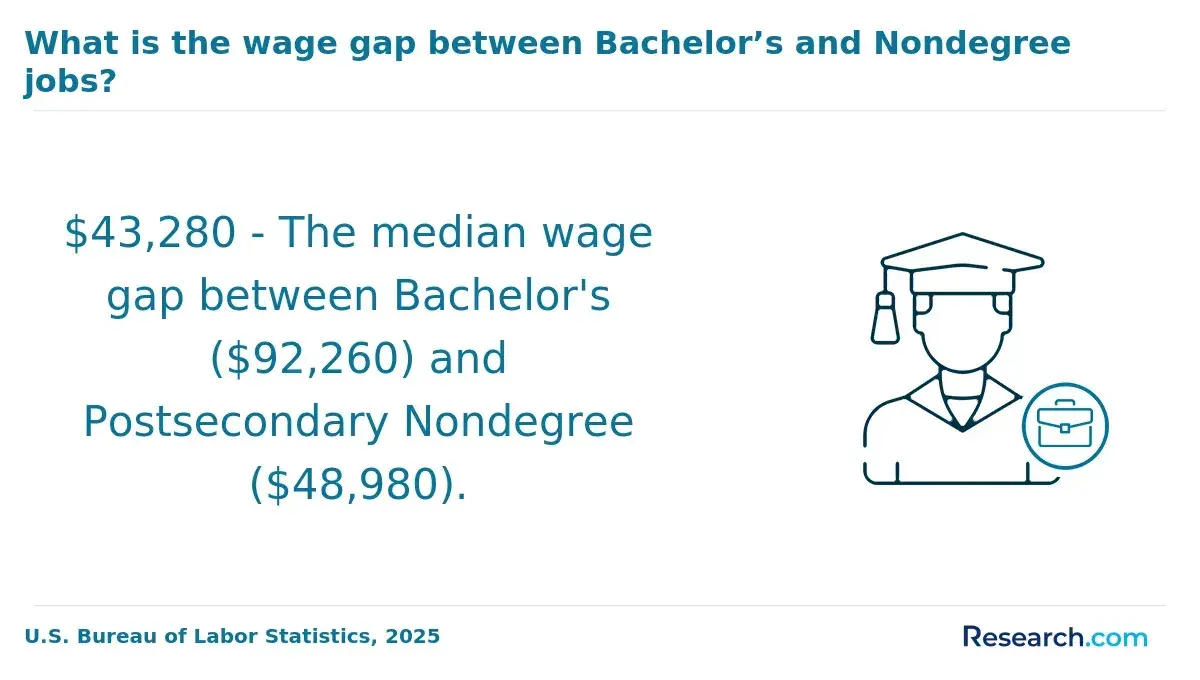
Wage data from the Bureau of Labor Statistics and research by Georgetown University reveal a clear salary advantage for individuals holding a master's degree in organizational leadership compared to those with only a graduate certificate. This premium typically ranges from 15% to 25%, reflecting employers' preference for the advanced expertise and leadership capabilities the degree signifies.
- Industry Impact: The master's degree offers the most significant earning benefits in sectors like healthcare administration, finance, and government-fields where strategic leadership roles demand comprehensive credentials.
- Organization Size: Large corporations and government agencies tend to reward master's degree holders with higher starting salaries and faster career progression, especially for senior and executive positions.
- Targeted Certificates: In some organizational leadership tracks such as project management and human resources, specialized graduate certificates can deliver earnings comparable to a master's, particularly when aligned with high-demand skills.
- Return on Investment: While a master's degree usually requires 1-2 years longer and entails greater tuition costs, it often leads to higher long-term salary growth. Conversely, certificates offer a quicker, less costly path to employment gains, benefiting those seeking immediate income improvement.
- Leadership Roles: Access to top-tier leadership positions frequently hinges on possession of a master's degree, which correlates with substantial salary increases rarely achieved through certificates alone.
- Market Perception: Employers commonly view a master's degree as evidence of dedication and expertise, enhancing negotiation power for raises and promotions beyond base salary increases.
As of 2024, the organizational leadership field has seen a 10% increase in employer preference for master's credentials over certificates when hiring for managerial roles, emphasizing the growing value placed on comprehensive graduate education.
Which Organizational Leadership Career Paths Favor a Master's Degree Over a Graduate Certificate?
Certain organizational leadership career paths-such as executive roles, academic positions, and licensed professions-strongly favor a master's degree over a graduate certificate due to the deeper scope and academic rigor required. Employers and professional associations emphasize that positions demanding advanced strategic thinking, research capabilities, and formal credentials typically mandate or prefer candidates with a master's degree. This credential reflects not only practical skills but also a comprehensive theoretical understanding of leadership and organizational dynamics.
Executive Leadership: Senior roles in corporations, nonprofits, and government agencies usually require a master's degree as a minimum credential. These jobs demand navigating complex challenges, leading diverse teams, and developing long-term strategies-competencies developed extensively in master's programs.
Academic and Research Positions: Careers in teaching organizational leadership at the college level or engaging in intensive research almost always require a master's degree or higher. The detailed theoretical foundation and methodological training in these programs are essential for scholarly contributions and curriculum development.
Licensed Professions and Certifications: Certain leadership roles in healthcare administration, human resources, and public administration require licensure or certification that mandates a master's degree. This requirement ensures adherence to professional standards and ethical guidelines.
Career Advancement and Specialization: Many organizational leadership career ladders use the master's degree as a formal threshold for promotion or specialized roles such as organizational development consulting or change management, making the degree structurally necessary beyond initial credentials.
A recent report by the U.S. Bureau of Labor Statistics projects an 8% growth in management occupations from 2022 to 2032, highlighting the increasing value of advanced degrees in this expanding field.
Which Organizational Leadership Career Paths Favor a Graduate Certificate Over a Master's Degree?
Certain career paths within organizational leadership distinctly favor a graduate certificate over a master's degree due to their emphasis on rapid, specialized skill acquisition rather than broad academic knowledge. Hiring trends from platforms like LinkedIn and Lightcast Workforce Insights reveal that roles prioritizing immediate applied competencies-such as project management, change management, and human resources specialists-often consider certificates equivalent to or preferred over master's degrees. This dynamic is particularly relevant for those evaluating organizational leadership graduate certificate career advantages.
Technical Focus: Positions that emphasize technical proficiency and current methodologies in leadership value the concise, targeted nature of graduate certificates. These programs hone in on practical skills that employers seek immediately, contrasting with the theoretical depth typical of a master's degree.
Time Efficiency: Working professionals seeking a quick skills upgrade while balancing employment often choose certificates to avoid the longer commitment of full degrees. For mid-career employees aiming to close specific competency gaps, this advantage is critical.
Cost Effectiveness: Graduate certificates typically involve lower tuition and fees, providing an accessible option for individuals who want to enhance qualifications without the significant financial and time investment required by a master's. For more details on financial assistance, those interested in interdisciplinary programs may explore online interdisciplinary studies degree financial aid.
Career Changers: Those transitioning into organizational leadership often use certificates as faster entry points-demonstrating relevant skills to employers without the lengthy curriculum of a master's program.
Employer Preferences: Survey data shows some companies explicitly recognize graduate certificates as sufficient for certain leadership roles-especially in sectors where professional certifications and specialized training serve as benchmarks of competency. This employer stance influences decisions on when to choose an organizational leadership certificate over a master's degree.
Existing Credentials: Professionals already holding a related bachelor's or master's degree often gain greater value from a certificate's focused curriculum to quickly address specific skill gaps, rather than duplicating coursework through another comprehensive graduate program.
Is a Organizational Leadership Graduate Certificate Stackable Toward a Master's Degree?
Stackable credentials provide a flexible option for individuals aiming to advance their education efficiently-particularly in organizational leadership graduate certificate stackable credits. Several accredited universities permit coursework from graduate certificates in organizational leadership to count toward a master's degree in the same or a closely related field. This approach reduces the total coursework needed for the master's, offering a streamlined educational path for students who begin with a certificate and later decide to pursue an advanced degree.
- Institutional Policy: Stackability depends entirely on the school's rules and is not universally guaranteed. Each university has its own guidelines regarding transferability of certificate credits into the master's degree.
- Grade Thresholds: To qualify for transfer, courses typically must have been completed with a grade of B or higher, ensuring academic standards are met.
- Time Limits: Many programs require certificate credits to be recent-often earned within the past 5 to 7 years-for them to remain valid toward the master's degree.
- Program Matching: The graduate certificate and master's program must align closely in subject matter to maintain curricular relevance and complement advanced study in organizational leadership.
- Lower-Risk Entry: For students unsure about fully committing, the stackable certificate provides a way to assess the academic demands and financial implications before enrolling in a master's program.
- Verification: Prospective students should always confirm stackability details directly with program admissions, given wide variation in policies-even among accredited programs.
Those exploring career advancement options through education-particularly when transitioning from an organizational leadership certificate to a master's degree-should also consider related accelerated programs for broader skill diversification, such as a fast track cyber security degree. This can supplement leadership skills with technical expertise highly valued in today's workforce.
How Do Employers in the Organizational Leadership Field Perceive a Master's Degree Versus a Graduate Certificate?
Employer views on a master's degree versus a graduate certificate in organizational leadership vary greatly by industry and position. Tech and consulting sectors often favor certificates for their focus on targeted skills and quicker completion-seeing them as indicators of up-to-date practical knowledge without requiring the longer time commitment of a master's. In contrast, regulated industries, education, and academia usually regard the master's degree as the preferred credential, valuing its depth of theory and broad professional training essential for senior leadership roles.
Industry Variation: Tech and consulting are more flexible, frequently accepting graduate certificates as credible credentials; regulated and academic fields predominantly prefer the master's degree as the standard.
Role Type: Strategic and upper-level leadership roles tend to mandate a master's, while roles focused on specific competencies or project leadership often accept certificates.
Institution Reputation: The prestige and accreditation of the issuing school heavily influence employer perception-a certificate from a renowned program can surpass a master's from a lesser-known institution.
Hiring Manager Preferences: HR professionals increasingly weigh proven skills and relevant experience alongside formal credentials, sometimes equating certificates and master's degrees when quality and relevance align.
Career Context: Prospective students should assess how each credential fits their target employers and industry expectations to make an informed educational choice grounded in real-world outcomes rather than prestige alone.
Can a Organizational Leadership Graduate Certificate Help Someone Transition Into the Field From a Different Background?
Professionals shifting into organizational leadership from unrelated fields often find graduate certificates to be a strategic, time-efficient credential. Workforce development research highlights these certificates as tailored to career changers-providing focused expertise without the lengthy commitment or higher costs of a master's degree.
Accelerated Learning: Certificate programs require fewer credits and can be completed rapidly, enabling faster acquisition of leadership skills crucial for career transitions.
Cost-Effectiveness: Typically more affordable than master's programs, certificates lower financial barriers for individuals testing new career paths.
Stackable Credentials: Many programs allow credits earned to count toward future master's degrees, offering flexibility in educational planning.
Applied Curriculum: Emphasis on practical projects lets students compile a tangible portfolio that demonstrates organizational leadership capabilities to employers.
Career Relevance: Coursework focuses on essential leadership concepts and organizational dynamics specifically designed for swift professional adaptation.
Still, certificates may lack the in-depth study and broad recognition necessary for senior or specialized leadership roles. They function best as initial credentials-a first step rather than a comprehensive qualification. Combining a certificate with visible applied experiences such as leadership projects or volunteer roles can substantially boost hiring prospects by proving real-world impact.
What Graduates Say About Which Is Better: A Organizational Leadership Master's Degree or a Organizational Leadership Graduate Certificate
- Kevin: "Choosing between an organizational leadership master's and a certificate was tough-but cost was the decisive factor for me. The certificate program offered a more affordable path and quicker completion, which fit my budget and timeline perfectly. However, if you're aiming for broader employer recognition and long-term salary growth, the master's might be worth the extra investment."
- Julian: "Reflecting on my experience, the master's degree in organizational leadership opened more doors than the graduate certificate ever could. The rigorous admission requirements meant I was surrounded by motivated peers and gained deeper insights, which translated into tangible career utility. Still, if time-to-completion is pressing, the certificate provides a solid foundation without the extended commitment."
- Trevor: "From a professional standpoint, the salary impact was the game-changer for me. While the certificate offered a quicker route with fewer admission hurdles, employers tend to value the master's degree more, especially in leadership roles. That added recognition really made a difference in advancing my career-though I appreciate that the certificate can be a useful stepping stone."
Other Things You Should Know About Organizational Leadership Degrees
The choice between an Organizational Leadership master's degree and a graduate certificate can significantly impact graduate school prospects. A master's degree often provides in-depth knowledge and a broader skill set, which can be advantageous for those seeking higher academic qualifications or leadership roles. In contrast, a graduate certificate may offer targeted learning but might not carry the same weight for advanced academic pursuits.
Accreditation is crucial for both master's degrees and graduate certificates as it ensures educational quality and credibility in the job market. Candidates should verify that the program is accredited by a recognized agency-this affects eligibility for financial aid, transferability of credits, and acceptance by employers. While master's programs almost always require accreditation, some graduate certificate programs may be non-accredited, limiting their value for career advancement.
The master's degree is best suited for those seeking significant career advancement, leadership roles, or doctoral study-usually requiring a multi-year commitment and deeper academic engagement. Graduate certificates appeal to working professionals or career changers who need targeted skills quickly and with fewer admission barriers. Additionally, certificate holders who want broader credentials may later consider pursuing the full master's degree for enhanced career opportunities.
References
- 5 Career Paths in Organizational Leadership https://www.jobconvo.com/blog/en/5-career-paths-organizational-leadership/
- MBA vs Masters in Organizational Leadership: Which One to Choose? – The University of Zambia – Ecampus https://unza.ecampus.edu.zm/mba-vs-masters-in-organizational-leadership/
- Career Paths With a Degree in Organizational Leadership https://www.calcoast.edu/news/career-paths-with-a-degree-in-organizational-leadership
- What Can You Do With a Master's in Organizational Leadership? https://www.umassglobal.edu/blog-news/what-can-you-do-with-a-masters-in-organizational-leadership
- What Can I Do With a Master’s in Organizational Leadership? https://claremontlincoln.edu/news-blog/what-can-i-do-with-a-masters-in-organizational-leadership/
- Stackable Certificate and Degree Pathways https://www.rider.edu/academics/colleges-schools/college-education-human-services/stackable-graduate-programs
- Organizational Leadership Graduate Certificate | Rockhurst University https://www.rockhurst.edu/helzberg/certificate-programs/organizational-leadership
- Master’s in Organizational Leadership vs. MBA https://www.warnerpacific.edu/blog/masters-in-organizational-leadership-vs-mba/
- Online Graduate Certificates in Leadership Management: Compare Schools https://www.onlinemastersdegrees.org/graduate-certificate-programs/business/leadership-management/
- What Can I Do with a Master’s Degree in Organizational Leadership? - Grace Christian University https://gracechristian.edu/blog/what-can-i-do-with-a-masters-degree-in-organizational-leadership/