
2027 Online vs On-Campus Health Psychology Doctorate Programs: Cost, Flexibility, and Employer Perception

Co-Founder and Chief Data Scientist
Online and on-campus Health Psychology doctorate programs can lead to similar academic goals, but they create very different trade-offs in cost, scheduling, fieldwork access, and professional visibility. The decision matters because the U.S. Bureau of Labor Statistics projects psychologist employment to grow 7% from 2023 to 2033, making credential quality and fit especially important.
This guide is for prospective doctoral students comparing formats before applying. You will learn how to evaluate tuition, total cost, flexibility, fieldwork, dissertation support, and employer perception so you can choose the format that fits your goals.
Key Things to Know About Online vs On-Campus Health Psychology Doctorate Programs
- Format does not automatically determine quality, accreditation, faculty expertise, supervised fieldwork, dissertation support, and licensure alignment matter more than whether classes meet online or on campus.
- Federal data published by NCES in 2024 shows graduate distance education is now mainstream, with more than 1 million U.S. graduate students enrolled exclusively in distance education in fall 2022.
- Online programs may reduce relocation and commuting costs, but on-campus PhD programs are more likely to offer assistantships, tuition remission, lab access, and in-person research mentoring.
What are the key differences between online vs on-campus Health Psychology doctorate programs?
A Health Psychology doctorate usually refers to a PhD or PsyD in psychology with a health psychology, clinical health psychology, behavioral medicine, or related concentration. Some programs prepare students for research, teaching, consulting, or public health roles; others are health service psychology programs intended to support clinical licensure. That distinction matters more than the delivery format.
Online and on-campus formats differ most in how students access faculty, research labs, clinical placements, peer networks, and campus-based funding. NCES distance education data published in 2024 confirms that online graduate study is no longer unusual, but doctoral training in psychology still depends heavily on supervised practice and faculty-guided research.
The table below summarizes the main format differences prospective students should compare before deciding where to apply.
| Comparison factor | Online Health Psychology doctorate | On-campus Health Psychology doctorate | Why it matters |
| Course delivery | Often asynchronous or hybrid, with possible live seminars | Primarily in-person seminars, labs, and meetings | Determines weekly schedule control and interaction style |
| Research access | May rely on virtual advising, local data collection, or limited residencies | Usually stronger access to labs, research teams, and campus resources | Important for PhD applicants targeting academic or research careers |
| Clinical or applied training | Usually completed locally, if the program allows it, with program approval | Often arranged through affiliated hospitals, clinics, or community partners | Critical for licensure-focused students |
| Funding | Less likely to include assistantships or full tuition remission | More likely to offer teaching or research assistantships, especially in PhD programs | Can change the real cost more than tuition alone |
| Networking | Depends on cohort design, residencies, faculty access, and professional conferences | Built into campus labs, practicum sites, colloquia, and peer groups | Affects mentorship, recommendations, and postdoctoral opportunities |
Students who are still building their psychology background may also compare master's-level pathways first. For example, an online clinical psychology masters can help some students strengthen prerequisites, clarify licensure goals, or prepare for doctoral applications.
Are online Health Psychology doctorate programs as rigorous as on-campus programs?
They can be rigorous, but rigor is not guaranteed by format. A strong online doctorate should require advanced statistics, research methods, health behavior theory, assessment or intervention training when applicable, ethics, dissertation research, and faculty-supervised progress milestones. A weak on-campus program can be a poor investment, and a well-designed hybrid program can be demanding and professionally useful.
For clinical or counseling psychology pathways, accreditation is the key quality filter. The American Psychological Association's Commission on Accreditation evaluates doctoral programs in health service psychology based on standards such as faculty qualifications, curriculum, practicum training, internship preparation, student outcomes, and public disclosure. A program's modality does not excuse it from these expectations.
Use the following checks to judge academic rigor before applying. These are especially important because national data does not cleanly separate Health Psychology doctoral completion or attrition rates by online versus on-campus format.
- Confirm whether the program is institutionally accredited and, if licensure is your goal, whether the doctoral program holds the professional accreditation expected by your state licensing board.
- Review faculty publications in health psychology, behavioral medicine, chronic illness, stress and coping, pain, health disparities, or another area aligned with your interests.
- Ask for recent time-to-degree, internship match, licensure exam, attrition, and placement outcomes rather than relying on broad marketing claims.
- Look for required research milestones such as qualifying exams, proposal defense, dissertation defense, and regular dissertation committee meetings.
- Check whether online students receive the same library access, statistical software, research consultation, ethics review support, and faculty advising as campus students.
A common mistake is assuming "online" means easier. In a serious doctoral program, online students often need more self-management because they must coordinate coursework, research, fieldwork, and dissertation deadlines without the daily structure of campus life.
How does scheduling flexibility differ between online and on-campus Health Psychology doctorate programs?
Online programs usually offer more scheduling flexibility, but flexibility can mean several different things. Some programs are asynchronous, meaning students complete weekly modules on their own schedule. Others use synchronous evening seminars, required weekend intensives, or hybrid residencies. On-campus programs usually have fixed class times, lab meetings, practicum schedules, and faculty expectations tied to the academic calendar.
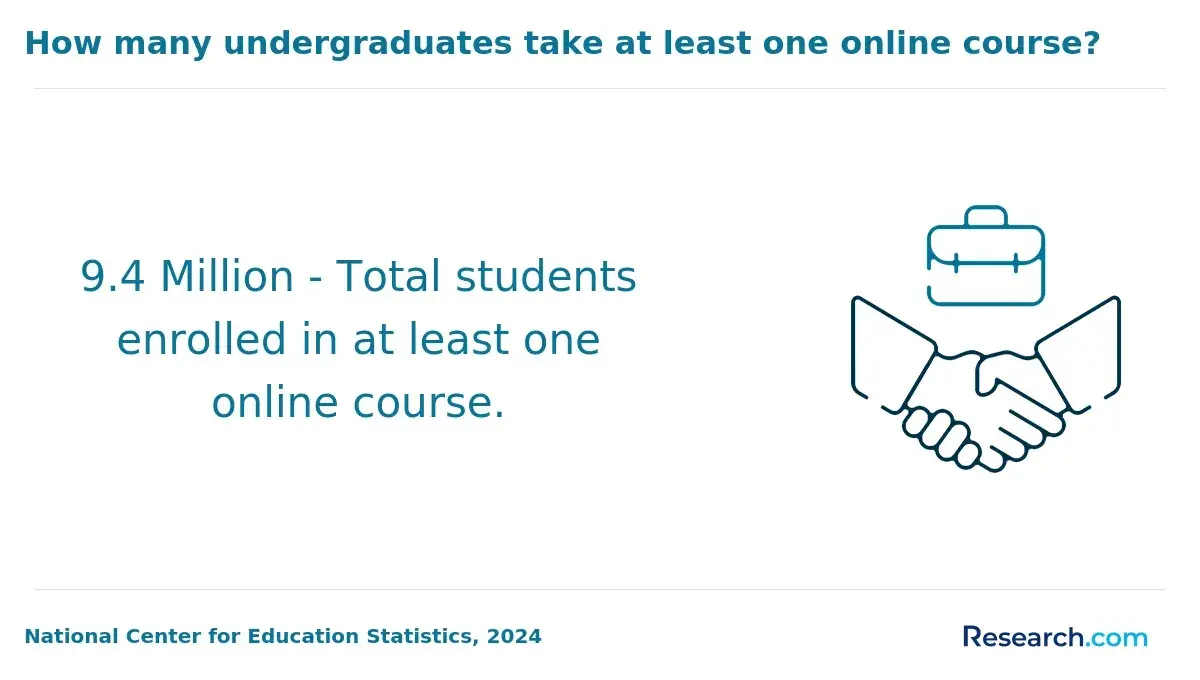
NCES data published in 2024 shows that distance education is now a major part of U.S. graduate education, which helps explain why universities continue to expand hybrid and online doctoral formats. For Health Psychology students, however, flexibility is useful only if it still allows enough time for research, supervision, and applied training.
The table below compares the scheduling realities students commonly encounter in each format.
| Scheduling area | Online format | On-campus format | Decision point |
| Weekly coursework | Often more control over when readings, discussions, and assignments are completed | Usually fixed class meeting times | Online may fit working adults better, but it requires strong discipline |
| Faculty meetings | Virtual appointments, email, video advising, and possible residency meetings | In-person office hours, lab meetings, and informal mentoring | Campus may be better for students who need frequent face-to-face feedback |
| Research work | May be remote, locally arranged, or concentrated during residencies | Often integrated into campus labs and research teams | Campus usually offers stronger structure for research-intensive goals |
| Practicum or fieldwork | Often local, with school approval and documentation | Often tied to campus-affiliated sites | Online students should confirm placement support before enrolling |
| Pacing | May offer part-time or cohort-based options | Often full-time, especially funded PhD programs | Part-time pacing may help working students but can extend total cost and time-to-degree |
Before choosing the more flexible option, map your actual week. A doctoral student may need time for readings, statistics assignments, research team work, writing, supervision, teaching, practicum travel, and dissertation planning. If you are working full-time, ask the program how many current students do the same and what supports are available; national public datasets do not reliably isolate full-time work rates specifically for Health Psychology doctoral students by format.
Fieldwork is one of the biggest differences between online and on-campus Health Psychology doctoral study. If the program is research-focused, fieldwork may involve research practica, community health partnerships, hospital-based data collection, or teaching. If the program is licensure-oriented, students typically need supervised practica, internship preparation, and a formal doctoral internship that meets state and professional expectations.
Online programs often require students to locate approved field sites near where they live. On-campus programs are more likely to have established relationships with hospitals, clinics, academic medical centers, veterans' facilities, integrated care teams, and community health organizations. That does not make campus automatically better, but it does make placement logistics more predictable.
Use this checklist before enrolling in any online or hybrid program with fieldwork requirements.
- Ask whether the school finds placements, helps identify placements, or expects students to secure sites independently.
- Confirm whether supervisors must hold a specific license, doctoral credential, specialty background, or state approval.
- Ask whether your state allows the program's fieldwork model to count toward licensure or postdoctoral requirements.
- Review how the program handles site contracts, liability insurance, background checks, telehealth supervision, and documentation.
- Find out how many in-person residencies are required and whether travel costs are included in the school's cost estimate.
Students comparing adjacent psychology specialties should pay close attention to placement expectations because applied settings differ by field. For example, forensic psychology master's programs may emphasize legal, correctional, or assessment settings, while Health Psychology placements often center on behavioral medicine, chronic illness, prevention, or integrated care.
The dissertation process is usually similar in purpose across formats: students identify a research question, complete a literature review, design a study, obtain ethics approval when needed, collect or analyze data, defend a proposal, and defend the final dissertation. The difference is not the academic standard; it is the support structure around the student.
On-campus students may have easier access to faculty labs, peer writing groups, research assistants, software support, participant pools, and informal feedback. Online students can succeed, but they need a program with clear dissertation milestones, responsive committee members, and reliable remote research infrastructure.
The table below highlights dissertation support differences that can affect time-to-degree and completion risk.
| Dissertation factor | Online format | On-campus format | What to verify |
| Topic development | Often handled through virtual advising and online seminars | Often supported through lab meetings and faculty research groups | Whether your intended topic matches faculty expertise |
| Data access | May require local recruitment, secondary datasets, telehealth-related data, or community partnerships | May use lab datasets, campus clinics, hospitals, or faculty-funded projects | Whether the program can realistically support your study design |
| Committee interaction | Video meetings and written feedback are common | In-person meetings and informal feedback may be easier | Expected response times and meeting frequency |
| Writing support | Online writing centers, statistical consultation, and virtual groups vary by school | Campus writing groups and research offices may be more visible | Whether doctoral-level support is available, not just general tutoring |
A major red flag is a program that highlights flexibility but gives vague answers about dissertation chair assignment, committee formation, proposal timelines, or recent completion outcomes. Dissertation delays can become expensive because students may continue paying enrollment, dissertation, or continuation fees after finishing coursework.
There is no single national tuition average for online versus on-campus Health Psychology doctorates because federal datasets do not separate this exact specialty by delivery format. The best starting point is to compare published per-credit tuition, required fees, funding, and credits required for the degree. NCES data published in 2024 provides a useful benchmark, average graduate tuition and required fees are substantially lower at public institutions than at private nonprofit institutions, but program-level psychology doctoral costs can differ widely from institutional averages.
In practical terms, online doctoral programs are often priced per credit, while on-campus PhD programs may list tuition but offset it through assistantships, tuition remission, or stipends. PsyD programs, whether online, hybrid, or campus-based, are often less likely than research PhD programs to be fully funded.
The table below shows how to interpret tuition categories without assuming that the sticker price is the final price.
| Cost category | Online Health Psychology doctorate | On-campus Health Psychology doctorate | How to compare fairly |
| Tuition structure | Commonly charged per credit or per term | May be per credit, flat-rate, or offset by funding | Multiply tuition by total required credits, not just annual rates |
| Mandatory fees | Technology, distance learning, residency, library, and graduation fees may apply | Campus, student services, health, lab, and activity fees may apply | Ask for a full fee schedule for the whole program |
| Assistantships | Less common, but some programs offer limited teaching or research roles | More common in full-time PhD programs | Compare net cost after tuition remission and stipend support |
| Residency costs | May include travel, lodging, meals, and missed work | Usually built into relocation and campus attendance costs | Include every required in-person visit in your estimate |
| Time-to-degree cost | Part-time pacing may extend fees and loan interest | Full-time pacing may reduce years enrolled but limit outside work | Compare total program cost, not annual affordability alone |
The biggest mistake is assuming online tuition is automatically cheaper. An online program with high per-credit tuition and no assistantship can cost more than a funded on-campus PhD, even if the online student avoids relocation.
Cost of attendance includes tuition, fees, books, software, equipment, travel, housing, food, transportation, loan fees, and personal expenses. For doctoral students, it should also include the opportunity cost of reduced work hours and the financial impact of extra dissertation semesters.
Online students may save on relocation, commuting, and campus housing, but they may pay technology fees, residency travel costs, local practicum expenses, and higher out-of-pocket tuition if assistantships are limited. On-campus students may face higher living costs near the university, but funded PhD programs can reduce net tuition dramatically.
Use the following steps to calculate the real cost before comparing offers.
- List total required credits, tuition per credit or per term, and every mandatory fee published by the program.
- Add required residency costs, including airfare or driving, lodging, meals, local transportation, and unpaid time away from work.
- Estimate practicum or fieldwork costs, such as background checks, liability insurance, testing materials, transportation, parking, and professional clothing.
- Subtract confirmed grants, scholarships, tuition remission, assistantship support, and employer tuition benefits only if they are guaranteed in writing.
- Estimate loan interest and the cost of additional dissertation or continuation semesters if the program's average time-to-degree is longer than the advertised plan.
Federal and professional sources do not publish a clean, current average student loan debt figure specifically for Health Psychology doctoral graduates by online versus on-campus format. That means students should use each program's financial aid disclosures, institutional outcome data, and federal loan counseling tools rather than relying on broad psychology averages that may combine PhD, PsyD, counseling, school psychology, and non-licensure programs.
Employer perception is becoming more favorable toward online graduate education, especially when the institution is accredited and the program includes rigorous assessment, supervised practice, and credible faculty. However, Health Psychology employers rarely evaluate format alone. They usually care about whether the graduate can conduct research, work ethically with patients or populations, interpret evidence, collaborate in healthcare settings, and meet licensure or postdoctoral requirements when the role requires them.
For clinical, hospital, academic medical center, and integrated care roles, employers may scrutinize accreditation, internship quality, practicum depth, postdoctoral training, publications, and references more closely than course modality. For research, policy, consulting, or wellness program roles, employers may focus more on research design, data skills, program evaluation, and applied health behavior expertise.
The table below summarizes employer concerns and how each format can address them.
| Employer concern | How online graduates can demonstrate readiness | How on-campus graduates can demonstrate readiness |
| Accreditation and legitimacy | Show institutional accreditation, program accreditation if relevant, and state licensure alignment | Show the same accreditation and outcome evidence |
| Applied experience | Document approved local practica, supervision hours, internship quality, and populations served | Document campus-affiliated placements, internship outcomes, and supervisor evaluations |
| Research competence | Present dissertation methods, publications, posters, datasets, and statistical skills | Present lab work, grants, conference presentations, publications, and dissertation outcomes |
| Professional network | Use faculty references, residency contacts, conference participation, and placement supervisors | Use lab mentors, practicum supervisors, faculty networks, and alumni contacts |
Students interested in specialized populations should also think about how employers judge applied preparation. For example, child psychology master's programs may be useful for comparing how programs present supervised experience, population focus, and career alignment before committing to doctoral study.
Program format can affect job prospects indirectly, but it is rarely the only factor. The bigger drivers are accreditation, licensure eligibility, internship and postdoctoral experience, dissertation quality, research productivity, faculty recommendations, and alignment with the target role. A strong online or hybrid doctoral graduate with relevant supervised experience may compete well for appropriate roles, while a campus graduate from a poorly matched or under-supported program may struggle.
The U.S. Bureau of Labor Statistics reports that the median annual wage for clinical and counseling psychologists was $95,830 in May 2024. This figure is not specific to Health Psychology or to online graduates, but it gives prospective students a realistic labor-market benchmark for many clinically oriented roles that may require doctoral training and licensure.
Think about format through the lens of the job you want. The following examples show when each option may make more sense.
- Choose an on-campus PhD if your goal is a research-intensive academic career, grant-funded lab work, or a hospital-based research track that depends on close faculty mentorship and publications.
- Consider an online or hybrid format if you are a working professional, cannot relocate, and have access to approved fieldwork or research settings near you.
- Be cautious with any format if the program cannot clearly explain licensure alignment, practicum support, dissertation outcomes, or recent graduate placements.
- Prioritize campus-based or strongly hybrid programs if your target employers are academic medical centers, VA settings, or competitive postdoctoral fellowships that value intensive in-person clinical training.
- Prioritize flexibility only if the program still gives you credible supervision, measurable research output, and a professional network beyond online discussion boards.
Salary expectations should also be compared across psychology specialties, not just formats. Readers exploring related careers often ask how much do forensic psychologists make, which can help frame how specialization, setting, licensure, and experience influence earnings beyond the degree delivery model.
How do you choose between online and on-campus Health Psychology doctorate programs?
The right choice is the format that supports your career goal at a cost and pace you can sustain. Start with the outcome you need, then work backward. If you need licensure, do not compromise on accreditation, supervised training, internship eligibility, or state requirements. If you want a research career, prioritize faculty fit, lab access, publications, and funding. If you need to keep working, evaluate whether the online structure is truly compatible with doctoral-level workload.
Use this decision sequence to build a shortlist and avoid choosing based on convenience alone.
- Define your target role, such as licensed clinical health psychologist, behavioral medicine researcher, academic faculty member, hospital consultant, public health evaluator, or corporate wellness researcher.
- Confirm whether the role requires licensure, postdoctoral hours, APA-accredited training, or a specific internship pathway in your state or employment setting.
- Compare faculty expertise with your intended research area, not just the program's concentration title.
- Ask each program for written details on practicum placement, internship preparation, dissertation advising, time-to-degree, attrition, and graduate outcomes.
- Calculate total cost of attendance after funding, residency travel, fieldwork expenses, lost income, and possible dissertation extension fees.
- Speak with current students and recent graduates in your intended track to learn whether the advertised flexibility and support match the real experience.
- Rank programs by career fit first, affordability second, and convenience third, because a convenient program that does not support your goal can become the most expensive option.
There are also warning signs that apply to both formats. Be skeptical of programs that promise fast completion without explaining dissertation expectations, avoid publishing student outcome data, give vague answers about field placements, minimize licensure complexity, or imply that a doctorate alone guarantees employment. A worthwhile Health Psychology doctorate should make its standards, costs, support systems, and outcomes clear before you enroll.
Other Things You Should Know About Health Psychology
They can, but strong programs usually require similar evidence of readiness: a relevant bachelor's or master's background, statistics or research methods preparation, recommendation letters, a statement of purpose, and faculty fit. Some online programs may value professional experience more heavily, while on-campus PhD programs may emphasize research experience.
Sometimes. Transfer policies vary widely by school and may limit how many credits count toward doctoral coursework. Even when credits transfer, students usually must complete core doctoral seminars, research requirements, practica, and dissertation milestones at the degree-granting institution.
Many doctoral programs take several years because students must complete advanced coursework, research training, fieldwork, exams, and a dissertation. Online or part-time formats may offer more schedule control, but they can also extend time-to-degree if students balance study with full-time work.
It can be. Hybrid programs may combine online coursework with in-person residencies, labs, supervision, or intensive seminars. They are worth considering when you need flexibility but still want structured faculty contact, cohort networking, and supervised applied training.
- CBS-friendly (e.g. ACT, FAP) Pre-Doctoral Internship Sites https://contextualscience.org/book/export/html/55
- Estimated Cost of Attendance | Palo Alto University https://paloaltou.edu/financial-aid/tuition-and-costs/estimated-cost-attendance
- Earning a PhD Your Way: How to Choose the Right Online Learning Format https://www.phds.me/resources/online-learning-modes/
- Best Online Health Psychology Degree Programs https://www.psychology.org/online-degrees/health-psychology/
- What Employers Actually Think About Online Degrees https://www.onlineu.com/magazine/what-employers-think-about-online-degrees
- Average Cost of a Doctorate Degree [2026]: Ph.D., Psy.D. & More https://educationdata.org/average-cost-of-a-doctorate-degree
- Doctoral Training at McLean Hospital https://www.mcleanhospital.org/training/doctoral-training
- Understanding the Differences Between Graduate Degrees in Clinical Psychology – IECA https://www.iecaonline.com/journal-article/understanding-the-differences-between-graduate-degrees-in-clinical-psychology/
- Western State University California || global-recognition-of-an-online-ms-psychology-degree-or-wsu https://www.wsu.university/media/blog/global-recognition-of-an-online-ms-psychology-degree-or-wsu/68bfbccf10e5d0976905a38d
- Practicum vs. Internship in Counseling Programs: What’s the Difference? https://www.nec.edu/news/practicum-vs-internship-counseling-programs


