2027 Online Health Psychology Doctorate Accreditation Guide: Institutional, Programmatic, and Licensure Considerations

Co-Founder and Chief Data Scientist
Choosing an online health psychology doctorate is not just an academic decision; it can determine whether your degree is recognized for licensure, employment, financial aid, or further study.
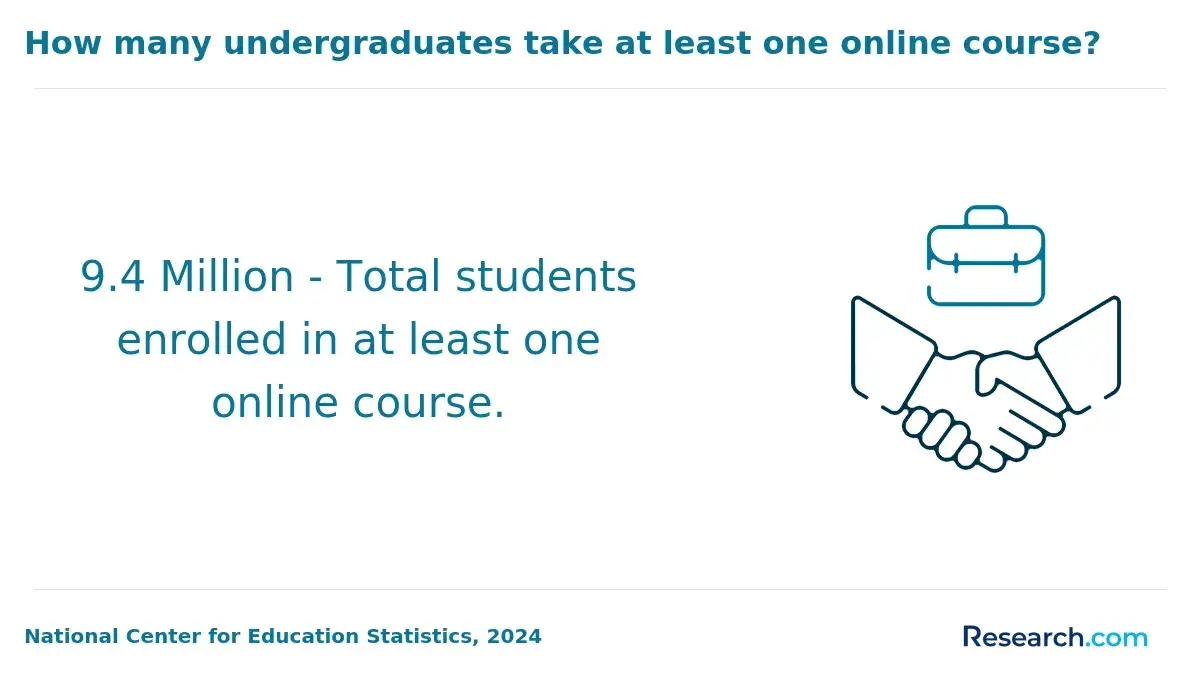
Federal postsecondary data released in 2024 show that more than half of graduate-level students took at least one distance education course, making online-program verification increasingly important.
This guide is for prospective doctoral students comparing accredited programs, especially those considering clinical practice. You will learn how institutional accreditation, programmatic accreditation, state authorization, and licensure rules work together so you can avoid programs that may not meet your goals.
Key Things You Should Know
- Institutional accreditation verifies the school, while programmatic accreditation evaluates a specific psychology program; for licensure-focused doctoral psychology training, APA Commission on Accreditation recognition often carries the most weight.
- State licensure rules are state-specific, so an online health psychology doctorate that is acceptable in one jurisdiction may not satisfy education, supervised experience, internship, or exam requirements in another.
- Before enrolling, verify the school in federal or CHEA-recognized accreditation databases, confirm any psychology-specific accreditation directly with the accreditor, and obtain written licensure disclosures for your state.
Is an Online Health Psychology Doctorate Accredited Differently From an On-Campus Program?
An online health psychology doctorate is not accredited under a separate "online accreditation" system. Legitimate accreditation evaluates the institution or program against recognized standards, regardless of whether courses are delivered online, on campus, or in a hybrid format.
What changes for online students is the need to verify state authorization, residency expectations, clinical placements, and whether distance delivery is acceptable for licensure in the student's state.
The table below shows how accreditation questions usually differ between online and campus-based doctoral psychology options. Use it to separate delivery-format issues from accreditation and licensure issues:
| Question | Online Health Psychology Doctorate | On-Campus Health Psychology Doctorate | Why It Matters |
| Is the school accredited? | Must be institutionally accredited by a recognized accreditor. | Must be institutionally accredited by a recognized accreditor. | Institutional accreditation affects federal aid eligibility, transferability, and basic degree recognition. |
| Is the psychology program accredited? | May be accredited if it meets the programmatic accreditor's standards, including training quality and student outcomes. | May be accredited if it meets the same programmatic standards. | Programmatic accreditation can be critical for clinical psychology licensure pathways. |
| Are clinical experiences acceptable? | Students may need approved local placements, in-person practica, internships, or residencies. | Placements are often arranged through campus-affiliated sites. | Licensing boards commonly evaluate supervised experience, not just completed coursework. |
| Does the state allow enrollment? | State authorization and professional licensure disclosures are especially important. | Usually governed by the school's home-state rules, with fewer cross-state delivery issues. | Online enrollment across state lines can trigger separate compliance requirements. |
One common mistake is assuming that "online" makes a doctorate less legitimate. The better question is whether the school, program, clinical training model, and state disclosures align with your intended professional outcome.
What Is the Difference Between Institutional and Programmatic Accreditation for an Online Health Psychology Doctorate?
Institutional accreditation and programmatic accreditation answer different questions. Institutional accreditation asks whether the university as a whole meets recognized standards for governance, finances, academic quality, student services, and integrity. Programmatic accreditation asks whether a specific program meets standards for a particular profession or discipline.
The distinction is especially important in health psychology because the term can refer to different educational paths. Some doctorates are research-focused health psychology programs, while others are clinical psychology doctorates with a health psychology concentration. Only the second type is typically designed to support psychologist licensure.
The table below summarizes the practical difference between institutional and programmatic accreditation for doctoral students:
| Accreditation Type | What It Reviews | Who Recognizes It | Student Impact | Common Misunderstanding |
| Institutional accreditation | The entire college or university. | Recognized institutional accreditors listed by the U.S. Department of Education or CHEA. | Supports Title IV federal aid eligibility, general degree recognition, and institutional quality review. | Students may assume it automatically means every program is licensure-ready. |
| Programmatic accreditation | A specific doctoral psychology program, internship, or postdoctoral residency. | Specialized accreditors such as the APA Commission on Accreditation for eligible psychology practice programs. | May affect licensure, internship competitiveness, board certification, employer review, and professional mobility. | Students may assume every psychology doctorate has or needs the same specialized accreditation. |
| State licensure approval | Whether an applicant's education and supervised training meet a licensing board's rules. | State, territorial, or district psychology licensing boards. | Determines whether the graduate can apply for professional licensure in that jurisdiction. | Students may confuse accreditation with a state board's final licensure decision. |
A practical way to think about it is this: institutional accreditation makes the degree broadly recognizable, programmatic accreditation can make the psychology training professionally recognizable, and state licensure rules determine whether the credential can be used for licensed practice.
How Can You Verify That an Online Health Psychology Doctorate and Its Accreditor Are Legitimate?
Verification should happen before you submit an application fee, sign an enrollment agreement, or relocate for a residency. Do not rely only on a school's marketing page, because accreditation status can change and some institutions use vague wording such as "pursuing accreditation" or "aligned with standards."
Use this sequence to verify legitimacy from the institution level to the licensure level:
- Search the institution in the U.S. Department of Education's Database of Accredited Postsecondary Institutions and Programs or the CHEA directory, and confirm that the listed accreditor matches the school's claim.
- Confirm that the accreditor is recognized for the type of accreditation being claimed; a legitimate institutional accreditor is not the same thing as a specialized psychology accreditor.
- Check the programmatic accreditor's own directory for the exact program name, degree level, campus or delivery site, accreditation status, and effective dates.
- Ask the school whether the health psychology doctorate is research-focused, licensure-focused, or a concentration within a clinical psychology doctorate.
- Request the professional licensure disclosure for your state and keep a copy of the response, especially if the school says requirements are still being evaluated.
- Contact your state psychology board and ask whether the degree structure, accreditation status, internship model, and supervised experience plan are acceptable for your intended license.
Watch for red flags that can signal accreditation risk. These do not automatically prove a program is illegitimate, but they should prompt deeper verification before enrollment:
- The school claims "international," "private," or "faith-based" accreditation but is absent from recognized U.S. accreditation databases.
- The program says it is "APA-style," "APA-based," or "designed around APA standards" without being listed by the APA Commission on Accreditation.
- The admissions representative promises licensure in all states without asking where you live or where you intend to practice.
- The program offers unusually short completion timelines for a practice doctorate that would normally require sequenced coursework, supervised clinical training, internship, and dissertation or doctoral project work.
- The school cannot identify who approves clinical placements or how supervisors meet state board requirements.
The safest approach is to verify claims from outside the school. A legitimate program should be comfortable with students checking accreditors, licensing boards, disclosures, and clinical training requirements independently.
An online health psychology doctorate does not always need programmatic accreditation, but the answer depends on what you plan to do with the degree. If your goal is research, teaching, consulting, wellness program evaluation, or non-licensed behavioral health work, institutional accreditation may be the key baseline. If your goal is to become a licensed psychologist, programmatic accreditation can become much more important.
Health psychology sits at the intersection of psychology, medicine, behavior change, public health, and chronic illness management. Some students enter doctoral study after clinical training, while others first compare foundations such as an online clinical psychology masters to understand whether they want a clinical or research-oriented path.
The table below shows when programmatic accreditation is typically essential, preferred, or less central:
| Goal | Typical Doctoral Path | Programmatic Accreditation Importance | What to Verify |
| Licensed psychologist practice | Clinical psychology, counseling psychology, school psychology, or a combined doctoral program with health psychology training. | Often very important because many boards, internships, postdoctoral positions, and employers look closely at APA-accredited training. | APA accreditation status, internship requirements, state board rules, supervised hours, and EPPP eligibility. |
| Academic research or teaching | PhD in health psychology, behavioral medicine, or related research field. | May be less essential than institutional accreditation, faculty research fit, funding, and dissertation support. | Institutional accreditation, research mentorship, publication opportunities, and graduate placement outcomes. |
| Health promotion or organizational consulting | Doctorate in health psychology, behavioral health, public health psychology, or applied psychology. | Depends on employer expectations and whether the role is licensed or non-licensed. | Job descriptions, employer credential preferences, internship or applied project requirements, and state title-use restrictions. |
| Board certification later in career | Usually licensure-eligible doctoral psychology training plus supervised specialization. | Can matter because specialty boards may review doctoral training, internship, postdoctoral experience, and licensure history. | Licensure pathway, supervised specialty experience, continuing education, and certification prerequisites. |
The key mistake to avoid is choosing a non-licensure health psychology doctorate and later discovering it does not qualify you to sit for psychologist licensure exams. If clinical practice is your goal, ask the school to show exactly how its graduates meet licensure requirements in your state.
For professional licensure, the most relevant accreditation is the one your state licensing board recognizes for the license you want. In psychology, this is often connected to doctoral training in clinical, counseling, or school psychology rather than a standalone health psychology label.
Health psychology may be a concentration, specialization, research area, or postdoctoral focus within a licensure-eligible psychology path.
Licensure-focused applicants should compare three layers of recognition. Each layer answers a different question and none should be skipped:
- Degree recognition: Is the university institutionally accredited by a recognized accreditor?
- Professional training recognition: Is the doctoral psychology program accredited by a recognized programmatic accreditor, such as the APA Commission on Accreditation when applicable?
- Licensure eligibility: Does the state board accept the program's curriculum, supervised experience, internship, residency, exams, and degree title for the license you intend to pursue?
Students comparing psychology specialties should also understand that licensure rules differ by profession and role. For example, forensic psychology master's programs may support work in legal or correctional settings, but they do not automatically create the same licensure pathway as a doctoral clinical psychology program.
Current labor-market data also explain why licensure matters. The U.S. Bureau of Labor Statistics Occupational Outlook Handbook released in 2024 projected 7% employment growth for psychologists from 2023 to 2033, faster than the average for all occupations.
That projection does not mean every doctorate leads to the same opportunities; licensed clinical roles, research roles, and consulting roles may have different credential expectations.
An online health psychology doctorate will meet licensure requirements in your state only if the state board accepts the education, supervised training, exams, and documentation connected to that specific program. Accreditation is influential, but the licensing board makes the final decision. This is why a school's national reputation is not enough.
Most psychology boards review a combination of education and supervised experience. Requirements vary, but these categories commonly appear in state rules:
- Doctoral degree from an accredited institution and, in many states, a doctoral psychology program that is APA-accredited or judged substantially equivalent.
- Required coursework in areas such as assessment, diagnosis, intervention, ethics, biological bases of behavior, social bases of behavior, research methods, and individual differences.
- Supervised practicum, internship, and postdoctoral or predoctoral experience meeting minimum hour and supervisor standards.
- Passing scores on required exams, often including the Examination for Professional Practice in Psychology and any state jurisprudence or ethics exam.
- Background checks, application documentation, references, and sometimes oral examinations or continuing education commitments.
The table below helps you frame state-specific questions before enrollment. It is not a substitute for a licensing-board review, but it shows what to ask:
| Licensure Question | Why It Matters | Best Source to Confirm |
| Does the board require APA-accredited doctoral training? | Some states treat APA accreditation as the clearest route, while others permit equivalent review. | State psychology board rules and written board guidance. |
| Are online or hybrid courses acceptable? | Some boards focus on accreditation and competencies, while others scrutinize delivery format or residency. | State board regulations and school licensure disclosures. |
| Will local practicum sites be approved? | Online students may arrange placements outside the school's home state. | Program clinical training office and state board. |
| Is the degree title acceptable? | A PhD in health psychology may be viewed differently from a PhD or PsyD in clinical psychology. | State licensing board and program director. |
If you are still exploring psychology pathways, related fields such as child psychology master's programs can help clarify whether your interests point toward licensed clinical practice, school-based services, research, or non-licensed support roles.
Yes. Practicum, internship, clinical, and residency requirements can be decisive for licensure eligibility. In psychology, licensing boards do not evaluate only the name of the degree; they also examine whether supervised experience was appropriate in setting, length, supervision, population served, and professional competencies.
Online students should be especially careful because clinical training is rarely "fully online." Even when coursework is remote, doctoral psychology programs may require in-person residencies, supervised local practica, a full-time internship, or postdoctoral supervised hours. These requirements can affect cost, relocation, employment schedules, and time to graduation.
The following training components commonly affect licensure planning:
- Practicum: Early supervised clinical experience that may involve assessment, intervention, documentation, and professional ethics under approved supervision.
- Internship: A more intensive supervised placement, often completed near the end of doctoral training and closely reviewed by licensing boards.
- Residency or in-person intensives: Required campus or training-site attendance used to evaluate clinical skills, professional identity, and competency development.
- Postdoctoral supervision: Additional supervised practice after the doctorate, required by many jurisdictions before independent licensure.
A frequent mistake is asking only whether the coursework is accredited. A better question is whether the entire training sequence, including off-campus placements and supervision, is acceptable to the state where you plan to practice.
Accreditation can affect nearly every practical outcome connected to a doctorate: federal financial aid, employer recognition, transfer credit, doctoral internship access, postdoctoral training, faculty hiring, and eligibility for further credentials. This is why accreditation verification is not merely administrative; it is a financial and career-risk decision.
For cost planning, federal student aid rules are especially important. Graduate and professional students may borrow up to $20,500 per academic year through Direct Unsubsidized Loans, with Graduate PLUS Loans potentially covering remaining eligible cost of attendance if approved.
Those options generally require enrollment at a Title IV-participating institution, so institutional accreditation and federal aid eligibility should be checked before comparing tuition.
The table below shows how accreditation status can influence common student outcomes:
| Outcome | How Accreditation Can Matter | What to Ask Before Enrolling |
| Federal financial aid | Institutional accreditation is connected to Title IV eligibility, although accreditation alone does not guarantee that a specific program participates. | Is the school Title IV eligible, and is this doctoral program eligible for federal aid? |
| Transfer credits | Receiving institutions often prefer credits from recognized accredited schools and may reject unaccredited doctoral coursework. | How many doctoral credits can transfer, and under what conditions? |
| Employment | Hospitals, universities, government agencies, and clinical employers may require degrees from accredited institutions or APA-accredited programs. | What employers have hired graduates, and for which roles? |
| Internship and postdoctoral training | Competitive clinical placements may prefer or require APA-accredited doctoral programs. | Where have students matched for internship or postdoctoral training? |
| Further credentials | Board certification and specialty recognition may review doctoral education, licensure, internship, and supervised experience. | Does the program's training history align with the specialty credential you may pursue? |
Students comparing psychology careers should evaluate both credential fit and labor-market fit. For example, someone researching health psychology may also look into adjacent salary guides such as how much do forensic psychologists make, but salary comparisons are most useful when matched to the correct licensure level, work setting, and degree pathway.
What Happens if an Online Health Psychology Doctorate Loses Accreditation or Is Only in Candidacy?
If an online health psychology doctorate loses accreditation or is only in candidacy, the consequences depend on timing, accreditor rules, state board policies, and employer expectations.
Candidacy is not the same as full accreditation. It usually means a program is being reviewed and may be progressing toward accreditation, but the final outcome is not guaranteed.
The table below explains common accreditation-status terms and what they can mean for students:
| Status | What It Usually Means | Student Risk | What to Confirm |
| Fully accredited | The institution or program currently meets the accreditor's standards. | Lower risk, though students must still verify licensure fit. | Effective dates, next review date, delivery locations, and any conditions. |
| Candidacy or applicant status | The program is seeking accreditation but has not yet received full approval. | Moderate to high risk if licensure, internship, or employment depends on full accreditation. | Whether students graduating during candidacy receive any retroactive benefit if accreditation is later granted. |
| Probation or show-cause status | The accreditor has identified serious concerns that must be corrected. | Potential disruption to reputation, placements, and future recognition. | The accreditor's public notice, teach-out protections, and program improvement timeline. |
| Accreditation withdrawn or lost | The accreditor no longer recognizes the institution or program. | High risk for aid, transfer, licensure, and employment depending on the facts. | Teach-out agreement, graduation timeline, transcript notation, and state board treatment. |
If your program's status changes while you are enrolled, act quickly and document everything. The following steps can reduce uncertainty:
- Download the accreditor's public notice and save the school's official communications.
- Ask whether a teach-out plan exists and whether it has been approved by the accreditor or state agency.
- Contact your state licensing board to ask how it treats graduates from the program during the affected period.
- Request written confirmation about federal aid eligibility, tuition refunds, transfer options, and graduation timelines.
- Compare transfer policies at accredited programs before withdrawing, because doctoral credits can be difficult to move.
The biggest mistake is waiting until graduation to ask whether candidacy or accreditation loss affects licensure. If your professional goal depends on full accreditation, resolve that question before investing more time and tuition.
Other Things You Should Know About Health Psychology
It depends on your state's title-use laws and the work you perform. Some states restrict the use of "psychologist" to licensed psychologists, even if the person holds a doctorate in a psychology-related field. Check your state board before using any protected professional title.
A PhD is often a stronger fit for research, academic, and scientist-practitioner goals, while a PsyD is usually more practice-oriented. Either can be appropriate if the program is accredited, fits your training goals, and satisfies your state's licensure requirements when licensure is the objective.
It can, but you should verify faculty research activity, dissertation expectations, statistics training, publication support, and graduate placement outcomes. For academic roles, institutional accreditation is essential, but research mentorship and scholarly productivity often matter just as much.
Be cautious. Accreditation is never guaranteed until the accreditor grants it. Ask whether candidacy provides any protection, whether accreditation could apply retroactively, and how the program's current status affects licensure, internships, financial aid, and employment.
- Mind Matters: Exploring Top Psychology Schools and Accreditation in the United States https://www.qahe.org/article/mind-matters-exploring-top-psychology-schools-and-accreditation-in-the-united-states/
- Top Accrediting Bodies For Counseling Degrees https://www.psychology.org/resources/accreditation-for-counseling-degrees/
- What is APA Accreditation? https://counselingaccreditation.org/apa/
- HSP Credentialing Requirements for Psychologists - National Register https://www.nationalregister.org/apply/credentialing-requirements/
- Psychology Accreditation: What you need to know https://www.onlinepsychologydegrees.com/articles/accreditation/
- The Psychology License Map: A State-by-State Guide https://www.onlinemastersdegrees.org/student-resources/psychology/licensure-by-state/
- Professional Licensure https://www.fielding.edu/school-of-psychology/phd-in-clinical-psychology/professional-licensure/
- Institutional vs. Programmatic Accreditation: Key Differences | Higher Ed Review https://higheredureview.com/institutional-vs-programmatic/
- Top Online Psychology Doctorate Degree Programs https://www.bestmastersinpsychology.com/best/online-phd-psychology/
- General Requirements https://abpp.org/application-information/general-requirements/