2027 Best Online Health Psychology Doctorate Programs for Private Sector and Corporate Careers

Co-Founder and Chief Data Scientist
A corporate career in health psychology sits at the intersection of employee well-being, behavioral science, data, and business strategy. The timing is strong: the U.S. Bureau of Labor Statistics reported a May 2024 median pay of $117,960 for medical and health services managers, a role family tied to workplace health, benefits, and population health leadership.
This guide is for professionals comparing online doctorate options and asking whether the credential can improve private-sector mobility. You will learn which program features matter, which tracks fit corporate goals, and how to choose without overpaying for the wrong degree.
Key Things to Know About Online Health Psychology Doctorate Programs for Corporate Careers
- Online health psychology doctorates are most useful for corporate professionals targeting behavioral health strategy, workplace wellness leadership, health product research, employee experience, or healthcare consulting rather than traditional clinical practice alone.
- Program fit matters more than modality: employers typically scrutinize accreditation, dissertation relevance, analytics training, applied projects, and whether the degree clearly connects to business outcomes.
- Private-sector salary potential varies by role; BLS May 2024 data places medical and health services managers at a $117,960 median salary and training and development managers at $127,090, but a doctorate does not guarantee either title or pay level.
Will Health Psychology doctorate programs benefit corporate professionals?
A health psychology doctorate can benefit corporate professionals when the degree helps them solve business problems linked to behavior, health risk, productivity, patient engagement, workforce resilience, or health technology adoption. Health psychology studies how biological, psychological, social, and environmental factors shape health behavior. In a private-sector setting, that expertise can translate into better wellness programs, benefits strategy, health communications, behavioral product design, or evidence-based consulting.
The degree is usually most valuable for professionals who already have a foothold in a relevant area and need doctoral-level credibility, research ability, or leadership positioning. It is less likely to pay off quickly for someone who simply wants a general promotion without a clear role target.
Corporate professionals who may benefit most include the following groups:
- Employee wellness, benefits, and occupational health leaders who need stronger evidence-based program design skills.
- Healthcare product, digital health, or user research professionals who study patient behavior, adherence, engagement, or behavior change.
- Human resources and people analytics professionals who work on burnout, stress, performance, resilience, or workforce health risk.
- Healthcare consultants who advise employers, insurers, providers, or vendors on population health, patient experience, or behavioral interventions.
- Clinically trained professionals moving toward strategy, research, leadership, or corporate advisory work rather than direct care.
The benefit is not automatic. A doctorate is a long investment, and many corporate roles will also value an MBA, MPH, I/O psychology credential, analytics certificate, or healthcare administration degree. If your background is still early-stage, a related master's can be a lower-risk way to build foundations before pursuing doctoral study; for example, an online clinical psychology master's can help clarify whether advanced psychology training fits your long-term goals.
What makes online Health Psychology doctorate programs ideal for private sector or corporate careers?
The best online health psychology doctorate programs for corporate careers are not simply the programs with the most convenient format. They are programs that let working professionals connect doctoral study to measurable workplace problems. That means flexible pacing, rigorous research training, applied assignments, faculty with relevant expertise, and room to build a dissertation around corporate health, behavioral risk, employee well-being, or consumer health behavior.
Look for the following qualities because they directly affect whether the program can support private-sector career movement:
- Regional or institutional accreditation from an agency recognized by the U.S. Department of Education.
- A curriculum that includes health behavior theory, psychometrics, program evaluation, research methods, statistics, ethics, and applied intervention design.
- Dissertation or capstone flexibility that allows workplace-relevant research rather than only academic laboratory topics.
- Faculty whose research or consulting experience connects to health behavior, occupational health, digital health, stress, chronic disease management, or organizational well-being.
- Online delivery designed for working adults, including asynchronous coursework, predictable residencies if required, and transparent dissertation milestones.
- Career support that includes private-sector networking, applied research translation, résumé positioning, and help communicating doctoral work to nonacademic employers.
The table below summarizes the program features that matter most for corporate usefulness. Use it to separate programs that merely offer a psychology doctorate online from programs that can support business-facing health psychology goals.
| Program feature | Why it matters for corporate careers | Strong signal | Weak signal |
| Accreditation | Employers and doctoral admissions reviewers use accreditation as a basic credibility filter. | Clear regional or institutional accreditation disclosure | Vague recognition language without accreditation details |
| Research methods depth | Corporate health roles often require evaluating interventions, surveys, behavior change programs, and outcomes. | Multiple quantitative, qualitative, and mixed-methods courses | Only one general research course |
| Applied health focus | Corporate roles need practical insight into behavior change, stress, adherence, motivation, and health decision-making. | Dedicated health psychology or behavioral medicine sequence | Generic psychology curriculum with one elective |
| Dissertation alignment | A corporate-relevant dissertation can become a portfolio asset for consulting, leadership, or product strategy. | Students can study workplace or consumer health problems | Topics are restricted to faculty lab interests only |
| Professional format | Working professionals need predictable scheduling and realistic completion support. | Online coursework with clear residency and milestone expectations | Unclear time-to-degree or dissertation support |
What are the best online Health Psychology doctorate programs for private sector careers?
Fully online doctoral programs specifically titled "health psychology" are relatively limited, so the strongest shortlist often includes health psychology doctorates plus adjacent online psychology doctorates with health, wellness, behavioral medicine, or applied research specializations. Always confirm current catalog language, accreditation status, faculty availability, licensure disclosures, and residency requirements before applying.
The table below identifies program types that are often better aligned with private-sector goals than purely academic or clinically narrow options. It is meant as a decision shortlist, not a ranking guarantee.
| Program or program type to investigate | Best corporate fit | Why it can work for private-sector careers | Important caution |
| Walden University PhD in Psychology with a Health Psychology specialization or related health-focused doctoral pathway | Wellness strategy, behavioral health research, consulting, health communications | Online doctoral structure and specialization model can support working professionals who want research-based health behavior expertise. | Confirm current specialization availability, dissertation support, cost, and whether the program meets any licensure needs. |
| National University online PhD in Psychology with health psychology or behavioral health emphasis where available | Corporate research, population health, digital health, behavioral program evaluation | One-to-one or flexible online formats may appeal to professionals who need individualized pacing and applied dissertation alignment. | Verify current concentration names and whether faculty expertise matches your intended dissertation topic. |
| University of Arizona Global Campus online PsyD with Health and Wellness Psychology specialization | Employee wellness, coaching-adjacent leadership, health behavior program design | An applied PsyD format may suit professionals who want practice-oriented health and wellness knowledge instead of an academic research career. | Check licensure disclosures carefully because health and wellness psychology doctorates do not automatically qualify graduates for psychologist licensure. |
| Saybrook University online or low-residency doctoral study in mind-body medicine, psychophysiology, or related psychology areas | Integrative wellness, stress science, resilience consulting, behavioral health innovation | Low-residency and interdisciplinary models can fit professionals focused on stress, mind-body health, and applied wellness research. | Because program titles may not be "health psychology," confirm employer relevance and how you will explain the credential. |
| Online PhD or PsyD in psychology with I/O, behavioral medicine, public health, or health services research electives | People analytics, workforce health, benefits strategy, organizational well-being | Adjacent pathways can be more useful when the corporate role emphasizes organizational systems rather than individual clinical health behavior. | Do not assume a general psychology doctorate will provide enough health psychology depth without targeted electives and dissertation planning. |
A strong program choice should let you graduate with more than a credential. Ideally, you should leave with a dissertation, applied research portfolio, executive-level communication skills, and a clear story about how your doctoral work improves business and health outcomes.
A research-focused health psychology doctorate is usually better for corporate roles involving analytics, product research, scientific leadership, evidence generation, or consulting. An applied doctorate is usually better for professionals who want to design, lead, evaluate, and communicate health behavior initiatives inside organizations. Neither is universally better; the right choice depends on the work you want to be trusted to do.
The comparison below shows how each doctorate type tends to map to corporate goals. Use it to identify the kind of proof employers will expect from you after graduation.
| Doctorate orientation | Best fit | Typical strengths | Potential drawback |
| Research-focused PhD | Health research scientist, user research lead, behavioral data strategist, evidence-generation consultant | Advanced methods, dissertation depth, publication potential, stronger preparation for research leadership | May feel too academic if your target role is program management or operations |
| Applied PsyD or professional doctorate | Wellness director, behavioral health program leader, health coaching strategy lead, training or organizational health consultant | Practice orientation, intervention design, professional communication, applied case analysis | May offer less quantitative depth unless the curriculum includes strong statistics and evaluation courses |
| Interdisciplinary health behavior doctorate | Digital health, public health consulting, employee benefits innovation, patient engagement strategy | Broader systems thinking across psychology, health, organizations, and behavior change | Credential may require more explanation if the title is not clearly psychology-based |
Choose a research-focused route if you want to publish, lead studies, build evidence models, evaluate outcomes, or compete for roles where methodological credibility is central. Choose an applied route if you want to manage programs, influence executives, lead workplace interventions, or translate research into practical corporate decisions.
It also helps to compare health psychology with adjacent psychology paths. For example, professionals interested in legal risk, workplace investigations, or justice-related behavioral questions may find forensic psychology master's programs more targeted than a health psychology doctorate.
Health psychology doctorate programs can build corporate skills that are difficult to gain through short certificates alone. The strongest skills are not limited to understanding stress or wellness; they include research design, behavioral measurement, data interpretation, ethical decision-making, intervention evaluation, and executive communication.
BLS May 2024 data reported a $101,190 median salary for management analysts, a role category that often rewards evidence-based problem solving and organizational improvement. That figure does not describe health psychology graduates specifically, but it shows why research translation and evaluation skills can be valuable in private-sector advisory roles.
The table below connects doctoral learning areas to corporate use cases. It can help you decide whether a curriculum is building skills that employers can recognize.
| Skill area | How it appears in a doctorate | Corporate use case | Evidence to build while enrolled |
| Behavior change theory | Health behavior, motivation, adherence, stress, and prevention coursework | Designing wellness, engagement, prevention, or patient behavior initiatives | Intervention proposal or program logic model |
| Research design | Quantitative, qualitative, and mixed-methods research courses | Evaluating employee health programs, digital tools, or benefits interventions | Methods plan, survey instrument, or outcomes dashboard |
| Psychometrics and measurement | Assessment, scale development, validity, reliability, and ethics | Building or evaluating workforce well-being, burnout, or engagement measures | Validated survey review or measurement critique |
| Data interpretation | Statistics, applied analytics, and dissertation analysis | Explaining whether a program improved health behavior or business outcomes | Executive-ready findings brief |
| Ethics and equity | Human subjects protection, privacy, health disparities, and professional ethics | Reducing risk in employee data, wellness incentives, or behavioral targeting | Ethical risk assessment for a corporate initiative |
| Communication | Scholarly writing, presentations, consulting-style recommendations | Turning evidence into decisions for HR, benefits, product, or executive teams | Board-style presentation or consulting memo |
Some professionals may not need a doctorate to gain a specific psychology specialty. For example, those focused on children's health products, school partnerships, pediatric wellness programs, or family-centered benefits may want to compare doctoral options with child psychology master's programs before committing to a longer pathway.
A health psychology doctorate can support private-sector roles that require behavioral expertise, research fluency, or credibility with health, HR, benefits, product, and executive stakeholders. It usually does not "unlock" a role by itself; it strengthens your candidacy when paired with relevant experience, measurable projects, and a clear business case.
The table below groups common corporate pathways by role focus and salary context. Salary figures are role-category medians from BLS May 2024 data, so readers should treat them as labor-market reference points rather than health psychology-specific earnings promises.
| Corporate role path | How a health psychology doctorate helps | Relevant BLS role category | May 2024 median salary |
| Workplace wellness or employee well-being director | Supports evidence-based program design, burnout prevention, stress interventions, and health behavior strategy | Medical and health services managers | $117,960 |
| Training, resilience, or behavior change leader | Strengthens adult learning, motivation, behavior change, and evaluation credibility | Training and development managers | $127,090 |
| Health product or digital health researcher | Adds expertise in adherence, engagement, user behavior, and intervention testing | Market research analysts | $76,950 |
| Healthcare or organizational health consultant | Builds credibility in behavioral evidence, program evaluation, and executive recommendations | Management analysts | $101,190 |
| Behavioral health strategy or population health leader | Connects psychology, prevention, patient engagement, and outcomes measurement | Medical and health services managers | $117,960 |
The best role fit depends on what you can prove. A dissertation on employee burnout may support wellness leadership; a dissertation on digital adherence may support product research; a dissertation on health communications may support marketing, patient engagement, or benefits strategy.
Corporate partnerships can offer an advantage when they give students access to real organizational problems, data-informed projects, internships, consulting cases, advisory boards, or employer-recognized networks. They matter less when they are vague marketing claims without student access, project documentation, or career outcomes.
The advantage is especially relevant because many corporate health psychology roles are applied. Employers want to know whether you can work with constraints such as privacy rules, stakeholder disagreement, budget limits, culture, participation rates, and measurable outcomes. A program with genuine corporate engagement can help you practice those constraints before graduation.
When evaluating partnership claims, ask direct questions before you apply:
- Which employers or organizations have active relationships with the program, and what do students actually do with them?
- Are projects embedded in required courses, optional practicums, dissertation research, or informal networking only?
- Can online students participate fully, or are opportunities limited to local or campus-based students?
- Are there examples of recent student projects involving employee health, digital health, benefits strategy, patient engagement, or health behavior evaluation?
- Does the school track private-sector outcomes separately from academic or clinical outcomes?
- Will the program help students translate doctoral research into executive presentations, case studies, or consulting portfolios?
A traditional academic program can still be excellent if it has strong faculty and research training. The trade-off is that you may need to create your own corporate bridge through your current employer, professional associations, consulting projects, or dissertation partnerships.
Corporate employers usually evaluate online health psychology doctorates through a practical lens: Is the institution accredited, is the program rigorous, and can the candidate apply doctoral expertise to business problems? The word "online" is less important when the résumé shows relevant outcomes, strong research work, and credible institutional standing.
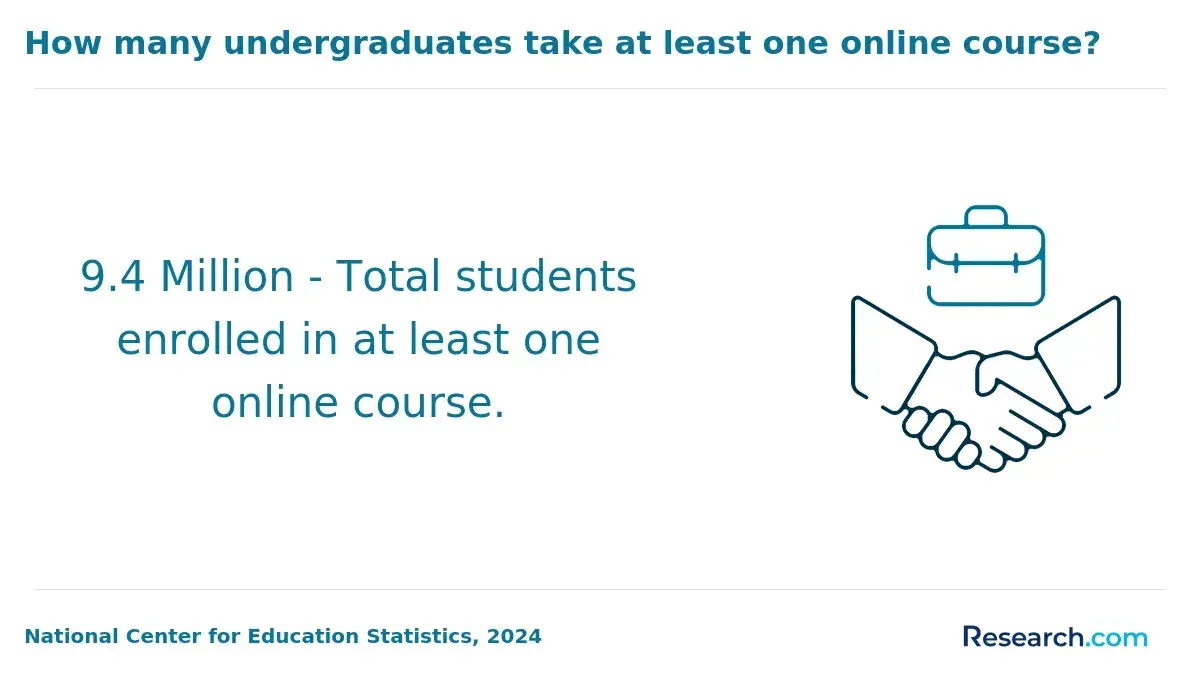
One useful context is that online learning is now a mainstream part of U.S. higher education. The National Center for Education Statistics reported in 2024 that distance education remained widely used across postsecondary institutions after the pandemic-era expansion. For corporate candidates, this means an online doctorate is not unusual, but it still needs to be explained through quality signals.
Employers are more likely to view the credential favorably when candidates can show the following:
- The degree came from an accredited institution with transparent doctoral requirements.
- The dissertation or capstone addressed a real health behavior, workforce, patient, product, or organizational problem.
- The candidate can translate statistical or research findings into business language.
- The program included ethics, privacy, research methods, and applied evaluation training.
- The candidate has relevant experience in healthcare, HR, benefits, consulting, analytics, product, or organizational leadership.
Red flags include unaccredited schools, programs with unclear dissertation standards, vague "doctor" titles that do not match employer expectations, and candidates who cannot explain how the doctorate changed their professional capabilities. For roles involving licensed psychological services, employer perception is not enough; state licensure rules determine eligibility.
Private-sector salary expectations for health psychology doctorate holders depend heavily on role, industry, geography, prior experience, leadership level, and whether the position is research-heavy, management-focused, clinical-adjacent, or consulting-based. The doctorate can improve positioning for senior roles, but it should be viewed as a strategic investment rather than a guaranteed pay increase.
The most useful way to think about salary is by target role family. BLS May 2024 wage data shows that several private-sector paths connected to health psychology expertise fall into mid-to-high professional salary bands, especially when they involve management or consulting responsibility.
| Role family | Why it may fit doctorate-level health psychology expertise | BLS May 2024 median salary | Salary interpretation |
| Medical and health services managers | Population health, behavioral health strategy, employee health programs, patient engagement | $117,960 | Relevant for leadership roles in healthcare companies, benefits organizations, and wellness vendors |
| Training and development managers | Resilience, behavior change, stress management, health behavior learning programs | $127,090 | Relevant when the role combines organizational learning with health or well-being strategy |
| Management analysts | Consulting, program evaluation, organizational health improvement, outcomes analysis | $101,190 | Relevant for advisory and consulting paths where research translation is valuable |
| Market research analysts | Digital health research, user behavior, patient adherence, health product insights | $76,950 | Relevant for research roles, though senior product research positions may use different pay structures |
| Psychologists | Behavioral science expertise, applied research, assessment, consulting, or clinical-adjacent work | $94,310 | Useful as a broad psychology benchmark, but corporate pay varies widely by specialization and licensure |
For ROI, compare total program cost with the specific role transition you are pursuing. A doctorate makes more financial sense when it supports a defined move into management, consulting, research leadership, or specialized health strategy. If your target is outside health behavior or workforce well-being, a shorter credential may produce a better return.
Salary comparisons across psychology specialties can also prevent unrealistic expectations. For example, readers comparing health psychology with legal or justice-related psychology may want to review how much do forensic psychologists make before choosing a doctoral path based only on title prestige.
How do you narrow down online Health Psychology doctorate programs for corporate goals?
Narrowing down online health psychology doctorate programs starts with your target role, not the school name. A strong program for a wellness executive may be a poor fit for a digital health researcher, and a strong research PhD may be unnecessary for someone who mainly wants leadership credibility in benefits strategy.
Use the following process to compare programs in a way that protects your time, money, and career momentum:
- Write one target outcome before looking at schools, such as "lead employee well-being strategy," "move into digital health research," or "become a behavioral health consultant."
- Decide whether you need a research-heavy PhD, an applied PsyD, or an interdisciplinary doctorate with health behavior coursework.
- Confirm accreditation and licensure disclosures, especially if you may ever want to provide psychological services.
- Review required courses for health psychology depth, research methods, statistics, evaluation, ethics, and organizational or population health relevance.
- Search faculty profiles for at least two advisors whose expertise fits your dissertation idea.
- Ask whether online students can complete applied projects with employers, healthcare organizations, wellness vendors, or digital health companies.
- Request total cost, average time-to-completion, dissertation fee structure, residency costs, and leave-of-absence rules.
- Compare career support for private-sector roles, not just academic publishing or clinical placement.
- Ask for examples of recent dissertations and where graduates work, while remembering that schools may not track outcomes by specialization.
- Choose the program that best connects curriculum, dissertation, schedule, and cost to your specific corporate goal.
Common mistakes include picking the cheapest program without checking dissertation support, assuming every psychology doctorate is useful for corporate wellness, choosing a program because of broad rankings instead of role alignment, and ignoring opportunity cost. Another mistake is choosing a doctoral path when a master's, certificate, MPH, MBA, or employer-sponsored training would meet the same career need faster.
Before enrolling, ask program advisors these questions:
- Can I design a dissertation around workplace health, employee well-being, digital health behavior, patient engagement, or benefits strategy?
- How many online students complete the program while working full time?
- What happens if my dissertation chair leaves or my topic changes?
- Are statistics, evaluation, and research software taught at a level suitable for corporate analytics or consulting roles?
- What private-sector roles have recent graduates entered, and how does the program verify those outcomes?
- What fees continue after coursework ends, and how long do students typically remain in dissertation status?
Other Things You Should Know About Health Psychology
Some do and some do not. Many online doctorates include short residencies, virtual intensives, research seminars, or dissertation milestones. Confirm the number, location, cost, and timing before applying.
Many programs are designed for working adults, but the dissertation stage can be demanding. Before enrolling, ask how many hours students typically spend each week during coursework and dissertation phases.
Requirements vary by school. Some programs accept applicants with related master's degrees in psychology, counseling, public health, social work, healthcare, or organizational fields, while others require specific psychology prerequisites.
Not necessarily. Licensure depends on program accreditation, supervised clinical training, internship requirements, exams, and state rules. Corporate-focused health or wellness psychology programs may not meet licensure requirements.
- Online and Hybrid PhD & PsyD Programs in Psychology https://www.psychologist-license.com/phd/
- PhD Applicant Advice — Global Community Health Lab https://ezerkang-howard-faculty.com/faqs-4
- Career Development https://www.healthadvances.com/careers/career-development
- Psychology Master’s Programs Online: Compare Top Schools https://www.onlinemastersdegrees.org/best-programs/psychology/
- Online PhD Degree Programs in Psychology: Top Schools & Specialisations https://henryharvin.ae/blog/online-phd-degree-programs-in-psychology-top-schools-specialisations/
- How to Become a Health Psychologist https://onlinecounselingprograms.com/mental-health-careers/how-to-become-psychologist/health-psychologist/
- Top 5 Highest-Paying Psychology Careers - Rivier Academics https://www.rivier.edu/academics/online/resources/program-resources/top-5-highest-paying-psychology-careers-rivier-university/
- Pathways to Employment - Migration and resettlement https://www.devon.gov.uk/migration-and-resettlement/key-services/refugee-employment-esol-and-enterprise-project/pathways-to-employment/
- What Can You Do With A Ph.D. In Psychology? | Psychology.org https://www.psychology.org/resources/jobs-with-a-doctorate-in-psychology/
- Psychology Accreditation: What you need to know https://www.onlinepsychologydegrees.com/articles/accreditation/