
2027 Different Types of Health Psychology Doctorate Degrees: PhD, DBA, EdD, DNP, PsyD, and Professional Doctorate Paths

Co-Founder and Chief Data Scientist
Choosing a health psychology doctorate is really a career-design decision: research, clinical practice, education, nursing leadership, and organizational strategy all point to different degrees. The U. S. Bureau of Labor Statistics projects psychologist employment to grow 7% from 2023 to 2033, making advanced specialization increasingly relevant. This guide is for students, clinicians, nurses, educators, and health professionals comparing PhD, DBA, EdD, DNP, PsyD, and related professional doctorates. You will learn what each path is built for, what trade-offs matter, and how to choose the option that fits your goals.
Key Things You Should Know
- A PhD is usually the strongest fit for health psychology research, university teaching, grant-funded scholarship, and scientist-practitioner training, while a PsyD is generally more practice-centered for clinical psychology careers that may include health psychology specialization.
- DBA, EdD, and DNP pathways are not substitutes for psychology licensure; they are best aligned with healthcare business leadership, health education or academic administration, and advanced nursing practice, respectively.
- Cost and ROI vary widely: federal graduate unsubsidized loans carry an 8.08% interest rate for 2024-2025, while the BLS reported May 2024 median pay of $94,310 for psychologists, $117,960 for medical and health services managers, and $129,210 for nurse practitioners.
What Are the Different Types of Health Psychology Doctorate Degrees?
Health psychology studies how biological, behavioral, emotional, social, and environmental factors affect health, illness, prevention, treatment adherence, pain, stress, chronic disease, and healthcare outcomes. At the doctoral level, the right degree depends less on the phrase "health psychology" and more on whether you want to produce research, provide licensed clinical services, lead healthcare organizations, teach, design programs, or practice as an advanced nurse.
One important point: in the U.S., health psychology is often a specialization, concentration, research area, or postdoctoral focus within psychology rather than a single standardized doctoral title. That means two programs with similar names can lead to very different outcomes, especially for licensure, clinical training, and academic careers.
The table below compares the main doctorate types by purpose. Use it as a first-pass filter before comparing individual programs.
| Doctorate type | Primary purpose | Typical health psychology connection | Best fit | Usually not best for |
| PhD | Research and scholarship | Behavioral medicine, prevention science, psychophysiology, health behavior change, chronic illness research | Future researchers, professors, scientist-practitioners, policy researchers | Students who want minimal research or a fast practice-only route |
| PsyD | Clinical psychology practice | Assessment, therapy, integrated care, hospital-based behavioral health, pain or chronic disease interventions | Students seeking psychology licensure and intensive clinical training | Students whose main goal is grant-funded research or tenure-track research faculty work |
| DBA | Applied business leadership | Healthcare consumer behavior, wellness strategy, patient experience, organizational health initiatives | Healthcare executives, consultants, administrators, entrepreneurs | Students seeking psychology licensure or clinical assessment authority |
| EdD | Education leadership and applied learning systems | Health education, wellness curriculum, patient education, academic program leadership | Educators, training leaders, student affairs or academic administrators | Students aiming for clinical psychology practice without a qualifying psychology doctorate |
| DNP | Advanced nursing practice and systems improvement | Behavioral health integration, patient adherence, chronic disease management, population health | APRNs, nurse practitioners, nurse executives, clinical nurse leaders | Non-nurses or students seeking psychologist licensure |
| Other professional doctorates | Applied professional expertise | Public health, rehabilitation, occupational therapy, social work, physical therapy, health administration | Licensed or specialized health professionals expanding scope or leadership | Students assuming the word "doctorate" alone creates psychology licensure eligibility |
The distinction matters because employers, licensing boards, and universities do not treat all doctorates as interchangeable. A DBA can be excellent for healthcare innovation, but it will not prepare someone to diagnose mental disorders as a psychologist. A PsyD can be excellent for clinical care, but it may not offer the same funded research apprenticeship as a research-intensive PhD.
What Is the Difference Between a PhD and a Professional Doctorate in Health Psychology?
The main difference is that a PhD is usually a research doctorate, while professional doctorates are designed to apply advanced knowledge to practice settings. In health psychology, that difference affects the kind of training you receive, the type of final project you complete, the faculty you should seek, and the jobs for which the degree is most credible.
The comparison below summarizes the practical differences students should review before applying. It is especially useful if you are choosing between academic research, clinical practice, and applied healthcare leadership.
| Factor | PhD in or related to health psychology | Professional doctorate such as PsyD, DBA, EdD, DNP, DrPH, or DHSc |
| Core goal | Create original knowledge through research | Apply evidence to clinical, educational, organizational, or healthcare problems |
| Training emphasis | Research design, statistics, theory, publishing, teaching, grants | Practice improvement, leadership, intervention, program evaluation, applied decision-making |
| Final project | Usually a dissertation based on original research | May require a dissertation, doctoral project, capstone, quality improvement project, or applied portfolio |
| Faculty match | Research mentor fit is often central | Professional expertise, practicum network, clinical sites, or organizational partnerships may matter more |
| Funding pattern | Research PhD programs may offer assistantships or stipends, especially full-time campus programs | Professional doctorates are often tuition-driven and commonly designed for working adults |
| Career alignment | Research scientist, professor, policy analyst, clinical researcher, academic psychologist | Clinician, executive, educator, advanced nurse, program director, consultant, systems leader |
A research doctorate is not automatically "better," and a professional doctorate is not automatically "easier." The better degree is the one that matches the work you want to do. For example, if you want to study how stress biology affects cardiovascular outcomes, a PhD is typically the cleaner path. If you want to improve behavioral health workflows in a hospital system, a DNP, DBA, DrPH, or DHSc may be more directly applicable, depending on your professional background.
Be especially careful with licensure assumptions. Psychology licensure usually requires a doctoral degree in clinical, counseling, or school psychology from an appropriate program, supervised clinical experience, internship requirements, and state board approval. A doctorate focused on leadership, education, public health, or business generally does not qualify a graduate to practice independently as a psychologist.
What Is a PhD in Health Psychology and Who Should Pursue One?
A PhD in health psychology, clinical psychology with a health emphasis, counseling psychology with a health focus, behavioral medicine, or a related psychology field is built for students who want deep research training. It is the most common doctoral route for people who want to design studies, publish, teach at universities, lead research teams, or evaluate behavioral interventions in healthcare settings.
Choose a PhD if your long-term goal involves asking research questions such as why patients do or do not follow treatment plans, how stress affects immune function, how culture shapes health behavior, or which interventions improve outcomes for people with chronic illness. Many PhD programs also include clinical training when they are housed in clinical or counseling psychology, but the research expectation is usually substantial.
A PhD may be the right path if several of the following apply to you:
- You want to become a researcher, professor, clinical scientist, behavioral medicine specialist, or principal investigator.
- You are comfortable with statistics, research methods, academic writing, peer-reviewed literature, and multi-year dissertation work.
- You want the option to pursue funded doctoral study through assistantships, fellowships, or grant-supported research teams.
- You are considering psychology licensure and are applying to a clinical or counseling psychology PhD program that meets state and professional training expectations.
- You want to work in hospitals, universities, public health agencies, research institutes, or academic medical centers.
A PhD may not be ideal if you want a primarily practice-oriented degree with less research, if you need a part-time executive format, or if your main interest is healthcare management rather than psychological science. Students still preparing for doctoral-level psychology study often begin with a master's pathway; for example, an online clinical psychology masters can help some learners build foundational knowledge before deciding whether doctoral clinical training is the right next step.
When evaluating PhD programs, look beyond the degree title. Strong fit usually depends on faculty research areas, publication opportunities, funding, practicum access, internship match history, accreditation status, and whether the program's graduates enter the kinds of roles you want. If licensure is part of your plan, check the requirements of the state where you intend to practice before enrolling.
How Does a DBA Compare With a PhD for Health Psychology Professionals?
A DBA, or Doctor of Business Administration, is a professional doctorate for experienced professionals who want to apply business research to organizational problems. For health psychology professionals, a DBA may make sense when the career goal is healthcare leadership, patient experience strategy, workplace wellness, behavior-informed management, digital health entrepreneurship, or consulting rather than clinical psychology practice.
The DBA-versus-PhD decision often comes down to whether you want to study health behavior as a scholar or use behavioral evidence to improve business and operational decisions. The BLS reported a May 2024 median annual wage of $117,960 for medical and health services managers, which helps explain why some health professionals pursue business-focused doctorates; however, that figure represents an occupation category, not a guaranteed outcome from any specific degree.
The table below shows when a DBA may be a better fit than a PhD and when it may not serve the reader's goals.
| Decision point | DBA path | PhD path |
| Main question | How can organizations solve applied business and leadership problems? | How can original research advance psychological or behavioral science? |
| Health psychology relevance | Patient engagement, wellness markets, healthcare operations, employee health strategy | Stress, behavior change, chronic illness, health disparities, intervention science |
| Typical student | Mid-career manager, executive, consultant, entrepreneur, administrator | Research-oriented student, academic candidate, scientist-practitioner |
| Project style | Applied dissertation or consulting-style research on an organizational problem | Original empirical dissertation contributing to scholarly literature |
| Credential limitation | Does not prepare for psychology licensure | May support licensure only if the program is an appropriate clinical, counseling, or school psychology doctorate |
A DBA can be powerful if you already understand health behavior and want to lead programs that change systems, such as reducing burnout, improving patient adherence, or designing consumer health platforms. It is usually the wrong choice if your goal is psychotherapy, psychological testing, university psychology faculty hiring, or clinical supervision as a licensed psychologist.
When Is an EdD the Right Doctorate Path for Health Psychology Professionals?
An EdD, or Doctor of Education, is best for health psychology professionals who want to lead learning, training, curriculum, student support, behavioral health education, wellness education, or academic programs. It is usually more applied than a PhD in education and more education-centered than a DBA or DNP.
The EdD becomes especially relevant when health psychology overlaps with teaching and behavior change. Examples include designing patient education programs, training healthcare workers in motivational interviewing, leading campus wellness initiatives, improving mental health literacy, or building health behavior curricula for schools and communities.
Consider an EdD if these goals describe your intended work:
- You want to lead health education, wellness education, academic affairs, student support, or workforce training programs.
- You are interested in learning systems, curriculum design, program evaluation, and applied educational leadership.
- You want a practitioner-oriented doctoral project that addresses a real educational or organizational problem.
- You work in a university, school system, nonprofit, hospital education office, corporate training unit, or community health setting.
- You do not need the doctorate itself to qualify you for psychology licensure.
An EdD may be less appropriate if your main goal is independent clinical practice as a psychologist, advanced nursing practice, or laboratory-based research. It can, however, be a strong fit for professionals who want to translate health psychology evidence into learning experiences that improve behavior, prevention, and care engagement.
Students interested in developmental and family-focused health behavior sometimes explore child psychology master's programs before deciding whether an EdD, PhD, PsyD, or another doctoral path best matches their long-term work with children, adolescents, schools, or family health systems.
When Does a DNP Make Sense for a Health Psychology Doctorate Path?
A DNP, or Doctor of Nursing Practice, makes sense when the student is a nurse seeking advanced clinical practice, systems leadership, population health, or quality improvement roles. It is not a psychology doctorate, but it can connect strongly to health psychology through patient behavior, adherence, chronic disease management, mental health integration, pain care, substance use, stress, and lifestyle intervention.
The DNP is especially relevant for nurse practitioners and advanced practice registered nurses who work with patients whose physical conditions are shaped by behavior, stress, social context, or mental health. According to BLS data, nurse practitioners had a May 2024 median annual wage of $129,210, and employment for nurse anesthetists, nurse midwives, and nurse practitioners is projected to grow much faster than average from 2023 to 2033. For nurses, that labor-market context can make a practice doctorate more directly career-aligned than a psychology PhD.
A DNP may be the right doctorate path when your goal is to improve care delivery rather than conduct psychology research. Common DNP health psychology connections include:
- Integrating behavioral health screening into primary care or specialty clinics.
- Improving treatment adherence for diabetes, cardiovascular disease, cancer care, pain, or substance use.
- Designing quality improvement projects that reduce readmissions or improve patient self-management.
- Leading nursing teams that address burnout, trauma-informed care, and patient communication.
- Using evidence-based behavioral interventions within the scope of advanced nursing practice.
A DNP is usually not the right choice for someone who is not a nurse or for someone whose goal is to become a licensed psychologist. Its value is highest when it builds on nursing licensure, clinical experience, and a clear plan for advanced practice or healthcare systems improvement.
How Does a PsyD Compare With a PhD for Health Psychology Students?
A PsyD, or Doctor of Psychology, is usually designed for students who want to become practicing psychologists. Compared with many PhD programs, PsyD programs often place more emphasis on clinical training, assessment, psychotherapy, supervision, and applied practice, although quality research and dissertation requirements still exist in many programs.
For students interested in health psychology, a PsyD can be a strong fit if the program offers relevant practica, internship pathways, supervisors, and coursework in areas such as integrated primary care, pain psychology, psycho-oncology, rehabilitation psychology, sleep, chronic illness, trauma, or behavioral medicine. The BLS reported May 2024 median pay of $94,310 for psychologists overall, but actual earnings vary by specialty, setting, licensure, region, and experience.
The PhD-versus-PsyD comparison below can help students decide whether they are more motivated by clinical practice or research-intensive training.
| Factor | PsyD | PhD |
| Best-known purpose | Clinical practice and applied psychology | Research, teaching, and scientific contribution |
| Health psychology fit | Clinical work with patients managing illness, stress, pain, adherence, or adjustment | Research on health behavior, interventions, prevention, or clinical mechanisms |
| Research intensity | Varies, but often less research-heavy than PhD programs | Usually extensive research apprenticeship and dissertation expectations |
| Clinical preparation | Often central to the program model | Strong in accredited clinical or counseling PhD programs, but balanced with research |
| Funding pattern | Often less likely to be fully funded, though scholarships and assistantships vary | More likely to include funding in research-intensive full-time programs, though not guaranteed |
| Best for | Future licensed psychologists focused on patient care | Future researchers, professors, clinical scientists, or scientist-practitioners |
The biggest PsyD red flag is assuming that any PsyD will automatically meet licensure expectations everywhere. Students should verify accreditation, internship outcomes, supervised clinical hour requirements, state board rules, and whether the program has health-focused placements. Those still exploring practice areas may also compare related master's options, including forensic psychology master's programs, before committing to a clinical doctorate.
What Other Professional Doctorate Degrees Are Available for Health Psychology Students?
Health psychology overlaps with public health, rehabilitation, occupational health, social work, counseling, physical medicine, health administration, and behavioral health policy. Because of that, some students may find a different professional doctorate more useful than a PhD, DBA, EdD, DNP, or PsyD.
The table below summarizes other doctorate options that may connect to health psychology through prevention, rehabilitation, systems change, or behavioral health practice. These degrees have different scopes and should be evaluated against licensing rules and career goals.
| Degree | Primary focus | Health psychology connection | Best-fit career direction |
| DrPH | Public health leadership | Population behavior, prevention, health disparities, community intervention | Public health executive, health policy leader, program director |
| DHSc or DHS | Health sciences leadership | Interprofessional care, evidence translation, health systems improvement | Health sciences educator, clinical leader, healthcare consultant |
| DSW | Advanced social work practice or leadership | Behavioral health, trauma, chronic illness support, community care | Clinical social work leader, social services administrator, practice innovator |
| OTD | Occupational therapy practice | Functional adaptation, disability, rehabilitation, behavior and daily living | Occupational therapist, rehabilitation leader, academic clinical educator |
| DPT | Physical therapy practice | Pain behavior, rehabilitation adherence, movement, recovery psychology | Physical therapist, rehab specialist, clinical director |
| PhD in Public Health or Behavioral Health | Research | Health behavior science, epidemiology, prevention, intervention studies | Researcher, professor, policy analyst, evaluation scientist |
These alternatives are useful when your goal is not to become a psychologist but to work on health behavior from another professional angle. For example, a public health professional may be better served by a DrPH than a PsyD, while a rehabilitation clinician may find an OTD or DPT more relevant than a psychology doctorate.
Specialization also matters. Students drawn to law, trauma, assessment, or justice-involved populations may compare career outcomes and salary context by reviewing resources on how much do forensic psychologists make, then decide whether forensic, clinical, health, or counseling psychology is the better long-term focus.
How Long Do Health Psychology Doctorate Degrees Take, and What Are the Admissions and Cost Requirements?
Health psychology doctorate timelines vary because doctoral programs are structured around different outcomes. A funded full-time PhD may take longer but include research assistantships. A professional doctorate may be designed for working adults but charge tuition over more semesters. A PsyD may include extensive clinical practica and a full-time internship. A DNP may depend on whether the student enters with a BSN, MSN, APRN certification, or another nursing background.
The table below provides general U.S. planning ranges. Individual schools vary, so students should confirm credit hours, residency expectations, clinical placements, dissertation rules, and total cost of attendance before applying.
| Degree type | Common time range | Common admissions profile | Major cost drivers | Typical culminating requirement |
| PhD | 4 to 7+ years | Bachelor's or master's degree, research fit, statistics preparation, writing sample, recommendations | Funding availability, full-time enrollment, assistantship limits, living expenses | Original research dissertation |
| PsyD | 4 to 6+ years | Psychology coursework, clinical exposure, recommendations, statement of purpose, sometimes master's-level preparation | Tuition, practicum travel, internship year, licensing exam preparation | Dissertation or doctoral project plus clinical internship |
| DBA | 3 to 5 years | Master's degree, professional experience, leadership goals, applied research interest | Part-time tuition, executive format fees, travel residencies, employer support availability | Applied dissertation or consulting-style doctoral project |
| EdD | 3 to 5 years | Education or related master's degree, leadership experience, professional goals | Tuition, cohort fees, technology fees, residency requirements | Dissertation in practice or applied doctoral project |
| DNP | 2 to 4+ years after MSN; longer from BSN | Nursing degree, RN license, clinical experience, APRN goals or credentials depending on track | Clinical placement support, tuition, certification preparation, reduced work hours | DNP scholarly or quality improvement project |
| Other professional doctorate | 2 to 5+ years | Varies by profession and licensure background | Clinical hours, residencies, equipment, insurance, fieldwork, lost wages | Capstone, dissertation, clinical project, portfolio, or practicum requirement |
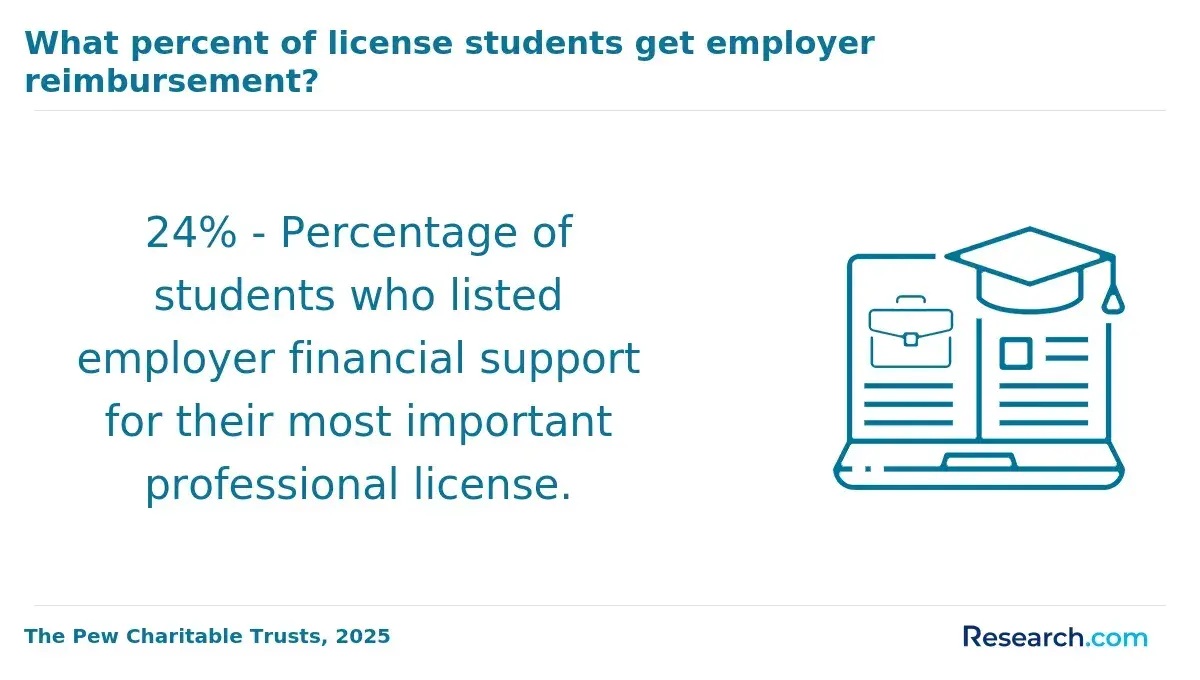
Cost should be evaluated as total cost, not just tuition. NCES data published in 2024 shows that average graduate tuition and required fees remain substantially different between public and private nonprofit institutions, which means school type can materially affect borrowing. Federal graduate loan rates also matter: for 2024-2025, Direct Unsubsidized Loans for graduate students carry an 8.08% interest rate, while Direct PLUS Loans carry a 9.08% interest rate. Those rates make funding, assistantships, employer tuition support, and time-to-completion central ROI questions.
Before choosing a program, complete these checks in order:
- Confirm whether the degree type actually supports your target role, especially if licensure is involved.
- Check institutional accreditation and, when relevant, programmatic accreditation in psychology, nursing, public health, counseling, education, or rehabilitation.
- Ask for total cost of attendance, not only per-credit tuition.
- Review completion rates, internship or practicum placement outcomes, dissertation expectations, and student support services.
- Compare faculty expertise with your intended health psychology interest, such as pain, chronic illness, prevention, stress, integrated care, or population health.
- Ask whether online or hybrid coursework satisfies residency, clinical, internship, and state authorization requirements in your location.
- Calculate opportunity cost, including reduced work hours, relocation, internship pay, and loan interest during enrollment.
Common mistakes include choosing the cheapest program without checking licensure fit, assuming online delivery eliminates clinical placement barriers, ignoring dissertation workload, and enrolling in a professional doctorate because it sounds prestigious rather than because it fits a defined career outcome.
Which Health Psychology Doctorate Is Best for Your Career Goals: PhD, DBA, EdD, DNP, PsyD, or Another Professional Doctorate?
The best health psychology doctorate is the one that matches your intended work setting, professional identity, licensure needs, research appetite, and financial reality. A student who wants to publish intervention studies needs a different pathway than a nurse who wants to lead behavioral health integration or an administrator who wants to improve patient experience across a healthcare system.
Use the following decision guide as a practical way to narrow your options. It does not replace program-specific research, but it can prevent the most expensive mismatch: earning a doctorate that does not support your intended role.
| If your main goal is... | Most likely degree fit | Why | Key caution |
| University research and teaching in health psychology | PhD | Strongest alignment with research methods, dissertation scholarship, publishing, and academic hiring | Funding and faculty mentor fit are critical |
| Licensed clinical practice with health psychology specialization | PsyD or clinical/counseling psychology PhD | Both can support clinical training when properly accredited and structured | Licensure rules vary by state and program |
| Healthcare executive leadership using behavioral evidence | DBA, DHA, DHSc, or DrPH | These degrees emphasize applied strategy, systems, operations, and organizational improvement | They do not create psychology practice authority |
| Health education, academic leadership, or wellness curriculum | EdD | Best fit for learning systems, program evaluation, training, and education leadership | Not a substitute for clinical psychology training |
| Advanced nursing practice or nursing systems improvement | DNP | Designed for nurses applying evidence to patient care, quality improvement, and leadership | Requires nursing background and does not confer psychologist licensure |
| Population health, prevention, or health disparities leadership | DrPH or PhD in public health | Connects behavior, policy, epidemiology, and community intervention | Choose DrPH for leadership, PhD for research |
| Rehabilitation, disability, or functional health behavior | OTD, DPT, rehabilitation PhD, or PsyD depending on role | Health psychology overlaps with adjustment, pain, function, adherence, and recovery | Scope of practice differs sharply by profession |
If you are still unsure, ask yourself these questions before contacting admissions offices:
- Do I want to create original research, apply research in practice, or lead systems that use research?
- Do I need a license, and if so, which license, in which state, and under which board?
- Do I want my daily work to involve patients, students, staff, datasets, policy, programs, or executive decisions?
- Am I willing to complete a traditional dissertation, or would an applied doctoral project better fit my work style?
- Can I afford the total cost after factoring in loan interest, reduced work time, travel, clinical placement costs, and internship requirements?
- Does the program have faculty, placements, and graduate outcomes in the exact health psychology area I care about?
A good final rule is this: choose the doctorate that qualifies you for the work you want to do most often, not the title that sounds broadest. For research and academia, start with the PhD. For clinical psychology practice, compare PsyD and accredited clinical or counseling PhD programs. For business, education, nursing, public health, or rehabilitation leadership, choose the professional doctorate tied to that profession's scope and expectations.
Other Things You Should Know About Health Psychology
Not necessarily. In the U.S., the title "psychologist" is regulated by state licensing boards. A DBA, EdD, DNP, DrPH, or DHSc may support health-related leadership work, but it usually does not authorize someone to practice as a psychologist.
No. Clinical psychology is a broader professional field focused on assessment, diagnosis, and treatment of mental and behavioral disorders. Health psychology is a specialty area focused on how behavior, stress, illness, prevention, and healthcare systems affect health outcomes.
It can, depending on the degree and career goal. Online or hybrid formats may work well for DBA, EdD, DNP, DrPH, or some applied programs, but clinical psychology licensure pathways often require in-person practica, internship training, state authorization, and strict accreditation review.
Start with your target role, then work backward. Confirm licensure rules, accreditation, clinical or field placement requirements, total cost, faculty fit, graduation outcomes, and whether the final project matches the kind of work you want to do after graduation.
References
- Health psychology: options after stage 2 | ClinPsy https://clinpsy.com/threads/health-psychology-options-after-stage-2.17498/
- What Can You Do With A Ph.D. In Psychology? | Psychology.org https://www.psychology.org/resources/jobs-with-a-doctorate-in-psychology/
- How to Become a Psychologist https://onlinecounselingprograms.com/mental-health-careers/how-to-become-psychologist/
- Average Cost of a Doctorate Degree [2026]: Ph.D., Psy.D. & More https://educationdata.org/average-cost-of-a-doctorate-degree
- A Definitive Guide to Psychology Graduate Degrees and Trending Career Opportunities https://paloaltou.edu/resources/blog/definitive-guide-psychology-graduate-degrees-and-trending-career-opportunities
- Doctorate in Psychology | Psychology Degree Guide https://psychologydegreeguide.org/degree/doctorate-degree/
- The Psychology License Map: A State-by-State Guide https://www.onlinemastersdegrees.org/student-resources/psychology/licensure-by-state/
- Health Psychology https://www.staffs.ac.uk/course/health-psychology-professional-doctorate


