2027 Online vs On-Campus Adult Gerontology Primary Care Nurse Practitioner Doctorate Programs: Cost, Flexibility, and Employer Perception

Co-Founder and Chief Data Scientist
The biggest decision is not whether an Adult Gerontology Primary Care Nurse Practitioner doctorate can advance your practice; it is whether the format fits your budget, schedule, and career plan. BLS projects nurse practitioner employment to grow 46% from 2023 to 2033, making program choice timely for working nurses.
This guide is for RNs, BSN-prepared nurses, MSN-prepared NPs, and career changers comparing online and campus-based doctorate options. You will learn how cost, flexibility, clinical requirements, dissertation or DNP project support, and employer views should shape your decision.
Key Things to Know About Online vs On-Campus Adult Gerontology Primary Care Nurse Practitioner Doctorate Programs
- Online and on-campus AGPCNP doctorate programs usually lead to the same credential when they share the same accreditation, curriculum standards, faculty oversight, and state authorization; the format changes delivery, not the expected clinical competence.
- The largest cost difference is often not tuition alone: online students may save on relocation and commuting, while campus students may gain easier access to assistantships, simulation labs, faculty offices, and local clinical networks.
- Doctoral AGPCNP students should plan around major fixed requirements, including advanced nursing coursework, supervised clinical practice, and the DNP standard of at least 1,000 post-baccalaureate practice hours; these expectations apply regardless of format.
What are the key differences between online vs on-campus Adult Gerontology Primary Care Nurse Practitioner doctorate programs?
Online and on-campus Adult Gerontology Primary Care Nurse Practitioner doctorate programs differ most in delivery, day-to-day structure, campus access, and how students build professional relationships. The core academic goal is the same: prepare advanced practice nurses to provide primary care to adults and older adults across settings such as internal medicine, geriatrics, community clinics, long-term care, and specialty primary care practices.
Most AGPCNP doctorate pathways are Doctor of Nursing Practice programs. Some nurses may also consider research-focused doctorates, but a PhD is not usually the direct route to AGPCNP clinical preparation. If you are comparing online nurse practitioner programs, confirm whether the program is designed for initial NP preparation, post-master's doctoral completion, or an added population focus.
The table below summarizes the practical format differences that usually matter most before applying. Use it to separate true academic requirements from format-related conveniences or limitations.
| Comparison factor | Online AGPCNP doctorate | On-campus AGPCNP doctorate | Decision impact |
| Course delivery | Usually asynchronous, synchronous, or hybrid online coursework | Scheduled in-person classes, labs, and seminars | Online favors working nurses; campus favors learners who want fixed structure |
| Clinical preparation | Completed in approved local or regional sites, depending on state authorization | Often completed through university-affiliated regional partners | Clinical placement support can matter more than format |
| Faculty access | Virtual office hours, online advising, teleconferencing, learning platforms | In-person office hours, lab access, campus advising | Students needing frequent face-to-face mentoring may prefer campus |
| Peer networking | Online cohort forums, residencies, virtual project groups | Campus cohorts, local events, interprofessional activities | Campus may offer easier informal networking; online may offer broader geographic networks |
| Best fit | Licensed nurses balancing work, family, and geographic limits | Students who can relocate or commute and want immersive campus support | The stronger choice depends on life constraints and learning style |
A key mistake is assuming "online" means independent or casual. Strong online AGPCNP doctorates still require proctored assessments, supervised clinical hours, faculty evaluation, population-focused competencies, and sustained scholarly work.
Are online Adult Gerontology Primary Care Nurse Practitioner doctorate programs as rigorous as on-campus programs?
Online AGPCNP doctorate programs can be just as rigorous as on-campus programs when they are accredited, meet state authorization rules, use qualified faculty, and require the same clinical and scholarly outcomes. Rigor is determined by admissions standards, curriculum depth, clinical evaluation, faculty engagement, exam expectations, and project oversight-not by whether lectures are delivered in a classroom or through a learning platform.
The most important quality checkpoint is accreditation. For nurse practitioner education, students should verify institutional accreditation and nursing program accreditation, commonly through CCNE or ACEN, and confirm that the AGPCNP track supports the certification exam and licensure pathway required in the state where they plan to practice.
Use the following checks to judge academic quality before assuming one format is stronger than the other:
- Confirm that the exact AGPCNP doctorate track, not just the university, is accredited or included under the nursing school's accredited offerings.
- Ask whether online and on-campus students take the same core courses, advanced pathophysiology, pharmacology, assessment, diagnostics, and population-focused clinical content.
- Review how clinical performance is evaluated, including site visits, preceptor feedback, simulation, objective structured clinical exams, and faculty review.
- Ask how often students interact with faculty during clinical courses and the DNP project or dissertation phase.
- Request current student outcome information, such as certification pass rates, completion trends, and time-to-degree, when available.
Recent federal and accreditor-facing reporting increasingly emphasizes outcomes rather than seat location, which is why employers and licensing bodies usually focus on accreditation, certification eligibility, and clinical competence. However, a program that hides outcome data, cannot explain clinical placement support, or treats online students as separate from faculty governance deserves caution.
How does scheduling flexibility differ between online and on-campus Adult Gerontology Primary Care Nurse Practitioner doctorate programs?
Scheduling flexibility is where online and on-campus AGPCNP doctorate programs often diverge sharply. Online programs may allow students to keep working while completing weekly modules, recorded lectures, virtual discussions, and scheduled clinicals. On-campus programs usually require more predictable attendance, which can help students who need external structure but can be difficult for nurses with rotating shifts.
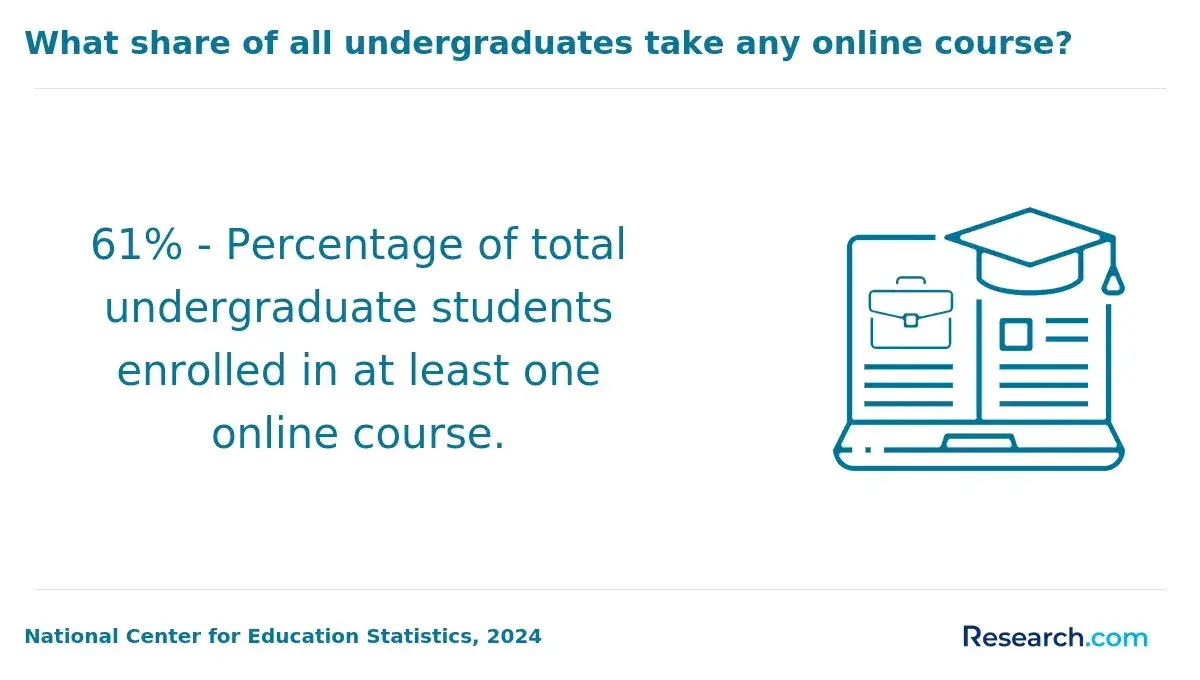
National data supports why flexibility matters: the National Center for Education Statistics' 2024 reporting shows that distance education remains a major part of U.S. graduate enrollment after its pandemic-era expansion. For AGPCNP students, that trend reflects a practical reality: many applicants are already licensed nurses who cannot pause employment for full-time campus study.
The table below compares typical scheduling patterns. It is not a substitute for a program calendar, but it helps you identify where hidden time conflicts usually appear.
| Schedule feature | Online format | On-campus format | What to verify |
| Weekly coursework | Often asynchronous with deadlines; some live sessions | Set class times on specific days | Whether live attendance is mandatory |
| Clinical hours | Scheduled around approved site and preceptor availability | Scheduled around affiliated clinical sites and course blocks | Whether weekend or evening clinical placements are realistic |
| Residencies | May require short campus visits or intensives | Built into regular campus attendance | Travel dates, costs, and required days away from work |
| Pacing | Often part-time, full-time, or cohort-based | More often term-based and cohort-driven | Whether slowing down affects financial aid or clinical sequencing |
Online study makes sense if you are disciplined, comfortable with digital communication, and need to fit coursework around employment. Campus study may be better if you learn best through in-person discussion, want frequent lab access, or need a structured weekly routine to stay on track.
Fieldwork is not optional in either format. Adult Gerontology Primary Care Nurse Practitioner doctorate programs require supervised clinical experiences that develop primary care judgment, diagnostic reasoning, prescribing readiness, care coordination, chronic disease management, and older-adult assessment skills. The format mainly changes how clinical sites are arranged and monitored.
For DNP students, national DNP guidance is built around at least 1,000 post-baccalaureate practice hours. Students entering with an MSN may be able to apply previously completed graduate practice hours, but schools decide how many hours count and whether additional AGPCNP-specific clinical hours are required.
Clinical placement is one of the highest-stakes comparison points, so ask direct questions before enrolling:
- Does the school find clinical placements, assist with placements, or require students to secure their own preceptors?
- Are there approved AGPCNP sites in your state, city, or rural region?
- Does the program have state authorization to enroll students where you live?
- Are telehealth, long-term care, internal medicine, geriatric, and community-based primary care settings accepted?
- How does the faculty evaluate preceptors and intervene if a placement falls through?
- Will the program's clinical experiences satisfy your state board and certification eligibility requirements?
Online programs can be excellent for students who already have strong local healthcare networks. On-campus programs can be advantageous when the nursing school has long-standing clinical partnerships, especially in competitive urban markets where preceptors are difficult to secure independently.
The dissertation process depends on the type of doctorate. In most AGPCNP clinical doctorates, students complete a DNP scholarly project rather than a traditional dissertation. A DNP project applies evidence to improve practice, quality, safety, care delivery, or outcomes. A PhD dissertation, by contrast, is original research designed to contribute new knowledge.
Online and on-campus students usually follow similar project milestones: topic development, faculty approval, literature review, project design, implementation, evaluation, and final defense or presentation. The main difference is the support environment. Online students may rely on virtual advising, remote project meetings, and digital writing support, while campus students may have easier access to in-person faculty meetings, research offices, and peer writing groups.
Before choosing a format, evaluate project support using these practical steps:
- Ask how project chairs are assigned and whether students can request faculty with AGPCNP or gerontology expertise.
- Review the expected timeline from proposal to implementation, including what happens if a clinical site delays approval.
- Confirm whether online students receive the same library, statistics, writing, and evidence-based practice support as campus students.
- Ask how often students meet with project faculty and whether meetings are required at fixed times.
- Find out whether students can complete projects in their workplace or must use a school-approved external site.
A common red flag is a program that heavily advertises flexibility but cannot explain its project mentoring model. For doctoral students, weak project support can delay graduation and increase cost even when tuition looks affordable.
Tuition comparisons are more complicated than "online is cheaper" or "campus is worth more." U.S. universities price AGPCNP doctorate programs by credit, term, residency status, delivery mode, or school of nursing fee structure. Some online public programs charge one rate for all students, while some campus programs still separate in-state and out-of-state tuition.
No federal dataset isolates average tuition specifically for online versus on-campus AGPCNP doctorate programs. The most reliable comparison is therefore school-by-school using published tuition and required credits. NCES data released in 2024 remains useful context because it shows that graduate tuition varies widely by control of institution, so institution type and residency status can influence price as much as delivery format.
The table below shows the tuition items you should compare rather than relying on the advertised per-credit rate alone. It is designed to help you make an apples-to-apples comparison between formats.
| Tuition factor | Online AGPCNP doctorate | On-campus AGPCNP doctorate | Why it matters |
| Per-credit tuition | May be flat-rate, regardless of state residency | May vary for in-state and out-of-state students | A lower campus rate may disappear if you are not a resident |
| Required credits | Varies by BSN-to-DNP, MSN-to-DNP, or post-master's pathway | Varies by entry point and curriculum plan | Total tuition depends on credits, not just rate |
| Program fees | Technology, online learning, clinical tracking, proctoring | Campus, lab, simulation, student services, health fees | Fees can narrow or reverse the tuition difference |
| Residency costs | Travel and lodging for intensives, if required | Ongoing commuting, parking, or relocation | Attendance costs can be substantial even when tuition is similar |
| Financial aid access | Federal aid may be available if eligible and enrolled in an approved program | Federal aid, assistantships, and campus employment may be available | Aid availability can change net price |
If your main concern is affordability, compare at least three total-cost scenarios: online from your current location, campus as an in-state commuter, and campus with relocation. Students exploring shorter routes may also want to compare accelerated nurse practitioner programs, but speed should not outweigh accreditation, clinical quality, or certification eligibility.
Cost of attendance includes tuition, fees, books, technology, travel, clinical compliance, lost work time, childcare, housing, and loan interest. For many AGPCNP doctoral students, the real difference between online and campus formats is not the posted tuition but the indirect cost of participating in the program.
The most recent federal student aid framework requires schools to publish a cost of attendance estimate, but those estimates may not capture your full reality as a working nurse. For example, a campus program may include transportation and living expenses, while an online program may underestimate residency travel or the income lost during weekday clinical rotations.
The table below breaks down the expenses that most often change by format. Use it as a personal budgeting checklist before accepting admission.
| Cost category | Online student consideration | On-campus student consideration | Budgeting note |
| Housing | Usually no relocation if the student can complete clinicals locally | May require relocation or living near campus | Can be the largest non-tuition difference |
| Transportation | Travel to clinical sites and any campus residencies | Regular commuting, parking, fuel, or transit | Clinical distance matters in both formats |
| Technology | Reliable computer, webcam, software, broadband, proctoring tools | Still needed, but campus labs may reduce some needs | Online students should not underbudget technology |
| Clinical compliance | Background checks, immunizations, drug screening, health records, tracking platforms | Similar compliance requirements | Usually required regardless of format |
| Employment impact | May allow continued work, but clinical terms may reduce hours | Fixed class times may make full-time work harder | Lost income can exceed fee differences |
A practical way to compare cost is to build a two-year or three-year cash-flow estimate rather than looking only at tuition. Include the months when clinical hours peak, because those terms often create the greatest work-schedule disruption.
Employers generally care more about licensure, certification, accreditation, clinical competence, and experience than whether a doctoral course was online or on campus. For AGPCNP roles, hiring managers typically evaluate whether the candidate can assess adults and older adults, manage chronic conditions, prescribe appropriately under state rules, coordinate care, and communicate well with patients and teams.
BLS wage data released for U.S. nurse practitioners shows a median annual wage of $129,210 in 2024. That figure is not specific to AGPCNP doctorate graduates or program format, but it helps frame the labor market: employers are hiring into a high-skill clinical role where demonstrated readiness matters more than classroom location.
Employer acceptance of online doctoral credentials has improved as accredited universities have expanded hybrid and online nursing pathways. However, not all online programs carry the same reputation. A strong online program should be able to document accreditation, clinical oversight, faculty qualifications, certification preparation, and graduate outcomes.
If you want to understand how employers in your area view online credentials, take these steps before enrolling:
- Search job postings for AGPCNP, adult-gerontology NP, primary care NP, geriatric NP, and internal medicine NP roles to see whether employers specify degree format.
- Ask local healthcare recruiters whether they distinguish online and campus doctorates when the program is accredited.
- Contact alumni from both formats and ask how their credential was discussed during interviews.
- Confirm whether major clinical employers in your region already precept or hire graduates from the programs you are considering.
- Prioritize programs with transparent certification preparation and clinical evaluation over programs that only market convenience.
Employer perception can be more sensitive in competitive academic medical centers, specialty clinics, and leadership roles. In those settings, the school's clinical partnerships, faculty reputation, and your practicum experience may influence perception more than modality alone.
Program format alone usually does not determine job prospects for AGPCNP doctorate graduates. Job prospects are more strongly shaped by certification eligibility, state licensure, clinical experience, geographic demand, preceptor networks, and the reputation of the nursing school or health system partnerships.
The labor market is favorable for nurse practitioners overall: BLS projects 46% employment growth for nurse practitioners from 2023 to 2033. That projection does not separate online and on-campus graduates, so it should be used as a broad demand signal rather than a guarantee of employment after a specific program.
Online programs may help students remain embedded in their current healthcare market, which can support job prospects if they complete clinicals near employers that are hiring. On-campus programs may improve access to faculty referrals, academic health system rotations, and local alumni networks. The better choice depends on where you want to work after graduation.
Students comparing AGPCNP with other NP pathways should also consider population focus. For example, nurses weighing an FNP to acute care NP transition should be clear that AGPCNP primary care is different from acute care preparation, even though both may serve adult and older adult patients.
Do not choose a format because you assume it will automatically open more jobs. Instead, ask whether the program gives you access to the patient populations, preceptors, clinical settings, and professional references that align with your target role.
How do you choose between online and on-campus Adult Gerontology Primary Care Nurse Practitioner doctorate programs?
Choosing between online and on-campus AGPCNP doctorate programs should start with your career goal, not the delivery format. A nurse aiming for rural primary care while keeping a current job may benefit from a well-supported online program with local clinical approval. A nurse seeking academic medical center networks, campus research resources, or frequent in-person faculty contact may prefer an on-campus or hybrid doctorate.
Use a structured process so convenience does not overshadow quality. The steps below help you narrow the field without missing critical risks.
- Define your target outcome: direct primary care practice, clinical leadership, geriatric care coordination, faculty work, quality improvement, or policy-oriented practice.
- Verify accreditation, state authorization, certification eligibility, and whether the program supports AGPCNP primary care specifically.
- Compare total cost of attendance, including fees, travel, technology, lost income, and clinical compliance costs.
- Ask for a written explanation of clinical placement responsibilities and preceptor support in your location.
- Review the DNP project or dissertation support structure, including faculty assignment, timelines, and completion expectations.
- Evaluate scheduling fit honestly, including work shifts, family responsibilities, clinical-hour availability, and your need for structure.
- Speak with current students or recent graduates from the exact format you are considering.
- Check employer signals in your target market by reviewing job ads, recruiter feedback, and alumni placement patterns.
Red flags apply to both formats: unclear accreditation, vague clinical placement promises, no transparent faculty access, unusually aggressive recruiting, hidden fees, weak certification preparation, and pressure to enroll before you understand state licensure requirements. If you are looking for the easiest NP program, be careful not to confuse manageable structure with low standards; AGPCNP doctoral preparation should be demanding because it leads to advanced clinical responsibility.
The best format is the one you can complete without compromising clinical preparation, financial stability, licensure eligibility, or your long-term employment goal.
Other Things You Should Know About Adult Gerontology Primary Care Nurse Practitioner
Possibly, but requirements vary by school and state. You may need a post-master's AGPCNP certificate, additional supervised clinical hours, population-focused coursework, and certification eligibility review before or during the doctorate.
Some do. Many online programs include short intensives, simulations, orientations, skills assessments, or project presentations. Always confirm the number, timing, location, and cost of required visits before enrolling.
Requirements vary by state and employer. Many AGPCNPs still enter practice with a master's-level NP credential, but the DNP is increasingly common for advanced clinical leadership, quality improvement, and doctoral-level practice preparation.
Some students do, especially in part-time online tracks, but clinical semesters can make full-time work difficult. Ask the program for expected weekly hours during didactic, clinical, and project phases before committing.
- Top Online Adult-Gerontology NP Programs 2026: AGNP Rankings https://www.npschools.com/rankings/all-online-agnp-programs
- What Employers Actually Think About Online Degrees https://www.onlineu.com/magazine/what-employers-think-about-online-degrees
- Costs for M.S.N. in Adult-Gerontology Primary Care Nurse Practitioner - Online https://www.midwestern.edu/admissions/paying-college/cost-attendance/online-program-budgets/costs-msn-adult-gerontology-primary-care-nurse-practitioner-online
- Employers' Perceptions of Online University Degrees and ... https://journals.um.si/index.php/oe/article/view/2425/2054
- Can You Earn a DNP Online? | All Nursing Schools https://www.allnursingschools.com/dnp/online-or-on-campus/
- Guide to the Most Affordable Online Nurse Practitioner Programs https://www.edumed.org/online-schools/nurse-practitioner-programs/most-affordable/
- Adult Gerontology Acute Care Nurse Practitioner (AG-ACNP) https://nursinglicensemap.com/advanced-practice-nursing/nurse-practitioner/adult-gerontology-acute-care-np/