2027 Online Substance Abuse Counseling Degree Programs With Monthly Tuition Payment Plans

Co-Founder and Chief Data Scientist
Paying a full term of tuition at once can make an online substance abuse counseling degree difficult to start, even when the program fits your career goals. Monthly tuition payment plans divide a school balance into scheduled installments, usually within one term.
This matters in a field with growing demand, the U.S. Bureau of Labor Statistics projects 19% growth for substance abuse, behavioral disorder, and mental health counselors from 2023 to 2033. This guide helps prospective students compare costs, payment terms, aid interactions, and licensure considerations before choosing a program.
Key Things to Know About Substance Abuse Counseling Programs with Monthly Tuition Payments
- Monthly tuition plans are available at many colleges that offer online addiction, recovery, behavioral health, or substance abuse counseling programs, but the plan is usually administered by the institution and may cover only one academic term at a time.
- For context, average published undergraduate tuition and fees for 2024-25 were $11,610 at public four-year in-state institutions and $43,350 at private nonprofit four-year institutions; dividing a balance into 10 installments does not reduce the underlying tuition.
- Payment plans can help with cash flow, but students should confirm the enrollment fee, required first payment, late-payment policy, excluded fees, financial aid timing, program accreditation, and whether the curriculum meets their state's substance abuse counseling credential requirements.
Which online Substance Abuse Counseling degree programs have monthly tuition payment plans?
Online substance abuse counseling programs may be titled addiction counseling, addictions and recovery, substance use disorder counseling, behavioral health, or psychology with an addictions concentration. A monthly payment plan is generally a school billing option rather than a feature of one academic major, so students must confirm availability with the bursar or student accounts office for the specific online program and start term.
The schools below are examples of institutions that offer online study related to addiction counseling and commonly provide institutional installment-plan information. Program availability, state authorization, tuition, and installment options can change by term, so treat this as a starting point for direct confirmation rather than a guarantee of enrollment terms.
| Institution and online study option | Relevant program area | What to verify before enrolling |
| Grand Canyon University | Online behavioral health and counseling-related undergraduate study | Whether the selected program's balance can be split by course or term and whether clinical requirements apply in your state |
| Liberty University | Online psychology study with addictions and recovery-related coursework | Current installment dates, enrollment fees, and whether aid posts before the first scheduled payment |
| Purdue Global | Online psychology and human-services-related pathways | Program-specific tuition rate, quarter or term billing cycle, and payment-plan eligibility after financial aid is applied |
| University of South Dakota | Addiction counseling and prevention-related online education | Whether the option is a degree, certificate, or course sequence and whether the payment plan applies to online students |
Ask the school for the payment-plan agreement in writing before accepting an offer. The most useful confirmation identifies the total term balance, number of installments, dates, nonrefundable charges, consequences of a missed payment, and whether the academic program supports your intended state credential.
Program title alone does not establish eligibility for licensure or certification. States may require particular coursework, supervised practicum hours, examinations, or a graduate degree for some counseling roles; addiction counselor credentials can also be governed by a state board or certification body.
How much do online Substance Abuse Counseling degree programs typically cost?
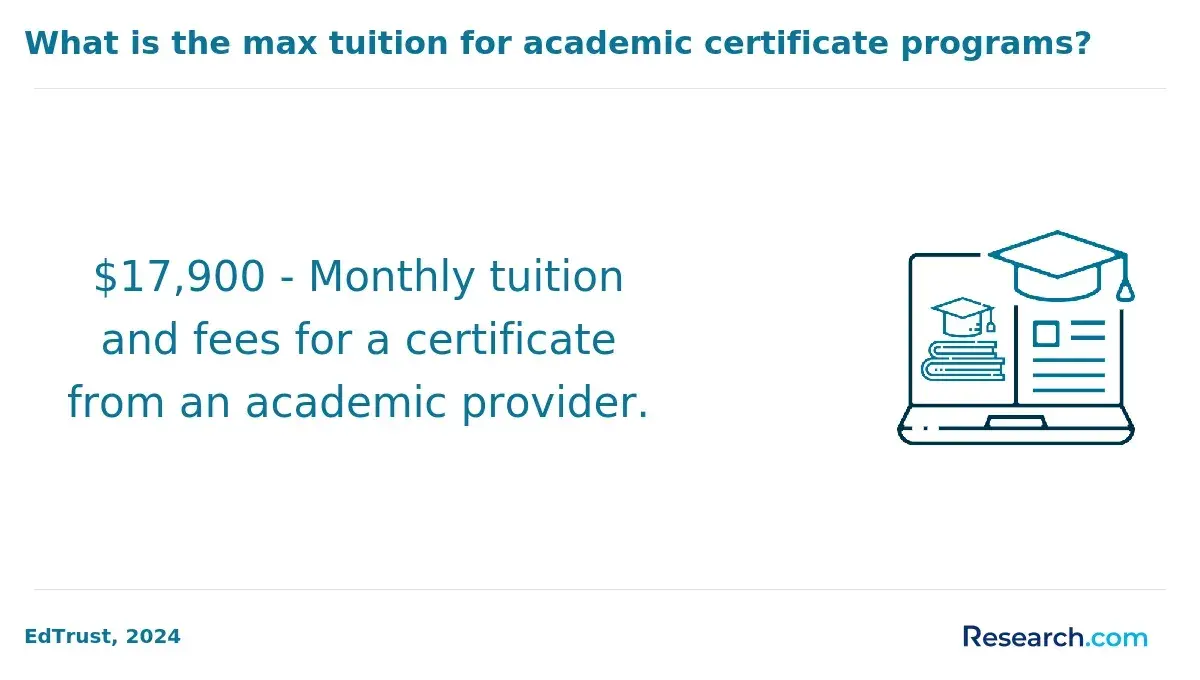
There is no single national tuition average for online substance abuse counseling degrees because programs range from certificates to bachelor's and master's degrees, and schools price online credits differently. Use published institutional tuition, mandatory fees, transfer-credit rules, and the number of credits remaining to calculate your own total.
As a broad U.S. benchmark, College Board reported average 2024-25 published tuition and fees of $11,610 for public four-year in-state students and $43,350 for private nonprofit four-year students. Those figures are not prices for a counseling major or a prediction of net price; grants, residency, transfer credits, and delivery format can materially change what a student pays.
The table shows how the same balance produces different monthly obligations. It is a budgeting illustration based on published average tuition figures, not an estimate of a particular online counseling program.
| Illustrative term or annual balance | 10 equal payments | How to use the figure |
| $11,610 | $1,161 per month | Represents the average published annual tuition and fees benchmark for public four-year in-state study |
| $43,350 | $4,335 per month | Represents the average published annual tuition and fees benchmark for private nonprofit four-year study |
| Your net term balance | Net balance ÷ number of scheduled installments | Use the amount due after accepted grants, loans, scholarships, and employer benefits are applied |
Many online programs bill by credit, course, quarter, semester, or accelerated session. A shorter session can lower the total balance due at one time but create a higher monthly installment because there are fewer months to pay. Students comparing health-care education pathways can also review short DNP programs when considering how accelerated schedules affect both tuition timing and workload.
Request a complete cost sheet that includes tuition, technology charges, graduation fees, books, background checks, liability insurance, practicum expenses, and any travel required for supervised experiences. Net price, not the advertised credit rate alone, is the most useful comparison point.
How common are monthly tuition payment plans among Substance Abuse Counseling programs?
Monthly payment plans are common across U.S. colleges, especially at institutions using centralized student-account systems, but schools do not always publish plan availability by academic major. For online substance abuse counseling students, the relevant question is whether the institution allows online learners in the selected term to enroll after aid and other credits are applied.
Plans are most often structured around a semester, quarter, or accelerated session rather than the full degree. A school may offer four, five, or more scheduled installments in a standard term, while a short eight-week course may have fewer payment dates. That difference can substantially change the monthly amount even if tuition is identical.
Availability is influenced by institutional billing practices, not necessarily program quality or affordability. A college without a monthly plan may still have lower net tuition, while a college with a plan may have a high total price. Compare both the payment schedule and the complete program cost.
When contacting admissions, ask to speak with student accounts rather than relying solely on a recruiter or program webpage. Student accounts can confirm whether the plan is open to distance learners, when enrollment closes, and whether an unpaid installment can block registration, course access, transcripts, or graduation.
Can monthly tuition plans make paying for Substance Abuse Counseling degrees more attainable?
Monthly plans can make a degree more attainable for students who have steady income but cannot pay a full term balance upfront. They are a cash-flow tool: the school divides an existing obligation into smaller due dates, usually without requiring students to take out an additional private education loan.
A payment plan may be a practical fit in the following situations.
- You can reliably cover each installment from wages, savings, employer assistance, or household income without missing essential expenses.
- Your grants, scholarships, or employer reimbursement cover part of the balance but not the full amount at the start of the term.
- You need to avoid borrowing a small remaining balance at interest and the school's plan has a modest enrollment fee with no finance charge.
- You understand that practicum schedules, course loads, and credential requirements may limit the hours you can work while enrolled.
It may be a poor fit if the required monthly amount depends on unpredictable overtime, credit cards, or additional high-cost borrowing. In that case, reducing the course load, seeking scholarships, using employer tuition assistance, attending a lower-net-price school, or waiting until sufficient funding is available may be safer.
Employer reimbursement deserves special attention because some employers pay only after successful course completion. A payment plan can bridge that timing gap, but students should confirm reimbursement limits, grade requirements, employment obligations, and whether the reimbursement will arrive before the final installment. Learners comparing clinical and administrative career routes may also find fastest online master's in healthcare management useful for evaluating a different education timeline and employer-benefit fit.
Does monthly payment plans have an effect on the overall cost of Substance Abuse Counseling degrees?
A monthly payment plan does not normally change tuition, but it can increase the amount paid through plan enrollment fees, returned-payment charges, late fees, or holds that delay registration. Unlike federal student loans, many institutional plans do not charge interest; however, students should not assume a plan is free.
This comparison clarifies the main trade-off between a short institutional installment plan and borrowing for a remaining balance.
| Option | Typical payment period | Potential added cost | Best use case |
| Institutional monthly payment plan | Usually one academic term or short session | Possible enrollment, late, or returned-payment fees | A manageable short-term balance with dependable monthly income |
| Federal student loan | Generally repaid after enrollment under federal repayment rules | Interest and potential loan fees | A necessary education cost that cannot reasonably be paid during the term |
| Paying tuition upfront | Before the term or by the school's due date | Usually no plan fee, but it uses savings immediately | Students with sufficient savings who want the lowest administrative cost |
Calculate the true payment-plan cost by adding every required charge to the amount being financed through installments. Then compare that result with the cost and risks of alternatives. Do not choose a longer payment arrangement solely because its monthly bill looks lower if it extends beyond the school term or includes financing charges.
Low tuition and short completion time can both matter, but they are separate decisions. For example, students evaluating advanced nursing routes can compare cheap DNP options to see why total program cost should be reviewed independently from monthly billing convenience.
Do monthly payment plans affect your financial aid eligibility for Substance Abuse Counseling programs?
Enrolling in a school payment plan does not itself make a student ineligible for federal financial aid. Eligibility is determined through factors such as FAFSA information, enrollment status, satisfactory academic progress, program eligibility, and federal aid rules. The plan generally applies to the remaining amount due after aid disburses.
The timing matters. Federal grants and loans often disburse after enrollment and attendance requirements are met, while a school may require the first installment before that disbursement date. Ask whether pending aid can be counted toward the balance or whether you must make an initial payment while waiting.
Before selecting a plan, complete these checks with the financial aid and student accounts offices.
- Submit the FAFSA and all requested verification documents as early as possible.
- Review the aid offer to separate grants, scholarships, federal loans, and any aid that is still estimated or pending.
- Ask when each accepted award is expected to disburse and whether the payment plan will automatically recalculate after disbursement.
- Confirm the amount you must pay if aid is reduced because of a schedule change, withdrawal, or unmet eligibility requirement.
Students should be cautious about using a plan to cover a balance created by dropping courses after aid has paid. Federal aid can be recalculated after withdrawal, and the student may become responsible for a returned-aid balance. Obtain the school's withdrawal and return-of-funds policies before changing enrollment.
Is there a deposit required before starting Substance Abuse Counseling monthly payment plans?
Often, yes. Schools may require an enrollment fee, a down payment, the first monthly installment, or a combination of these items before activating a plan. The amount and label vary by institution, and a required initial payment is not always refundable.
A deposit is especially likely when the plan begins near the start of a semester or when the school needs to reduce its risk before granting course access. Some schools instead set the first payment at a larger amount and divide the rest of the balance among later installments.
Ask for a written breakdown showing whether the initial amount is applied to tuition, retained as a separate plan fee, or returned if you withdraw before classes begin. Also ask what happens if financial aid later disburses for more than expected. A credit balance may be refunded or carried forward under the school's procedures, but the timing can vary.
Do not interpret a low deposit as evidence that a program is less expensive. It only changes when you pay, not the total cost or the suitability of the curriculum for state credentialing.
Are there fees not covered by monthly tuition payment plans for Substance Abuse Counseling programs?
Yes. A plan may cover tuition and selected mandatory institutional fees, while excluding costs that are billed separately, paid to third parties, or arise from required fieldwork. Substance abuse counseling programs can have additional practical requirements because students may need background clearance and supervised placement experiences.
The table identifies common charges to ask about. The school's written agreement controls, so use it to determine which items are included in the installment balance.
| Potential charge | Often included in plan? | Why it needs confirmation |
| Tuition | Usually | This is generally the balance being divided into installments |
| Mandatory institutional fees | Sometimes | Technology, online-learning, and student-service fees may be billed with tuition or separately |
| Payment-plan enrollment fee | No | It may be due immediately and may be nonrefundable |
| Books, course materials, and exam preparation | Often no | These costs may be purchased separately from the school balance |
| Background checks, drug screening, immunizations, or liability insurance | Often no | Requirements can arise before practicum or placement approval |
| Travel, lodging, or local supervision costs | Usually no | Online study may still include in-person fieldwork requirements |
Build a separate reserve for excluded items instead of assuming the monthly tuition amount represents your entire educational cost. This is particularly important when a practicum begins later in the program, because compliance costs can arrive after you have already committed to tuition payments.
What should you look for in payment plan terms for Substance Abuse Counseling programs?
The best payment plan is not necessarily the one with the lowest first installment. It is the plan whose total cost, payment dates, and consequences of nonpayment fit your verified income, financial aid timeline, and course schedule.
Use the following questions to compare written terms from different schools.
- How much is due at enrollment, and is any part of that amount nonrefundable?
- How many installments are available, on what dates are they due, and can the dates be changed?
- What enrollment, late, returned-payment, reinstatement, or cancellation fees can be charged?
- Does the plan cover all tuition and mandatory fees, or are technology, practicum, and third-party expenses excluded?
- Will pending financial aid reduce the required payment, and what happens if aid disburses late or is revised?
- What happens after a missed payment: late fee, course-access restriction, registration hold, collections referral, or plan cancellation?
- What balance is owed if you drop a course, withdraw, or cannot secure a required field placement?
- Can you obtain the agreement, tuition schedule, and refund policy in writing before paying?
Red flags include vague fee disclosures, pressure to enroll before receiving a full cost estimate, promises that a degree automatically qualifies you for licensure, and a plan that requires credit-card debt you cannot pay off. Students exploring doctoral nursing education should similarly compare written cost disclosures across PhD in nursing programs rather than relying on headline tuition alone.
Keep copies of the agreement, payment confirmations, financial aid offer, and correspondence with the school. Written documentation is particularly valuable if your payment amount changes after aid, enrollment, or course scheduling changes.
How do you know if online Substance Abuse Counseling degrees with monthly payments are right for you?
An online substance abuse counseling degree with monthly payments can be a sound choice when the program meets your career and state-credential goals, the net price is competitive, and each installment fits a conservative monthly budget. The payment option should support an already good academic choice; it should not be the primary reason to select a program.
Start by matching the credential level to the work you want to do. Entry-level support, prevention, peer, or technician roles may have different requirements from independent clinical counseling roles. Verify the relevant state board's education, supervised-hours, examination, and degree requirements before choosing an online program, especially if you expect to practice outside the school's home state.
A monthly plan is likely appropriate when all of the following are true.
- You have calculated the net balance after reliable aid and can pay every installment without relying on high-cost debt.
- The school confirms that the online program is authorized for students in your state and that its curriculum aligns with your intended credential pathway.
- You have accounted for practicum, technology, books, background checks, and other costs outside the payment plan.
- You understand the missed-payment and withdrawal rules and can tolerate the consequences if income changes.
Consider paying upfront if doing so avoids fees and does not undermine your emergency savings. Consider federal loans or a reduced course load if the term-based installment is unaffordable but the program has strong credential alignment and a reasonable net price. Students comparing adjacent allied-health training formats may also review best online radiology tech programs to contrast program structure, clinical requirements, and education costs.
Finally, compare at least two programs using the same checklist: total net cost, time to completion, payment terms, accreditation or approval status, field placement support, transfer-credit policy, and state eligibility. That comparison is more reliable than choosing the school with the smallest advertised monthly payment.
Other Things You Should Know About Substance Abuse Counseling
Often, yes, if the institution allows certificate students to use its tuition payment system. Confirm the policy because short certificates may have fewer installment dates and a higher payment per month than a semester-based degree program.
It may. Requirements vary by credential level, school, and state. Ask whether the school arranges placements, whether you must find an approved local site, and what compliance costs or travel may be required.
Yes. Accepted transfer credits can reduce the number of credits you must take and therefore lower the total balance. Request an official transfer evaluation before relying on a projected payment amount.
Yes, but the relevant standard depends on your goal. Institutional accreditation can affect financial aid and credit transfer, while specialized program approval, curriculum content, and supervised experience may matter for state counseling or addiction credentials. Verify requirements with the appropriate state authority.
References
- Online Master's in Addiction Counseling | Hazelden Betty Ford https://www.hazeldenbettyford.org/graduate-school-addiction-studies/online-masters
- Addiction Counseling Cost, Tuition & Financial Aid https://www.addiction-counselors.com/addiction-counseling-cost-and-aid/
- Substance Abuse Online Degree Programs in Indiana https://www.onlinepsychologydegrees.com/specialty/substance-abuse-counseling/indiana/
- New buy now, pay later plans come with high interest rates and other risks that may trip up consumers https://advocacy.consumerreports.org/press_release/new-buy-now-pay-later-plans-come-with-high-interest-rates-and-other-risks-that-may-trip-up-consumers/
- Can I get financial aid for an online degree? | edX https://www.edx.org/resources/can-i-get-financial-aid-for-an-online-degree
- Texas Substance Abuse Certification https://centerforaddictionstudies.com/certification-requirements/us-substance-abuse-certification/texas/
- Choosing the Right Payment Plan for Your Needs https://support.patientfi.com/hc/en-us/articles/35114676209939-Choosing-the-Right-Payment-Plan-for-Your-Needs-A-PatientFi-Guide-to-Understanding-Your-Options
- 50 Best Master's Degree Programs in Addiction Counseling https://addiction-counselor.org/degrees/masters/
- A Complete Guide To Amazon Financing And Payment Plans | Bankrate https://www.bankrate.com/credit-cards/advice/amazon-financing-and-payment-plans-guide/
- What are installment payments & how do they work - Splitit https://www.splitit.com/blog/payment-solutions-technology/understanding-installment-payments-and-how-they-work/