2027 Online Speech Pathology Doctorate Programs for Working Professionals: Flexible, Part-Time, and Self-Paced Options

Co-Founder and Chief Data Scientist

Reviewed by Rhea Paul, PhD
SLP Education & Research Expert
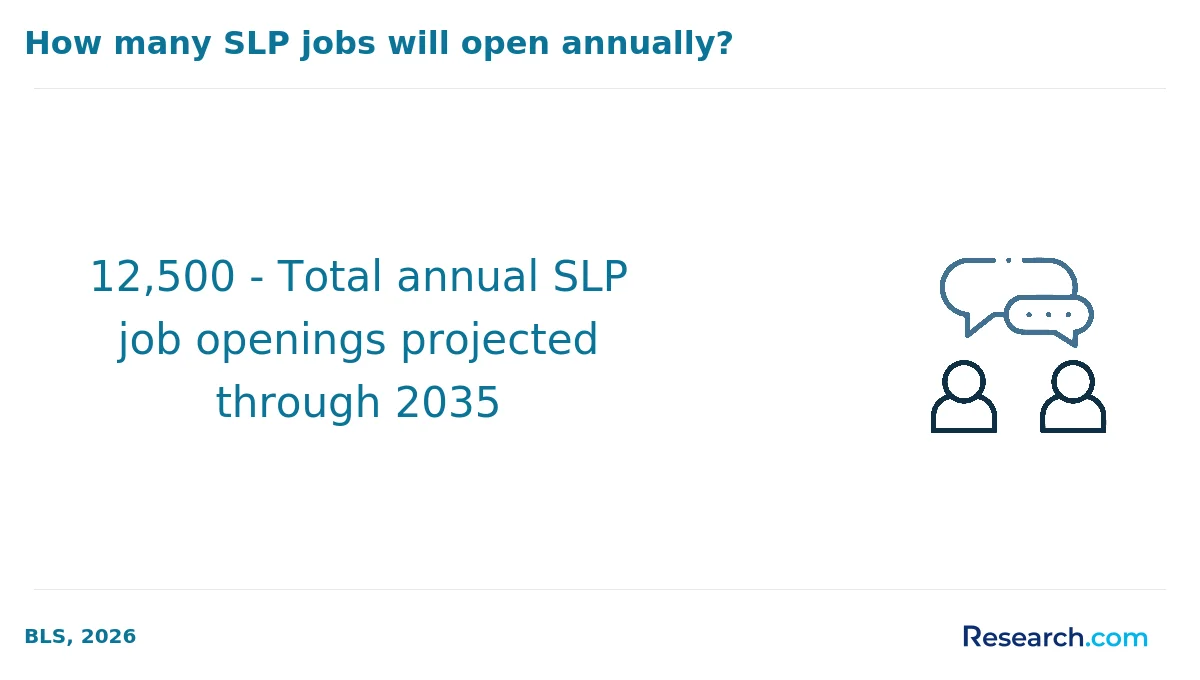
Choosing an online Speech Pathology doctorate while working full time is a scheduling, financial, and career decision. The field remains timely, BLS data lists a May 2024 median wage of $95,410 for speech-language pathologists and projects much faster-than-average employment growth through 2034.
This guide is for clinicians, educators, and administrators balancing doctoral study with caseloads, family, and licensure obligations. You'll learn how flexible, part-time, asynchronous, and self-paced formats differ so you can choose a program that fits your goals, workload tolerance, and preferred learning style.
Key Things You Should Know
- Most online Speech Pathology doctorates are designed for licensed or credentialed professionals and commonly take about 2 to 5 years, with part-time plans extending the timeline but reducing term-by-term pressure.
- Working professionals should expect roughly 10 to 20 hours per week in many part-time doctoral terms, with higher peaks during research, applied project, residency, or dissertation phases.
- Costs vary by school, credits, fees, and travel requirements; compare total program cost, residency expenses, and aid limits such as the $20,500 annual federal Direct Unsubsidized Loan limit for graduate students.
Is an Online Speech Pathology Doctorate Worth It for Working Professionals?
An online Speech Pathology doctorate can be worth it for working professionals when the degree supports a specific next step: university teaching, clinical leadership, research, advanced practice specialization, program development, advocacy, administration, or supervisory roles. It is usually less useful if your main goal is simply to become a speech-language pathologist, because entry into the profession in the United States is typically built around a qualifying master's degree, supervised clinical experience, state licensure, and professional certification requirements.
The value depends on fit, not just the online format. A part-time doctoral program may let you continue earning income, keep benefits, maintain licensure activity, and apply coursework directly to your current caseload or workplace. The trade-off is that the degree may take longer, and dissertation or capstone work can become difficult if your employer does not provide scheduling flexibility.
Current labor data supports continued demand for speech-language pathology expertise, but it does not mean every doctoral path has the same return. BLS projections for 2024 to 2034 show speech-language pathologist employment growing much faster than the average for all occupations. For a working clinician, that demand can strengthen the case for advanced specialization, leadership, or teaching preparation, but salary and promotion outcomes still depend on employer type, region, role, union or district pay schedules, and whether the doctorate is required or preferred.
Consider the degree a strong fit if you want one of the following outcomes and can connect the curriculum to that outcome before enrolling:
- You want to teach, supervise clinical education, or move toward faculty roles where a terminal or practice doctorate may strengthen your profile.
- You want leadership responsibility in hospitals, schools, rehabilitation systems, private practice networks, telepractice programs, or community agencies.
- You want to develop advanced expertise in areas such as dysphagia, neurogenic communication disorders, augmentative and alternative communication, literacy, bilingual service delivery, or pediatric feeding.
- You want to conduct applied research, evaluate programs, publish, present, or lead evidence-based practice initiatives.
- You already hold the credentials needed for practice and are choosing the doctorate for advancement rather than basic licensure eligibility.
You may want to delay or avoid the doctorate if you are still deciding whether the profession itself is right for you, need a lower-cost route into SLP practice, or cannot protect consistent weekly study time. If you are still comparing entry-level pathways, it may be more practical to review online SLP programs first and confirm the master's-level requirements that lead to licensure.
Which Type of Online Speech Pathology Doctorate Best Fits Your Career Goals?
Online Speech Pathology doctorates are not interchangeable. The best option depends on whether you want to become a researcher, a clinical leader, an educator, or an executive-level practitioner. For working professionals, the right degree type should match both the career outcome and the time structure you can realistically maintain.
The table below summarizes common doctorate types and how they usually align with professional goals. Use it as a starting point, then confirm each school's degree title, curriculum, faculty expertise, research expectations, and residency requirements.
| Doctorate type | Best fit | Typical emphasis | Work-friendly considerations |
| SLPD or clinical doctorate | Licensed SLPs seeking advanced clinical leadership | Evidence-based practice, clinical specialization, supervision, healthcare or school-based leadership | Often more applied than research-intensive, but may still require projects, synchronous sessions, or short residencies |
| PhD in Speech-Language Pathology, Communication Sciences and Disorders, or related field | Professionals seeking research, tenure-track faculty, or scientific leadership roles | Research design, statistics, theory, grant writing, dissertation research | May be harder to complete part time if research labs, funding, assistantships, or campus engagement are central |
| EdD with communication disorders, special education, or leadership focus | School-based leaders, clinical educators, administrators, and policy-focused professionals | Applied research, education systems, leadership, program evaluation | Often designed for working educators, but may not be SLP-specific enough for every clinical goal |
| Interdisciplinary health sciences doctorate | Clinicians moving into health leadership, rehabilitation administration, or interprofessional practice | Healthcare systems, outcomes, leadership, population health, quality improvement | Flexible delivery may be strong, but SLP-specific mentoring may be limited |
The biggest decision is whether you need a research doctorate or an applied doctorate. A PhD usually makes the most sense if you want to produce original research, compete for research faculty roles, or pursue grant-funded academic work. An SLPD, EdD, or applied doctorate may be more efficient if you want to improve clinical systems, supervise teams, teach clinically, or lead programs while continuing to work.
If you are choosing among degree levels, take these steps before requesting information from schools:
- Write one target role you want within 3 to 5 years, such as clinical director, assistant professor, district specialist, private practice owner, or hospital program lead.
- Review job postings for that role and note whether employers ask for a doctorate, a PhD specifically, faculty experience, research output, administrative experience, or specialty certification.
- Compare the program's culminating requirement with your goal: dissertation for research roles, applied doctoral project for workplace leadership, or clinical specialization portfolio for advanced practice.
- Ask whether online students receive faculty mentoring, research collaboration opportunities, teaching experience, or leadership practicum options that match your desired outcome.
Professionals who are not yet eligible for a graduate SLP program because their bachelor's degree is in another field should not skip foundational preparation. A structured SLP bridge program may be the more relevant first step before considering master's or doctoral study.
How Do Flexible, Part-Time, Asynchronous, and Self-Paced Speech Pathology Doctorate Programs Differ?
Flexible, part-time, asynchronous, and self-paced are related terms, but they do not mean the same thing. This distinction matters because many working professionals assume "online" automatically means they can study whenever they want. In reality, online doctorates often combine flexible coursework with fixed academic calendars, required milestones, live meetings, group projects, or residency dates.
The table below explains the main delivery models. Use it to identify the format that fits your work schedule, learning preferences, and need for external structure.
| Format | What it means | Best for | Main trade-off |
| Flexible online | The program offers online access, multiple start dates, evening sessions, limited campus visits, or adjustable course sequencing | Professionals with predictable but busy schedules | Flexibility varies widely by school and may not apply to all milestones |
| Part-time | Students take fewer credits per term than full-time doctoral students | Full-time employees, caregivers, and clinicians with heavy caseloads | Lower weekly load but longer completion time |
| Asynchronous | Course materials can be accessed outside scheduled class meetings, usually within weekly deadlines | Clinicians whose work hours change or who need evening and weekend study blocks | Still requires consistent participation, deadlines, and discussion activity |
| Synchronous online | Students attend live virtual sessions at set times | Learners who want real-time discussion, cohort accountability, and faculty interaction | Can conflict with evening clinics, school events, time zones, or family responsibilities |
| Self-paced | Students move through some coursework at their own speed within broader completion limits | Highly independent learners with variable work cycles | True self-paced doctoral options are less common, and research milestones often remain faculty-dependent |
| Cohort-based | Students progress with the same group through a set sequence | Professionals who value peer support and predictable course maps | Less room to slow down, pause, or accelerate individual courses |
A practical way to compare programs is to ask where the flexibility actually exists. Some schools are flexible with course access but strict about term deadlines. Others allow part-time enrollment but require synchronous seminars. A few may advertise self-paced coursework, yet still require fixed dissertation checkpoints or faculty-approved project timelines.
When reviewing program pages or speaking with admissions advisors, clarify these scheduling details:
- Whether lectures are fully asynchronous, partly asynchronous, or mostly live online.
- Whether live sessions are required, optional, recorded, or graded through attendance.
- Whether part-time students follow a formal plan or must request reduced course loads each term.
- Whether students can pause enrollment without losing good standing, financial aid eligibility, or cohort placement.
- Whether dissertation, capstone, practicum, or residency dates are fixed far enough in advance for working professionals.
- Whether the program has maximum completion limits that could affect students who need to slow down.
The common mistake is choosing the most flexible-sounding program without testing it against a real weekly calendar. Before enrolling, map a normal workweek, commute, documentation time, family obligations, and continuing education requirements. If the program requires live attendance during your busiest clinic or school hours, it may not be the right fit even if it is technically online.
What Are the Admission Requirements for Online Speech Pathology Doctorate Programs?
Admission requirements vary by degree type, but online Speech Pathology doctorates usually expect applicants to show graduate-level preparation, professional focus, and the ability to complete advanced independent work. Clinical doctorates often prefer or require applicants who already hold a master's degree in speech-language pathology or communication sciences and disorders, while PhD programs may focus more heavily on research fit and faculty mentorship.
The table below outlines common admission elements and why each matters for employed applicants. Always verify details directly with the school because doctoral admissions can vary by department and faculty capacity.
| Requirement | What schools may look for | Why it matters for working professionals |
| Relevant master's degree | Often a master's in speech-language pathology, communication sciences and disorders, education, health sciences, or a related field | Confirms readiness for doctoral coursework and may affect whether prerequisite courses are needed |
| Licensure or certification | State SLP license, CCC-SLP, school credential, or evidence of clinical eligibility, depending on program type | Important for clinical doctorates that build on professional practice rather than entry-level training |
| Professional experience | Clinical, school-based, healthcare, research, teaching, or leadership experience | Helps students connect doctoral projects to real workplace problems |
| Statement of purpose | Clear goals, research interests, faculty fit, and explanation of why the doctorate is needed | Shows whether the program's format and outcomes match the applicant's career plan |
| Letters of recommendation | Academic, clinical, supervisory, or professional references | Can document leadership potential, writing ability, ethical practice, and readiness for independent work |
| Writing sample or interview | Scholarly writing, research proposal, professional project, or faculty conversation | Gives the school evidence that the applicant can manage doctoral-level communication and inquiry |
Admissions competitiveness depends on faculty availability, degree type, cohort size, and the applicant's fit with the program. A program with a flexible online format is not automatically easier to enter. In fact, small doctoral cohorts may be selective because faculty supervision and dissertation advising capacity are limited.
To avoid applying to programs that do not fit your background, prepare these items before contacting admissions:
- Confirm whether the program is post-professional, research-focused, or open to related-field applicants.
- Ask whether applicants must already hold CCC-SLP, state licensure, school certification, or a clinical master's degree.
- Request a prerequisite review if your graduate degree is in education, linguistics, psychology, rehabilitation, or another adjacent field.
- Ask whether GRE scores are required, optional, waived, or replaced by writing samples and interviews.
- Identify two faculty members whose interests match your clinical, leadership, or research goals.
If admissions flexibility is a major concern, compare doctoral expectations with master's-level options and admissions pathways. Applicants still building their academic profile may find it useful to review the easiest SLP programs to get into before deciding whether a doctorate is the immediate next step.
How Long Does It Take to Complete an Online Speech Pathology Doctorate Part Time?
Part-time online Speech Pathology doctorates commonly take longer than full-time options, but they may be more sustainable for clinicians who cannot reduce work hours. A realistic part-time plan often runs about 3 to 5 years, while some applied doctorates may be shorter and research-heavy PhD pathways may take longer, especially when dissertation data collection, faculty availability, or publication goals extend the timeline.
The table below compares common pacing patterns. It is not a guarantee of any school's timeline, but it shows how enrollment intensity affects workload and completion planning.
| Pacing option | Typical completion pattern | Who it fits | Potential risk |
| Full-time online or hybrid doctorate | Often about 2 to 3 years for applied programs; longer for research doctorates | Professionals who can reduce work hours or have major employer support | High weekly workload and less room for unexpected professional or family demands |
| Part-time fixed plan | Often about 3 to 5 years, depending on credits and dissertation or project requirements | Full-time employees who want predictable sequencing | Course availability may limit acceleration or pauses |
| Extended part-time plan | May approach the school's maximum completion limit | Caregivers, administrators, or clinicians with seasonal workload spikes | Momentum loss, changing faculty advisors, and possible additional fees |
| Self-paced or competency-based elements | Varies by school and is more common for selected coursework than for dissertation work | Independent learners with uneven schedules | Students may underestimate the discipline needed without weekly structure |
Timeline planning should include more than coursework. Doctoral milestones often create workload spikes that do not fit neatly into credit-hour estimates. Proposal approval, ethics review, data collection, revision cycles, committee feedback, and final defense can be slower than expected, especially if your study depends on workplace access or participant recruitment.
A working professional can create a more realistic completion estimate by following this sequence:
- List every required course, credit, residency, practicum, comprehensive exam, proposal, dissertation, capstone, and defense milestone.
- Ask the school for a part-time course map rather than assuming you can simply take fewer courses whenever needed.
- Identify terms when your job is busiest, such as IEP season, hospital census peaks, school-year transitions, or annual evaluations.
- Place research-heavy milestones in terms when you can protect writing and meeting time.
- Ask whether courses are offered every term or only once per year, because missed courses can delay graduation.
If speed is more important than reduced workload, compare doctoral plans with shorter master's or post-baccalaureate routes where appropriate. Some students who are earlier in the pipeline may be better served by accelerated speech pathology programs rather than a doctoral pathway that assumes prior clinical preparation.
What Curriculum, Dissertation, Residency, or Practicum Requirements Do Online Speech Pathology Doctorate Programs Include?
Online Speech Pathology doctorate curricula usually combine advanced coursework with a major culminating requirement. Depending on the degree, that requirement may be a dissertation, applied doctoral project, capstone, research portfolio, clinical specialization project, or leadership initiative. The format matters because it determines how much independent writing, data collection, committee work, and workplace coordination you will manage while employed.
The table below summarizes common components in online or hybrid doctoral programs. Use it to look beyond the course list and understand where time-intensive requirements may appear.
| Requirement | What it may include | Scheduling impact |
| Advanced clinical or professional coursework | Evidence-based practice, diagnostics, intervention, supervision, ethics, diversity, healthcare or school systems | Usually predictable by term, but reading and writing loads can be substantial |
| Research and statistics | Quantitative methods, qualitative methods, outcomes measurement, critical appraisal, program evaluation | May require extra study time for students who have been away from formal research training |
| Leadership or teaching preparation | Higher education pedagogy, clinical education, administration, policy, advocacy, interprofessional collaboration | Often useful for workplace-based projects but may involve group work or live presentations |
| Residency or intensive | Short campus visits, virtual intensives, simulation, seminars, orientation, defense, or cohort meetings | Requires advance planning for travel, PTO, childcare, clinic coverage, or school-year calendars |
| Practicum or applied experience | Leadership practicum, teaching practicum, supervision hours, workplace project, or clinical specialization experience | May depend on employer approval, site access, and documentation requirements |
| Dissertation or doctoral project | Original research, applied study, quality improvement project, program evaluation, or evidence-based practice project | Often the least predictable phase and the one most affected by advisor feedback and work schedule |
A dissertation-based path typically carries more research intensity. It may be required or strongly preferred for academic research roles, especially if you want to pursue tenure-track positions. An applied doctoral project may be more practical for working clinicians who want to solve a defined workplace problem, such as improving dysphagia screening processes, designing telepractice protocols, evaluating literacy interventions, or strengthening supervision systems.
Before enrolling, ask detailed questions about requirements that are easy to overlook:
- Whether residencies are required, optional, virtual, hybrid, or fully in person.
- How many days of travel are required and whether dates are published before enrollment.
- Whether dissertation or project topics can be based in your current workplace.
- Whether employer permission, site agreements, or ethics review will be needed for workplace-based research.
- Whether students choose advisors before admission, during coursework, or after a proposal stage.
- Whether the program has recent examples of completed dissertations or projects by online part-time students.
A major red flag is vague language around residencies or "field experiences." If the school cannot explain how online students complete the requirement, who approves the site, and how much time it normally takes, the program may be difficult to manage alongside full-time employment.
How Much Weekly Work Should Full-Time Professionals Expect in an Online Speech Pathology Doctorate Program?
Full-time professionals should plan for a weekly workload that changes by term. A light part-time course load may be manageable with evening and weekend study blocks, but research methods, statistics, major papers, group projects, and dissertation milestones can create short periods of much heavier work. The most successful students usually treat doctoral study as a recurring professional commitment, not something to fit into leftover time.
The table below gives a practical workload estimate by enrollment intensity. Actual hours vary by reading speed, writing experience, research background, course design, and how quickly faculty feedback cycles move.
| Enrollment pattern | Typical weekly academic commitment | Best scheduling approach | Common pressure point |
| One doctoral course | About 8 to 12 hours per week | Two weeknights plus one weekend block | Long readings and discussion posts after heavy clinical days |
| Two doctoral courses | About 15 to 25 hours per week | Protected weekday study time plus a longer weekend block | Competing deadlines, group work, and major writing assignments |
| Research or statistics-heavy term | About 15 to 30 hours per week | Short daily study sessions plus dedicated analysis or writing blocks | Learning software, methods, or analysis techniques while working full time |
| Dissertation or doctoral project phase | Highly variable; often concentrated around proposal, data, revisions, and defense | Standing advisor meetings and weekly writing targets | Waiting for approvals, feedback, participant access, or workplace permissions |
Working professionals should also consider cognitive load. After a day of evaluations, treatment sessions, documentation, team meetings, or parent conferences, reading dense research articles can take longer than expected. Asynchronous access helps, but it does not reduce the total effort required.
To make the workload more sustainable, build a weekly operating plan before the first term begins:
- Reserve fixed study blocks on your calendar and treat them like clinical appointments.
- Use lighter workdays for statistics, research design, or writing tasks that require deeper concentration.
- Batch lower-intensity tasks, such as discussion replies and citation management, into shorter sessions.
- Tell supervisors early about residency dates, live class sessions, or major project milestones that may affect availability.
- Create a family or household plan for peak weeks instead of renegotiating responsibilities during deadlines.
- Reassess workload after the first term and reduce credits if your grades, health, clinical performance, or family responsibilities suffer.
The biggest mistake is assuming a part-time doctorate is automatically manageable because it is online. A better test is whether you can protect at least 10 consistent hours in a normal week and more time during peak academic periods without compromising patient care, school responsibilities, or personal well-being.
How Much Does an Online Speech Pathology Doctorate Cost, and What Financial Aid Is Available?
The cost of an online Speech Pathology doctorate depends on tuition model, number of credits, residency travel, technology fees, books, dissertation continuation fees, and how long you remain enrolled. Online delivery can reduce relocation and commuting costs, but it does not always mean lower tuition. For working professionals, the most important number is total cost to completion, not the advertised per-credit rate.
Recent national data can help you benchmark affordability, even though it is not specific to SLP doctorates. NCES data released in 2024 reported average graduate tuition and required fees of $12,596 at public institutions and $29,931 at private nonprofit institutions for the 2022-23 academic year; use these figures as a broad reference point while comparing the actual tuition sheets of individual programs.
Program-level pricing can differ substantially from national averages because doctoral programs may charge by credit, by term, by cohort, or by dissertation continuation status. A lower per-credit rate may not be cheaper if the program requires more credits, repeated residencies, or extra enrollment terms after coursework.
When estimating affordability, include these cost categories rather than tuition alone:
- Tuition for all required credits, including dissertation, capstone, or continuation credits.
- Mandatory university, technology, online learning, clinical education, or graduation fees.
- Residency travel, lodging, meals, parking, and lost income if time off is unpaid.
- Books, assessment materials, software, transcription tools, statistical software, or research platforms.
- Background checks, immunization documentation, liability insurance, or site paperwork if a practicum is required.
- Loan interest, origination fees, and repayment timing if borrowing is necessary.
Financial aid may include federal student loans, institutional scholarships, graduate assistantships, employer tuition assistance, professional association awards, military or veteran benefits, payment plans, and tax-advantaged education benefits when eligible. However, aid rules vary by enrollment status. Dropping below half-time can affect federal loan eligibility, and employer reimbursement may require minimum grades, continued employment, or a role-related degree plan.
A common financial mistake is choosing the cheapest visible tuition without pricing the time cost. A slower part-time plan can protect income, but extra terms may add fees. A faster plan may reduce time in school, but it can require fewer work hours or unpaid leave. The best financial comparison should include total program cost, income stability, employer support, debt tolerance, and the career benefit you can reasonably expect in your setting.
How Can You Verify the Accreditation and Quality of an Online Speech Pathology Doctorate Program?
Accreditation is one of the most important quality checks for any online doctorate, but speech-language pathology adds a layer of nuance. In the United States, entry-level preparation for speech-language pathologists is tied to master's-level education, supervised clinical requirements, state licensure, and professional certification pathways. A post-professional doctorate may be high quality and regionally accredited even if it is not an entry-level clinical accreditation pathway.
Start with institutional accreditation. The college or university should be accredited by an agency recognized by the U.S. Department of Education or the Council for Higher Education Accreditation. This affects federal financial aid eligibility, credit recognition, employer acceptance, and the general legitimacy of the credential.
Then evaluate program quality in context. For speech-language pathology, the Council on Academic Accreditation in Audiology and Speech-Language Pathology is especially relevant for entry-level graduate clinical education, but not every post-professional doctorate functions the same way as a CAA-accredited master's program. Ask the school exactly how the doctoral program relates to licensure, CCC-SLP preparation, advanced clinical practice, and professional recognition.
Use this quality-check sequence before applying:
- Verify institutional accreditation through official federal or recognized accreditor databases, not only through the school's marketing page.
- Ask whether the specific doctoral program is intended for already-licensed SLPs, aspiring researchers, educators, administrators, or students from related fields.
- Confirm whether the doctorate leads to any new licensure eligibility or whether it only builds on credentials you already hold.
- Review faculty qualifications, research areas, clinical expertise, publications, grants, and advising availability.
- Ask for completion rates, average time to degree, dissertation or project examples, and online student support services.
- Confirm residency, practicum, and defense requirements in writing before enrolling.
- Check whether your employer, state licensing board, school district, or university hiring committee recognizes the credential for the advancement you want.
Quality also shows up in student support. Strong online doctorate programs provide library access, research consultation, statistical support, writing support, advisor access, technology help, career guidance, and clear milestone tracking. If a program advertises flexibility but cannot explain advising structure or dissertation support for online students, that is a red flag.
What Career Outcomes and Professional Benefits Can an Online Speech Pathology Doctorate Provide?
An online Speech Pathology doctorate can support several career outcomes, but the benefit depends on your current credentials and target setting. The degree may help clinicians move into leadership, supervision, higher education, research coordination, advanced practice, policy, program evaluation, or administrative roles. It may also strengthen credibility for consulting, publishing, presenting, or building specialized clinical programs.
The table below connects doctorate pathways with common professional benefits. Use it to decide whether the credential aligns with the work you actually want to do.
| Career direction | How a doctorate may help | What else may be needed |
| Clinical leadership | Supports advanced decision-making, protocol development, supervision, and program design | Management experience, employer support, specialty expertise, and measurable outcomes |
| Higher education teaching | May strengthen eligibility for lecturer, clinical faculty, or professor roles depending on degree type | Teaching experience, research or clinical expertise, publications, and alignment with university hiring standards |
| Research and scholarship | Builds research design, analysis, grant, and dissemination skills, especially in PhD programs | Faculty mentorship, research productivity, conference presentations, and publication record |
| School system leadership | Can support district-level roles, program evaluation, mentoring, and policy implementation | School credential requirements, administrative experience, and district pay scale recognition |
| Healthcare administration | Can support quality improvement, interdisciplinary leadership, outcomes analysis, and service-line development | Healthcare operations experience, budgeting skills, compliance knowledge, and leadership track record |
| Private practice or consulting | May improve credibility for specialization, training, expert services, or program development | Business skills, referral networks, legal compliance, payer knowledge, and marketing strategy |
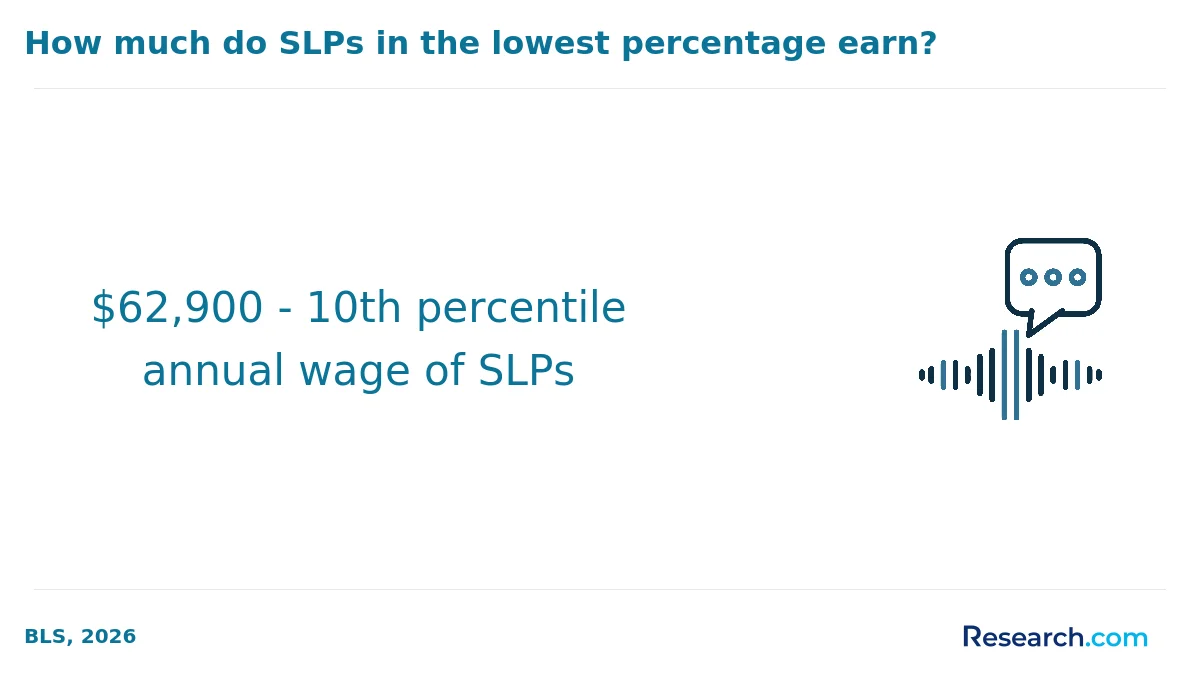
Salary impact should be evaluated carefully. BLS May 2024 data reports a $95,410 median annual wage for speech-language pathologists, but that figure includes professionals with different degrees, settings, regions, and experience levels. A doctorate may support advancement in some environments, while in others, pay is determined mainly by collective bargaining agreements, school salary schedules, productivity models, or administrative classifications.
Current trends make advanced training more relevant, but also more specialized. Telepractice, AI-assisted documentation, digital assessment tools, interprofessional care, outcomes-based reimbursement, school staffing pressures, and demand for evidence-based intervention are changing expectations for SLP leaders. Doctoral study can help professionals evaluate evidence, lead change, and train others, but only if the program includes applied research, ethics, technology literacy, and leadership development that match the workplace.
Before committing, ask yourself these decision questions:
- Does my target role require a doctorate, prefer a doctorate, or simply value experience and specialty expertise?
- Will my employer recognize the degree for promotion, salary advancement, faculty status, or leadership eligibility?
- Does the program's culminating project create a portfolio piece I can use professionally?
- Can I complete the degree without reducing the quality of my clinical work or personal well-being?
- Is the doctorate the best next credential, or would a specialty certification, leadership certificate, research collaboration, or master's pathway be more efficient?
The best online Speech Pathology doctorate for a working professional is not necessarily the fastest, cheapest, or most flexible. It is the one that combines credible accreditation, realistic pacing, strong faculty mentorship, transparent requirements, and a clear connection to your next professional role.
Other Things You Should Know About Speech Pathology
You can apply independently, but it is often better to involve your employer once you know the program requirements. Residencies, practicum activities, research access, schedule changes, or tuition reimbursement may require supervisor approval.
True self-paced doctoral programs are less common than asynchronous or part-time programs. Many schools allow flexible access to coursework, but dissertation, capstone, residency, and faculty review milestones usually follow fixed deadlines.
Many universities do not label the delivery format on the diploma, but policies vary. Ask the school how the degree appears on the diploma and transcript, and focus on institutional accreditation, program quality, and employer recognition.
Ask about leave-of-absence policies before enrolling. Confirm how a pause affects tuition, financial aid, cohort placement, advisor assignment, maximum time to degree, and access to university resources.
References
- U.S. Bureau of Labor Statistics - Speech-Language Pathologists https://www.bls.gov/ooh/healthcare/speech-language-pathologists.htm
- ASHA EdFind - Accredited Speech-Language Pathology Programs https://find.asha.org/ed/
- ETS Praxis - Speech-Language Pathology (5331) https://praxis.ets.org/test/speech-language-pathology-5331.html
- New York University - Online MS, Communicative Sciences and Disorders (Speech@NYU) https://steinhardt.nyu.edu/degree/online-ms-communicative-sciences-and-disorders
- West Virginia University - Speech-Language Pathology, M.S. - Online https://medicine.hsc.wvu.edu/communications-sciences-and-disorders/speech-language-pathology-ms/future-students/curriculum/online-slp-program/
- Nova Southeastern University - SLP Program - Master of Science in Speech-Language Pathology https://osteopathic.nova.edu/degrees/masters/speech-language-pathology/index.html
- Ithaca College - Online Master of Science in Speech-Language Pathology https://slponline.ithaca.edu/programs/masters-speech-language-pathology-online
- Delaware Valley University - Master of Science in Speech-Language Pathology (M.S.) https://delval.edu/programs/graduate-programs/speech-language-pathology