2027 Is an Online Speech Pathology Doctorate Worth It? ROI, Salary Growth, and Career Impact

Co-Founder and Chief Data Scientist
An online speech pathology doctorate can strengthen leadership, teaching, research, and advanced clinical credentials-but it is not an automatic salary multiplier. The U.S. Bureau of Labor Statistics reports a May 2024 median annual wage of $95,410 for speech-language pathologists, with much faster-than-average projected job growth.
That demand makes the field attractive, but doctoral ROI depends on cost, debt, employer pay structures, and career goals. This guide helps practicing SLPs, prospective doctoral students, and career changers evaluate whether the degree is financially and professionally worthwhile.
Key Things You Should Know
- An online speech pathology doctorate is most likely to pay off for professionals pursuing university teaching, research, clinical leadership, program administration, consulting, or specialized practice-not for SLPs whose employers pay the same rate for master's- and doctoral-level clinicians.
- The BLS reported a May 2024 median annual wage of $95,410 for speech-language pathologists, while related leadership roles such as medical and health services managers reported higher median pay, showing why ROI often depends on moving into a different role rather than staying in the same job title.
- The smartest ROI test is to compare total program cost, interest, time in school, and realistic post-degree compensation; a doctorate that costs less, allows continued employment, and connects directly to a higher-paying role usually has the stronger return.
What Is the ROI of an Online Speech Pathology Doctorate?
The ROI of an online speech pathology doctorate is the financial and professional return you may receive compared with the total cost of earning the degree. In practical terms, ROI asks whether the degree helps you gain enough salary growth, promotion opportunity, job security, professional credibility, or career flexibility to justify tuition, fees, time, and potential debt.
For speech-language pathologists, ROI is especially individualized because the master's degree is the standard entry-level credential for clinical practice. A doctorate may add value, but it usually does so by changing your career ceiling rather than simply increasing your pay for the same clinical caseload.
Use this table to separate the main ROI drivers. It shows why two students in the same doctoral program can experience very different outcomes after graduation:
| ROI factor | Why it matters | Stronger ROI signal | Weaker ROI signal |
| Total degree cost | Tuition, fees, technology costs, travel for residencies, books, and loan interest affect the break-even point. | Low tuition, employer assistance, scholarships, or cash-flowing part of the degree | High debt for a role that does not require or reward a doctorate |
| Career target | Some jobs value doctoral preparation more than others. | Academic, research, leadership, executive, or specialized clinical roles | Same staff SLP role with no pay differential |
| Ability to keep working | Online formats may reduce opportunity cost if you remain employed. | Part-time or flexible program that fits full-time work | Program structure that forces reduced hours without a clear income gain |
| Employer pay policy | School districts, hospitals, universities, and clinics differ in how they compensate advanced credentials. | Documented salary lane, promotion path, or required doctorate for target role | No written evidence that the degree changes pay or responsibility |
| Time to completion | Longer timelines delay the point at which higher earnings can begin. | Efficient completion with strong advising and realistic dissertation or capstone support | Extended enrollment, stop-outs, or unclear completion expectations |
A common mistake is calculating ROI only from tuition. A more realistic calculation includes loan interest, fees, travel, reduced work hours, licensing or certification costs, and the number of years it may take to move into a higher-paying role. The degree is usually worth more when it supports a planned career shift than when it is pursued as a general prestige credential.
How Much Can Salaries Increase After an Online Speech Pathology Doctorate?
Salary growth after an online speech pathology doctorate varies because the degree does not create one universal pay bump. The BLS reported a May 2024 median annual wage of $95,410 for speech-language pathologists, but actual earnings vary by setting, state, experience, union contracts, productivity models, and whether the doctorate leads to a new role.
The most realistic way to evaluate salary growth is to compare your current role with the positions you could credibly pursue after graduation. A doctorate may be financially meaningful if it moves you from direct service into higher-responsibility work, such as faculty teaching, clinical program direction, research administration, or health services leadership.
The table below compares common post-degree directions. It is not a salary guarantee; it shows how compensation may change when the doctorate supports a role transition:
| Career direction | How a doctorate may help | Salary-growth potential | Important limitation |
| Advanced clinical specialist | Supports deeper expertise in dysphagia, voice, neurogenic communication disorders, pediatric feeding, AAC, or similar areas. | Moderate if the employer pays for specialization, productivity, or advanced responsibility | Some clinical employers do not pay more solely for a doctorate. |
| Clinical director or department lead | Strengthens preparation for supervision, quality improvement, compliance, and service-line management. | Potentially stronger when leadership duties replace or supplement direct caseload work | Management experience may matter as much as the degree. |
| Postsecondary faculty | May be required or strongly preferred for full-time teaching, research, and tenure-track roles. | Potentially meaningful for those moving from clinical practice into higher education | Academic pay depends heavily on institution type, rank, workload, and research expectations. |
| Research or grant-funded role | Builds research design, evidence appraisal, and dissemination skills. | Strongest when tied to funded research, university appointments, or healthcare innovation roles | A clinically focused doctorate may not substitute for a research PhD in all hiring contexts. |
| Executive or healthcare administration | Can support credibility for system-level leadership, especially with management experience. | Potentially high if paired with operations, budgeting, and people-management responsibility | Some employers may prefer an MBA, MHA, or administrative track instead. |
The key salary question is not "Do doctoral graduates earn more?" but "Will my target employer pay more for the specific role this doctorate prepares me to do?" Before enrolling, compare job postings, salary schedules, and internal promotion requirements for the positions you want.
Which Career Paths Offer the Strongest Financial Return With an Online Speech Pathology Doctorate?
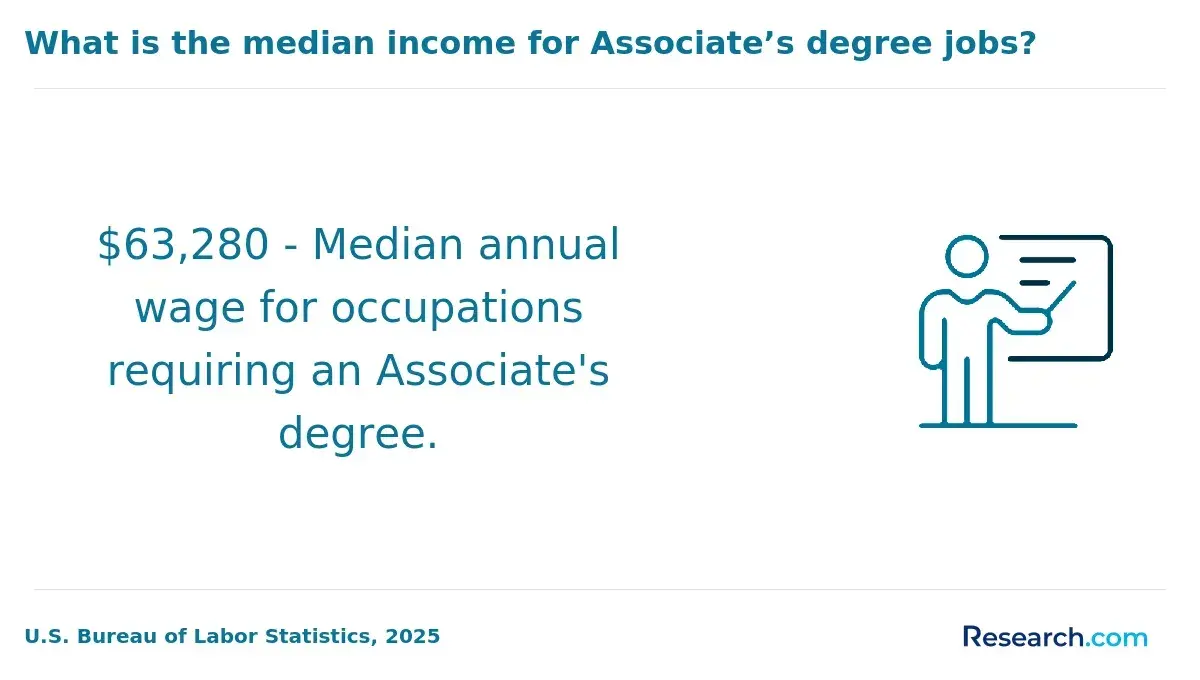
The strongest financial return usually comes from career paths where doctoral-level training changes your job category, not just your title. The BLS reported May 2024 median pay of $117,960 for medical and health services managers, which helps explain why leadership-oriented paths can have stronger ROI than clinical roles with flat credential-based pay.
For SLPs, doctoral ROI tends to be strongest when the degree connects directly to a labor-market need: faculty shortages, clinical supervision, healthcare quality improvement, specialized service delivery, program evaluation, and research translation. The best-fit path depends on whether you want to lead teams, teach, publish, consult, or remain primarily clinical.
The following comparison can help you identify where a doctorate is more likely to influence compensation and advancement:
| Career path | Typical doctoral value | Financial-return outlook | Best fit for |
| University faculty in communication sciences and disorders | Supports teaching, research, supervision, accreditation work, and scholarly credibility. | Often strong if the role requires doctoral preparation and offers long-term academic progression | SLPs who enjoy teaching, mentoring, research, and curriculum development |
| Clinical program director | Signals advanced expertise in evidence-based practice, service design, supervision, and outcomes measurement. | Often strong when paired with management authority and budget responsibility | Experienced clinicians who want to lead clinics, departments, or specialty programs |
| Healthcare quality, compliance, or administration | Can support credibility for interdisciplinary leadership and policy implementation. | Potentially strong, especially in larger healthcare systems | SLPs interested in operations, patient safety, documentation standards, and systems improvement |
| Independent consultant or expert clinician | May differentiate you in niche services, expert review, professional training, or school and healthcare consulting. | Variable; depends on business development and referral demand | Entrepreneurial SLPs with a clear specialty and strong professional network |
| Staff clinician in the same setting | May deepen expertise but may not change the pay scale. | Often weaker unless the employer has a doctoral stipend or salary lane | Clinicians who value professional growth more than financial return |
A red flag is enrolling without a target role. If your goal is "more options," pause and define the exact jobs you want, the credentials they require, and the compensation range they offer. Doctoral ROI improves when the degree is part of a career plan, not the career plan itself.
How Does an Online Speech Pathology Doctorate Affect Career Advancement?
An online speech pathology doctorate can affect advancement by strengthening your authority in clinical reasoning, research interpretation, leadership, teaching, and program development. It may also help you compete for roles where employers expect evidence-based decision-making, supervision experience, and the ability to evaluate outcomes across teams or populations.
Career advancement is not only about salary. For many SLPs, the return includes greater autonomy, eligibility for faculty roles, credibility in interdisciplinary teams, stronger qualifications for grants or presentations, and access to leadership work that is difficult to reach from a staff clinician role alone.
Before assuming the doctorate will create advancement, check whether your intended path requires clinical licensure, the ASHA Certificate of Clinical Competence, state-specific school credentials, supervisory experience, publications, or administrative experience. Requirements vary by employer and state, so the doctorate should complement-not replace-the credentials your target roles already demand.
Doctoral-level preparation is most useful for advancement when it helps you document the following capabilities:
- Leading clinical teams, graduate students, or interdisciplinary service initiatives with measurable outcomes.
- Designing evidence-based protocols, quality-improvement projects, or specialized treatment programs.
- Teaching, supervising, or mentoring clinicians and students in structured settings.
- Translating research into practice for schools, hospitals, rehabilitation centers, or private clinics.
- Communicating with executives, policymakers, faculty committees, and payer or compliance stakeholders.
The main mistake to avoid is treating the doctorate as a substitute for leadership experience. Many employers want both: the credential and a record of solving problems, managing people, improving services, or contributing to scholarship.
How Much Does an Online Speech Pathology Doctorate Cost Compared With Its Potential Benefits?
The cost of an online speech pathology doctorate depends on tuition per credit, required credits, program length, fees, residency requirements, books, technology charges, and whether you borrow. Because published tuition rarely captures the full cost, students should calculate a complete "all-in" estimate before comparing programs.
Costs also depend on where you are in the SLP education pipeline. If you are still comparing master's-level pathways before thinking about doctoral study, reviewing affordable online SLP programs can help you control the cost of the required entry-level credential before adding a doctorate later.
The table below shows the major cost categories to include when judging whether the degree's benefits are likely to outweigh its cost:
| Cost category | What to include | Why it affects ROI |
| Tuition | Per-credit price multiplied by required credits, plus any tuition increases during enrollment | This is usually the largest direct cost and the starting point for break-even analysis. |
| Program fees | Technology, clinical, dissertation, graduation, library, and distance-learning fees | Fees can materially raise the final price beyond advertised tuition. |
| Residency or travel | Campus visits, hotel stays, transportation, meals, and time away from work | Online programs may still have in-person requirements that affect affordability. |
| Lost income | Reduced hours, unpaid leave, or fewer per-diem opportunities while enrolled | Opportunity cost can be as important as tuition for working clinicians. |
| Loan interest | Interest accrued during school and repayment | Borrowing can extend the time needed to recover the investment. |
| Professional costs | Licensure, certification, conferences, publications, supervision training, or specialty credentials | Some career paths require additional spending beyond the degree itself. |
Potential benefits should be measured just as carefully. Consider not only higher pay, but also promotion access, faculty eligibility, consulting revenue, job security, schedule control, and professional influence. A lower-cost program with strong alignment to your career goal may produce better ROI than a more expensive program with a stronger brand but no clear connection to your intended role.
How Does the Time Required for an Online Speech Pathology Doctorate Affect Its ROI?
Time affects ROI because every additional term can add tuition, fees, interest, delayed promotions, and personal strain. Online speech pathology doctorates are often designed for working professionals, but flexible pacing can be a double-edged sword: it may preserve income, yet it can also stretch completion if the capstone, dissertation, or clinical project is not tightly managed.
The break-even point is the moment when additional post-degree earnings exceed the total cost of the degree. You do not need a complicated model to estimate it; you need honest numbers.
Use this sequence to estimate a realistic timeline-based ROI before enrolling:
- List the total expected cost of tuition, fees, residency travel, books, loan interest, and professional expenses.
- Estimate any income you may lose if you reduce work hours, turn down contract work, or extend your time in school.
- Identify the specific post-degree role you expect to pursue and the realistic annual pay increase compared with your current role.
- Divide the total cost by the estimated annual increase to estimate the number of years needed to break even.
- Repeat the calculation using a conservative salary increase, because promotion timing and employer pay policies are uncertain.
For example, if a doctorate leads to a modest pay differential within the same job category, the break-even period may be long. If it enables a move into administration, faculty leadership, or specialized consulting, the return may arrive sooner-but only if the role is attainable in your market.
A common red flag is ignoring completion risk. Ask each school how long working students typically take to finish, what happens if a capstone or dissertation is delayed, and whether students continue paying fees during extension terms.
Does an Online Speech Pathology Doctorate Have the Same Career Value as a Campus-Based Degree?
An online speech pathology doctorate can have comparable career value to a campus-based degree when the institution is properly accredited, the curriculum is rigorous, faculty are qualified, and the program produces evidence of advanced scholarly or clinical competence. Employers usually care less about the delivery format than about program credibility, licensure relevance, outcomes, and the graduate's experience.
That said, online and campus formats are not identical. Online study may offer better financial value for working SLPs because it can reduce relocation costs and help preserve income. Campus study may offer more immediate access to labs, faculty networks, assistantships, teaching placements, or research teams, depending on the university.
The table below summarizes the practical differences that influence ROI:
| Factor | Online doctorate | Campus-based doctorate | ROI implication |
| Work compatibility | Often designed for part-time or full-time working professionals | May require more daytime availability | Online formats may reduce lost income. |
| Relocation | Usually not required, though residencies may apply | Often required for full participation | Online formats may reduce housing and moving costs. |
| Research access | Varies by program and faculty structure | May offer easier access to labs and funded projects | Campus may be stronger for research-intensive academic careers. |
| Networking | Requires intentional participation in virtual mentoring, conferences, and residencies | More built-in face-to-face interaction | Either can work if the student actively builds relationships. |
| Employer perception | Strong when the school is reputable and outcomes are clear | Strong when the institution has recognized faculty, labs, or clinical partnerships | Format matters less than accreditation, rigor, and career fit. |
Do not assume online means easier or less respected. Also do not assume online automatically has better ROI. The best-value format is the one that lets you complete the degree, keep costs controlled, and build the evidence of expertise your target employers will recognize.
How Does an Online Speech Pathology Doctorate Compare With Other Career Advancement Options?
A doctorate is only one way to advance in speech pathology. Depending on your goal, a specialty certification, leadership certificate, research experience, management degree, continuing education sequence, or strategic job change may produce a faster or lower-cost return.
If your main barrier is speed rather than credential level, comparing accelerated speech pathology programs may be more relevant earlier in your education path than committing immediately to doctoral study.
This comparison can help you decide whether a doctorate is the right advancement tool or whether another option may be more efficient:
| Option | Best use case | Typical advantage | When it may be weaker than a doctorate |
| Online speech pathology doctorate | Academic, research, leadership, advanced clinical, or policy-oriented goals | Highest credential depth and stronger scholarly credibility | May be unnecessarily expensive if your goal is a small clinical pay raise |
| Specialty certification or focused continuing education | Developing expertise in a defined clinical area | Lower cost and faster skill application | May not qualify you for faculty or senior leadership roles |
| Administrative or healthcare management credential | Moving into operations, compliance, or executive leadership | Direct alignment with budgets, staffing, and organizational strategy | May not provide discipline-specific SLP authority |
| Research apprenticeship or publication track | Building academic competitiveness before doctoral study | Low-cost way to test interest in scholarship | May not replace a doctorate for faculty hiring |
| Strategic employer change | Increasing pay through setting, region, or role change | Can improve compensation without tuition debt | May not create long-term eligibility for doctoral-preferred roles |
A common mistake is using a doctorate to solve a problem that a cheaper credential could solve. If your employer only requires a short supervisory course for advancement, the doctorate may be personally rewarding but financially inefficient. If your desired role consistently asks for doctoral preparation, the degree may be the more strategic investment.
Which Professionals Are Most Likely to Benefit From an Online Speech Pathology Doctorate?
The professionals most likely to benefit are those who already understand the SLP field, have a clear advancement target, and can connect doctoral work to a specific role. The degree generally offers the strongest value to experienced clinicians who want to teach, lead, conduct applied research, build specialty programs, or move into system-level decision-making.
Career changers should be especially careful. If you do not yet have the academic background needed for graduate SLP study, an SLP bridge program may be the more appropriate step before evaluating doctoral ROI.
These profiles are most likely to see meaningful professional or financial value from doctoral study:
- Experienced licensed SLPs who want to move into faculty, clinical education, or graduate supervision roles.
- Clinicians with a defined specialty who can use doctoral work to build a niche practice, training model, or consulting service.
- SLPs aiming for leadership roles that involve budgets, compliance, program development, quality improvement, or interdisciplinary strategy.
- Professionals whose employers offer tuition assistance, salary lanes, promotion pathways, or protected time for doctoral study.
- Students who can complete the degree without taking on debt that is disproportionate to their realistic salary increase.
The degree may be a poor fit for students who want only entry-level clinical practice, are unsure whether they like the profession, have no target role, or would need to borrow heavily without evidence that employers in their market reward the credential. In those cases, building experience, changing settings, or pursuing a lower-cost credential may be wiser.
How Can Students Determine Whether an Online Speech Pathology Doctorate Is Worth It?
The best decision starts with a personal ROI model, not a generic ranking. A program that is worth it for a future professor may not be worth it for a school-based clinician whose district does not offer a doctoral pay lane.
If you are still trying to enter the profession or improve your admissions options, researching the easiest SLP programs to get into may be more useful than comparing doctorates too early. Doctoral ROI is easier to evaluate after you know your licensure path, preferred setting, and long-term role.
Use these questions when comparing programs and deciding whether to apply:
- What exact job do I want after the doctorate, and do current postings require or prefer doctoral preparation?
- Will my current or target employer offer a raise, promotion, salary lane, faculty eligibility, or leadership opportunity because of the degree?
- What is the total cost after tuition, fees, travel, interest, and lost income?
- Can I keep working while enrolled, and how many hours can I realistically manage each week?
- What are the program's completion expectations, capstone or dissertation requirements, faculty availability, and student support systems?
- Does the curriculum match my goal: clinical specialization, research, teaching, administration, or policy?
- What evidence does the program provide about graduate outcomes, faculty mentorship, employer connections, and alumni roles?
- What lower-cost alternatives could achieve the same goal, and why would a doctorate be better?
The clearest "yes" occurs when three things line up: the program is affordable, the format lets you continue earning, and the degree is directly tied to a role that offers higher compensation or meaningful career advancement. The clearest "no" occurs when the degree is expensive, the target role is vague, and employers do not require or reward doctoral-level preparation.
Other Things You Should Know About Speech Pathology
Usually, no. In the U.S., clinical practice as a speech-language pathologist typically requires a qualifying master's degree, supervised clinical experience, examination requirements, and state licensure. Requirements vary by state, so always verify rules with the relevant licensing board.
An SLPD is usually a professional clinical doctorate, a PhD is typically research-focused and often preferred for tenure-track academic research roles, and an EdD may focus on education, leadership, or applied practice. The best choice depends on whether your goal is clinical leadership, research, teaching, or administration.
Yes, but the structure varies. Some programs use local projects, virtual mentorship, applied capstones, campus residencies, or faculty-guided research. Ask how placements, data collection, supervision, and project approvals work before enrolling.
It depends on the employer. Hospitals, universities, school districts, and large healthcare systems may offer tuition benefits, but eligibility rules, annual caps, service commitments, and approved programs differ. Request the written policy before counting tuition assistance in your ROI calculation.
References
- Why Get a Doctorate in Speech Pathology? Career Guide 2025 https://www.speechpathologygraduateprograms.org/blog/why-get-a-doctorate-in-speech-pathology/
- Is a Speech Pathology Degree Worth It? https://speechpathologymastersprograms.com/become-speech-pathologist/is-speech-pathology-degree-worth-it/
- Speech-Language Pathology Doctorate https://www.moravian.edu/rehab/slp-doctorate
- Return on Investment For an Online Psychology Degree https://www.onlinepsychologydegrees.com/articles/return-on-investment-for-an-online-psychology-degree/
- Is Grad School Worth It? A Comprehensive Return on Investment Analysis - FREOPP https://freopp.org/whitepapers/is-grad-school-worth-it-a-comprehensive-return-on-investment-analysis/
- Speech Pathology Graduate Program | Ability Action Australia https://abilityactionaustralia.com.au/graduate-program/speech-pathologist/
- Doctor of Speech-Language Pathology (SLPD) & PhD Salary (2026) https://pediatricspeechtherapist.com/salary/doctorate
- Is a Master's in Speech Pathology Really Worth It? https://teach.com/online-ed/healthcare-degrees/online-masters-speech-language-pathology/is-a-master-of-slp-worth-it/
- Choosing the “Right” Doctoral Program: How To Decide Which Program Is Right for YOU - NSSLHA Blog https://blog.nsslha.org/2024/07/09/choosing-the-right-doctoral-program/
- Top Careers in Speech and Language Pathology: A Guide https://www.growwithcoral.com/blog/top-careers-in-speech-and-language-pathology-a-comprehensive-guide