2027 Online Sociology Degree Programs With No Letters of Recommendation Required

Co-Founder and Chief Data Scientist
Applicants returning to school, changing careers, or applying without recent academic contacts may prefer online sociology programs that do not require recommendation letters. A no-letter policy can remove one application barrier, but it does not eliminate academic review.
The National Center for Education Statistics reported in 2024 that distance education remained a major part of U.S. postsecondary enrollment, making online degree comparisons especially important. This guide explains how streamlined sociology admissions work, what schools review instead, and how to choose an accredited program that fits your budget and goals.
Key Things You Should Know
- "No letters of recommendation required" means the program's standard application does not ask for them; it does not mean admission is automatic, and transcripts, GPA, an application, and placement or prerequisite review may still apply.
- For a bachelor's degree, compare institutional accreditation, sociology curriculum, transfer policy, and total price - not just application simplicity. For context, average published tuition and fees for public four-year in-state students were $11,610 in 2024-25, according to College Board.
- Online sociology degrees can support paths in community services, research support, human resources, public policy, and graduate study; however, the U.S. Bureau of Labor Statistics projects only 4% growth for sociologist jobs from 2024 to 2034, so career planning should extend beyond the sociologist title.
Which Online Sociology Degree Programs Require No Letters of Recommendation?
Most no-recommendation options are undergraduate Bachelor of Arts or Bachelor of Science programs. Large online campuses and adult-focused degree-completion programs commonly use transcript-based admission, although requirements can differ for first-year, transfer, international, and graduate applicants. A school may also waive letters for one applicant category while requiring them for another.
The programs below are examples of established institutions that offer online sociology study and have commonly used streamlined undergraduate application processes. Admission pages and program catalogs can change by term, so treat this as a shortlist to verify - not a substitute for the current application checklist:
| Institution and online option | Degree level | Recommendation-letter status to verify | What to compare beyond admission |
| Arizona State University Online sociology program | Bachelor's | Undergraduate applicants generally use an application and academic records rather than recommendation letters | Transfer-credit evaluation, required general education courses, and session format |
| Southern New Hampshire University online sociology program | Bachelor's | Undergraduate admission is generally designed around application and transcript review rather than letters | Transfer maximum, course alignment, and tuition model |
| Oregon State University Ecampus sociology program | Bachelor's | Check the current undergraduate or postbaccalaureate admission category; recommendation requirements can vary by applicant type | Residency requirements, upper-division credits, and research-methods coursework |
| University of Arizona Online sociology program | Bachelor's | Confirm the current online undergraduate checklist and whether supplemental materials apply to your status | Core curriculum, transfer equivalencies, and academic advising access |
Do not assume an online degree is identical in admissions requirements to a campus program, even when both are offered by the same university. Request the checklist for your exact degree, start term, and applicant category in writing before paying an application fee.
Applicants focused on social-service graduate study should also compare admission expectations for related credentials. Some most affordable MSW programs online may have different prerequisite, field-placement, and recommendation requirements than an undergraduate sociology degree.
What Are the Admission Requirements for Online Sociology Degree Programs With No Recommendation Letters?
For undergraduate sociology programs, the standard application is usually built around evidence of prior academic preparation rather than third-party endorsements. Many schools use a holistic review, while others publish GPA-based admission standards or offer conditional pathways for students who do not initially meet them.
Applicants should expect some combination of the following materials. These requirements help admissions teams confirm readiness for college-level reading, writing, social science analysis, and quantitative coursework:
- Completed online application and application fee or fee-waiver request.
- Official high school transcript, GED documentation, or prior college transcripts.
- Minimum GPA review, which may differ for first-year and transfer applicants.
- Proof of high school completion or equivalent credential.
- Residency, identity, or immunization documents when required by the institution.
- Personal statement, résumé, or short-answer responses if the program requests them.
- English-language proficiency documentation for applicants who must provide it.
SAT or ACT scores are often optional or not used in undergraduate review, but "test optional" is separate from "no recommendation letters." Graduate sociology programs are more likely to request a writing sample, statement of purpose, résumé, prerequisite coursework, and sometimes recommendations, even if a university's undergraduate application does not.
Before applying, download the program's current requirements, check whether they apply to online students, and ask whether any missing document will delay review. This prevents a common mistake: relying on a general university admissions page while overlooking department-specific requirements.
Are Online Sociology Programs With No Letters of Recommendation Easier to Get Into?
Not necessarily. Removing recommendation letters makes an application more accessible, particularly for working adults, military-affiliated students, and applicants who have been away from school. It does not by itself indicate lower standards, higher acceptance odds, or a less rigorous degree.
Admissions difficulty depends on the institution's published GPA threshold, capacity, transfer-credit rules, required preparation, and applicant pool.
A program may have a simple application but still deny or conditionally admit applicants whose records do not meet its academic standards. Conversely, a selective program may omit letters because transcripts and other records provide sufficient evidence for undergraduate review.
Use the distinction below when assessing marketing language. It helps separate genuinely streamlined admissions from claims that could create unrealistic expectations:
| Application feature | What it means | What it does not mean |
| No recommendation letters required | Letters are not part of the standard required file | Guaranteed admission or no academic review |
| Optional recommendation letters | You may submit letters to add context | Letters cannot influence a holistic decision |
| Letters waived for some applicants | A waiver may apply to a specific degree level or applicant group | Every applicant is exempt |
| Open or broad-access admission | The institution may provide multiple entry pathways | All students can immediately enter every major or advanced course |
A streamlined application is a good fit if your records accurately show your readiness. It may be a weaker fit if you need recommendations to explain a low GPA, a long academic gap, or unusual circumstances; in that case, prioritize programs that invite a personal statement or optional supporting materials.
What Do Online Sociology Programs Evaluate Instead of Letters of Recommendation?
Without letters, admissions offices generally rely more heavily on direct evidence supplied by the applicant and prior schools. The goal is still to determine whether you can succeed in the program, not simply whether you completed an application.
The following comparison shows how common replacement materials can contribute to an admissions decision:
| Material | What it can show | How an applicant can strengthen it |
| Transcripts and GPA | Academic performance, completed prerequisites, and course progression | Submit records from every required institution early and review them for accuracy |
| Personal statement | Academic goals, relevant context, and writing ability | Connect prior experience to specific sociology learning goals |
| Résumé | Employment, volunteer work, leadership, and transferable skills | Include community-facing, research, service, or data-related responsibilities |
| Prerequisite coursework | Preparation for college writing, statistics, or social science methods | Identify equivalent transfer courses before enrolling |
| Placement or readiness assessment | Current readiness for math, writing, or introductory coursework | Complete it by the deadline and use available preparation resources |
Sociology programs often value evidence of analytical writing, ethical reasoning, cultural awareness, research literacy, and comfort interpreting social data. Relevant employment can help provide context, but it usually does not replace required academic records.
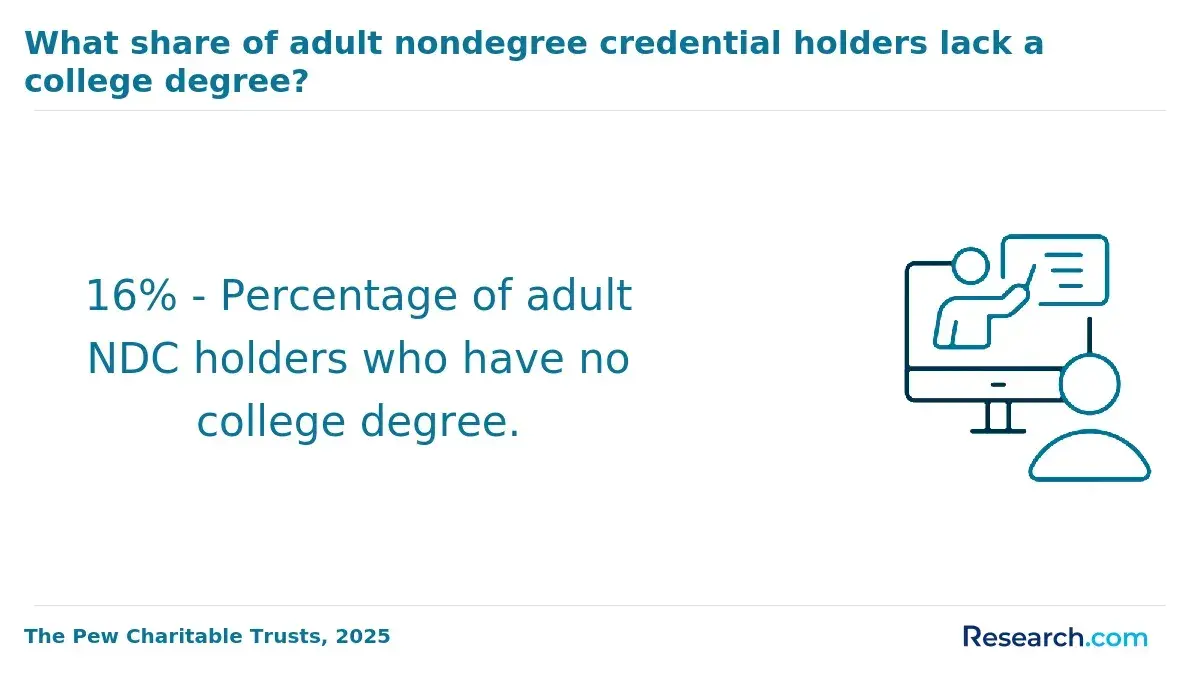
Students who need to improve a transcript or demonstrate recent academic readiness can consider short, credit-bearing coursework before applying. Nondegree learning may build skills, but ask the university whether it will count toward admission or transfer credit; 6-week online courses with certificates are not automatically equivalent to college credits.
How Can You Tell if an Online Sociology Degree With No Recommendation Requirement Is Accredited and Legitimate?
A legitimate online sociology degree is awarded by a properly accredited institution, provides transparent academic and financial information, and follows the same basic institutional accountability standards as other degrees. Sociology bachelor's programs usually do not need separate programmatic accreditation in the way some clinical or licensure-focused fields do, so institutional accreditation is the central check.
Use these steps before applying or sharing personal information. They are especially important when a program emphasizes fast or easy enrollment:
- Confirm institutional accreditation in the U.S. Department of Education's Database of Accredited Postsecondary Institutions and Programs or through the accreditor named by the school.
- Verify that the exact online sociology degree appears in the university catalog, including its credential level, required credits, and graduation requirements.
- Review faculty listings, course descriptions, student-support services, and the school's physical contact information.
- Compare the published net price, refund policy, transfer policy, and financial-aid information before signing an enrollment agreement.
- Ask whether online students receive an official transcript and diploma that identify the same institution as campus students.
Be cautious if a provider will not identify its accreditor, promises a degree in an implausibly short time, awards credit solely for payment, or pressures you to enroll immediately.
Also avoid assuming that national brand recognition alone proves fit: check whether the curriculum includes research methods, statistics or data analysis, theory, inequality, and electives aligned with your interests.
Accreditation matters even more if sociology is a first step toward counseling or therapy. A sociology degree alone does not qualify someone for clinical licensure; students considering that route should investigate the required graduate MFT program pathway and their state's separate licensing rules.
How Much Do Online Sociology Degree Programs With No Letters of Recommendation Cost?
No-recommendation admissions do not inherently make a sociology degree cheaper. Total cost depends on whether the institution charges a flat online rate, applies in-state and out-of-state tuition, accepts transfer credit, requires fees, or uses separate rates for part-time enrollment.
College Board's 2024-25 estimates put average published tuition and fees at $11,610 for in-state students at public four-year colleges and $43,350 at private nonprofit four-year colleges. These are broad U.S. benchmarks rather than online sociology prices, but they show why applicants should compare a school's actual per-credit rate and expected credit total.
The table highlights the cost items that can change the value of an online degree most significantly:
| Cost factor | Why it matters | What to verify |
| Tuition rate | It is often charged per credit and may vary by residency or course level | Rate for the exact online sociology program and upcoming term |
| Transfer credit | Accepted credits can reduce the courses you must pay for | Maximum transfer amount and course-equivalency decisions |
| Mandatory fees | Technology, student-service, graduation, and course fees can add to tuition | Full fee schedule and whether online students pay campus-specific fees |
| Materials and technology | Books, software, reliable internet, and proctoring may create additional expenses | Course syllabus estimates and device requirements |
| Enrollment pace | Taking fewer credits spreads payments but can extend total time to degree | Part-time pricing, term structure, and aid implications |
Ask for a written estimate covering remaining required credits, not merely the price of one course. If your priority is finishing sooner, compare curriculum sequencing and transfer rules alongside accelerated programs; acceleration only saves money when credits transfer and the pace remains manageable.
Can You Get Financial Aid for an Online Sociology Degree With Streamlined Admissions?
Yes. Admission without recommendation letters does not generally limit eligibility for federal student aid. Eligibility depends on factors such as enrollment in an eligible program at an eligible institution, satisfactory academic progress, citizenship or eligible noncitizen status, and the information submitted through the Free Application for Federal Student Aid (FAFSA).
For the 2024-25 award year, the maximum Federal Pell Grant was $7,395. Your actual award can be lower and depends on financial circumstances, enrollment intensity, cost of attendance, and other federal rules, so use a school's financial-aid offer rather than the maximum amount as a budget assumption.
After admission, compare aid offers based on net cost and borrowing terms. The following steps can help avoid accepting more debt than necessary:
- Submit the FAFSA as early as practical and respond promptly to any verification requests.
- Ask whether the online sociology program is eligible for federal aid and whether part-time study changes your offer.
- Review grants and scholarships before federal loans, then compare federal loans before considering private loans.
- Confirm whether employer tuition assistance, military education benefits, or state aid can be used for online enrollment.
- Calculate the remaining balance for a full academic year, including fees, books, and living costs not covered by aid.
Read any scholarship conditions carefully. Some awards require full-time enrollment, a minimum GPA, residency, or continuous enrollment. A simple admissions process should never be mistaken for a simple financing decision.
How Long Does an Online Sociology Degree With No Letters of Recommendation Take to Complete?
A traditional bachelor's degree usually requires about 120 semester credits. A first-year student attending full time may plan around four years, while transfer students can finish sooner if a substantial portion of prior coursework applies to degree requirements. Part-time students may need longer, especially when required courses are offered in sequence.
Recommendation-letter policy has no direct effect on time to completion. The more meaningful timing factors are accepted transfer credits, course availability, term length, general education requirements, and whether the program allows students to take courses year-round.
This comparison shows how enrollment history usually affects a realistic timeline:
| Student situation | Likely timeline driver | Planning consideration |
| New first-year student | Completion of roughly 120 credits | Map general education and sociology requirements from the first term |
| Community college transfer student | Number of applicable lower-division credits | Get a formal evaluation before assuming an associate degree covers all requirements |
| Working adult studying part time | Credits taken each term and scheduling flexibility | Choose a pace that supports consistent progress and academic performance |
| Student with prior university coursework | Age and fit of previous courses | Check residency, upper-division, and major-credit requirements |
Students should be careful with programs marketed as "fast." A shorter session format can increase workload rather than reduce credits required. Confirm the number of weekly study hours, exam or proctoring expectations, and whether statistics or methods courses have prerequisites before choosing an accelerated schedule.
Can You Transfer Credits Into an Online Sociology Degree Program With No Recommendation Letters?
Often, yes. Transfer admission is one reason many adults seek online sociology degrees with streamlined applications. However, a college decides transferability course by course; having credits on an old transcript does not guarantee that every credit will apply to your new major or reduce graduation requirements.
A strong transfer policy should be transparent about maximum credits, minimum grades, residency requirements, and how it evaluates prior learning. Programs may accept general education courses more readily than upper-level sociology courses, particularly research methods, statistics, and theory courses that must meet department standards.
Take these steps before enrolling to protect the value of credits you already earned:
- Send official transcripts to the prospective institution and request a written transfer-credit evaluation.
- Compare accepted credits with the degree audit, not just the total number of credits transferred.
- Ask which transferred courses fulfill sociology-major, general education, elective, and upper-division requirements.
- Keep prior course descriptions and syllabi in case the department requests them for equivalency review.
- Confirm the institution's residency requirement, meaning the credits that must be completed through that university.
For students whose previous study is technical or career-oriented, a transfer-friendly sociology program can still be useful, but elective credit may not shorten the major sequence as much as expected. This is also why a program in a different field, such as an online construction management degree, should be evaluated on its own career and transfer requirements rather than used as a shortcut comparison.
How Should You Compare Online Sociology Degree Programs That Do Not Require Letters of Recommendation?
Start with fit, legitimacy, and total cost; make no-recommendation admission one comparison point rather than the deciding factor. The best option is one that accepts you under a transparent policy and provides coursework, support, and outcomes that match your next step.
Use this side-by-side framework when narrowing a list. It focuses on factors that affect both your ability to finish and the usefulness of the credential afterward:
| Comparison category | Questions to ask | Why it affects your decision |
| Admission policy | Are letters truly not required for my degree level and applicant type? Are essays, GPA thresholds, or prerequisites required? | Prevents incomplete applications and false assumptions about access |
| Accreditation and degree record | Is the institution accredited, and does the catalog list the online sociology degree? | Supports credit transfer, aid eligibility, and employer or graduate-school recognition |
| Curriculum | Does the program include theory, methods, statistics, inequality, and electives related to my goals? | Builds relevant analytical and research skills |
| Career preparation | Are internships, career advising, research opportunities, or graduate-school guidance available online? | Helps connect a broad degree to a specific job plan |
| Cost and aid | What is the estimated total cost after transfer credit and grants? | Shows affordability more accurately than a single per-credit price |
| Learning format | Are classes asynchronous, live, accelerated, or term-based? Are exams proctored? | Determines whether the schedule works with employment and caregiving |
Before submitting applications, contact each admissions office with a short, specific list of questions: whether recommendation letters are required for your category, the deadline for official transcripts, the estimated transfer-credit result, the expected time to completion, and the full cost of attendance. Save the responses and compare them with the published catalog.
A sociology degree may be a strong choice for students interested in social research, community organizations, public service, people operations, advocacy, or later graduate education. It may be less direct for applicants seeking immediate entry into a licensed clinical profession or a tightly regulated occupation; those goals usually require a specialized graduate degree, supervised experience, or separate credential.
Other Things You Should Know About Sociology
Possibly, but only submit optional letters when the application explicitly allows them. Unrequested materials may not be reviewed. If letters are permitted, use them to add meaningful context rather than repeat information already shown on your transcript or résumé.
Ask whether the school offers conditional admission, a pathway program, or an opportunity to submit a personal statement. You can also strengthen a future application with recent college coursework, clear evidence of academic improvement, and a realistic plan for managing the online course load.
No. Recommendation letters are part of the admissions process, not usually part of a degree, transcript, or employer-facing record. Employers typically focus on the institution, completed credential, skills, experience, and fit for the role.
Check when you first build your list, again before applying, and once more before enrollment. Requirements can change by term, degree level, residency status, or transfer status, and the current university catalog and admissions checklist should control.
References
- No Letters of Recommendation? Find Flexible Colleges Today https://www.educationconnection.com/resources/colleges-with-no-letters-of-recommendation-required/
- Online Sociology Major - Crucial Skills for a Diverse Global Society https://www.msudenver.edu/online/sociology-ba/
- 2025 Most Affordable Online Sociology Degrees https://www.onlineu.com/most-affordable-colleges/sociology-degrees
- What to Expect from an Online Degree Program Guide https://www.snu.edu/degrees/what-to-expect-from-an-online-degree-program-guide
- Major in Sociology (Bachelor's) https://online.cudenver.edu/programs/undergraduate/online-major-sociology-bachelors