2027 Online Post-Master's FNP Certificates for Nurses in Mississippi: Coursework and Clinical Requirements
Audited and Verified:
Our Editorial and Data Verification Process
Research.com uses government datasets, official education statistics and primary institutional information to support its career and degree guides. Our review process checks factual accuracy, occupational definitions, source dates and the requirements associated with the credentials discussed.
How This Article Was Fact-Checked
Our editorial team verifies salary estimates, employment projections, education requirements and program information against original data providers and official organizations. Salary figures are checked against the relevant occupational definitions and reporting periods. Information about licensure, accreditation and required in-person training is reviewed separately.
Fact-checked and verified on:

Co-Founder and Chief Data Scientist
If you already hold a nursing master's degree, a post-master's family nurse practitioner (FNP) certificate may offer a route into primary care without earning another full degree. The difficult part is determining which graduate courses you can reuse, how many new supervised clinical hours you need, and whether an online program can support placements in Mississippi.
This guide explains the coursework, clinical preparation, certification and licensure steps, and questions to put to schools before you enroll.
Key Things You Should Know
- An online FNP certificate is not fully remote: supervised, program-approved direct patient care is required, and prior nursing employment does not automatically count.
- FNP certification pathways commonly require at least 500 faculty-supervised clinical hours; a school may require more after reviewing your prior education and current standards.
- Before applying, confirm that a program admits Mississippi residents, supports Mississippi clinical placements, and prepares graduates for an accepted FNP certification exam and Mississippi APRN licensure.
What Is an Online Post-Master's FNP Certificate in Mississippi?
A post-master's FNP certificate is graduate preparation for an RN who already has an MSN or another qualifying graduate nursing degree and wants to provide advanced practice care across the lifespan.
"Online" generally describes academic delivery, not clinical delivery: students complete supervised patient-care experiences at approved sites, and some programs require campus visits or live online sessions.
The certificate is particularly relevant to two applicants with different gaps. A nurse educator or administrator with an MSN may need the full advanced practice core and FNP specialty sequence.
An already-certified NP changing population focus may have completed some applicable graduate work, but still needs a school-approved review of FNP-specific coursework and clinical competencies. Neither a certificate nor prior experience alone grants FNP certification or an APRN license.
This is a postlicensure route, not initial nursing education. Someone without an RN license should investigate prelicensure nursing study options online instead.
What Are Mississippi's Requirements for FNP Certification and APRN Licensure?
Mississippi FNP practice involves separate decisions by the school, a national certifying organization, and the Mississippi Board of Nursing.
A qualifying graduate FNP program establishes educational preparation; passing an accepted national FNP certification examination establishes certification; the board determines whether an applicant meets Mississippi's APRN licensure requirements. An RN license, including a multistate RN privilege, is not a substitute for APRN authorization.
The American Nurses Credentialing Center (ANCC) and the American Academy of Nurse Practitioners Certification Board (AANPCB) offer FNP certification pathways. Both evaluate educational eligibility under their own current rules.
Before enrollment, ask the program which examination pathways its certificate supports, then check the certifier's requirements and the Mississippi Board of Nursing's application, RN-license, certification, and practice requirements directly. Do not assume a school's statement that graduates are "exam eligible" resolves an individual licensing question.
Population focus matters. Shorter psychiatric-mental health NP certificates prepare for a different certification and do not replace FNP preparation.
Which Mississippi Schools Offer Online Post-Master's FNP Certificates?
Start your Mississippi search with the University of Mississippi Medical Center, the University of Southern Mississippi, and Mississippi College, which have graduate nursing offerings worth examining for FNP preparation. Do not treat that shortlist as confirmation that each school currently enrolls students in an online post-master's FNP certificate.
A university may offer an FNP degree but no certificate, pause certificate admissions, or deliver its certificate in a hybrid rather than online format. Request the current certificate-specific catalog and admission-term confirmation from each school.
For a useful comparison, ask each program for its written answers to these questions: Is the award a post-master's FNP certificate? Which courses and visits require attendance? Who finds and approves Mississippi clinical sites? Will the school evaluate your transcript and prior supervised hours before giving you a course-and-hour plan?
Schools outside Mississippi may also be options, but verify their authorization to enroll Mississippi residents and their ability to support local placements before comparing prices. An online nurse practitioner affordability guide can broaden a search, but its advertised tuition cannot replace a certificate-specific cost estimate.
Delivery format changes how you attend classes, not the need to demonstrate FNP competencies with patients. The comparison below identifies scheduling questions that matter when clinical placements must fit around an RN or APRN job.
| Factor | Primarily online certificate | Campus-based or hybrid certificate |
| Didactic classes | May use recorded work, scheduled live sessions, or both | May require regular classroom attendance |
| Clinical care | In-person, school-approved placements near an eligible student when available | In-person placements, potentially through established local relationships |
| Travel | Possible campus intensives plus travel to clinical sites | Recurring campus travel plus clinical-site travel |
| Scheduling risk | Placement and preceptor availability can limit flexibility | Fixed class times can limit flexibility |
Ask for a sample term schedule, including live classes, intensives, and expected clinical days. Do not infer that flexible classroom delivery means self-paced patient encounters. Likewise, exploring RN-to-BSN nontraditional clinical formats will not establish what an FNP program accepts: advanced practice direct-care requirements are different.
The school builds a certificate plan from a formal review of your graduate transcript, course content, and documented competencies.
FNP preparation generally includes advanced physiology/pathophysiology, advanced health assessment, and advanced pharmacology, followed by population-focused diagnosis and management across the lifespan. Courses may address preventive care, chronic conditions, reproductive and pediatric care, older adults, evidence-based practice, and clinical decision-making.
The distinction between having taken a course and having met an FNP requirement is consequential. A prior pharmacology course may need review for graduate level, advanced practice content, recency, and alignment with the receiving program's policy.
An adult-gerontology NP may have completed the advanced practice core but still need pediatric and other lifespan-focused learning and clinical encounters. An MSN in leadership may involve substantially more coursework.
Do not confuse a non-APRN graduate pathway with FNP preparation. Online DNP executive and organizational pathways can serve leadership goals, but their absence of FNP-specific patient-care preparation makes them a different choice.
There is no single clinical-hour total that can accurately describe every Mississippi applicant's certificate plan. FNP certification pathways commonly specify a minimum of 500 faculty-supervised clinical hours, while an individual program may require more hours or additional experiences to satisfy its curriculum and applicable standards. Confirm the current minimum with the intended certifier and obtain the school's written requirement for your entry term.
Hours must meet the program's rules for supervised FNP learning, patient population, preceptor qualifications, documentation, and faculty evaluation. Your RN shifts, independent APRN practice, simulation, and previously completed clinical hours are not automatically interchangeable with new FNP clinical hours.
A school may consider documented prior graduate experiences during a gap analysis without waiving the experiences needed to demonstrate a new population focus.
Ask whether placements must include particular age groups or settings, whether your workplace can be considered, who secures a preceptor, and what happens if a site falls through. Advertised shorter routes to family NP preparation are feasible only if their required clinical days and site approvals fit your actual schedule.
Expect a program to review your graduate nursing degree, RN license, transcripts, and suitability for advanced practice study. Schools may also request a résumé documenting nursing experience, recommendations, a statement of goals, and evidence that you can meet clinical-site requirements. Requirements differ by institution; admission to a university is not the same as admission to its FNP certificate track.
Request a written gap analysis before relying on a quoted duration or price. Supply syllabi for graduate advanced assessment, pathophysiology, and pharmacology; prior NP specialty courses; and records of supervised clinical hours and populations, if applicable.
The receiving program decides what satisfies its curriculum. Clinical sites may impose additional screening, immunization, or documentation requirements after academic admission.
If your highest nursing qualification is an associate degree rather than a graduate nursing degree, associate-to-master's nursing pathways address a different entry point; a post-master's certificate is not a shortcut around its graduate-degree prerequisite.
Time and cost depend on the school's gap analysis, course sequence, enrollment pace, and available clinical placements. A previously certified NP who needs focused lifespan coursework may have a different plan from a nurse with a non-APRN MSN.
A short advertised timeline is not a reliable personal completion date until the school confirms which courses run each term and when approved clinical hours can begin.
Calculate total cost from the credit hours you must take, the applicable tuition rate, and mandatory fees. Add books, technology, background checks, clinical compliance costs, travel, possible lodging for campus visits, certification and licensure fees, and any reduced work hours. Request a term-by-term estimate and ask whether employer tuition assistance covers certificates and requires continued employment.
Comparisons with accelerated DNP program comparisons are useful only if you also want the DNP award. A DNP may serve a broader academic goal, but a certificate can avoid unrelated doctoral coursework when FNP eligibility is the immediate objective.
After meeting certification and Mississippi APRN licensure requirements, an FNP may pursue primary care roles in family practices, community clinics, and other settings whose patient populations and duties match FNP preparation and employer expectations. Graduation alone does not authorize NP practice, guarantee a position, or establish readiness for every specialty setting.
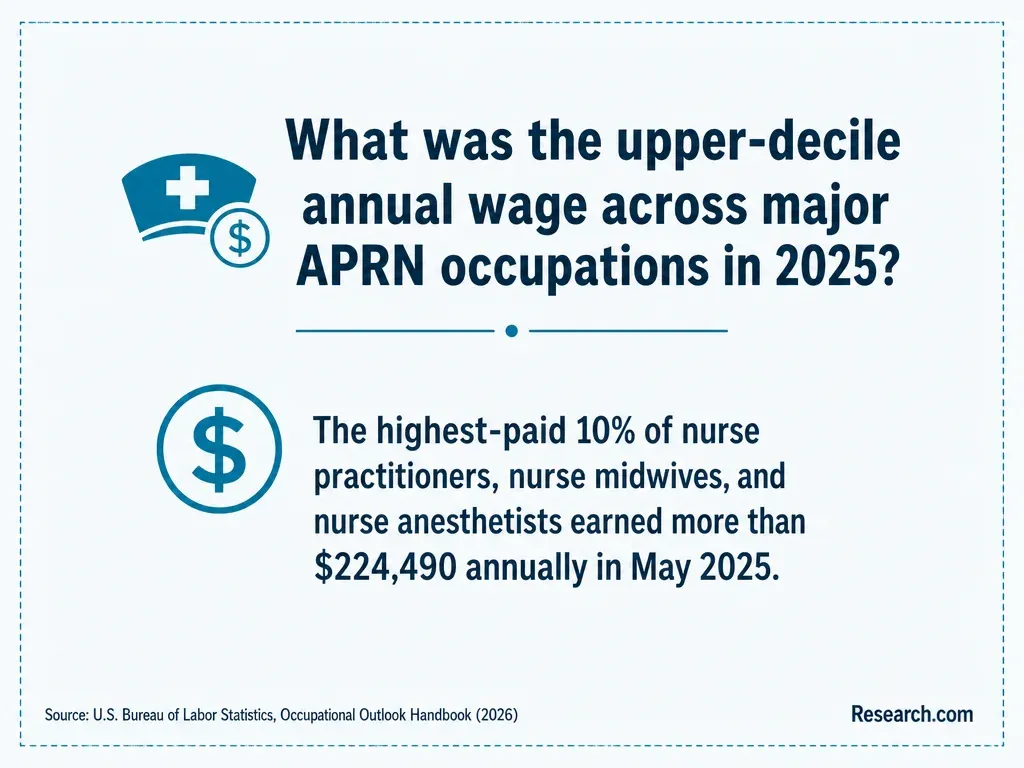
The U.S. Bureau of Labor Statistics reports nurse practitioner wages for the occupation as a whole, not for Mississippi FNP certificate graduates. Those figures can provide labor-market context, but a local offer will depend on setting, experience, schedule, responsibilities, and employer. Compare actual Mississippi postings and offers rather than treating a national occupational median as your expected pay or assuming that a certificate produces an automatic raise.
Choose the population focus for the work you intend to do. If your goal is psychiatric specialty practice rather than lifespan primary care, comparing shorter MSN-PMHNP routes is more relevant than choosing an FNP certificate for speed alone.
How Should You Choose an Accredited Online FNP Certificate Program?
Choose the program that can document a workable route from your current credentials to FNP certification and Mississippi APRN eligibility, not simply the one with the fewest advertised credits. Institutional accreditation, nursing program accreditation, authorization to enroll Mississippi residents, and individual certification and licensing eligibility answer different questions.
Before paying a deposit, obtain written confirmation of the following items so that competing offers can be compared on the same basis.
- Confirm the exact FNP certificate award, applicable nursing program accreditation, and eligibility to enroll and complete clinical experiences in Mississippi.
- Request a transcript-based course and clinical gap analysis, including which prior work the school accepts and which FNP experiences remain.
- Get the clinical placement policy in writing: geographic restrictions, preceptor approval, school assistance, deadlines, and contingency plans.
- Compare required live sessions and campus visits with your employment schedule, then request a term-by-term tuition and fee estimate.
- Check the intended certifier's current examination criteria and ask the Mississippi Board of Nursing about any unresolved individual licensure question.
For a broader look at advertised timelines, accelerated FNP certificate admissions and requirements can help generate questions. Let the written, applicant-specific answers, not a "fastest" label, settle the decision.
Other Things You Should Know About Nursing Programs
Yes. ANCC and AANPCB set their own renewal rules and documentation requirements. Check the rules for the credential you hold and separately maintain any required state license.
Not solely because the FNP is licensed in Mississippi. The patient's location can trigger another state's licensing and practice requirements; verify them before providing care across state lines.
No. Pediatric RN experience can inform your learning, but it does not replace graduate FNP education, supervised advanced practice preparation, certification, or APRN licensure.
Not necessarily. Employers and regulators evaluate the NP's population focus and role preparation. Ask about the position's patient population and required certification before choosing an FNP rather than an acute-care track.
- Advanced Practice Registered Nurse | Mississippi Board of Nursing https://www.msbn.ms.gov/licensure/advanced-practice-registered-nurse
- Family Nurse Practitioner Post-Master's Certificate | Western Governors University https://www.wgu.edu/online-nursing-health-degrees/post-masters-nursing-certificate/family-nurse-practitioner.html
- Online Post-Master's Certificate - Family Nurse Practitioner | Xavier University https://degrees.xavier.edu/nursing/post-masters-certificates/fnp
- Family Nurse Practitioner (Post-Professional Certificate) | virginia.edu https://records.ureg.virginia.edu/preview_program.php
- Nursing Certification and Licensure - Academic Guides | Academics at Walden University https://academicguides.waldenu.edu/certification-licensure/nursing
- Family Nurse Practitioner Post-Master's Certificate | Capella University https://www.capella.edu/online-nursing-degrees/nursing-certificate-programs/certificate-family-nurse-practitioner/
- What Does It Take to Become a Nurse Practitioner? | Spring Arbor University https://online.springarbor.edu/news/what-does-it-take-become-nurse-practitioner
- Post-Master's Nursing Certificate (Online) | deltastate.edu https://www.deltastate.edu/academics/certificate-programs/nursing/