2027 Online Post-Master's FNP Certificates for Nurses in Massachusetts: Coursework and Clinical Requirements
Audited and Verified:
Our Editorial and Data Verification Process
Research.com uses government datasets, official education statistics and primary institutional information to support its career and degree guides. Our review process checks factual accuracy, occupational definitions, source dates and the requirements associated with the credentials discussed.
How This Article Was Fact-Checked
Our editorial team verifies salary estimates, employment projections, education requirements and program information against original data providers and official organizations. Salary figures are checked against the relevant occupational definitions and reporting periods. Information about licensure, accreditation and required in-person training is reviewed separately.
Fact-checked and verified on:

Co-Founder and Chief Data Scientist
An online post-master's family nurse practitioner (FNP) certificate can help a Massachusetts nurse with a graduate degree prepare for a new advanced practice role. The decision hinges on more than online coursework: your prior preparation, access to approved clinical sites, certification eligibility, and Massachusetts licensure all matter. This guide explains what programs typically teach, how supervised clinical experiences work, and what to verify before committing tuition or arranging a preceptor.
Key Things You Should Know
- An FNP certificate adds family-population preparation to prior graduate nursing study; it does not itself award national certification or a Massachusetts APRN license.
- Expect supervised, program-approved clinical care across the lifespan, even when academic courses are online. Prior employment hours do not automatically count.
- Compare the complete plan - not just tuition per credit - including required credits, clinical placements, on-site visits, and eligibility for one of the 2 major FNP certification exams.
What is an online post-master's FNP certificate in Massachusetts?
It is a graduate-level, nondegree program for a nurse who already holds an MSN or another qualifying graduate nursing degree and needs formal FNP preparation. FNP is a nurse practitioner population focus spanning primary care across the lifespan. "Online" usually describes didactic delivery; supervised patient care takes place in approved clinical settings, and some programs require campus visits or live online sessions.
The best fit depends on what your existing degree prepared you to do. An adult-gerontology NP changing population focus needs different coursework and patient encounters from an MSN-prepared nurse educator who has never completed an NP track. A school should evaluate both against its FNP competencies before estimating credits or time. If speed matters, use short-format family NP certificates for graduate nurses as a starting point, then verify each program's individual study plan and Massachusetts eligibility.
What are the Massachusetts requirements for becoming a certified family nurse practitioner?
There are separate educational, certification, and licensing decisions. A prospective FNP generally needs an active RN license, graduate-level education that meets FNP certification requirements, a passing result on an accepted national FNP certification examination, and authorization from the Massachusetts Board of Registration in Nursing to practice in the APRN role. The board - not the certificate program or certifying organization - determines state licensure requirements and issues the license.
Check the board's current application instructions for education documentation, RN license status, certification verification, and any other required materials before choosing a program. If you hold a BSN but no qualifying graduate nursing degree, a post-master's certificate is not the immediate route; exploring less expensive MSN pathways after a BSN may be more relevant, provided the chosen track actually prepares FNPs. A generalist or non-APRN MSN alone does not authorize NP practice.
How do online FNP certificate programs meet clinical hour requirements?
Students complete supervised direct patient care at sites approved by their program. FNP experiences should provide appropriate assessment, diagnosis, management, and health-promotion opportunities across the lifespan - not just hours in an unrelated nursing role. The school determines the individualized clinical plan and evaluates performance; the certifying organization sets examination-eligibility rules. Confirm the applicable hour and experience requirements with both, because a prior graduate transcript does not establish that hours satisfy a new FNP population focus.
Before enrolling, ask who finds sites, who approves preceptors, whether placements are available near your Massachusetts address, and when affiliation agreements must be signed. Also ask whether pediatric and other lifespan experiences require more than one site. Comparing clinical site support for FNP students can help frame those questions, but "placement assistance" is not a guarantee of a local preceptor. Employment, simulation, and self-arranged shadowing should not be assumed to replace approved clinical care.
Typical study combines advanced pathophysiology, advanced pharmacology, advanced health assessment, and FNP-specific diagnosis and management across the lifespan. Courses may address pediatric and adult primary care, reproductive health, older adults, prevention, evidence-based care, and clinical decision-making. The exact curriculum follows the program's review of prior graduate work; a course title alone does not prove equivalent content or competence.
This distinction matters when changing specialties. Psychiatric-mental health NP and FNP tracks prepare for different population-focused practice; psychiatric NP certificate coursework options cannot be substituted wholesale for family primary care preparation. Request a written gap analysis identifying accepted courses, new courses, required clinical experiences, and any on-campus assessments before comparing programs.
Verify the institution's recognized institutional accreditation and the nursing program's applicable accreditation, commonly through the Commission on Collegiate Nursing Education (CCNE) or Accreditation Commission for Education in Nursing (ACEN). Then confirm that the specific post-graduate FNP certificate falls within the accreditation scope and meets the intended certifier's educational criteria. Institutional accreditation alone does not establish FNP certification eligibility.
Also obtain written confirmation that the school may enroll a Massachusetts resident, can approve clinical experiences there, and prepares graduates to seek Massachusetts APRN licensure. State authorization, program accreditation, and the board's licensing decision answer different questions. That distinction applies even when comparing online formats with other nursing study, such as RN-to-BSN capstone and practice requirements; an RN-completion program's format does not establish what an FNP certificate's supervised clinicals must include.
Programs commonly request an active RN license, graduate nursing transcripts, a résumé, and evidence of graduate-level preparation. They may also require recommendations, an interview, a minimum GPA, NP experience, or specific advanced-practice courses. Admission rules differ: some schools accept graduates of non-APRN MSN programs, while others limit entry to already-prepared APRNs or require additional foundational study.
Submit syllabi and any documented supervised clinical hours if you want prior work considered. Ask admissions to distinguish admission eligibility from the later course and clinical gap analysis. If your intended role is psychiatric rather than family primary care, compare the right specialty from the outset; accelerated MSN preparation in psychiatric nursing is a different route and does not provide FNP preparation.
There is no reliable single duration for every graduate nurse. Your prior coursework, required FNP clinical experiences, course sequence, enrollment pace, and availability of approved sites determine the timeline. A school's advertised minimum may assume full-time study, immediate placement, and no additional foundational courses.
Request a term-by-term plan that shows clinical start dates, weekly site commitments, live sessions, and required travel. If you are considering a doctorate instead, a guide to shorter DNP programs can help compare formats, but a DNP is not automatically necessary to pursue FNP preparation. Confirm that any doctoral track includes the FNP-specific education you need.
Without a named school and individualized credit evaluation, there is no defensible statewide certificate price. Multiply the credits you must take by the applicable per-credit tuition, then add mandatory fees and clinical-related expenses. For example, 24 credits at a hypothetical $900 per credit would produce $21,600 in tuition alone - not an estimate for any particular program.
Budget separately for books, technology, background checks, health clearances, travel or lodging for visits, clinical-site requirements, certification, and licensing. Reduced work hours can matter more than a small tuition difference. When exploring less expensive nurse practitioner study, compare your written total-cost estimates using the same assumptions, and ask whether employer assistance applies to a post-graduate certificate.
The two principal options are the American Nurses Credentialing Center's FNP-BC credential and the American Academy of Nurse Practitioners Certification Board's FNP-C credential. Both require applicants to meet the organization's current education and supervised-practice eligibility rules and pass its examination. A school-issued certificate is neither credential; verify that the program will supply the documentation required by the certifier you choose.
Choose based on eligibility, examination content, fees, renewal obligations, and any employer preference - not an assumption that one credential grants broader Massachusetts practice authority. If you are also weighing another specialty, affordable psychiatric-mental health NP pathways lead toward a different national certification and should not be treated as interchangeable with FNP study.
What careers, salaries, and job outlook can FNPs expect in Massachusetts?
Licensed FNPs may work in primary care practices, community health centers, outpatient clinics, and other settings that use family-focused advanced practice. Actual duties, prescribing authority, onboarding, and compensation depend on Massachusetts law, employer policies, experience, and the patient population. An FNP certificate can establish an educational pathway toward the role; it does not guarantee a position or immediate readiness for independent clinical responsibility.
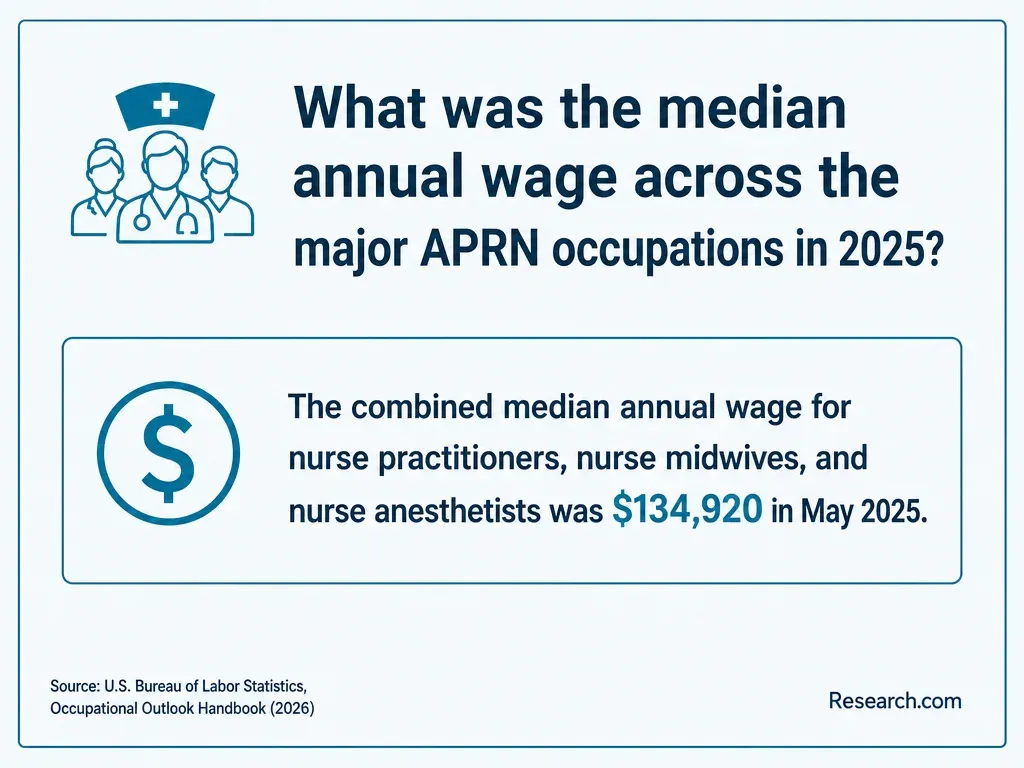
For pay comparisons, use the U.S. Bureau of Labor Statistics' nurse practitioner occupation data and its Massachusetts wage estimates, noting the data year. Those figures cover nurse practitioners across specialties and experience levels - not salaries guaranteed to new FNP certificate graduates. National NP employment projections likewise describe an occupation, not openings at a particular Massachusetts clinic. If your goal is advancement rather than a new patient-care population focus, comparing DNP admission criteria may help you assess another route; confirm that any DNP track matches the work you want to do.
Other Things You Should Know About Nursing
Often, yes, but clinical shifts, live classes, and travel may conflict with your schedule. Ask for a term-by-term estimate of required attendance before committing to full-time employment.
Not solely by holding a Massachusetts license. Check the licensing and practice rules where the patient is located, along with employer and payer requirements.
No. Prescribing depends on applicable state requirements, any required registrations, and employer authorization. Confirm the rules before accepting a role that includes prescribing.
Yes. ANCC and AANPCB each set renewal requirements for their credentials. Review the requirements for your chosen certification and maintain any separate Massachusetts license obligations.
- Post-Master's Family Nurse Practitioner Certificate | Immaculata University https://www.immaculata.edu/academics/degrees-programs/family-nurse-practitioner-certificate/
- Program: Family Nurse Practitioner (Post-Master's Certificate) | umb.edu https://catalog.umb.edu/preview_program.php
- Post-Graduate Nursing Certificate Programs | Georgetown https://nursing.georgetown.edu/non-degree-certificates/post-graduate-certificate-in-nursing/
- Tuition, Fees, & Other Costs | MCPHS https://www.mcphs.edu/admission-and-aid/cost-and-aid/tuition-and-fees
- Online Family Nurse Practitioner (FNP) Program | Simmons https://online.simmons.edu/masters/fnp/
- Nursing (NURS) - catalog.uark.edu - University of Arkansas https://catalog.uark.edu/graduatecatalog/coursesofinstruction/nurs/
- Traditional Post-Graduate FNP Certificate Program (Online w/Immersions) | Mount Carmel College of Nursing https://www.mccn.edu/academics/post-graduate-certificate-tracks/post-graduate-certificate-family-nurse-practitioner/traditional-fnp
- Program: Family Nurse Practitioner Graduate Certificate | utk.edu https://catalog.utk.edu/preview_program.php
- 4.1.21 Instructional Modalities and Distance Education | Illinois State https://policy.illinoisstate.edu/academic/4-1-21
- Advanced Pathiophysiology/Pharmacology And Health Assessment Across the Lifespan | Viterbo University https://www.viterbo.edu/courses/nurs-614