2027 Online Pediatric Primary Care NP Programs for Nurses in South Dakota: MSN Routes and Clinical Requirements
Audited and Verified:
Our Editorial and Data Verification Process
Research.com uses government datasets, official education statistics and primary institutional information to support its career and degree guides. Our review process checks factual accuracy, occupational definitions, source dates and the requirements associated with the credentials discussed.
How This Article Was Fact-Checked
Our editorial team verifies salary estimates, employment projections, education requirements and program information against original data providers and official organizations. Salary figures are checked against the relevant occupational definitions and reporting periods. Information about licensure, accreditation and required in-person training is reviewed separately.
Fact-checked and verified on:

Co-Founder and Chief Data Scientist
For a South Dakota RN, an online pediatric primary care nurse practitioner program can make graduate study possible without relocating. It cannot eliminate supervised pediatric clinical care - and a program that enrolls you may not necessarily support placements where you live.
This guide explains which MSN routes lead toward pediatric primary care NP certification, how to evaluate clinical and campus requirements, and what to confirm before paying a deposit.
The goal is to help you choose a feasible path to the specific advanced practice role you want, rather than an online degree that does not meet it.
Key Things You Should Know
- Choose a pediatric primary care NP population-focus track, not a general MSN, pediatric RN specialty course, or pediatric acute care NP track.
- Plan for supervised pediatric direct-care experiences; the Pediatric Nursing Certification Board's published PNP-PC eligibility baseline has been 500 hours, but confirm the current handbook and your program's higher requirements.
- Before enrolling from South Dakota, obtain written confirmation of state enrollment eligibility, local clinical-placement arrangements, required travel, and the track's certification eligibility.
What are online pediatric primary care NP programs for South Dakota nurses?
These are graduate nursing tracks that prepare licensed RNs to assess, diagnose, manage, and promote health for children and adolescents in primary care. Coursework may be delivered online, but supervised patient care occurs at approved clinical sites.
A pediatric primary care NP (PNP-PC) track is distinct from pediatric acute care NP preparation, which emphasizes care of children with acute, critical, or complex conditions.
South Dakota nurses may need to consider out-of-state schools. "Online" does not establish that a school can enroll a South Dakota resident, approve a South Dakota preceptor, or offer an appropriate pediatric placement within commuting distance.
Ask the school to confirm each point for your intended entry term and clinical county. An RN whose highest nursing credential is an associate degree can investigate ADN-to-MSN education pathways, but must verify that a particular bridge actually includes a PNP-PC track; many do not.
What MSN pathways prepare nurses for pediatric primary care NP certification?
The right route depends on what the nurse already holds. In every case, the decisive feature is documented graduate preparation in the pediatric primary care NP population focus, not the MSN credential alone.
The comparison below separates routes that can lead to a first PNP-PC credential from options that require a different academic award or an individual review of prior work:
| Starting point | Potential route | Critical check |
| RN with a BSN | MSN with a PNP-PC track | Confirm the named track, clinical plan, and certification eligibility. |
| RN without a BSN | Eligible RN-to-MSN bridge followed by PNP-PC preparation | Confirm bridge admission, any intermediate degree, and whether PNP-PC is available. |
| MSN- or DNP-prepared nurse in another field | Post-graduate PNP-PC certificate, if offered | Request a formal review of prior courses, competencies, and clinical hours. |
| RN considering a practice doctorate | DNP with a PNP-PC track | Compare the additional degree requirements with an MSN route to the same intended role. |
An FNP track may include care across the lifespan, but it is not the same educational and certification route as PNP-PC. Likewise, a leadership or education MSN does not qualify its graduate as an NP.
Nurses comparing tuition after a BSN can use affordable graduate study after a nursing bachelor's as a starting point, then screen specifically for the pediatric primary care track.
What clinical requirements apply to online pediatric primary care NP programs?
PNP-PC students need faculty-supervised, documented direct patient care with an appropriate pediatric population and qualified preceptors. The Pediatric Nursing Certification Board (PNCB) has published a minimum of 500 supervised direct patient care hours for its PNP-PC exam pathway; schools may require more, and applicants should check the handbook in effect when they apply.
Hours alone are insufficient if experiences do not satisfy the program's population, competency, supervision, and evaluation requirements.
Clinical access is often the make-or-break issue for a South Dakota student. A small local patient population, a clinic that sees mostly adults, or a long drive to a pediatric specialty site can complicate the schedule even when lectures are asynchronous.
Before accepting an offer, get specific answers to these questions:
- Who identifies and secures sites and preceptors, and what happens if the first placement falls through?
- Which pediatric ages, settings, encounter types, and preceptor credentials must the school approve?
- How many hours are required each term, and must they occur on weekdays or in prescribed rotations?
- Which simulation, skills assessments, or campus visits are additional to direct-care hours?
- Will the school approve the proposed South Dakota site before clinical coursework begins?
An RN job in pediatrics is valuable preparation but does not automatically count as graduate NP clinical education. This also distinguishes an NP track from comparing RN-to-BSN practice expectations: a program's treatment of RN-to-BSN experiential work does not determine PNP-PC clinical requirements.
The meaningful comparison is the complete weekly and semester schedule, not the location of lectures. Either format still requires approved supervised care and faculty assessment.
Use this comparison to identify which format is feasible alongside employment, travel, and caregiving responsibilities:
| Feature | Online or hybrid track | Campus-based track |
| Class meetings | May mix recorded work with required live sessions | May provide a predictable in-person timetable |
| Clinical sites | May permit approved sites near home, subject to school rules | May use established regional relationships, without guaranteeing placement |
| Travel | Can include intensives and long drives to pediatric sites | Includes regular campus travel and potentially separate clinical travel |
| Scheduling risk | Local preceptor availability may determine progression | Course and campus attendance may limit work flexibility |
Ask for a sample clinical-term calendar, not just a description of "flexible" delivery. Nurses comparing other online NP specialties may find online psychiatric NP master's schedule options useful as a reminder that the word "online" says little about live sessions or placement time; those programs do not substitute for PNP-PC preparation.
Check accreditation at three different levels. The institution should hold recognized institutional accreditation. Its graduate nursing program should hold applicable nursing program accreditation, commonly from the Commission on Collegiate Nursing Education (CCNE) or Accreditation Commission for Education in Nursing (ACEN).
Separately, the school must be able to confirm that its specific PNP-PC track supports the intended certification route and that it can enroll and place the student in South Dakota.
Accreditation of a university - or even of its MSN program - does not prove that every advertised NP concentration is available to every resident. Request the exact degree and track name, the accreditor's scope, a written South Dakota enrollment and placement determination, and the school's explanation of PNCB exam eligibility.
If a practice doctorate is under consideration instead, DNP study options beyond highly selective programs are only useful after the same pediatric track and eligibility checks; a DNP without PNP-PC preparation does not solve this decision.
Expect graduate-level advanced health assessment, pathophysiology, and pharmacology alongside pediatric growth and development, health promotion, prevention, and diagnosis and management of common pediatric conditions.
Family communication, developmental and behavioral concerns, and care coordination may be integrated across courses and clinical evaluations. Exact course titles, credits, and sequence vary by school.
Review the curriculum map for how pediatric content connects to supervised encounters, not merely whether "pediatrics" appears in a catalog description. If you already hold another NP credential, the school should assess your prior coursework and clinical preparation individually.
Reviewing psychiatric NP certificate coursework options can illustrate why a certificate is population-focus-specific: psychiatric coursework cannot simply be relabeled as pediatric primary care preparation.
Schools commonly evaluate an active RN license, an eligible nursing degree or bridge background, transcripts, academic performance, references, and a professional statement.
Some also require or prefer pediatric RN experience, interviews, or particular prerequisite coursework. Admission rules differ from later clinical-site clearance, which may involve separate checks and documentation.
For an experienced RN, the best application question is not simply "Do I qualify?" Ask whether your present degree and license qualify for the PNP-PC track, whether pediatric experience is required, and when you must secure a clinical site.
Already-certified APRNs should submit syllabi and documented supervised hours for a formal gap analysis rather than assume prior NP training will transfer. Advertised accelerated pathways, including one-year FNP admission requirements, should not be mistaken for evidence that an applicant can enter or finish a PNP-PC track on the same terms.
Completion time depends on the entry route, required credits and clinical terms, course sequencing, and full- or part-time enrollment. A BSN-prepared RN entering an MSN track has a different plan from an ADN-prepared bridge student or an APRN completing a post-graduate certificate.
Request a term-by-term plan that shows when pediatric placements must be available; an advertised shortest duration may assume uninterrupted, full-time progression.
Compare written total-cost estimates, not tuition alone. Include per-credit tuition, mandatory fees, books and technology, clinical compliance expenses, travel and lodging for intensives, trips to clinical sites, certification and licensing fees, and any reduction in paid work. Ask whether extending a placement adds tuition or fees.
For a first pass at school prices, affordable graduate pathways to NP preparation can narrow the search, but confirm PNP-PC availability and calculate costs using that track's actual credit and travel requirements.
Graduation, national certification, and South Dakota authority to practice are separate steps. PNP-PC graduates generally seek the Pediatric Nursing Certification Board's Certified Pediatric Nurse Practitioner-Primary Care (CPNP-PC) credential, subject to the board's current education, clinical, application, and examination rules.
They then must satisfy the South Dakota Board of Nursing's applicable APRN licensure requirements before practicing in that role. Verify the current board application instructions, RN-license requirements, certification documentation, and any prescribing requirements directly with the responsible authorities.
For an APRN changing population focus, a short certificate is not automatically sufficient: the receiving school and certifying body must establish the needed pediatric courses and supervised experiences.
Post-master's FNP certificate completion timelines describe a different population focus and should not be used to predict the length or eligibility of a PNP-PC certificate. An RN multistate practice privilege also does not, by itself, establish authorization to practice as a pediatric NP in every state.
What salaries and career opportunities are available to pediatric primary care NPs?
PNP-PC graduates may seek roles in pediatric primary care practices, outpatient clinics, community health services, and other settings that need ongoing child and adolescent care.
Job fit depends on the actual patient population, employer expectations, orientation, scope of practice, and local demand, not merely the certification printed on a résumé.
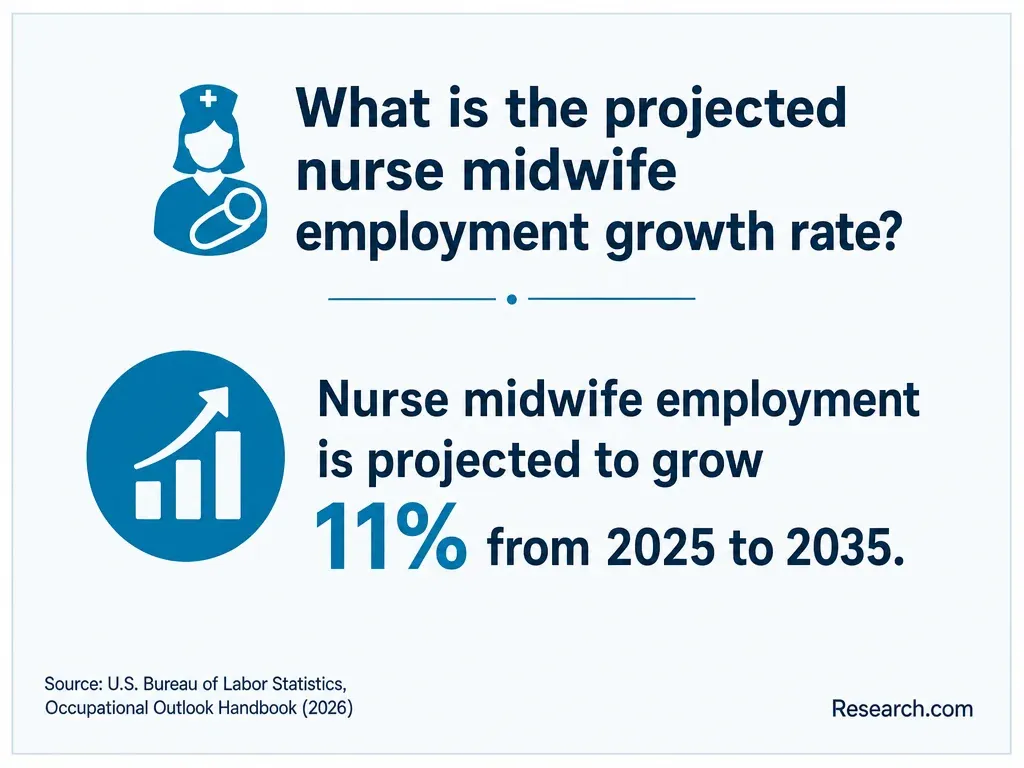
The U.S. Bureau of Labor Statistics reports wages and projected growth for nurse practitioners as an occupation, not a separate national median for South Dakota pediatric primary care NPs. Its May 2025 wage reference and 2025-2035 employment projections can provide broad context, but cannot predict a pediatric offer in a particular town.
For a realistic comparison, examine local postings and ask about compensation, patient volume, call duties, mentoring, benefits, and the share of pediatric versus other visits.
If your intended work is primarily behavioral health rather than pediatric primary care, compare the required population focus before committing tuition. Affordable online psychiatric nurse practitioner programs represent a different clinical and certification pathway, not a cheaper route to PNP-PC practice.
Other Things You Should Know About Nursing
Potentially, if the facility agrees and the school approves its patients, preceptor, supervision, documentation, and affiliation arrangements. Do not count on a site until those approvals are in place.
Telehealth practice may depend on where the patient is located and that state's licensing rules. Check the patient state's APRN requirements and the employer's policies before providing care.
Not automatically. School nurse positions can have separate state, district, or employer requirements. Compare the job description with your RN and APRN credentials before pursuing a graduate degree for that purpose.
Identify realistic possibilities early, but ask the program whether it assigns sites or permits student-proposed preceptors. Only the school can determine whether a proposed arrangement meets its clinical requirements.
- Administrative Rule 20:48 | South Dakota Legislature https://sdlegislature.gov/Rules/Administrative/20:48
- Nursing Field Experience: Find a Preceptor and Site | Academics at Walden University https://academicguides.waldenu.edu/nursing-field/find-preceptor
- Primary Care Pediatric Nurse Practitioner Concentration, MS | purdue.edu https://catalog.purdue.edu/preview_program.php
- RN to MSN - Pediatric Nurse Practitioner | Spring Arbor University https://online.springarbor.edu/programs/master-of-science-in-nursing/rn-to-pnp-bridge
- Prepping for PNCB Nursing Certification | Regis College Online https://online.regiscollege.edu/blog/pncb-nursing
- Clinical Collaborations | Nell Hodgson Woodruff School of Nursing https://www.nursing.emory.edu/degrees-programs/simulation-and-clinical-experience/clinical-collaborations
- What Is Pediatric Primary Care Nursing? | UTA https://academicpartnerships.uta.edu/healthcare-nursing-online-programs/msn-pediatric-care/pcnp/pediatric-primary-care-nursing/
- MSN: Pediatric Primary Care Nurse Practitioner | jhu.edu https://nursing.jhu.edu/programs/masters/msn-ap/msn-pediatric-np/
- Pediatric Nurse Practitioner - Primary Care Graduate Certificate https://health-education-human-services.wright.edu/nursing/pediatric-nurse-practitioner-primary-care-graduate-certificate
- BSN to MSN - Pediatric Primary Care Nurse Practitioner | Herzing University https://www.herzing.edu/nursing/msn-pnp-program