2027 Online MSN Public Health Nursing Programs for Nurses in Maine: Population Health Practicum and Cost
Audited and Verified:
Our Editorial and Data Verification Process
Research.com uses government datasets, official education statistics and primary institutional information to support its career and degree guides. Our review process checks factual accuracy, occupational definitions, source dates and the requirements associated with the credentials discussed.
How This Article Was Fact-Checked
Our editorial team verifies salary estimates, employment projections, education requirements and program information against original data providers and official organizations. Salary figures are checked against the relevant occupational definitions and reporting periods. Information about licensure, accreditation and required in-person training is reviewed separately.
Fact-checked and verified on:

Co-Founder and Chief Data Scientist
For a Maine RN interested in community health, the difficult part of choosing an online MSN is not finding online classes. It is finding a program whose supervised population health work can be completed at an approved Maine site - and understanding the full cost before enrolling.
This guide explains what to ask about practicums, how to compare tuition and placement expenses, and where accreditation and licensure fit. It also helps you decide whether an MSN is necessary for your intended public health role.
Key Things You Should Know
- An online MSN does not guarantee a Maine-based practicum: confirm the site, supervisor, required hours, and school approval before committing. Compare total cost, not tuition alone.
- As an arithmetic example - not a quoted program price - 36 credits at $700 per credit equal $25,200 before fees, travel, or reduced work hours.
- A public health or population health MSN is generally a non-APRN pathway; it does not, by itself, qualify a graduate for nurse practitioner licensure.
What are online MSN public health nursing programs in Maine?
An online MSN public health nursing program is graduate education for licensed nurses who want to work with communities and populations, rather than focus solely on individual encounters. Coursework may be online, but applied learning can require scheduled meetings, an approved organization, faculty oversight, and a supervised project or practicum. Programs may use names such as population health, community health, nursing leadership, or care coordination; the title alone does not establish what fieldwork they provide.
For a Maine nurse, the strongest fit depends on the intended work. A health department role involving outreach and program evaluation calls for different preparation from an advanced practice role diagnosing and treating patients. If the latter is your goal, compare APRN tracks separately; an online nurse practitioner affordability guide addresses a different credential and cost decision.
Which Maine online MSN programs offer population health practicums?
No specific Maine online MSN can be confirmed here as currently guaranteeing a population health practicum. A school may offer relevant coursework without offering a dedicated public health track, and permission to use a particular Maine site can depend on the student's location, the proposed supervisor, and the enrollment term. The institutions below are starting points for direct inquiries, not a verified list of available tracks or placements.
Ask each nursing department about its current MSN catalog and practicum policy. This comparison separates a useful lead from the evidence needed before applying.
| Institution to investigate | Decision-critical confirmation |
| University of Southern Maine | Whether a current online MSN pathway includes supervised population health objectives and accepts a proposed Maine community site. |
| Saint Joseph's College of Maine | Whether its current MSN offerings include an applicable community-based practicum, and who secures and approves the site. |
| Other Maine or out-of-state online MSN providers | Whether Maine residents may enroll and complete every required in-person experience at an approved Maine site. |
Request the current course sequence, practicum handbook, required hours, site criteria, preceptor qualifications, and a written explanation of placement responsibility. An existing job at a clinic or nonprofit is not automatically an approved practicum. An RN entering through a bridge route should also confirm when graduate fieldwork begins; an ADN-to-MSN bridge program guide can help frame questions about that sequence.
How much do online MSN public health nursing programs cost?
Published per-credit tuition is only one part of an online MSN's price. Without a current, track-specific tuition schedule and degree audit, a reliable Maine program total cannot be stated. This hypothetical calculation shows why credit count matters: 36 credits at $700 per credit cost $25,200 in tuition; adding a hypothetical $1,200 in required fees brings the subtotal to $26,400. Neither figure is a quote from a school.
Use the same cost categories for every program you compare. Ask for charges applicable to your entry term, including any difference between full-time and part-time study.
- Tuition: required credits multiplied by the applicable rate, including any bridge or prerequisite coursework.
- Required charges: university, online-learning, course, graduation, and continuing-enrollment fees.
- Practicum expenses: background checks, health documentation, travel, parking, and any schedule changes that reduce earnings.
- Other costs: books, technology, possible campus visits, and interest if borrowing.
Ask whether employer tuition assistance covers a non-APRN MSN and whether reimbursement requires a grade, continued employment, or repayment after leaving. For a BSN-prepared RN, lower-cost master's nursing pathways after a BSN may provide comparison points, but recalculate costs using the actual credits and Maine practicum requirements of each option.
Check three separate questions before enrolling: whether the institution has recognized institutional accreditation, whether the MSN falls within the scope of a recognized nursing program accreditor such as CCNE or ACEN, and whether the school can enroll a Maine resident and support the required educational activities there. Accreditation of a university is not, by itself, confirmation of nursing program accreditation or Maine placement eligibility.
Ask the school for its accreditor, the exact degree and track covered, and written confirmation of Maine enrollment and practicum arrangements for your intended term. If comparing a public health MSN with an APRN track, apply the same checks to each specific program; a tuition comparison such as online PMHNP tuition and fee considerations cannot establish accreditation or clinical-placement approval.
Most postlicensure online MSN pathways expect an active, unencumbered RN license and qualifying undergraduate preparation. Depending on the school and track, applicants may also need transcripts, a minimum GPA, statistics coursework, nursing experience, recommendations, a résumé, or a statement of purpose. Admission requirements and practicum-site clearance are separate decisions; a nurse can meet academic criteria without yet having an approved site.
If you hold an ADN, ask whether the school offers an RN-to-MSN route and which bachelor's-level courses it requires. If you are not yet an RN, do not mistake a postlicensure MSN for initial nursing preparation. Fast-track LPN programs with online coursework are also prelicensure options, not substitutes for the RN license generally expected for these MSN tracks. Obtain an individualized eligibility and credit review rather than assuming an earlier credential shortens the degree.
A population health-oriented MSN commonly combines graduate nursing foundations with epidemiology, evidence appraisal, health policy, community assessment, program planning, data interpretation, and evaluation. A supervised experience may ask the student to assess a population need, develop an intervention proposal, or evaluate an existing service. The exact courses, credit allocation, and deliverables depend on the program.
For example, a nurse working with a rural Maine organization might examine access to a preventive service and propose measures the organization could realistically track. The school and site must approve the project and any use of organizational data; graduate coursework does not grant unrestricted access to patient records. Applicants without an RN license should look instead at programs explicitly designed for initial nursing entry, using direct-entry MSN admission planning to distinguish that curriculum from a postlicensure public health MSN.
Completion time depends on required credits, the number of courses taken each term, course availability, and when the practicum can begin. Part-time study may better protect work income, but it can increase the number of terms with fees. Even an asynchronous program may require scheduled faculty meetings, site activities during business hours, or a project conducted on the organization's timeline.
Request a term-by-term plan for your intended pace and ask what happens if a Maine site is not approved on schedule. Nurses comparing specialties should not infer public health MSN timing from online psychiatric NP master's schedule options: APRN tracks have different clinical and curriculum requirements.
A Maine RN who completes a non-APRN public health MSN does not receive a new nursing license simply by graduating. The nurse must maintain the RN license required for the work being performed and meet applicable renewal obligations. A population health MSN also does not independently authorize nurse practitioner practice; that requires the relevant advanced practice preparation and Maine regulatory authorization.
If you are an LPN considering graduate public health work, first establish a route to RN licensure. Practical nurse to registered nurse study options address that earlier step, though a program's advertised format or duration does not establish Maine RN eligibility. For any proposed role, verify license requirements with the Maine State Board of Nursing and the hiring organization rather than relying on the MSN title.
Public health MSN graduates may pursue community health nursing leadership, care coordination, population health program management, quality improvement, or nursing education related to community services. Maine employers can include health systems, public agencies, schools, community organizations, and nonprofits. Actual duties vary: one position may center on outreach and patient education, while another requires budgets, staff supervision, or evaluation reports.
Match job descriptions to your RN experience and documented project skills. An MSN may strengthen an application, but it does not replace experience an employer requires or automatically confer management authority. For a nurse already doing the target work, employer training or a focused course may be more efficient; a practice doctorate is a separate decision. DNP programs with flexible admission criteria should be evaluated for their actual preparation and cost, not treated as a necessary next step for every community health role.
What salaries and job outlook can public health MSN graduates expect?
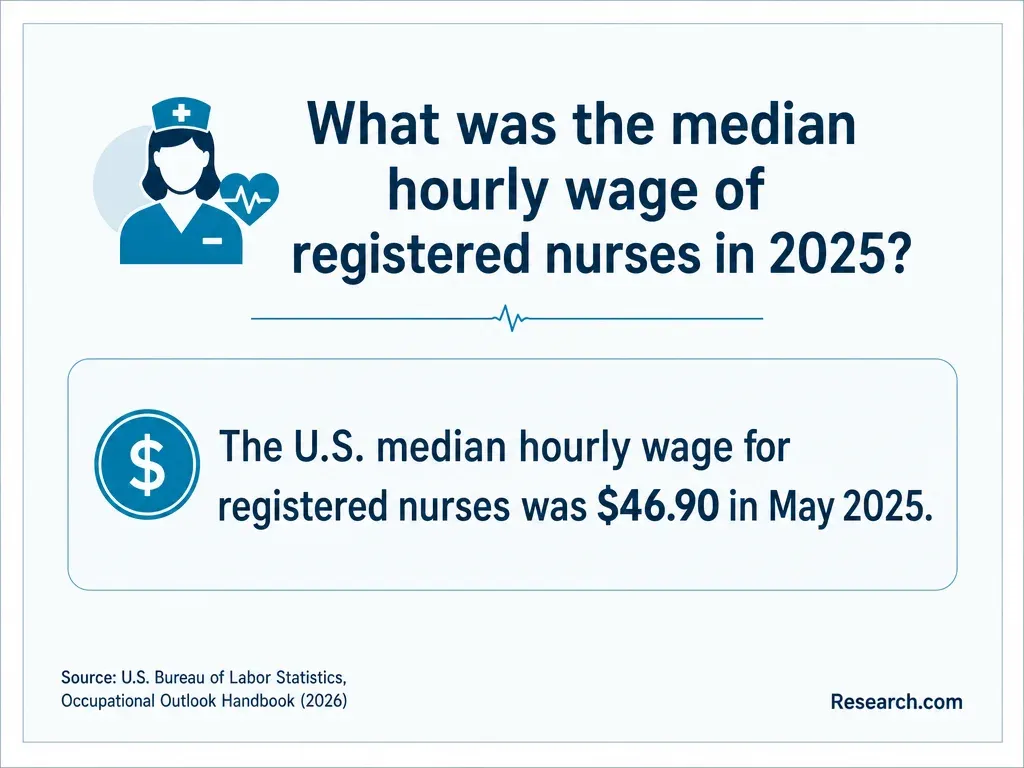
There is no single dependable "public health MSN graduate salary." The U.S. Bureau of Labor Statistics reports wages and employment projections by occupation, not by MSN concentration. A community health RN may be counted among registered nurses, while a nursing instructor or manager may fall into a different occupational category. An occupation-wide median cannot predict an individual Maine offer or the financial return on this degree.
For a useful comparison, identify the occupation that matches the job's actual duties, then review its latest BLS wage reference year and projection period alongside Maine job postings and public-sector pay schedules. Compare those figures with the full degree cost and any earnings you would give up while studying. Someone who is not yet an RN faces a different starting-cost calculation; admission-focused accelerated nursing comparisons concern entry to nursing, not the salary benefit of a public health MSN.
Other Things You Should Know About Nursing
Possibly, if the program approves the site, supervisor, objectives, and evaluation plan. Employment duties alone do not count as approved practicum hours.
Not automatically. The school must determine whether supervised activities meet its learning objectives and documentation rules.
Potentially, but confirm internet and live-session requirements, approved sites within feasible travel distance, and any campus visits before enrolling.
Yes, if your goal is public health analysis or program work rather than graduate nursing preparation. Compare the roles you want, employer requirements, fieldwork, and total cost of each degree.
- Title 32, §2173: General provisions and jurisdiction | maine.gov https://legislature.maine.gov/statutes/32/title32sec2173.html
- Health Care Clinical Opportunities & Credentials | maine.gov http://www.maine.gov/jobsplan/program/health-care-clinical-opportunities-credentials
- Academics - Graduate - School of Nursing | Credit for Prior Learning https://umaine.edu/nursing/graduate/graduate-handbook/academics-grad/
- Health - Nursing and Medicine Licensure | Students https://www.maine.edu/licensure/programs/health-nursing-and-medicine/
- Online M.S.N. Program - Master of Science in Nursing - BenU | Benedictine University https://online.ben.edu/programs/nursing/msn/
- Master of Science in Nursing Public & Population Health Online | Worcester https://online.worcester.edu/programs/nursing/msn-public-health/
- Admissions - University of Maine at Fort Kent https://catalog.umfk.edu/content.php
- Practicum | ucsd.edu https://ph.ucsd.edu/masters/mph/current-students/practicum.html
- Public Health Practicum: Plan for Practicum - Academic Guides | Academics at Walden University https://academicguides.waldenu.edu/public-health-practicum/plan
- Public Health (MSN) - Graduate Programs | Commonwealth University https://www.commonwealthu.edu/academics/programs/nursing-public-health-msn