2027 Online Mobile App Development Degree Programs With No Application Fee and Rolling Admissions

Co-Founder and Chief Data Scientist
Choosing an online mobile app development degree is easier when you can apply without paying upfront and enroll on a flexible schedule. The stakes are real: the U.S. Bureau of Labor Statistics reported a $133,080 median wage for software developers in May 2024, with 17% projected job growth from 2023 to 2033. This guide is for students comparing online degree options, especially working adults, transfer students, and career changers. You'll learn how no-fee applications and rolling admissions affect cost, timing, quality checks, and long-term value.
Key Things You Should Know
- No application fee usually saves $25 to $75 per school, but the bigger financial decision is total tuition, technology fees, transfer-credit acceptance, and financial aid eligibility.
- Rolling admissions can help students start faster, but it does not mean "no deadlines"; financial aid, scholarship, transcript, and course-capacity dates may still close before a term begins.
- Mobile app development degrees are often listed as software development, computer science, web development, or information technology programs; BLS data places software developers at a $133,080 median wage as of May 2024.
Which Online Mobile App Development Degree Programs Have No Application Fee and Rolling Admissions?
Few U.S. colleges use "mobile app development" as the exact degree title. Most relevant online programs are broader software development, computer science, information technology, or web development degrees that include programming, databases, user interfaces, cloud services, and project-based application development.
The table below highlights examples of online degree programs that publicly market no application fee or no required application fee and flexible or rolling admissions processes. Policies can change by term, student type, and promotion, so students should verify the fee waiver, admissions calendar, and next start date directly with the school before applying.
| School | Relevant online degree path | Why it may fit mobile app development goals | No-fee and rolling-admission value | Best-fit student |
| Southern New Hampshire University | BS in Computer Science with software engineering-focused coursework | Covers programming, software design, testing, databases, and development workflows that support app-building roles | No application fee and rolling online admissions with multiple undergraduate term starts | Students who want a broad software foundation and frequent entry points |
| Purdue Global | BS in Information Technology with programming and software development options | Emphasizes applied IT, coding, systems, and development concepts useful for business and mobile applications | No application fee and frequent online start dates | Adult learners who want a career-focused online IT pathway |
| Franklin University | BS in Software Development or related web/software programs | Focuses on coding, software engineering, databases, and application design in an adult-learner format | No undergraduate application fee and rolling admissions for many online programs | Transfer students and working adults seeking practical software coursework |
| Champlain College Online | BS in Software Development | Includes programming, software engineering, secure development, and project-centered technical skills | No application fee and multiple online start dates with rolling-style review | Students who want a software-focused bachelor's degree with an online professional format |
Use this list as a starting point, not a final ranking. A program with a free application can still be expensive overall, and a program with rolling admissions can still have limited course availability if you apply too close to the start date.
How Does Rolling Admission Work for Online Mobile App Development Degree Programs?
Rolling admission means a school reviews applications as they are completed rather than waiting for one fixed deadline. For online software, computer science, IT, and app development-related programs, this often pairs with several start dates per year, such as monthly, bi-monthly, or term-based online sessions.
The main advantage is speed. If your transcripts and materials are ready, you may receive a decision sooner and begin in the next available term. The main risk is misunderstanding flexibility: rolling admission does not guarantee admission, course access, financial aid packaging, or scholarship availability.
This comparison shows how rolling admissions differ from traditional fixed-deadline admissions when you are trying to plan an online degree around work, family, or transfer-credit timing.
| Admissions model | How applications are reviewed | Flexibility for online students | Common risk |
| Rolling admissions | Applications are reviewed as they become complete | Higher flexibility because students can often target the next available start date | Students may apply too late for financial aid processing, transfer evaluation, or preferred course sections |
| Priority deadline with rolling review | Early applicants may receive first consideration, then later applications are reviewed if space remains | Moderate flexibility, especially for students seeking scholarships or transfer-credit review | Late applicants may miss aid or advising advantages even if admission remains open |
| Fixed deadline | Applications are reviewed after a published closing date | Lower flexibility but clearer planning windows | Missing the deadline may delay enrollment by a full term or year |
Students comparing flexible online degree formats may also want to understand how accelerated pathways work. Research.com's guide to 2 year accelerated bachelor degrees explains how transfer credit, term length, and course load can affect completion time.
How Much Can Students Save by Choosing an Online Mobile App Development Degree With No Application Fee?
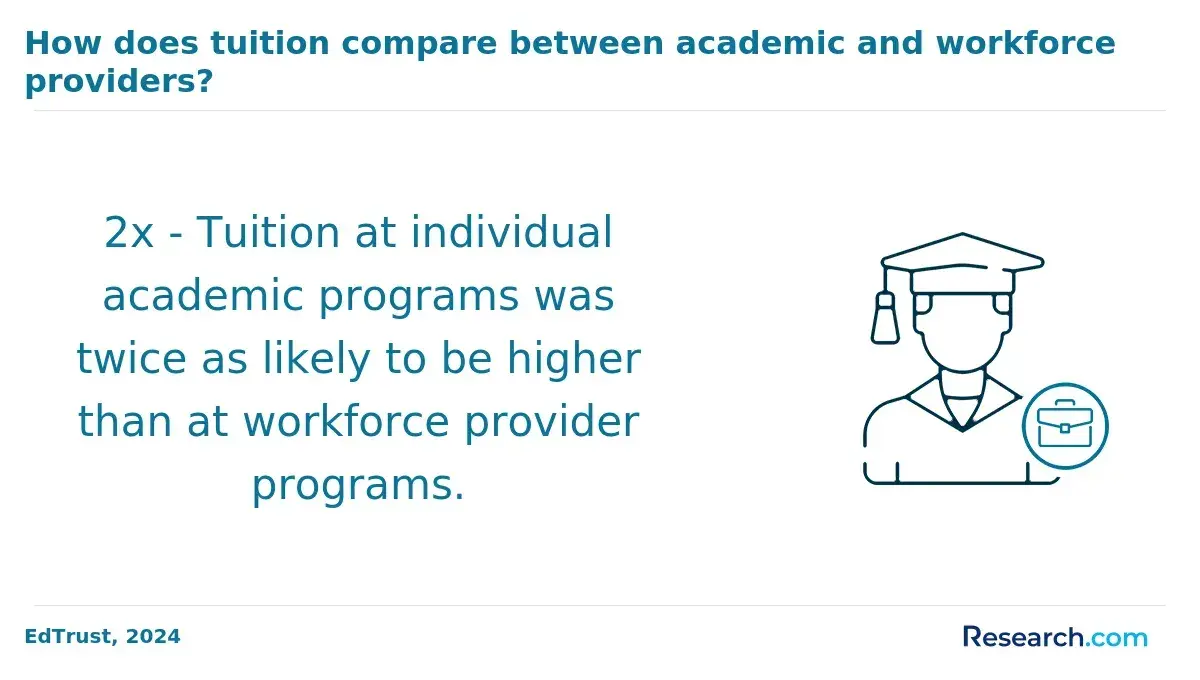
A waived application fee can be useful, especially if you plan to compare several schools. Many college application fees fall in the $25 to $75 range, so applying to four no-fee programs could save roughly $100 to $300 before enrollment. That is meaningful upfront savings, but it is small compared with tuition, online fees, books, software, and lost time if credits do not transfer.
The more important question is whether the no-fee program is affordable after all costs are included. College Board's 2024 Trends in College Pricing reported average published tuition and fees of $11,610 for in-state public four-year institutions in 2024-25, which gives students a benchmark for judging whether an online bachelor's program is priced competitively.
The table below shows why application-fee savings should be treated as one cost factor, not the full affordability test.
| Cost item | Why it matters | How to compare programs |
| Application fee | Reduces upfront cost before admission | Confirm whether the fee is always waived or only waived during a promotion |
| Tuition per credit | Usually the largest cost driver | Multiply tuition by remaining credits after transfer evaluation |
| Technology or online fees | Can increase the actual cost per term | Ask for a full fee schedule, not just tuition |
| Transfer-credit policy | Can reduce both cost and completion time | Request an official or preliminary transfer review before committing |
| Books, software, and equipment | Programming courses may require a capable computer and paid tools in some programs | Ask whether required tools are included in tuition or billed separately |
A practical way to think about this is the same method students use when comparing other online graduate or professional programs: focus on total cost and return, not just the first waived fee. For example, cost-focused guides such as Research.com's list of the cheapest MBA programs online are useful because they compare broader affordability factors rather than one enrollment perk.
What Are the Admission Requirements for No-Fee Online Mobile App Development Degree Programs?
Admission requirements vary by school and degree level, but online bachelor's programs in software development, computer science, web development, and information technology usually ask for standard undergraduate materials. No application fee does not mean no standards; it only means the school does not charge you to submit the application.
Most students should prepare the following before applying because incomplete files are the most common reason rolling-admission decisions take longer than expected.
- Completed online application with the correct program, term, and student type selected
- Official high school transcript, GED documentation, or college transcripts from every institution previously attended
- Minimum GPA documentation if required by the school or program
- Proof of English proficiency for applicants whose prior education requires it under school policy
- Transfer-credit documentation, including syllabi or course descriptions when technical credits need review
- Optional resume, personal statement, or work-experience record if the program allows applicants to explain career goals or prior technical experience
Technical prerequisites are less consistent. Some programs accept beginners and start with introductory programming, while others expect college algebra, statistics, discrete math, or prior coding experience. Students aiming for mobile app development should look for coursework in object-oriented programming, databases, API integration, software testing, user experience, cloud services, and secure coding.
When Should Students Apply to Online Mobile App Development Degree Programs With Rolling Admissions?
The best time to apply is earlier than the school's final enrollment date. Rolling admissions rewards readiness: students who submit transcripts early have more time for transfer-credit evaluation, financial aid processing, advising, placement assessment, and course registration.
A good planning window is to begin the process several weeks before your intended start date, even if the school advertises fast decisions. This is especially important for transfer students because a generous transfer evaluation can reduce tuition more than a waived application fee ever could.
Use the timeline below to organize your application around a target start date.
- Eight to twelve weeks before the start date, shortlist accredited programs and confirm that the application fee is currently waived.
- Six to eight weeks before the start date, request official transcripts from all high schools and colleges attended.
- Four to six weeks before the start date, ask admissions how long transfer-credit review, financial aid packaging, and course registration usually take.
- Three to four weeks before the start date, complete the FAFSA if you plan to use federal aid and confirm whether the school has separate scholarship deadlines.
- Two to three weeks before the start date, review your degree plan, tuition estimate, and first-term schedule before accepting enrollment.
A common mistake is waiting because the program says applications are accepted continuously. Rolling admission gives you options, but applying late can leave you with fewer course choices or insufficient time to compare aid offers.
How Can Students Strengthen an Online Mobile App Development Degree Application?
For many online undergraduate programs, a complete and accurate application matters more than a polished essay. Still, students can stand out by showing academic readiness, clear career goals, and evidence that they understand what software development requires.
Before submitting, focus on materials that help the school place you correctly and evaluate your readiness for technical coursework.
- Submit every transcript, even if you think credits will not transfer, because missing records can delay admission or financial aid.
- Describe any coding, help desk, design, database, or project experience in plain language if the application includes an experience section.
- Build a small portfolio with simple projects, such as a mobile-friendly website, calculator app, task tracker, or API-based data project.
- Explain career goals clearly, such as iOS development, Android development, cross-platform app development, software QA, front-end engineering, or product support.
- Ask whether prior learning, certifications, military training, or professional experience can count toward elective or technical credits.
Students interested in consumer apps should also think beyond code. Mobile products often depend on audience research, content strategy, analytics, and user engagement, which is why some students pair technical study with marketing knowledge from areas such as a social media marketing degree.
Are Online Mobile App Development Degree Programs With No Application Fees Accredited and Legitimate?
Yes, many legitimate accredited colleges offer online software or IT-related degrees with no application fee and rolling admissions. However, neither feature proves quality. Accreditation, curriculum depth, faculty qualifications, student support, transfer policies, and career services matter more.
Start with institutional accreditation from an agency recognized by the U.S. Department of Education or the Council for Higher Education Accreditation. For computing degrees, programmatic accreditation such as ABET can be valuable, but it is not present in every legitimate software development or IT program, especially in applied online programs.
Watch for red flags that suggest a program deserves closer scrutiny before you enroll.
- The school emphasizes "free application" more than accreditation, curriculum, faculty, and student outcomes.
- Admissions staff pressure you to enroll immediately before you receive a full tuition and fee estimate.
- The program will not provide a clear list of required courses, transfer-credit rules, or online attendance requirements.
- The institution is unclear about whether credits can transfer to other accredited schools.
- The program promises specific jobs, salaries, or guaranteed placement after graduation.
The same accreditation-first mindset applies across online education, whether students are comparing software programs or advanced options such as the best online EdD programs. Flexible admissions can be helpful, but legitimacy starts with recognized accreditation and transparent academic policies.
How Do Financial Aid and Total Costs Compare Among Online Mobile App Development Degree Programs?
Financial aid can make a bigger difference than an application-fee waiver. Students enrolled in eligible accredited degree programs may qualify for federal grants, federal loans, state aid, employer tuition assistance, military benefits, institutional scholarships, or payment plans. The exact aid package depends on the school, enrollment intensity, dependency status, income information, and satisfactory academic progress rules.
Federal Student Aid reported that the maximum Federal Pell Grant for the 2024-25 award year is $7,395. That figure matters because grant aid does not have to be repaid if eligibility rules are met, making it more financially important than saving a one-time application fee.
When comparing programs, request a complete cost estimate before making an enrollment decision. The most useful comparison is not "free application versus paid application," but "lowest realistic net cost for the degree I can finish."
| Financial factor | Question to ask the school | Why it affects value |
| Net price | What will I pay after grants, scholarships, employer aid, and transfer credits? | Shows the likely out-of-pocket cost more clearly than tuition alone |
| Transfer credits | How many of my prior credits apply to this specific major? | Can shorten completion time and reduce total tuition |
| Course load | How many credits must I take to remain eligible for aid? | Affects pacing, aid eligibility, and work-life balance |
| Technology costs | Are software subscriptions, testing platforms, or equipment included? | Prevents surprise expenses in programming-heavy courses |
| Withdrawal policy | What happens to tuition and aid if I drop after the term begins? | Important for working adults with changing schedules |
Students comparing degrees should also research salary context by role, not just by major. Research.com's career guide on how much do forensic psychologists make is a useful example of why occupation-specific earnings research can change how students judge degree ROI.
Which Students Benefit Most From No-Fee, Rolling-Admission Online Mobile App Development Degrees?
No-fee, rolling-admission programs are most useful for students who need flexibility without delaying their education. They are especially helpful when the student is comparing multiple accredited programs and wants to avoid paying several application fees before seeing transfer-credit results or aid estimates.
The students who often benefit most include several groups with timing or cost constraints.
- Working adults who need multiple start dates because job schedules make traditional semester deadlines difficult
- Transfer students who want to compare how different schools apply prior credits before committing
- Career changers who want to begin foundational programming courses without waiting for a once-a-year admissions cycle
- Military-connected students who may need flexible start dates around relocation, deployment, or benefit timing
- Students applying to several programs who want to reduce upfront costs while comparing accreditation, tuition, and curriculum
However, students should avoid choosing a program primarily because the application is free. If tuition is higher, transfer policies are weaker, or the curriculum lacks current software development practice, the waived fee is not enough to make the program a strong investment.
How Should Students Choose Among No-Fee Online Mobile App Development Degree Programs?
The best choice is the program that fits your career goal, budget, schedule, and academic starting point. A no-fee application and rolling admissions can make the process easier, but they should not outrank accreditation, curriculum quality, transfer value, support services, and realistic total cost.
Use this decision sequence to compare programs in a practical order.
- Confirm the degree match by checking whether the curriculum includes programming, databases, software engineering, web or mobile development, cloud concepts, testing, and security.
- Verify accreditation through recognized institutional accreditation databases and ask whether any computing-specific accreditation applies.
- Request a written estimate of tuition, fees, transfer credits, remaining credits, and expected time to completion.
- Confirm that admissions are genuinely rolling by asking for the next three start dates and the last date to submit transcripts for each one.
- Compare student support, including tutoring, career services, portfolio guidance, technical support, and access to faculty.
- Ask about course format, including synchronous sessions, proctored exams, group projects, internship options, and required software or hardware.
- Choose the program only after comparing net cost, schedule fit, curriculum relevance, and career support side by side.
If you are unsure, apply to more than one no-fee accredited program and compare the official admissions, transfer, and aid information you receive. The strongest option is usually the one that helps you finish with relevant skills, manageable debt, and a clear path toward software development roles.
Other Things You Should Know About Mobile App Development
Mobile app development is a specialized area within software engineering. It focuses on building applications for mobile devices, while software engineering also includes systems, enterprise applications, databases, testing, architecture, and maintenance.
Not always. Some developers specialize in iOS, Android, or cross-platform tools. Learning one platform deeply can be a good starting point, but cross-platform knowledge can make a portfolio more versatile.
Yes. Many online degree programs start with introductory programming and web fundamentals. Beginners should look for structured support, tutoring, project-based courses, and clear math or programming prerequisites.
A strong beginner portfolio can include a few working projects, clean code samples, screenshots, short explanations of each app's purpose, and notes about tools used, bugs solved, and features planned for future versions.
References
- Rolling Admissions: Key Insights https://www.themoodmeter.com/rolling-admissions-pros-cons-and-strategies/
- App Development Costs https://www.businessofapps.com/app-developers/research/app-development-cost/
- Rolling Admissions at Oak Hill Academy: Flexible Boarding School Enrollment Opportunities - Oak Hill Academy https://oak-hill.net/blog/rolling-admissions-at-oak-hill-academy-flexible-boarding-school-enrollment-opportunities/
- Mobile Application Development Course - Google Reichman Tech School https://www.graitechschool.co.il/en/%D7%A7%D7%95%D7%A8%D7%A1/mobile-application-development-course/
- Rolling Admissions Explained: How It Works and When You Should Apply https://riseglobaleducation.com/blogs/rolling-admissions-explained-how-it-works-and-when-you-should-apply
- Mobile App Developer Jobs » Find Job for App Development | useme.com https://useme.com/en/jobs/category/coding-and-it,35/mobile-apps,101/
- How to Be a Mobile App Developer | triOS College https://www.trios.com/blog/how-to-be-a-mobile-app-developer/
- Do Online Programs Have Rolling Admissions? Process, Benefits & Key Insights https://www.onlinecu.in/blog/cu/do-online-programs-have-rolling-admissions
- How Much Does Mobile App Development Cost in 2026? https://kimei-global.com/blogs/how-much-does-mobile-app-development-cost
- Mobile Development Degrees | Online Associate, Bachelors & Masters https://www.itcareerfinder.com/find-training/by-career-path/mobile-application-development-online-courses-and-degrees.html