2027 Online Industrial Organizational Psychology Degree Programs With No Personal Statement or Admissions Essay Required

Co-Founder and Chief Data Scientist
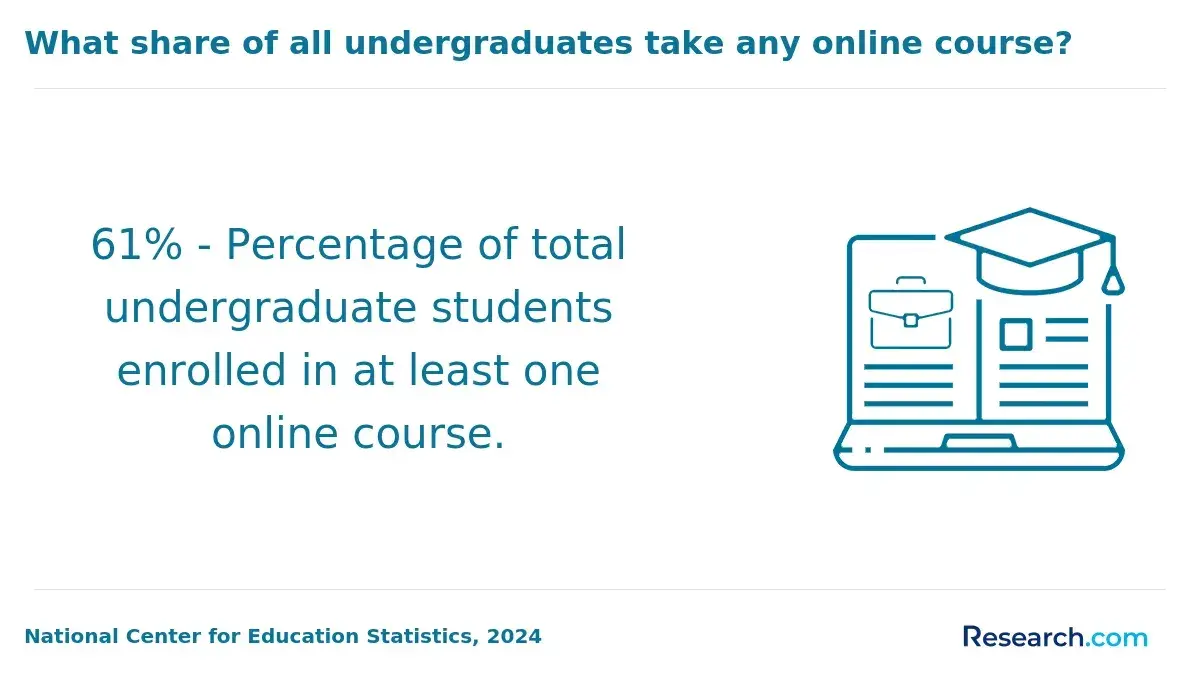
An online industrial-organizational psychology degree can reduce application writing when a school does not require a personal statement or admissions essay, but transcripts, GPA, prerequisites, and other reviews may still determine admission. This matters as online study remains common: NCES reported that 53.5% of U.S. postsecondary students took at least one distance-education course in fall 2022.
This guide helps prospective and transfer students identify true no-essay policies, compare program quality and cost, and apply without mistaking a shorter application for guaranteed admission.
Key Things You Should Know
- A true no-essay policy means the standard application does not request a personal statement; it does not mean automatic, open, or guaranteed admission because GPA, official transcripts, prerequisite coursework, and graduate-level experience requirements may still apply.
- Essay-optional means a statement is not required but may strengthen a borderline application; essay-waived usually means a school has temporarily or conditionally removed an otherwise required essay, so applicants should confirm the policy for their term and degree level.
- Industrial-organizational psychologists typically need a master's degree, and the U.S. Bureau of Labor Statistics projected 6% employment growth from 2023 to 2033; choose for curriculum, accreditation, cost, and career fit rather than application simplicity alone.
What Does No Personal Statement or Admissions Essay Required Mean for Online Industrial Organizational Psychology Degree Programs?
For an online industrial-organizational (I-O) psychology program, "no personal statement or admissions essay required" ordinarily means the standard application can be submitted without a narrative explaining your goals, background, or readiness. The school instead makes its initial decision from objective materials such as prior coursework, cumulative GPA, official transcripts, and, for some graduate programs, professional experience.
I-O psychology applies psychological research to workplace issues, including employee selection, training, performance, leadership, engagement, and organizational change. Degree options may include a bachelor's degree with an I-O concentration, a master's degree in I-O psychology or organizational psychology, or a related graduate certificate. Requirements can differ substantially by credential.
Read the policy narrowly. "No essay" may apply only to domestic applicants, one online campus, a particular start term, or applicants who meet stated GPA thresholds. A school may still request a written explanation for academic gaps, disciplinary history, low grades, international documentation, or a conditional-admission review.
A no-essay application is most useful when your academic record clearly demonstrates readiness. It is less helpful when you need space to explain a career transition, unusual transcript pattern, or relevant work accomplishments that are not visible in your records.
What Admissions Requirements Do Online Industrial Organizational Psychology Degree Programs Use Instead of an Essay?
When an essay is absent, admissions teams usually rely more heavily on verifiable academic and administrative records. The exact threshold varies by institution and degree level, so the program's published admissions page - not a general university page - should control your decision.
The following comparison shows common substitute requirements and what they assess.
| Requirement | What the school evaluates | Why it matters |
| Official transcripts | Completed credits, grades, degree conferral, and academic trend | Usually the central evidence of college readiness |
| Minimum GPA | Overall or upper-division academic performance | A minimum is an eligibility rule, not necessarily a competitive benchmark |
| Prerequisite coursework | Psychology, statistics, research methods, or quantitative preparation | Graduate I-O coursework often builds on these foundations |
| Resume or employment history | Professional experience, especially for adult-oriented master's programs | May help demonstrate workplace context but may not replace prerequisites |
| Recommendations or interview | Professional readiness, communication, and program fit | Some selective programs retain these despite having no essay |
| Test scores, if requested | Academic preparation under the school's current policy | Test-optional is separate from no-essay admission |
Before paying an application fee, confirm whether statistics and research methods must be completed before enrollment or may be taken as a condition of admission. Applicants who lack prerequisites should also ask whether the school offers bridge courses, permits transfer equivalents, or requires admission to be deferred.
Who Is a Good Fit for Online Industrial Organizational Psychology Degree Programs With No Admissions Essay?
No-essay programs can fit applicants with solid records who want a more direct application process. They are particularly practical for working adults who can document relevant education and experience but have limited time for repeated, school-specific essays.
These applicants are often well positioned to consider a no-essay pathway:
- Students with a completed bachelor's degree, a consistent GPA, and the psychology or statistics prerequisites required for a master's program.
- Working professionals in human resources, learning and development, talent management, analytics, or operations who want formal training in workplace behavior and research.
- Transfer students whose official transcripts clearly show transferable general education and psychology credits.
- Applicants seeking a bachelor's-level foundation before deciding whether graduate I-O psychology study is necessary for their target role.
A simpler application may not be the best choice for everyone. Consider an essay-required or essay-optional program if a statement would explain a weak academic period, demonstrate research interests, connect substantial workplace experience to I-O psychology, or support a competitive scholarship application.
Students still completing lower-division coursework may want to compare a 2-year psychology degree online option with bachelor's transfer pathways.
What Is the Difference Between No-Essay, Essay-Optional, and Essay-Waived Industrial Organizational Psychology Degree Admissions?
These labels are not interchangeable. The distinction matters because optional materials can affect admission, scholarships, honors tracks, or a review of an applicant who falls below a stated GPA guideline.
This table separates the policies applicants most commonly encounter.
| Policy | Meaning for the standard application | Best applicant response |
| No essay required | No personal statement is part of the published standard admissions checklist | Submit complete objective records and verify exceptions for your applicant type |
| Essay-optional | The essay is not mandatory, but the school accepts it | Submit a focused statement if it adds meaningful context or evidence of fit |
| Essay-waived | An essay normally required has been removed for a defined cohort, term, partnership, or eligibility group | Confirm the waiver in writing and check its expiration date and conditions |
| Essay required | A written statement is part of the admissions review | Follow the prompt, word limit, and program-specific instructions exactly |
Also distinguish an admissions essay from other writing. A scholarship essay, statement for graduate assistantships, explanation of prior conduct, or response for international credential review can remain required even when the degree application itself is essay-free. Save a screenshot or email confirmation of the policy that applies to your application cycle.
For learners exploring broader associate-level routes before specializing, reviewing the best associates degrees to get can clarify whether psychology aligns with their intended career direction.
Are Online Industrial Organizational Psychology Degree Programs With No Admissions Essay Easier to Get Into?
Not necessarily. Removing an essay reduces one application task; it does not change the program's academic capacity, cohort size, prerequisite standards, or institutional review process. A program can be selective while evaluating applicants primarily through GPA, course rigor, work history, interviews, and recommendations.
This distinction is especially important for master's-level I-O psychology study. The U.S. Bureau of Labor Statistics identifies a master's degree as the typical entry-level education for industrial-organizational psychologists. A school may therefore expect evidence that applicants can handle graduate statistics, research design, assessment, and organizational behavior coursework even if it does not request a personal narrative.
Do not equate no essay with open admissions. Open admission generally describes a broader institutional policy of admitting applicants who meet basic entry criteria; a no-essay policy only describes one omitted document. Ask admissions whether the published GPA is a minimum for consideration, whether prerequisite grades are reviewed separately, and whether admission is regular, provisional, or conditional.
A program requiring an essay can be the stronger strategic choice if your application needs context. Conversely, a no-essay program may be efficient when your transcripts and experience already tell a coherent story. In both cases, compare curriculum and outcomes before interpreting application length as a measure of difficulty or quality.
How Can You Verify Accreditation and Quality in No-Essay Online Industrial Organizational Psychology Degree Programs?
Start by verifying institutional accreditation through the institution's accreditor and its official listings, then examine whether the specific online program delivers the curriculum and student support needed for your goal. Accreditation and admission simplicity answer different questions: one concerns educational legitimacy and quality oversight, while the other concerns application format.
Use these checks before applying:
- Confirm that the university holds recognized institutional accreditation and that the online degree is awarded by that accredited institution.
- Review the curriculum for research methods, statistics, measurement or psychometrics, organizational behavior, personnel selection, training, ethics, and applied projects.
- Ask whether online students receive faculty access, library services, career support, tutoring, and opportunities to complete applied research or a capstone.
- Verify whether credits are likely to support your next step, such as doctoral study, employer tuition reimbursement, or a career-related credential.
- Request clear information about faculty qualifications, modality, synchronous requirements, completion policies, and total program cost.
I-O psychology is not a single nationally licensed profession in the way that clinical psychology can be regulated by state licensure rules. Still, career goals matter. If you are comparing psychology-adjacent clinical pathways, standards can be more prescriptive; for example, students evaluating speech-language pathology should separately confirm ASHA approved SLP programs because professional eligibility depends on field-specific requirements.
Red flags include unclear accreditation language, missing faculty information, vague claims about job placement, unexplained fees, and a curriculum that lacks quantitative or research training. An easy application cannot compensate for a credential that employers, doctoral programs, or tuition-benefit administrators may not recognize.
How Does the Application Process Work for Online Industrial Organizational Psychology Degree Programs With No Personal Statement?
A no-personal-statement application is usually document-driven, but completing it carefully still takes planning. Requirements can change by start date and applicant category, so work from the program's current checklist rather than assuming another online degree uses the same process.
A practical application sequence is:
- Choose the exact degree, concentration, start term, and online format, then confirm that the personal statement is not required for that option.
- Review GPA, prerequisite, residency, transfer-credit, and application-deadline rules before beginning the form.
- Order official transcripts from every postsecondary institution, including schools where you withdrew or earned few credits if the institution requires full disclosure.
- Complete the application accurately, including prior names, degree dates, employment history, and any required disclosures.
- Submit requested documents such as a resume, recommendations, identification, or prerequisite-course descriptions by the stated deadline.
- Monitor the applicant portal and respond promptly if the school requests clarification, a course syllabus, or additional written information.
- After admission, compare the financial-aid offer, transfer evaluation, enrollment agreement, and course sequence before accepting.
Applicants sometimes assume "no essay" means they should not prepare any writing. Keep a short factual explanation available for gaps in enrollment, unusual grades, or prerequisite equivalencies. It may be useful if an admissions counselor requests context, but do not send unsolicited materials unless the school invites them.
Can Transfer and Adult Students Apply to Online Industrial Organizational Psychology Degree Programs Without an Essay?
Yes, many online programs allow transfer and adult applicants to apply without a personal statement, but their review can involve more documentation than a first-time student's application. Transfer credit, degree-completion requirements, and graduate prerequisite checks often matter more than an essay requirement.
Transfer applicants should verify how the school treats prior psychology, statistics, research methods, and general education courses. A course title alone may not establish equivalency; the institution may request a catalog description or syllabus. Confirm the maximum transferable credits, minimum grade accepted, age-of-credit policy, and whether transferred courses count toward prerequisites or only total credits.
Adult learners with extensive workplace experience should not assume experience replaces required academic preparation. HR, management, analytics, and training experience can strengthen an application or help connect coursework to career goals, but quantitative prerequisites may still be nonnegotiable for a graduate I-O program.
For students comparing pathways, an associate program can be a cost-conscious starting point, but it is not normally sufficient for the industrial-organizational psychologist occupation. Build a transfer plan that leads to a bachelor's degree, then assess whether a specialized master's degree is needed for the role you want.
Do No-Essay Online Industrial Organizational Psychology Degree Programs Affect Tuition, Financial Aid, or Scholarships?
No-essay admission generally does not determine tuition, federal aid eligibility, or scholarship availability. Tuition is set by the institution and program, while federal aid depends on factors such as FAFSA information, enrollment intensity, satisfactory academic progress, and the school's participation in federal student-aid programs.
Cost comparison remains essential because online programs may charge per credit, by term, or through a flat program rate, and may add technology, distance-learning, graduation, or course-material fees. For context, College Board reported average published tuition and fees of $11,610 for in-state students at public four-year institutions in 2024-25. That national benchmark is not an online I-O psychology price quote, but it helps illustrate why applicants should calculate total cost rather than rely on a per-credit headline.
Compare these cost items in writing before enrolling:
- Total required credits after transfer evaluation, not just the catalog length of the program.
- Per-credit tuition, mandatory fees, books, software, assessment tools, and any residency or intensive-course expenses.
- Whether tuition changes by residency, course load, or future academic year.
- Employer tuition benefits, payment plans, federal loans, grants, and institutional aid eligibility.
- Scholarship deadlines and separate essay, recommendation, or résumé requirements.
A fast application can be valuable, but it may provide fewer opportunities to showcase financial need, leadership, or career goals in institutional scholarship competitions. Students considering other helping-profession graduate routes can also compare cost structures through guides to cheapest SLP master's programs, while recognizing that SLP and I-O psychology have different curriculum and professional requirements.
How Should You Compare Online Industrial Organizational Psychology Degree Programs With No Admissions Essay?
Compare programs using the application policy as one factor, not the deciding factor. The strongest option is the one whose credential level, curriculum, support, schedule, total cost, and career relevance match your intended role.
This comparison framework helps separate a convenient application from a sound educational investment.
| Comparison factor | What to examine | Decision implication |
| Degree level | Bachelor's, master's, certificate, or related organizational psychology program | Match the credential to the jobs and further study you intend to pursue |
| Admissions policy | True no-essay, optional essay, or time-limited waiver; separate scholarship rules | Choose the policy that best fits the strength and context of your record |
| Academic preparation | GPA threshold, statistics and research prerequisites, conditional-admission options | Avoid applying to programs where required preparation is missing |
| Curriculum | Research, analytics, assessment, leadership, training, and applied project work | Prioritize skills employers and future graduate programs can recognize |
| Online design | Asynchronous versus live classes, group work, pacing, and required meetings | Select a format compatible with work and caregiving responsibilities |
| Affordability | Net price, fees, transfer credits, aid, and employer support | Compare total completion cost rather than advertised tuition alone |
| Career support | Internship guidance, applied projects, alumni access, and career coaching | Look for tangible support instead of unverified outcome claims |
Contact each admissions office with the same concise questions: Does the no-essay policy apply to my applicant type and start term? Which prerequisites are required? Is the listed GPA a minimum or a competitive standard? What is the estimated total cost after my transfer review? Are scholarships reviewed separately? Written answers make comparisons more reliable.
Also keep alternatives in perspective. A learner aiming for a different service-industry path may find hospitality management courses online more aligned with their goals than workplace psychology. Career alignment should lead the decision; admissions convenience should follow.
Other Things You Should Know About Industrial Organizational Psychology
No. A policy may exclude international applicants, applicants seeking conditional admission, students with academic disclosures, or applicants to a particular concentration. Confirm the requirement for your degree, term, and applicant category.
Yes. A school may request an explanation of a transcript issue, disciplinary matter, prerequisite equivalency, or other item needed to complete an individualized review. This does not necessarily contradict a no-essay standard application policy.
Often, yes. Institutional scholarships, honors programs, assistantships, and external awards may use separate applications with essays, recommendations, or résumés. Check financial-aid deadlines independently from admission deadlines.
Usually not by itself. I-O psychology career paths differ from clinical or counseling psychology licensure paths, which are regulated by states and typically require specific doctoral education, supervised experience, and examinations. Verify requirements with the relevant state board if licensure is your goal.
References
- Admission Essay vs Personal Statement | What's the Difference? https://www.proof-reading.com/resources/admission-essay-vs-personal-statement
- Guide to I-O Psychology PhD Program Application - Paul Spector https://paulspector.com/guide-to-i-o-psychology-phd-program-application/
- How To Become An Industrial Organizational Psychologist | Psychology.org https://www.psychology.org/careers/industrial-organizational-psychologist/
- Comparing aid offers- College Ready AZ https://collegereadyaz.com/comparing-aid-offers/
- How to Get into Grad School in I/O Psychology - NeoAcademic https://neoacademic.com/io-grad-school-series/
- The Genre of the Personal Statement - The Wheaton College Writing Center Blog https://www.wheatoncollegewritingcenterblog.com/2021/10/26/the-genre-of-the-personal-statement/
- Colleges That Offer Complete Financial Aid https://www.collegeessayguy.com/blog/colleges-that-offer-complete-financial-aid
- How To Pay for College: 7 Smart Options in 2026 https://www.credible.com/student-loans/how-to-pay-for-college
- Paying for college https://www.commonapp.org/plan/paying-for-college/
- Financial Aid Myths vs. Facts https://www.pointpark.edu/admissions/financialaid/understandingfinancialaid/financialaidmyths