2027 Online Industrial Organizational Psychology Degree Programs With University Scholarships: Awards, Eligibility, and Net Cost

Co-Founder and Chief Data Scientist
An online industrial-organizational psychology degree can appear affordable until tuition, fees, enrollment rules, and scholarship conditions are added together. For the 2025-26 award year, the maximum Federal Pell Grant is $7,395, but institutional scholarships and eligibility can vary sharply by university and online status. This guide helps prospective bachelor's and master's students compare university-funded awards, renewal terms, financial-aid stacking, and realistic out-of-pocket cost so they can choose an online I-O psychology program on net price - not advertised tuition alone.
Key Things You Should Know
- University scholarships for online industrial-organizational psychology students are not standardized: some schools include online learners in general institutional scholarship pools, while others reserve major awards for campus-based or degree-seeking students.
- A $7,395 maximum Federal Pell Grant may reduce undergraduate cost for eligible students in the 2025-26 aid year, but it is need-based federal aid - not a guaranteed university scholarship - and most master's students are not Pell-eligible.
- Compare the written annual award, required enrollment level, GPA and renewal rules, tuition, mandatory fees, transfer-credit policy, and loans before deciding which scholarship offer produces the lowest net cost.
Which Online Industrial Organizational Psychology Degree Programs Offer University Scholarships?
Online industrial-organizational psychology is offered most often as a psychology bachelor's degree with an I-O concentration, an applied psychology degree, or a specialized master's degree. University-funded scholarships may be available through the institution rather than the specific I-O psychology department, so students should verify that their exact online program and enrollment format are eligible before applying.
Several universities with online psychology, applied psychology, or I-O psychology pathways maintain institutional scholarship processes that may include distance learners. Availability, deadlines, award size, and eligibility can change by term, residency, degree level, and funding cycle.
| University or program type | Online study option to investigate | Institutional-aid question to ask | Best fit for |
| Bellevue University | Online psychology-related undergraduate and graduate study | Whether the scholarship is open to fully online students and whether it applies to the selected psychology pathway | Adult and transfer students seeking a flexible private-university format |
| Colorado State University Global | Online undergraduate psychology-related study and graduate business or leadership alternatives | Whether scholarships are available for the specific program, start date, and enrollment intensity | Working learners who need asynchronous scheduling |
| University of Maryland Global Campus | Online psychology and workforce-relevant study options | Whether the student must be enrolled before applying and whether awards apply to tuition, fees, or both | Adult, transfer, and military-connected learners |
| Purdue Global | Online psychology and organizational-behavior-related study | Whether scholarship eligibility is based on program, prior credits, military affiliation, or financial need | Students seeking frequent starts and career-focused support |
| Public university online programs | Online psychology bachelor's degrees or I-O psychology master's degrees | Whether online students qualify for university merit scholarships at the same level as campus students | Residents who may benefit from lower public tuition |
Use this table as a screening tool, not as a guarantee of funding. A university may advertise scholarships broadly while limiting a particular award to new students, undergraduate students, a minimum credit load, a specific campus, or a separate application pool.
Students who are still completing lower-division coursework can also compare a 2-year psychology degree online pathway before transferring into a bachelor's program. Starting with transferable general education credits can sometimes reduce total degree cost more reliably than a small institutional scholarship.
When contacting admissions or financial aid, ask for a written answer to four points: whether fully online I-O psychology students qualify, the award's annual amount, whether it renews, and the estimated tuition and required fees remaining after the award.
How Much Scholarship Money Can Online Industrial Organizational Psychology Degree Students Receive?
There is no single typical university scholarship amount for online industrial-organizational psychology students. Institutional awards can range from small one-time grants to multi-term tuition reductions, and the amount often depends on academic record, transfer status, financial need, military affiliation, employer relationships, available funding, and whether the student is undergraduate or graduate level.
The most useful benchmark is not an advertised maximum scholarship. It is the amount that appears in the student's official financial-aid offer after the university confirms eligibility. For undergraduate students with sufficient financial need, the maximum Federal Pell Grant for the 2025-26 award year is $7,395.
That amount can materially reduce annual charges, but it is federal grant aid, not institutional scholarship money, and eligibility is determined through the FAFSA formula.
The following comparison shows why students should separate award categories before treating all aid as equivalent.
| Aid type | Who funds it | Typical decision factor | What to verify |
| Institutional merit scholarship | University | Academic record, transfer GPA, leadership, achievement, or admissions profile | Whether online students qualify, award duration, GPA requirement, and credit-load rule |
| Institutional need-based grant | University | Financial need calculated from FAFSA or university review | Whether funding is limited, renewable, and available to graduate or part-time students |
| Federal Pell Grant | Federal government | Undergraduate financial need and enrollment status | FAFSA eligibility, remaining lifetime eligibility, and annual enrollment level |
| Outside scholarship | Employer, foundation, association, or community organization | Rules set by the sponsoring organization | Whether the university reduces other need-based aid when outside funds are received |
| Federal student loan | Federal government | FAFSA and annual borrowing limits | Interest, repayment responsibility, and whether borrowing is actually necessary |
A scholarship described as "up to" a certain amount is not a promised award. Ask whether the figure is per term, per academic year, or for the entire degree; whether it is applied before or after other grants; and whether it can cover mandatory technology, course-material, graduation, or proctoring charges.
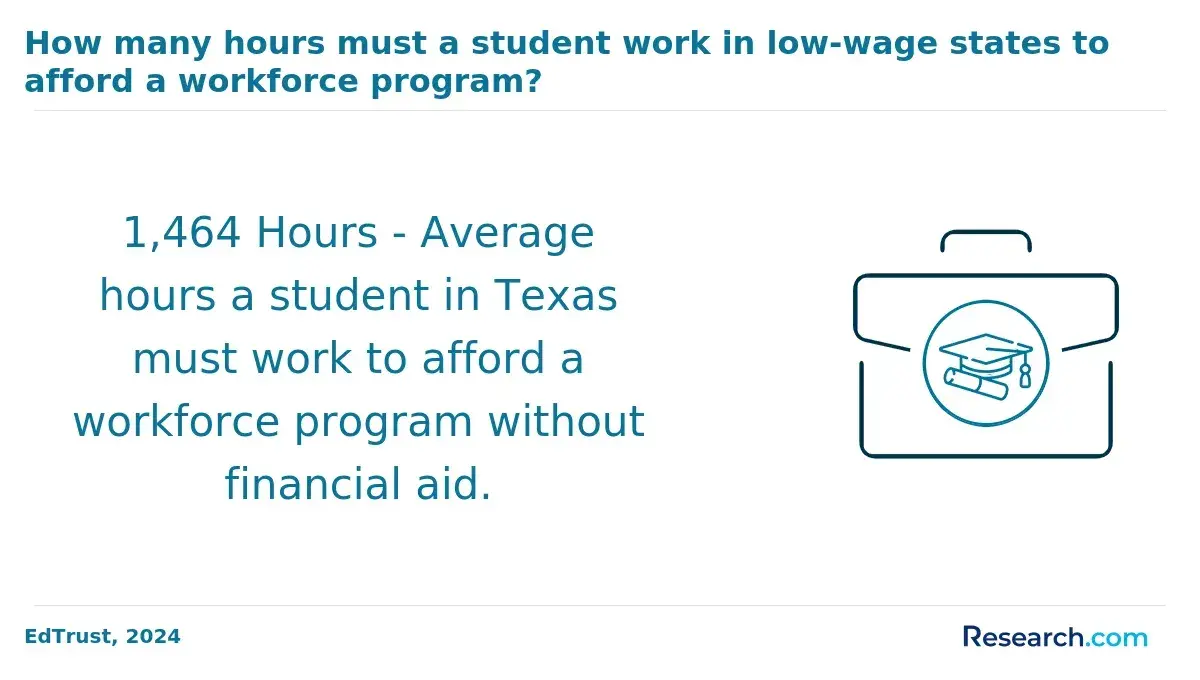
What Are the Eligibility Requirements for Online Industrial Organizational Psychology Degree Scholarships?
Eligibility requirements determine whether a scholarship is realistic for a particular student. Universities commonly use different rules for new applicants, continuing students, transfer students, online learners, military-affiliated students, and graduate students. A strong GPA can help, but it does not override an award's program, deadline, residency, or enrollment restrictions.
Before investing time in an application, review these common requirements and compare them against your own status.
- Admission status: Many institutional awards require admission to a degree-seeking program rather than nondegree, certificate-only, or provisional enrollment.
- Program and modality: Confirm that the scholarship includes the fully online industrial-organizational psychology degree or concentration, not only an on-campus psychology program.
- Academic record: Merit awards may consider high school GPA, college transfer GPA, completed credits, academic achievement, or graduate admissions credentials.
- Enrollment intensity: Some awards require full-time enrollment, while others permit part-time students but prorate the award.
- FAFSA or financial-need review: Need-based university grants often require a current FAFSA and may be affected by the Student Aid Index.
- Citizenship or residency status: Requirements can differ for federal aid, state programs, and university-funded scholarships.
- Deadline and documentation: Essays, recommendations, service records, proof of employment, transcripts, or military documentation may be required before a fixed deadline.
Graduate I-O psychology students should be especially careful. Many institutional scholarship pools are designed primarily for undergraduates, while master's students may encounter smaller grants, departmental awards, assistantships that are unavailable to online learners, or employer tuition benefits instead.
A practical red flag is vague language such as "scholarships available" without stating whether online students can receive them. Request the scholarship terms or ask financial aid to identify the exact award name and eligibility policy in writing.
How Do You Apply for University Scholarships for an Online Industrial Organizational Psychology Degree?
Application procedures vary by school. Some universities automatically consider admitted applicants for selected merit awards, while others require a separate scholarship portal, FAFSA, essay, recommendation, or proof of eligibility. Automatic consideration is convenient, but students should still confirm that their online program is included and that their file is complete before the deadline.
The following process helps applicants avoid missing aid that requires more than submitting an admissions application.
- Identify the exact online degree, concentration, start term, and expected enrollment level before searching the university's scholarship catalog.
- Submit the admissions application early enough for the university to evaluate transcripts and issue an admission decision before scholarship deadlines.
- File the FAFSA if you may qualify for federal, state, or university need-based aid, even if you also expect merit scholarships.
- Read each award's eligibility language and separate automatic awards from scholarships requiring a portal application, essay, recommendation, or supporting documents.
- Upload requested records, including official transcripts, transfer-credit evaluations, military documentation, or employer-verification materials, before the stated deadline.
- Ask financial aid whether the award applies to online enrollment, how it interacts with other aid, and whether it is renewable.
- Compare written aid offers only after confirming tuition, required fees, expected transfer credits, and the number of terms needed to graduate.
Applicants considering related helping-profession pathways should also understand that program affordability and professional requirements differ by field. For example, ASHA approved SLP programs have accreditation and clinical-training considerations that do not apply to most I-O psychology programs.
Do not wait until after enrollment to ask whether a scholarship exists. Some university funds are first-come, limited by budget, or awarded only to students who meet a priority deadline.
Are Scholarships for Online Industrial Organizational Psychology Degree Programs Renewable Every Year?
Some university scholarships renew, but renewal is never automatic unless the award terms say it is. Renewable aid usually has conditions related to satisfactory academic progress, cumulative GPA, enrollment level, continuous enrollment, degree progress, conduct standards, and the number of semesters or credits already funded.
Review the award letter and scholarship agreement for the conditions below. They can change the value of an offer substantially when a program takes longer than expected.
| Renewal condition | Why it matters for online students | Question to ask |
| Minimum cumulative GPA | A scholarship may be reduced or lost after a difficult term even when the student remains academically eligible to continue | What GPA is required, when is it reviewed, and is there an appeal process? |
| Minimum enrollment | Part-time attendance may reduce an award or make the student ineligible | Is the scholarship available for less-than-full-time enrollment, and is it prorated? |
| Maximum funded terms | An award can expire before graduation if transfer credits do not apply as expected or the student pauses enrollment | How many terms, credits, or academic years are covered? |
| Continuous enrollment | Work, caregiving, military, or health interruptions can affect eligibility | Does a leave of absence preserve renewal eligibility? |
| Satisfactory academic progress | Federal and institutional rules may require completion of a set share of attempted credits | Are scholarship progress rules different from federal-aid rules? |
Students should calculate the scholarship across the full expected program length, not only the first term. A smaller annual award that remains available throughout a 36-credit master's program may be more valuable than a larger introductory award that ends after one session.
Common mistake: assuming a scholarship stays in place as long as tuition is paid. Avoid this by saving the award letter, noting the review date, and checking your standing before every registration period.
Can You Combine an Online Industrial Organizational Psychology Scholarship With FAFSA and Other Financial Aid?
In many cases, yes. University scholarships can often be combined with FAFSA-based federal aid, state grants, employer tuition assistance, veterans' education benefits, and private scholarships. However, the university must package all aid within applicable cost-of-attendance and financial-need rules, and a new scholarship can sometimes reduce another need-based award or lower planned loan eligibility.
The best approach is to give the financial-aid office a complete picture of expected resources before accepting loans. Ask the school to show how each source changes your bill rather than assuming every award stacks dollar for dollar.
- Federal grants and loans: FAFSA can determine eligibility for Pell Grants, Direct Loans, work-study, and some university need-based aid.
- Institutional scholarships: These may be stackable with federal aid, but the university can set its own rules for combining multiple institutional awards.
- State grants: Eligibility may depend on residency, enrollment level, degree type, and attendance at an eligible institution.
- Employer tuition assistance: Employer funds may have grade, repayment, service, course-approval, or annual-cap requirements.
- Military and veterans' benefits: These benefits follow separate federal and institutional certification processes and may interact with tuition discounts or scholarships.
- Private scholarships: Report outside awards promptly because the school may need to revise the financial-aid package.
Loans are not scholarships. An aid offer can look generous when it includes significant borrowing, but Direct Loans and private loans must generally be repaid with applicable interest. Compare grants and scholarships first, then decide whether the remaining net cost justifies borrowing.
How Much Does an Online Industrial Organizational Psychology Degree Cost After Scholarships and Financial Aid?
Net cost is the amount a student is responsible for after grants and scholarships, before any optional borrowing is treated as payment. It is more informative than tuition alone because online degree costs can include tuition, mandatory institutional fees, course materials, technology charges, assessment fees, and costs created by taking extra courses when transfer credit does not apply.
A simple calculation can help students compare offers on consistent terms: total estimated program charges minus confirmed grants and scholarships equals estimated net price. Then subtract employer assistance or veterans' benefits that are confirmed for the same period. Do not subtract loans when comparing affordability because loans shift cost into the future rather than eliminate it.
| Cost item | Include in your comparison? | Why it can change net cost |
| Published tuition per credit | Yes | Multiply by the credits you actually need after accepted transfer credits |
| Required university and technology fees | Yes | Online programs may charge fees that are not included in the tuition headline |
| Books, platforms, and assessments | Usually | These may be billed separately or vary by course |
| University scholarship | Yes, if confirmed | Use the written annual or term amount and account for renewal limits |
| Federal and state grants | Yes, if eligible | Amounts may change with FAFSA information and enrollment level |
| Federal and private loans | No, for net-price comparison | They finance a balance but do not reduce the underlying cost |
For example, a school with a higher tuition rate can still have a lower net cost if it accepts more applicable transfer credits, charges fewer mandatory fees, and provides renewable grant aid. Conversely, a large first-term scholarship may not offset a higher per-credit price over an entire degree.
Students comparing psychology-related graduate study with another communication-disorders path may find the cost framework useful for cheapest SLP master's programs as well. The degrees lead to different careers, but tuition, aid renewal, clinical requirements, and borrowing exposure should be evaluated with the same net-cost discipline.
Ask every institution for a program-specific estimate based on your expected transfer credits and course load. A general net-price calculator is useful for initial planning, but it may not accurately model a specialized online master's degree or a student with unusual transfer, employer, or military benefits.
Are There Scholarships for Transfer, Adult, Military, and Other Online Industrial Organizational Psychology Students?
Online programs often serve transfer students, working adults, parents, career changers, and military-connected learners, and universities may maintain scholarships or tuition benefits for these populations. The key is determining whether an opportunity is a true scholarship, a tuition discount, a waived fee, an employer partnership rate, or a benefit that applies only to particular programs.
These student groups should look beyond traditional freshman merit awards because their strongest affordability options may come from enrollment history, professional affiliation, or prior learning.
| Student group | Potential university-supported opportunity | Important verification point |
| Transfer students | Transfer merit scholarship, transfer grant, or articulation-based tuition benefit | Whether the transfer GPA and number of accepted credits meet the award requirement |
| Adult learners | Completion scholarship, re-entry grant, adult-student scholarship, or employer partnership pricing | Whether prior college attendance, age, work history, or enrollment intensity affects eligibility |
| Military members and veterans | Military scholarship, tuition reduction, Yellow Ribbon participation where applicable, or veterans' support fund | Whether the benefit can be combined with VA education benefits and applies to online courses |
| Active-duty spouses and dependents | Military-family scholarship or tuition discount | Required relationship and service documentation, plus renewal conditions |
| First-generation or low-income students | Need-based institutional grant or student-success scholarship | Whether FAFSA filing, enrollment status, and available funding determine priority |
Transfer credit is often the overlooked variable. A student who receives a modest scholarship but loses many prior credits may pay more than a student at another university with a smaller award and a stronger credit evaluation. Review the official transfer evaluation before accepting an offer whenever possible.
Students who want to compare short, career-oriented starting points can review best associates degrees to get before choosing a transfer route. An associate degree is not a substitute for an I-O psychology master's degree, but it can be a lower-cost way to complete foundational coursework before entering a bachelor's pathway.
What Is the Difference Between Merit-Based and Need-Based Scholarships for Online Industrial Organizational Psychology Degrees?
Merit-based scholarships are generally awarded for academic achievement, leadership, service, talent, transfer performance, or other accomplishments. Need-based scholarships and grants are generally awarded based on financial circumstances, often using FAFSA information. Both can reduce the price of an online industrial-organizational psychology degree, but they answer different questions: merit aid recognizes qualifications, while need-based aid addresses ability to pay.
The table below clarifies the trade-offs students should consider when evaluating each type of aid.
| Feature | Merit-based scholarship | Need-based scholarship or grant |
| Main basis for selection | Academic or other demonstrated achievement | Financial need and available funding |
| FAFSA requirement | Sometimes not required | Often required |
| Online-student access | Varies by university and scholarship terms | Varies by university, FAFSA eligibility, and funding rules |
| Renewal focus | Often GPA, progress, and enrollment level | Often continued need, FAFSA renewal, progress, and enrollment level |
| Best use in comparison | Assess whether your credentials produce a predictable multi-term discount | Assess whether the grant remains likely if financial circumstances or aid formulas change |
Neither type is automatically better. A student with a strong transfer GPA may find merit aid more predictable, while a student with substantial demonstrated financial need may receive greater value from need-based grants. Students eligible for both should pursue both and compare the total confirmed grant-and-scholarship package.
Be cautious about treating a tuition discount as merit scholarship money. Discounts can have separate rules, may not be refundable, and may not reduce all required fees.
How Should You Compare Scholarship Offers From Online Industrial Organizational Psychology Degree Programs?
The best scholarship value is the offer that leaves you with the lowest manageable net cost for a credible program that fits your career goal - not necessarily the largest award printed on the first page. Industrial-organizational psychology careers often value advanced training in research methods, statistics, organizational behavior, assessment, ethics, and data interpretation, so compare curriculum quality and career relevance alongside price.
Use the following decision sequence after receiving written offers. It forces each school's award into a full-program comparison rather than a first-term marketing comparison.
- Confirm the degree level and curriculum match your goal, such as a psychology bachelor's for foundational study or a specialized master's for more advanced I-O roles.
- Verify that the institution is appropriately accredited and that the online format provides the same degree credential described in the offer.
- Calculate required credits after the official transfer evaluation, not before it.
- Add tuition, mandatory fees, expected course materials, and any recurring online-learning charges for the full expected program length.
- Subtract only confirmed grants and scholarships, separating one-time awards from renewable awards.
- Review GPA, enrollment, FAFSA, and progress conditions that could change aid after the first year.
- Compare the remaining cash payment, employer benefit, veterans' benefit, and loan amount needed at each school.
- Ask whether the aid offer can be reconsidered if a competing university has a lower verified net price.
A useful final check is to ask each school for the same information in writing: annual tuition, total required credits, expected fees, institutional scholarship amount, renewal rule, and estimated balance after grants. This makes it easier to identify offers that look large but have short duration or restrictive eligibility.
Career changers may also compare adjacent online business pathways, including hospitality management courses online, if their goal is people management rather than applied workplace psychology. The fields differ, but comparing credit requirements, institutional aid, and career outcomes can clarify whether an I-O psychology specialization is worth the added cost.
Do not enroll based only on a verbal estimate. A written financial-aid offer and a program-specific cost estimate are the strongest basis for comparing scholarship value.
Other Things You Should Know About Industrial Organizational Psychology
Industrial-organizational psychologists apply psychological research to workplace issues such as employee selection, training, performance management, leadership, motivation, organizational culture, job analysis, and employee well-being. Their work may involve surveys, statistics, assessment tools, consulting, human-resources analytics, and organizational development.
A bachelor's degree can support entry-level work in human resources, recruiting, training, customer insights, or people operations. Many roles specifically titled industrial-organizational psychologist, organizational consultant, or people analytics specialist prefer or require graduate-level preparation. Requirements depend on the employer, job duties, and state rules affecting psychology titles or independent practice.
Employers typically evaluate the institution, accreditation, curriculum, applied skills, work experience, and ability to use research and data - not only delivery format. Choose a program that clearly teaches statistics, research methods, organizational behavior, ethical practice, and evidence-based decision-making.
Usually no. I-O psychology focuses on workplace behavior and organizational systems rather than clinical assessment and therapy. Clinical psychologist licensure generally requires a different educational path, supervised experience, examinations, and compliance with the rules of the state where a person seeks licensure.
References
- Blacks In Industrial Organizational Psychology, Incorporated https://blacksinio.org/Scholarship
- Top 9 Most Affordable Master's in I-O Psychology https://www.organizationalpsychologydegrees.com/best/most-affordable-masters-in-industrial-organizational-psychology/
- Masters in Psychology Program | Masters in Psychology Degree | University of Phoenix https://www.phoenix.edu/online-psychology-degrees/industrial-organizational-psychology-masters-degree.html
- Degrees In I/O Psychology: Courses, Requirements, & Careers https://www.psychology.org/online-degrees/industrial-organizational-psychology/
- I/O Psychology | Online MA in Psychology | TUW https://www.tuw.edu/academics/business/industrial-organizational-psychology-graduate-programs/
- Inside Online Master's Programs in Organizational Psychology https://www.onlinemastersdegrees.org/best-programs/psychology/organizational-psychology/