2027 Online Industrial Organizational Psychology Degree Programs With No Application Fee and Rolling Admissions

Co-Founder and Chief Data Scientist
Choosing an online industrial organizational psychology degree is partly about fit and partly about timing: application fees, start dates, tuition, accreditation, and career goals all matter. The field is attractive because the U. S. Bureau of Labor Statistics reported a $147,420 median annual wage for industrial-organizational psychologists in May 2024, but not every role requires the same degree level. This guide helps working adults, transfer students, and career changers compare no-fee, rolling-admission programs and decide whether the flexibility is truly worth it.
Key Things You Should Know
- No-application-fee programs can reduce upfront application costs, but the real affordability test is total tuition, mandatory fees, transfer-credit acceptance, and financial aid eligibility.
- Rolling admissions usually means applications are reviewed as they arrive, not that seats, scholarships, preferred start dates, or course sections stay open indefinitely.
- I-O psychology careers often favor graduate training; BLS May 2024 wage data shows strong salary potential for industrial-organizational psychologists, but outcomes vary by role, employer, degree level, and experience.
Which Online Industrial Organizational Psychology Degree Programs Have No Application Fee and Rolling Admissions?
Several U.S. online programs in industrial organizational psychology, organizational psychology, or psychology with an I-O concentration use either a $0 application fee, a regularly available fee waiver, or an admissions model with multiple start dates. Because fee policies and start calendars can change without much notice, students should treat the table below as a shortlist to verify directly with each school before applying.
The programs below are useful starting points because they combine online delivery with admissions flexibility. The most important comparison is not simply "free application" versus "paid application," but whether the program's cost, accreditation, curriculum, and format support your career goal.
| School | Online I-O psychology-related program | Application-fee status to verify | Rolling or flexible admission feature | Best fit |
| Southern New Hampshire University | MS in Psychology with Industrial-Organizational Psychology concentration | Often advertised with no graduate application fee | Multiple online term starts with ongoing admissions review | Working adults who want a broad psychology master's with an I-O focus |
| Touro University Worldwide | MA in Industrial and Organizational Psychology | Commonly advertises no application fee | Multiple annual starts and online enrollment cycles | Students seeking a dedicated I-O psychology master's |
| Bellevue University | MS in Industrial and Organizational Psychology | Application-fee policies should be confirmed before applying | Online programs commonly use rolling or frequent-start admission cycles | Students comparing workforce-oriented graduate options |
| Grand Canyon University | MS in Psychology with an Emphasis in Industrial and Organizational Psychology | Commonly promotes no-cost application processes for many applicants | Frequent online starts with enrollment advisor review | Students who want an applied psychology curriculum with structured online support |
| Purdue Global | MS in Psychology with Industrial/Organizational Psychology concentration | Application-fee status should be checked for the current term | Frequent online starts and rolling-style admissions processes | Students who need multiple start options and a large online university structure |
| Walden University | MS in Industrial and Organizational Psychology | Often uses no-fee or waived-fee online application promotions | Multiple start dates and online admissions review | Students seeking a specialized online I-O psychology graduate path |
At the bachelor's level, many schools offer online psychology degrees with concentrations or elective tracks in workplace behavior, leadership, human resources, or organizational psychology rather than a full I-O major. Students still exploring psychology broadly may also compare accelerated options such as a 2-year psychology degree online before committing to a graduate-level I-O path.
A good shortlist should include at least three programs: one lowest-cost option, one best curriculum fit, and one most flexible start-date option. This prevents the waived application fee from becoming the only reason you apply.
How Does Rolling Admission Work for Online Industrial Organizational Psychology Degree Programs?
Rolling admission means a school reviews applications continuously or in repeated cycles instead of waiting for one fixed deadline. For online I-O psychology programs, this often pairs with several start dates per year, allowing students to begin in the next available term after acceptance.
Rolling admission is helpful, but it is not the same as unlimited admission. Seats in a cohort, faculty availability, financial aid packaging, and course sequencing may still depend on internal deadlines.
| Feature | Rolling admissions | Fixed-deadline admissions | What it means for students |
| Application review | Reviewed as files become complete | Reviewed after a stated deadline | Rolling admissions can produce faster decisions if transcripts and documents arrive early |
| Start dates | Often multiple annual starts | Usually one or two major starts | Flexible starts help working adults avoid waiting a full academic year |
| Seat availability | May fill before the final cutoff | Usually all applications compete together | Applying early can improve access to preferred terms, though it does not guarantee admission |
| Scholarships and aid | May have separate priority dates | Often aligned with admissions calendar | Students should track financial aid deadlines separately from admission deadlines |
Before relying on rolling admission, ask the school exactly how the process works. The most useful questions are practical and specific:
- What is the last date to submit a complete application for my preferred start term?
- Are applications reviewed only after all transcripts, recommendations, and test scores are received?
- Do all start dates offer the same I-O psychology courses, electives, and faculty access?
- Are scholarships, employer tuition benefits, or assistantship deadlines earlier than the admission deadline?
- If I am admitted late, can I defer to the next start date without reapplying or paying a deposit again?
The best use of rolling admission is strategic: apply early enough to compare offers, review financial aid, and avoid being pushed into a later term because one document arrived late.
How Much Can Students Save by Choosing an Online Industrial Organizational Psychology Degree With No Application Fee?
A waived application fee can help, especially if you are applying to several programs, but it rarely determines the overall affordability of an I-O psychology degree. Application fees are one-time costs; tuition, technology fees, textbooks, graduation fees, and lost work time are the costs that shape the real return on investment.
The table below shows how the application-fee savings should be interpreted. It helps separate upfront savings from the larger cost categories that affect total degree price.
| Cost factor | Why it matters | How to compare programs |
| Application fee | Reduces the cost of applying, especially to multiple schools | Confirm whether the fee is permanently $0, automatically waived, or waived only with a code |
| Tuition per credit | Usually the largest cost driver | Multiply tuition by required credits and ask whether rates differ for online students |
| Program length | More credits can outweigh a free application | Compare total credits required for completion, not just per-credit tuition |
| Transfer credits | Accepted credits can reduce time and cost | Request a transcript evaluation before enrolling when possible |
| Mandatory fees | Online, technology, graduation, and course fees can add up | Ask for a full cost sheet, not only the tuition rate |
For context, federal graduate Direct Unsubsidized Loans are capped at $20,500 per academic year for eligible students, which means a small application-fee waiver will not offset a large difference in annual tuition. Students comparing affordability in other health or behavioral fields often see the same pattern when reviewing resources such as cheapest SLP master's programs: the meaningful savings usually come from tuition, transfer credit, and program length, not the application form.
Use a no-fee application as a way to expand your comparison list, not as proof that the program is low-cost. A program with a $0 application fee but higher tuition can cost more than a program with a modest application fee and better transfer-credit or scholarship options.
What Are the Admission Requirements for No-Fee Online Industrial Organizational Psychology Degree Programs?
Most online I-O psychology programs use standard undergraduate or graduate admissions requirements even when the application fee is waived. A no-fee application does not mean the program has open admission, and rolling admissions does not eliminate academic screening.
The requirements below are common, but students should always check the specific school and degree level. Graduate programs usually review academic preparation more closely than bachelor's completion programs.
| Requirement | Bachelor's or completion program | Master's program | Why it matters |
| Prior education | High school diploma, GED, or transfer credits | Regionally accredited bachelor's degree | Graduate I-O programs generally require a completed bachelor's before enrollment |
| GPA | Minimums vary by school | Often a minimum undergraduate GPA or conditional admission review | Applicants with lower GPAs may need stronger statements, experience, or additional materials |
| Transcripts | Official high school and college transcripts | Official transcripts from all colleges attended | Incomplete transcript files are a common reason rolling applications stall |
| Recommendations | Often not required for broad online bachelor's programs | Sometimes required or optional | Strong academic or supervisor recommendations can support career-change applicants |
| Statement of purpose | May be optional | Commonly required | This is where applicants connect psychology, data, HR, leadership, and workplace goals |
| GRE or test scores | Usually not required for online bachelor's programs | Often waived or not required, but policies vary | Applicants should verify testing rules before assuming a program is test-free |
If you are not yet ready for a master's program, a lower-cost undergraduate pathway can make more sense than rushing into graduate enrollment. Some students begin with transferable general education or psychology coursework, while others compare entry-level options such as the best associates degrees to get before building toward a bachelor's and then an I-O psychology master's.
To avoid delays, prepare the core materials before submitting the application. This is especially important in rolling admissions because most schools will not review the file until it is complete:
- Request official transcripts from every college attended, including community colleges and dual-enrollment coursework.
- Confirm whether the program requires a psychology prerequisite, statistics course, research methods course, or minimum GPA.
- Draft a statement of purpose that explains your interest in workplace behavior, employee selection, training, leadership, analytics, or organizational change.
- Ask recommenders early and give them your resume, target program, and deadline for your preferred start date.
- Save written confirmation of the application-fee waiver, including any code, expiration date, or term limitation.
When Should Students Apply to Online Industrial Organizational Psychology Degree Programs With Rolling Admissions?
The safest time to apply is well before the posted priority deadline for your intended start term. Even when a program advertises rolling admission, students need time for transcript processing, financial aid review, transfer-credit evaluation, course registration, and employer tuition reimbursement paperwork.
A practical timeline is to work backward from your desired start date. For many online graduate students, beginning the process 8 to 12 weeks before the term starts gives enough time to fix missing documents and compare aid offers.
| Time before preferred start | What to do | Why it helps |
| 12 weeks | Shortlist programs and confirm fee-waiver and rolling-admission policies | Prevents wasted applications to programs that do not fit your budget or timeline |
| 10 weeks | Request transcripts and ask about prerequisite or GPA concerns | Transcripts are one of the most common sources of application delays |
| 8 weeks | Submit applications and recommendation requests | Early submission improves your chance of receiving a decision before registration pressure builds |
| 6 weeks | Compare admission decisions, transfer-credit evaluations, and cost estimates | This is when the real cost differences become clearer |
| 4 weeks | Finalize financial aid, payment plans, and course registration | Late financial clearance can delay enrollment even after admission |
Students using employer tuition assistance should start even earlier. Some employers require preapproval before the course begins, and a rolling-admission acceptance letter may not be enough if the company also needs a course description, accreditation information, or itemized tuition statement.
The biggest timing mistake is assuming "rolling" means "whenever I feel ready." Apply early if you want your preferred term, course schedule, scholarship consideration, or enough time to decline an offer without pressure.
How Can Students Strengthen an Online Industrial Organizational Psychology Degree Application?
A strong I-O psychology application shows that you understand both sides of the field: psychology and workplace systems. Admissions reviewers often look for evidence that you can handle research, statistics, writing, and applied organizational problems.
Applicants can improve their file by connecting past experience to I-O themes. This matters for career changers because relevant experience may come from HR, training, management, operations, military leadership, analytics, consulting, or employee development.
- Use your statement of purpose to name specific I-O interests, such as employee assessment, organizational development, performance management, leadership, motivation, workplace well-being, or people analytics.
- Highlight quantitative readiness by mentioning statistics, research methods, data analysis, assessment, survey design, or evaluation experience.
- Choose recommenders who can speak to analytical thinking, writing ability, professional maturity, and workplace problem-solving rather than only general character.
- Explain any academic weaknesses directly and briefly, then point to stronger recent coursework, professional growth, or evidence of readiness.
- Tailor each application to the curriculum instead of sending the same generic essay to every school.
It also helps to understand how I-O psychology overlaps with adjacent fields without being identical to them. Human resources programs may emphasize policy and compliance, MBA programs may emphasize management strategy, and I-O psychology programs usually place more weight on psychological theory, measurement, research, and evidence-based workplace interventions.
Are Online Industrial Organizational Psychology Degree Programs With No Application Fees Accredited and Legitimate?
Yes, many legitimate online I-O psychology programs have no application fee or rolling admissions, but those features do not prove quality. Accreditation, degree level, faculty expertise, curriculum, student support, and transparent cost information matter much more than the fee policy.
For most I-O psychology students, the key accreditation check is institutional accreditation from a recognized U.S. accreditor. Programmatic accreditation is not as standardized in I-O psychology as it is in some health professions, so students should not assume that the absence of a field-specific accreditor automatically means a program is illegitimate.
| Quality check | What to verify | Red flag |
| Institutional accreditation | The school is accredited by a recognized accrediting agency | The school avoids naming its accreditor or uses vague language such as "internationally recognized" without details |
| Degree title | The program clearly identifies whether it is a psychology degree, I-O psychology degree, or concentration | The marketing page suggests professional outcomes that do not match the actual degree title |
| Faculty background | Faculty have psychology, I-O psychology, organizational behavior, HR analytics, or related expertise | No faculty list, no credentials, or no evidence of graduate-level subject expertise |
| Curriculum | Courses cover research methods, statistics, assessment, organizational behavior, consulting, and workplace applications | The curriculum is mostly generic management content with little psychology or research foundation |
| Outcome transparency | The school can explain career services, alumni paths, and limits of the credential | The school implies guaranteed jobs, salaries, promotions, or licensure |
Accreditation rules vary sharply by field. For example, students in speech-language pathology often need to understand field-specific approval through resources such as ASHA approved SLP programs, while I-O psychology students usually focus first on institutional accreditation and employer recognition unless they plan to pursue licensure in another psychology specialty.
Common warning signs include pressure to enroll immediately, unclear tuition, a "scholarship" that expires within hours, no published academic catalog, or a claim that rolling admission guarantees acceptance. A legitimate program should be willing to provide written answers about accreditation, costs, start dates, and degree requirements.
How Do Financial Aid and Total Costs Compare Among Online Industrial Organizational Psychology Degree Programs?
Financial aid can make a higher-tuition program more manageable, but only if the student compares net cost rather than sticker price. For online I-O psychology students, the main cost variables are tuition per credit, number of credits, institutional fees, transfer credits, employer reimbursement, scholarships, and loan eligibility.
The table below shows how to compare total cost across programs. It is more useful than comparing application fees because it focuses on the expenses that continue after admission.
| Cost category | What to ask | Why it affects ROI |
| Tuition structure | Is tuition charged per credit, per term, or through a subscription-style model? | Different structures benefit different pacing; part-time students may pay more under some models |
| Required credits | How many credits are required after transfer evaluation? | A lower per-credit rate can still cost more if the program requires more credits |
| Fees | Are there technology, clinical, residency, graduation, or course-specific fees? | Mandatory fees can change the true cost of attendance |
| Books and materials | Are digital materials included or billed separately? | Included materials can reduce out-of-pocket costs each term |
| Transfer credit | Can prior graduate coursework, military training, or professional learning apply? | Accepted credits can reduce both tuition and time to completion |
| Financial aid | Is the program eligible for federal aid, scholarships, employer tuition benefits, or payment plans? | Aid timing and eligibility can affect cash flow and borrowing |
One useful benchmark is the federal graduate Direct Unsubsidized Loan annual limit of $20,500 for eligible students. If a program's annual cost is above that amount, students may need savings, employer benefits, payment plans, scholarships, or additional borrowing, so the waived application fee should not drive the decision.
Before enrolling, request a written cost estimate for your specific plan of study. Include part-time and full-time scenarios if you are unsure how many courses you can handle while working.
Which Students Benefit Most From No-Fee, Rolling-Admission Online Industrial Organizational Psychology Degrees?
No-fee, rolling-admission online I-O psychology programs are especially useful for students who need flexibility but still want to compare several schools. The format often fits working adults, military-affiliated students, HR professionals, managers, and career changers who cannot pause life around one traditional admission deadline.
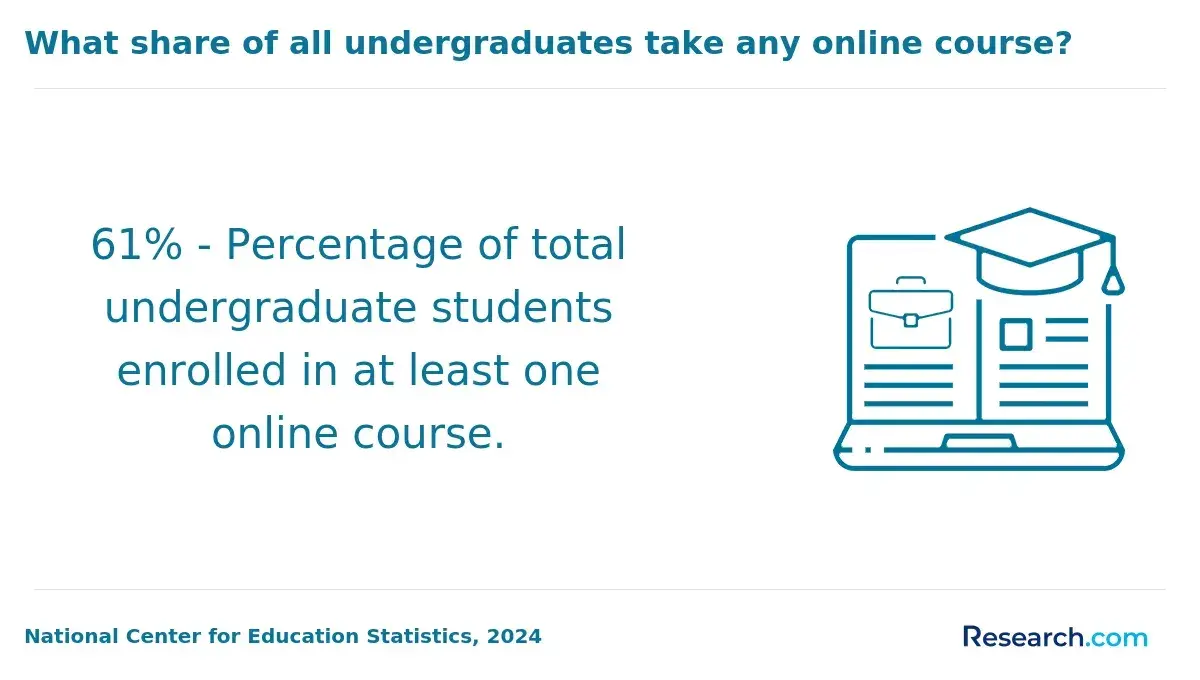
Distance education is now a mainstream enrollment pattern rather than a niche option. NCES data published in 2024 showed that more than half of U.S. postsecondary students took at least one distance education course in fall 2022, which helps explain why online psychology and organizational programs now compete heavily on start dates, pacing, and application simplicity.
- Working adults benefit when multiple start dates let them align enrollment with work cycles, promotions, relocation, or employer tuition reimbursement windows.
- Career changers benefit when a no-fee application lets them test admission readiness at more than one school without adding avoidable upfront costs.
- Transfer students benefit when rolling admissions provide more chances to submit transcripts and receive evaluations before committing.
- Military-affiliated students benefit when flexible starts align with deployment, PCS moves, benefit eligibility, or unpredictable schedules.
- Students comparing graduate programs benefit when waived fees let them apply broadly, then choose based on total cost and curriculum rather than marketing pressure.
However, this pathway is not ideal for everyone. Students who need a highly research-intensive PhD path, funded assistantships, lab-based mentorship, or a traditional campus experience may find fixed-deadline programs stronger. Students still deciding between fields may be better served by broader career exploration first, including comparing options outside psychology such as hospitality management courses online if their main interest is leadership, service operations, or people management rather than psychological research.
How Should Students Choose Among No-Fee Online Industrial Organizational Psychology Degree Programs?
The best program is the one that fits your career goal, budget, schedule, and academic needs after all costs and requirements are visible. A $0 application fee and rolling admissions are helpful features, but they should be tie-breakers after accreditation, curriculum, affordability, and outcomes.
Use the following process to compare programs in a disciplined way. It keeps the decision focused on long-term value rather than the convenience of applying quickly.
- Define your target outcome: HR analytics, talent development, organizational consulting, employee assessment, leadership development, people operations, or preparation for doctoral study.
- Confirm institutional accreditation and make sure the degree title matches how you plan to present the credential to employers.
- Compare total cost using tuition, credits, fees, books, transfer credits, and expected time to completion.
- Ask whether the application fee is permanently waived, automatically waived, or waived only for certain terms or applicants.
- Confirm the real rolling-admission deadline for your preferred start date, including transcript and financial aid deadlines.
- Review curriculum depth in statistics, research methods, assessment, consulting, organizational behavior, and workplace intervention.
- Check online format details, including synchronous meetings, residency requirements, group projects, pacing, and course availability.
- Ask about career support, alumni paths, internship or project options, and whether students complete applied capstone work.
- Compare admitted-student offers only after you receive written cost estimates and transfer-credit decisions.
Avoid choosing a program solely because it is easy to apply. The strongest choice is usually the program that gives you enough admissions flexibility without sacrificing academic quality, transparent pricing, or career relevance.
If you are still early in your education path, compare the I-O psychology route with adjacent undergraduate and graduate options before committing. The right choice depends on whether you want to study workplace behavior scientifically, manage people and operations, or build a broader business or HR credential.
Other Things You Should Know About Industrial Organizational Psychology
Usually not by itself. Licensure as a psychologist typically requires a doctoral degree, supervised experience, exams, and state-specific requirements. Many I-O psychology master's graduates work in organizational, HR, consulting, analytics, or training roles that do not require psychologist licensure.
Common related roles include organizational development specialist, talent management analyst, training and development manager, HR analyst, employee engagement specialist, leadership development consultant, and workforce researcher. Exact qualifications vary by employer and seniority level.
A master's degree can be enough for many applied roles in HR, training, organizational development, and people analytics. Research-heavy, academic, or licensed psychologist roles may require a PhD or PsyD, depending on the position and state rules.
Some programs include internships, applied projects, practicums, or capstones, while others are fully coursework-based. Students seeking career change should prioritize programs with applied projects or employer-relevant assignments, even when an internship is not required.
References
- How To Become An Industrial Organizational Psychologist | Psychology.org https://www.psychology.org/careers/industrial-organizational-psychologist/
- Industrial Organizational Psychology MA https://www.fdu.edu/program/ma-industrial-organizational-psychology/
- Industrial Organizational Psychology Master's Degree | Elmhurst University https://www.elmhurst.edu/academics/departments/psychology/programs/industrial-organizational-psychology/
- Inside Online Master’s Programs in Organizational Psychology https://www.onlinemastersdegrees.org/best-programs/psychology/organizational-psychology/
- 6 Top Industrial Organizational Psychology Programs in California - Psychology California https://psychologyca.org/masters-programs/industrial-organizational-psychology-programs/