2027 Cheapest Accredited Online Industrial Organizational Psychology Degree Programs That Accept FAFSA

Co-Founder and Chief Data Scientist
Key Things You Should Know
- The lowest published online I/O psychology master's tuition can start around $11,500 before fees at public nonprofit options, but total out-of-pocket cost depends on FAFSA results, transfer credits, employer aid, fees, and enrollment pace.
- FAFSA eligibility usually means the institution participates in federal Title IV aid; it does not mean every student receives grants, and graduate I/O psychology students generally rely more on federal loans, scholarships, assistantships, or employer tuition benefits.
- The maximum Federal Pell Grant for the 2025-26 award year is $7,395, but Pell Grants are primarily for eligible undergraduates, so master's students should compare debt against realistic career outcomes rather than assuming grant funding will cover tuition.
Which Are the Cheapest Accredited Online Industrial Organizational Psychology Degree Programs That Accept FAFSA?
The table below compares lower-cost online I/O psychology or closely aligned applied psychology programs with institutional accreditation and federal aid participation. Tuition figures are based on published per-credit rates and required credits commonly listed by schools; students should verify the current catalog, fees, residency rules, and financial aid eligibility before enrolling.
| School | Online program | Institution type | Institutional accreditation | Published tuition basis | Estimated base tuition before fees | FAFSA participation |
| Fort Hays State University | MS in Industrial/Organizational Psychology | Public nonprofit | Higher Learning Commission | About $319.45 per graduate credit, 36 credits | About $11,500 | Yes, if otherwise eligible |
| Touro University Worldwide | MA in Industrial and Organizational Psychology | Private nonprofit | WASC Senior College and University Commission | About $500 per credit, 36 credits | About $18,000 | Yes, if otherwise eligible |
| Liberty University | MA in Applied Psychology, Industrial/Organizational Psychology | Private nonprofit | Southern Association of Colleges and Schools Commission on Colleges | About $565 per credit for full-time online graduate study, 36 credits | About $20,340 | Yes, if otherwise eligible |
| Southern New Hampshire University | MS in Psychology, Industrial-Organizational Psychology | Private nonprofit | New England Commission of Higher Education | About $637 per credit, 36 credits | About $22,932 | Yes, if otherwise eligible |
| Bellevue University | MS in Industrial and Organizational Psychology | Private nonprofit | Higher Learning Commission | About $660 per credit, 36 credits | About $23,760 | Yes, if otherwise eligible |
| Purdue Global | MS in Psychology, Industrial/Organizational Psychology concentration | Public nonprofit system institution | Higher Learning Commission | About $420 per quarter credit, 60 quarter credits | About $25,200 | Yes, if otherwise eligible |
| Capella University | MS in Psychology, Industrial/Organizational Psychology specialization | Private institution | Higher Learning Commission | About $565 per quarter credit, 55 quarter credits | About $31,075 | Yes, if otherwise eligible |
For students who are not ready for graduate study, a lower-cost psychology bachelor's pathway can reduce the total price of eventually entering an I/O master's program. For example, an accelerated 2-year psychology degree online may help students complete prerequisite coursework faster before applying to a specialized graduate program.
The cheapest option is not always the best option. A $20,000 program that accepts more transfer credits, offers stronger advising, or fits your work schedule may cost less in real life than a $15,000 program that delays completion or requires retaking courses.
How Does FAFSA Eligibility Work for Online Industrial Organizational Psychology Degree Programs?
FAFSA eligibility for an online industrial-organizational psychology degree depends primarily on the school's participation in federal Title IV student aid programs, the student's eligibility, and the program's aid-approved status. In practical terms, "accepts FAFSA" means the school can use FAFSA information to determine eligibility for federal grants, federal loans, and some school-based aid, but it does not guarantee that the student will receive free aid.
Students should understand the difference between institutional aid eligibility and personal aid eligibility. The school may accept FAFSA, while a specific student may receive a smaller aid package because of enrollment status, prior borrowing, satisfactory academic progress, citizenship or eligible noncitizen status, dependency status, or degree level.
Before applying, use this sequence to confirm whether a program is truly FAFSA-eligible and affordable for your situation:
- Confirm that the institution is listed as participating in federal student aid and has a valid federal school code.
- Ask the financial aid office whether the specific online I/O psychology program is Title IV-eligible, not just whether the university participates in FAFSA.
- Request the full cost of attendance, including tuition, required fees, books, technology fees, graduation fees, and any required residencies or assessments.
- Ask whether you will be considered full-time or part-time for aid purposes based on your planned course load.
- Compare your aid offer against the total program cost, not only the first term's bill.
- Check renewal requirements, including satisfactory academic progress, minimum credits, and maximum time frame rules.
A common mistake is assuming FAFSA acceptance means the federal government will fully fund the degree. For graduate I/O psychology students, FAFSA is often used to access federal loans, while grants are more limited than they are for undergraduate students.
How Much Does an Online Industrial Organizational Psychology Degree Cost After Financial Aid?
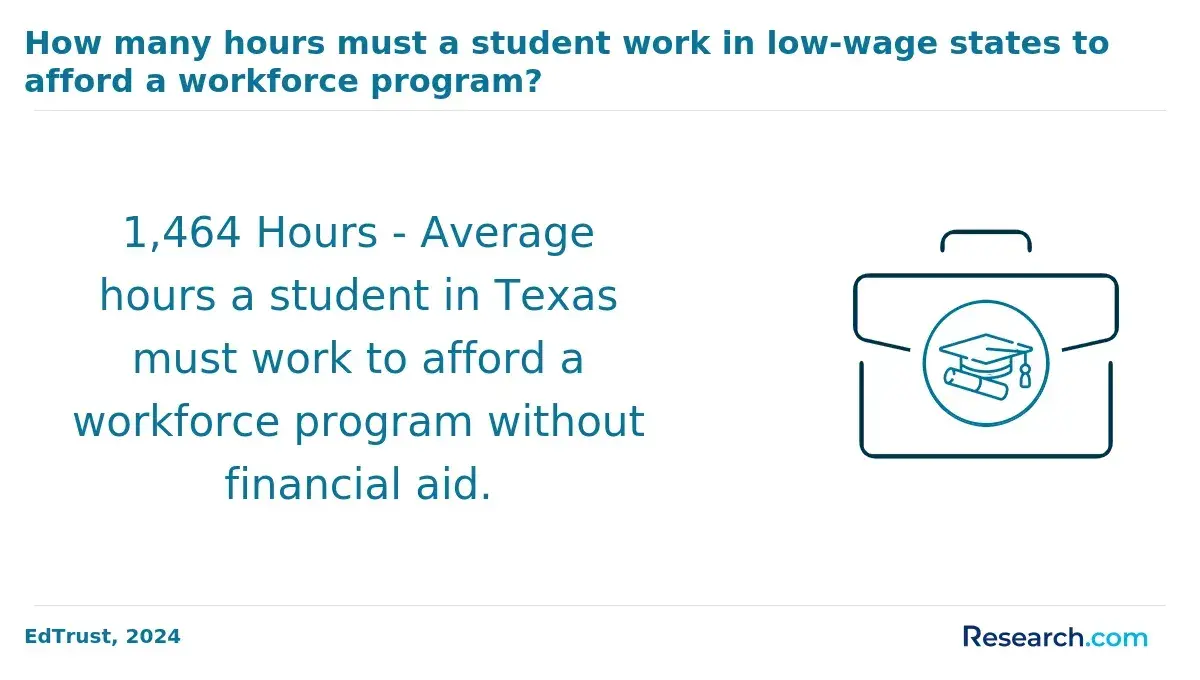
The cost of an online industrial-organizational psychology degree after financial aid depends on four numbers: published tuition, mandatory fees, aid that does not need to be repaid, and loans that create future repayment obligations. Students should focus on net cost and total borrowing rather than the tuition rate alone.
The examples below show how aid can change the real price of a program. These are planning scenarios, not guaranteed aid offers, because FAFSA results vary by student, award year, dependency status, enrollment intensity, and school packaging rules.
| Student scenario | Typical degree level | Possible aid mix | What changes the final cost | Decision takeaway |
| Undergraduate psychology student planning for I/O graduate study | Bachelor's degree or completion pathway | Pell Grant if eligible, federal loans, state grants, institutional scholarships | Transfer credits, residency tuition, Pell eligibility, course load | Grant aid can materially reduce cost, so compare net price letters from multiple schools. |
| Working adult entering an online I/O master's program | Master's degree | Federal Direct Unsubsidized Loan, employer tuition assistance, scholarships | Employer reimbursement limits, pace of study, fees, annual borrowing | A low tuition program paired with employer aid can reduce or eliminate out-of-pocket tuition. |
| Career changer with prior graduate coursework | Master's degree | Federal loans, transfer credit, institutional scholarship | Number of accepted graduate transfer credits and repeat-course rules | A higher per-credit program may be cheaper if it accepts more usable credits. |
| Student relying mostly on loans | Master's degree | Federal Direct Unsubsidized Loan and possibly Graduate PLUS Loan | Total debt, interest, completion speed, post-graduation income | Borrow only after comparing repayment to realistic salary outcomes. |
The simplest cost formula is: total credits multiplied by tuition per credit, plus required fees, minus grants, scholarships, tuition discounts, transfer-credit savings, and employer payments. Loans should not be subtracted as "savings" because they reduce today's bill but increase future repayment.
Students comparing programs should ask for a written, program-level estimate before committing. A school with a low per-credit price may still be less affordable if it charges high technology fees, requires more credits, limits transfer credit, or offers few scholarships to online learners.
Which Affordable Online Industrial Organizational Psychology Degree Programs Offer the Best Value?
The best-value affordable online I/O psychology program is the one that combines low net cost, recognized accreditation, usable curriculum, flexible delivery, and realistic career alignment. For most students, value means completing the degree with the least unnecessary debt while still gaining skills in assessment, organizational research, employee selection, training, leadership, analytics, and workplace behavior.
Use the comparison below to think beyond sticker price. The lowest published tuition is valuable, but it should be weighed against program structure, completion support, and how well the degree fits your intended career path.
| Value factor | Why it matters | When a higher-cost program may be worth it |
| Net price after aid | This is closer to the amount you actually pay or borrow. | When scholarships, employer aid, or transfer credits lower the final cost below a cheaper listed option. |
| Curriculum fit | I/O roles often require applied research, statistics, assessment, and organizational consulting skills. | When the program includes stronger analytics, capstone, consulting, or internship-style projects. |
| Flexibility | Working adults may need asynchronous courses, multiple start dates, and part-time pacing. | When flexibility prevents stop-outs that would increase total cost. |
| Faculty and career support | Advising, research guidance, and career services can help students translate coursework into job-ready evidence. | When the program supports portfolio projects, applied research, or employer-facing career preparation. |
| Completion requirements | Thesis, capstone, practicum, and comprehensive exam requirements affect time and cost. | When a research-heavy path supports doctoral goals or specialized consulting work. |
This same value logic applies across other professional graduate fields. Students comparing education ROI can also look at how cost, accreditation, and career fit are weighed in guides to the cheapest SLP master's programs, where the cheapest program is not automatically the best professional pathway for every student.
Students who should avoid choosing solely by lowest tuition include those seeking doctoral preparation, specialized research roles, advanced analytics positions, or employer-sponsored advancement that requires a particular curriculum. In those cases, the better investment may be the program that provides stronger methods training, a relevant capstone, or better alignment with the student's target industry.
Are the Cheapest Online Industrial Organizational Psychology Degree Programs Properly Accredited?
The cheapest online industrial-organizational psychology programs can be properly accredited, but students need to verify accreditation carefully. In the United States, the most important accreditation checkpoint for federal aid, credit transfer, and employer recognition is institutional accreditation from an agency recognized by the U.S. Department of Education or the Council for Higher Education Accreditation.
I/O psychology does not work like some licensure-heavy health fields where programmatic accreditation is always the central requirement. The American Psychological Association generally accredits doctoral programs in health service psychology, not typical online master's programs in industrial-organizational psychology, so a lack of APA accreditation does not automatically make an I/O master's program illegitimate.
Use these checks before applying to a low-cost program:
- Verify the school's institutional accreditor through official accreditation databases or the school's accreditation page.
- Confirm that the online campus or online division is included under the institution's accreditation status.
- Ask whether the exact I/O psychology degree or concentration appears on the transcript and diploma.
- Check whether credits are semester credits or quarter credits so you can compare total workload accurately.
- Review whether the curriculum includes research methods, statistics, psychometrics, organizational behavior, personnel selection, and applied project work.
- Ask employers, doctoral programs, or professional mentors whether the credential fits your intended next step.
A useful red flag is vague language about accreditation. If a school says it is "approved," "recognized," or "internationally accredited" without naming a recognized institutional accreditor, pause before submitting a deposit. In regulated fields, students often use professional standards as a screening tool; for example, speech-language pathology students may review ASHA approved SLP programs because accreditation and professional requirements can directly affect eligibility for practice.
What FAFSA Grants and Federal Aid Can Pay for an Online Industrial Organizational Psychology Degree?
FAFSA can help pay for an online industrial-organizational psychology degree by determining eligibility for federal, state, institutional, and sometimes scholarship-based aid. The type of aid available depends heavily on whether the student is pursuing an undergraduate or graduate degree.
The 2025-26 maximum Federal Pell Grant is $7,395 for eligible students, but that figure is most relevant to undergraduates. Graduate students in I/O psychology typically do not receive Pell Grants, so they should pay close attention to scholarships, employer tuition reimbursement, assistantships if available, and federal loan limits.
The most common FAFSA-related funding categories include the following:
- Federal Pell Grant: Usually available only to eligible undergraduate students who have not already earned a bachelor's degree.
- Federal Supplemental Educational Opportunity Grant: Campus-based undergraduate aid for students with exceptional financial need, depending on school participation and available funds.
- Federal Direct Subsidized Loan: Undergraduate loan option for eligible students with financial need; the government pays interest during certain periods.
- Federal Direct Unsubsidized Loan: Available to eligible undergraduate and graduate students; interest begins accruing when the loan is disbursed.
- Graduate PLUS Loan: Available to eligible graduate students after a credit check, often used only when Direct Unsubsidized Loan funding is not enough.
- Federal Work-Study: Campus-based employment aid that may be available to online students depending on the institution's policies and job availability.
- State and institutional aid: Some scholarships and grants use FAFSA information even when they are not federal grants.
Students should treat loans as financing, not discounts. A low-cost program that can be paid partly with employer assistance or scholarships may be safer financially than a slightly cheaper program that requires heavy borrowing and offers limited support.
How Do Transfer Credits Lower the Cost of an Online Industrial Organizational Psychology Degree?
Transfer credits can substantially lower the cost of an online industrial-organizational psychology degree because they reduce the number of credits you must pay for at the new school. This is especially important for students with prior psychology coursework, general education credits, military training, professional learning, or unfinished graduate credits.
At the undergraduate level, transfer credit can be one of the biggest affordability tools because students may be able to complete lower-division coursework at a community college before entering a bachelor's completion program. Students still building a foundation may also compare the best associates degrees to get if they want a lower-cost starting point before transferring into psychology or organizational behavior coursework.
At the graduate level, transfer policies are usually more restrictive. Many I/O psychology master's programs cap transfer credits, require recent coursework, and accept only courses that closely match the curriculum.
Ask these transfer-credit questions before choosing a program:
- How many undergraduate or graduate credits can be transferred into this specific program?
- Is there a minimum grade required for transfer credit?
- Are quarter credits converted differently from semester credits?
- Will transferred courses satisfy major requirements, electives, or only general credits?
- Are statistics, research methods, or psychology core courses too old to transfer?
- Does the school charge a transcript evaluation fee or prior-learning assessment fee?
- Will transfer credits change my enrollment status and financial aid amount?
The key trade-off is simple: a program with lower tuition but poor transfer acceptance may cost more than a higher-tuition program that accepts more credits. Always compare total remaining credits, not just per-credit tuition.
Which Students Benefit Most From a Low-Cost Online Industrial Organizational Psychology Degree With FAFSA?
A low-cost online industrial-organizational psychology degree with FAFSA is most useful for students who need flexibility, want to limit debt, and can clearly connect the credential to a career goal. The best fit is often a working adult, HR professional, training specialist, analyst, manager, or psychology graduate who wants to move into talent analytics, employee selection, organizational development, leadership development, workforce research, or consulting support.
Students who benefit most usually share several traits. They have enough schedule discipline for online coursework, they compare aid offers carefully, and they choose programs based on both cost and career relevance.
- Working HR or talent development professionals who need a graduate credential to qualify for advancement.
- Psychology bachelor's graduates who want a more applied career path than counseling or clinical psychology.
- Military-affiliated students who can combine federal aid with military education benefits, if eligible.
- Career changers who already have business, analytics, management, or training experience.
- Students who can transfer credits or use employer tuition assistance to reduce borrowing.
Students should be more cautious if they want to become licensed clinical psychologists, provide therapy, or pursue counseling licensure. I/O psychology is focused on workplaces and organizations, not clinical diagnosis or psychotherapy, and state licensure rules vary.
Some students compare I/O psychology with business, HR, or operations-focused degrees. If your goal is broader service-sector leadership rather than employee assessment or organizational research, practical options such as hospitality management courses online may align better with your target role and timeline.
How Does the Cost of an Online Industrial Organizational Psychology Degree Affect Career ROI?
The cost of an online industrial-organizational psychology degree affects career ROI because every extra borrowed amount must be justified by improved job access, promotion potential, or long-term earning power. ROI is strongest when the degree is affordable, completed on time, tied to a realistic role, and paired with relevant experience.
The U.S. Bureau of Labor Statistics reported a May 2024 median annual wage of $94,310 for psychologists overall, but students should be careful with that number. It includes multiple psychology occupations and does not mean every I/O psychology graduate will enter a psychologist-titled job immediately; many graduates work in HR analytics, organizational development, talent management, training, consulting support, or research roles with varying pay.
The table below shows how cost affects ROI thinking. It does not predict individual earnings; instead, it helps students compare borrowing risk against career intent.
| Total program cost before aid | Likely borrowing risk | Best fit | ROI concern |
| Under $15,000 | Lower if fees are modest and completion is timely | Students seeking affordable advancement or a low-debt graduate credential | Confirm curriculum depth and career support before choosing solely on price. |
| $15,000 to $25,000 | Moderate, depending on grants, employer aid, and savings | Working adults who can use the degree for HR, OD, analytics, or management growth | Compare net price and completion speed across several schools. |
| $25,000 to $40,000 | Higher if funded mainly with loans | Students who need a specific format, brand, specialization, or support model | Make sure the program provides clear advantages over cheaper accredited options. |
| Above $40,000 | High unless offset by scholarships or employer funding | Students with strong employer sponsorship or highly specific academic goals | Debt may be difficult to justify without a clear salary or promotion pathway. |
Current workplace trends make applied people analytics and organizational research more valuable, especially as employers use AI-supported hiring tools, employee engagement platforms, and workforce planning systems. That trend can help I/O-trained graduates, but it also raises expectations for data literacy, ethics, assessment validity, and communication skills.
A practical ROI rule is to estimate your likely monthly loan payment before enrolling. If the payment would require a promotion or job change that is uncertain, consider a cheaper program, slower part-time enrollment, employer reimbursement, or a related certificate before taking on large debt.
How Should Students Choose the Cheapest FAFSA-Eligible Online Industrial Organizational Psychology Degree?
Students should choose the cheapest FAFSA-eligible online industrial-organizational psychology degree by comparing total net cost, accreditation, curriculum fit, flexibility, transfer credit, and career outcomes together. The right choice is not simply the lowest tuition number; it is the lowest-risk path to the credential you actually need.
Use this step-by-step process to compare programs before applying or accepting an aid offer:
- Define your target outcome, such as HR analytics, organizational development, employee selection, consulting, doctoral study, or management advancement.
- Shortlist only institutionally accredited schools that participate in federal student aid.
- Confirm that the exact online I/O psychology program is eligible for aid and currently accepting students.
- Calculate total tuition using required credits, not just per-credit cost.
- Add mandatory fees, books, technology costs, residency costs, graduation fees, and exam or assessment fees.
- Request a financial aid estimate and separate gift aid from loans.
- Ask for a transfer-credit review before enrolling, especially if you have prior psychology, statistics, business, or graduate credits.
- Compare course requirements for statistics, research methods, psychometrics, personnel selection, organizational behavior, and applied projects.
- Review completion support, faculty access, career services, and online student advising.
- Estimate total borrowing and likely repayment before signing enrollment documents.
Common red flags include choosing based only on advertised tuition, ignoring fees, assuming FAFSA means free tuition, failing to verify accreditation, overlooking transfer policies, and borrowing up to the maximum without a career plan. Students should also avoid programs that make unrealistic employment or salary promises.
A good final test is to ask: "If I received no grants and had to repay every borrowed amount, would this program still make sense for my career goal?" If the answer is no, keep comparing options until the total cost and professional value align.
Other Things You Should Know About Industrial Organizational Psychology
Usually not by itself. I/O psychology programs focus on workplace behavior, research, assessment, and organizational systems, while psychologist licensure often requires a doctoral degree, supervised experience, and state-specific requirements.
Many schools do not print "online" on the diploma, but policies vary. Ask the registrar how the degree, concentration, and delivery format appear on the diploma and transcript.
Many online master's programs have test-optional or no-GRE admissions, especially for working adults. Typical requirements include a bachelor's degree, transcripts, a statement of purpose, resume, and sometimes prerequisite psychology or statistics coursework.
Many programs take about 1.5 to 3 years, depending on credit load, transfer credits, start dates, and whether the student enrolls full time or part time. Accelerated pacing can reduce time but may be difficult for working students.
References
- How To Become An Industrial Organizational Psychologist | Psychology.org https://www.psychology.org/careers/industrial-organizational-psychologist/
- Masters in Psychology Program | Masters in Psychology Degree | University of Phoenix https://www.phoenix.edu/online-psychology-degrees/industrial-organizational-psychology-masters-degree.html
- Financial Aid for Psychology Students https://www.onlinepsychologydegrees.com/financial-aid/
- Inside Online Master’s Programs in Organizational Psychology https://www.onlinemastersdegrees.org/best-programs/psychology/organizational-psychology/
- Organizational Psychology Degrees https://www.organizationalpsychologydegrees.com/
- Financial Aid For Online Colleges https://www.affordablecollegesonline.org/financial-aid/financial-aid-for-online-colleges/