2027 Fastest Accredited Online Industrial Organizational Psychology Degree Programs That Accept Transfer Credits

Co-Founder and Chief Data Scientist
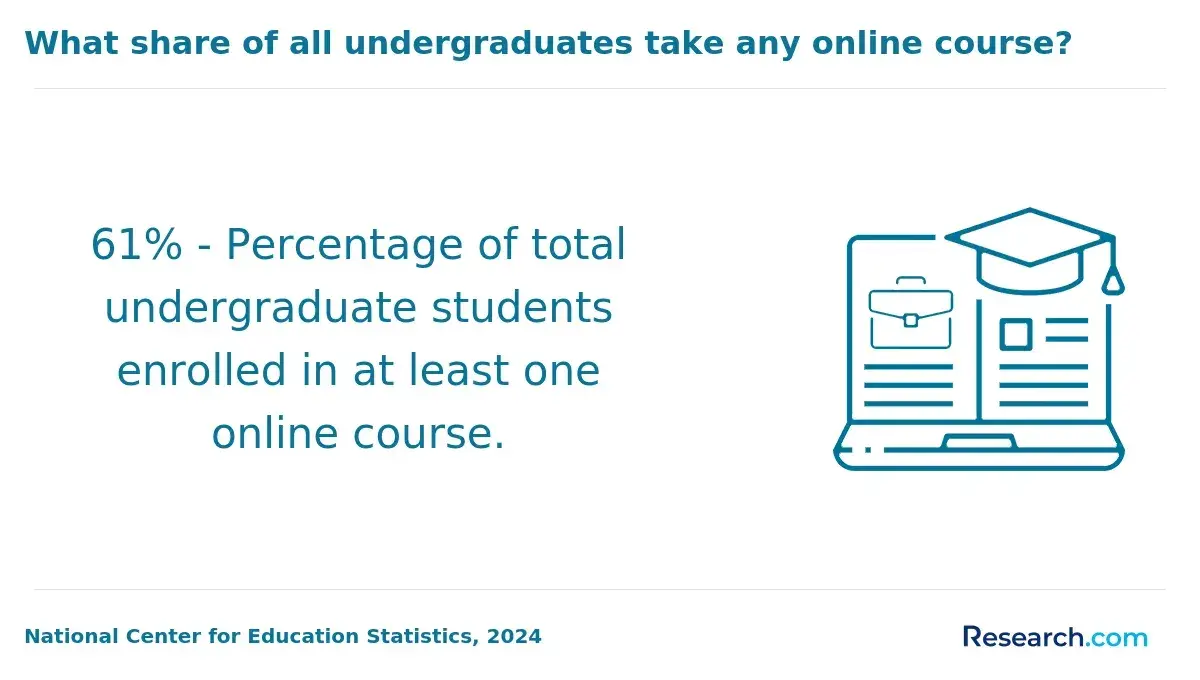
Your fastest route to an accredited online industrial-organizational psychology degree usually depends less on the advertised program length and more on how many prior credits actually apply. NCES reported in 2024 that more than half of undergraduates took at least one distance education course, making online transfer pathways a mainstream option.
This guide is for transfer students, working adults, military learners, and degree completers who want a legitimate shortcut to graduation. You will learn how to compare transfer limits, accreditation, residency rules, costs, and realistic accelerated timelines.
Key Things You Should Know
- The fastest realistic bachelor's path is usually a regionally accredited online psychology or industrial-organizational psychology program that accepts up to 90 semester credits, or the quarter-credit equivalent, leaving about 30 semester credits in residence.
- Transfer-friendly examples to compare include Southern New Hampshire University, Liberty University, Purdue Global, Capella University, and National University, but the fastest option is the one where your prior credits satisfy the degree plan, not just the school's maximum transfer cap.
- With 75 to 90 applicable transfer credits, many students can finish in about 8 to 18 months depending on course load, term length, major requirements, and whether prior learning, CLEP, military credit, or portfolio credit is accepted.
What Are the Fastest Accredited Online Industrial Organizational Psychology Degree Programs That Accept Transfer Credits?
The fastest accredited online industrial-organizational psychology degree programs are usually bachelor's programs in psychology with an industrial-organizational psychology concentration, specialization, or course sequence. At the undergraduate level, these programs prepare students for HR, training, organizational development, employee assessment, and graduate study; the protected title "psychologist" typically requires graduate education and state-specific requirements.
The table below compares commonly transfer-friendly online options in the U.S. Use it as a shortlist, not as a substitute for an official transfer evaluation, because schools can accept credits institutionally while still deciding that some credits do not apply to the I-O psychology major or general education plan.
| Online program to compare | Institutional accreditation | Online format | Published transfer-credit ceiling | Why it may be fast for transfer students |
| Southern New Hampshire University BA in Psychology, Industrial Organizational Psychology concentration | NECHE | Asynchronous online terms | Up to 90 semester credits toward a 120-credit bachelor's degree | Strong fit for students with completed general education and lower-division psychology credits because the remaining requirement may be close to the 30-credit residency minimum. |
| Liberty University BS in Psychology, Industrial-Organizational Psychology | SACSCOC | Eight-week online courses | Up to 75% of the degree, commonly interpreted as up to 90 credits for a 120-credit bachelor's degree | Accelerated terms can help motivated full-time students finish remaining upper-division and major coursework faster. |
| Purdue Global BS in Psychology in Industrial/Organizational Psychology | HLC | Online terms with career-focused coursework | Up to 75% of the program, expressed in quarter-credit requirements | May work well for students with substantial prior college, military, or assessed learning credit, especially if quarter-credit conversion is favorable. |
| Capella University BS in Psychology, Industrial/Organizational Psychology specialization | HLC | Online coursework with transfer and prior-learning review options | Often up to 75% of bachelor's requirements, subject to program rules | Can be fast when a student brings a large block of applicable credits and can move through remaining courses without long prerequisite delays. |
| National University BA in Psychology with I-O or organizationally focused electives, where available | WSCUC | Four-week course model in many online programs | Typically up to 75% of bachelor's requirements, subject to catalog and residency rules | Short course blocks can support steady year-round progress, but students should confirm the exact I-O pathway before enrolling. |
Students who do not yet have enough credits to transfer may be better served by starting with a broad online psychology pathway, such as a 2-year psychology degree online, then transferring into a bachelor's completion program. This can be faster and cheaper than entering a four-year program with no prior credits.
Before choosing, ask each school for a written degree audit that separates accepted credits from credits applied to the major. That single document is more useful than any advertised "finish fast" claim.
How Fast Can You Complete an Online Industrial Organizational Psychology Degree With Transfer Credits?
With transfer credits, an online industrial-organizational psychology bachelor's degree can sometimes be completed in under a year, but that is only realistic when the student has nearly all general education and elective credits completed and can study full time. Most transfer students should plan around remaining credits, course availability, and whether upper-division psychology requirements are offered every term.
The table below shows practical timeline ranges based on remaining credits. These estimates assume the program is regionally accredited, the student takes courses continuously, and there are no unresolved prerequisites or transcript delays.
| Applicable transfer credits | Credits left in a 120-credit bachelor's degree | Typical fast full-time pace | More realistic working-adult pace | Best-fit student |
| 90 credits | About 30 credits | 8 to 12 months | 12 to 18 months | Degree completer with finished lower-division coursework and strong academic discipline |
| 75 credits | About 45 credits | 12 to 18 months | 18 to 24 months | Transfer student with most general education done but several major courses remaining |
| 60 credits | About 60 credits | 18 to 24 months | 24 to 36 months | Associate-degree holder whose credits align well with the bachelor's plan |
| 30 credits | About 90 credits | 30 to 36 months | 36 months or longer | Student with some college credits but many general education and major requirements left |
The biggest timeline mistake is assuming that 90 transferred credits always means only 30 credits left. If many credits transfer as free electives, you may still need statistics, research methods, social psychology, organizational behavior, capstone, or upper-division psychology courses.
To estimate your fastest legitimate completion date, follow this sequence before applying:
- Request unofficial transcript reviews from at least three accredited online programs that offer I-O psychology coursework.
- Ask each school to show remaining general education, major, upper-division, elective, and residency credits separately.
- Confirm how often required I-O psychology, research methods, statistics, and capstone courses are offered online.
- Compare the fastest possible plan with a sustainable plan based on your work schedule, family responsibilities, and financial aid limits.
- Choose the program with the fewest required remaining credits, not necessarily the one with the highest advertised transfer maximum.
How Many Transfer Credits Can You Apply Toward an Online Industrial Organizational Psychology Degree?
Most transfer-friendly online bachelor's programs allow up to 75% of degree requirements to come from transfer or alternative credit. For a 120-credit semester-based bachelor's degree, that usually means up to 90 credits can be accepted, but the school may still require at least 30 credits taken through the institution.
Credit quantity and credit usability are different. A student comparing best associate's degrees to get should prioritize programs with transferable general education, statistics, psychology, business, communication, and research-related courses because those are more likely to fit an I-O psychology bachelor's plan.
The table below explains how common transfer caps work and why two schools with the same maximum can produce different graduation timelines.
| Policy type | What it usually means | Why it matters for speed | Question to ask |
| Maximum transfer limit | The largest number of credits the institution may accept from outside sources | A high cap helps only if those credits satisfy requirements in the degree plan | How many of my credits apply to this specific I-O psychology program? |
| Residency requirement | The minimum number of credits that must be completed at the degree-granting school | Even with many credits, you may need 30 or more credits at the new school | What is the minimum number of credits I must complete here? |
| Upper-division requirement | A required number of advanced junior- or senior-level credits | Lower-division community college credits may not replace advanced psychology courses | Which upper-division psychology courses must I still take? |
| Major requirement | Specific courses required for the psychology or I-O psychology concentration | General credits may transfer but not reduce major coursework | Will my previous psychology, business, or statistics courses satisfy major requirements? |
| Age limit or recency rule | Some programs review older science, statistics, or technology courses more closely | Older credits may transfer as electives but not satisfy current methods or statistics requirements | Are there time limits on statistics, research methods, or major courses? |
The safest approach is to request a course-by-course audit before committing. If the school provides only a broad estimate, keep comparing because small differences in applied credits can add a full term or more to your timeline.
How Can You Verify Accreditation for Fast Online Industrial Organizational Psychology Degree Programs?
Accreditation is the line between a legitimate fast degree and a credential that may not be recognized by employers, graduate schools, or financial aid programs. For online industrial-organizational psychology bachelor's degrees, the most important factor is institutional accreditation from an agency recognized by the U.S. Department of Education or CHEA.
Use this verification process before you send transcripts, pay an application fee, or enroll. It helps you confirm both institutional legitimacy and whether the online program is covered by the same accreditation as the campus-based institution.
- Search the school in the U.S. Department of Education's Database of Accredited Postsecondary Institutions and Programs.
- Confirm the accreditor name, accreditation status, and institutional location match the school's official website.
- Check whether the program is offered by the accredited institution itself, not by an unrelated third-party training provider.
- Review the accreditor's public status page for warnings, probation, show-cause actions, or recent changes.
- Ask admissions whether online students are eligible for the same transcript, diploma, federal financial aid, and graduate-school consideration as other students.
- For graduate pathways, ask whether the bachelor's curriculum includes statistics, research methods, and psychology prerequisites commonly expected by master's programs.
Programmatic accreditation is usually not required for undergraduate I-O psychology in the way it is for some healthcare or licensure fields. However, students planning to become licensed psychologists should understand that I-O psychology practice, state licensure, doctoral preparation, and supervised experience requirements vary significantly.
A major red flag is a school that promises an extremely fast psychology degree with no transcript review, no residency requirement, no meaningful coursework, or vague accreditation language. Legitimate accelerated programs are faster because they use prior credits, shorter terms, or competency-based progress, not because they skip academic standards.
Which Types of Transfer Credits Can Count Toward an Online Industrial Organizational Psychology Degree?
Transfer credits can come from several sources, and each source is evaluated differently. The best online I-O psychology programs usually combine traditional transfer credit with assessed learning options, but they still require evidence that the learning matches college-level outcomes.
The table below summarizes credit types that may reduce the time needed to finish. Policies vary by school, so use these categories to prepare your transcript and documentation questions.
| Credit source | What may count | How it can help | Common limitation |
| Regionally accredited college credit | General education, psychology, business, statistics, communication, and electives | Usually the most straightforward way to reduce remaining credits | Courses may transfer as electives rather than major requirements |
| Community college associate degree | Completed lower-division coursework and general education blocks | Can clear many first- and second-year requirements | Upper-division psychology courses usually still remain |
| Military training | ACE-recommended learning from Joint Services Transcript or Community College of the Air Force records | May satisfy electives, leadership, management, or technical credits | Often does not replace research methods or advanced psychology courses |
| CLEP and DSST exams | Exam-based credits in subjects such as psychology, sociology, management, or composition | Can fill remaining lower-division requirements quickly | Score minimums and credit limits vary by school |
| Professional certifications | ACE-evaluated workplace learning, HR credentials, training programs, or management education | May reduce elective or applied coursework requirements | Non-ACE credentials may require portfolio review or may not count |
| Prior learning portfolio | Documented college-level learning from work, training, leadership, or military experience | Can be valuable for experienced HR, training, or operations professionals | Requires evidence, faculty review, fees, and time to prepare |
For I-O psychology specifically, the most valuable transfer credits often include introductory psychology, statistics, research methods, social psychology, organizational behavior, human resources, leadership, communication, and business analytics. Credits in unrelated electives still help only if the degree plan has room for them.
Before paying for new exams or portfolio review, ask whether the credits will count toward open requirements. A low-cost exam that duplicates a completed requirement may not shorten your degree at all.
How Do Residency and Major Requirements Affect Transfer Credits for an Online Industrial Organizational Psychology Degree?
Residency and major requirements are the main reasons two students with the same number of transfer credits can have different graduation dates. Residency means the minimum coursework you must complete at the school awarding the degree; major requirements are the specific courses needed for the psychology major or I-O psychology concentration.
The table below shows how these rules can slow down or speed up a transfer plan. It is especially useful when comparing schools that all claim to accept up to 90 credits.
| Requirement | Fast-program advantage | Possible delay | How to evaluate it |
| Institutional residency | A 30-credit residency can make a bachelor's completion path possible in about one year for full-time students | A higher residency requirement may add terms even when more transfer credits are accepted | Ask for the exact minimum credits you must complete at the school |
| Major residency | Some schools allow several transferred psychology courses to apply to the major | Others require many major courses to be completed in-house | Ask how many major credits must be taken at the institution |
| Upper-division credits | Programs with frequent upper-division online course offerings can support faster completion | Lower-division transfer credits may not satisfy junior- or senior-level requirements | Ask which required courses are upper-division and when they are offered |
| Capstone or senior project | A regularly offered online capstone can be completed near the end of the program without delay | A capstone offered only in certain terms can push graduation back | Ask whether the capstone has prerequisites or term restrictions |
| Concentration requirements | Flexible I-O electives can allow more prior business or psychology coursework to count | A tightly sequenced concentration may require specific courses only available from the school | Ask whether organizational behavior, HR, leadership, or analytics courses can apply |
The most transfer-friendly program is not always the most flexible academically. A focused I-O psychology curriculum may require more in-major credits, while a broader psychology degree may accept more electives but offer less specialized preparation.
Students aiming for graduate school should be careful not to over-optimize for speed. A slightly longer plan that includes statistics, research methods, writing-intensive psychology coursework, and a strong capstone may be more useful than the absolute shortest path.
Can Prior Learning, CLEP, Military Training, or Certifications Help You Finish an Online Industrial Organizational Psychology Degree Faster?
Prior learning, CLEP, military training, and certifications can help you finish faster, but only when they fill open requirements in your degree audit. They are most useful for students who are short on general education, elective, management, communication, or introductory psychology credits.
Use the following checklist to decide whether alternative credit is worth pursuing. It can prevent you from spending time or money on credits that will not move you closer to graduation.
- Identify the exact remaining requirements after your official or unofficial transfer evaluation.
- Ask the school which CLEP, DSST, ACE, military, or portfolio credits it accepts for those requirements.
- Confirm the maximum number of alternative credits allowed within the total transfer-credit limit.
- Check whether alternative credits can satisfy major requirements or only electives and general education.
- Compare the time needed to prepare for an exam or portfolio with the time needed to complete the course online.
- Get approval in writing before registering for exams or paying portfolio assessment fees.
Military students should request a Joint Services Transcript early because evaluation can take time. Working adults in HR, training, employee relations, recruiting, leadership development, or operations may have portfolio-worthy experience, but strong documentation is essential.
Common mistake: assuming professional experience automatically becomes college credit. Accredited colleges award prior learning credit for documented, college-level learning that matches course outcomes, not simply for years on the job.
How Much Does a Fast Online Industrial Organizational Psychology Degree Cost After Transfer Credits and Financial Aid?
The cost of a fast online I-O psychology degree depends on the number of credits you still need, the tuition rate, technology fees, books, portfolio fees, exam fees, and financial aid eligibility. Transfer credits can reduce cost significantly because the most expensive degree is often the one where you retake courses you already completed elsewhere.
College Board's 2024 pricing data reported average published tuition and fees of $11,610 for in-state public four-year students and $43,350 at private nonprofit four-year institutions for the 2024-25 academic year. For online transfer students, that comparison matters because an affordable per-credit rate can still be expensive if the school applies fewer credits to the degree.
The table below shows how remaining credits can affect direct tuition before aid. Replace the sample per-credit rates with each school's current tuition to estimate your own total.
| Remaining credits | At $350 per credit | At $500 per credit | At $650 per credit | What to remember |
| 30 credits | $10,500 | $15,000 | $19,500 | Often the fastest completion scenario, but major residency requirements still matter |
| 45 credits | $15,750 | $22,500 | $29,250 | Common for students with substantial transfer credit but several upper-division courses left |
| 60 credits | $21,000 | $30,000 | $39,000 | May still be affordable if the program has strong transfer alignment and financial aid |
| 90 credits | $31,500 | $45,000 | $58,500 | Students with fewer applicable credits should compare total program cost, not just speed |
Students comparing education options across fields may notice similar cost trade-offs in healthcare, business, and communication programs; for example, lists of cheapest SLP master's programs often show why total credits and clinical or residency requirements matter as much as tuition. The same logic applies to online I-O psychology: a lower tuition rate is not automatically the better deal if it adds extra terms.
To reduce cost, send every transcript, ask about employer tuition benefits, submit the FAFSA if eligible, compare military and veteran benefits, and confirm whether portfolio or exam credits cost less than taking equivalent courses. Avoid schools that pressure you to enroll before giving a clear cost estimate based on applied credits.
How Do Accelerated, Competency-Based, and Self-Paced Online Industrial Organizational Psychology Degree Programs Compare?
Accelerated, competency-based, and self-paced formats can all shorten completion time, but they work differently. The fastest format depends on your prior credits, learning style, available study time, and whether the remaining courses are content you already know well.
The table below compares common online formats for I-O psychology degree completion. Use it to decide whether speed, structure, flexibility, or predictability should drive your program choice.
| Format | How it works | Who may finish fastest | Main trade-off |
| Accelerated term-based | Courses run in short sessions, often five to eight weeks | Students who can handle intensive deadlines and take multiple terms per year | Fast pacing can be stressful when courses involve research, writing, and statistics |
| Traditional asynchronous online | Students complete weekly work online within standard terms | Working adults who need flexibility but still benefit from regular deadlines | May be slower than accelerated terms if required courses are not offered often |
| Competency-based | Students progress by demonstrating mastery rather than simply completing weekly seat time | Experienced learners with strong writing, analysis, HR, or organizational knowledge | Not every I-O psychology program is competency-based, and financial aid rules can differ |
| Self-paced subscription model | Students complete as much coursework as possible during a billing period | Highly independent students with significant prior knowledge and available study time | Can become expensive if motivation drops or assessments take longer than expected |
| Cohort-based online | Students move through courses with the same group | Students who value structure, peer support, and predictable sequencing | Less flexible for transfer students who need a customized completion plan |
Accelerated formats are common beyond psychology, including business and service fields such as hospitality management courses online. The useful lesson is that short terms help only when courses are available in the right order and the student can sustain the workload.
Choose accelerated terms if you want deadlines and can study consistently. Consider competency-based or self-paced options if you already understand much of the material and can write strong papers without weekly instructor prompts. Choose a slower path if you need graduate-school preparation, want research experience, or are balancing a heavy work schedule.
Are Fast Accredited Online Industrial Organizational Psychology Degrees Respected by Employers and Graduate Schools?
Fast accredited online I-O psychology degrees can be respected by employers and graduate schools when the institution is properly accredited, the curriculum is credible, and the student can explain relevant skills. Employers usually care more about accreditation, demonstrated ability, work experience, analytics skills, communication, and applied projects than whether the courses were online.
BLS employment projections released for the 2024-34 period expect psychologist employment overall to grow 7%, but I-O psychology career paths vary because many bachelor's graduates work in HR, training, recruiting, workforce analytics, employee engagement, or organizational development rather than licensed psychologist roles. That means the bachelor's degree can support career entry or advancement, while many specialist I-O psychologist roles require a master's or doctoral degree.
To make a fast online degree more credible, focus on evidence of applied skill. Employers and graduate admissions committees may value coursework and projects in statistics, research methods, organizational behavior, psychometrics, leadership, data interpretation, and workplace assessment.
Programs in regulated fields show why standards matter; for example, students comparing ASHA-approved SLP programs must think carefully about accreditation and professional eligibility. I-O psychology is different, but the same principle applies: speed should not come at the expense of recognition, prerequisites, or long-term goals.
Before enrolling, ask whether graduates have gone on to HR roles, organizational development work, people analytics positions, or graduate programs. Also ask whether the diploma or transcript identifies the online format; many accredited institutions do not distinguish online delivery, but policies vary.
Other Things You Should Know About Industrial Organizational Psychology
Six months is uncommon for an accredited bachelor's degree, even with many transfer credits. It may be possible only if you have nearly all required credits completed, the school requires very few remaining courses, and those courses are available immediately. Most fast transfer students should expect closer to 8 to 18 months.
No. An associate degree can help because it may package general education credits neatly, but schools usually evaluate individual courses too. A student without an associate degree can still transfer credits if the prior coursework is from an eligible institution and fits the degree plan.
Often, yes, especially for general education and elective courses. However, some schools review older statistics, research methods, technology, or major courses more carefully. Always ask whether older credits will satisfy specific requirements or transfer only as electives.
It can be a strong fit for working adults interested in HR, training, leadership, organizational behavior, employee selection, engagement, or workplace data. It is especially practical for students who can connect coursework to current work experience, but those seeking licensed psychologist roles should plan for graduate education.
References
- Masters in Psychology Program | Masters in Psychology Degree | University of Phoenix https://www.phoenix.edu/online-psychology-degrees/industrial-organizational-psychology-masters-degree.html
- How Long Does it Take to Become an Industrial Psychologist? - Organizational Psychology Degrees https://www.organizationalpsychologydegrees.com/faq/how-long-does-it-take-to-become-an-industrial-psychologist/
- How To Become An Industrial Organizational Psychologist | Psychology.org https://www.psychology.org/careers/industrial-organizational-psychologist/
- Inside Online Master’s Programs in Organizational Psychology https://www.onlinemastersdegrees.org/best-programs/psychology/organizational-psychology/