2027 Online Higher Education Leadership Doctorate Programs That Give Credit for Prior Graduate Work

Co-Founder and Chief Data Scientist
If you already have master's-level or doctoral coursework, repeating similar classes can add unnecessary cost and time to an online Higher Education Leadership doctorate. NCES data published in 2024 shows average graduate tuition and fees reached $12,596 at public institutions and $29,931 at private nonprofit institutions, making transfer credit a practical financial issue. This guide explains how prior graduate work is reviewed, what usually transfers, and how credits may affect tuition, residency, and completion time so you can identify legitimate transfer-friendly programs before enrolling.
Key Things You Should Know
- Prior graduate work can sometimes reduce an online Higher Education Leadership EdD or PhD by 6 to 30 credits, but most schools require course equivalency, institutional accreditation, minimum grades, and a final faculty or registrar review.
- Common eligibility rules include graduate-level coursework, grades of B or better, courses completed within about 5 to 10 years, and a residency requirement that forces students to complete a minimum number of credits at the doctoral-granting institution.
- Transfer credit may lower tuition only if accepted credits replace billable program credits; it may not shorten the dissertation, capstone, qualifying exam, or required doctoral residency sequence.
Can Prior Graduate Credits Be Applied to an Online Higher Education Leadership Doctorate?
Yes, many online Higher Education Leadership doctorate programs allow some prior graduate credits to be applied, but the credits are not accepted automatically. Schools usually distinguish between transfer credit, which replaces a specific requirement; advanced standing, which recognizes prior graduate preparation and may reduce the number of required credits; and waivers, which excuse a course but may not reduce total credits or tuition.
The key question is not whether a program advertises transfer credit. The better question is whether your courses match the doctorate's curriculum closely enough to replace required credits. A course titled "Leadership Theory" may count in one program but be rejected in another if it lacks a higher education focus, doctoral rigor, or equivalent learning outcomes.
Students comparing programs should also understand the difference between an EdD and a PhD. An EdD in Higher Education Leadership is typically designed for applied leadership roles in colleges, universities, community colleges, policy organizations, and educational nonprofits. A PhD is more research-intensive and may be less flexible about transfer credit because it often requires a tightly sequenced research core.
What Types of Prior Graduate Work Can Count Toward an Online Higher Education Leadership Doctorate?
| Prior graduate work | Transfer potential | What schools usually review |
| Master's courses in higher education administration | High | Course descriptions, learning outcomes, credits, grade earned, and overlap with leadership core requirements |
| Student affairs, enrollment management, or academic affairs coursework | Moderate to high | Relevance to the program's higher education leadership concentration |
| Research methods or statistics courses | Moderate | Level of rigor, recency, software or methodology covered, and whether the doctoral program requires its own sequence |
| Education specialist or post-master's leadership credits | High in transfer-friendly EdD programs | Whether credits were graduate-level, post-master's, and not already used in a way the school prohibits |
| Unfinished doctoral coursework | Potentially high | Institutional accreditation, doctoral level, grade, syllabus, and whether credits align with required doctoral courses |
| Business, public administration, or organizational leadership courses | Moderate | Applicability to higher education governance, finance, policy, ethics, or leadership practice |
| Instructional design or learning technology graduate coursework | Selective | Whether the doctorate includes teaching, learning innovation, online learning, or academic technology electives |
Students with coursework outside higher education should not assume the credits are unusable. For example, graduate work from best online instructional design master's programs may be relevant if the doctorate includes academic innovation, digital learning leadership, faculty development, or curriculum transformation.
- Official graduate transcripts showing institution name, course number, credits, term, and final grade
- Syllabi with weekly topics, assignments, textbooks, and learning outcomes
- Catalog descriptions from the year the course was completed
- Evidence that the course was graduate-level or doctoral-level, especially if the numbering system is unclear
- Writing samples or major projects if the school asks for proof of research or applied leadership work
How Many Credits Can You Transfer Into an Online Higher Education Leadership Doctorate Program?
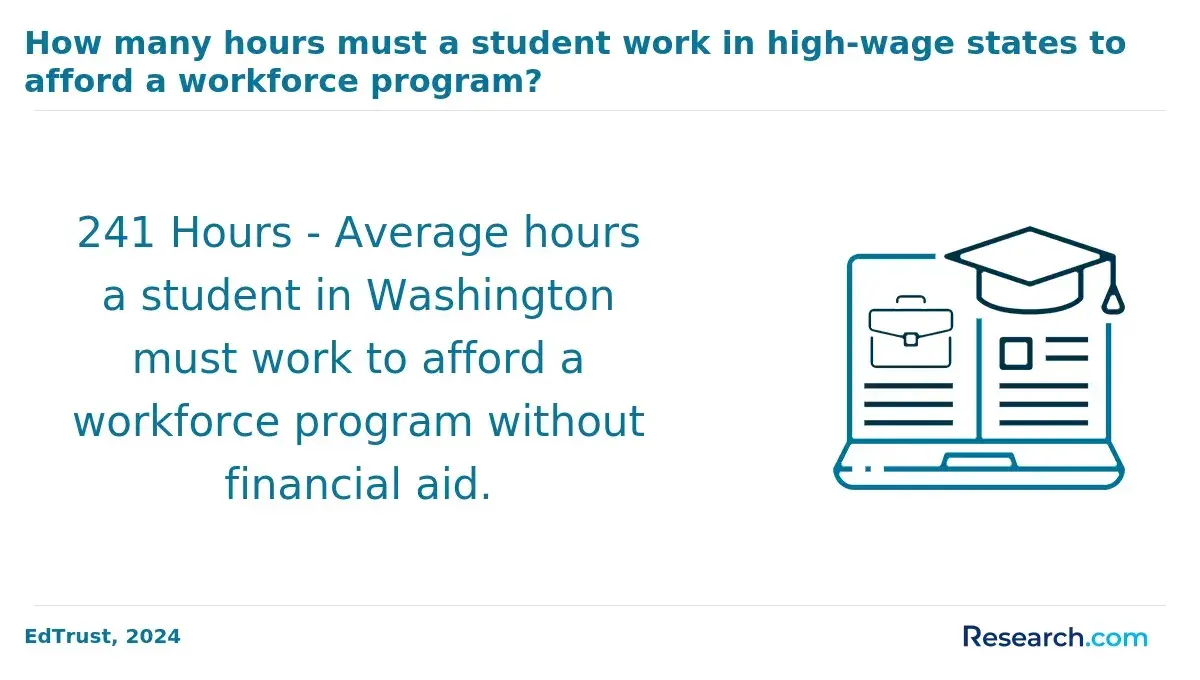
Transfer limits vary widely. Some online Higher Education Leadership doctorates accept only a small number of elective credits, while others offer advanced standing for students who already hold an education specialist degree or substantial doctoral coursework. A common range is 6 to 30 credits, although the credits actually accepted may be lower than the advertised maximum.
The table below shows how different transfer-credit models affect students. Use it to compare program language because two schools that both say "transfer credit accepted" may handle prior graduate work very differently.
| Transfer model | Typical credit treatment | Best fit | Main caution |
| Course-by-course transfer | Individual courses are matched to required or elective doctorate courses | Students with several highly relevant graduate courses | Approval can be slow and may result in fewer credits than expected |
| Advanced standing | A block of credits may be recognized based on a completed master's, EdS, or prior doctoral study | Students with a closely related graduate credential | The school may still require all research, residency, and dissertation credits |
| Elective-only transfer | Prior credits fill elective space but do not replace core courses | Students with related but not identical coursework | May reduce cost less than expected if the program has few electives |
| No doctoral transfer, but course waiver allowed | A requirement may be waived, but credits must be replaced with another doctoral course | Students trying to avoid repeated content | May not reduce tuition or time to completion |
Students should focus on the usable transfer maximum, not just the published cap. For example, a program may allow up to 30 transfer credits but still require 48 institutional credits, a leadership core, a research sequence, and dissertation credits that cannot be transferred. In that case, the real savings depend on whether your prior work fits the limited portion of the curriculum that is transferable.
A practical rule is to ask for a preliminary transfer review before making a deposit. Admissions representatives can explain policy, but final decisions often come from the registrar, program director, dean, or faculty committee.
What Grades, Course Matches, and Credit-Age Rules Apply to an Online Higher Education Leadership Doctorate?
Most online Higher Education Leadership doctorate programs use several filters before approving transfer credit. The most common are grade minimums, course equivalency, credit age, institutional accreditation, and whether the course was already applied toward another completed degree in a way the receiving institution does not allow.
The following criteria are especially important because they can disqualify otherwise relevant coursework. Review them before assuming that a prior graduate course will count.
- Minimum grade: Many programs require a B or better for graduate transfer credit; courses with B-minus, C, pass/fail, satisfactory, or incomplete grades may be rejected unless the school has an exception process.
- Course level: Credits usually must be graduate-level, and doctoral programs may prefer post-master's or doctoral-level work for core substitutions.
- Content match: The prior course must align with a requirement such as higher education law, governance, finance, policy, research methods, leadership theory, assessment, or organizational change.
- Credit age: Some schools limit transfer credits to courses completed within 5 to 10 years, especially for research methods, law, policy, technology, and compliance-related topics.
- Credit value: Semester and quarter credits may be converted differently; a 3 quarter-credit course may not equal a 3 semester-credit requirement.
- Duplicate use: Some institutions restrict credits already used to complete another degree, while others allow them as part of advanced standing if policy permits it.
Course age matters more in Higher Education Leadership than some applicants expect. Higher education law, federal compliance, financial aid policy, online learning, accreditation expectations, and data governance continue to change. A course from many years ago may show useful background, but a program may still require a current doctoral course to ensure students work from today's policy environment.
Students can strengthen a transfer request by mapping each previous course to a specific requirement in the new doctorate. Instead of asking, "Will you take my credits?" ask, "Can this graduate-level higher education finance course satisfy your doctoral finance or resource management requirement?"
How Does the Transfer-Credit Evaluation Process Work for an Online Higher Education Leadership Doctorate?
The evaluation process usually begins before or shortly after admission, but the timing matters. A preliminary review can help you compare programs, while an official evaluation typically requires final transcripts and admission to the university.
Students should treat transfer review as a documented academic decision, not an informal conversation. The steps below show how to move from rough estimate to written confirmation.
- Request the program's doctoral transfer-credit policy, including maximum credits, grade rules, credit-age limits, residency requirements, and restrictions on previously applied credits.
- Ask whether the school offers a preliminary evaluation before enrollment and whether the result is advisory or binding.
- Order official transcripts from every graduate institution attended, including unfinished doctoral programs and certificate programs.
- Collect syllabi, catalog descriptions, course outcomes, and major assignments for courses you want reviewed.
- Create a course-match worksheet that pairs each prior course with a specific requirement in the Higher Education Leadership doctorate.
- Submit materials through the required office, which may be admissions, the registrar, graduate studies, or the academic department.
- Request a written decision showing accepted credits, denied credits, remaining requirements, estimated program length, and whether tuition will be reduced.
- Keep copies of the evaluation and confirm whether the decision remains valid if you defer enrollment or change concentrations.
One common mistake is relying on verbal assurances. A phrase like "you should be able to transfer credits" is not the same as an official degree plan. Before enrolling, ask for the accepted credits to appear in writing and verify how they change your remaining courses.
Another mistake is waiting until after the first term to ask. Once you have started a course sequence, some programs may limit retroactive substitutions or may require you to continue with the prescribed cohort plan even if credits are later accepted.
How Do Accreditation and Academic Recognition Affect Higher Education Leadership Doctoral Transfer Credits?
Accreditation is one of the most important transfer-credit filters. In the U.S., online doctoral programs generally expect prior credits to come from an institution recognized by an accreditor approved by the U.S. Department of Education or the Council for Higher Education Accreditation. If your previous school lacked recognized accreditation, your credits may be rejected even if the course content appears relevant.
Students comparing online programs should confirm the accreditation status of both the prior institution and the new doctoral institution. If institutional mission and recognition matter to you, a guide to choosing a non profit online university can help you evaluate schools where transfer policy, governance, and student support may be easier to verify.
The table below explains how accreditation and academic recognition can influence transfer outcomes. This matters because a low-cost or fast program is not a good value if the credits, degree, or institution are not recognized by employers, licensing bodies, or future universities.
| Recognition factor | Why it matters for transfer credit | What to verify |
| Institutional accreditation | Most schools require prior credits from a recognized accredited institution | Accreditor name, dates of accreditation, and institutional status during the term you completed the course |
| Programmatic accreditation or approval | Less common for higher education leadership, but relevant if tied to educator leadership or licensure goals | Whether the program meets your state, employer, or professional requirements |
| State authorization | Online programs must be authorized to enroll students in many states | Whether the school can legally enroll students where you live |
| Employer recognition | Some employers have policies about accredited degrees, tuition reimbursement, and promotion eligibility | Whether the degree type and institution meet workplace requirements |
For Higher Education Leadership, programmatic accreditation is not always required in the way it may be for counseling, nursing, or clinical fields. However, if your career goal involves K-12 superintendent licensure, principal licensure, or state education leadership certification, an online Higher Education Leadership doctorate may not meet those requirements unless the program is specifically designed for them.
How Do Transfer Credits Affect the Curriculum, Residency, and Dissertation Requirements of an Online Higher Education Leadership Doctorate?
Transfer credits usually affect coursework first, not the entire doctoral experience. Even when a school accepts prior graduate credits, students are commonly required to complete the program's leadership core, research sequence, comprehensive exam, dissertation, capstone, doctoral project, or residency requirements through the granting institution.
In online Higher Education Leadership doctorates, residency does not always mean living on campus. It may refer to the minimum number of credits that must be completed at the institution, a virtual intensive, an in-person weekend, a summer institute, a research seminar, or continuous enrollment in dissertation credits.
The table below shows which parts of the curriculum are usually more or less likely to be reduced by transfer credit. This helps students avoid the mistake of assuming that accepted credits will shorten every part of the degree.
| Doctoral requirement | Transfer-credit impact | Why it may remain required |
| Foundational leadership courses | Sometimes reduced | Prior leadership coursework may overlap with theory or organizational change requirements |
| Higher education specialization courses | Sometimes reduced | Transfer depends on close alignment with governance, policy, law, finance, or student success topics |
| Research methods sequence | Often restricted | Programs may require their own sequence to prepare students for dissertation or doctoral project work |
| Residency or institutional-credit minimum | Rarely waived | Schools must ensure enough doctoral work is completed under their faculty supervision |
| Dissertation, capstone, or doctoral project | Almost never replaced by transfer credit | The final scholarly project demonstrates original or applied doctoral competence within the program |
| Comprehensive or qualifying exam | Rarely waived | The exam verifies readiness for advanced doctoral work at that institution |
Some students look for alternatives because they want an applied doctoral project rather than a traditional dissertation. If that is your priority, compare transfer policy with program design and review online EdD programs no dissertation to understand how capstone-style doctorates may differ from dissertation-based programs.
The trade-off is important. A shorter curriculum may be appealing, but students who plan to publish research, pursue faculty roles, or move into institutional research may benefit from completing the full research sequence even if an older methods course could technically transfer.
How Much Time and Tuition Can Transfer Credits Save in an Online Higher Education Leadership Doctorate?
Transfer credit can reduce tuition if the program charges by the credit and the accepted credits replace credits you would otherwise pay for. The savings are less direct in flat-rate, subscription, cohort, or dissertation-continuation models, where time in program may matter as much as the number of credits.
NCES data published in 2024 reported average graduate tuition and fees of $12,596 at public institutions and $29,931 at private nonprofit institutions for the 2022-23 academic year. For doctoral students, this underscores why even a modest transfer award can matter, but the real savings depend on the institution's per-credit rate, fees, and whether accepted credits reduce required enrollment terms.
The table below uses simple per-credit scenarios rather than promises. Use it as a framework for estimating possible savings after a school confirms how many credits will actually transfer.
| Accepted transfer credits | If tuition is $700 per credit | If tuition is $1,000 per credit | Possible time effect |
| 6 credits | $4,200 before fees | $6,000 before fees | May remove one or two courses |
| 12 credits | $8,400 before fees | $12,000 before fees | May shorten coursework by about one term if sequencing allows |
| 18 credits | $12,600 before fees | $18,000 before fees | May reduce several terms, but dissertation timing may be unchanged |
| 30 credits | $21,000 before fees | $30,000 before fees | Can be substantial, but only if the program allows that many usable credits |
Time savings are often smaller than credit savings because doctoral programs are sequenced. A student who transfers 12 credits may still need to wait for a research course offered once per year, complete a cohort-based leadership sequence, or remain enrolled through dissertation milestones.
Students seeking the shortest possible route should compare transfer credit with accelerated program design. Some 1 year EdD programs online may be structured for speed, but applicants should still verify accreditation, workload, dissertation or capstone expectations, and whether the timeline is realistic for working professionals.
Transfer credit is worth pursuing when it removes repeated coursework, lowers billable credits, and still leaves enough doctoral training to support your goals. It is less useful when the credits only fill electives, do not reduce tuition, or force you into a program that is a poor academic or professional fit.
Can Students Transfer Credits From Another Field, an International University, or an Unfinished Higher Education Leadership Doctorate?
Students often apply with complex academic histories: a master's in another field, an unfinished doctorate, international graduate coursework, or certificates from multiple institutions. These credits may count, but they usually receive closer scrutiny than coursework from a closely matched U.S. higher education leadership program.
The table below summarizes how schools often treat less straightforward transfer situations. It can help you decide whether to invest time in a credit review before applying.
| Prior credit source | Can it transfer? | What usually determines approval |
| Another field, such as business, public administration, policy, or organizational leadership | Sometimes | Clear connection to higher education leadership outcomes, especially finance, governance, management, ethics, or policy |
| International graduate institution | Sometimes | Credential evaluation, U.S. credit equivalency, institutional recognition, translated syllabi, and grade conversion |
| Unfinished Higher Education Leadership doctorate | Often possible | Doctoral-level coursework, good academic standing, recency, accreditation, and alignment with the new curriculum |
| Professional development or continuing education units | Rarely | Whether the work carried graduate credit from an accredited institution |
| Military or workplace training | Rare at doctoral level | Whether the training appears on an accredited graduate transcript and matches program outcomes |
International coursework usually requires a course-by-course credential evaluation from an approved evaluator. Students should ask the doctoral program which evaluators it accepts because schools may not recognize every report format.
If you are leaving an unfinished doctoral program, request official transcripts before losing access to your student portal. You may also need syllabi, dissertation-stage documentation, or a letter confirming academic standing. However, dissertation credits from another institution are commonly difficult to transfer because the receiving school must supervise the final research or doctoral project.
Students changing fields should be strategic. A public administration course in budgeting may transfer into higher education finance, but a clinical counseling course may not. The best approach is to build a direct academic argument: show how the prior course supports leadership decisions in colleges, universities, student services, academic affairs, or policy environments.
How Should Students Compare Online Higher Education Leadership Doctorate Programs That Accept Prior Graduate Work?
The best transfer-friendly program is not always the one with the highest published transfer limit. A stronger choice is the program that accepts the most usable credits, provides a written evaluation, fits your career goal, is properly accredited, and offers a realistic path through coursework, residency, and the dissertation or capstone.
Use the following comparison points before applying or enrolling. They focus on decisions that affect cost, completion time, and academic value.
- Ask for the maximum and the typical accepted amount: A 30-credit transfer cap is helpful only if students with backgrounds like yours actually receive close to that amount.
- Confirm whether credits reduce tuition: Some waivers remove repeated content but require replacement credits, which may not lower the bill.
- Review the remaining degree plan: Ask how many credits, terms, residencies, exams, and dissertation or capstone milestones remain after transfer.
- Compare curriculum fit: Choose a program aligned with your goals, such as student affairs leadership, academic administration, community college leadership, policy, institutional research, or online learning leadership.
- Check faculty and dissertation support: A generous transfer policy is less valuable if advising, research mentoring, or doctoral completion support is weak.
- Verify online format requirements: Some "online" programs include in-person intensives, synchronous evening classes, or required campus visits.
- Evaluate total cost: Include tuition, fees, travel, books, dissertation continuation credits, technology fees, and the possibility of extra terms.
- Ask about career fit: Confirm whether the degree supports your target role, employer expectations, tuition reimbursement rules, or any licensure-related requirements.
The table below highlights common red flags and better alternatives. It is useful when admissions language sounds appealing but lacks the details needed for a sound financial decision.
| Red flag | Why it is risky | Better approach |
| "Up to 30 transfer credits" with no preliminary review | The actual award may be much lower | Request a written course-by-course estimate before enrolling |
| No clear accreditation information | Credits, degrees, or employer reimbursement may be questioned | Verify institutional accreditation through official recognition sources |
| Verbal promises from admissions only | Transfer decisions may not be binding | Ask for registrar, department, or graduate school approval in writing |
| Dissertation requirements are vague | Completion time may extend beyond advertised coursework length | Ask for dissertation milestones, enrollment rules, and continuation costs |
| Low tuition but few accepted credits | A cheaper per-credit rate may still cost more overall | Compare total remaining credits and fees after transfer evaluation |
| Fast timeline with heavy workload | Working professionals may struggle to sustain pace | Ask how many hours per week students typically spend on coursework and research |
Students who should strongly consider transfer-friendly programs include those with recent doctoral coursework, an EdS in educational leadership, a master's in higher education administration, or graduate courses that closely match the curriculum. Students may be better off starting without transferred credits if their prior work is outdated, unrelated, from an unrecognized institution, or if they want the full doctoral research sequence for academic or research-intensive roles.
The most practical next step is to shortlist three to five accredited online Higher Education Leadership doctorates, request each transfer policy, submit the same transcript package to each school, and compare the written results side by side. Do not choose until you know your remaining credits, total estimated cost, residency obligations, and final project requirements.
Other Things You Should Know About Higher Education Leadership
It can be, if the institution is properly accredited and the program includes rigorous leadership, research, policy, and applied practice requirements. Employers usually focus on institutional recognition, role relevance, experience, and whether the doctorate supports the responsibilities of the position.
Common paths include academic affairs administrator, student affairs leader, enrollment or retention director, community college administrator, institutional effectiveness leader, policy analyst, and faculty or administrative roles in education-related organizations. Job requirements vary by employer, and experience often matters as much as the credential.
An EdD is often better for applied leadership, executive administration, and organizational change roles. A PhD may be a better fit for research-intensive faculty work, scholarly research, or policy analysis. The better option depends on whether your goal is practice-focused leadership or research-focused scholarship.
Most Higher Education Leadership doctorates are not designed as licensure programs. If you need superintendent, principal, or other state education leadership licensure, confirm the program's approval status with the school and your state agency before enrolling.
References
- Choosing an Online School as a Transfer Student | OEDb.org https://www.oedb.org/advice/choosing-an-online-school-for-transfer-students/
- New Pathways to a College Degree: How Transfer Credits Save Time https://www.uagrantham.edu/blog/transfer-college-credits-online-pathways-degree/
- How Long is an Online EdD Program? Full-Time vs Part-Time EdD Programs https://www.onlineeddprograms.com/faqs/length-of-edd-programs
- Best Online EdD in Higher Education Programs of 2025 https://www.eddprograms.org/schools/higher-education/
- Community college transfer processes discourage degree completion https://journalistsresource.org/education/community-college-transfer-bachelors-degree-barriers-research/
- UMass Global Announces New Ed.D. Transfer Credit Policy https://www.umassglobal.edu/blog-news/umass-global-announces-new-edd-transfer-credit-policy
- Master’s Degree vs. PhD: How to Choose the Right Graduate Program For You https://www.coloradotech.edu/degrees/studies/business-and-management/articles/masters-degree-vs-phd
- Transferology https://www.transferology.com/
- Top Online Schools That Accept Transfer Credits https://www.edvisorly.com/student-guides/online-schools-that-accept-transfer-credits
- Online EdD - Higher Education https://online.aic.edu/programs/online-edd/higher-education