
2027 Online Higher Education Leadership Doctorate Programs with No Dissertation Requirement

Co-Founder and Chief Data Scientist
Choosing a doctorate is harder when one program says "dissertation, " another says "capstone, " and both claim to prepare higher education leaders. The distinction matters because it affects time, writing load, cost, and career fit.
The U.S. Bureau of Labor Statistics reported a May 2024 median annual wage of $103,960 for postsecondary education administrators, making advanced leadership preparation a serious investment decision. This guide explains which online higher education leadership doctorates avoid a traditional dissertation, what replaces it, and how to compare programs before enrolling.
Key Things You Should Know
- Yes, some accredited online higher education leadership doctorates replace the traditional dissertation with a capstone, applied doctoral project, portfolio, or dissertation-in-practice model, but these still require advanced research and writing.
- A no-dissertation doctorate is usually best for working higher education professionals who want to solve institutional problems rather than pursue tenure-track research careers.
- Career value depends more on institutional accreditation, degree type, employer expectations, and applied leadership experience than on whether the final project is called a dissertation or capstone.
Which Online Higher Education Leadership Doctorate Programs Do Not Require a Dissertation?
Some online higher education leadership doctorates do not require a traditional five-chapter dissertation, but they rarely eliminate the final scholarly requirement entirely.
Most replace it with an applied capstone, doctoral project, dissertation in practice, or research portfolio focused on a real problem in colleges, universities, student affairs, academic affairs, enrollment management, or institutional leadership.
The table below shows examples of program types students commonly investigate when searching for dissertation-free or dissertation-alternative pathways. Requirements can change, so use the table as a starting point and verify the current catalog before applying:
| School or program type | Doctorate structure | What typically replaces the dissertation | Best fit |
| Online EdD in Higher Education Administration or Higher Education Leadership | Professional doctorate for college and university administrators | Applied capstone, doctoral project, or dissertation in practice | Student affairs, academic operations, enrollment, advising, institutional effectiveness, and administrative leadership professionals |
| Online EdD in Educational Leadership with a higher education concentration | Leadership doctorate that may serve K-12, higher education, nonprofit, or training environments | Problem-of-practice project, action research project, or improvement science project | Professionals who want a broader leadership doctorate while focusing coursework or projects on higher education |
| Online EdD in Organizational Leadership or Organizational Change with higher education applications | Interdisciplinary leadership doctorate | Consulting-style capstone, organizational change project, or applied research portfolio | Higher education leaders working in strategy, operations, HR, student success, analytics, or change management |
| Online leadership doctorate from an accredited university with executive or cohort format | Structured doctoral program for working professionals | Team-based or individual applied project, often tied to a workplace challenge | Mid-career professionals who want a defined schedule and peer cohort rather than open-ended dissertation research |
When comparing options, look beyond marketing language. A page that says "no dissertation" may still require a rigorous final project with proposal approval, data collection, faculty review, and an oral defense. A broader guide to online EdD programs no dissertation can help you identify common completion models across education doctorates.
Before you treat a program as truly dissertation-free, ask the school to confirm these details in writing:
- The exact name of the final doctoral requirement as it appears in the academic catalog.
- Whether students must complete original data collection, human-subjects review, or an oral defense.
- Whether the final project is completed individually, in a team, or through a workplace-based model.
- Whether the project must be published, archived, or approved by a committee.
- Whether the degree transcript identifies the program as an EdD, PhD, DHA, DPA, or another doctorate.
What Replaces the Dissertation in an Online Higher Education Leadership Doctorate?
The most common replacement is not "no final project." It is a different kind of doctoral evidence. Instead of producing a traditional research dissertation designed mainly to contribute to academic literature, students usually complete an applied project that demonstrates they can diagnose, study, and improve a real higher education problem.
The table below compares the major completion models. This helps you understand how much research, writing, and faculty review may still be involved even when a program does not use the word dissertation:
| Completion model | Main purpose | Typical research expectation | Common final product |
| Traditional dissertation | Create an original scholarly contribution | Extensive literature review, research design, data collection, analysis, and committee defense | Multi-chapter dissertation |
| Dissertation in practice | Use research to solve a professional problem | Applied inquiry tied to a real educational setting | Problem-of-practice study with recommendations |
| Doctoral capstone | Demonstrate advanced professional competence | Evidence-based analysis, implementation plan, and evaluation | Capstone report, presentation, portfolio, or strategic plan |
| Applied doctoral project | Improve a policy, program, process, or organizational outcome | Needs assessment, data analysis, stakeholder input, and measurable recommendations | Organizational improvement project |
| Research portfolio | Show cumulative doctoral-level learning | Multiple research-based artifacts across the program | Portfolio with reflective synthesis and faculty review |
For higher education leadership students, common project topics include first-year retention, adult learner support, equity in advising, enrollment funnel improvement, faculty development, transfer student success, online learning quality, financial aid communication, or data-informed student services.
The best replacement depends on your goal. A capstone may be more useful if you want to become a dean, director, vice president, registrar, student success leader, or enrollment executive. A traditional dissertation may be better if you want a research-intensive academic role, a faculty appointment where publication expectations are high, or a path toward future scholarly research.
Are Online Higher Education Leadership Doctorate Programs Without Dissertations Legitimate and Accredited?
Yes, a no-dissertation online doctorate can be legitimate if the institution is properly accredited and the academic requirements are doctoral-level. Accreditation matters more than the final-project label because it affects federal financial aid eligibility, transferability, employer recognition, and whether other universities may accept the credential for faculty or administrative hiring.
In the U.S., the most important signal is institutional accreditation from an accreditor recognized by the U.S. Department of Education or the Council for Higher Education Accreditation.
Programmatic accreditation is less universal for higher education leadership doctorates than it is for nursing, counseling, or teacher licensure programs, but students seeking K-12 administrative licensure should check state-specific requirements carefully.
Students who prefer mission-driven or public-service-oriented institutions may also want to compare accredited options at a non profit online university, while remembering that nonprofit status alone does not prove quality, affordability, or employer recognition.
Use this accreditation checklist before you apply:
- Confirm the institution appears in the U.S. Department of Education accreditation database or a recognized accreditor's directory.
- Read the academic catalog, not only the marketing page, to verify the final doctoral requirement.
- Check whether the doctorate is an EdD, PhD, or another degree type because employers may interpret them differently.
- Ask whether the program has any required campus visits, residencies, intensives, internships, or field experiences.
- Verify whether the program supports your target role, especially if you want faculty, licensure, or senior administrative positions.
A major red flag is a school that emphasizes speed and "no dissertation" but gives vague answers about faculty supervision, research expectations, assessment standards, or accreditation. Legitimate dissertation-alternative programs should be able to explain exactly how doctoral rigor is measured.
Are No-Dissertation Online Higher Education Leadership Doctorate Programs Easier to Complete?
They can be more structured, but they are not automatically easier. The main advantage is that capstones and applied projects usually have clearer professional boundaries than traditional dissertations. Instead of spending years narrowing a research gap, students often work through a defined problem of practice with staged milestones.
That structure can help working professionals finish because the project connects directly to their job, institution, or leadership interests. However, students still need doctoral-level writing, research literacy, data interpretation, ethical judgment, and the ability to defend recommendations using evidence.
The practical difference is usually predictability. A dissertation may become longer if the research question changes, data collection fails, or committee feedback requires major redesign. A capstone or applied project may be more manageable because the program often embeds the project across courses and uses templates, rubrics, or cohort checkpoints.
Common mistakes include assuming "no dissertation" means:
- No literature review or scholarly sources.
- No quantitative, qualitative, or mixed-methods analysis.
- No faculty committee or formal review process.
- No final presentation, defense, or revision cycle.
- No Institutional Review Board review when human participants or institutional data are involved.
If you dislike open-ended independent research but enjoy solving real administrative problems, a dissertation-free EdD may feel more achievable. If you dislike extensive writing, evidence-based argument, and revision, it may still feel demanding.
How Long Does It Take to Complete an Online Higher Education Leadership Doctorate Without a Dissertation?
Many online higher education leadership doctorates without a traditional dissertation are designed for completion in about three to four years of part-time study, though some accelerated formats may be shorter and some students take longer.
Timeline depends on transfer credits, course load, cohort structure, residency requirements, project approval, and whether you pause for work or family obligations.
The table below summarizes typical timelines by doctoral structure. Use it to compare whether a program's advertised pace is realistic for your schedule:
| Program structure | Typical pace | Why the timeline varies |
| Accelerated online EdD with embedded capstone | Often under three years for highly structured programs | Requires year-round enrollment, heavy writing load, and limited breaks |
| Standard online EdD with applied project | Often three to four years | Coursework and project milestones are usually sequenced across terms |
| Cohort-based executive doctorate | Often three years or more | Students move together, so flexibility may be lower but support may be stronger |
| Traditional dissertation-based doctorate | Often four or more years | Independent research, committee revisions, and data collection can extend the final stage |
Students interested in the fastest possible route should be cautious. Some searches for 1 year EdD programs online reflect a real desire for speed, but a doctorate in higher education leadership still needs enough time for advanced coursework, applied inquiry, and meaningful faculty assessment.
To estimate your realistic completion time, ask admissions advisors these questions:
- How many credits are required after transfer evaluation?
- Are courses offered every term, or only once per academic year?
- When does the capstone or doctoral project begin?
- What percentage of students finish within the advertised timeframe?
- What happens if a student does not complete the final project on schedule?
How Much Do Online Higher Education Leadership Doctorate Programs Without Dissertations Cost?
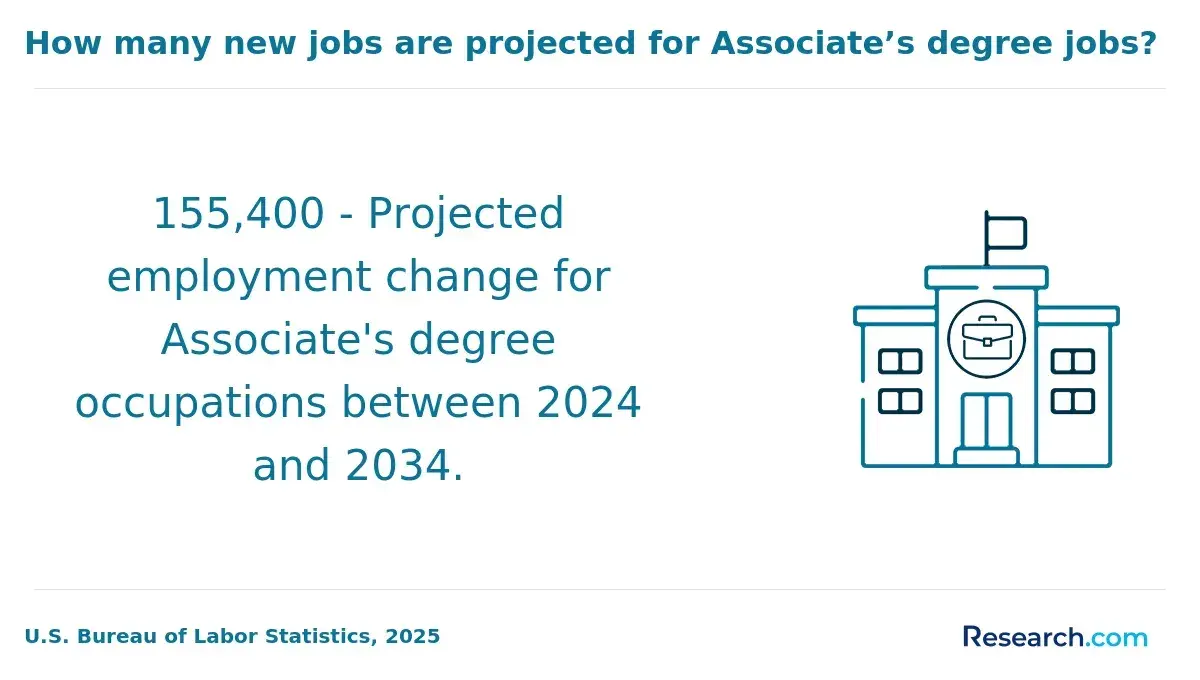
Cost varies widely because online doctoral programs use different credit totals, tuition rates, fee structures, and residency requirements. The most useful comparison is total cost to completion, not the per-credit tuition shown on the program page.
For students borrowing federal loans, financing costs can materially affect the real price of the degree. Federal Student Aid set the 2025-2026 fixed interest rate at 7.94% for Direct Unsubsidized Loans for graduate and professional students and 8.94% for Direct PLUS Loans first disbursed during that period.
That means a lower-tuition program can become more expensive if a student borrows heavily and repays over a long period.
The table below shows the cost categories to verify before you compare programs. It focuses on items that commonly change the final bill for online doctoral students:
| Cost category | What to verify | Why it matters |
| Tuition | Per-credit rate, total credits, and whether rates differ for online or out-of-state students | A low per-credit rate can still produce a high total cost if the program requires many credits |
| Fees | Technology, library, graduation, course, and doctoral project fees | Fees can add up and may not appear in headline tuition |
| Residencies | Required campus visits, travel, lodging, meals, and time away from work | A mostly online program may still have in-person costs |
| Capstone or project expenses | Software, transcription, data tools, survey platforms, or professional editing policies | Applied projects may create costs beyond tuition |
| Time cost | Reduced work hours, childcare, commuting for residencies, or delayed promotions | The opportunity cost can be as important as tuition |
When comparing prices, calculate several totals rather than relying on a single advertised number:
- Total tuition based on required credits after transfer review.
- Total mandatory fees across the full program.
- Total residency and travel expenses if any in-person sessions are required.
- Total estimated borrowing cost if you plan to use loans.
- Total employer tuition assistance or institutional aid you can reasonably expect.
A no-dissertation format can reduce cost if it shortens time to completion, but it can also cost the same as a dissertation-based doctorate if tuition, fees, and project requirements are similar. The better question is whether the program's structure helps you finish without adding extra terms.
Who Benefits Most From an Online Higher Education Leadership Doctorate Without a Dissertation?
The strongest fit is a working professional who wants to lead change inside a college, university, community college, online education unit, nonprofit education organization, or education technology environment. These students usually need applied leadership credibility more than a traditional research agenda.
A dissertation-free or dissertation-alternative doctorate may be especially useful for:
- Student affairs professionals aiming for director, dean of students, or vice president roles.
- Academic affairs staff moving into assessment, accreditation, curriculum, or faculty development leadership.
- Enrollment, registrar, financial aid, and student success leaders who need stronger strategic and data skills.
- Community college administrators focused on access, retention, workforce pathways, and transfer partnerships.
- Online learning, instructional technology, and academic innovation professionals managing digital programs.
- Mid-career professionals who want a doctorate but do not plan to pursue a tenure-track research role.
It may not be the best path for students who want a research-intensive faculty career, expect to publish extensively in scholarly journals, or plan to pursue roles where a PhD is strongly preferred. In those cases, a traditional dissertation-based doctorate may offer better preparation and signaling.
Students who are not ready for doctoral study may benefit from strengthening their academic technology, learning design, or assessment background first.
For example, some professionals compare doctoral pathways after researching the best online instructional design master's programs, especially if their target role involves online learning leadership rather than broad institutional administration.
How Does a No-Dissertation Online Higher Education Leadership Doctorate Affect Career Opportunities?
A no-dissertation online doctorate can support career advancement when the degree is accredited, relevant to the role, and paired with meaningful leadership experience. It is most useful for positions that value applied problem-solving, organizational change, budgeting, supervision, assessment, policy implementation, student success strategy, and data-informed decision-making.
The BLS reported a May 2024 median annual wage of $103,960 for postsecondary education administrators. This figure does not mean a doctorate will automatically produce that salary, but it does show that the occupation includes mid- to senior-level roles where advanced education and leadership experience can be economically meaningful.
Common career directions include:
- Dean or associate dean in student affairs, academic services, or continuing education.
- Director of student success, advising, retention, enrollment, or institutional effectiveness.
- Registrar, financial aid leader, or enrollment management executive.
- Community college administrator or workforce education leader.
- Director of online learning, academic innovation, or educational technology.
- Higher education consultant, policy analyst, or nonprofit education leader.
Employers usually evaluate more than the dissertation label. They may consider whether the institution is accredited, whether the program is recognizable, whether your doctoral project aligns with institutional priorities, and whether you can show measurable leadership outcomes.
AI and analytics are also changing higher education leadership. Institutions increasingly need leaders who can evaluate student success dashboards, understand predictive advising tools, manage ethical data use, guide faculty through technology adoption, and assess the risks of AI-generated content.
A strong applied doctoral project can help demonstrate those skills if it addresses a current institutional problem rather than a narrow theoretical topic.
How Do No-Dissertation Online Higher Education Leadership Doctorates Compare With Traditional Doctorates?
The best choice depends on whether you want to become a practitioner-scholar or a research scholar. Both paths can be rigorous, but they train students to prove doctoral competence in different ways.
The table below compares the two routes across the decision points that matter most to working professionals:
| Factor | No-dissertation or dissertation-alternative doctorate | Traditional dissertation-based doctorate |
| Primary goal | Solve applied leadership problems in real organizations | Produce original scholarly research |
| Common degree type | EdD or other professional doctorate | PhD or research-focused EdD |
| Final requirement | Capstone, applied project, dissertation in practice, or portfolio | Traditional dissertation with committee defense |
| Best fit | Administrators, directors, deans, student success leaders, and organizational change professionals | Researchers, tenure-track faculty candidates, and students seeking deep methodological training |
| Research emphasis | Applied inquiry, evaluation, improvement, and implementation | Theory development, methodology, literature contribution, and publication potential |
| Timeline risk | Often more structured, but still dependent on project completion | Can be less predictable because independent research may extend the dissertation stage |
| Employer interpretation | Often valued for leadership and professional advancement roles | Often valued for academic research and faculty roles |
A dissertation-free doctorate is not inherently inferior, and a dissertation-based doctorate is not automatically more valuable. The better credential is the one that matches your intended use.
If you want to lead a retention initiative, redesign student services, manage academic operations, or move into senior administration, an applied EdD may be the better fit. If you want to conduct original research as a central part of your career, a dissertation-based doctorate may be more appropriate.
How Should Students Choose an Online Higher Education Leadership Doctorate Without a Dissertation?
Start by treating "no dissertation" as one feature, not the whole decision. The strongest programs clearly explain their doctoral outcomes, accreditation, faculty expertise, project expectations, student support, and career relevance.
Use this step-by-step process to compare programs carefully:
- Define your career goal first, such as dean, director, vice president, institutional effectiveness leader, online learning executive, or faculty member.
- Choose the degree type that fits that goal, usually an EdD for applied leadership or a PhD for research-intensive academic work.
- Verify institutional accreditation through a recognized accreditor before reviewing tuition or curriculum.
- Read the catalog description of the final doctoral requirement and compare it with the marketing language.
- Ask for examples of recent capstone, applied project, or dissertation-in-practice topics.
- Confirm whether the program requires residencies, internships, fieldwork, synchronous sessions, or scheduled defenses.
- Calculate total cost to completion, including credits, fees, travel, project expenses, and borrowing costs.
- Evaluate faculty experience in higher education leadership, student affairs, enrollment, community colleges, online learning, or institutional research.
- Ask how the program supports students who fall behind on the final project.
- Compare the program's outcomes with your employer's expectations for promotion, hiring, or salary advancement.
Watch for these red flags during your search:
- The school cannot clearly explain what replaces the dissertation.
- The program advertises extreme speed but provides little information about doctoral rigor.
- Accreditation claims are vague, outdated, or not tied to a recognized institutional accreditor.
- The curriculum has few courses directly related to higher education leadership.
- The program requires in-person components that are not disclosed clearly on the main program page.
- Admissions staff promise career outcomes, salary increases, or guaranteed promotions.
The smartest choice is usually the program that offers the best alignment among your career goal, available time, budget, preferred research style, and employer expectations. A no-dissertation doctorate can be worth it when it helps you complete a rigorous applied project that demonstrates leadership value in the higher education setting where you want to advance.
Other Things You Should Know About Higher Education Leadership
Many online EdD programs no longer require the GRE, especially programs designed for working professionals. However, admissions requirements vary, so check whether the school instead requires a master's degree, professional experience, writing sample, resume, interview, or statement of purpose.
Some programs allow limited doctoral transfer credits, but caps are common and credits must usually match the curriculum. The final capstone or applied doctoral project normally must be completed at the degree-granting institution.
In most cases, diplomas list the degree and institution, not the delivery format or final project type. Policies vary by school, so ask the registrar how the degree appears on the diploma and transcript.
Many higher education leadership doctorates prefer or require professional experience because coursework and projects often rely on real organizational problems. Applicants with limited experience may need to show strong academic preparation and a clear leadership goal.
References
- Is An Ed.D. Worth It? Pros, Cons, and Considerations https://www.eddprograms.org/resources/is-an-edd-worth-it/
- Doctor of Education | UNE Online https://online.une.edu/program/doctor-of-education/
- Can you get a PhD in one year? - Swiss School of Business Research https://ssbr-edu.ch/can-you-get-a-phd-in-one-year/
- Capstone Options in Master's in Communication Programs (Thesis vs Project) https://www.mastersincommunications.com/features/guide-to-graduate-communication-capstone-options
- Doctor of Education in Organizational Leadership https://www.umassglobal.edu/academic-programs/doctor-education-organizational-leadership
- What Is a Non-Dissertation Doctorate, and Is It Right for You? https://www.snu.edu/blog/what-is-a-non-dissertation-doctorate-and-is-it-right-for-you
- Do All Doctoral Programs Require a Dissertation? UK Guide https://www.researchprospect.com/do-all-doctoral-programs-require-a-dissertation/
- 2026 Online EdD Programs No Dissertation Required (Applied Capstone Projects) https://www.onlineeddprograms.com/faqs/edd-programs-no-dissertation
- Trends for the Future of Education: How Cairn’s EdD Equips You to Lead https://cairn.edu/trends-for-the-future-of-education-how-cairns-edd-equips-you-to-lead/
- 2025 Most Affordable Online Doctorates in Education https://www.onlineu.com/most-affordable-colleges/education-doctoral-degrees