
2027 Online Health Systems Management Degree Programs With University Scholarships: Awards, Eligibility, and Net Cost

Co-Founder and Chief Data Scientist
An online Health Systems Management degree can look affordable until technology fees, transfer-credit limits, and scholarship renewal rules change the bill. For context, the maximum Federal Pell Grant was $7,395 for the 2024-25 award year, but eligibility depends on financial need and enrollment details.
This guide is for prospective undergraduate students comparing university-funded aid, not tuition headlines alone. Learn how institutional scholarships work, which students may qualify, what aid can be combined, and how to estimate the amount you may actually pay.
Key Things You Should Know
- University scholarships for online Health Systems Management students are often institution-wide rather than program-specific; awards can range from small one-time grants to multi-term awards, but an advertised maximum is not a guaranteed offer.
- Eligibility commonly depends on admission status, FAFSA information, GPA, transfer standing, residency, enrollment intensity, and whether the university includes fully online students; the $7,395 maximum 2024-25 Federal Pell Grant is separate need-based aid, not a university scholarship.
- Compare annual net cost - not scholarship size alone - by subtracting grants and scholarships from tuition, required fees, books, and likely living expenses, then confirming whether each award renews and can be combined with other aid.
Which Online Health Systems Management Degree Programs Offer University Scholarships?
Online Health Systems Management programs may be titled Health Care Management, Healthcare Administration, Health Services Management, or Health Information Management. A university may make institutional scholarships available to eligible online undergraduates across several majors rather than reserving an award for this exact degree title.
Start by confirming that the school offers both the online degree and institutional aid for your enrollment category. A related health administration degree online may also have a different pace, tuition structure, or scholarship policy, even when the curriculum overlaps with health systems management.
The comparison below shows the types of institutions and scholarship arrangements students are likely to encounter. It is a screening tool, not a promise of eligibility; scholarship catalogs, program availability, and online-student restrictions can change by term.
| Program or institution type | Typical online degree fit | Institutional scholarship pattern to investigate | Important verification point |
| Public university online division | BS or BA in health services administration, health management, or a related major | Merit scholarships, transfer scholarships, foundation awards, and state-residency programs | Ask whether distance students and nonresidents are eligible |
| Private nonprofit university | Online bachelor's completion or adult-focused health management program | Institutional grants, adult-learner scholarships, employer-partner discounts, and donor awards | Confirm whether the grant is renewed automatically and whether tuition discounts reduce it |
| Competency-based online university | Healthcare management bachelor's program billed by term | Competitive university scholarships that may reduce one or more terms | Compare the award with the number of terms you realistically need |
| Regional university with online completion options | Transfer-oriented health systems or healthcare administration degree | Transfer merit awards and departmental or foundation scholarships | Check minimum transferred credits and full-time requirements |
Programs that openly publish a scholarship directory, online-student eligibility statement, renewal terms, and cost-of-attendance budget are usually easier to evaluate. If a school cannot state whether an online Health Systems Management student qualifies before you deposit, treat the award as uncertain.
How Much Scholarship Money Can Online Health Systems Management Degree Students Receive?
There is no standard university scholarship amount for online Health Systems Management students. Awards may be a one-time amount, a per-term credit, a tuition discount, or a renewable annual scholarship. The useful number is the amount you are likely to receive over the time needed to finish, not the largest award in a marketing message.
For example, Western Governors University has periodically listed competitive WGU scholarships with awards up to $2,500 for eligible students, including students in its online programs. That figure should be read as a potential maximum for a specific scholarship cycle, not as a universal Healthcare Management award or a guarantee of aid.
When reviewing an award notice, separate the types of funding because they affect affordability differently.
| Aid type | How the amount is commonly presented | What it means for net cost |
| University merit scholarship | Fixed annual or term amount | Usually reduces billed educational costs if renewal conditions are met |
| Need-based institutional grant | Amount based on financial-aid review | May change after FAFSA data, enrollment, or family circumstances change |
| Transfer scholarship | Amount tied to transfer GPA or credits | Can be valuable for degree-completion students but may require continuous enrollment |
| Tuition discount | Percentage or reduced per-credit rate | Can lower the bill, but may not stack with a separate institutional scholarship |
| Outside scholarship | One-time or renewable award paid to the school | Can reduce unmet need, but the school may revise other need-based aid |
Ask for the award's exact duration, dollar amount per term, and maximum lifetime value. A $1,500 renewable award for four academic years can be more valuable than a $3,000 one-time award, but only if you can meet the renewal terms and will remain enrolled long enough to use it.
What Are the Eligibility Requirements for Online Health Systems Management Degree Scholarships?
Eligibility requirements are the rules that determine whether you can receive an award. Institutional aid may be based on academic record, financial need, service, employment, military affiliation, transfer status, or a combination of factors. Online enrollment alone does not establish eligibility.
Most applicants should verify the following conditions before treating a scholarship as part of their budget.
- Admission category: Confirm that you are admitted as a degree-seeking online undergraduate rather than as a nondegree, certificate, visiting, or provisional student.
- Academic record: Merit awards may use high school GPA, transfer GPA, prior college credits, or a separate scholarship review.
- Enrollment intensity: Some awards require full-time enrollment, while adult-focused programs may permit part-time study; the school defines these terms.
- Financial need: Need-based grants commonly require a FAFSA and may depend on the university's cost-of-attendance calculation.
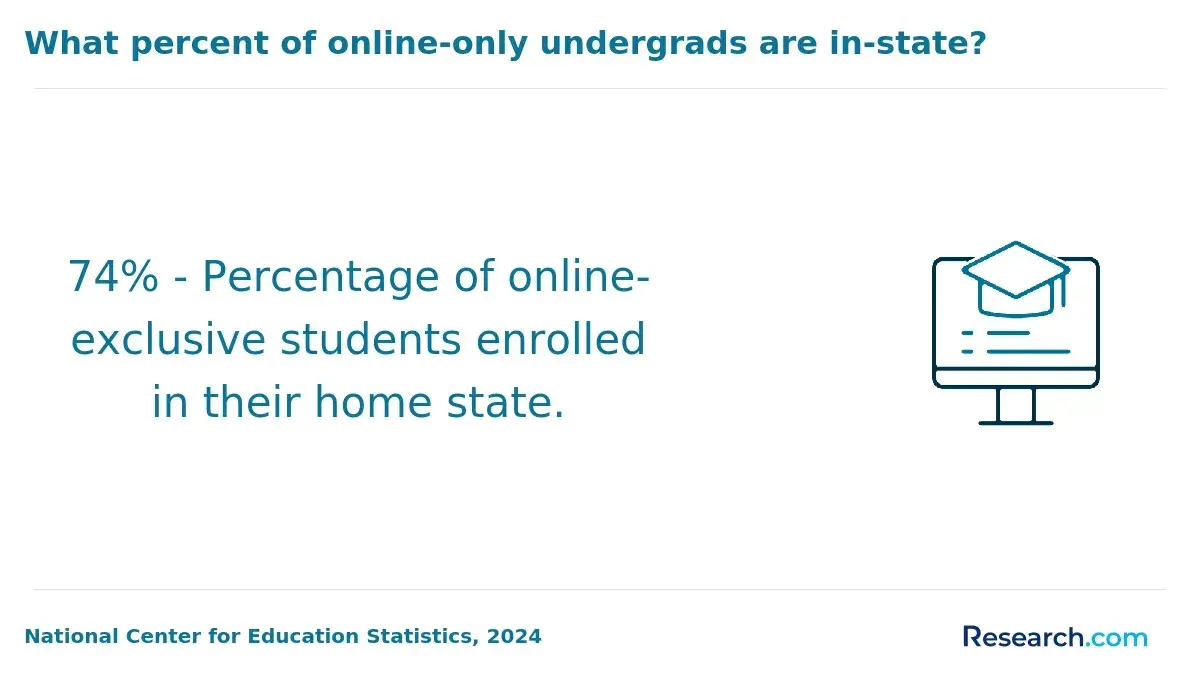
- Residency and location: Public institutions may reserve certain awards for in-state students even if the degree is delivered online.
- Program eligibility: Ask specifically whether the online Health Systems Management major, concentration, and start term are eligible.
- Citizenship or aid status: Federal aid has citizenship and eligible-noncitizen rules, while private scholarships may set different requirements.
A common mistake is relying on a scholarship page that applies only to campus-based first-year students. Request written confirmation from financial aid that your exact online program, academic level, and start date qualify.
How Do You Apply for University Scholarships for an Online Health Systems Management Degree?
Some university scholarships are awarded automatically from the admissions application, while others require a financial-aid file, a scholarship portal application, essays, recommendations, or proof of employment or military service. Complete each step early because scholarship deadlines may occur before the program application deadline.
Use this process to avoid losing aid because of an overlooked requirement.
- Confirm that the online Health Systems Management degree is available in your state and that you meet the admission requirements.
- Ask admissions which institutional scholarships specifically include online degree-seeking students and whether consideration is automatic.
- Submit the FAFSA when eligible, even if you expect a merit award, because some university grants require a completed financial-aid record.
- Complete the school's scholarship application or donor-scholarship portal before its stated deadline.
- Provide requested documents, such as transcripts, transfer-credit evaluations, military documentation, employer verification, essays, or recommendations.
- Review the written aid offer for the amount, disbursement schedule, renewal conditions, and award restrictions before accepting enrollment.
Keep copies of submission confirmations and ask when scholarship decisions are final. Students exploring adjacent clinical pathways can also compare the different admissions and scheduling demands of online ABSN programs, which generally involve clinical-placement requirements that differ from management degrees.
Are Scholarships for Online Health Systems Management Degree Programs Renewable Every Year?
Some scholarships are renewable, meaning the university may continue them for later academic years or terms if you meet stated conditions. Others are one-time awards. "Renewable" does not mean permanent: renewal can depend on GPA, enrollment, satisfactory academic progress, program participation, and the maximum number of terms funded.
Before enrolling, identify the renewal rules in the award letter or scholarship terms.
| Renewal condition | Why it can affect an online student | Question to ask |
| Minimum cumulative GPA | A lower grade in one term can place the award at risk | What GPA is checked, and when is it reviewed? |
| Enrollment level | Part-time pacing may reduce or eliminate an annual award | How many credits or courses are required each term? |
| Satisfactory academic progress | Federal and institutional aid can be affected by unsuccessful or withdrawn courses | Does the scholarship use the same standard as financial aid? |
| Continuous enrollment | A work, caregiving, or military break may interrupt eligibility | Is there an approved leave or appeal process? |
| Maximum duration | Transfer students may have fewer funded terms than first-year students | What is the maximum total amount and number of terms? |
Do not assume a scholarship will cover a four-year calendar period. Measure the award against your expected remaining credits and course pace. If you plan to take breaks or study part-time, ask whether the university will prorate, pause, or cancel the scholarship.
Can You Combine an Online Health Systems Management Scholarship With FAFSA and Other Financial Aid?
Usually, yes: an institutional scholarship can often be combined with FAFSA-based federal aid, state grants, employer tuition assistance, veterans' education benefits, and outside scholarships. However, the total aid package cannot exceed the school's cost of attendance, and a new award can change how need-based institutional assistance is calculated.
The FAFSA is an application for federal student aid, not a scholarship application, but it can unlock Pell Grants, federal loans, work-study eligibility, and need-based university grants. For the 2024-25 award year, the maximum Pell Grant was $7,395; an individual student's amount could be lower based on eligibility, enrollment intensity, and other federal rules.
Use these questions when discussing aid stacking with the financial-aid office.
- Can my university scholarship be combined with Federal Pell Grant, state grant, and outside scholarship funds?
- Will employer tuition assistance reduce the institutional scholarship or only reduce my remaining bill?
- Does the school replace need-based grant aid after I report an outside scholarship?
- Are federal Direct Loans included in the displayed "financial aid" total, or are they shown separately from grants and scholarships?
- What happens if total aid exceeds tuition and required fees but not the full cost-of-attendance budget?
Loans lower the amount due now but must generally be repaid with interest, so they should not be counted as a scholarship when comparing offers. Review grants, scholarships, work-study, and loans in separate lines.
How Much Does an Online Health Systems Management Degree Cost After Scholarships and Financial Aid?
Net cost is the estimated total cost after grants and scholarships are subtracted. It is more informative than tuition alone because online students may still pay mandatory fees, course materials, technology charges, proctoring fees, and living expenses. A school's net price calculator can help, but it may not fully reflect a specialized online student's transfer credits or scholarship eligibility.
The calculation below is illustrative rather than an offer from any university. It shows why a larger scholarship does not automatically create the lowest out-of-pocket cost.
| Illustrative annual comparison | Program A | Program B |
| Tuition and required institutional fees | $18,000 | $12,000 |
| University scholarship | -$5,000 | -$2,000 |
| Federal or state grants | -$3,000 | -$3,000 |
| Estimated books, technology, and course expenses | $1,200 | $1,200 |
| Estimated net educational cost before loans | $11,200 | $8,200 |
In this example, Program A advertises the larger scholarship, but Program B has the lower estimated net educational cost. Your own calculation should use the school's written charges and award notice, then include only costs you expect to incur.
Health systems management is a nonclinical business and operations pathway within healthcare. It can fit students interested in coordinating services, budgets, compliance, staffing, patient access, quality improvement, or health information workflows rather than direct patient care. Students considering hands-on diagnostic careers should understand that an ultrasound tech education path typically has separate clinical and programmatic requirements.
Are There Scholarships for Transfer, Adult, Military, and Other Online Health Systems Management Students?
Yes, many institutions structure at least some aid around nontraditional student characteristics, but availability varies widely. Transfer, adult, military-connected, veteran, employer-affiliated, and first-generation students should not assume that scholarships marketed to traditional residential students apply to them.
These categories can guide a more targeted scholarship search.
| Student group | Potential institutional aid category | Key detail to verify |
| Transfer students | Transfer merit scholarship or completion grant | Required transfer GPA, minimum accepted credits, and whether all prior credits count |
| Adult learners | Adult degree-completion grant or returning-student scholarship | Minimum age, work history, prior enrollment, and part-time eligibility |
| Military service members and veterans | Military scholarship, tuition reduction, or institutional military grant | Interaction with Tuition Assistance, GI Bill benefits, and residency classification |
| Employer-affiliated students | Corporate partner discount or workforce scholarship | Whether the employer must remain active throughout enrollment |
| First-generation or underserved students | Foundation scholarship or need-based access grant | FAFSA requirement, essay requirements, and competitive selection process |
Adult learners should also compare course pacing and credit transfer policies. A shorter credential can meet a different career goal: for example, a shortest medical assistant program is a distinct route from an online management bachelor's degree and may have very different aid, training, and employment considerations.
For military-connected students, obtain a written estimate showing institutional aid, military benefits, and remaining charges separately. This helps prevent double-counting benefits that a university may treat as part of the overall aid package.
What Is the Difference Between Merit-Based and Need-Based Scholarships for Online Health Systems Management Degrees?
Merit-based scholarships are generally awarded for academic achievement, transfer performance, leadership, service, or another accomplishment. Need-based scholarships and grants are generally tied to demonstrated financial need, often determined through FAFSA information and the school's financial-aid methodology. Some awards consider both merit and need.
Neither type is automatically better. Merit aid can be more predictable for a student with a strong GPA if the renewal threshold is manageable. Need-based aid can be especially valuable for students with limited resources, but it may change when financial circumstances, enrollment, or other aid changes.
| Feature | Merit-based scholarship | Need-based scholarship or grant |
| Main basis for eligibility | Academic record, achievement, leadership, or talent | Financial need, often supported by FAFSA data |
| FAFSA commonly required? | Sometimes | Often |
| Potential stability | May remain stable if GPA and enrollment requirements are met | May be recalculated when financial circumstances or aid change |
| Common online-student issue | Residential-only merit awards may exclude distance learners | Part-time enrollment may reduce grant eligibility |
| Best comparison measure | Total renewable amount and GPA threshold | Expected award after all required documents are reviewed |
Read the terms rather than relying on the label. A "grant" is usually gift aid that does not require repayment, but it can still have enrollment and satisfactory-progress conditions. Ask whether the award is guaranteed after admission, competitive, or contingent on funds being available.
How Should You Compare Scholarship Offers From Online Health Systems Management Degree Programs?
The best scholarship value is the offer that produces the most manageable total cost for a program you can complete and that supports your career goals. Health Systems Management curricula commonly cover healthcare finance, operations, policy, quality, leadership, data use, and compliance; compare program accreditation, transfer-credit acceptance, course format, and student support alongside financial aid.
Use a consistent comparison method instead of choosing the biggest headline award.
- List each program's annual tuition, mandatory fees, estimated books, technology charges, and any required travel or residency costs.
- Record grants and scholarships separately from loans, using only written awards that apply to your exact online program.
- Calculate annual net educational cost by subtracting grants and scholarships from direct costs, then estimate the number of terms or years remaining after transfer credit.
- Check whether each award is one-time, renewable, prorated for part-time study, or limited to a maximum number of terms.
- Compare renewal GPA, satisfactory academic progress, course-load rules, and consequences of withdrawing from a course.
- Ask whether outside scholarships, employer payments, military benefits, or state grants alter institutional aid.
- Request a revised estimate if your transfer evaluation changes the credits you need to complete.
Red flags include an offer that combines loans with scholarships under one "aid" total, omits required fees, does not identify renewal conditions, or cannot confirm online-program eligibility. A degree can also support progression into other healthcare education and leadership paths; those considering advanced nursing education should review the distinct career and compensation context associated with PhD in nursing salary information rather than assuming it applies to health systems management roles.
Before committing, ask financial aid for a written, itemized answer to three questions: What is my first-year net cost before loans? What aid is renewable and under what conditions? What will I owe if I attend part-time or lose a scholarship? Those answers are more decision-useful than tuition or scholarship advertising alone.
Other Things You Should Know About Health Systems Management
They are often closely related, but not always identical. Health Systems Management may emphasize how care delivery systems, operations, quality, policy, and resources work together, while healthcare administration may emphasize organizational leadership and administration. Compare required courses, concentrations, and the degree title on the transcript before applying.
Usually, no. Health systems management is generally a nonclinical management degree and does not itself create eligibility for a clinical license. Licensing requirements apply to specific regulated professions and vary by role and state.
Often, yes. Accepted transfer credits can reduce the number of courses and terms you need to pay for. However, a lower remaining course load can also affect scholarships that require full-time enrollment, so request both a transfer evaluation and an aid estimate.
Depending on experience and employer requirements, graduates may pursue administrative, operations, patient-access, quality-improvement, compliance, scheduling, or practice-management roles. Job titles and advancement opportunities vary; relevant work experience, communication, data literacy, and healthcare knowledge can be as important as the degree title.
References
- Different types of scholarship opportunities https://www.citizensbank.com/student/articles/different-types-scholarship-opportunities.aspx
- Types of Scholarships https://broadviewfcu.moneyedu.org/public/featured-this-week-topic.cfm
- The Ultimate Guide to Finding and Applying for Merit Scholarships https://www.ivywise.com/blog/merit-scholarships/
- 25 Great Scholarships for Healthcare Management Students - Healthcare Management Degree Guide https://www.healthcare-management-degree.net/great-scholarships-for-healthcare-management-students/
- A Guide to Merit Scholarships + List of 25 Great Merit-based Scholarships https://www.collegeessayguy.com/blog/merit-scholarships
- Healthcare Administration Scholarships https://www.healthadministrationdegrees.com/healthcare-administration-scholarships/
- Master of Health Administration - Online https://www.unthealth.edu/tcom/public-health/online-master-of-health-administration.html
- 25 Public Health Scholarships and Tips to Apply https://www.publichealthdegrees.org/resources/scholarships/
- Online Resources & Scholarships for Healthcare Administration Students https://www.edumed.org/financial-aid/scholarships/healthcare-administration-degrees/
- 2025 Most Affordable Healthcare Administration Degrees Online https://www.onlineu.com/most-affordable-colleges/healthcare-administration-degrees


