2027 Online Health Services Degree Programs That Accept 60, 75, or 90 Transfer Credits

Co-Founder and Chief Data Scientist
Transfer students often face one high-stakes question: will an online Health Services degree count 60, 75, or even 90 previous credits toward graduation? The answer matters because National Student Clearinghouse Research Center data showed transfer enrollment grew 4.4% in fall 2024, signaling renewed demand for flexible degree-completion paths. This guide is for students with substantial prior college credit who want to finish efficiently. You will learn how transfer limits, applied credits, residency rules, cost, and remaining major requirements affect which program is truly fastest and most affordable.
Key Things You Should Know
- A 120-credit bachelor's degree that accepts 60, 75, or 90 transfer credits may still require 60, 45, or 30 remaining credits, but only if those credits apply to general education, electives, prerequisites, and Health Services major requirements.
- The maximum transfer limit is not the same as the usable transfer amount; students should verify residency rules, upper-division requirements, minimum grades, accreditation, and whether major courses must be completed at the new school.
- At an illustrative $400 per-credit tuition rate, transferring 60, 75, or 90 applicable credits could avoid $24,000, $30,000, or $36,000 in tuition before fees, but actual savings depend on the school's tuition model and official credit evaluation.
How Many Transfer Credits Can You Apply Toward an Online Health Services Degree?
Most online Health Services bachelor's degrees require about 120 semester credits. When a school says it accepts up to 60, 75, or 90 transfer credits, it is describing a maximum allowance, not a promise that every previous course will reduce your remaining degree plan.
The most important distinction is accepted credits vs. applied credits. Accepted credits are credits the university recognizes as college-level work. Applied credits are the credits that actually fill requirements in your specific Health Services degree audit. A course in art history, for example, may transfer as elective credit but may not replace a required healthcare finance, epidemiology, health systems, or management course.
The table below shows how common transfer-credit scenarios usually affect a 120-credit online Health Services bachelor's degree. Use it as a planning framework, not as a substitute for an official evaluation.
| Transfer scenario | Credits remaining in a 120-credit degree | What it usually means | Main risk to check |
| 60 transfer credits | About 60 credits | Often fits associate degree holders who have completed many general education requirements and lower-division electives. | You may still need most upper-division Health Services major courses. |
| 75 transfer credits | About 45 credits | Often fits students who completed an associate degree plus extra courses, certificates, or prior enrollment at a four-year school. | Some credits may transfer only as free electives after the elective area is full. |
| 90 transfer credits | About 30 credits | Often fits degree-completion students near senior standing or students entering transfer-friendly programs with broad elective space. | Residency and upper-division rules may still require 30 credits at the enrolling university. |
A 90-credit transfer policy can be valuable, but it is not automatically better than a 75-credit policy if the 75-credit program applies more credits directly to the major. The best program is the one that leaves you with the fewest required courses, the clearest graduation path, and the lowest total cost after transfer evaluation.
Which Online Health Services Degree Programs Accept 60, 75, or 90 Transfer Credits?
Online Health Services programs that accept large numbers of transfer credits are usually designed for adult learners, associate degree graduates, healthcare workers, military-connected students, or students returning after stopping out. They may appear under several names, including Health Services Administration, Healthcare Administration, Health Sciences, Health Care Management, Health Information Management, or Applied Health Studies.
Demand for healthcare leadership skills remains strong. The U.S. Bureau of Labor Statistics reported a May 2024 median pay of $117,960 for medical and health services managers and projected 29% job growth from 2023 to 2033. A bachelor's degree does not guarantee those outcomes, but it can help students build the management, compliance, quality improvement, and health systems knowledge many employers look for.
The table below compares the types of online Health Services degree programs most likely to work for students bringing 60, 75, or 90 credits. It focuses on transfer fit rather than ranking schools by a single advertised maximum.
| Program type | Typical transfer-credit fit | Best for | What to verify before enrolling |
| Online Health Services Administration bachelor's degree | Often transfer-friendly, especially for associate degree holders | Students interested in healthcare operations, supervision, patient services, or administration | Whether business, management, statistics, and healthcare courses apply to the major or only to electives |
| Online Healthcare Administration or Healthcare Management bachelor's degree | May accept up to senior-standing transfer amounts at transfer-focused universities | Students seeking a broad nonclinical healthcare leadership degree | Residency credits, upper-division major requirements, and whether a capstone must be completed in-house |
| Online Health Sciences bachelor's degree | Often flexible for students with mixed healthcare, science, or allied health credits | Students with prior clinical coursework, pre-health credits, or healthcare certificates | Whether older science courses expire or must be repeated for major credit |
| Online Health Information Management bachelor's degree | Can be transfer-friendly, but major requirements may be more structured | Students interested in medical records, data quality, coding, compliance, privacy, and revenue cycle work | Institutional accreditation and, where relevant, CAHIIM accreditation for credential-aligned HIM pathways |
| Online Applied Health or Interdisciplinary Health degree-completion program | Often flexible for students with 75 or 90 credits | Students whose credits do not fit neatly into a traditional major | Whether the degree title and curriculum match your career goals or graduate-school plans |
Students comparing programs should request a degree audit from each school and compare the number of remaining required credits, not just the number of credits accepted. A program accepting 90 credits but requiring 36 new credits may be less efficient than one accepting 75 credits but requiring only 30 carefully mapped credits.
How Can You Tell Whether Transfer Credits Will Actually Apply Toward Your Health Services Degree?
The only reliable way to know whether transfer credits will apply is to obtain an official or written preliminary transfer evaluation tied to the exact Health Services degree you plan to pursue. General admissions statements are useful for screening programs, but they do not show how each course fits your degree map.
Use the following process to separate generous marketing language from a realistic completion plan. These steps are especially important if you are choosing between programs advertising 60-, 75-, or 90-credit transfer limits.
- Request the full degree plan for the online Health Services major, including general education, major core, concentration, elective, capstone, and upper-division requirements.
- Send official transcripts from every college you attended, even if you completed only one course or withdrew from the institution.
- Ask for a course-by-course evaluation that shows whether each transfer course applies to a requirement, transfers as an elective, or does not transfer.
- Confirm the minimum transfer grade, because many schools require at least a C for undergraduate transfer and may set higher standards for major prerequisites.
- Ask whether the school has a transfer articulation agreement with your previous community college or state system.
- Request a written estimate of remaining credits, remaining terms, tuition, fees, and any required in-person or practicum components.
Watch for red flags before committing. A school that tells you "up to 90 credits may transfer" but will not show how those credits apply to your Health Services curriculum is not giving you enough information to compare cost or time to graduation.
What Types of Previous College Credits Can Transfer Into an Online Health Services Degree?
Online Health Services programs may accept credits from several sources, but each source is evaluated differently. The strongest transfer credits usually come from regionally accredited or institutionally accredited colleges and match common lower-division requirements such as English composition, statistics, psychology, sociology, anatomy, medical terminology, public health, or business foundations.
Students with healthcare-related associate degrees should compare how much of the technical curriculum transfers into the bachelor's degree. For example, someone exploring a health information management associate degree online may want to know whether coding, reimbursement, health data, and privacy courses will later satisfy Health Services bachelor's requirements or transfer only as electives.
Commonly transferable credit sources include the following. The key is to ask whether each source can satisfy a requirement in the Health Services degree rather than simply adding to your total credit count.
- Community college coursework, especially general education, introductory healthcare, business, communication, statistics, and social science courses.
- Previous four-year college coursework, including upper-division healthcare, management, public health, or health science courses that match the new school's catalog.
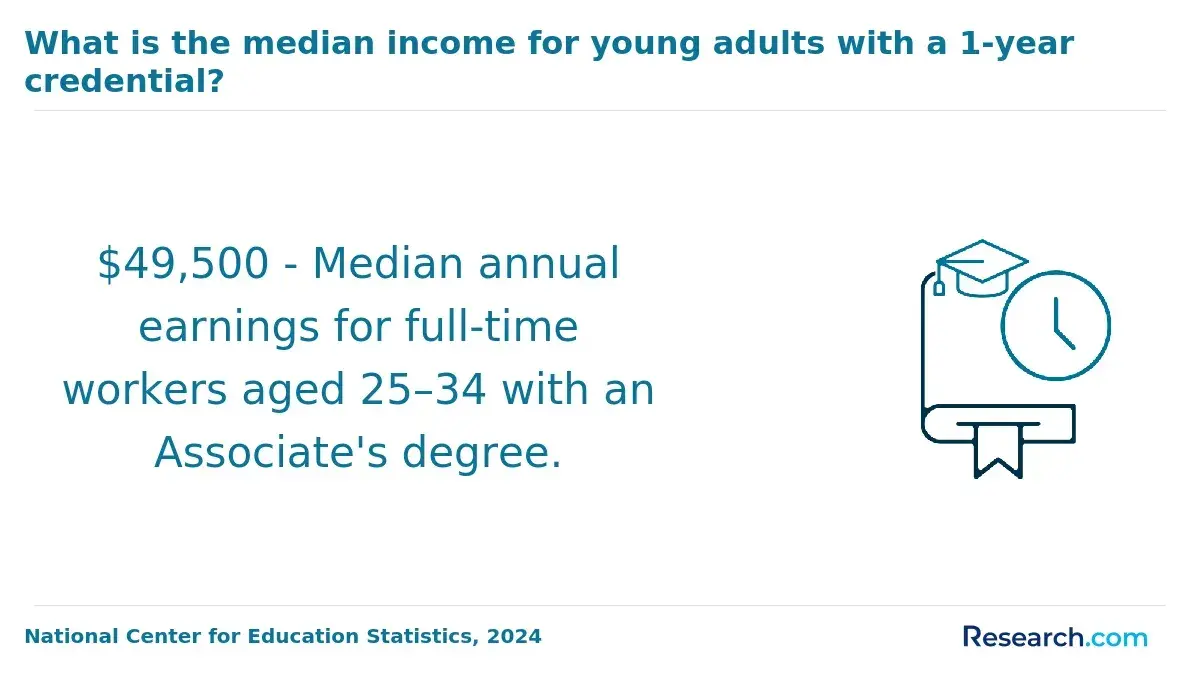
- Associate degrees, which may satisfy a large block of lower-division requirements at schools with strong articulation policies.
- Career or technical healthcare coursework, which may transfer best when the receiving school has an applied health, health science, or allied health completion pathway.
- Exam-based credit, prior learning assessment, military training, and professional certifications, if the school has a published policy for evaluating them.
The most common mistake is assuming that a completed associate degree automatically equals 60 applied credits. It often helps, but the receiving institution still decides whether the courses satisfy its own degree requirements.
How Do Residency and Upper-Division Requirements Affect Health Services Transfer Students?
Residency requirements determine how many credits you must complete at the school that awards the degree. Upper-division requirements determine how many junior- or senior-level credits you must complete, often within the major. Together, these rules explain why a 90-credit transfer maximum may still leave you with at least 30 credits to complete.
The table below summarizes common rules that affect online Health Services transfer students. These rules vary by institution, so they should be verified in the catalog and in your transfer evaluation.
| Requirement | Common policy range | How it affects transfer students | Question to ask |
| Institutional residency | Often 30 credits for a bachelor's degree | Even if 90 credits transfer, you may still need 30 credits from the degree-granting university. | What is the minimum number of credits I must complete at your school? |
| Major residency | Often a portion of the Health Services major | Some transferred healthcare courses may not replace required upper-division major courses. | How many Health Services major credits must be completed with your university? |
| Upper-division credits | Often 30 to 45 credits in a bachelor's degree | Lower-division community college credits may not satisfy junior- or senior-level requirements. | How many upper-division credits will I still need after transfer? |
| Capstone requirement | Usually completed at the enrolling school | May add a required final course even for students entering with many credits. | Is the capstone required, and when can I take it? |
Residency rules are not necessarily negative. They can ensure that graduates complete advanced coursework in healthcare ethics, quality improvement, healthcare law, data-informed decision-making, and leadership at the degree-granting institution. The issue is transparency: you need to know these rules before comparing programs.
Students considering future clinical leadership or advanced practice pathways should also separate a Health Services bachelor's degree from nursing pathways. If you later compare DNP programs, admission requirements, licensure expectations, and prerequisite coursework will be different from nonclinical Health Services degree-completion rules.
How Does the Transfer Credit Evaluation Process Work for an Online Health Services Degree?
The transfer credit evaluation process is the formal review that turns your prior coursework into a new degree plan. It may happen before admission, after admission, or after enrollment depending on the university, but transfer students should push for the clearest possible answer before paying deposits or registering for courses.
A strong evaluation should tell you more than the total number of accepted credits. It should show how every course applies, what is missing, and whether anything requires a syllabus review.
- Collect official transcripts from all previous institutions and check that names, dates, and course levels are correct.
- Submit transcripts early, because evaluations can take longer when you have multiple schools, quarter credits, international coursework, repeated courses, or old catalogs.
- Provide syllabi for healthcare, science, statistics, business, or technology courses that do not have obvious equivalents.
- Review the degree audit line by line and flag courses that transferred as electives but look similar to Health Services requirements.
- Appeal course decisions when you have evidence, such as a syllabus, course description, textbook list, or learning outcomes.
- Ask for an updated graduation plan after any appeal, prior learning assessment, exam credit, or certification review is completed.
Online students should also consider format. Some degree-completion programs run on fixed 8-week terms, while others use competency-based or flexible pacing. Students who need more control over timing may want to compare self paced colleges, but they should still verify transfer evaluation rules before assuming a flexible format will shorten the degree.
How Long Does It Take to Finish an Online Health Services Degree With 60, 75, or 90 Transfer Credits?
Completion time depends on the number of remaining credits, course availability, term length, full-time or part-time enrollment, and whether prerequisites block access to advanced Health Services courses. A student entering with 90 applied credits may still take longer than expected if the remaining 30 credits must be taken in a specific sequence.
The table below shows realistic planning estimates for students transferring 60, 75, or 90 applicable credits into a 120-credit online Health Services bachelor's degree. Actual timelines vary by school calendar and course load.
| Applicable transfer credits | Remaining credits | Part-time pace at 6 credits per term | Full-time pace at 12 credits per term | Best-fit student profile |
| 60 | 60 | About 10 terms | About 5 terms | Associate degree graduate who can balance school with work and family obligations. |
| 75 | 45 | About 8 terms | About 4 terms | Student with an associate degree plus additional transferable coursework. |
| 90 | 30 | About 5 terms | About 3 terms | Near-completion student who mainly needs upper-division major, residency, and capstone credits. |
Online education has become a mainstream option for degree completion rather than a niche format. NCES distance education data released in 2024 continued to show that a large share of U.S. undergraduates take at least one online course, which matters because more institutions now build transfer-friendly online pathways for working adults.
Students planning beyond a Health Services bachelor's degree should check how graduate prerequisites may affect timing. For example, healthcare workers comparing a fastest PMHNP program should know that nursing licensure and MSN admission requirements are separate from nonclinical Health Services transfer policies.
How Much Can Transfer Credits Reduce the Cost of an Online Health Services Degree?
Transfer credits can reduce cost because most online bachelor's programs charge tuition by the credit or by the term. The financial benefit is strongest when transfer credits apply to required courses you no longer need to take, not when they sit unused as excess electives.
College Board's 2024 pricing data reported average published tuition and fees of $11,610 for in-state students at public four-year institutions for 2024-25. Online tuition varies widely, but the broader trend is clear: avoiding repeated credits can meaningfully reduce the amount students need to pay or borrow.
The table below uses an illustrative $400 per-credit tuition rate to show how applicable transfer credits can change remaining tuition. It does not include fees, books, technology charges, course materials, prior learning assessment fees, or financial aid.
| Applicable transfer credits | Credits avoided | Illustrative tuition avoided at $400 per credit | Credits still needed | Illustrative remaining tuition at $400 per credit |
| 60 | 60 | $24,000 | 60 | $24,000 |
| 75 | 75 | $30,000 | 45 | $18,000 |
| 90 | 90 | $36,000 | 30 | $12,000 |
Cost comparisons should include more than tuition. Ask whether the school charges a graduation fee, online course fee, transcript evaluation fee, proctored exam fee, technology fee, or per-term subscription charge. Also ask whether financial aid eligibility changes if you attend part time or complete a competency-based term faster than planned.
Students should be cautious about borrowing for credits they may not need. Federal Student Aid set the undergraduate Direct Loan interest rate at 6.53% for 2024-25, so reducing unnecessary credits can also reduce interest costs over time. If you are a nurse mapping long-term graduate study, comparing cheapest MSN to DNP programs later may require a separate cost analysis because doctoral pricing and transfer policies work differently.
Can Prior Learning, Military Training, Exams, or Certifications Count Toward an Online Health Services Degree?
Some online Health Services programs award credit for learning completed outside a traditional college classroom. This can be helpful for experienced healthcare workers, veterans, certified professionals, and students who have learned college-level material through workplace training.
Alternative credit policies vary widely, so students should confirm what the school accepts, how credits are transcripted, and whether they apply to general education, electives, or major requirements. The following sources are commonly reviewed by transfer-friendly institutions.
- Prior learning assessment portfolios that document college-level learning through work experience, training, projects, or professional responsibilities.
- Military training evaluated through official military transcripts and credit recommendations.
- Standardized exams such as CLEP, DSST, or Advanced Placement, when the school has approved equivalencies.
- Healthcare certifications, such as coding, emergency medical services, allied health, medical assisting, or health information credentials, when the institution grants credit for them.
- Employer or industry training evaluated through recognized credit recommendation services or institutional faculty review.
The main trade-off is that alternative credit may be capped or restricted. A school may accept exam credit for electives but require core Health Services courses to be completed through the university. Before paying for an exam or portfolio assessment, ask whether the resulting credit will reduce your remaining degree requirements.
Alternative credit is especially useful when it fills electives that would otherwise cost extra time and tuition. However, students should not assume it will replace advanced healthcare law, finance, leadership, policy, or capstone courses.
Do Older College Credits Expire When Transferring Into an Online Health Services Degree?
Older college credits do not automatically expire, but some subjects age better than others. General education courses such as English composition, history, humanities, sociology, or public speaking are often more durable. Science, technology, coding, statistics, compliance, and healthcare systems courses may face more scrutiny because the field changes quickly.
Health Services students should pay special attention to older courses in anatomy and physiology, medical terminology, health information technology, data analytics, reimbursement, healthcare law, and software-based subjects. A course may transfer as credit but fail to satisfy a current major requirement if the content is outdated or no longer equivalent.
Use this checklist when you have credits that are 5, 10, or more years old. It can help you avoid enrolling under the wrong assumption about how much time remains.
- Ask whether the school has age limits for science, statistics, technology, coding, or major courses.
- Check whether older credits can apply to electives even if they cannot replace current Health Services core requirements.
- Provide syllabi or catalog descriptions for older courses when equivalency is unclear.
- Confirm whether graduate schools, employers, or certification bodies may require more recent prerequisite coursework.
- Get the final answer in writing before building a budget or graduation timeline around old credits.
The best approach is not to discard older credits too quickly. Even when they do not satisfy a major requirement, they may still reduce elective needs and move you closer to the 120-credit total.
Other Things You Should Know About Health Services
No. A Health Services degree usually focuses on healthcare administration, operations, policy, quality improvement, health systems, or health information. It typically does not lead to RN licensure. Students seeking nursing licensure should choose an approved nursing pathway and verify state board requirements.
Possibly, but it depends on the receiving institution. Many universities prefer credits from institutionally accredited colleges, and some may limit or deny credits from schools that do not meet their transfer standards. Always ask for a formal review before assuming those credits will count.
Some schools accept pass/fail credits if the transcript shows the grade is equivalent to a minimum passing standard, but others restrict them for major requirements. This is especially important for prerequisites, statistics, science, and healthcare core courses.
Sometimes, but policies vary. Some schools allow additional transfer credits after enrollment, while others require approval before you take outside courses. If you plan to complete remaining credits at a community college, get written permission first so you do not pay for courses that will not transfer.
References
- Health and Human Services: Campus & Online Degrees and Careers https://www.publichealthonline.org/human-services/online-degree-programs/
- Fastest Online Healthcare Degrees for Adult Learners https://www.collegetransitions.com/blog/fastest-online-healthcare-degrees-for-adult-learners/
- Top 20 Online Bachelor’s Degree Programs in Healthcare Management - Healthcare Management Degree Guide https://www.healthcare-management-degree.net/best/online-bachelors-programs/