2027 Online Health Sciences Master's Programs With No Application Fee

Co-Founder and Chief Data Scientist
Applying to several online Health Sciences master's programs can become expensive before tuition is even considered. No-fee programs and targeted waivers can reduce that risk for budget-conscious applicants, military learners, alumni, and students with documented financial need. This matters as healthcare occupations are projected to have about 1.9 million openings each year from 2023 to 2033, according to the U.S. Bureau of Labor Statistics.
This guide identifies realistic no-fee options, explains waiver rules, and shows how to compare program quality, cost, and career fit.
Key Things to Know About Health Sciences Master's Programs with No Application Fee
- Some online Health Sciences-related master's programs permanently charge $0 to apply, while others offer waivers only to eligible applicants or during limited enrollment periods.
- A waived application fee can save the published charge for each school, but applicants should still budget for transcripts, credential evaluations, testing when required, and enrollment expenses.
- No-fee status does not indicate easier admission; compare accreditation, curriculum, admission standards, total tuition, clinical requirements, and career relevance before applying.
How much do application fees typically cost for Health Sciences master's programs?
There is no single national average application fee specifically for Health Sciences master's programs because universities set charges by institution and graduate school rather than by academic field. In practice, applicants may encounter no fee, a modest graduate application charge, or a higher fee at selective universities. The most reliable figure is the amount displayed in the application portal for the exact online program and term.
For a budget-conscious applicant, the financial impact grows with the number of applications. A student applying to five programs with a $50 fee would spend $250 before submitting transcripts or enrolling. Use no-fee programs to broaden a carefully researched list, not to submit unfocused applications.
The table separates costs that may occur before admission from charges that generally begin after a student accepts an offer. It helps prevent the common mistake of treating a waived application fee as a no-cost application process.
| Expense | When it may apply | What applicants should verify |
| Application fee | When submitting an application | Whether the program has a permanent $0 fee, a waiver process, or a deadline-based promotion |
| Official transcripts | Before or shortly after applying | Whether electronic delivery is accepted and whether former institutions charge for records |
| Credential evaluation | Often for education completed outside the U.S. | Whether an approved evaluator and course-by-course report are required |
| Standardized testing | Only when required or recommended | Whether the test is optional, waived, or required for a particular applicant profile |
| Enrollment deposit | After admission at some institutions | Whether a deposit is required, refundable, or credited toward tuition |
| Tuition and course materials | After enrollment | Total program tuition, technology fees, books, proctoring, and any practicum costs |
What does the application fee typically cover for Health Sciences master's programs?
An application fee generally supports administrative work associated with reviewing an application. It may help cover processing materials, verifying records, maintaining the admissions platform, communicating decisions, and conducting an initial eligibility review. It does not buy admission, reserve a seat, or usually apply toward tuition.
Schools differ substantially in how they fund those activities. Some build administrative costs into institutional operations or tuition revenue, while others charge applicants directly. Applicants considering several health-focused graduate routes may also want to compare admissions costs alongside the academic investment in a cheapest online pharmacy school option if pharmacy leadership, medication safety, or a clinical doctorate better matches their goal.
Before paying, confirm what the fee covers and whether it is refundable. The following questions are especially useful when a fee policy is unclear.
- Is the fee charged for this specific online Health Sciences master's program and start term?
- Can eligible applicants receive a waiver before payment, rather than request reimbursement later?
- Will submitting an application before a waiver decision make the fee nonrefundable?
- Are transcript review, credential evaluation, deposit, or technology charges separate from the application fee?
Which online Health Sciences master's programs have no application fees?
Online programs with no application fee are available, but they are more common among institutions designed for adult, transfer, and working-professional learners than among every university-based graduate program. "Health Sciences" can also appear under related names such as healthcare administration, health informatics, population health, public health, health education, or healthcare management. Confirm the credential title and admission page before applying.
The programs below are examples of online graduate options that have advertised no application fee or a no-fee institutional application process. Policies can change by term, location, citizenship status, and program, so applicants should obtain written confirmation from admissions before submitting materials.
| Institutional example | Relevant online graduate study area | No-fee policy to confirm | Best use for applicants |
| American Public University System | Health Sciences and related health graduate study | Whether the current graduate application remains free for the selected program | Working adults seeking flexible online scheduling |
| University of Maryland Global Campus | Health informatics and healthcare administration-related graduate study | Whether the application charge is waived for all graduate applicants | Applicants comparing public university online formats |
| Southern New Hampshire University | Healthcare administration and related graduate study | Whether the selected program uses the institution's no-application-fee process | Applicants prioritizing multiple start dates and online support |
| Walden University | Health Sciences, public health, and healthcare-related graduate study | Whether the fee is permanently $0 or subject to program-specific conditions | Professionals seeking health-focused specialization options |
A no-fee option is particularly useful when it is academically comparable to a paid application choice. For applicants focused on organizational leadership rather than a broad Health Sciences degree, reviewing master of healthcare administration programs can help distinguish administrative preparation from clinical or science-oriented graduate study.
Do not assume that a school's general application policy applies to every graduate division. Ask whether the online program has separate fees, supplemental materials, prerequisite requirements, practicum placement expectations, or state authorization limits.
Why do some Health Sciences master's programs forego application fees entirely?
Programs may eliminate application fees to remove an early barrier for prospective students, improve access for adult learners, and encourage qualified applicants to complete an application. A no-fee policy can also support recruitment for online programs with several annual start dates, where reducing administrative friction may help schools build a fuller applicant pool.
The policy is not necessarily a measure of institutional generosity or academic rigor. Universities may recover admissions costs through central budgets, enrollment operations, tuition, or other revenue, while another school may use a fee to offset the cost of reviewing a high volume of applications.
Applicants should view a no-fee policy as one useful access feature. It makes the most sense to prioritize it when two programs have similar accreditation, outcomes information, academic fit, and total cost. It should not outweigh a substantially stronger curriculum, required professional preparation, or employer-recognized credential at a program that charges a reasonable fee.
Are no-fee Health Sciences master's programs less competitive than others?
The absence of an application fee does not establish that an online Health Sciences master's program is less competitive, less selective, or lower quality. Admissions competitiveness depends on the number and preparation of applicants, cohort size, prerequisite coursework, grade expectations, professional experience, writing requirements, interviews, and faculty capacity.
Use evidence that reflects the exact program instead of using its fee policy as a shortcut. A program can be free to apply to and still require a strong academic record, healthcare experience, statistics or science prerequisites, and a detailed personal statement. Conversely, a paid program may use broad-access admissions criteria.
These checks are more informative than the application fee when evaluating rigor and value.
- Verify institutional accreditation and any programmatic accreditation relevant to the intended profession.
- Review admission requirements, prerequisite courses, transfer-credit rules, and whether experience can substitute for academic preparation.
- Ask for current information on cohort format, faculty access, completion expectations, practicum arrangements, and student support.
- Confirm that the curriculum supports the job, doctoral study, certification, or licensure path you intend to pursue.
A red flag is not a $0 fee by itself. More meaningful concerns include unclear accreditation, vague tuition disclosures, pressure to enroll before receiving complete cost information, or claims that a degree automatically qualifies graduates for a license or job.
Do military members get fee waivers for Health Sciences master's programs?
Many universities offer application-fee waivers to active-duty service members, veterans, reservists, National Guard members, and sometimes military spouses or dependents. Eligibility is entirely school-specific. Some schools apply the waiver automatically after military affiliation is indicated, while others require proof before the application is submitted.
Military applicants should contact admissions early because a waiver may not be retroactive after payment. Ask whether the policy applies to online graduate programs, whether it covers all military-connected applicants, and which document the school accepts.
Common documentation requests are summarized below. Sending only the materials requested can protect personal information and speed up review.
| Applicant category | Examples of documentation a school may request | Important confirmation |
| Active-duty service member | Current military identification, orders, or service verification | Whether the waiver applies before payment |
| Veteran | DD Form 214 or other discharge documentation | Whether discharge status affects eligibility |
| Reserve or National Guard member | Current service documentation or unit verification | Whether active drilling status is required |
| Military spouse or dependent | Proof of relationship and sponsor affiliation when requested | Whether the institution includes family members |
Applicants moving from nursing preparation into an advanced practice pathway should separately evaluate admissions and clinical requirements for ADN to NP programs. A fee waiver can reduce the cost to apply, but it does not replace nursing licensure, prerequisite, or clinical-placement requirements.
Do alumni receive fee waivers when applying to Health Sciences master's programs?
Some institutions waive application fees for alumni who earned a prior certificate, undergraduate degree, or graduate credential from the same university. Alumni waivers are often designed to encourage continued study, but they are not universal and may exclude certain professional schools, centralized application systems, or third-party platforms.
Alumni should not assume that a prior enrollment record automatically triggers the waiver. Contact the graduate admissions office using the same name or student identification information associated with the prior credential, then ask for confirmation before paying.
For professionals exploring an entry-level allied-health route before committing to graduate school, best online medical assistant programs may offer a more appropriate starting point. A master's degree is usually best reserved for applicants whose target role genuinely requires advanced graduate education or benefits from leadership, informatics, research, or population-health preparation.
Keep the written waiver approval with your application records. This is useful if a portal unexpectedly displays a charge or if the university needs to match your alumni record after a name change.
Can financial need qualify applicants for Health Sciences master's program fee waivers?
Financial need can qualify an applicant for a fee waiver at some Health Sciences master's programs, but the process varies widely. Schools may consider low income, unemployment, receipt of public benefits, participation in access programs, recent hardship, or a counselor's verification. A need-based waiver is often more reliable when requested before the application is submitted.
Applicants should follow the school's stated procedure rather than uploading sensitive documents into a general application portal without instruction. If the policy is not published, ask whether a graduate admissions counselor can provide a waiver form and deadline.
A careful request generally follows these steps.
- Identify the exact online program and term, then locate its graduate admissions fee-waiver policy.
- Request a waiver before paying or submitting the final application whenever possible.
- Provide only the documentation the university requests, such as a benefit letter, financial-aid record, or brief hardship statement.
- Wait for written approval or instructions before entering payment information.
- Save confirmation and verify that the application portal shows a $0 balance before final submission.
A waiver request may require effort, but it is worthwhile when the program is a strong fit and the application charge would force you to narrow an otherwise thoughtful list. Avoid submitting incomplete forms or assuming that a general undergraduate waiver automatically applies to graduate study.
Are fee waivers available for international applicants to Health Sciences master's programs?
International applicants may be eligible for a fee waiver, but eligibility is frequently narrower than it is for domestic applicants. Some universities offer no-fee applications to all applicants regardless of citizenship; others limit need-based waivers to U.S. citizens, permanent residents, or participants in designated access programs.
International applicants should ask the graduate admissions office whether the fee waiver applies to their citizenship category and online location before applying. They should also confirm whether foreign transcripts require a credential evaluation, whether English-language proficiency evidence is required, and whether the program can enroll students in their country of residence.
The following comparison highlights the questions that matter most. It is especially important because international documentation costs can exceed the application fee itself.
| Requirement area | What to confirm with the school | Potential additional cost or issue |
| Application fee waiver | Whether international applicants are eligible and whether approval is needed in advance | Waiver may be unavailable or nonretroactive |
| Academic records | Whether official translations or a course-by-course evaluation are required | Translation and evaluation charges |
| English proficiency | Whether an approved examination is required or can be waived | Testing and score-reporting costs |
| Online authorization | Whether the university may deliver the program where the student lives | Enrollment may be restricted by location |
| Clinical or fieldwork | Whether required placements can be completed outside the U.S. | Local placement and supervision barriers |
What should applicants consider when choosing Health Sciences master's programs with no application fee?
The best online Health Sciences master's program is not automatically the one with the lowest application cost. A no-fee program is a sensible priority when it meets your academic and career requirements, but a paid application can still be a good investment if the program offers a better specialization, recognized accreditation, stronger employer relevance, or the required preparation for your next step.
Start by defining the outcome you need: health services leadership, public or population health, health informatics, education, research, safety, or another specialty. For example, professionals targeting workplace compliance, risk reduction, or sustainability may find an environmental health and safety degree online more aligned with their career path than a general Health Sciences master's degree.
Compare the following factors across each serious option. These questions help applicants distinguish a lower upfront cost from a better long-term educational investment.
- What is the total tuition estimate for the full degree after transfer credits, employer benefits, scholarships, and required fees are considered?
- Is the institution accredited, and does the program hold any specialized accreditation needed for your intended field?
- Does the curriculum include the concentration, practicum, capstone, analytics, leadership, or research training your target role requires?
- Can you complete online coursework, group projects, field experiences, and synchronous sessions within your work and family schedule?
- What career services, faculty support, tutoring, disability services, and technical support are available to online students?
- Does the degree lead to licensure, certification eligibility, or advancement only when combined with separate experience or state-specific requirements?
A practical application strategy is to select a small group of strong-fit programs: include no-fee choices, request waivers from schools where you are eligible, and reserve paid applications for programs with a clear advantage. Do not skip a highly suitable program solely because of a modest fee, and do not apply broadly to no-fee programs without reviewing admissions requirements and full program cost.
Other Things You Should Know About Health Sciences
Usually, universities limit applicants to one active application per term or program cycle. Reapplying after a denial or withdrawal may be allowed, but admissions offices can explain whether a new application, updated materials, or another fee is required.
Not always. Some programs accept unofficial transcripts for an initial review and require official records only after admission. Others require official transcripts before making a decision, so confirm the rule for the specific program.
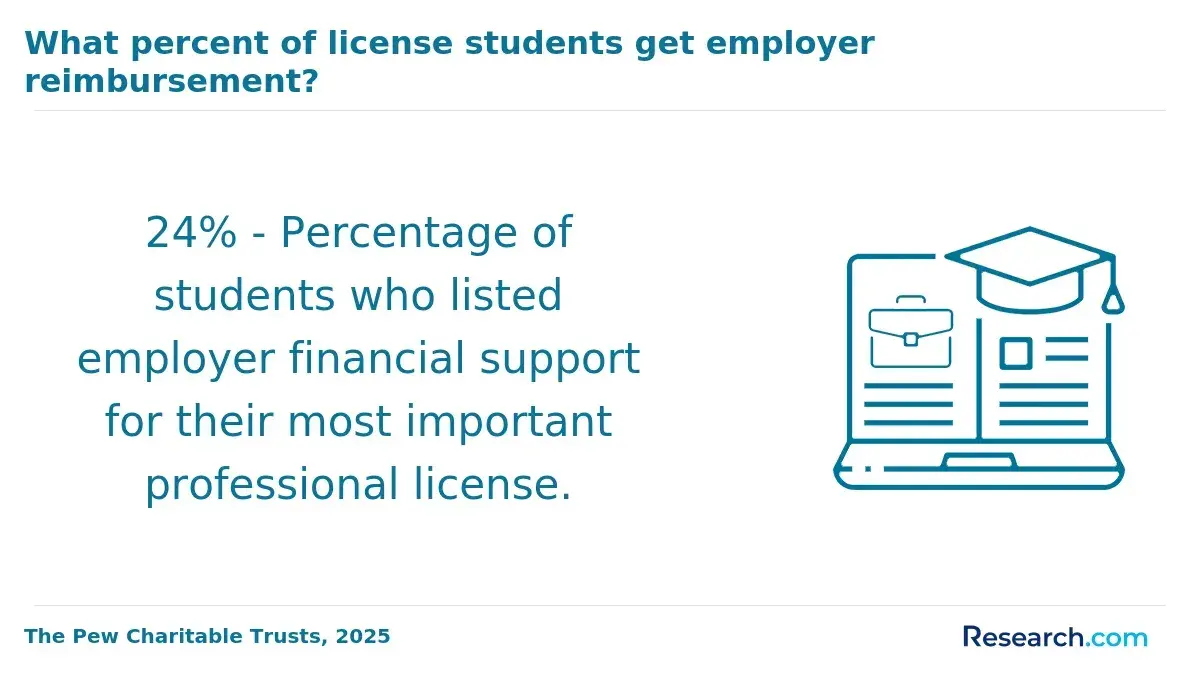
Some employer education-benefit plans reimburse eligible pre-enrollment expenses, but many cover tuition only after admission or course registration. Review your employer's policy before relying on reimbursement.
Usually not by itself. Clinical licensure depends on the profession, state rules, prior education, supervised training, examinations, and board requirements. Confirm licensure eligibility directly with the relevant state licensing authority and the university before enrolling.
References
- Tuition & cost of attendance https://admission.universityofcalifornia.edu/tuition-financial-aid/tuition-cost-of-attendance/
- Tuition and Costs | Point Park University | Pittsburgh, PA https://www.pointpark.edu/admissions/tuitioncosts/tuition/index
- Master of Public Health Online https://www.unthealth.edu/tcom/public-health/master-of-public-health-online.html
- Master of Public Health - UNE Online https://online.une.edu/program/master-of-public-health/
- Average Cost of College [2025]: Yearly Tuition + Expenses https://educationdata.org/average-cost-of-college
- Master's Degree in Health Science (MHS) | PublicHealthOnline.org https://www.publichealthonline.org/health-sciences/masters-degree-programs/
- Average Cost Of College 2024-2025 | Bankrate https://www.bankrate.com/loans/student-loans/average-cost-of-college/
- Financing Your Degree https://aspph.org/student-journey/financing-your-degree/
- 35 Most Affordable Online Master's Degrees in Healthcare Administration - Healthcare Administration Degree Programs https://www.healthcare-administration-degree.net/best/affordable-online-masters-degrees-in-healthcare-administration-22/