2027 Online Family Nurse Practitioner Degree Programs With No Letters of Recommendation Required

Co-Founder and Chief Data Scientist
Finding professional references can delay an otherwise qualified RN's graduate-school plans. Online Family Nurse Practitioner programs with no letters of recommendation required can reduce that barrier, but they still assess clinical readiness, academic preparation, and licensure eligibility.
This matters in a high-demand field: the U.S. Bureau of Labor Statistics projects 46% growth for nurse practitioner jobs through 2033. This guide helps BSN-prepared RNs identify legitimate options, understand substitute admissions materials, compare total costs, and confirm that a streamlined application supports their FNP career goals.
Key Things You Should Know
- "No letters of recommendation required" means the standard application does not require reference letters; it does not mean letters are merely optional, waived only for selected applicants, or that transcripts, an active RN license, GPA standards, and other screening requirements disappear.
- Published requirements can change by entry pathway and state. Confirm the requirement for the specific online MSN-FNP or post-master's FNP certificate before paying an application fee, especially if you are applying as an RN-to-MSN, BSN-to-MSN, or certificate student.
- Admissions convenience should not outweigh professional quality: nurse practitioner employment is projected to grow 46% through 2033, while legitimate FNP preparation still depends on institutional accreditation, CCNE or ACEN nursing accreditation, supervised clinical education, and eligibility for national FNP certification.
Which Online Family Nurse Practitioner Degree Programs Require No Letters of Recommendation?
A small but changing group of online MSN-FNP programs publishes standard application checklists without recommendation letters. The most useful way to treat these schools is as starting points for verification, not as permanent guarantees: requirements may differ for conditional admission, international applicants, post-master's certificates, or applicants with a lower GPA.
The following programs have commonly published streamlined MSN admissions processes in which recommendation letters are not listed as a standard FNP application item. Contact admissions and request written confirmation for your intended start term.
| Program to investigate | Typical entry route | Materials commonly emphasized instead of letters | What to confirm |
| Chamberlain University | Online MSN, Family Nurse Practitioner specialty | BSN transcript, active RN license, application, prerequisite review | Whether the FNP specialty and your state have additional documentation or placement rules |
| Maryville University | Online MSN-FNP | Academic transcript, RN license, nursing education review | Current GPA threshold and whether a personal statement is required for your file |
| Walden University | Online MSN-FNP | Degree verification, RN license, academic record, admissions review | Whether prior graduate coursework or an alternate pathway changes the checklist |
| Purdue Global | Online MSN, Family Nurse Practitioner concentration | Transcripts, licensure documentation, prior nursing preparation | Current clinical-placement support, state availability, and specialty-specific requirements |
Do not assume that every online FNP program follows this model. Many well-established programs require one to three professional or academic references because they use them to evaluate clinical judgment, communication, and graduate-level readiness. If references are a major obstacle, compare the whole application process rather than eliminating a program solely because it requests them.
RNs who still need to complete a bachelor's degree before pursuing graduate nursing can also examine best online RN to BSN programs. An RN-to-BSN degree is not an FNP qualification, but it can be an important prerequisite for BSN-to-MSN FNP admission.
To verify a no-letter policy, follow these steps before applying:
- Open the admissions page for the exact FNP degree, concentration, and start term rather than relying on a general graduate admissions page.
- Download or save the current application checklist and look for "references," "recommendations," "evaluations," and "professional endorsements."
- Ask an admissions representative by email whether recommendation letters are required, optional, conditionally required, or not considered.
- Ask whether your GPA, prior degree type, state of residence, or transfer status can trigger additional documentation.
What Are the Admission Requirements for Online Family Nurse Practitioner Degree Programs With No Recommendation Letters?
Most no-recommendation online FNP programs are designed for registered nurses who already hold a BSN. Removing letters usually shortens the document-gathering process; it does not remove the school's responsibility to determine whether an applicant can succeed in advanced practice nursing coursework and clinical practice.
Requirements vary, but applicants should expect the following categories of evidence.
| Requirement | Why the program reviews it | Common issue to address early |
| BSN degree and official transcripts | Confirms foundational nursing education and cumulative or nursing GPA | Missing transcripts from transfer institutions |
| Unencumbered RN license | Establishes legal authority to practice as a registered nurse | License expiration or a state-specific eligibility limitation |
| Minimum GPA | Provides a consistent academic-readiness measure | A GPA below the published threshold may require a review or conditional pathway |
| Statistics and nursing prerequisites | Supports evidence-based practice and graduate-level research coursework | An outdated or incomplete statistics course |
| Resume or employment history | Documents nursing experience, settings, and professional progression | A resume that lists duties but not scope, patient population, or accomplishments |
| Goal statement or essay | Assesses fit with the FNP role and ability to communicate professionally | A generic essay that does not explain primary-care goals |
| Background check, drug screening, immunizations, or CPR documentation | Supports clinical-site eligibility after admission or before practicum | Waiting until clinical placement to collect compliance records |
GRE scores are often not required for practice-focused online nursing master's programs, but applicants should not treat that as universal. A school may also request an interview, an English-language proficiency measure where applicable, or documentation explaining academic concerns.
If you are changing direction within healthcare rather than advancing from a BSN, review prerequisites carefully. Some accelerated healthcare programs serve administrative career goals, but they do not replace RN licensure, advanced nursing coursework, or FNP clinical preparation.
Are Online Family Nurse Practitioner Programs With No Letters of Recommendation Easier to Get Into?
Not necessarily. A program can simplify its application while maintaining rigorous academic, licensing, clinical, and progression standards. "Easier to apply to" is not the same as "easier to be admitted to," complete, or use for FNP certification and state APRN licensure.
Programs without letters may rely more heavily on objective evidence, such as a BSN GPA, the quality and recency of prerequisite coursework, an active RN license, work history, and a focused statement of purpose. This can benefit experienced RNs who lack recent faculty contacts, work in settings where supervisors cannot provide references, or need a more predictable application timeline.
The U.S. Bureau of Labor Statistics reports a 2024 median annual wage of $129,210 for nurse practitioners. That figure covers nurse practitioners broadly rather than only FNPs, and pay varies by state, experience, employer, specialty, and work setting. It reinforces why applicants should prioritize certification eligibility and clinical quality over a low-friction application alone.
Applicants should avoid four common assumptions:
- Assuming no letters means automatic acceptance, even when the program publishes a minimum GPA and license requirement.
- Assuming an online format eliminates required in-person clinical practicum experiences.
- Assuming a school can enroll students in every state or arrange every clinical placement.
- Assuming a simplified admissions process makes employers or certification boards view the degree differently.
A no-recommendation program is a good fit when the school's outcomes, curriculum, clinical model, state authorization, and total cost align with your goals. It is a poor fit if the school cannot clearly explain its accreditation, supervised clinical expectations, or eligibility for the certification examination you intend to take.
What Do Online Family Nurse Practitioner Programs Evaluate Instead of Letters of Recommendation?
Recommendation letters offer a third-party perspective, but they are only one admissions tool. Schools that do not request them generally create a fuller picture from records that are easier to verify and compare across applicants.
This comparison shows how common substitute materials can demonstrate readiness for graduate FNP study.
| Alternative material | What it can show | How to make it stronger |
| Official transcript | Academic consistency, nursing foundation, and performance in science or statistics courses | Resolve transcript holds and submit records from every required institution early |
| Professional resume | RN experience, patient populations, leadership, and care settings | Use concise accomplishments that show assessment, education, coordination, or quality-improvement work |
| Personal statement | Understanding of the FNP role, motivation, and communication skills | Connect your clinical experience to family-centered primary care without overstating your scope |
| RN license verification | Current professional standing and practice eligibility | Check that your license name and number match the application exactly |
| Interview or admissions conversation | Professionalism, career fit, and understanding of online learning demands | Prepare specific questions about clinical placement, course sequencing, and state eligibility |
A strong application is specific and internally consistent. For example, an emergency nurse interested in FNP practice can explain how triage, patient education, and care transitions shaped an interest in longitudinal primary care, while also recognizing that FNP education prepares a different scope of practice.
Applicants returning to school after a long absence may benefit from updating study and technology habits before enrollment. A self-paced bachelor's degree online is not equivalent to a structured clinical FNP program, but experience with online learning can help a student assess whether remote coursework fits their schedule and learning style.
How Can You Tell if an Online Family Nurse Practitioner Degree With No Recommendation Requirement Is Accredited and Legitimate?
Accreditation and clinical eligibility matter far more than whether a school requests references. A legitimate online FNP program should clearly identify its institution, nursing accreditation, curriculum, faculty, clinical requirements, state availability, and pathway to national certification.
Use this verification sequence before enrolling:
- Confirm that the institution holds recognized institutional accreditation through the U.S. Department of Education or Council for Higher Education Accreditation directories.
- Confirm programmatic nursing accreditation from the Commission on Collegiate Nursing Education (CCNE) or the Accreditation Commission for Education in Nursing (ACEN), and verify the accreditation status rather than relying on a logo.
- Review your state board of nursing requirements for APRN licensure and ask the school whether the FNP track is designed to meet them in your state.
- Confirm that the curriculum supports eligibility for a national FNP certification examination, such as an exam offered by ANCC or AANPCB.
- Get a written explanation of who secures clinical sites, how preceptors are approved, how faculty supervise clinical learning, and what happens if placement is delayed.
- Review the student handbook for progression rules, technology expectations, refund policies, clinical travel expectations, and total program charges.
Red flags include vague accreditation language, pressure to enroll before you receive written answers, promises of unusually fast clinical completion, unclear state eligibility, or a refusal to explain clinical placement responsibilities. An online program may deliver didactic courses remotely, but FNP education requires supervised, in-person clinical experiences with patients.
Employers generally focus on whether an applicant is licensed, nationally certified where required, clinically prepared, and eligible to practice in the state. They are less concerned with whether admissions used recommendation letters, provided the degree comes from a recognized and appropriate program.
How Much Do Online Family Nurse Practitioner Degree Programs With No Letters of Recommendation Cost?
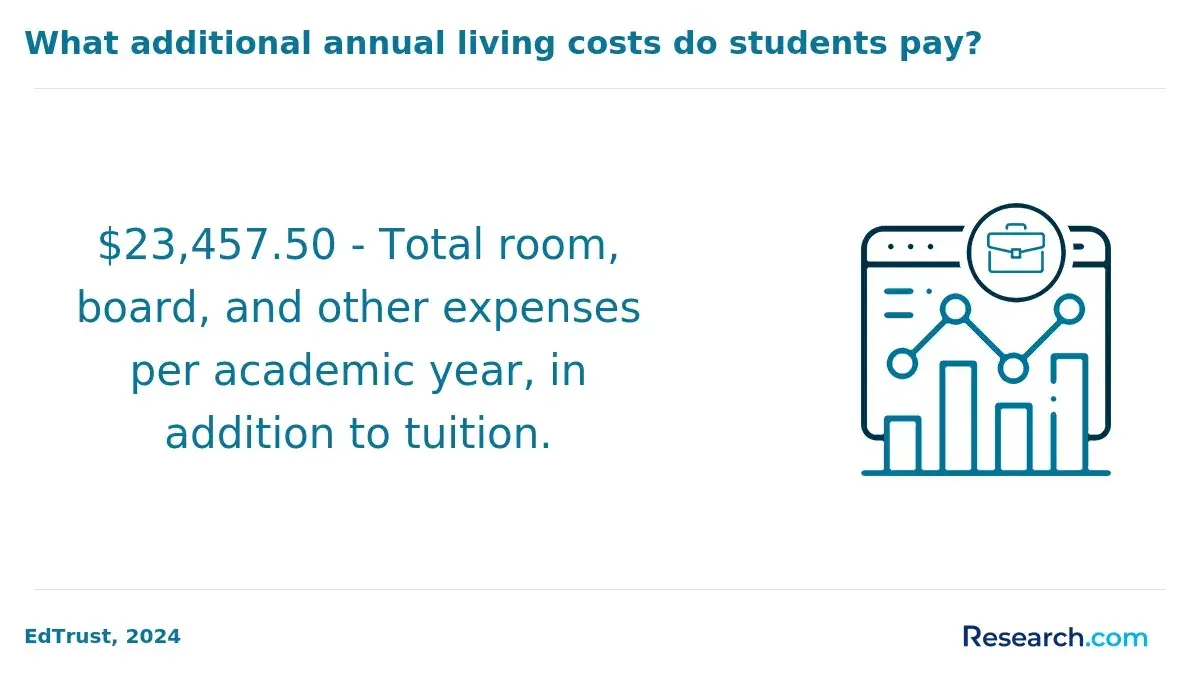
No-recommendation admissions do not inherently make an FNP degree less expensive. Tuition depends on the institution, number of required credits, residency rules, fees, clinical-course charges, and whether the student needs prerequisite or repeat coursework. Ask for a written estimate that covers the full program, not only a per-credit tuition figure.
The cost categories below help applicants compare offers that may appear similar at first glance.
| Cost category | Why it changes total cost | Question to ask |
| Tuition per credit or term | Programs use different credit totals and billing models | What is the estimated tuition through graduation at the current rate? |
| Mandatory university fees | Technology, resource, graduation, and distance-learning charges can recur | Which mandatory fees apply each term and during clinical courses? |
| Clinical expenses | Travel, background checks, drug screening, immunizations, and site-related costs vary | Does the estimate include clinical placement, preceptor, and travel expenses? |
| Books and simulation tools | Digital resources may be included or billed separately | Which course materials are included in tuition? |
| Lost work time | Clinical schedules can reduce overtime or require fewer work hours | How flexible are practicum schedules, and how many weekly hours should I plan for? |
Compare cost alongside expected career value, not in isolation. The BLS median wage figure for nurse practitioners is a national occupational benchmark, not a personal earnings forecast or a measure of debt affordability. Your repayment capacity depends on borrowing, local pay, employer benefits, household obligations, and time needed to finish.
If your career interests ultimately lean toward operations or leadership rather than direct advanced practice, compare that path before committing to clinical graduate education. A fastest online MHA may suit management goals, but it does not lead to FNP certification or APRN practice authority.
Can You Get Financial Aid for an Online Family Nurse Practitioner Degree With Streamlined Admissions?
Yes. Admissions requirements and financial-aid eligibility are separate issues. Students in an eligible online FNP program at a qualifying institution may be able to use federal student aid, employer tuition assistance, scholarships, veterans' education benefits, or private education loans, subject to individual eligibility and program rules.
Start with the Free Application for Federal Student Aid (FAFSA) and the school's financial-aid office. Graduate students are commonly offered federal Direct Unsubsidized Loans if eligible; unlike undergraduate subsidized loans, interest generally accrues while the student is enrolled. Aid packages, annual borrowing limits, and availability can change, so use the written award notice rather than an estimate from admissions.
Before accepting funds, compare these financial questions:
- Is the program eligible for federal aid, and does the institution have a current federal school code?
- What is the total estimated cost of attendance, including clinical travel and living expenses?
- Will employer tuition assistance require continued employment or repayment if you leave the organization?
- Can you reduce borrowing by keeping a workable RN schedule during nonclinical terms?
- What is the school's withdrawal and refund policy if a clinical placement delay changes your timeline?
A streamlined application should never be confused with a financial-aid guarantee. Review the loan terms, likely monthly repayment, and the effect of borrowing on your broader financial plan before committing.
How Long Does an Online Family Nurse Practitioner Degree With No Letters of Recommendation Take to Complete?
Most BSN-to-MSN FNP programs take roughly two to three years of continuous part-time study, although accelerated full-time options may be shorter and part-time plans may take longer. The admissions process does not determine academic duration; the curriculum, course sequence, clinical availability, transfer credit decision, and a student's work commitments do.
FNP master's programs typically combine advanced pathophysiology, advanced pharmacology, advanced health assessment, primary-care courses, and supervised clinical practicum. National nurse practitioner education criteria have long required at least 500 supervised direct patient-care clinical hours for master's-level NP preparation, while individual schools may require more. Clinical courses are therefore the most likely point at which a program timeline can become less flexible.
This timeline comparison helps set realistic expectations.
| Pathway | Typical starting point | Primary timing consideration |
| BSN-to-MSN FNP | Licensed RN with a BSN | Graduate nursing and clinical courses must be completed in sequence |
| Part-time BSN-to-MSN FNP | Working RN with a BSN | Lower course load can support employment but extends completion time |
| Post-master's FNP certificate | Master's-prepared nurse seeking the FNP population focus | Transcript gap analysis determines required courses and clinical hours |
| RN-to-MSN pathway | RN without a BSN, where offered | Additional undergraduate and graduate requirements usually lengthen the route |
Ask whether the program uses fixed cohort terms, whether clinical courses can be taken only in certain semesters, and whether delayed placement pauses progression. A school that advertises flexibility should be able to explain these constraints plainly.
Can You Transfer Credits Into an Online Family Nurse Practitioner Degree Program With No Recommendation Letters?
Transfer credit may be possible, but it is evaluated separately from the recommendation-letter policy. Schools commonly review official graduate transcripts, course descriptions or syllabi, credit age, grades, and alignment with their curriculum. A prior course must match the required content and meet the receiving institution's grade and recency standards.
Transfer opportunities are often strongest for graduate nursing core courses, such as advanced pharmacology, advanced pathophysiology, advanced health assessment, research, or statistics. Specialty FNP courses and clinical hours are less predictable because schools must ensure that graduates meet their own curriculum and certification-preparation requirements.
To avoid enrollment mistakes, request a written transfer evaluation before assuming that credits will shorten your degree. Ask whether accepted credits affect tuition, course sequence, clinical-hour requirements, financial aid, and the date by which coursework must be completed.
Applicants considering a science prerequisite rather than graduate nursing transfer credit should choose coursework carefully. An online bachelor's in biology can provide broader science preparation, but it does not substitute for the accredited nursing degree, RN licensure, or advanced practice curriculum required for FNP preparation.
How Should You Compare Online Family Nurse Practitioner Degree Programs That Do Not Require Letters of Recommendation?
Compare programs in the order that protects your licensure and career options: eligibility, accreditation, clinical education, cost, and then admissions convenience. A school can be a good application fit yet a poor professional fit if it does not serve your state, provide a realistic clinical model, or support the certification path you need.
Use these comparison questions during school calls and when reviewing written materials:
- Does the exact FNP program state that recommendation letters are not required for my pathway and start term?
- What institutional and nursing accreditations does the program hold, and what is the current accreditation status?
- Is the program available to residents of my state, and is it designed to meet my state's APRN educational requirements?
- How many supervised clinical hours are required, where may they be completed, and who is responsible for locating and approving sites and preceptors?
- Does the curriculum support eligibility for the national FNP certification examination I plan to pursue?
- What are the total estimated tuition, mandatory fees, clinical costs, and likely travel costs through completion?
- What academic support, faculty access, simulation resources, and clinical-placement assistance are available to online students?
- What are the progression rules if I need to repeat a course, miss a clinical term, or change from full-time to part-time study?
Make a side-by-side spreadsheet using the answers, and retain emails that confirm key requirements. The best option is usually the one that offers a credible route to certification and state licensure at a manageable total cost and schedule - not simply the one with the fewest application documents.
Other Things You Should Know About Family Nurse Practitioner
Yes, if the specific program does not require recommendation letters. You will still usually need an active RN license, official transcripts, a qualifying nursing degree, and any required statement, resume, prerequisites, or compliance documents.
It may request additional information in special circumstances, such as a GPA below the standard threshold, incomplete records, disciplinary history, or a pathway-specific review. Ask whether letters are ever required conditionally and obtain the answer in writing.
Yes. Most 2027 online Family Nurse Practitioner programs require an unencumbered RN license, usually from a U.S. state where you can complete clinical placements. Many also require a BSN, a minimum GPA around 3.0, and proof of immunizations or background checks.
Prescriptive authority comes from state APRN law and licensure, not from the online format or the absence of recommendation letters. States differ in supervision, collaboration, controlled-substance, and prescribing requirements, so verify rules with the board of nursing where you intend to practice.
References
- Application Requirements https://www.regis.edu/academics/majors-and-programs/application-requirements/nursing-family-fnp-msn
- Online Nurse Practitioner (NP) Programs No GRE Required (GRE Waivers) https://www.onlineeducation.com/nursing/faqs/gre-requirements-online-nurse-practitioner-programs
- Top Online NP Programs in Colorado (Most Affordable) https://www.npschools.com/states/colorado
- 2025 Most Affordable Online Nurse Practitioner Programs https://www.onlineu.com/most-affordable-colleges/nurse-practitioner-masters-degrees
- Are Nurse Practitioner Programs as Competitive as They Seem? | ThriveAP https://provider.thriveap.com/blog/are-nurse-practitioner-programs-competitive-they-seem