
2027 Online Educational Leadership Doctorate Programs with No Dissertation Requirement

Co-Founder and Chief Data Scientist
Many educators want a doctorate that advances leadership practice without spending years on a traditional dissertation. That choice matters because the U.S. Bureau of Labor Statistics reported a May 2024 median salary of $104,070 for elementary, middle, and high school principals, making doctoral preparation a serious career investment for many leaders.
This guide is for teachers, administrators, instructional leaders, and higher education professionals comparing online educational leadership doctorates with no dissertation. You will learn what replaces the dissertation, how to verify legitimacy, and how to choose a program that fits your goals.
Key Things You Should Know
- Yes, some online educational leadership doctorates replace the traditional dissertation with a capstone, applied doctoral project, scholarly project, or problem-of-practice portfolio, but "no dissertation" rarely means "no major research or writing."
- Accreditation matters more than the dissertation label: students should verify institutional accreditation, state authorization, and any licensure alignment before comparing cost, speed, or convenience.
- Costs vary widely, but federal graduate loan limits remain a practical constraint: graduate students may borrow up to $20,500 per year in Direct Unsubsidized Loans, so total program price should be reviewed before enrolling.
Which Online Educational Leadership Doctorate Programs Do Not Require a Dissertation?
Online educational leadership doctorates without a traditional dissertation are usually professional doctorates, most often EdD programs, designed around applied leadership problems rather than original theory-building research.
The safest way to identify them is to look for the exact final requirement in the catalog, not just marketing phrases such as "dissertation-free," "practitioner-focused," or "accelerated."
For a broader comparison of dissertation-free EdD options beyond educational leadership, readers can also review online EdD programs no dissertation to see how different institutions describe capstones, applied projects, and other alternatives.
The table below summarizes the main types of programs a student may encounter when searching for an online educational leadership doctorate with no traditional dissertation:
| Program or pathway type | Common degree wording | Typical final requirement | Best fit | Important caution |
| Dissertation-free educational leadership EdD | EdD in Educational Leadership, Educational Leadership and Organizational Innovation, or similar | Capstone, applied doctoral project, or leadership project | Practicing educators who want to solve a workplace or systems-level problem | May not lead to principal or superintendent licensure unless specifically approved by the state |
| Leadership and learning doctorate | Online EdD in Leadership and Learning in Organizations or similar | Capstone project tied to organizational improvement | K-12, higher education, nonprofit, corporate learning, or policy professionals | May be broader than school leadership and may not satisfy education administrator credential requirements |
| Healthcare, higher education, or organizational education leadership doctorate | EdD in Education and Leadership, Organizational Leadership, or Higher Education Leadership | Scholarly project, portfolio, or applied research project | Education professionals outside traditional K-12 administration | Program title may not match school district leadership job requirements |
| Dissertation-in-practice EdD | EdD in Educational Leadership or Leadership for Organizations | Dissertation in practice | Students who want applied research but not a traditional PhD-style dissertation | This is still a dissertation requirement, even if it is applied and shorter in scope |
Common examples of dissertation-free or nontraditional final-project models include Marymount University's online EdD in Educational Leadership and Organizational Innovation, Vanderbilt University's online EdD in Leadership and Learning in Organizations, and Nebraska Methodist College's online education and leadership doctorate for healthcare education contexts.
These examples illustrate the range of options, but they are not automatically interchangeable: one may be appropriate for a school leader, another for an instructional executive, and another for a healthcare educator.
When comparing programs, pay close attention to the words used in the catalog. "No traditional dissertation" may mean a genuine capstone pathway, but it may also mean a dissertation-in-practice, which still requires formal research, committee review, and multi-chapter writing.
What Replaces the Dissertation in an Online Educational Leadership Doctorate?
A dissertation-free online educational leadership doctorate usually replaces the dissertation with a structured, applied project. The goal is not to remove doctoral-level inquiry; it is to shift the work from producing original academic research to solving a real leadership, instructional, organizational, or policy problem.
The table below compares the most common doctoral completion models. This distinction is critical because two programs can both advertise a "practice-focused" doctorate while requiring very different amounts of research design, writing, fieldwork, and faculty review:
| Completion model | What students typically produce | Research intensity | Typical audience | Best career alignment |
| Traditional dissertation | Original research study, often with extensive literature review, methodology, data analysis, and defense | High | Academic committee and scholarly readers | Faculty, research, policy analysis, or doctoral teaching roles |
| Dissertation in practice | Applied study of a problem of practice in an educational or organizational setting | Moderate to high | Practitioners, faculty committee, and organizational stakeholders | District, school, higher education, or systems leadership |
| Capstone project | Applied intervention, strategic plan, program evaluation, policy proposal, or improvement project | Moderate | Workplace stakeholders and faculty reviewers | Practitioner leadership, instructional improvement, organizational change |
| Scholarly project or portfolio | Evidence-based professional project, reflective portfolio, or cumulative leadership artifact | Moderate | Faculty evaluators and professional audience | Executive leadership, professional advancement, applied education roles |
In practice, a capstone may require students to identify a problem, review relevant research, collect or analyze evidence, design an intervention, evaluate outcomes, and present findings. That is why students should not assume that a no-dissertation doctorate eliminates doctoral research expectations.
Before enrolling, ask the school to define the final project in concrete terms. Useful questions include:
- Is the final requirement officially called a capstone, doctoral project, dissertation in practice, scholarly project, portfolio, or something else?
- Does the project require original data collection, institutional review board approval, committee defense, or publication-style writing?
- Can the project be completed in the student's current workplace, or must the school approve a separate field site?
- Are project courses built into the curriculum from the beginning, or does the final project start after coursework is complete?
- What happens if a student changes jobs, loses site access, or cannot collect planned data during the project phase?
The best dissertation alternative is one that matches the student's professional setting. A school principal may benefit from a student achievement or teacher retention project, while a higher education administrator may prefer a student services, enrollment, equity, or institutional effectiveness project.
Are Online Educational Leadership Doctorate Programs Without Dissertations Legitimate and Accredited?
Yes, an online educational leadership doctorate without a traditional dissertation can be legitimate and accredited. Accreditation does not depend on whether the program requires a dissertation; it depends on whether the institution and program meet recognized quality standards and whether the degree aligns with applicable professional or state requirements.
The first checkpoint is institutional accreditation from an accreditor recognized by the U.S. Department of Education or the Council for Higher Education Accreditation. Institutional accreditation affects credit transfer, employer recognition, federal financial aid eligibility, and the credibility of the doctorate.
The second checkpoint is program purpose. Some educational leadership doctorates are designed for leadership development and do not provide principal, superintendent, or administrator licensure. Others are tied to state-approved preparation routes. If licensure matters, the student should verify approval with the state education agency, not only with the university.
Use this checklist before assuming a no-dissertation doctorate is legitimate:
- Confirm the university's current institutional accreditation status through an official accreditor or federal database.
- Read the academic catalog page for the exact degree name, concentration, credit requirement, and final project requirement.
- Ask whether the program is state-approved for the specific credential you want, such as principal, superintendent, or district administrator licensure.
- Confirm whether the program accepts students from your state and whether online fieldwork or internships are authorized there.
- Review faculty credentials, project expectations, graduation requirements, and any required campus visits or residencies.
Red flags include vague accreditation language, unclear final project requirements, unusually aggressive completion promises, hidden residency fees, and reluctance to provide a current catalog link. A legitimate program should be transparent about curriculum, faculty review, student support, and state authorization.
Are No-Dissertation Online Educational Leadership Doctorate Programs Easier to Complete?
No-dissertation online educational leadership doctorates are not automatically easier. They may be more practical for working educators because the final project is often tied to a real workplace problem, but students still complete doctoral-level reading, research, writing, leadership analysis, and faculty-reviewed project work.
The main difference is the type of difficulty. A traditional dissertation can be difficult because it requires sustained independent research and an original contribution to scholarship.
A capstone or applied project can be difficult because it requires access to real organizations, stakeholder cooperation, data quality, implementation planning, and measurable improvement.
Students often underestimate the following demands:
- Applied projects still require research literacy, including the ability to evaluate studies, use evidence, and justify decisions.
- Workplace-based projects can become complicated if district priorities, supervisors, data access, or employment status changes.
- Online doctoral programs require strong self-management because weekly coursework, group projects, and writing milestones continue while students work full time.
- Shorter programs may feel more intense because they compress doctoral expectations into fewer terms.
- A capstone may require public presentation, committee review, revision cycles, or professional deliverables that resemble consulting work.
A dissertation-free format is usually better described as more applied, not easier. It can reduce the risk of getting stuck in a long dissertation phase, but it does not remove the need for disciplined academic work.
How Long Does It Take to Complete an Online Educational Leadership Doctorate Without a Dissertation?
Many online educational leadership doctorates without a traditional dissertation take about two to four years, depending on transfer credits, enrollment pace, cohort structure, project design, and whether the student takes breaks.
Some accelerated programs advertise shorter timelines, but students should examine whether those timelines assume continuous enrollment, heavy course loads, or previously completed graduate credits.
Students looking specifically for speed can compare 1 year EdD programs online, but they should be careful: a fast doctorate may be appropriate for experienced leaders with a clear project site, while a slower cohort model may provide better support for students who need more writing, research, or licensure guidance.
The table below shows typical timeline patterns by doctoral structure. These are planning ranges, not guarantees, because the final project phase can expand if approvals, data access, writing revisions, or workplace implementation take longer than expected:
| Doctoral pathway | Common pace | Timeline pressure points | Who may finish faster |
| Accelerated no-dissertation EdD | About 1 to 2 years when designed for speed | Heavy course loads, limited breaks, early project planning | Students with recent graduate credits, strong writing skills, and an approved project setting |
| Standard online capstone EdD | About 2 to 3 years | Balancing coursework, job responsibilities, and capstone milestones | Students in structured cohorts with consistent faculty feedback |
| Part-time applied doctorate | About 3 to 4 years or more | Reduced course loads, job changes, family obligations, and project delays | Students who maintain steady enrollment and choose feasible project scopes |
| Traditional dissertation doctorate | Often longer and more variable | Proposal approval, data collection, analysis, committee revisions, defense | Students with strong research preparation and a well-defined study |
To estimate your own completion time, ask how many students finish within the advertised timeline and what supports are available during the final project. A transparent program should be able to explain how project advising, writing support, and milestone tracking work.
How Much Do Online Educational Leadership Doctorate Programs Without Dissertations Cost?
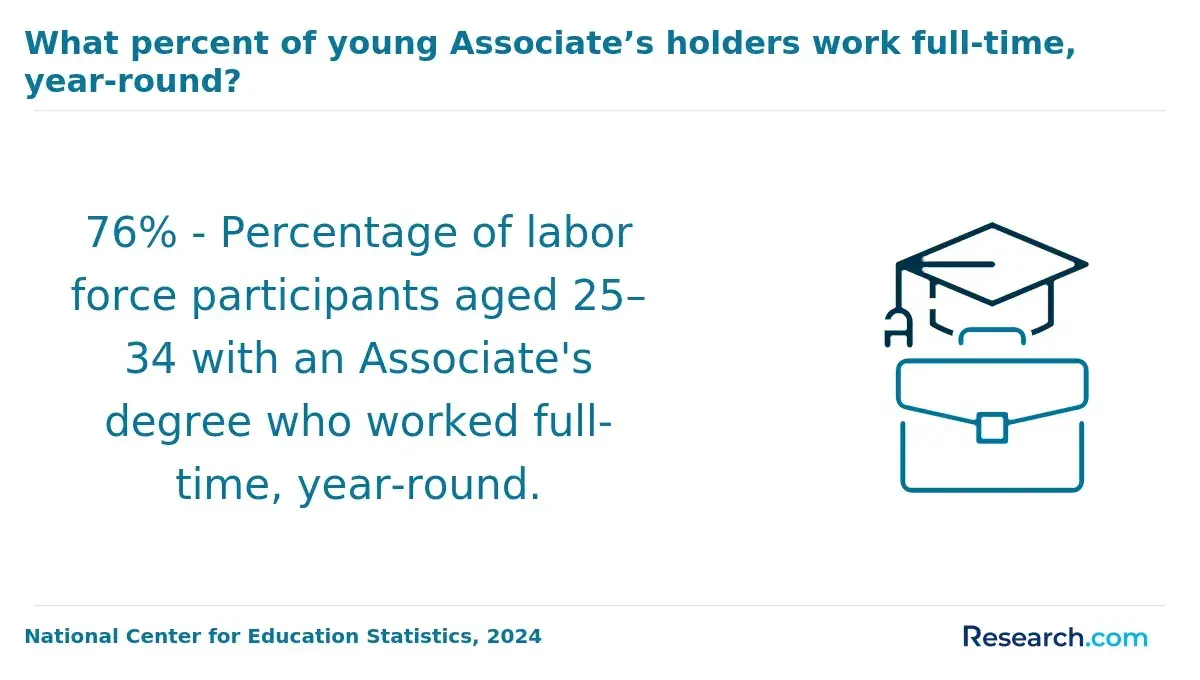
The cost of an online educational leadership doctorate without a dissertation depends on tuition per credit, required credits, fees, books, technology costs, travel for residencies, and whether the student receives employer tuition assistance.
The dissertation-free format may reduce time-to-completion risk for some students, but it does not automatically make the degree less expensive.
One practical benchmark is federal borrowing capacity. For current U.S. graduate students, the annual Direct Unsubsidized Loan limit is $20,500, which means a doctorate costing more than that per year may require Grad PLUS Loans, savings, scholarships, employer support, payment plans, or a combination of funding sources.
When reviewing published tuition, compare total program cost rather than only the per-credit rate. The table below shows the cost categories that commonly affect the real price of an online doctorate:
| Cost factor | Why it matters | Question to ask |
| Tuition per credit | The largest cost driver, especially in programs requiring 45 to 60 or more credits | Is tuition locked for the cohort or subject to annual increases? |
| Total required credits | A lower per-credit rate can still be costly if the program requires more credits | How many credits are required after transfer or EdS credits are evaluated? |
| Program and technology fees | Online programs may charge additional fees not shown in headline tuition | What is the full cost of attendance for the entire degree? |
| Residency or immersion costs | Some online doctorates require campus visits, travel, lodging, or meals | Are any in-person sessions required, and who pays travel costs? |
| Capstone or project expenses | Applied projects can involve assessment tools, transcription, software, or site-related costs | Are there extra costs tied to data collection, research software, or project implementation? |
Students should also consider opportunity cost. A program that fits around full-time employment may preserve income, but a demanding schedule can reduce availability for extra duties, consulting, coaching, or leadership assignments.
A smart cost review includes three steps:
- Calculate the full program price using required credits, fees, and expected annual tuition changes.
- Subtract confirmed funding, such as employer reimbursement, scholarships, assistantships, military benefits, or grants.
- Compare the remaining cost with realistic career goals, not with the highest possible salary outcome.
The strongest financial case usually exists when the doctorate supports a clear advancement path, such as district leadership, higher education administration, executive learning leadership, policy work, or a pay lane that recognizes doctoral credentials.
Who Benefits Most From an Online Educational Leadership Doctorate Without a Dissertation?
A no-dissertation online educational leadership doctorate tends to benefit experienced professionals who want to apply research to real systems rather than pursue a full-time academic research career.
It is especially useful when the student already has access to a school, district, college, nonprofit, healthcare education unit, or learning organization where an applied project can be completed.
Professionals in curriculum, training, and learning leadership may also consider adjacent credentials before committing to a doctorate. For example, someone focused mainly on course design or learning technology may find that the best online instructional design master's programs provide a more targeted and lower-cost path than a doctoral degree.
The table below helps identify who is most likely to benefit from a dissertation-free educational leadership doctorate and who may be better served by another pathway:
| Student profile | Fit with no-dissertation doctorate | Why |
| Experienced teacher moving into school or district leadership | Potentially strong fit | Applied projects can align with instructional improvement, staff development, equity initiatives, or school systems change |
| Current administrator seeking advancement | Strong fit if the degree aligns with state and employer requirements | The doctorate can support leadership credibility and advanced problem-solving skills |
| Higher education professional | Strong fit for student affairs, academic affairs, enrollment, assessment, or institutional effectiveness roles | Capstones can focus on retention, student success, policy, or organizational improvement |
| Instructional designer or learning executive | Moderate to strong fit depending on role | A doctorate may help with strategic leadership, but a specialized master's may be enough for technical design roles |
| Aspiring professor or academic researcher | Often weaker fit | Research universities and tenure-track roles may prefer a PhD or dissertation-based doctorate with stronger research preparation |
| Student seeking the fastest possible title | Risky fit | Choosing only for speed can lead to poor alignment, weak support, or limited career value |
The degree is most useful when the student can name the problem they want to solve and the role they want next. It is less useful when the student is unsure whether they need a doctorate, needs licensure the program does not provide, or wants a research-heavy academic career.
How Does a No-Dissertation Online Educational Leadership Doctorate Affect Career Opportunities?
A no-dissertation online educational leadership doctorate can support career advancement, but its value depends on the employer, role, state rules, and how directly the program connects to the student's leadership goals. Employers generally care about the institution's credibility, the degree's relevance, the candidate's experience, and demonstrated leadership results.
For K-12 leaders, possible outcomes include principal, assistant superintendent, superintendent, curriculum director, director of assessment, instructional leadership coordinator, or district administrator roles. For higher education professionals, possible paths include dean-level administration, student affairs leadership, enrollment management, academic operations, institutional effectiveness, and learning innovation roles.
Salary should be interpreted by occupation, not by degree title alone. The BLS May 2024 median salary for elementary, middle, and high school principals was $104,070, but actual pay varies by district size, state funding, union or contract structure, administrative experience, and whether the role is school-based or district-level.
A doctorate may help in some leadership markets, but it should not be treated as a guaranteed salary increase.
Common responsibilities in roles connected to educational leadership doctorates include:
- Setting instructional, operational, or organizational strategy.
- Using data to evaluate student outcomes, program effectiveness, staffing needs, or institutional performance.
- Leading teams, departments, schools, divisions, or cross-functional improvement initiatives.
- Designing professional development, policy changes, equity initiatives, or curriculum improvement plans.
- Communicating with boards, faculty, families, staff, community partners, or executive leadership.
Technology is also changing leadership expectations. AI tools, learning analytics, early-alert systems, and digital assessment platforms are becoming part of decision-making in schools and colleges. A strong doctoral program should help students evaluate technology ethically, protect student data, and use evidence rather than chase tools without measurable outcomes.
Career value is strongest when the final project becomes a professional asset. A well-designed capstone can demonstrate the ability to diagnose a real problem, lead stakeholders, use evidence, manage implementation, and evaluate results.
How Do No-Dissertation Online Educational Leadership Doctorates Compare With Traditional Doctorates?
The best doctoral format depends on what the student wants the doctorate to do. A dissertation-free EdD is often a strong fit for applied leadership, while a traditional dissertation-based doctorate may be better for research-intensive academic, policy, or scholarly careers.
The table below compares no-dissertation educational leadership doctorates with traditional dissertation-based doctorates across the decision factors that matter most to working professionals:
| Decision factor | No-dissertation or capstone-based EdD | Traditional dissertation-based doctorate |
| Primary purpose | Apply research to solve a leadership or organizational problem | Produce original research that contributes to scholarship |
| Best fit | Practitioners, administrators, district leaders, higher education staff, learning executives | Aspiring researchers, faculty members, policy scholars, or students pursuing research-heavy roles |
| Final product | Capstone, applied project, portfolio, or scholarly project | Formal dissertation with proposal, methodology, analysis, and defense |
| Flexibility for working adults | Often designed around professional schedules and workplace projects | Can be flexible online, but dissertation demands may be less predictable |
| Research depth | Applied and practice-oriented | More extensive theoretical and methodological depth |
| Completion risk | May reduce risk of a prolonged dissertation phase if milestones are structured | Can take longer if topic approval, data collection, or committee revisions stall |
| Academic career alignment | Possible for some teaching or administrative roles, but not always ideal for tenure-track research positions | Usually stronger for research faculty and scholarly publishing pathways |
A dissertation-free doctorate may be the better choice if the student wants to become a stronger practitioner, lead systems change, or build an applied leadership portfolio. A traditional dissertation may make more sense if the student wants to teach doctoral research methods, publish scholarly studies, or pursue tenure-track roles where original research is central.
The most common mistake is treating "no dissertation" as the main decision point. A better comparison is whether the program's research model, faculty expertise, leadership focus, accreditation, cost, and career outcomes match the student's goals.
How Should Students Choose an Online Educational Leadership Doctorate Without a Dissertation?
Choosing an online educational leadership doctorate without a dissertation requires more than finding the shortest or most convenient program. The right choice should match your professional role, state requirements, project access, learning style, budget, and long-term career plan.
Students in regulated or credential-sensitive education fields should be especially careful. Just as applicants review whether school psychology programs online accredited by NASP align with professional standards, educational leadership applicants should verify whether a doctorate meets the relevant expectations for their state, district, institution, or employer.
A practical evaluation process includes the following steps:
- Define your career target first, such as principal, superintendent, curriculum director, higher education administrator, policy leader, or learning executive.
- Confirm whether that role requires a specific license, endorsement, certification, or state-approved preparation program.
- Verify institutional accreditation and state authorization before discussing tuition or admission.
- Read the catalog description of the final doctoral requirement and confirm whether it is truly not a traditional dissertation.
- Ask for examples of recent capstone or applied project topics so you can judge whether the work matches your interests.
- Compare total cost, including fees, residencies, project expenses, and expected tuition increases.
- Review admissions requirements, including master's degree expectations, GPA minimums, professional experience, writing samples, recommendations, and interviews.
- Ask how project advising works and whether students receive structured support before the final terms.
- Check whether transfer credits, EdS credits, or previous graduate coursework can reduce time or cost.
- Speak with alumni or current students when possible to understand workload, faculty responsiveness, and career usefulness.
Important red flags include unclear accreditation, no published curriculum, vague promises of fast completion, no explanation of the final project, pressure to enroll quickly, unclear licensure language, and tuition estimates that exclude fees. If a program cannot clearly explain what you will produce at the doctoral level, keep looking.
The best dissertation-free online educational leadership doctorate is not simply the fastest one. It is the one that gives you credible doctoral preparation, a manageable structure, an applied project you can complete, and a degree that your employer or licensing pathway will recognize.
Other Things You Should Know About Educational Leadership
Yes, graduates of accredited doctoral programs generally may use the title "Dr." in professional contexts. However, they should represent the credential accurately as an EdD or other earned doctorate and follow employer or licensing-board rules where applicable.
Many online EdD programs no longer require the GRE, especially practitioner-focused programs for experienced educators. Requirements vary, so applicants should check whether the school instead requires a writing sample, interview, resume, statement of purpose, or minimum graduate GPA.
Sometimes. Some universities allow EdS, post-master's, or doctoral-level transfer credits to reduce the required coursework, but limits vary by school, age of credits, grades earned, accreditation of the prior institution, and match with the EdD curriculum.
No. A dissertation-free EdD from an accredited university is an earned academic doctorate with coursework and a required final project. An honorary doctorate is a recognition award and is not equivalent to completing a doctoral degree program.
References
- Doctor of Education | UNE Online https://online.une.edu/program/doctor-of-education/
- 25 Best Online EdD Programs of 2025 https://www.eddprograms.org/schools/best-online-doctor-of-education-programs/
- 2026 Online EdD Programs No Dissertation Required (Applied Capstone Projects) https://www.onlineeddprograms.com/faqs/edd-programs-no-dissertation
- What to Expect from Ed.D. Programs - Graduate Programs for Educators https://www.graduateprogram.org/blog/what-to-expect-from-ed-d-programs/
- A New Era of Doctoral Education: Beyond the Traditional Dissertation https://www.snu.edu/blog/a-new-era-of-doctoral-education-beyond-the-traditional-dissertation
- 2025 Most Affordable Online Doctorates in Education https://www.onlineu.com/most-affordable-colleges/education-doctoral-degrees


