2027 Is an Online Educational Leadership Doctorate Worth It? ROI, Salary Growth, and Career Impact

Co-Founder and Chief Data Scientist
An online educational leadership doctorate can be a smart investment, but only when it supports a specific advancement goal. The decision matters because leadership roles are financially meaningful but competitive: the BLS reported a May 2024 median annual wage of $104,070 for elementary and secondary education administrators.
This guide is for teachers, principals, district leaders, instructional specialists, and higher education professionals weighing cost against career impact. You'll learn how to estimate ROI, compare alternatives, avoid common mistakes, and decide whether the degree fits your next move.
Key Things You Should Know
- An online educational leadership doctorate is most likely to pay off when it helps you qualify for district leadership, superintendent-track, higher education administration, policy, consulting, or senior training roles-not when it is pursued only for a title.
- BLS May 2024 data places median pay at $104,070 for K-12 education administrators and $103,960 for postsecondary education administrators, so ROI depends heavily on whether the doctorate moves you into roles above your current salary range.
- The true cost includes tuition, fees, books, travel or residency requirements, loan interest, and time; graduate Direct Unsubsidized Loans carry a 7.94% fixed interest rate for 2025-2026, making debt planning central to ROI.
What Is the ROI of an Online Educational Leadership Doctorate?
The ROI of an online educational leadership doctorate is the financial and professional return you receive compared with the total cost of earning the degree. In simple terms, the degree is "worth it" when the added earnings, promotion access, leadership credibility, and career flexibility outweigh tuition, debt, time, and stress.
For most professionals, ROI is not based on the doctorate alone. It depends on your current role, years of experience, state licensure rules, employer pay scales, and whether your target jobs actually reward doctoral-level preparation. An EdD in educational leadership is usually practice-focused and designed for working educators, while a PhD is more research-focused and may be better for academic research or tenure-track faculty goals.
A practical ROI estimate starts with this basic formula: total additional compensation over time minus total degree cost. The payback period is the number of years it may take for increased earnings to recover the cost. If a doctorate costs $45,000 and contributes to a promotion that raises annual compensation by $15,000, the simple payback period is about three years before taxes, loan interest, and retirement effects. If the salary increase is only $3,000, the financial payback could take much longer.
This table shows how different ROI situations can look. The examples are not promises; they illustrate how the same doctorate can produce very different outcomes depending on career movement.
| Scenario | Degree cost before interest | Possible annual salary increase | Simple payback period | ROI interpretation |
| Promotion from school-level leadership to district leadership | $45,000 | $15,000 | 3 years | Potentially strong if the promotion is realistic |
| Doctoral stipend on an existing educator salary schedule | $45,000 | $4,000 | 11.25 years | May be modest unless it also opens advancement options |
| No salary lane change and no promotion | $45,000 | $0 | No direct payback | Weak financial ROI unless nonfinancial benefits are the main goal |
| Move into consulting, executive training, or higher education leadership | $60,000 | Variable | Uncertain | Depends on market demand, network, and experience |
The biggest mistake is assuming the degree automatically produces a large raise. A better approach is to identify three to five target roles, review their salary ranges, confirm whether a doctorate is preferred or required, and compare those outcomes with your current compensation.
How Much Can Salaries Increase After an Online Educational Leadership Doctorate?
Salary growth after an online educational leadership doctorate varies widely because education compensation is structured differently across K-12 districts, universities, state agencies, nonprofits, and private employers. In some districts, a doctorate may trigger a fixed salary-lane increase. In other workplaces, the degree matters only if it helps you win a higher-level role.
BLS May 2024 wage data gives useful context: the median annual wage for postsecondary education administrators was $103,960. That figure does not isolate doctorate holders, but it shows the salary level of a major career category that often values advanced leadership preparation.
The table below compares salary context across roles commonly associated with educational leadership. Use it to see where a doctorate may have the most financial leverage.
| Role category | Relevant BLS May 2024 median annual wage | How a doctorate may affect compensation | Important limitation |
| K-12 principal or school administrator | $104,070 | May support movement into district leadership or salary-lane advancement | Principal roles often require administrator licensure, not necessarily a doctorate |
| Postsecondary education administrator | $103,960 | May strengthen candidacy for dean, director, student affairs, or academic leadership roles | Institution type, department size, and experience strongly affect pay |
| Instructional coordinator | $74,720 | May help with senior curriculum, assessment, or district-level roles | A master's degree may be sufficient for many positions |
| Training and development manager | $127,090 | May be valuable for education technology, corporate learning, or leadership development roles | Business experience and measurable outcomes may matter more than the degree alone |
The most realistic salary gains usually come from role change, not credential change. For example, moving from teacher to assistant principal, principal to central-office administrator, or director to executive-level higher education leadership can create more upside than staying in the same job and receiving a small doctoral stipend.
Readers should also account for geography. A doctorate may be more financially valuable in districts or university systems with transparent pay bands and doctoral differentials. It may be less valuable in employers that do not distinguish between master's and doctoral preparation for compensation purposes.
Which Career Paths Offer the Strongest Financial Return With an Online Educational Leadership Doctorate?
The strongest financial return usually appears in roles where doctoral-level leadership, applied research, organizational change, and policy expertise are directly tied to hiring or promotion decisions. The weakest return tends to appear when the degree does not change job eligibility, salary schedule placement, or leadership access.
The table below summarizes common career paths and how they differ in ROI potential. It is designed to help you compare the degree against specific employment outcomes rather than treating all education careers as equal.
| Career path | Typical responsibilities | Doctorate ROI potential | Why the return may be strong or limited |
| District administrator | Oversee curriculum, operations, assessment, student services, or school improvement | Strong | The doctorate can support executive credibility and advancement beyond building-level leadership |
| Superintendent or assistant superintendent | Lead district strategy, budgets, policy implementation, and community relations | Strong | Many boards value doctoral-level preparation, though state licensure and experience remain critical |
| Higher education administrator | Manage academic programs, student services, enrollment, compliance, or institutional planning | Moderate to strong | The doctorate can help with senior roles, especially when paired with higher education experience |
| Instructional design or curriculum leadership | Design learning systems, evaluate instruction, lead academic innovation, or manage learning teams | Moderate | ROI improves when the role is senior, strategic, or technology-focused |
| Education consultant | Advise schools, districts, nonprofits, or companies on improvement, leadership, and learning outcomes | Variable | Income depends on reputation, client pipeline, niche expertise, and business development |
| Classroom teacher staying in the same role | Teach students, manage classrooms, assess learning, and collaborate with teams | Often limited | Financial return depends on salary-lane rules and may not justify high debt by itself |
Technology is also changing ROI. Districts and universities increasingly need leaders who understand learning analytics, AI-enabled academic support, online program quality, cybersecurity-aware operations, and responsible technology adoption. A doctorate can help if your program builds those competencies, but a curriculum that ignores digital strategy may have weaker long-term value.
How Does an Online Educational Leadership Doctorate Affect Career Advancement?
An online educational leadership doctorate can affect career advancement by strengthening your leadership profile, signaling commitment to systems-level improvement, and helping you build a portfolio of applied research. However, it is rarely a substitute for management experience, measurable results, licensure, or strong references.
In many EdD programs, students complete coursework in organizational leadership, education law, finance, equity, research methods, program evaluation, strategic planning, and change management. Those areas align with the work of principals, district administrators, higher education leaders, nonprofit executives, and learning-organization managers.
Career advancement is most likely when the program helps you produce evidence that employers can evaluate. Before enrolling, look for experiences that translate into promotion conversations and interviews.
- Applied dissertation, capstone, or improvement project tied to a real school, district, college, or organization problem
- Leadership internships, fieldwork, or superintendent preparation components when relevant to your state
- Courses in finance, law, personnel management, data use, and strategic planning
- Faculty with K-12, higher education, policy, or executive leadership experience in your target sector
- Opportunities to present research, publish practitioner work, or build a professional network
A common red flag is choosing a program because it sounds prestigious without checking whether its curriculum aligns with your target job. If your goal is district operations, a program centered almost entirely on classroom pedagogy may not deliver the leadership preparation you need. If your goal is higher education administration, K-12 licensure coursework may not be the best fit.
How Much Does an Online Educational Leadership Doctorate Cost Compared With Its Potential Benefits?
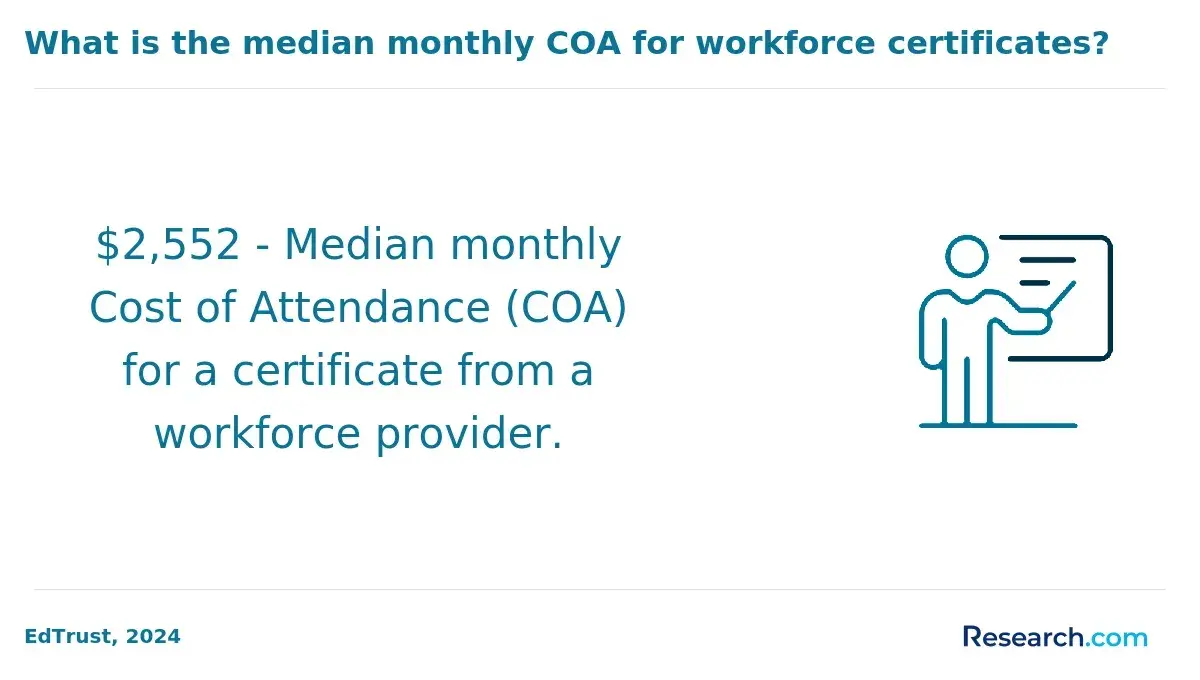
The cost of an online educational leadership doctorate includes more than tuition. Students should consider required fees, books, technology costs, background checks, testing, travel for residencies, dissertation or capstone continuation fees, and loan interest. Even when online programs let students keep working, the schedule can still reduce overtime, consulting income, or family availability.
Federal loan terms matter because many doctoral students finance at least part of the degree. For 2025-2026, federal graduate Direct Unsubsidized Loans have a 7.94% fixed interest rate, so a program that looks affordable at enrollment can become meaningfully more expensive if repayment stretches over many years.
The following cost categories are the ones most likely to change your final ROI. Review each one before comparing programs.
- Published tuition: Compare cost per credit with the total number of credits required, not just the annual tuition estimate.
- Mandatory fees: Ask about online learning fees, graduation fees, course materials, assessment fees, and dissertation continuation charges.
- Residency expenses: Some online programs require campus visits, hotel stays, meals, and travel.
- Completion risk: A lower tuition rate may not be a bargain if the program structure makes it difficult to finish.
- Debt and interest: Model repayment under conservative salary assumptions before borrowing.
- Employer support: Tuition reimbursement, district partnerships, union benefits, or leadership development funds can improve ROI.
Program length can also affect cost. Some students look for 1 year EdD programs online to reduce time in school, but speed should not be the only filter. A fast program only improves ROI if it is accredited, manageable, aligned with your career goal, and respected by the employers you plan to approach.
The clearest financial benefit appears when the degree helps you reach a higher salary band, qualify for senior leadership, or gain consulting credibility. The weakest cost-benefit case appears when you borrow heavily for a doctorate that your employer does not require, reward, or recognize for advancement.
How Does the Time Required for an Online Educational Leadership Doctorate Affect Its ROI?
Time affects ROI in two ways: the number of years you pay tuition and the number of years you have left to benefit from higher earnings. A doctorate completed earlier in your career may provide a longer earnings window, while a late-career doctorate may need a clearer nonfinancial purpose, such as legacy work, consulting, or executive credibility.
Many online EdD programs are built for working professionals and may take roughly three to four years, depending on transfer credits, dissertation or capstone progress, course load, and required field experiences. Shorter programs can improve financial return, but only if they do not sacrifice academic quality or career relevance.
The table below shows why timeline matters. It uses simplified scenarios to illustrate how speed and career timing can influence payback.
| Completion pattern | Potential ROI advantage | Potential ROI risk | Best fit |
| Accelerated full-time or near full-time online program | Earlier access to promotions and fewer years of tuition exposure | High workload may reduce job performance or personal sustainability | Professionals with strong support systems and clear advancement targets |
| Part-time online program while working | Allows continued income and practical application of coursework | Longer time to credential may delay promotion benefits | Working educators who cannot pause employment |
| Extended dissertation or capstone timeline | May allow deeper research and better workplace alignment | Continuation fees and delayed graduation can weaken ROI | Students with complex projects or changing professional responsibilities |
Students who are concerned about dissertation delays sometimes compare traditional programs with online EdD programs no dissertation. These programs may use a doctoral capstone or applied project instead, but "no dissertation" does not mean "no major research requirement." The key question is whether the final project helps you demonstrate leadership impact to employers.
A common mistake is underestimating time cost because the program is online. Online study removes commuting, but doctoral work still requires reading, research, writing, group collaboration, and revision. If the program causes burnout or delays career movement, the financial return can shrink.
Does an Online Educational Leadership Doctorate Have the Same Career Value as a Campus-Based Degree?
An online educational leadership doctorate can have the same career value as a campus-based degree when it is offered by an accredited institution, has a rigorous curriculum, provides meaningful faculty interaction, and aligns with employer expectations. Many employers care more about accreditation, reputation, skills, licensure alignment, and demonstrated leadership impact than whether courses were completed online or in person.
The format matters most when it affects learning quality, networking, field experience, and completion. Online programs are often better for working educators because they allow students to keep earning income and apply coursework immediately in their schools or organizations. Campus programs may provide stronger in-person networking, easier access to faculty, or more structured research communities.
This comparison highlights practical differences that can affect ROI rather than assuming one format is always better.
| Factor | Online doctorate | Campus-based doctorate | ROI implication |
| Ability to keep working | Usually stronger | May be harder if courses meet during work hours | Maintaining income can improve ROI |
| Travel and relocation | Usually lower, unless residencies are required | May require commuting or relocation | Lower indirect costs can improve affordability |
| Networking | Depends on cohort design and live interaction | Often more organic in person | Networking quality can influence advancement |
| Employer perception | Strong when accredited and reputable | Strong when institution and program are respected | Accreditation and outcomes matter more than format alone |
| Field experiences | Often completed near the student's workplace | May be tied to campus partnerships | Local relevance can be valuable for district or regional careers |
Accreditation should be nonnegotiable. Institutional accreditation affects federal financial aid eligibility, transferability, and employer recognition. Programmatic or professional alignment may also matter for specialized roles. For example, educators exploring student support leadership may also compare adjacent paths such as school psychology programs online accredited by NASP if their goals involve psychological services rather than administrative leadership.
The safest rule is to evaluate the school and program, not just the delivery mode. Ask whether the diploma distinguishes online study, whether graduates move into the roles you want, and whether your employer has a history of recognizing the institution.
How Does an Online Educational Leadership Doctorate Compare With Other Career Advancement Options?
An online educational leadership doctorate is not the only way to advance in education. Depending on your goal, a lower-cost credential, second master's degree, administrative license, graduate certificate, or specialized master's may produce a faster or more targeted return.
The best alternative depends on the gap between your current qualifications and your target role. A doctorate makes sense when you need executive credibility, advanced applied research skills, or eligibility for senior leadership. It may be excessive if your immediate goal is a role that primarily requires licensure, technical skill, or a master's degree.
The table below compares common advancement options by cost logic and career fit.
| Option | Best suited for | Potential advantage | Potential limitation |
| Online EdD in educational leadership | Current educators seeking senior leadership, district roles, executive credibility, or applied research expertise | Strongest credential for systems-level leadership | Higher cost and longer timeline than many alternatives |
| Administrative license or certification | Teachers moving into principal or administrator roles | Directly tied to eligibility in many states | May not provide doctoral-level credibility for executive roles |
| Education specialist degree | Professionals seeking post-master's advancement without a full doctorate | Can be shorter than a doctorate | May not carry the same recognition for top leadership roles |
| Second master's degree | Educators changing specialty areas | More focused and often less expensive | May not differentiate candidates for senior leadership |
| Graduate certificate | Professionals adding a targeted skill such as assessment, technology, or policy | Lower cost and shorter timeline | Limited credential value for executive leadership |
For some professionals, instructional design may be a stronger ROI path than educational leadership. If your goal is to move into learning technology, course design, corporate training, or digital learning management, comparing best online instructional design master's programs may be more practical than starting a doctorate.
The common mistake is choosing the highest credential instead of the most efficient credential. If an administrative license is the missing requirement for your next role, earn that first. If a doctorate becomes necessary later for district leadership or executive roles, you can pursue it with clearer ROI evidence.
Which Professionals Are Most Likely to Benefit From an Online Educational Leadership Doctorate?
The professionals most likely to benefit are those who already have education experience, leadership responsibility, and a clear plan to use the doctorate for advancement. The degree is usually less effective as a career reset for someone with limited experience in schools, higher education, training, or organizational leadership.
An online educational leadership doctorate tends to fit these profiles best because the credential builds on existing professional capital.
- Experienced teachers preparing for administration: The degree can help if paired with required state administrator licensure and leadership experience.
- Principals and assistant principals seeking district roles: Doctoral work can strengthen preparation for curriculum, operations, human resources, assessment, or superintendent-track responsibilities.
- Higher education professionals pursuing senior roles: The degree may support advancement in student affairs, academic administration, enrollment, assessment, or institutional effectiveness.
- Curriculum and instructional leaders: Doctoral study can help professionals lead systemwide improvement, evaluation, and instructional innovation.
- Education consultants and nonprofit leaders: A doctorate can add credibility when paired with a strong record of results and a clear service niche.
Professionals who should be cautious include those who are unsure whether they want to remain in education, those who would need to borrow heavily without a realistic salary increase, and those whose target employers do not value doctoral preparation. The degree may also be a poor fit for people who want a fast technical credential rather than a long leadership development process.
Admissions expectations vary, but many programs look for a master's degree, professional experience, letters of recommendation, a statement of purpose, transcripts, and sometimes leadership or licensure documentation. Competitive applicants usually connect their doctoral goals to a real educational problem they want to solve.
How Can Students Determine Whether an Online Educational Leadership Doctorate Is Worth It?
The best way to decide is to run a personal ROI analysis before applying. This should combine financial calculations with career evidence, because the degree's value depends on what it helps you do next.
Use the following steps to make the decision concrete rather than emotional. Each step helps you test whether the doctorate is aligned with a real career outcome.
- Identify your target roles and write down the exact job titles you want within the next five to ten years.
- Review job postings from districts, universities, agencies, nonprofits, and companies to see whether a doctorate is required, preferred, or rarely mentioned.
- Compare your current salary with realistic compensation for those roles using employer pay scales, public salary schedules, and labor market data.
- Calculate total program cost, including tuition, fees, books, residencies, loan interest, and any income you may lose while studying.
- Estimate your simple payback period by dividing total cost by the annual compensation increase you reasonably expect.
- Ask your employer whether the degree changes your salary lane, promotion eligibility, leadership pipeline access, or tuition reimbursement options.
- Check accreditation, state licensure alignment, dissertation or capstone requirements, faculty expertise, and graduate outcomes.
- Compare the doctorate with alternatives such as an administrative license, certificate, education specialist degree, or specialized master's.
When speaking with schools, ask specific questions instead of relying on marketing language. Request information about completion timelines, continuation fees, residency requirements, student support, dissertation or capstone expectations, and career outcomes for students in your field. Be cautious if a program emphasizes speed and convenience but gives little detail about mentoring, research support, or graduate advancement.
A reasonable decision rule is this: pursue the online educational leadership doctorate if it clearly supports a role you want, improves your advancement odds, fits your budget, and offers a manageable path to completion. Delay or choose another credential if the financial case depends on vague hopes, unusually large debt, or an employer that does not reward the degree.
Other Things You Should Know About Educational Leadership
An EdD is usually better for practitioners who want to lead schools, districts, colleges, nonprofits, or learning organizations. A PhD is usually better for people focused on academic research, theory development, or tenure-track faculty work.
Sometimes, but it depends on the state and the program. Students should confirm whether the program meets superintendent, principal, or administrator licensure requirements in the state where they plan to work.
Some do and some do not. Online programs may include short residencies, intensive weekends, internships, or in-person defenses, so students should confirm travel requirements before enrolling.
They can, but policies vary by school. Some programs accept post-master's credits or education specialist coursework, while others limit transfer credits or require most doctoral credits to be completed in residence.
References
- Educational Leadership Degree: Master’s vs. Doctorate https://www.educationalleadershipdegree.com/blog/educational-leadership-degree-masters-vs-doctorate/
- EdD Salary - How much can you make with a Doctor of Education (EdD) degree? (2025 Update) https://www.onlineeddprograms.com/faqs/edd-salary
- Is An Ed.D. Worth It? Pros, Cons, and Considerations https://www.eddprograms.org/resources/is-an-edd-worth-it/
- How to Advance Your Career with an Ed.D. in Educational Leadership - Graduate Programs for Educators https://www.graduateprogram.org/blog/how-to-advance-your-career-with-an-ed-d-in-educational-leadership/
- What can you do with an Ed.D.? | University of Idaho https://www.uidaho.edu/newsroom/blog/what-can-you-do-with-an-edd-degree
- The Higher Ed Grad School ROI: A Current Student’s Perspective https://www.roompact.com/2022/04/the-higher-ed-grad-school-roi-a-current-students-perspective/
- Teacher Salary with a Master’s Degree https://www.educationdegree.com/articles/teacher-salary-with-masters-degree/
- Does College Pay Off? A Comprehensive Return On Investment Analysis - FREOPP https://freopp.org/whitepapers/does-college-pay-off-a-comprehensive-return-on-investment-analysis/
- Online EdD Programs: Review Top Schools & More https://www.phds.me/online-programs/education-doctorate-edd/
- Career Opportunities After Earning an Educational Leadership Graduate Degree https://aituedu.org/career-opportunities-after-earning-an-educational-leadership-graduate-degree/