2027 Low-Cost Online Educational Leadership Doctorate Programs with Financial Aid: Scholarships, Grants, and Employer Tuition Support

Co-Founder and Chief Data Scientist
Choosing an online educational leadership doctorate is often a cost decision as much as an academic one. The stakes are high: the Bureau of Labor Statistics reported a May 2024 median salary of $104,070 for elementary and secondary education administrators, but doctoral tuition can vary widely by school, credit load, and fees. This guide is for educators comparing affordable online EdD and PhD-style leadership programs. You will learn how to compare total cost, financial aid, scholarships, employer benefits, and career value before committing.
Key Things You Should Know
- The lowest-cost online educational leadership doctorates are often public or mission-focused private programs with tuition-only estimates in the low-to-mid $20,000s, but required fees, residencies, and dissertation credits can change the true total.
- Federal unsubsidized loans for graduate students are capped at $20,500 per academic year, so scholarships, grants, employer tuition support, and payment plans matter if you want to avoid Grad PLUS borrowing.
- Cost should be compared against outcomes: BLS May 2024 data places median pay for elementary and secondary education administrators at $104,070, but salaries vary by district, state, role, union rules, and prior experience.
Which Online Educational Leadership Doctorate Programs Offer the Lowest Total Cost?
The lowest total cost usually comes from programs that combine modest per-credit tuition, a clear credit requirement, limited residency expenses, and predictable dissertation or capstone fees. For online educational leadership doctorates, the main credentials are the EdD, which is usually practice-focused, and the PhD, which is usually research-focused; most low-cost online options in this field are EdD programs designed for working educators.
The table below summarizes examples of commonly compared low-cost online or mostly online doctoral programs in educational leadership or closely related leadership fields. Tuition changes frequently, so use these figures as a starting point and confirm the current tuition, fees, and credit requirements directly with each university before applying.
| Institution | Online doctorate focus | Typical credit structure | Why it may be low cost | Cost caveat to verify |
| American College of Education | EdD in Leadership with education-related pathways | Approximately 60+ credits depending on pathway | Known for comparatively low per-credit tuition and online delivery | Confirm technology fees, dissertation continuation rules, and specialization requirements |
| University of the Cumberlands | Online EdD in Educational Leadership or related leadership fields | Often around 60 credits | Competitive per-credit tuition for doctoral study | Confirm whether your state, licensure goal, or concentration changes costs |
| Arkansas State University | Online EdD in Educational Leadership | Commonly structured around a fixed doctoral sequence | Public university pricing and online format can reduce relocation costs | Confirm program fees, dissertation enrollment charges, and any residency requirements |
| Murray State University | EdD in P-20 and Community Leadership | Designed for education and community leadership professionals | Public university tuition and practitioner-focused curriculum | Confirm online course fees and whether out-of-state pricing applies |
| Valdosta State University | Online doctoral options in leadership or curriculum-related education fields | Credit requirements vary by program and entry pathway | Public institution with online graduate options | Confirm whether the exact concentration fits educational leadership goals |
The cheapest program on paper is not always the least expensive program to finish. A $25,000 tuition estimate can become less attractive if the program requires multiple residencies, extended dissertation enrollment, or courses that do not align with your career goal.
Use a full-cost comparison instead of a tuition-only comparison. A realistic estimate should include tuition, required fees, books, technology costs, background checks, travel, licensure-related expenses if applicable, and the cost of taking fewer paid work hours during intensive terms.
What Financial Aid Is Available for Online Educational Leadership Doctorate Students?
Online doctoral students may qualify for many of the same financial aid categories as campus-based students if the institution is properly accredited and the student meets eligibility rules. The most important first step is completing the FAFSA, because it determines access to federal loans and may also be used by schools to award institutional grants or need-based aid.
The table below compares the main funding sources for online educational leadership doctorate students. It is useful because each source works differently: some reduce the bill directly, while others only delay payment or create future repayment obligations.
| Funding source | Does it need to be repaid? | Best fit | Key limitation |
| Institutional grants | No, if requirements are met | Students applying to schools with doctoral education funding | Often limited, competitive, or tied to enrollment status |
| Scholarships | No, if requirements are met | Educators with leadership experience, service commitments, or strong academic records | Deadlines may fall months before enrollment |
| Federal Direct Unsubsidized Loans | Yes | Students who need predictable federal borrowing | Graduate students can borrow up to $20,500 per academic year before considering other federal options |
| Grad PLUS Loans | Yes | Students whose remaining cost exceeds unsubsidized loan limits | Requires credit review and can increase total repayment cost |
| Employer tuition assistance | Usually no if service rules are met | Working educators in districts, universities, nonprofits, or agencies | May require repayment if you leave the employer too soon |
| Military and veterans benefits | Usually no if eligibility rules are met | Eligible service members, veterans, and dependents | Benefit levels and school participation vary |
For most working educators, the best order is to pursue gift aid first, employer support second, payment plans third, and loans only for the remaining gap. Borrowing can make sense when the doctorate is clearly connected to advancement, but it should not be the default before you know your net cost.
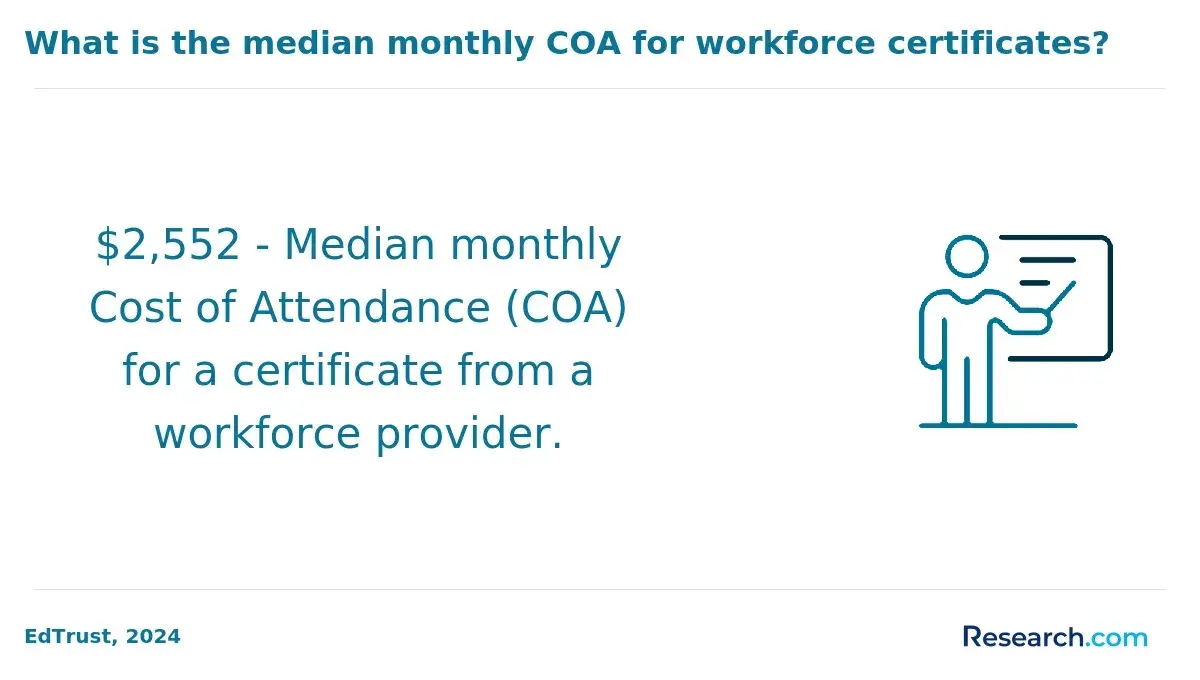
Ask each financial aid office for a written cost-of-attendance estimate for your exact program and enrollment pattern. Also ask whether online doctoral students are eligible for the same institutional aid as campus doctoral students, because some schools treat online programs differently.
Which Scholarships Help Reduce the Cost of an Online Educational Leadership Doctorate?
Scholarships for educational leadership doctorate students often come from universities, professional associations, foundations, school districts, unions, and community organizations. They may target aspiring principals, superintendents, higher education administrators, curriculum leaders, special education leaders, rural educators, or educators from underrepresented groups.
The most useful scholarship search is not just a broad web search. Start with awards that match your professional identity and leadership goal, then expand outward to general doctoral education scholarships.
- University doctoral scholarships: Ask whether the college of education has awards for EdD students, dissertation research, educational administration, principal preparation, or leadership in underserved communities.
- Professional association scholarships: Look at state principal associations, superintendent associations, school administrator groups, and specialty organizations tied to curriculum, special education, higher education, or instructional leadership.
- District and union awards: Some districts, local education foundations, and educator unions fund advanced study for teachers moving into leadership roles.
- Dissertation and research grants: These are usually smaller than full scholarships but can offset survey tools, transcription, data analysis software, travel, or participant-related costs.
- Diversity, rural education, and public service scholarships: These may be available to educators serving high-need districts, rural schools, first-generation college communities, or public-sector education systems.
A common mistake is skipping smaller awards because they appear too competitive or too modest. A $1,000 dissertation grant or $2,500 professional association scholarship can prevent a student from borrowing for a term, especially in a low-cost online program.
To improve your odds, prepare a reusable scholarship packet with a current resume, leadership statement, unofficial transcript, recommendation list, and a short description of your doctoral problem of practice. Many educational leadership awards favor applicants who can explain how their degree will improve schools, districts, or student outcomes.
How Can Employer Tuition Assistance Help Pay for an Online Educational Leadership Doctorate?
Employer tuition assistance can be one of the most valuable funding sources for an online educational leadership doctorate because many students are already working in K-12 schools, districts, colleges, nonprofits, or education agencies. The benefit may be structured as upfront tuition payment, reimbursement after grades post, a fixed annual allowance, or support tied to a promotion pathway.
The IRS allows employers to provide up to $5,250 per employee per year in tax-free educational assistance under qualifying plans. For doctoral students, that amount may not cover the full program, but it can significantly reduce annual borrowing if you enroll part time and align course loads with benefit limits.
Before counting on employer support, review the policy carefully. The details below often determine whether the benefit actually lowers your out-of-pocket cost.
- Annual cap: Confirm the maximum amount available per calendar year or fiscal year, because timing courses across benefit years can increase usable support.
- Eligible programs: Make sure doctoral-level coursework, online study, educational leadership, and your chosen institution qualify under the policy.
- Grade requirement: Some employers reimburse only after a minimum grade is earned, which means you may need to pay upfront.
- Service commitment: Districts and universities may require you to remain employed for a set period after receiving assistance.
- Repayment clause: Understand what happens if you resign, transfer, retire, or are laid off before the service period ends.
- Promotion alignment: Ask whether the degree supports roles such as principal, assistant superintendent, dean, director of curriculum, or higher education administrator.
Employer-funded doctoral study makes the most sense when your current employer benefits from your research and leadership development. It is riskier if you plan to change districts soon or if the policy has a strict clawback clause that could turn "free" tuition into a sudden bill.
How Do Assistantships, Fellowships, and Research Funding Work for Online Educational Leadership Doctorate Students?
Assistantships and fellowships are less common in fully online EdD programs than in full-time campus PhD programs, but they are still worth asking about. Some universities offer limited graduate assistant roles, research support, teaching opportunities, tuition discounts, or dissertation funding for online doctoral students who can contribute remotely.
The table below explains the main funding types and how realistic they are for working online students. This helps set expectations before you choose a program based on funding that may not be available to distance learners.
| Funding type | How it usually works | Online student fit | What to ask |
| Graduate assistantship | Student works for a department in exchange for stipend, tuition support, or both | Possible but less common for part-time online EdD students | Are remote assistantships available to online doctoral students? |
| Research assistantship | Student supports faculty research, data collection, literature reviews, or grant work | Possible if the work can be done online | Can my professional experience support a faculty research project? |
| Teaching assistantship | Student supports undergraduate or graduate courses | May be limited if the program is not campus-based | Are online course support roles open to doctoral students? |
| Fellowship | Merit-based or mission-based award that may not require work | Competitive but valuable when available | Do EdD students qualify, or only PhD students? |
| Dissertation grant | Small award for research expenses | Strong fit for online students | What research costs are eligible, and when should I apply? |
Research funding is especially relevant because educational leadership doctorates often require a dissertation, dissertation-in-practice, capstone, or applied research project. If your study involves district data, interviews, travel, assessment tools, or transcription, even a modest grant can reduce indirect costs.
Students considering alternatives to a traditional dissertation may also compare online EdD programs no dissertation, but they should verify what replaces the dissertation. A capstone, improvement project, or applied research portfolio can still require time, fees, and faculty review.
Which Program Features Have the Biggest Impact on the Total Cost of an Online Educational Leadership Doctorate?
The biggest cost drivers are not always obvious from the tuition page. Two programs with similar per-credit rates can have very different total costs if one requires more credits, longer dissertation enrollment, in-person residencies, or higher mandatory fees.
Pay close attention to the features below when comparing programs. They are the areas most likely to create a gap between advertised affordability and actual cost.
- Credit requirement: A 42-credit post-specialist EdD may cost far less than a 60-credit program, even if the per-credit rate is higher.
- Transfer credit policy: Some programs accept prior EdS, superintendent certification, or graduate leadership credits, while others require nearly all doctoral credits in residence.
- Dissertation structure: Extended dissertation enrollment can add terms of tuition and fees if students need more time.
- Residency requirement: In-person weekends, summer institutes, or campus intensives add travel, lodging, meals, and time away from work.
- Flat-rate versus per-credit tuition: Flat-rate pricing can help full-time students but may be less useful for educators who need part-time pacing.
- Online fees: Technology, distance learning, graduation, portfolio, and course materials fees can add up over several years.
- Licensure alignment: Programs that prepare students for principal or superintendent credentials may include exams, internships, background checks, or state-specific requirements.
Accelerated formats can reduce opportunity cost when they are realistic for your schedule. If speed is a priority, compare whether 1 year EdD programs online offer the leadership focus, accreditation, and workload structure you need before assuming a shorter timeline is cheaper.
The red flag is a program that advertises "affordable tuition" without clearly showing total credits, required fees, and dissertation continuation costs. If a school cannot explain what a typical student pays from first term to completion, compare it cautiously.
How Can Students Reduce Borrowing While Earning an Online Educational Leadership Doctorate?
Reducing borrowing starts before enrollment. The goal is to lower the amount you need to finance each term, avoid avoidable fees, and keep your completion timeline realistic so you do not pay for extra dissertation or continuation semesters.
Use the following sequence before accepting the full loan amount in your aid portal. It is designed to help working educators lower net cost without undermining academic progress.
- Build a total-cost spreadsheet that includes tuition, fees, books, travel, technology, licensure exams, and dissertation expenses.
- Ask each school for a sample degree plan showing how many terms students typically need to complete coursework and dissertation requirements.
- Apply for institutional scholarships before external scholarships, because school-based awards may have earlier priority deadlines.
- Request employer tuition assistance in writing and map courses across benefit years if the policy has an annual cap.
- Use a monthly payment plan for small remaining balances when the fee is lower than the long-term cost of borrowing.
- Borrow only the amount needed for the term instead of accepting the maximum offered loan amount automatically.
- Revisit your budget each academic year because tuition, fees, work hours, and family obligations can change.
Part-time enrollment often works well for educators because it preserves income and benefits. However, going too slowly can create extra fees and delay career advancement, so the lowest-stress schedule is not always the lowest-cost schedule.
A practical target is to match your course load to your funding cycle. For example, if your employer reimburses annually and your program charges per credit, spreading courses across benefit years may reduce debt more than rushing through without support.
Does Paying Less for an Online Educational Leadership Doctorate Affect Career Outcomes?
Paying less does not automatically mean weaker career outcomes, but choosing solely on price can be risky. Employers in education usually care about accreditation, leadership experience, licensure eligibility when relevant, dissertation or applied research quality, and whether the program fits the role you want.
For K-12 leadership, an educational leadership doctorate may support advancement toward roles such as principal, assistant principal, curriculum director, superintendent, instructional leader, or district administrator. For higher education, it may align with student affairs, academic administration, institutional effectiveness, enrollment management, or community college leadership.
The table below shows how cost and career value should be weighed together. It helps separate programs that are genuinely efficient from programs that are merely inexpensive.
| Program profile | Potential value | Main risk | Best fit |
| Low tuition, strong accreditation, clear leadership alignment | Often the strongest affordability profile | May have fewer specialized electives or funding awards | Working educators with defined advancement goals |
| Higher tuition, generous institutional aid | May be cheaper after grants or scholarships | Aid may not renew automatically | Students with strong applications or mission fit |
| Low tuition, unclear licensure fit | Can work for non-licensure leadership roles | May not meet state administrator requirements | Students not seeking principal or superintendent credentials |
| Prestige-focused program with limited aid | May offer strong networks in some markets | Higher debt may reduce ROI | Students whose employer or target sector values that network |
Consider opportunity cost as well as tuition. If a lower-cost program takes significantly longer to complete or offers limited advising during the dissertation stage, the apparent savings may shrink.
If your goal is not district or school administration, a different graduate pathway may be more cost-effective. For example, educators interested in learning technology, corporate training, or curriculum product roles may want to compare the best online instructional design master's programs before committing to a doctorate.
Which Online Educational Leadership Doctorate Programs Offer the Best Combination of Cost, Financial Aid, and Flexibility?
The best combination is usually not a single universal program. It depends on whether you need licensure alignment, employer reimbursement compatibility, a fast timeline, low upfront cost, strong dissertation support, or maximum schedule flexibility.
The table below groups program types by the kind of student they tend to serve best. Use it to create a shortlist rather than to pick a school automatically.
| Student priority | Program type to prioritize | Why it can be a strong fit | Question to ask before applying |
| Lowest tuition | Public online EdD or low-cost private online EdD | Lower per-credit cost can reduce the need for loans | What is the total tuition and fee estimate through completion? |
| Employer reimbursement | Part-time online EdD with predictable course pacing | Courses can be scheduled around annual employer benefit caps | Can I take one course at a time without losing aid eligibility? |
| Licensure advancement | State-aligned educational leadership doctorate | May support principal, superintendent, or district leadership requirements | Does this program meet my state's administrator credential rules? |
| Fast completion | Accelerated EdD with strong advising | Shorter timeline may reduce opportunity cost | What is the completion rate for students working full time? |
| Research-intensive goals | Doctorate with active faculty research and funding support | Better fit for policy, higher education research, or faculty-adjacent goals | Are online students eligible for assistantships or research grants? |
A higher-cost program can be the better financial choice if it offers renewable aid, accepts more transfer credits, includes strong dissertation support, or aligns directly with your employer's promotion ladder. Conversely, the lowest-cost program can be the best choice when it is accredited, transparent, flexible, and aligned with your state and career goals.
Students whose intended role involves assessment, student support, or psychological services should not assume an educational leadership doctorate is the right credential. In those cases, compare requirements for school psychology programs online accredited by NASP, because licensure and professional practice expectations differ sharply from educational administration.
How Should Students Compare Low-Cost Online Educational Leadership Doctorate Programs?
A strong comparison process looks at net price, program quality, flexibility, accreditation, and career fit together. The mistake to avoid is ranking schools by per-credit tuition alone.
Use these questions when speaking with admissions, financial aid, program directors, and your employer. They will help you uncover costs and requirements that are not always obvious on program pages.
- What is the estimated total cost for my exact concentration, including tuition, fees, residencies, dissertation enrollment, and graduation charges?
- How many credits can I transfer from an EdS, master's degree, leadership certification, or prior graduate coursework?
- Are online doctoral students eligible for institutional scholarships, assistantships, fellowships, or dissertation grants?
- What percentage of students complete the dissertation or capstone within the planned timeline?
- Is the program regionally accredited, and does it meet any state administrator licensure requirements I need?
- Can I enroll part time without losing financial aid eligibility or delaying required course sequences?
- How often are courses offered, and what happens if I need to stop out for a term?
- Does the curriculum fit my goal: K-12 administration, district leadership, higher education, curriculum leadership, policy, or nonprofit education leadership?
- What support is available for research design, data approval, institutional review board requirements, and dissertation writing?
- What is the school's policy on tuition increases after enrollment?
After collecting answers, compare programs by net cost per completed degree, not sticker price. Include only aid you are reasonably likely to receive and renew, and separate gift aid from loans.
A final red flag is pressure to enroll before you receive a written aid estimate or degree plan. Affordable doctoral study requires planning; a school that avoids direct cost questions may not be the safest financial choice.
Other Things You Should Know About Educational Leadership
It can be, especially when the university is properly accredited, the curriculum matches the role, and the student has relevant education experience. Employers often focus more on accreditation, licensure eligibility, leadership record, and demonstrated impact than on whether coursework was online.
Not always. Some programs are designed for licensed administrators, while others are broader leadership doctorates for educators, higher education professionals, or policy leaders. If your goal is principal or superintendent licensure, check your state's requirements before enrolling.
Many working educators take about three to four years, depending on transfer credits, course load, dissertation progress, and whether the program is accelerated. Students who pause during the dissertation stage may take longer and may pay additional continuation fees.
Yes, many online EdD programs are built for full-time educators. The key is choosing a program with predictable scheduling, manageable course loads, strong advising, and research expectations that can realistically fit around your work calendar.
References
- What Is Involved in the Financial Aid Application Process (FAFSA)? - AVID Open Access https://avidopenaccess.org/resource/what-is-involved-in-the-financial-aid-application-process/
- Additional benefits for doctoral students | SGH | Szkoła Główna Handlowa w Warszawie https://www.sgh.waw.pl/en/additional-benefits-doctoral-students
- Talent Studies: Investing in employee education benefits everyone https://www.luminafoundation.org/our-work/talent-investments/
- A comprehensive guide to types of financial aid for college students https://www.citizensbank.com/learning/types-of-federal-financial-aid.aspx
- Understand Financial Aid https://graniteedvance.org/cover-the-cost/understand-financial-aid/
- Doctoral Education Programs | ACE https://ace.edu/degree-programs/doctoral-degrees/doctoral-education/
- 2025 Most Affordable Online Doctorates in Education https://www.onlineu.com/most-affordable-colleges/education-doctoral-degrees
- Best Online Doctor of Education Programs for 2025 https://www.princetonreview.com/education-school-rankings
- How FAFSA Works | A Guide for HS Juniors and Seniors - Torch & Laurel https://torchandlaurel.org/how-fafsa-can-help-you-pay-for-college-a-guide/
- 25 Cheapest Online EdD Programs of 2025 https://www.eddprograms.org/schools/affordable-online-doctor-of-education-programs/