2027 Online Data Degrees With SQL, Python, and Cloud Certification Preparation

Co-Founder and Chief Data Scientist
Choosing an online data degree is harder when you need more than theory: employers often expect practical SQL, Python, and cloud-platform experience. The U.S. Bureau of Labor Statistics projects 36% employment growth for data scientists through 2033, far faster than the average occupation.
This guide helps aspiring analysts, data engineers, and career changers compare degree levels, online formats, costs, certification preparation, and career outcomes so they can choose a program aligned with a specific job goal.
Key Things You Should Know
- A reputable online data degree should teach relational database design, SQL querying, Python programming, statistics, data visualization, and at least one cloud workflow; a certification-aligned course alone is not the same as official AWS, Azure, or Google Cloud certification.
- For bachelor's students, the U.S. average published tuition and fees for 2024 was $11,610 at public four-year in-state institutions and $43,350 at private nonprofit four-year institutions, according to the National Center for Education Statistics; compare total cost, transfer credit, and aid rather than tuition alone.
- Data scientists had a $108,020 median annual wage and projected 36% job growth through 2033, according to the U.S. Bureau of Labor Statistics, but outcomes vary substantially by prior experience, portfolio quality, location, role, and employer.
What is an online data degree focused on SQL, Python, and cloud certification preparation?
An online data degree is an academic program delivered primarily through online coursework that develops the technical and analytical skills used to collect, store, transform, analyze, and communicate data. Depending on the degree, it may be called data science, data analytics, business analytics, information systems, computer science, database management, or data engineering.
The distinguishing feature of a program focused on SQL, Python, and cloud certification preparation is applied technical depth. SQL is the language used to query and manage relational databases. Python is widely used for data cleaning, analysis, automation, machine learning, and application development. Cloud platforms provide the storage, computing, databases, security controls, and analytics services that organizations increasingly use to run data workloads.
"Certification preparation" should be interpreted carefully. A degree may map assignments to AWS, Microsoft Azure, or Google Cloud concepts, offer a discounted exam voucher, or include a cloud course taught around a vendor framework. It usually does not mean that a student automatically earns a vendor credential. Official certification requires meeting the vendor's registration and examination requirements.
This path is a strong fit for learners who want structured instruction, a recognized academic credential, and a portfolio of projects. It may be less efficient for an experienced IT professional who needs only one cloud credential quickly, or for someone whose goal is purely business reporting and does not require programming-intensive work.
| Component | What students should learn | Why it matters in a data role |
| SQL | Joins, subqueries, window functions, schemas, indexing, and data quality checks | Most organizations store operational data in databases or data warehouses. |
| Python | Variables, functions, files, APIs, pandas, visualization, testing, and notebooks | Python supports repeatable analysis and scalable data-processing workflows. |
| Cloud data tools | Storage, identity access management, managed databases, warehouses, compute, and monitoring | Cloud knowledge helps graduates work with modern data environments rather than only local files. |
| Statistics and communication | Sampling, regression, experimentation, dashboards, and stakeholder presentations | Technical outputs need valid interpretation and useful business context. |
How do online data degrees compare with campus programs for data science careers?
Online and campus data degrees can lead to similar credentials when they come from the same accredited institution and use comparable curricula. The more important comparison is not delivery mode alone; it is whether the program gives you enough feedback, project practice, technical support, and career access to build job-ready evidence of skill.
Online study can work especially well for employed adults, caregivers, military-affiliated learners, and students who need geographic flexibility. A campus format may be better for learners who benefit from scheduled labs, face-to-face faculty access, research opportunities, or local recruiting. Self-directed learners should also compare structured programs with the flexibility of the cheapest self-paced online college options, recognizing that lower-cost self-paced formats can require more independent planning and may offer fewer live supports.
The comparison below highlights the trade-offs that matter most for an analytics or data science career decision.
| Decision factor | Online degree | Campus degree | Best fit |
| Schedule | Often asynchronous or mixed, with deadlines | Usually fixed class and lab times | Online for working adults; campus for students wanting routine. |
| Networking | Virtual teams, online office hours, remote career events | In-person clubs, labs, faculty contact, and recruiting | Campus can be stronger if local employer access is a priority. |
| Technical practice | Cloud labs, virtual machines, repositories, and remote projects | May include physical labs plus similar software environments | Choose the program with assessed projects, regardless of format. |
| Cost beyond tuition | May reduce relocation and commuting costs | May add housing, transportation, and campus fees | Calculate the full attendance budget, not just the credit rate. |
| Learning support | Depends heavily on tutoring, response times, and online advising | Often easier access to in-person support | Choose the environment where you can consistently complete technical work. |
An online degree is worth considering when the curriculum includes graded SQL and Python assignments, team projects, instructor feedback, and a capstone using realistic data. Be cautious of programs that advertise data science but provide only survey-level courses, unassessed videos, or no clear access to faculty and career support.
What types of accredited data degrees prepare you for SQL, Python, and cloud roles?
Several degree types can prepare students for data careers, but they emphasize different outcomes. The best choice depends on whether you want broad analytical literacy, software and infrastructure depth, advanced modeling, or a faster route into a specific role. Students comparing data with other majors in college should look beyond the major title and inspect required courses, electives, and capstone expectations.
This comparison shows how common degree routes typically align with SQL, Python, and cloud-focused positions.
| Degree type | Typical focus | Best-aligned roles | Important limitation |
| Associate degree in data analytics or IT | Foundational databases, spreadsheets, introductory programming, and reporting | Junior reporting analyst, data technician, support roles | May not provide the statistics or software depth employers seek for data scientist roles. |
| Bachelor's in data analytics or business analytics | SQL, visualization, statistics, business context, and introductory Python | Data analyst, BI analyst, operations analyst | Cloud and machine-learning depth varies widely by school. |
| Bachelor's in computer science or information systems | Programming, algorithms, databases, systems, and software development | Data engineer, database developer, analytics engineer | May require students to add statistics and visualization electives. |
| Master's in data science or analytics | Advanced analytics, machine learning, experimentation, and applied projects | Data scientist, senior analyst, applied machine learning roles | Programs can move quickly and may assume prior math or programming knowledge. |
| Master's in information systems or cloud computing | Enterprise systems, architecture, security, cloud services, and governance | Cloud data engineer, data platform analyst, technical consultant | May offer less statistical modeling than a data science degree. |
Accreditation should be the first screening step. In the United States, institutional accreditation from an agency recognized by the U.S. Department of Education or the Council for Higher Education Accreditation is generally the baseline for transferability and federal aid eligibility. Programmatic accreditation can add information in certain fields, but it is not universal or required for data science degrees.
A bachelor's degree is usually the practical starting point for students without a prior degree who want broad access to analyst and technical roles. A master's degree makes more sense when you already have a quantitative, business, or technical foundation and need advanced specialization, not simply because the title sounds more marketable.
Which data science curricula include hands-on SQL, Python, and major cloud platforms?
A strong curriculum does not merely list SQL, Python, AWS, Azure, or Google Cloud in a course catalog. It sequences skills so students can move from querying clean data to building repeatable pipelines, analyzing results, and explaining decisions to a nontechnical audience.
Look for a curriculum that includes the following progression. These elements help distinguish applied preparation from a program that treats technical tools as optional exposure.
- Build foundations in algebra, statistics, spreadsheet analysis, and data ethics before tackling advanced modeling.
- Learn SQL through database design, joins, aggregations, window functions, query optimization, and data validation assignments.
- Use Python for data structures, functions, notebooks, data frames, visualization, API access, and reproducible workflows.
- Apply data engineering concepts such as ETL or ELT, version control, data warehousing, pipelines, and documentation.
- Use a major cloud platform to store data, manage permissions, run queries or compute jobs, and monitor an end-to-end project.
- Complete a capstone that identifies a question, documents data limitations, produces an analysis, and presents a recommendation.
Major cloud platforms have overlapping concepts but different service names and interfaces. A program does not need to teach every platform deeply. For most students, meaningful work in one platform plus exposure to the comparable services on others is more useful than shallow coverage of all three.
| Platform area | AWS example | Microsoft Azure example | Google Cloud example | What to verify in a course |
| Object storage | Amazon S3 | Azure Blob Storage | Cloud Storage | Students upload, organize, secure, and retrieve data. |
| Data warehouse | Amazon Redshift | Azure Synapse Analytics | BigQuery | Students write SQL against a warehouse-scale dataset. |
| Compute and processing | Amazon EC2 or managed analytics services | Azure Virtual Machines or analytics services | Compute Engine or managed analytics services | Students understand cost, scaling, and workload choices. |
| Identity and security | IAM | Microsoft Entra ID and role-based access | IAM | Students apply least-privilege access rather than sharing credentials. |
Ask whether cloud labs are included in tuition, whether students receive sandbox accounts, and whether projects require students to manage budgets or shut down resources. Unplanned cloud charges and inaccessible lab environments are practical problems that can undermine an otherwise promising course sequence.
How do these programs integrate preparation for AWS, Azure, or Google Cloud certifications?
Degree programs commonly integrate certification preparation in one of four ways: vendor-aligned content within a course, dedicated exam-prep electives, cloud-lab assignments, or partnerships that provide learning materials and possible exam discounts. The strongest model connects vendor concepts to academic work rather than replacing core education with practice questions.
Entry-level cloud certifications generally validate foundational platform knowledge, while associate- and professional-level certifications usually expect more hands-on experience with architecture, operations, security, or data services. A student new to IT should not assume a single introductory course creates readiness for an advanced cloud credential.
Use the following questions to determine whether "certification preparation" is substantive.
- Which exact certification objective domains are mapped to required courses, and where is that mapping published?
- Do students complete timed practice assessments, graded cloud labs, and troubleshooting tasks rather than only watching demonstrations?
- Is an exam voucher included, discounted, optional, or entirely separate from tuition?
- Which cloud platform is used in required assignments, and can students build a portfolio project from that work?
- Do instructors have current cloud or data-platform experience, and can they explain how certification concepts appear in workplace data pipelines?
A certification can help a newer candidate signal platform familiarity, especially when paired with projects and a degree. It is not a substitute for SQL fluency, programming ability, communication, or documented experience. Employers may value different vendors depending on their existing technology stack, so choose the platform your target employers use when you can identify that information.
A common mistake is paying for several certification exams before developing practical skills. A better sequence is to complete foundational coursework, build one cloud-hosted project with clear documentation, review the relevant exam blueprint, and then decide whether the credential improves your target job applications.
What are typical admission requirements for online bachelor's and master's data programs?
Admission standards vary by institution and degree level, but online applicants generally meet the same academic requirements as campus applicants. Programs may be more flexible about when courses are taken, not necessarily about prerequisite knowledge needed to succeed in statistics, programming, and quantitative analysis.
Applicants comparing graduate timelines can review fastest master's degree online options, but should verify that an accelerated pace still leaves sufficient time for coding, mathematics, group projects, and career preparation.
| Requirement area | Typical bachelor's expectation | Typical master's expectation | What applicants should check |
| Prior education | High school diploma or GED; transfer applicants submit college records | Accredited bachelor's degree | Whether a specific undergraduate major is required. |
| Academic record | Institutional GPA and placement standards may apply | Many programs set a preferred or minimum GPA | How conditional admission or academic exceptions work. |
| Quantitative preparation | Algebra or college-level math may be expected | Often statistics, calculus, linear algebra, or quantitative coursework | Whether prerequisites can be completed before or during enrollment. |
| Programming background | Usually not required for introductory programs | May be recommended or required for technical data science programs | Whether Python, R, SQL, or another language is expected. |
| Application materials | Application, transcripts, and sometimes a personal statement | Application, transcripts, statement, résumé, and possible recommendations | Deadlines, transcript evaluation, and test-score policy. |
For a master's degree, applicants with a nontechnical background should not automatically rule themselves out. Business, social science, health, and other disciplines can provide useful domain context. However, completing an introductory Python course and refreshing statistics before enrollment can reduce the risk of falling behind in compressed graduate classes.
Before applying, request a prerequisite review and ask whether admitted students receive a formal plan for missing math or programming requirements. Do not rely on a marketing statement that a program is "beginner-friendly" without confirming what the first technical course actually expects.
How long do online data degrees take, and what tuition and total costs should you expect?
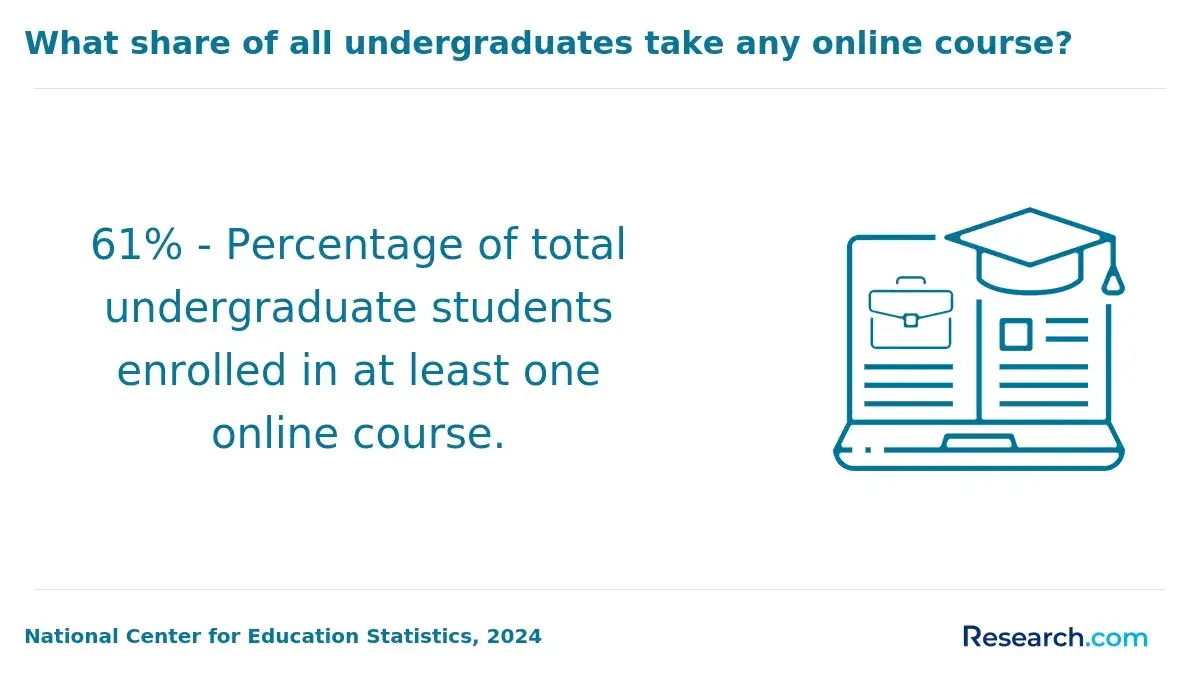
Completion time depends on degree level, transfer credit, enrollment intensity, prerequisite courses, and whether classes run in traditional semesters or shorter terms. A full-time bachelor's degree commonly follows a four-year design, while a full-time master's program often uses a shorter sequence. Part-time online study can be more manageable for working adults but usually extends the calendar time to graduation.
Published tuition is only one part of the investment. The National Center for Education Statistics reported average 2024 tuition and fees of $11,610 for public four-year in-state undergraduate institutions and $43,350 for private nonprofit four-year undergraduate institutions. Those national averages are not quotes for online data programs, but they show why school-specific net-price, aid, and transfer-credit reviews matter.
The table outlines the factors that create meaningful differences in total cost and completion time.
| Cost or timeline factor | How it affects the student | What to compare |
| Transfer credit | Accepted credits can reduce required courses and time enrolled. | Maximum transfer limit, course-age rules, and evaluation timing. |
| Per-credit versus flat-rate tuition | Taking more credits may either increase cost or be covered by a term rate. | Billing model, course load, and mandatory fees. |
| Technology and lab expenses | Cloud labs, proctoring, software, devices, and certification exams may be separate. | Required equipment and all program-specific charges. |
| Course format | Accelerated terms can shorten completion but increase weekly workload. | Term length, expected study hours, and availability of required courses. |
| Financial aid | Grants, scholarships, employer support, and loans change net cost. | Net-price estimate, aid eligibility, renewal rules, and borrowing needs. |
Students who need speed should evaluate accelerated degree programs alongside standard formats. Acceleration is most sensible when you have transfer credits, reliable weekly study time, and enough technical preparation to avoid repeating courses. It is not automatically the least expensive or the best option for a learner who needs extensive tutoring or has a demanding job.
To estimate return on investment, compare the program's net cost with your likely time away from work, projected borrowing, and the entry-level roles you can realistically pursue after graduation. Ask the financial aid office for a written breakdown of tuition, fees, books, technology, and any charges for cloud labs or certification vouchers.
What entry-level and advanced job roles can these data degrees help you qualify for?
An online data degree can support several career paths, but the degree title does not determine the job title. Employers evaluate the combination of coursework, projects, technical assessments, prior experience, industry knowledge, and communication skills. A bachelor's degree may support entry-level analyst roles, while advanced engineering and data science roles often require deeper experience or graduate-level preparation.
The roles below illustrate how SQL, Python, and cloud skills are used at different stages. They are examples of possible targets, not guaranteed outcomes.
| Role | Typical work | Most important skills | Common preparation route |
| Data analyst | Queries data, builds reports, identifies trends, and communicates findings | SQL, spreadsheets, visualization, statistics, and business communication | Bachelor's degree, portfolio, internship, or related operational experience |
| Business intelligence analyst | Develops dashboards, reporting definitions, and decision-support metrics | SQL, BI tools, data modeling, stakeholder management | Analytics, business, information systems, or related degree |
| Junior data engineer | Supports pipelines, data warehouses, transformations, and data reliability | Python, SQL, version control, cloud services, and ETL concepts | Technical bachelor's degree plus practical projects or IT experience |
| Database administrator or database architect | Designs, secures, tunes, and maintains data storage systems | SQL, database design, performance tuning, security, and cloud databases | IT, computer science, or information systems degree plus experience |
| Data scientist | Builds models, conducts experiments, interprets data, and communicates uncertainty | Python, statistics, machine learning, SQL, and domain expertise | Strong bachelor's foundation, often supplemented by experience or graduate study |
| Analytics engineer | Creates curated datasets and data models for analysts and business users | SQL, transformation workflows, testing, documentation, and cloud warehouses | Analytics or engineering experience with a data portfolio |
Artificial intelligence is changing data work by automating portions of code generation, documentation, dashboard drafting, and exploratory analysis. That raises the value of skills that tools cannot independently validate: defining useful questions, checking data quality, protecting sensitive information, testing outputs, and explaining trade-offs to decision-makers.
Students should build a small, credible portfolio before graduation. Include a SQL project with documented queries, a Python analysis stored in a reproducible format, and a cloud project that explains architecture, security choices, cost awareness, and limitations. Remove confidential information and focus on explaining your own contribution.
What salary ranges and job outlook do graduates with SQL, Python, and cloud skills see?
Salary varies by occupation, seniority, industry, location, education, and prior experience. A degree with SQL, Python, and cloud coursework can expand the range of roles a candidate can pursue, but no curriculum or certification guarantees a particular title or pay level.
U.S. Bureau of Labor Statistics data provides useful role-level context. The figures below are national medians or projections for occupations, not estimates of what any individual graduate will earn.
| Occupation | Median annual wage | Projected employment change through 2033 | How to use the information |
| Data scientists | $108,020 | 36% | Reflects a high-growth, quantitatively demanding occupation; many openings still favor relevant experience and strong statistics. |
| Database administrators and architects | $117,450 | 9% | Useful benchmark for database and data-platform paths, where architecture and security knowledge matter. |
| Software developers, quality assurance analysts, and testers | $130,160 | 17% | Broad category that includes roles with programming depth beyond a typical analytics curriculum. |
The data scientist growth projection suggests continued demand for people who can work with complex data, but it should not be read as a simple entry-level hiring forecast. Many data scientist postings expect experience in experimentation, machine learning, domain knowledge, or production systems. New graduates may enter through analyst, reporting, data operations, quality, or junior engineering work and advance as their portfolio and workplace experience grow.
When comparing programs, ask for outcomes that separate job titles, graduation cohorts, response rates, geographic scope, and methodology. Be skeptical of vague claims such as "high earning potential" without published definitions. A school should be able to explain whether it reports salaries, employment rates, internships, or self-reported survey results and what those measures exclude.
How can you evaluate and choose a reputable, accredited online data degree program?
Choose a program by working backward from your intended role. An aspiring data analyst needs strong SQL, visualization, and business communication. An aspiring data engineer needs substantially more programming, data modeling, cloud infrastructure, and pipeline practice. A future data scientist needs rigorous statistics and mathematics in addition to Python and SQL.
Before enrolling, use this process to compare programs consistently rather than choosing based on a ranking, a short completion claim, or a single advertised tuition rate.
- Define one or two realistic target roles and collect several current job descriptions to identify recurring skills, tools, and degree expectations.
- Confirm institutional accreditation through the school and the relevant recognized accreditor, then verify that the degree appears on the institution's official catalog.
- Download the curriculum and identify required courses in SQL, Python, statistics, data visualization, databases, cloud computing, security, and a capstone.
- Ask how students access cloud environments, whether labs are graded, and whether certification exam costs or vouchers are included.
- Calculate net cost after grants, scholarships, employer tuition assistance, transfer credits, fees, devices, and possible exam expenses.
- Review faculty credentials, tutoring, career services, internship support, technical help, and the process for resolving issues in online courses.
- Request clear outcomes information and compare its methodology, not only its headline claims.
- Read the transfer-credit and withdrawal policies before paying a deposit or committing to a start date.
Common red flags include unrecognized accreditation claims, a curriculum with no named database or programming courses, cloud training that consists only of vendor videos, unclear total charges, and career-outcome claims without methodology. Another frequent mistake is selecting a "data science" label when the required coursework is mostly business intelligence. Neither path is inherently worse, but they lead to different first jobs.
A reputable option should make its requirements, costs, faculty, student support, and academic policies easy to verify. The right program is the one whose technical depth, pace, budget, and support structure match your starting point and target role - not necessarily the fastest or most heavily advertised choice.
Other Things You Should Know About Data Science
No. You can learn these skills through courses, projects, work experience, and vendor training. A degree can be valuable when you need structured instruction, a broader academic credential, access to financial aid, or a pathway into roles that commonly list a degree requirement.
The best choice depends on the platform used by your target employers. Newer analysts often benefit most from foundational cloud knowledge and a portfolio project before pursuing advanced certifications. SQL, data visualization, and business communication may matter more for many analyst roles than an advanced infrastructure credential.
Not always. Many entry-level reporting and business intelligence roles rely heavily on SQL, spreadsheets, and visualization tools. Python becomes more valuable for automating workflows, analyzing larger datasets, using APIs, and moving toward data science or data engineering.
It can provide relevant preparation, especially when it includes statistics, machine learning, Python, SQL, and substantial projects. However, data scientist roles often require evidence of advanced quantitative ability and applied experience, so some graduates begin in analyst or junior technical positions before moving into data science.
References
- Online Undergraduate Certificate in Python and Data Analytics | CSU Global | Accredited https://csuglobal.edu/academic-programs/undergraduate-certificates/undergraduate-certificate-python-and-data-analytics
- Online Data Science Courses and Certification - 365 Data Science https://365datascience.com/courses/
- Amazon Web Services. (2026). AWS Certified Cloud Practitioner. https://aws.amazon.com/certification/certified-cloud-practitioner/
- Microsoft. (2026, July 21). Microsoft Certified: Azure Data Fundamentals. Microsoft Learn. https://learn.microsoft.com/en-us/credentials/certifications/azure-data-fundamentals/
- Oracle. (2026). MySQL 8.4 reference manual. https://dev.mysql.com/doc/refman/8.4/en