2027 Online Creative Writing Degree Programs With University Scholarships: Awards, Eligibility, and Net Cost

Co-Founder and Chief Data Scientist
An online creative writing degree can look affordable until tuition, fees, enrollment rules, and limited scholarship eligibility are added together. For context, College Board reported average published 2024-25 tuition and fees of $11,610 at public four-year colleges and $43,350 at private nonprofit four-year colleges.
This guide is for prospective undergraduate and graduate writers who want to compare university-funded scholarships, not just advertised tuition. You will learn how awards work, who qualifies, whether aid renews, and how to estimate your real net cost before enrolling.
Key Things You Should Know
- Institutional scholarships are funded by the university, but online creative writing students may face different eligibility rules than campus students; confirm that the award applies to your exact online program and enrollment status.
- A scholarship offer is valuable only after comparing it with total charges: College Board lists an average 2024-25 published tuition and fees of $11,610 at public four-year institutions and $43,350 at private nonprofit four-year institutions.
- Most renewable awards require continued enrollment and satisfactory academic progress, while FAFSA-based aid can change with financial need, enrollment intensity, and annual federal or institutional policies.
Which Online Creative Writing Degree Programs Offer University Scholarships?
Online creative writing options are commonly offered as a Bachelor of Arts in English with a creative writing concentration, a Bachelor of Fine Arts in Creative Writing, or a Master of Fine Arts or Master of Arts. Scholarship access is not standardized: a university may advertise broad institutional scholarships while excluding fully online students, limiting awards to degree-seeking students, or requiring a separate application.
The strongest prospects are usually regionally accredited universities that administer university-wide merit, need-based, transfer, military, donor-funded, or departmental awards. A program should not be treated as scholarship-friendly merely because its institution has a scholarship webpage. Ask the financial aid office to confirm online-program eligibility in writing.
This comparison framework shows the types of schools and awards worth investigating before applying. It is more reliable than assuming every listed scholarship applies to a distance learner.
| Program format to compare | Institutional scholarship possibilities | Important verification question | Best fit |
| Online BA in English with a Creative Writing concentration | Freshman merit, transfer merit, need-based grants, donor scholarships | Does the award cover online degree-seeking students? | Students seeking a broad literature, editing, and writing curriculum |
| Online BFA in Creative Writing | Portfolio-based awards, creative arts scholarships, university merit aid | Is a portfolio required, and is the award available for online attendance? | Students who want workshop-heavy writing study |
| Online MA or MFA in Creative Writing | Departmental awards, fellowships, graduate scholarships, tuition discounts | Are awards available to online graduate students, or only to residential cohorts? | Working writers seeking advanced craft study |
| Online interdisciplinary writing degree | Adult learner, completion, transfer, or employer-partner awards | Is part-time enrollment eligible for institutional aid? | Adults returning to college with prior credits |
Look beyond the degree title. A writing concentration can be academically suitable and may offer more university-wide scholarship access than a narrowly branded creative writing program.
Students comparing adjacent helping-profession pathways can use the same net-price approach when reviewing the cheapest online master's in social work options: eligibility language and renewable-award terms matter as much as the initial discount.
How Much Scholarship Money Can Online Creative Writing Degree Students Receive?
University scholarship amounts range from small one-time awards that offset books or fees to multi-year merit awards that reduce a substantial share of tuition. There is no dependable national "typical" amount for online creative writing students because awards depend on the institution, degree level, residency, academic record, financial need, available funds, and whether online learners are included.
Use an award letter to identify the amount, frequency, and restrictions. A $5,000 scholarship is not automatically better than a $3,000 scholarship if the first program charges substantially more per credit or requires more credits to graduate.
The following calculations illustrate how to read an award without treating an advertised amount as a guaranteed net-price quote:
| Illustrative offer | Annual tuition and mandatory fees | University scholarship | Estimated charges after scholarship | What to verify |
| Lower-price program | $12,000 | $2,000 | $10,000 | Whether books, course materials, and graduation fees are extra |
| Higher-price program | $22,000 | $8,000 | $14,000 | Whether the $8,000 award renews for the full degree |
| Part-time online enrollment | $9,000 | $4,000 advertised maximum | Could be higher than $5,000 | Whether the award is prorated below full-time enrollment |
For a writing degree, do not overlook indirect costs. A laptop, books, workshop travel, residency requirements, childcare, lost work hours, and loan interest can affect affordability even when they do not appear on the tuition bill.
What Are the Eligibility Requirements for Online Creative Writing Degree Scholarships?
Eligibility requirements determine whether a scholarship is available at all and whether its published maximum is realistic for you. Merit awards generally use academic performance or demonstrated talent; need-based institutional aid commonly uses FAFSA information; departmental writing awards may require a portfolio, personal statement, or faculty review.
Before relying on an award, compare these common conditions against your student profile and your program's attendance model:
- Admission status: Many awards require admission as a degree-seeking student rather than a nondegree, certificate, or visiting student.
- Enrollment level: A scholarship may require full-time enrollment, while an online adult learner taking one or two courses may receive a reduced amount or no award.
- Academic record: Minimum high school GPA, transfer GPA, undergraduate GPA, test scores where considered, or a writing portfolio may be required.
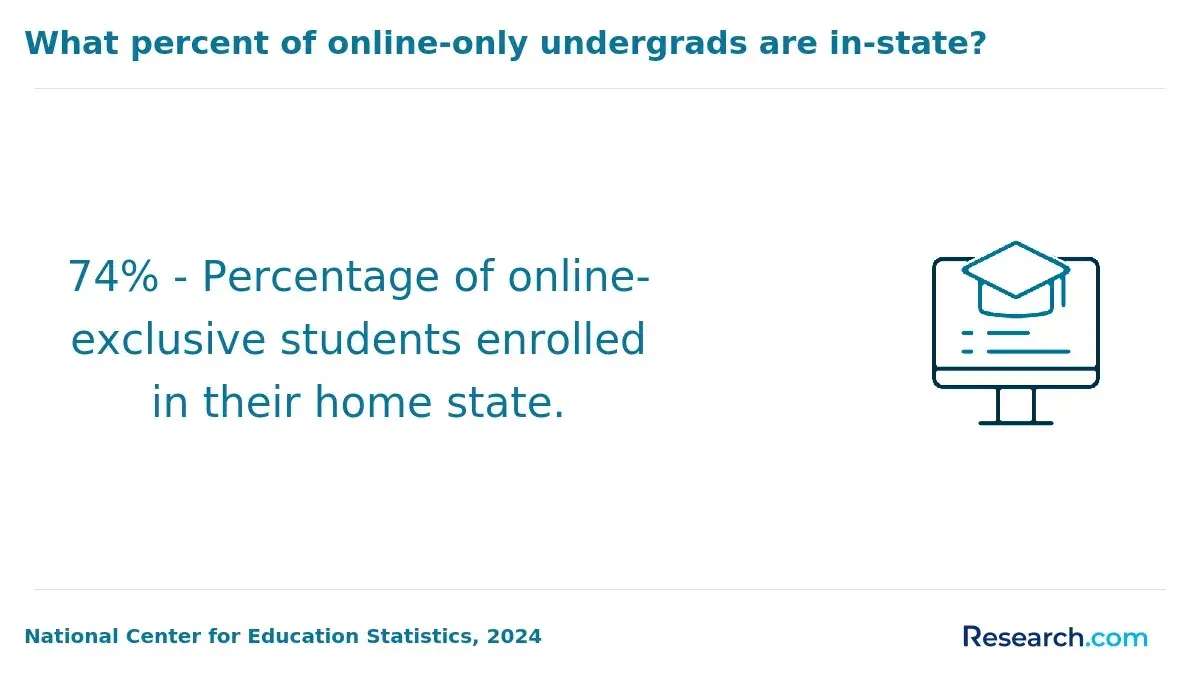
- Residency and location: Public universities may reserve some institutional funds for in-state students even when online tuition is available nationwide.
- Application deadline: Priority scholarship dates can occur before the general admission deadline.
- Financial need: Need-based university grants usually require a FAFSA and may require additional verification documents.
- Program participation: Some awards exclude accelerated sessions, specific online divisions, post-baccalaureate study, or graduate programs.
Creative writing applicants should also distinguish between an admissions portfolio and a scholarship portfolio. A portfolio sufficient for admission may not automatically enter you into a competitive scholarship review.
How Do You Apply for University Scholarships for an Online Creative Writing Degree?
Start scholarship work before submitting the final enrollment commitment. Some universities automatically consider admitted students for merit aid, but others require a general scholarship application, FAFSA, portfolio, recommendation letters, or separate departmental submission.
Use this sequence to avoid losing an award because of a missed requirement or an assumption that online admission triggers automatic consideration:
- Confirm that the online creative writing degree is institutionally accredited and that you are applying as a degree-seeking student.
- Ask admissions which scholarships are specifically open to online students in your entry term.
- Submit the admissions application early enough for priority scholarship consideration.
- File the FAFSA if you are eligible to do so, even when pursuing merit awards, because it can unlock need-based grants and federal aid.
- Complete the university's scholarship application and upload requested transcripts, essays, recommendations, or writing samples before the deadline.
- Read the award notice for the annual amount, number of terms, enrollment minimum, GPA requirement, and any conditions that can reduce the award.
- Request a written cost estimate showing tuition, mandatory fees, institutional grants, scholarships, federal aid, and any remaining balance.
Keep copies of submissions and award notices. If a scholarship description conflicts with an award letter, ask the financial aid office which document controls and request clarification before paying a deposit.
Are Scholarships for Online Creative Writing Degree Programs Renewable Every Year?
Some scholarships renew annually or by term, but renewal is never automatic unless the written terms say so. Renewable aid generally means the university intends to continue the award for a defined period if the student meets stated conditions; it does not mean the amount is permanently locked regardless of academic progress, enrollment, or institutional funding.
Review these renewal provisions carefully because they can change the total cost of a multi-year writing degree:
| Renewal condition | How it can affect an online student | Question to ask |
| Minimum cumulative GPA | A lower grade in a workshop or required literature course can place the award at risk | What GPA is required, and is there a probation or appeal process? |
| Enrollment intensity | Part-time terms may reduce or suspend an annual award | Is the scholarship prorated for less-than-full-time study? |
| Maximum terms or credits | Transfer credits, course repeats, or a changed major may affect remaining eligibility | How many terms and credits are covered? |
| Satisfactory academic progress | Withdrawing, failing, or not completing enough credits can affect several aid types | What completion pace and academic standards apply? |
| Annual application or FAFSA | Need-based and donor awards may require updated information each year | Must I reapply, submit FAFSA, or provide new documentation? |
A useful rule is to calculate two budgets: one assuming the scholarship renews and one assuming it does not. If the second budget is unaffordable, ask whether the school offers an appeal process, payment plan, or lower-cost completion path.
Can You Combine an Online Creative Writing Scholarship With FAFSA and Other Financial Aid?
In many cases, yes. Students may combine an institutional scholarship with FAFSA-based federal aid, state grants, outside scholarships, employer educational assistance, veterans' benefits, and payment plans. This is often called aid stacking, but each university decides how institutional awards interact with other resources and may adjust one form of aid when another is added.
Federal aid can be especially important for students with financial need. The maximum Federal Pell Grant for the 2024-25 award year was $7,395, although an individual student's eligibility depends on federal formulas, enrollment, program eligibility, and other circumstances.
Ask the financial aid office how these situations are handled before accepting an offer.
- Whether an outside scholarship first reduces loans, work-study, need-based grants, or the university scholarship.
- Whether institutional merit aid can be combined with a need-based institutional grant.
- Whether a scholarship is reduced for part-time online enrollment.
- Whether employer tuition benefits must be reported and how they change the aid package.
- Whether veterans' education benefits, military tuition assistance, or Yellow Ribbon participation affect university awards.
FAFSA does not itself award a university scholarship, but it supplies financial information that many colleges use for need-based institutional grants. File it early and compare the final aid notification—not only the scholarship advertisement.
This same aid-stacking review is useful when comparing fast track MSW programs online, where an accelerated calendar can change enrollment intensity and annual aid timing.
How Much Does an Online Creative Writing Degree Cost After Scholarships and Financial Aid?
Net cost is the amount you and your family may need to cover after grants and scholarships are applied to eligible educational charges. It is not the same as published tuition, and it is not necessarily the same as the balance due after loans, because loans must be repaid.
Estimate net cost using the school's actual credit requirement and your written financial aid offer. The calculation below separates gift aid from borrowing so you can see the remaining financial responsibility:
| Net-cost step | Example calculation | Why it matters |
| Total program tuition and mandatory fees | 120 credits × $350 = $42,000, plus $1,000 in required fees = $43,000 | Credit price alone can understate total billed costs |
| Subtract renewable university scholarships | $43,000 − $8,000 = $35,000 | Use only aid confirmed for your program and expected enrollment |
| Subtract grants that do not require repayment | $35,000 − $5,000 = $30,000 | Need-based grants can materially reduce out-of-pocket cost |
| Separate loans from gift aid | $30,000 remaining before loans | Loans may cover the balance but do not reduce the degree's eventual cost |
For graduate creative writing programs, calculate by the required credit total rather than by a single academic year. A lower per-credit rate can still produce a higher total if the program requires more credits, residencies, or fees.
Students exploring other career-oriented degrees can apply this same total-program calculation to the cheapest online master's in human resources program rather than comparing only one term's tuition.
Are There Scholarships for Transfer, Adult, Military, and Other Online Creative Writing Students?
Yes, but the relevant scholarship category may be different from the awards marketed to first-time, full-time students. Transfer, adult, military-affiliated, veteran, employer-sponsored, and returning students should look for university-wide completion awards, transfer merit scholarships, military grants, donor scholarships, and need-based institutional grants.
Transfer students should request a preliminary credit evaluation before judging an offer. A larger scholarship can lose value if fewer credits transfer and the student must pay for additional terms. For students who want the lowest-cost entry point, an associate's degree can also provide transferable general-education credits, provided the receiving university confirms how each course will apply.
The following student groups often need additional questions because their aid rules differ:
- Transfer students: Ask about the minimum transferable credits, the transfer GPA threshold, and whether a scholarship is based on admission GPA before or after transfer evaluation.
- Adult learners: Ask whether awards require full-time enrollment, a recent high school record, or participation in a traditional campus cohort.
- Military-affiliated students: Ask separately about military tuition rates, grants, tuition assistance, veterans' benefits, and whether they can be combined.
- International online students: Ask about institutional scholarship eligibility because FAFSA-based federal aid is generally not available to most noncitizens.
- Part-time students: Ask whether awards are prorated and whether taking fewer courses extends the scholarship's term limit.
Do not assume a military discount is a scholarship or that it renews under the same terms. It may be a tuition-rate policy rather than gift aid.
What Is the Difference Between Merit-Based and Need-Based Scholarships for Online Creative Writing Degrees?
Merit-based scholarships are awarded primarily for achievement, such as academic GPA, transfer performance, leadership, writing talent, or a portfolio. Need-based scholarships and institutional grants consider financial circumstances, often using FAFSA information and the college's own methodology. Either can reduce net cost, but they are evaluated differently and may have different renewal conditions.
This side-by-side view helps applicants decide which documents and deadlines deserve the most attention:
| Aid type | Primary basis | Common evidence | Typical renewal focus |
| Merit-based scholarship | Academic or creative achievement | Transcript, GPA, portfolio, audition-style review, essay | Minimum GPA, enrollment, satisfactory academic progress |
| Need-based institutional grant | Demonstrated financial need | FAFSA and possible verification documents | Updated financial information, enrollment, satisfactory academic progress |
| Departmental writing award | Creative work or program engagement | Writing sample, faculty recommendation, contest entry | Continued major, creative work, academic standing, funding availability |
Neither type is universally better. Merit aid can be more predictable when its renewal terms are clear, while need-based aid may be more valuable for a student with substantial financial need. The best offer is the one that produces the lower realistic net cost for the time you need to finish.
How Should You Compare Scholarship Offers From Online Creative Writing Degree Programs?
Compare written offers on a total-degree basis, using the same assumptions for credits, enrollment pace, scholarship renewal, fees, and transfer credit. The best scholarship value is not necessarily the largest award; it is the offer that leaves the lowest manageable cost while providing a credible program, suitable curriculum, and support for your goals.
Create a one-page comparison for each finalist program using the information below. This also gives you precise questions to take to admissions and financial aid staff.
- Total credits required after transfer evaluation and the tuition rate for those credits.
- Mandatory technology, course-material, residency, graduation, and other program-specific fees.
- Each scholarship's annual amount, term limit, restrictions, and whether it is guaranteed or competitive.
- Minimum GPA, enrollment intensity, program-major, and satisfactory-academic-progress requirements for renewal.
- Federal, state, institutional, employer, military, and outside aid that can be combined.
- Expected annual balance before loans and total projected borrowing if loans are needed.
- Accreditation, faculty access, writing workshop format, career services, and any in-person residency expectations.
Red flags include vague phrases such as "up to" without individual eligibility details, awards that apply only to the first term, and net-price estimates that omit fees or assume full-time attendance you cannot maintain. Also be cautious of a program that will not confirm whether online students can receive the award.
Program quality still matters alongside cost. Similar evaluation questions apply to accredited online speech pathology programs, where academic requirements and professional standards can affect the practical value of an apparently low-cost option.
Other Things You Should Know About Creative Writing
Requirements vary. Many undergraduate online programs accept students based on general admissions criteria and do not require a portfolio, while selective BFA, MA, and MFA programs often request fiction, poetry, nonfiction, or screenplay samples. Review genre, length, formatting, and deadline requirements carefully.
It can build skills in drafting, revision, critique, research, editing, and audience awareness that apply to writing, editing, communications, content, publishing, and related work. Outcomes depend on the student's portfolio, experience, networking, location, and job market; the degree alone does not guarantee publication or employment.
Possible paths include writer, editor, copywriter, content specialist, communications coordinator, grant writer, publishing assistant, and teaching-related roles with additional qualifications where required. The U.S. Bureau of Labor Statistics reported a 2024 median annual wage of $72,270 for writers and authors, but earnings vary widely by role, experience, industry, and employment arrangement.
A BA usually combines writing study with a broader liberal arts curriculum. A BFA generally emphasizes studio and workshop work. An MA may provide advanced academic or professional writing study, while an MFA is commonly the terminal creative writing degree and is often more portfolio-intensive. Choose based on curriculum, time commitment, cost, and whether you need an advanced credential for your intended path.
References
- Creative Writing BFA https://www.fullsail.edu/degrees/creative-writing-bachelor-degree-program
- The Ultimate List of Writing Scholarships in 2025 • Apply Today https://reedsy.com/resources/writing-scholarships/
- A Guide to Merit Scholarships + List of 25 Great Merit-based Scholarships https://www.collegeessayguy.com/blog/merit-scholarships
- 12 Best Colleges for Creative Writing [2023] | Outlier https://articles.outlier.org/best-colleges-for-creative-writing
- Different types of scholarship opportunities https://www.citizensbank.com/student/articles/different-types-scholarship-opportunities.aspx
- Top 210 Merit-Based Scholarships to Apply for in April 2026 https://bold.org/scholarships/by-type/merit-based/
- Ways to Pay for College: 5 Types of Merit-Based Scholarships - College Aid Pro https://collegeaidpro.com/ways-to-pay-for-college-5-types-of-merit-based-scholarships/
- 2025 Most Affordable Master's in Creative Writing Online https://www.onlineu.com/most-affordable-colleges/creative-writing-masters-degrees
- Online Master's in Creative Writing Degree Programs: MA vs MFA Programs https://www.mastersincommunications.com/related-degrees/masters-in-creative-writing
- Create Your Best 2025 with These Top MFA Creative Writing Programs https://www.onlinemastersdegrees.org/best-programs/fine-arts-mfa/creative-writing/