2027 Online Business Development & Sales Bachelor's Degree Completion Programs for Working Adults

Co-Founder and Chief Data Scientist
Finishing a bachelor's degree in business development and sales can change the kinds of roles a working adult can pursue, but the right path depends on transfer credits, schedule flexibility, accreditation, and total cost. Online degree completion programs are built for students who already have college credits and want to finish without starting over.
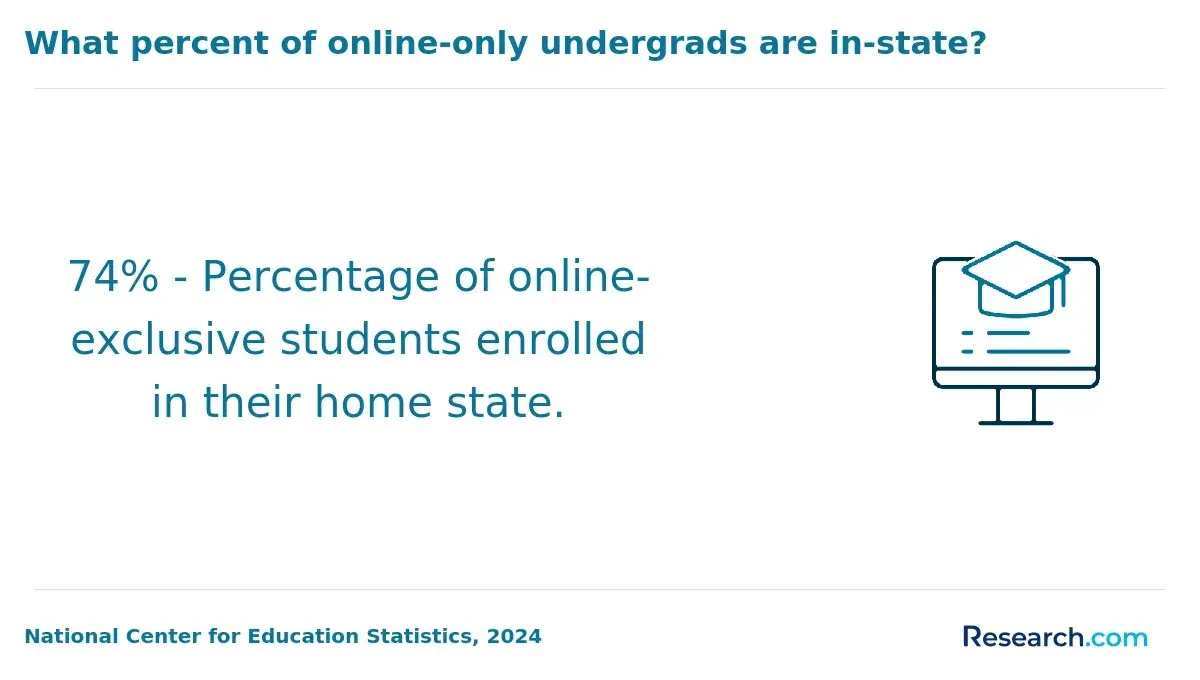
According to the National Center for Education Statistics, over 40% of adult learners enroll in online degree completion programs to balance work and study effectively. At the same time, transfer-credit rules, tuition models, and business-school accreditation vary widely. This guide explains how online business development and sales bachelor's completion programs work, who they serve, what they cost, how long they take, and how to compare programs before enrolling.
Key Benefits of Online Business Development & Sales Bachelor's Degree Completion Programs for Working Adults
- Programs offer flexibility through fully asynchronous coursework, allowing working adults to balance studies with demanding jobs without sacrificing current income.
- Students benefit from accelerated timelines, enabling graduation faster than starting a traditional four-year degree from scratch.
- Designed for credit transfer and prior learning recognition, these programs reduce redundancy, streamlining degree completion for career-changing professionals.
What Are Online Business Development & Sales Bachelor's Degree Completion Programs, and Who Are They Designed For?
Online business development and sales bachelor's degree completion programs are designed for adults who have earned college credits but have not completed a bachelor's degree. Instead of repeating lower-division coursework, students transfer eligible credits into a bachelor's pathway and focus on the remaining upper-division business, sales, marketing, leadership, and strategy courses.
According to the National Center for Education Statistics (NCES), more than 36 million Americans possess some college credits without a credential. These programs are commonly built for community college transfer students, military veterans, mid-career professionals, parents returning to school, and employees who need a bachelor's degree to qualify for promotion.
Who is a good fit?
- Adults with prior college credit: Students who have completed general education, associate degree, or previous bachelor's coursework may shorten the time and cost required to graduate.
- Working professionals: Online and asynchronous formats help students complete assignments around full-time work, travel, or caregiving responsibilities.
- Sales and business employees seeking advancement: A bachelor's credential can support movement into account management, sales management, business development, customer success, marketing, or operations roles.
- Military learners and veterans: Some programs evaluate military training, professional credentials, and ACE-recommended learning for possible credit.
Common features to compare
- Accelerated formats: Condensed terms can help motivated students move faster, although the workload may be intense.
- Transfer credit acceptance: The strongest completion programs clearly explain how credits transfer, how many credits may be applied, and which credits meet major requirements.
- Flexible delivery: Fully online and asynchronous courses are often the best fit for students with unpredictable schedules.
- Employer relevance: Programs should teach practical skills in prospecting, negotiation, CRM tools, market analysis, revenue strategy, relationship management, and sales leadership.
Working adults comparing flexible online education models may also review options such as the cheapest online SLP programs to understand how affordability, accreditation, and online delivery differ across fields.
How Do Online Business Development & Sales Degree Completion Programs Differ From Traditional Four-Year Business Development & Sales Bachelor's Degrees?
Online business development and sales degree completion programs are not simply traditional bachelor's degrees placed online. They are structured for students who already have college-level learning and need a faster, more transfer-friendly route to the credential.
| Comparison point | Degree completion program | Traditional four-year bachelor's degree |
| Typical student | Adult learner with prior credits, work experience, or military training | First-time college student or student starting near the beginning of the curriculum |
| Credit structure | Focuses on remaining major, upper-division, and graduation requirements | Covers the full curriculum, usually around 120 to 130 credits |
| Transfer emphasis | Built around transfer evaluation and degree mapping | May accept transfer credits, but the program is not always designed around them |
| Schedule | Often online, asynchronous, accelerated, or part time | Often follows standard semester sequencing and campus-based availability |
| Time to completion | Students transferring 60 credits can finish in 12 to 24 months | Generally takes about four years, depending on course load and transfer credits |
The biggest practical difference is efficiency. Completion programs try to prevent students from paying for coursework they have already completed. Traditional programs may provide a broader campus experience and more elective exploration, but they can be slower and less convenient for adults who need a direct route to graduation.
IPEDS data reveal notable cost differences between program types within the same institutions. Completion programs often charge a higher cost per credit hour, but because they require fewer credits overall, the total cost may be lower. Some schools further accommodate adult learners with flat-rate tuition or tiered pricing models.
When a completion program may be the better choice
- You already have substantial credits: Students with 60 or more college credits may benefit most from a completion pathway.
- You need schedule control: Asynchronous online courses may be more manageable than daytime campus courses.
- You want a career-focused curriculum: Many completion programs emphasize applied business development, sales analytics, communication, and management skills.
- You need to control cost: The key is not only the per-credit price but also how many credits the school accepts.
Students comparing business pathways may also review best bachelor degrees to get to see how bachelor's-level fields differ by career and earning potential.
Which Accredited Universities Offer the Most Affordable Online Business Development & Sales Bachelor's Degree Completion Programs?
Affordable online business development and sales completion programs usually combine three traits: recognized institutional accreditation, transparent online tuition, and generous transfer-credit rules. The lowest sticker price is not always the best value if the school accepts fewer credits or charges significant required fees.
- University of Central Florida: UCF lists one of the lowest in-state tuition rates at $212.94 per credit hour and $641.62 for out-of-state learners. The university is accredited by the Southern Association of Colleges and Schools Commission on Colleges (SACSCOC), and its business school holds AACSB accreditation, a business-school distinction that may matter to some employers and graduate programs.
- University of North Carolina at Pembroke: This program charges $217.50 per credit hour for residents and $742.50 for non-residents. The university is regionally accredited by SACSCOC, and its business programs have ACBSP accreditation, combining recognized academic oversight with online student support.
- Fort Hays State University: Fort Hays State University charges a flat tuition rate of $226.88 per credit hour regardless of residency. It is accredited by the Higher Learning Commission (HLC), and its business programs are accredited by ACBSP. Its transfer-credit acceptance and prior learning assessment options can help eligible students reduce time to completion.
- Western Carolina University: Western Carolina University charges $259.25 per credit hour in-state and $769.57 out-of-state. It is accredited by SACSCOC, and its business disciplines have ACBSP endorsement. The university emphasizes transfer flexibility and online advising for adult learners.
- Columbia College (Missouri): Columbia College charges a flat $370 per credit hour for online courses and holds HLC accreditation. It supports transfer credits up to 90 hours and recognizes military training, making it a practical option for veterans and students with previous college coursework.
How to judge affordability correctly
Do not compare programs only by per-credit tuition. Ask each school for a degree plan showing how many credits you must complete after transfer evaluation. A program with higher tuition may cost less overall if it accepts more transfer credits, applies military or professional learning, or avoids repeat coursework. Students focused primarily on cost can also compare options for the most affordable online business degree when evaluating related business pathways.
One professional who completed an online business development and sales bachelor's degree described transfer policy as the deciding factor. "The transfer policies were a game-changer-it allowed me to bring in most of my previous credits, which cut down both time and expense significantly," he reflected. He also noted that accreditation helped him feel confident that the degree would hold value after graduation. His experience highlights why adult learners should verify both price and academic recognition before enrolling.
How Many Transfer Credits Can Working Adults Apply Toward an Online Business Development & Sales Degree Completion Program?
Most online business development and sales bachelor's completion programs accept between 60 and 90 semester credit hours from previous coursework. The exact number depends on the institution, the accreditation status of the prior school, course equivalency, grades earned, major requirements, and residency rules that require students to complete a minimum number of credits at the degree-granting institution.
- Typical credit caps: Many programs accept 60 to 90 semester credit hours, which may cover around half or more of the bachelor's degree requirements.
- Credit evaluation: Schools review transcripts to determine whether previous courses match general education, elective, business core, or major requirements.
- Articulation agreements: Universities with community college partnerships often provide clearer transfer maps, reducing uncertainty for students entering with an associate degree.
- Transfer credit loss: Data from the U.S. Department of Education's transfer summit indicates students lose about 40% of eligible credits during the transfer process. Choosing programs with structured or guaranteed transfer pathways can help reduce this risk.
- Military and certification credits: Some programs award credit for military training and professional certifications recognized by the American Council on Education.
- Transcript evaluation: Students should request an official evaluation before committing to a program, not after enrollment.
Questions to ask before applying
- What is the maximum number of transfer credits accepted?
- How many credits must be completed through your institution?
- Will my credits count toward the major or only as electives?
- Do credits expire, especially business, technology, or statistics courses?
- Do you accept ACE-reviewed military, workplace, or certification learning?
- Can I receive a written degree-completion plan before enrollment?
Working adults should compare transferability and total tuition together. Resources discussing affordability in other degree-completion-oriented fields, such as criminal justice degree price, can help students understand how credit acceptance changes the real cost of finishing a degree.
What Are the Typical Admission Requirements for Online Business Development & Sales Bachelor's Degree Completion Programs?
Admission requirements vary, but most online business development and sales bachelor's completion programs expect applicants to have completed between 24 and 60 transferable credits from accredited colleges. Selective programs may require stronger academic records, while open or transfer-friendly programs may offer conditional pathways for students who need to complete prerequisites.
- Prior college credits: Many programs require a minimum number of transferable credits before students can enter upper-division coursework.
- GPA requirements: Applicants typically need a minimum cumulative GPA ranging from 2.5 to 3.0.
- Official transcripts: Students usually must submit transcripts from every college previously attended, even if they do not expect all credits to transfer.
- Foundational coursework: Some programs require introductory business, accounting, economics, statistics, communication, or marketing courses before admission to the major.
- Personal statement or resume: Some institutions ask applicants to explain career goals, professional background, or readiness for online study.
- Conditional admission: Students who fall below a GPA or prerequisite threshold may be admitted after completing specified courses or meeting academic performance conditions.
How to strengthen an application
Before applying, collect all transcripts, confirm whether prior institutions were accredited, and identify missing prerequisites. If your GPA is close to the cutoff, completing targeted courses at a community college and earning strong grades may improve your application and reduce the number of courses left after transfer.
One graduate described the admissions phase as stressful but manageable: "It was intimidating navigating the GPA threshold and ensuring all my transcripts were in order," she recalled. "However, taking a few targeted courses beforehand really boosted my confidence and my application's strength." Her experience reflects a common lesson for adult learners: preparation before applying can prevent delays after admission.
How Long Does It Take to Complete an Online Business Development & Sales Bachelor's Degree Completion Program as a Working Adult?
Completion time depends mainly on how many credits transfer, how many courses a student takes each term, and whether the program offers accelerated or year-round enrollment. Working adults should choose a pace they can sustain rather than assuming the fastest option is always the best option.
- Transfer credit effects: Students transferring approximately 90 credits, equivalent to three years of coursework, often complete their degree in about one year if enrolled full time. Those with 60 credits usually need around two years, while 30-credit transfers may take three years or longer depending on course load.
- Enrollment pace: Part-time enrollment at around 6 credits per semester generally results in completion within three to four years. Accelerated full-time programs requiring 12 or more credits per term, including summer sessions, can reduce this timeframe to 18-24 months.
- Two-course-per-semester model: Working adults often take two courses per semester, or 6 credits, to balance employment and academic progress. This pace commonly leads to graduation in three to four years when maintained continuously.
- Accelerated terms and competency-based options: Eight-week courses can help students earn credits faster, while competency-based models may allow experienced learners to progress after demonstrating mastery.
- Summer term enrollment: Summer courses can help students complete electives, prerequisites, or remaining general education requirements more quickly.
- Life commitments and employer support: Employer tuition assistance, predictable work schedules, and family support can shorten the path. Heavy travel, overtime, or caregiving responsibilities may extend it.
- Recent trends: According to the National Center for Education Statistics, in 2022 nearly 41% of bachelor's degree graduates were adults returning online to finish their studies.
Choosing a realistic pace
If you work full time, ask the program how many hours students typically spend each week per course. A lighter course load may cost less per term and reduce burnout, but it can delay graduation. A heavier course load may speed up completion, but only if your work schedule and personal responsibilities allow consistent study time.
What Financial Aid, Grants, and Employer Tuition Assistance Options Are Available for Online Business Development & Sales Completion Students?
Online business development and sales completion students may qualify for the same major aid categories as other eligible undergraduate students, provided the institution and program meet aid requirements. The most important first step is to confirm that the school is properly accredited and eligible for federal student aid.
- Federal Pell Grants: Eligible returning adults may receive need-based aid that does not require repayment.
- Direct Loans: Federal loans can help cover remaining costs, but students should borrow only what they need and understand repayment obligations.
- State grants: Some states provide grants for adults returning to college, transfer students, or residents completing high-demand degrees.
- Institutional scholarships: Colleges may offer awards for online learners, transfer students, military-affiliated students, or adults with financial need.
- Employer tuition assistance: Under IRS Section 127, employers can offer up to $5,250 annually in tax-free educational benefits to employees pursuing undergraduate degrees.
- Professional and nonprofit scholarships: Some awards support adult learners, business students, leadership development, or career advancement.
What to verify before enrolling
File FAFSA early, confirm transfer credits, and verify employer tuition benefits before enrolling. Ask your employer whether tuition assistance is paid upfront or reimbursed after grades are posted, whether you must earn a minimum grade, and whether you must remain employed for a set period after using the benefit.
Also ask the college for a full cost estimate that includes tuition, required fees, books, technology charges, and any prior learning assessment fees. Financial aid can reduce out-of-pocket cost, but it does not make an overpriced or poor-fit program a good decision.
How Does Per-Credit-Hour Tuition for Online Business Development & Sales Completion Programs Compare Across Accredited Institutions?
Per-credit-hour tuition for online business development and sales bachelor's degree completion programs at accredited institutions nationally averages between $400 and $550, based on NCES and IPEDS data. For students entering with 60 or 90 transfer credits, total tuition costs typically range from $24,000 to over $50,000, depending on the institution's pricing and the number of credits still required for graduation.
Because completion students bring different amounts of credit, per-credit tuition is only one part of the cost calculation. A student who transfers more usable credits may pay less overall even at a higher per-credit rate.
| Example institution | Per-credit tuition | Illustrated total cost |
| University A | $350/credit hour | $21,000 (60 transfer credits) |
| College B | $525/credit hour | $31,500 (60 transfer credits) |
| University C | $475/credit hour | $42,750 (90 transfer credits) |
| College D | $400/credit hour | $28,000 (60 transfer credits) |
Ancillary fees can change the final bill substantially. Common added costs include technology fees of $15-$50 per credit hour, graduation fees that may exceed $200, proctoring fees around $30 per exam, and annual textbook expenses averaging $1,200.
- Ancillary fees impact: Mandatory technology, proctoring, and course fees may increase total costs by 10-20%.
- Credit hour requirements: Programs requiring more than the standard 120 credit hours can cost more even when the per-credit rate looks attractive.
- Transfer credit policies: The more credits accepted toward actual degree requirements, the fewer credits students must pay to complete.
- Total cost focus: Students should compare the total remaining cost to graduate, not only the advertised tuition rate.
Working adults comparing graduate and undergraduate online pricing may also find resources such as one year online MBA programs no GMAT useful for understanding how tuition models, admissions policies, and program formats affect cost.
What Prior Learning Assessment and Credit-by-Exam Options Exist in Online Business Development & Sales Degree Completion Programs?
Prior learning assessment, often called PLA, can help experienced adults earn academic credit for college-level learning gained outside a traditional classroom. Policies vary significantly, so students should confirm accepted options, credit limits, fees, and how credits apply to the degree.
- CLEP and DSST exams: Many online business development and sales bachelor's completion programs accept standardized exam credit for approved subjects. These exams can reduce the number of required courses when scores meet institutional standards.
- Portfolio review: Some institutions allow students to submit documented evidence of professional experience, training, projects, presentations, or workplace learning. Faculty or trained evaluators determine whether the evidence meets college-level outcomes.
- ACE credit recommendations: The ACE credit recommendation service can support credit for military training, corporate training, and other evaluated learning experiences.
- Military training: Veterans and service members may receive credit when training aligns with academic requirements and institutional policy.
- Professional certifications: Some schools evaluate business, sales, project management, technology, or leadership credentials for possible credit.
The most expansive PLA policies accept upwards of 30 to 60 credits from various prior learning options. This can significantly reduce tuition and time to graduation, but credits may apply as electives rather than major requirements. That distinction matters: elective credit can help reach the total credit count, while major credit can replace required business development and sales coursework.
How to prepare for PLA review
- Gather certificates, training records, licenses, exam score reports, military transcripts, and job descriptions.
- Ask whether PLA credits count toward residency requirements.
- Confirm whether PLA credits affect financial aid enrollment status.
- Request written confirmation of how credits will apply before enrolling.
Students comparing affordability across degree types may review the cost of MLIS degree US as a broader example of how credit policies and tuition structures affect online education planning.
How Do Asynchronous Schedules in Online Business Development & Sales Programs Accommodate Full-Time Working Professionals?
Asynchronous online programs allow students to complete coursework without attending live class meetings at fixed times. This format is often the most practical option for full-time professionals, shift workers, parents, military learners, and students who travel for work.
- Fully asynchronous delivery: Students complete readings, recorded lectures, assignments, discussions, quizzes, and exams within weekly deadlines rather than at scheduled class times.
- Comparison of formats: Synchronous courses require real-time attendance, which can be difficult for students with changing work schedules. Hybrid models add some structure and interaction but reduce flexibility.
- Eight-week terms: Many institutions use eight-week courses, allowing students to focus on fewer subjects at a time while continuing to make steady progress.
- Time management: Successful students set weekly study blocks, track deadlines, and begin major assignments early rather than waiting until the end of the term.
- Digital tools: Calendar apps, learning management systems, cloud documents, discussion boards, recorded lectures, and collaboration platforms help students stay organized.
What flexibility does not mean
Asynchronous does not mean self-paced unless the program specifically says so. Most courses still have weekly deadlines, participation requirements, exams, group projects, and instructor expectations. Before enrolling, ask whether tests require proctoring, whether group work includes live meetings, and whether any courses require scheduled presentations.
What Concentrations and Career Tracks Are Available Within Online Business Development & Sales Degree Completion Programs?
Online business development and sales bachelor's completion programs may offer concentrations that align with different career goals. These specializations are commonly built into the standard 120-credit curriculum, so students can often specialize without adding extra time or cost. Availability varies by institution.
- Sales Management: This track emphasizes team leadership, sales operations, customer relationships, forecasting, performance management, and sales data analysis. Graduates often pursue roles such as sales manager or account executive, with median salaries near $126,000 and robust job growth according to the U.S. Bureau of Labor Statistics.
- Business Development: This concentration focuses on market expansion, partnerships, strategic planning, lead generation, and revenue growth. Career options include business development manager and market research analyst, with median pay around $70,000 to $80,000 and consistent demand.
- Digital Marketing: Coursework may cover social media strategy, e-commerce, online advertising, analytics, and digital sales funnels. Graduates may pursue roles such as digital marketing specialist or e-commerce manager, and certifications such as Google Ads or HubSpot may strengthen employability.
- Entrepreneurship: This path focuses on venture creation, innovation, business planning, financing, and small business operations. It can support startup founders, small business owners, and professionals working in growth-focused roles.
- Professional Certifications: Some pathways help students prepare for credentials such as Certified Professional Sales Person (CPSP) or Project Management Professional (PMP), which can complement the bachelor's degree.
How to choose a concentration
Choose based on the job you want next, not only the title that sounds most appealing. Sales management is better for students who want to lead teams. Business development fits students interested in partnerships and growth strategy. Digital marketing suits students focused on online customer acquisition. Entrepreneurship works best for students planning to build or manage a venture.
What Graduates Say About Online Business Development & Sales Bachelor's Degree Completion Programs for Working Adults
- : "Completing the online Business Development & Sales degree truly exceeded my expectations, especially because the program's accreditation gave me confidence in the quality of education I was receiving. The clear transfer credit policies made it simple to apply my previous coursework, saving me time and money. I also appreciated how the flexible structure allowed me to balance work and study effectively. — Romeo"
- : "Reflecting on my journey, the tuition model of the Business Development & Sales program was a game-changer-it was affordable without compromising the comprehensive curriculum. Prior learning assessments acknowledged my professional experience, accelerating my path to graduation. This degree has opened doors at my company, enhancing both my role and earning potential. — Aidan"
- : "From a professional standpoint, the structured online format combined with strong accreditation standards assured me of a solid foundation in business principles. I valued the generous transfer credit policy, which meant my previous credits were recognized and I could graduate faster. The program's focus on employer outcomes motivated me, and now I'm seeing tangible career growth thanks to the skills I gained. — Luke"
Other Things You Should Know About Business Development & Sales Degrees
Employers and academic institutions increasingly recognize online business development and sales degrees, especially as technology advances and remote learning becomes more prevalent. Accreditation and the institution's reputation are key factors. Graduates from reputable programs often find ample career opportunities and acceptance into graduate programs.
Many online business development & sales completion programs offer dedicated academic advising, tutoring, and career counseling tailored for working adults. Students typically have access to virtual writing centers, discussion forums, and one-on-one sessions with advisors to help balance coursework with professional responsibilities. Career services often include resume reviews, interview preparation, and job placement assistance specific to sales and business development fields.
Some institutions have introduced flat-rate tuition or subscription-based models allowing students to pay a fixed fee for unlimited courses during a set term. This can benefit working adults by providing financial predictability and accelerating degree completion. However, availability varies widely between schools, so it is important to confirm tuition structures when researching programs.
References
- Asynchronous Work - A Detailed Guide https://4dayweek.io/schedule/asynchronous-work
- Average Cost per Credit Hour & College Class: 2026 Data https://educationdata.org/cost-of-a-college-class-or-credit-hour
- Online Tuition and Costs https://www.usd.edu/Admissions-and-Aid/Tuition-and-Costs/Online-Tuition-and-Costs
- Finish an online Bachelor's degree in business management https://www.trevecca.edu/academics/program/business-bs-adult
- Online MBA Scholarships: Guide to Funding, Sponsorships, Financial Aid for Working Professionals https://ebsedu.org/blog/online-mba-scholarships-for-working-professionals/
- Online Business Degree Completion | University of Olivet https://www.uolivet.edu/program/online-business-degree-completion/
- Adult Studies Admission https://www.desales.edu/admissions/adult-studies-admission
- Online Sales Degree Programs https://www.academicinfo.net/sales/
- Best Accredited Online Universities in 2025 https://www.study.eu/article/best-accredited-online-universities
- Credit By Examination FAQs https://www.fullsail.edu/about/faqs/credit-by-examination