2027 Online BFA (Bachelor of Fine Arts) Bachelor's Degree Completion Programs for Working Adults

Co-Founder and Chief Data Scientist
Many working adults face the dilemma of balancing career demands while completing their bachelor's degree in fine arts. Interruptions in education often lead to diminished income potential and limited career advancement. Studies show that online bfa bachelor's degree completion programs have grown 25% in enrollment over the past five years, reflecting their rising importance for nontraditional students. These programs provide flexible, accredited pathways tailored to those with prior college credits who need a clear route to graduation. This article explores key factors such as transfer policies, tuition models, and employer outcomes to help readers find the program best suited to their individual needs.
Key Benefits of Online BFA (Bachelor of Fine Arts) Bachelor's Degree Completion Programs for Working Adults
- Online bfa bachelor's degree completion programs offer flexible schedules tailored for working professionals, allowing enrollment without conflicting with full-time employment.
- Fully asynchronous coursework enables learners to study at any time, preserving income by avoiding course attendance conflicts with demanding work commitments.
- These programs often accelerate graduation by awarding transfer credits and focusing on degree completion, avoiding the time investment of restarting a traditional four-year degree.
What Are Online BFA (Bachelor of Fine Arts) Bachelor's Degree Completion Programs, and Who Are They Designed For?
Online bfa (Bachelor of Fine Arts) bachelor's degree completion programs offer a specialized path for adults who have earned some college credits but have not yet completed their degree. Unlike traditional bachelor's programs that start with a full four-year curriculum, these programs build on prior academic work to help students efficiently finish their bachelor's degree requirements.
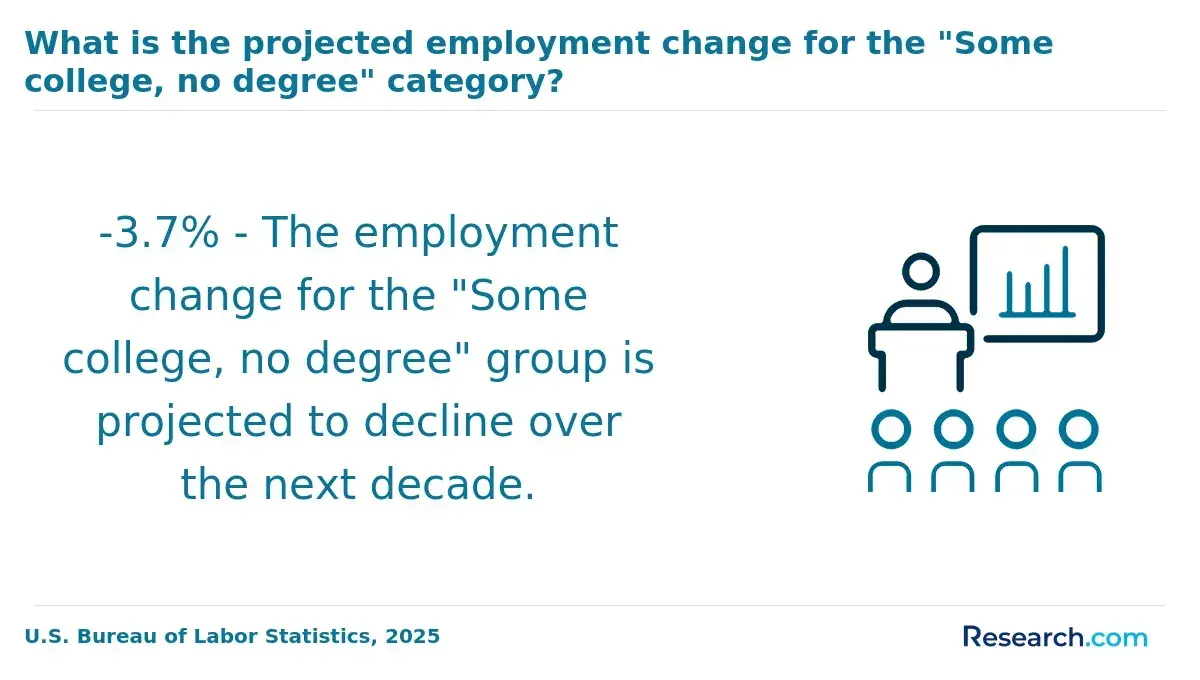
According to the National Center for Education Statistics (NCES), millions of Americans have some college experience but no credential, highlighting a large demographic seeking flexible ways to complete their education. This makes online bfa bachelor's degree completion programs for working adults particularly relevant for those balancing career and personal commitments.
Such programs are tailored to adult learners with distinct features:
- Accelerated Format: Focuses on completing remaining coursework faster by eliminating redundant classes, enabling learners to progress while managing other responsibilities.
- High Transfer Credit Acceptance: Recognizes previously earned credits and professional experience to reduce time and cost needed for degree completion.
- Flexible Delivery: Offers online or hybrid instruction, allowing access nationwide without relocating or following rigid schedules.
- Growing Employer Demand: As bachelor's degrees become prerequisites for many jobs, these programs provide a practical avenue for professionals to meet changing workforce expectations.
Working adults exploring options might consider online colleges that accept FAFSA as a resource to find affordable choices. These best online bfa degree completion programs for adult learners facilitate degree attainment while respecting diverse professional and financial circumstances.
How Do Online BFA (Bachelor of Fine Arts) Degree Completion Programs Differ From Traditional Four-Year BFA (Bachelor of Fine Arts) Bachelor's Degrees?
Online bfa degree completion programs for working adults offer a distinct pathway compared to traditional four-year bfa programs, primarily for students transferring 60 or more credits. They streamline degree requirements to focus on the last 60 credits, reducing redundant coursework common in standard programs.
- Credit Requirements: Completion programs accept a larger number of transfer credits, often requiring fewer total credits than the typical 120 to 130 needed in traditional bachelor's degrees. This approach enables faster progress for students with prior college experience.
- Curriculum Sequencing: Unlike standard programs with fixed sequences of general education, foundational art courses, and majors, completion programs often waive general education requirements. They integrate competency-based assessments or life-experience credits, allowing advancement based on skills demonstrated rather than seat time. This curriculum mapping caters especially well to adult learners balancing multiple responsibilities.
- Time to Completion: With flexible, asynchronous online formats, these programs typically enable degree completion in two years or less, significantly shorter than the usual four-year path.
- Cost Structure and Credit Hour Pricing: IPEDS data indicates that cost per credit hour in completion programs tends to be more competitive, reflecting streamlined administration.
- Some institutions offer flat-rate tuition per term or discounted fees for students transferring many credits.
A key trade-off is between accelerated, cost-effective degree completion and the immersive campus experience offered by traditional four-year bfa programs. Completion programs emphasize practical, portfolio-driven coursework aligned with industry needs, accommodating diverse learners including community college transfers and military veterans through flexible credit transfer policies and recognition of prior learning.
Prospective students should consider their career goals and personal schedules when choosing between these pathways. For those seeking one of the least expensive online masters or bachelor's completion options, these models offer a targeted route to finishing a bfa degree without repeating mastered content.
2026 Update: Studio Access and Portfolio Expectations
For 2026, this section adds a closer look at how online BFA completion programs handle hands-on creative work, portfolio development, and remote critique formats for working adults.
- Whether studio courses can be completed fully online or require short campus visits, exhibitions, or supervised workshops.
- What materials, equipment, software, or camera setup students must provide before enrolling in studio-intensive courses.
- How critiques are delivered, such as live video sessions, recorded presentations, peer reviews, or faculty feedback boards.
- Whether the program helps students build a professional portfolio for employment, graduate school, freelance work, or exhibitions.
- How capstone projects are reviewed and whether students receive guidance on artist statements and documentation.
- Whether course deadlines are flexible enough for adults balancing creative production with full-time work or family responsibilities.
Checking these details helps students choose a program that fits not only their schedule, but also the practical realities of making, presenting, and refining studio work online.
Which Accredited Universities Offer the Most Affordable Online BFA (Bachelor of Fine Arts) Bachelor's Degree Completion Programs?
Programs with the lowest tuition typically feature flat per-credit fees regardless of residency, accept extensive transfer credits, and accommodate adult learners through flexible scheduling and prior learning credit options. Meanwhile, mid-priced programs generally follow traditional state residency pricing models.
Across all, regional accreditation ensures academic quality, but affordability and flexibility distinguish the most accessible options.
- Fort Hays State University: Charges a flat tuition rate of $258.67 per credit hour for all online students regardless of residency. Its BFA degree completion program is regionally accredited by the Higher Learning Commission (HLC) and offers asynchronous courses with flexible deadlines tailored for working adults.
- Appalachian State University: Tuition is $326 per credit hour for in-state and $726 for out-of-state students. Accredited by the Southern Association of Colleges and Schools Commission on Colleges (SACSCOC), Appalachian State's program balances practical studio practice with liberal arts education. Transfer students may apply up to 90 credits toward degree completion, which helps lower overall costs.
- California State University, Fullerton: Offers an online BFA with $396 per credit for California residents and $1,011 for non-residents. The university holds accreditation from the WASC Senior College and University Commission (WSCUC). Their program integrates artistic techniques with critical theory while providing clear pathways for transfer credits.
- University of North Texas: Applies a single flat rate of around $400 per credit hour for all online students, without residency distinctions. Accredited by SACSCOC, this program is nationally recognized for its arts curriculum and supports prior learning assessments and generous transfer policies to improve affordability.
- University of Massachusetts Amherst: Charges $450 per credit for in-state and $992 for out-of-state students. The institution is accredited by the New England Commission of Higher Education (NECHE). Its online BFA completion track emphasizes robust faculty mentorship and thorough portfolio development to prepare students professionally.
How Many Transfer Credits Can Working Adults Apply Toward an Online BFA (Bachelor of Fine Arts) Degree Completion Program?
Transfer credit limits for online bfa degree completion programs often range from 60 to 90 semester hours, helping students apply prior college coursework toward their degree. Each institution performs a thorough credit equivalency evaluation to ensure transferred courses match the academic level and content required in their bfa programs.
Formal partnerships, or articulation agreements, between community colleges and four-year universities improve the transfer process by clarifying which credits will be accepted.
- Credit Caps: Institutions set maximum transferable credits, typically between 60 and 90 semester hours, to maintain program integrity while allowing substantial prior learning recognition.
- Credit Evaluation: Schools carefully assess official transcripts to verify that transfer credits fulfill bfa degree requirements and academic standards.
- Articulation Agreements: Seamless credit transfers are enabled through agreements that reduce lost credits and simplify degree pathways for working adults.
- Credit Loss Risk: The U.S. Department of Education reports students lose about 40% of credits when transferring; selecting programs with guaranteed or structured transfer policies is crucial.
- Military and Certification Credits: Transfer-friendly bfa programs often accept ACE-recommended military training and professional certification credits, benefiting veterans and professionals.
- Transcript Evaluation: Requesting an official evaluation before enrolling helps students understand how many credits will transfer and avoid surprises.
Working adults considering the maximum transfer credits allowed in online bfa completion programs should also research flexible options and compare institutions to find the best fit. For those exploring prior credits, options like easy associate degrees that pay well can offer valuable stepping stones to a seamless degree progression.
What Are the Typical Admission Requirements for Online BFA (Bachelor of Fine Arts) Bachelor's Degree Completion Programs?
Admission requirements for online BFA (Bachelor of Fine Arts) degree completion programs generally emphasize prior college coursework, academic performance, and a portfolio of creative work. Most programs require applicants to have an associate degree or transferable college credits, along with official transcripts and a minimum GPA, often around 2.5.
Additionally, applicants usually must submit a portfolio showcasing their artistic skills, and some programs may request a personal statement or letters of recommendation.
- Transfer Credit Requirements: Programs generally expect applicants to have completed between 24 and 60 semester credit hours from accredited colleges. This prerequisite ensures students bring foundational academic experience before focusing on advanced bfa coursework.
- GPA Standards: A cumulative GPA of around 2.5 to 3.0 is typical, though some highly selective programs may require a higher GPA to ensure readiness. Certain institutions provide conditional admission for candidates just below the threshold, offering additional support to help them succeed.
- Required Documentation: Submission of official transcripts from every postsecondary institution attended is mandatory. Additionally, many programs ask for a personal statement or an artistic portfolio to evaluate candidates' creative strengths and alignment with fine arts study.
- Prerequisite Coursework: Completion of introductory subjects like drawing, design, or art history is often necessary. Prospective students lacking these foundational classes are advised to take prerequisite courses at community colleges to improve their application viability.
- Admissions Approach: Open-admission programs tend to accept most qualified transfer students with fewer entry barriers but may offer limited academic advising. Conversely, selective programs set higher admission standards and usually provide more comprehensive support and recognition upon graduation.
How Long Does It Take to Complete an Online BFA (Bachelor of Fine Arts) Bachelor's Degree Completion Program as a Working Adult?
Completion time for an online bfa degree varies significantly based on previously earned credits and course scheduling. Students transferring with 90 credits may only need around 30 more to graduate, potentially finishing in about one academic year. Those with 60 transfer credits might require 18 to 24 months, while those with 30 credits typically need up to three years, especially when balancing work and life responsibilities.
- Transfer Credit Influence: More credits transferred mean fewer required course hours, directly shortening overall completion time, with 90 credits often leading to graduation within 12 to 18 months.
- Part-Time vs Accelerated: Enrolling part-time at six credits per semester usually extends degree length but allows better work-life balance. Accelerated paths offering 12 or more credits or compressed eight-week courses enable quicker progression.
- Competency-Based Options: Some programs advance students based on demonstrated mastery instead of seat time, which can significantly hasten degree completion.
- Summer and Intersession Courses: Taking advantage of summer terms helps maintain steady credit accumulation year-round, reducing overall time to finish.
- Realistic Professional Pace: Working adults enrolling in two courses per semester commonly finish within two to three years when transferring 60 credits, but life events and job demands may extend this timeframe.
Recent studies reveal more than 35% of bachelor's degree completers now select online or hybrid formats, reflecting a growing preference for flexible learning models that accommodate busy schedules and professional commitments.
What Financial Aid, Grants, and Employer Tuition Assistance Options Are Available for Online BFA (Bachelor of Fine Arts) Completion Students?
Federal Pell Grants and Direct Loans continue to provide essential funding for eligible adult learners returning to complete their bachelor of fine arts degrees online. These federal aid options are need- and enrollment-based, making them foundational resources for working adults balancing education and career commitments.
Many states offer grants specifically aimed at adult students resuming their education, often focusing on high-demand fields like fine arts. Researching your state's higher education agency can uncover targeted programs that help reduce tuition costs and encourage degree completion.
Colleges and universities increasingly award institutional scholarships to non-traditional and degree completion students, recognizing academic merit, financial need, or artistic talent. These scholarships can significantly ease tuition burdens and fees.
Employer tuition assistance programs are valuable for working adults pursuing a bachelor of fine arts degree. Under IRS Section 127, employers may contribute up to $5,250 annually tax-free toward undergraduate education expenses, including tuition, fees, and course materials.
Confirm with your employer if such benefits are available to you.
- Federal Aid Access: Complete the FAFSA to determine eligibility for Pell Grants and Direct Loans that support adult learners completing their bachelor of fine arts degrees.
- State Grants: Investigate your state's financial aid programs tailored to returning adult students in fine arts fields to find specialized grant opportunities.
- Institutional Scholarships: Apply for college-specific awards focused on non-traditional and degree completion students to reduce tuition costs.
- Employer Assistance: Request an employer tuition benefit agreement leveraging IRS Section 127 tax-free allowances of up to $5,250 annually for undergraduate education expenses.
Additionally, nonprofit organizations and arts foundations often offer scholarships and fellowships geared toward adult learners returning to complete their bfa degrees. These awards typically emphasize artistic achievement, community service, or specific career goals in the arts sector.
How Does Per-Credit-Hour Tuition for Online BFA (Bachelor of Fine Arts) Completion Programs Compare Across Accredited Institutions?
Per-credit-hour tuition rates for online bfa completion programs vary widely across accredited institutions. Based on NCES and IPEDS data, the national average cost per credit hour for these programs is roughly $420. This benchmark aids in assessing the competitiveness of individual programs but should not be the sole factor in tuition cost comparison for accredited online bfa bachelor's degree studies.
Total program costs depend heavily on credit requirements after transfer credits are applied. For example, a program charging $350 per credit hour with 120 credits needed may cost more overall than one charging $450 per credit but accepting up to 90 transfer credits, reducing the credits a student must purchase.
Ancillary fees are also important to consider. These include technology fees, proctoring charges, online course material costs, and graduation fees, many of which are not included in advertised per-credit rates.
These additional expenses can substantially increase the total amount students pay to complete their degree.
- Tuition Variability: Rates differ based on institutional type, regional factors, and public versus private status, causing wide cost variation even among similarly accredited programs.
- Total Credit Requirements: Programs requiring more total credits can be more expensive overall despite lower per-credit-hour rates, so transfer flexibility impacts final cost significantly.
- Ancillary Costs: Extra fees for technology, proctoring, and materials can add several thousand dollars, underscoring the need to review full fee schedules when budgeting.
- Transfer Flexibility: Generous transfer credit policies reduce the number of credits needing payment, often providing the best financial value for adult learners.
For working adults finishing their degree, prior learning options and careful program comparison ensure smarter financial decisions. For those interested in communication degrees with similar online flexibility, consider exploring an online master's in communications to complement creative or fine arts credentials.
What Prior Learning Assessment and Credit-by-Exam Options Exist in Online BFA (Bachelor of Fine Arts) Degree Completion Programs?
Online BFA (Bachelor of Fine Arts) degree completion programs often offer prior learning assessments and credit-by-exam options to help students earn credit for existing knowledge and skills. Common methods include portfolio reviews, where students submit creative work for evaluation, and standardized exams such as CLEP or DSST for applicable general education courses.
These options allow learners to reduce the number of required courses, accelerating progress toward their degree while leveraging professional or artistic experience.
- Credit-by-Exam Options: Many online bfa programs for working adults provide credit-by-exam opportunities like CLEP and DSST exams, which allow students to demonstrate mastery of subjects and earn college credits without taking traditional courses. These exams help reduce time to graduation by converting prior knowledge into transferable credits.
- Portfolio Assessment: Some schools offer portfolio assessment policies enabling students to submit creative work, professional projects, or documented skills for academic credit. The scope of acceptable evidence and maximum credits awarded vary, with top programs accepting comprehensive art portfolios and detailed project documentation.
- ACE Credit Evaluations: The American Council on Education (ACE) credit recommendation system plays a vital role for military veterans and those with corporate training. Institutions that recognize ACE credits accept documented military training and professional development, making prior learning more accessible.
- Maximum Credit Acceptance: Leading online bfa completion programs accept up to 90 credits toward degree requirements through prior learning assessment (PLA), including transfer credits, exams, and portfolio review. This flexibility significantly benefits community college transfers and mid-career professionals targeting degree completion.
- Documentation and Submission: To maximize PLA benefits, students should carefully document all prior learning, including transcripts, certificates, work samples, and training evaluations. Programs typically require detailed submission portfolios and official exam scores, which should align with the institution's evaluation criteria.
Working adults considering an environmental engineering degree or other STEM or design-related fields will find similar PLA policies, illustrating how structured prior learning assessment options expedite degree completion across disciplines.
How Do Asynchronous Schedules in Online BFA (Bachelor of Fine Arts) Programs Accommodate Full-Time Working Professionals?
Asynchronous schedules in online BFA (Bachelor of Fine Arts) programs allow full-time working professionals to access lectures, assignments, and studio exercises at times that fit their personal schedules. This flexibility makes it possible to balance work, creative practice, and coursework without attending live classes.
By enabling self-paced progress, these programs help learners steadily advance toward their degree while maintaining full-time employment.
- Fully Asynchronous Delivery: Online bfa completion programs that use fully asynchronous formats allow students to complete assignments, participate in discussions, and take assessments anytime within set deadlines. This flexibility supports learners across all time zones and accommodates varied work schedules without requiring live attendance.
- Comparison to Other Formats: Programs with synchronous sessions require attendance at fixed times, which may challenge shift workers, travelers, and caregivers. Hybrid models blend live and asynchronous elements, offering some flexibility but still imposing scheduled commitments that can conflict with unpredictable routines.
- Eight-Week Terms: Certain institutions employ accelerated eight-week course terms, limiting student course loads and enabling focused study periods. This format helps balance academic and professional responsibilities, making it easier to manage workloads for busy adults.
- Time Management Strategies: Successful online learners emphasize the importance of setting consistent study schedules, prioritizing tasks, and breaking assignments into manageable parts. Using digital calendars and reminder apps helps maintain deadlines and reduce last-minute work.
- Digital Tools: Tools like task managers, note-taking applications, and collaboration platforms enhance organization and engagement. Students report higher productivity by integrating these resources to track progress and communicate with peers and instructors irrespective of time constraints.
What Concentrations and Career Tracks Are Available Within Online BFA (Bachelor of Fine Arts) Degree Completion Programs?
Online bfa bachelor's completion programs commonly embed concentrations within the typical 120-credit curriculum, helping students avoid extra coursework, reduce costs, and graduate on schedule. These options suit working adults balancing education with other responsibilities.
Below are prevalent concentration tracks paired with relevant careers and Bureau of Labor Statistics (BLS) insights.
- Graphic Design: Concentrates on branding, digital media, and user experience, preparing graduates for graphic design roles. Median salaries near $53,380 reflect steady demand primarily in marketing and technology sectors.
- Animation and Visual Effects: Focuses on 3D modeling and motion graphics, leading to careers as animators or multimedia artists. BLS data shows a median annual wage around $77,700 with faster than average job growth.
- Studio Art and Painting: Emphasizes traditional fine arts such as painting and sculpture, suited for artists, educators, or gallery professionals. Earnings vary significantly depending on success and teaching opportunities.
- Art Education: Prepares students for teaching credentials and licensure exams, enhancing job security. Median pay for art educators is about $61,820, reflecting competitive salaries in education.
- Photography: Covers technical and editing skills for commercial or journalistic photography roles, with median wages near $41,280. Employment growth aligns with media industry trends.
Choosing a concentration should balance personal passion and favorable labor market outcomes. Concentrations integrated into standard credit requirements help avoid delays and extra expenses.
Licensure-focused tracks like art education offer additional professional advantages beyond the degree itself.
What Graduates Say About Online BFA (Bachelor of Fine Arts) Bachelor's Degree Completion Programs for Working Adults
- Kian: "The online BFA program's clear structure and rigorous accreditation gave me confidence right from the start. I appreciated how seamlessly my previous college credits transferred, which saved me both time and money. This degree truly enhanced my artistic skills and gave me new career opportunities in graphic design that I hadn't imagined possible."
- Leonard: "Reflecting on my experience, the program's flexible tuition options and prior learning assessments made completing my bfa achievable alongside a full-time job. The accreditation ensured the degree was respected by employers in the creative industries, which helped me secure a better position. Overall, it was a practical and rewarding path to finish what I started academically."
- David: "As a working professional, I found the transfer credit policy to be incredibly beneficial, allowing me to capitalize on my previous coursework without repeating material. The program's alignment with industry standards assured me that the skills I gained were relevant and job-ready. Graduating with an online BFA has elevated my portfolio and opened doors for freelance projects and collaborations."
Other Things You Should Know About BFA (Bachelor of Fine Arts) Degrees
Online BFA programs with strong job placement rates often have partnerships with industry professionals, robust career services, and alumni networks. Institutions may vary, but schools with comprehensive support systems and internship opportunities generally position graduates better in the job market.
Most online bfa completion programs offer dedicated academic advisors to help students navigate course selection and degree requirements. Additional resources often include virtual tutoring, portfolio reviews, and career counseling tailored for artists. These services accommodate working adults' schedules, enabling them to balance studies with professional commitments.
Some online bfa completion programs provide flat-rate tuition per term or subscription-based pricing to help students better manage costs. These models allow unlimited course enrollment within a period, which benefits students aiming to accelerate their degree completion. However, many programs still use traditional per-credit pricing, so it is essential to review tuition structures carefully.
References
- 5 Best Online Art Degrees | Find Affordable Options https://www.affordablecollegesonline.org/degrees/art-schools/
- What is the difference between a B.A. and a BFA? - RMCAD https://www.rmcad.edu/blog/what-is-the-difference-between-a-b-a-and-a-bfa/
- Admissions : Online Tuition | Full Sail University https://www.fullsail.edu/admissions/tuition-online
- What is a Bachelor of Fine Arts (BFA)? Syllabus, Subjects, Scope & More https://jgu.edu.in/opjgublog/what-is-bachelor-of-fine-arts-bfa-course/
- Asynchronous Education vs Fixed Schedule Online Classes: Which Works for Working Professionals https://puie.ac/asynchronous-education-vs-fixed-schedule-online-classes-which-works-for-working-professionals/
- 2025 Most Affordable Online Colleges for Art Degrees https://www.onlineu.com/most-affordable-colleges/art-design-degrees
- What Is the Difference Between a BA, BS, and BFA? https://www.colum.edu/college-101/ba-bfa-bs-difference
- Bachelor of Fine Arts - Wikipedia https://en.wikipedia.org/wiki/Bachelor_of_Fine_Arts
- Bachelor of Fine Arts Degree Programs | Sessions College https://www.sessions.edu/bachelors/
- Bachelor of Fine Art : Thompson Rivers University, Open Learning https://www.tru.ca/distance/programs/bachelor-of-fine-art/