2027 Online Behavioral Health Degree Programs With University Scholarships: Awards, Eligibility, and Net Cost

Co-Founder and Chief Data Scientist
An online behavioral health degree can look affordable until fees, enrollment rules, and limited scholarship eligibility change the price. College Board reported average published tuition and fees of $11,610 at public four-year colleges and $43,350 at private nonprofit four-year colleges for 2024-25.
This guide helps prospective, transfer, adult, and military students compare institutional scholarships, renewal terms, and realistic net cost - not tuition or a headline award alone - before choosing an online program.
Key Things You Should Know
- University-funded scholarships for online behavioral health students may range from small one-time awards to tuition-based discounts or full-tuition awards, but many campus scholarships exclude fully online enrollment; confirm eligibility in writing before applying.
- Academic performance, admission status, FAFSA results, residency, transfer credits, and full-time versus part-time enrollment can affect both the award amount and whether it renews; a scholarship is not automatically guaranteed for every term.
- Use net cost - not advertised tuition or the largest award - to compare schools: subtract grants and scholarships first, then add required fees, books, technology, field-experience travel, and the cost of any credits not covered by aid.
Which Online Behavioral Health Degree Programs Offer University Scholarships?
Students searching for an "online behavioral health degree" will often find related majors rather than one standardized degree title. Relevant programs include behavioral health, human services, psychology, addiction studies, social work, public health, and health sciences. Scholarship access depends more on the university's online-student policy and the student's admission category than on the major name.
Public universities may offer resident tuition and targeted transfer or adult-learner awards, while private nonprofit universities may use institutional grants to reduce higher published tuition. Programs delivered through a university's continuing education division can have different aid rules from degree programs administered by the main college.
The comparison below identifies the program structures most likely to appear in a scholarship search and the institutional-aid question to ask before submitting an application.
| Online program type | Typical academic purpose | Institutional scholarship question to ask | Important limitation |
| Bachelor's in behavioral health or human services | Entry-level community, case-management, and support-service preparation | Are online undergraduate students included in freshman, transfer, and need-based institutional grants? | Some awards require full-time enrollment or exclude accelerated terms. |
| Bachelor's in psychology with behavioral health coursework | Broad behavioral-science foundation and preparation for further study | Does the university award merit aid based on transfer GPA or only first-time freshman credentials? | A psychology bachelor's alone does not qualify a graduate for independent clinical licensure. |
| Substance-use or addiction-studies degree | Preparation for prevention, recovery-support, and treatment-adjacent roles | Can program-specific awards be used by distance learners? | State credential rules and supervised-experience requirements vary. |
| Master's in counseling, social work, or behavioral health | Advanced practice or leadership preparation | Are graduate students eligible for university scholarships, assistantships, or departmental awards online? | Online students may be ineligible for campus-based assistantships. |
Do not assume that an institution advertising scholarships offers them to every online major. Ask the financial-aid office whether the exact program, start term, location code, and enrollment intensity are eligible. Students considering adjacent clinical education can also compare best DNP programs online, where clinical placement and professional requirements can materially affect total cost.
How Much Scholarship Money Can Online Behavioral Health Degree Students Receive?
There is no standard university scholarship amount for online behavioral health students. Institutions may offer a fixed annual award, a per-credit tuition reduction, an admission-based merit scholarship, a need-based grant, or a competitive departmental award. The amount can be $0 for an otherwise qualified online student if that school reserves a scholarship for campus enrollment, specific states, or a limited funding pool.
When reviewing an offer, identify whether the figure is per term, per academic year, or for the entire degree. A $2,000 annual scholarship has a very different value from a $2,000 award spread across a two-year program, and neither figure shows the final bill by itself.
This framework shows how to translate a quoted award into comparable value.
| Published award format | How to interpret it | What to verify |
| Fixed annual scholarship | A set amount applied during an academic year, often split by term | Number of covered terms, minimum credits, and whether summer is included |
| Per-credit discount | Reduces eligible tuition for each enrolled credit | Whether fees, repeated courses, transfer credits, and practicum credits are excluded |
| Full-tuition scholarship | May cover tuition charges up to a stated limit | Whether mandatory fees, books, housing, technology, and course materials remain payable |
| Need-based institutional grant | Amount is tied to financial need and available institutional funds | FAFSA requirement, annual recalculation, and treatment of outside scholarships |
For context, the maximum Federal Pell Grant for the 2025-26 award year is $7,395. Pell is federal need-based aid, not a university scholarship, but it illustrates why a school's institutional award should be evaluated alongside FAFSA-based aid. Students should request a term-by-term aid estimate instead of relying on a marketing claim such as "up to" a stated amount.
What Are the Eligibility Requirements for Online Behavioral Health Degree Scholarships?
Eligibility requirements are the conditions a student must meet to receive an award. They can apply at admission, before each disbursement, or at renewal. Institutional scholarships commonly evaluate academic record, enrollment level, degree-seeking status, financial need, citizenship or eligible noncitizen status, and whether the student attends online, on campus, or in a designated program.
The following requirements deserve attention because they can change an apparently strong offer into an unavailable one.
- Admission category: First-time, transfer, readmission, graduate, and nondegree students may have separate scholarship pools.
- Academic record: Merit awards may use high school GPA, transfer GPA, prior degree GPA, test scores where considered, or a portfolio.
- Enrollment intensity: An award may require full-time enrollment, a minimum credit load, or continuous attendance; part-time online students should confirm proportional awards.
- Program and modality: The scholarship must explicitly include the online behavioral health major and its delivery format.
- Financial need: Need-based awards often require a current FAFSA and may change when income, household information, or other aid changes.
- Residency or affiliation: Some awards are limited to state residents, employees, alumni families, partner organizations, veterans, or military-connected students.
Also verify academic accreditation and, for counseling or social-work pathways, whether the curriculum supports the licensure route in the state where you expect to practice. Scholarship value does not compensate for a degree that does not meet professional requirements.
How Do You Apply for University Scholarships for an Online Behavioral Health Degree?
Some institutional awards are automatic: the university assesses eligible applicants from their admission file. Others require a scholarship portal, essay, recommendation, FAFSA, or a separate department application. "Automatically considered" does not mean every admitted student receives an award, so save confirmation of the terms offered.
Use this sequence to avoid missing an award because of a deadline or an incomplete file.
- Identify the exact online behavioral health degree, start term, and student category on the university's scholarship page and in its admissions materials.
- Apply for admission early enough for scholarship review and submit official transcripts by the institution's stated deadline.
- Complete the FAFSA when eligible, even if you expect a merit award, because universities may use it for need-based grants and federal aid packaging.
- Submit any separate scholarship application, essay, résumé, recommendation, military documentation, or transfer-credit evaluation required for the award.
- Read the written offer for amount, covered terms, enrollment conditions, renewal GPA, cancellation triggers, and whether other aid can reduce it.
- Request a revised estimate if your enrollment plan, transfer credits, employer benefit, or outside scholarship changes.
Keep screenshots and dated copies of each requirement. If behavioral health is one option within a wider health-care plan, compare related pathways such as best medical coding programs; the education length, aid rules, and career scope may differ substantially.
Are Scholarships for Online Behavioral Health Degree Programs Renewable Every Year?
Some university scholarships are renewable, meaning the school may continue the award for later terms if the student meets stated conditions. Others are one-time awards, limited to a set number of terms, or subject to annual funding. Renewable does not mean permanent: renewal is usually evaluated after each academic year or term.
Read the award letter for these renewal provisions before treating an initial scholarship as part of a multiyear budget.
| Renewal condition | Why it matters | Question to ask |
| Minimum cumulative GPA | A lower grade in one course can threaten future aid if it affects the required GPA | Is the GPA reviewed each term or once annually, and is there an appeal process? |
| Minimum enrollment | Dropping to part-time may reduce, pause, or end the award | What happens if work, caregiving, or a practicum requires fewer credits? |
| Satisfactory academic progress | Federal and institutional aid commonly require successful completion of attempted credits | Is the scholarship tied to the same standard as federal aid or a separate rule? |
| Maximum terms or credits | Extra courses, changing majors, and delayed graduation can exhaust eligibility | How many terms and attempted credits are covered after transfer credits are counted? |
| Annual application or FAFSA | Need-based and some institutional awards require updated information | Must the student reapply, renew FAFSA data, or submit a new essay? |
Ask whether a leave of absence, course withdrawal, incomplete grade, or change from online to campus study affects renewal. Get the response by email and retain it with the original award notice.
Can You Combine an Online Behavioral Health Scholarship With FAFSA and Other Financial Aid?
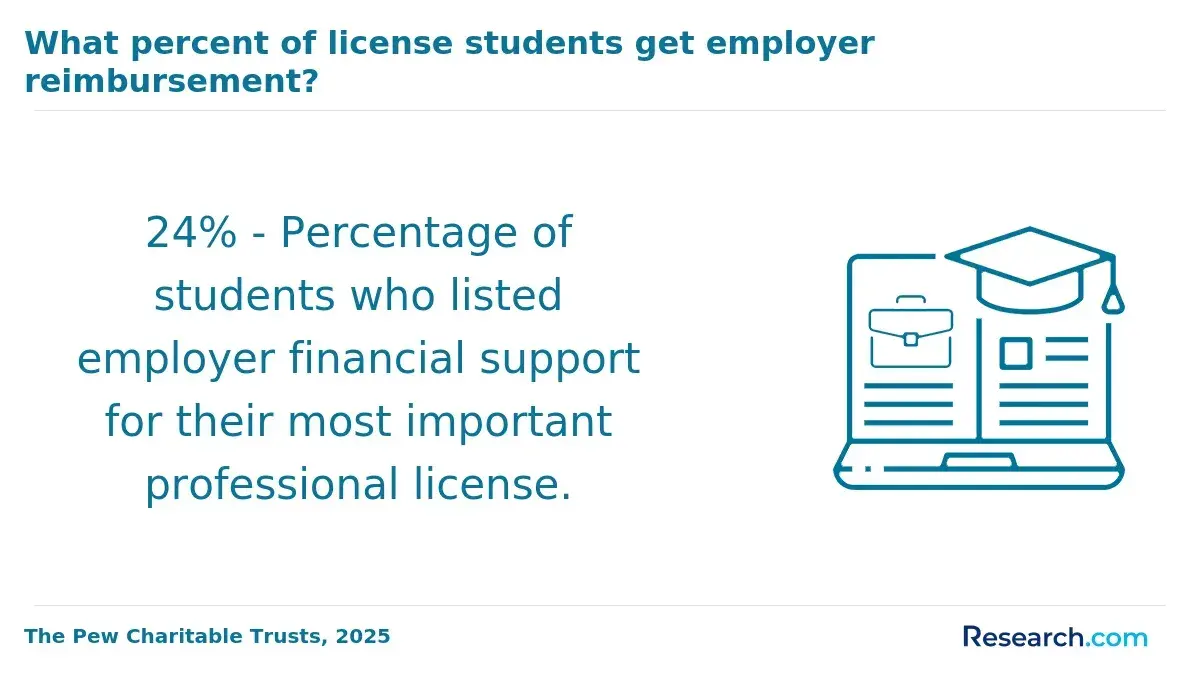
Usually, yes. A university scholarship can often be combined with FAFSA-based federal aid, state grants, employer tuition assistance, military education benefits, and private scholarships. This practice is often called aid stacking. However, the school must keep total aid within its cost-of-attendance and aid-packaging rules, so an additional award can sometimes replace loans, work-study, or institutional grant funds.
FAFSA remains useful even for students pursuing merit aid because it can establish eligibility for federal grants, Direct Loans, work-study where available, and need-based institutional assistance. For the 2025-26 award year, the maximum Pell Grant is $7,395; an individual award depends on financial circumstances, enrollment intensity, and other federal eligibility factors.
Before accepting outside funds, ask the financial-aid office how each source will be applied. The following distinctions prevent surprises.
- Grants and scholarships: Usually reduce the amount the student must pay, but may cause the school to adjust another need-based award.
- Federal Direct Loans: Borrowed funds can fill a remaining gap but must generally be repaid with interest; they are not a scholarship.
- Employer assistance: May be paid after grades post or require continued employment, creating a short-term cash-flow need.
- Veterans and military benefits: Eligibility and payment procedures depend on the benefit and institution; confirm certification timing with the school.
- Outside scholarships: Report them as required and ask whether they first reduce loans or institutional grants.
Students pursuing advanced health-care credentials may face different aid and clinical-cost structures; reviewing online PharmD programs can help illustrate why total program cost and professional requirements matter as much as scholarship size.
How Much Does an Online Behavioral Health Degree Cost After Scholarships and Financial Aid?
Net cost is the estimated amount remaining after grants and scholarships are applied to the school's total cost of attendance. It is more useful than tuition alone because online students may still pay required fees, books, proctoring charges, technology costs, transportation for fieldwork, and living expenses. Loans lower the immediate balance but do not lower the underlying cost because they must be repaid.
This illustrative calculation shows why a larger scholarship is not automatically the better offer. The figures are examples only; request a personalized written estimate from each institution.
| Cost component | School A example | School B example | Decision implication |
| Annual tuition and required academic fees | $18,000 | $14,500 | Begin with charges applicable to the student's actual credit load. |
| University scholarship | -$5,000 | -$2,500 | The larger award does not settle the comparison. |
| Federal and state grants | -$4,000 | -$4,000 | Grant eligibility may differ by institution and student circumstances. |
| Estimated tuition-and-fee balance | $9,000 | $8,000 | School B costs less in this example despite the smaller scholarship. |
| Additional student costs | Books, technology, travel, and living costs vary | Books, technology, travel, and living costs vary | Compare these separately because they can change the real budget. |
Calculate at least two scenarios: your planned course load and a slower part-time schedule. A program that appears cheaper per credit may cost more overall if required courses are not offered frequently, scholarships expire before completion, or a practicum requires travel. Nutrition-focused health education can have similarly variable program expenses, so prospective students may also review a master's degree in nutrition when comparing adjacent career directions.
Are There Scholarships for Transfer, Adult, Military, and Other Online Behavioral Health Students?
Yes, but eligibility varies sharply. Transfer applicants may qualify for awards based on transferable credits or college GPA; adult learners may find completion grants, employer-partner discounts, or scholarships for returning students; and military-connected students may have institution-specific awards in addition to federal and service-related education benefits. These opportunities can be valuable because traditional freshman merit programs sometimes exclude nontraditional applicants.
Compare the following student categories with the school's formal scholarship criteria rather than relying on a general "online students welcome" statement.
| Student group | Potential university-funded opportunity | Verification point |
| Transfer student | Transfer merit award or credit-completion scholarship | Minimum transferable credits, transfer GPA calculation, and deadline after admission |
| Adult or returning student | Degree-completion grant, employer partnership, or adult-learner scholarship | Age, prior enrollment, work status, and whether fully online programs qualify |
| Active-duty military, veteran, or dependent | Military tuition reduction or university military scholarship | Benefit coordination, documentation, residency classification, and course-certification process |
| Employee of a partner organization | Affiliation discount or cohort tuition rate | Whether the benefit can combine with institutional merit aid |
| First-generation or underrepresented student | Mission-based or donor-funded scholarship | Separate application, essay, and recurring eligibility conditions |
Transfer students should obtain a preliminary credit evaluation before comparing offers. A scholarship that looks generous may provide less value if many prior credits do not transfer or if the award only applies after a minimum number of new credits. Nurses adding a focused credential should separately examine a 1-year post-master's FNP online option, since certificate aid and degree-program scholarships may follow different rules.
What Is the Difference Between Merit-Based and Need-Based Scholarships for Online Behavioral Health Degrees?
Merit-based scholarships are generally awarded for academic achievement, leadership, service, professional accomplishment, or another documented strength. Need-based scholarships are based primarily on the student's financial circumstances, often using FAFSA information. A university may blend both approaches, such as awarding a merit scholarship and then using need to determine an additional institutional grant.
The distinction matters because the application evidence, predictability, and renewal risk can differ.
| Feature | Merit-based scholarship | Need-based scholarship or grant |
| Primary basis | Academic or other achievement criteria | Demonstrated financial need and available funding |
| Common evidence | Transcript, GPA, résumé, essay, recommendation, or admission record | FAFSA and sometimes institutional verification documents |
| Amount stability | May be relatively predictable if renewal conditions are met | May change when financial circumstances, enrollment, or other aid changes |
| Typical renewal focus | GPA, credits completed, and continued enrollment | Continued need, FAFSA completion, academic progress, and funding availability |
| Best use in comparison | Assess whether the award lasts long enough to complete the degree | Assess a realistic annual estimate rather than assuming the first-year amount repeats |
Neither type is inherently better. A student with a strong transfer GPA may value renewable merit aid, while a student with substantial demonstrated need may benefit more from a university with generous need-based grant practices. Compare both against the projected cost through graduation.
How Should You Compare Scholarship Offers From Online Behavioral Health Degree Programs?
Compare offers using the same timeframe and course-load assumptions. Put each school's official aid offer beside its program curriculum, estimated completion time, transfer evaluation, and all required charges. The best scholarship value is the offer that produces the most manageable total cost for a degree that fits your academic, professional, and scheduling needs.
Before enrolling, use this practical review checklist to identify weak offers and hidden cost risks.
- Confirm that the award applies to your exact online behavioral health degree, not only to on-campus or different academic programs.
- Convert each scholarship into annual and total-degree value, then compare it with tuition, mandatory fees, and the expected number of terms.
- Check whether the award is automatic, competitive, one-time, renewable, or subject to annual appropriations.
- Verify the required GPA, credit load, satisfactory academic progress standard, maximum covered terms, and consequences of withdrawing from a course.
- Ask whether the offer can be combined with Pell Grants, state aid, employer benefits, military benefits, and outside scholarships.
- Review transfer-credit acceptance and course sequencing; fewer accepted credits or delayed required courses can erase an apparently larger award.
- Request the school's estimate of direct charges and indirect expenses, including books, software, background checks, practicum travel, and licensure-related costs where applicable.
- Do not accept the largest advertised award until you have compared the projected out-of-pocket amount through completion and the borrowing needed to cover it.
A useful final question for financial aid is: "If I enroll online part-time, retain my current GPA, and take the stated number of credits each term, what institutional aid is expected in every remaining term?" A clear written response makes an offer easier to compare and exposes assumptions that may not appear in promotional materials.
Other Things You Should Know About Behavioral Health
Usually not at the bachelor's level. Independent clinical licensure typically requires a qualifying graduate degree, supervised clinical experience, examinations, and state-specific approval. Verify the requirements of the licensing board in the state where you plan to work before selecting a program.
Depending on employer and state requirements, graduates may pursue roles in community outreach, case management, behavioral health support, patient navigation, recovery services, intake coordination, or program administration. Job titles and duties vary, and some roles require additional credentials or supervised training.
Many are offered by institutionally accredited colleges, but institutional accreditation is not the same as programmatic accreditation or professional licensure approval. Confirm the university's accreditation and evaluate whether the specific degree meets requirements for your intended role or graduate-school pathway.
A bachelor's degree commonly requires about 120 credits, although completion time depends on transfer credits, course availability, and whether you study full-time or part-time. Master's programs vary by curriculum and may include internships or practicum experiences that affect the timeline.
References
- Counseling Degree Programs Online with Financial Aid https://www.edumed.org/online-schools/counseling-degrees/financial-aid/
- Counseling Scholarships https://onlinecounselingprograms.com/become-a-counselor/resources/scholarships/
- Psychology Scholarships | ScholarshipOwl https://scholarshipowl.com/blog/apply-for-scholarships/psychology-scholarships/
- Free Behavioral Health Master's Degree https://www.utpb.edu/admissions-aid/impact-majors/behavioral-health/ibh-scholarship
- Scholarships For Psychology Majors (2025) https://www.psychology.org/scholarships/
- 50+ Scholarships & Resources for Counseling Master's Students https://www.onlinemastersdegrees.org/student-resources/counseling/
- Grants & Scholarships https://www.emoryhenry.edu/academics/clinical-mental-health-counseling/grants-scholarships/
- Top 105 Mental Health Scholarships to Apply For in November 2025 https://bold.org/scholarships/by-demographics/mental-health-scholarships/