
2027 Are Online Behavioral Health Doctorate Degrees Respected by Employers? Hiring Trends and Career Outcomes

Co-Founder and Chief Data Scientist
An online behavioral health doctorate can be respected by employers, but only when the degree matches the role, licensing rules, accreditation expectations, and evidence of professional competence. The stakes are high: the U. S. Bureau of Labor Statistics projects 17% growth for substance abuse, behavioral disorder, and mental health counselors from 2024 to 2034, much faster than average. This guide is for counselors, clinicians, administrators, educators, and career changers weighing doctoral study. You'll learn where the credential pays off, where it may not, and how to judge employer recognition before enrolling.
Key Things You Should Know
- Employers usually care more about institutional accreditation, relevant licensure, supervised experience, leadership record, and doctorate type than whether coursework was delivered online.
- ROI is strongest for professionals targeting leadership, clinical supervision, integrated care, university teaching, consulting, or policy roles; it is weaker when the target job only requires a master's degree and license.
- Current BLS data show major outcome differences by path: medical and health services managers had a May 2024 median wage of $117,960, while mental health counselors had a May 2024 median wage of $59,190.
What Is the True ROI of an Online Behavioral Health Doctorate?
The true ROI of an online behavioral health doctorate is not just the salary increase after graduation. It is the combined value of higher earnings potential, promotion access, professional credibility, job mobility, licensure alignment, research or consulting opportunities, and the cost of time, tuition, debt, and reduced flexibility while enrolled.
In employer hiring decisions, "online" is usually not the central issue. A respected online doctorate is typically one from an institutionally accredited university, with a curriculum aligned to the student's target occupation and evidence that the graduate can apply doctoral-level skills in real behavioral health settings. Employers become more cautious when a program lacks recognized accreditation, has unclear practicum or applied research expectations, or markets the doctorate as a shortcut to roles that actually require a different license.
The table below summarizes the factors that most often shape employer respect for an online behavioral health doctorate. Use it to separate legitimate career value from marketing claims.
| Employer evaluation factor | Why it matters | What strong evidence looks like |
| Institutional accreditation | It confirms the school meets recognized academic quality standards and is usually required for federal financial aid and employer tuition benefits. | The university is accredited by an agency recognized by the U.S. Department of Education or CHEA. |
| Degree type | A PhD, PsyD, DBH, EdD, DrPH, or DSW can signal different preparation and may lead to different roles. | The doctorate clearly matches the target job, such as clinical leadership, research, teaching, behavioral health administration, or integrated care. |
| Licensure alignment | Some jobs require a specific license, and a doctorate alone may not qualify someone for that license. | The program explains state-specific requirements, supervised hours, internship expectations, and limitations. |
| Applied experience | Employers respect doctorates more when graduates can show measurable workplace impact. | Capstone projects, research, practicum work, supervision experience, publications, quality-improvement projects, or employer-based projects. |
| Reputation in the target field | Employer recognition can be industry-specific rather than universal. | Alumni work in relevant roles, faculty are active in the field, and the program has partnerships with clinics, hospitals, agencies, or public health organizations. |
ROI is strongest when the doctorate solves a specific career bottleneck. For example, a licensed counselor moving into director-level clinical operations may benefit more than someone seeking entry into counseling, because most counseling entry roles depend on a qualifying master's degree and license rather than a doctorate.
How Much Does an Online Behavioral Health Doctorate Increase Earning Potential?
An online behavioral health doctorate can increase earning potential, but the increase depends heavily on the occupation. The degree may help candidates compete for higher-paying leadership, teaching, consulting, program evaluation, or health administration roles, but it does not automatically raise pay in positions governed by fixed salary schedules or master's-level licensure requirements.
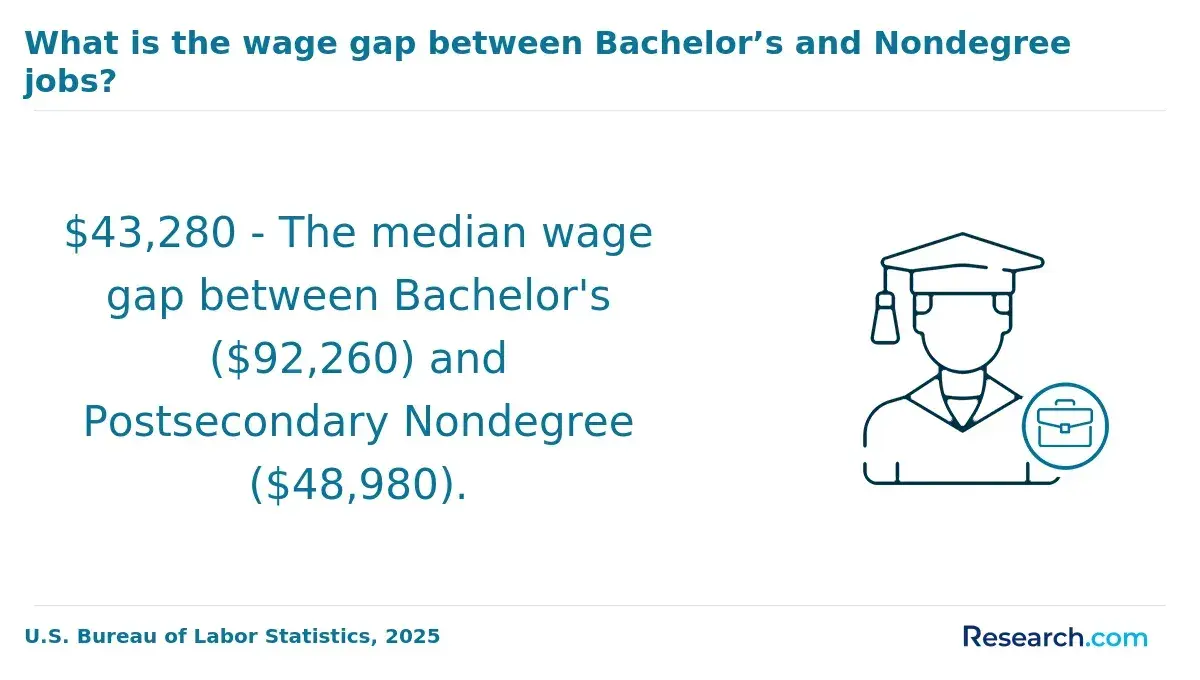
BLS May 2024 wage data show why career target matters. The median annual wage for substance abuse, behavioral disorder, and mental health counselors was $59,190, while the median annual wage for medical and health services managers was $117,960. That gap shows that the strongest financial return may come from using doctoral training to move into management, systems leadership, or integrated behavioral health operations rather than remaining in the same direct-service role.
The table below compares common behavioral health-related career outcomes. It is not a promise of income; it shows where a doctorate may be more likely to influence hiring, advancement, or compensation.
| Career path | Typical doctorate value | Salary context | Employer respect considerations |
| Behavioral health administrator | High for senior leadership, quality improvement, program design, and integrated care strategy. | Medical and health services managers had a May 2024 median wage of $117,960. | Employers often value leadership results, compliance knowledge, budgeting, and population health experience alongside the degree. |
| Licensed mental health counselor or therapist | Moderate when it supports supervision, specialization, teaching, or private-practice credibility. | Mental health counselor wage levels vary by setting, payer mix, license, and region. | A qualifying master's degree and state license usually matter more than a doctorate for entry-level practice. |
| Psychologist | Potentially high, but only if the doctorate meets state licensure and internship requirements. | Psychologists had a May 2024 median wage of $94,310. | Fully online formats may not satisfy health service psychology licensure expectations; APA accreditation and supervised training are critical. |
| Postsecondary instructor | Moderate to high depending on institution type and research expectations. | Pay varies widely between adjunct, full-time teaching, and tenure-track roles. | Community colleges and applied programs may value professional doctorates; research universities may prefer a PhD and publications. |
| Consultant or trainer | Variable, often strongest for professionals with a niche and prior reputation. | Income depends on contracts, specialization, and client base. | Employers and clients look for proof of outcomes, not only the credential. |
Students still exploring clinical pathways should compare whether a doctoral program is necessary now or whether an online clinical psychology masters better fits their licensing or career-entry needs before committing to a doctorate.
Which Careers Provide the Best Financial Return With an Online Behavioral Health Doctorate?
The best financial return usually comes from roles where doctoral-level expertise changes the type of work you can access. These include leadership roles in behavioral health organizations, integrated primary care, addiction treatment systems, public health agencies, employee assistance programs, higher education, and specialized consulting.
Career ROI tends to be lower when the doctorate does not change the job category. For example, a counselor who remains in the same employer band may see limited salary movement unless the degree qualifies them for supervision, administration, teaching, or a specialized clinical niche.
These career paths are most likely to reward an online behavioral health doctorate when the student already has relevant experience and a clear plan for using the credential:
- Behavioral health executive or clinical director: Strong ROI is possible when the doctorate supports budget responsibility, service-line development, accreditation compliance, outcome measurement, or integrated care leadership.
- Program evaluator or quality-improvement lead: Doctoral training can be valuable when employers need professionals who can analyze outcomes, reduce care gaps, and translate evidence into practice.
- Higher education instructor or academic program leader: The degree can open teaching or curriculum leadership opportunities, especially in applied behavioral health, counseling, addiction studies, psychology, and human services programs.
- Licensed clinician with a specialty niche: ROI can improve when the doctorate strengthens credibility in trauma care, addiction, child and adolescent services, forensic behavioral health, telebehavioral care, or integrated health.
- Independent consultant: Financial upside may be strong for professionals with a marketable niche, but income is less predictable and depends on reputation, network, and business development skills.
Employers in child-serving systems may value doctoral-level knowledge of development, assessment, family systems, and school or community intervention models; professionals focused on that population can also compare child psychology master's programs if they still need a more direct pathway into specialized practice.
How Does an Online Behavioral Health Doctorate Affect Career Advancement?
An online behavioral health doctorate can help with advancement when it adds capabilities employers already need: supervision, research literacy, program design, ethical leadership, grant writing, interprofessional collaboration, health equity strategy, and data-informed decision-making. It is less useful when treated as a credential upgrade without a matching career strategy.
Current hiring trends favor professionals who can work across clinical, administrative, and technology-enabled care environments. Telebehavioral health, integrated care, measurement-based care, and AI-assisted documentation are changing how organizations evaluate leaders. A doctorate can help if it trains students to evaluate evidence, manage risk, protect client privacy, and lead change responsibly.
To make the degree visible in advancement conversations, students should connect doctoral work to workplace outcomes. The most effective approach is to build a portfolio before graduation:
- Choose research or capstone topics tied to a real employer problem, such as access delays, no-show rates, crisis response, staff burnout, care coordination, or patient outcomes.
- Document measurable deliverables, such as a program evaluation plan, training curriculum, needs assessment, policy proposal, or clinical supervision model.
- Seek faculty, practicum, or employer mentors who can speak to doctoral-level performance rather than only coursework completion.
- Update your résumé and LinkedIn profile with applied outcomes, not just the degree title.
- Ask your current employer whether the doctorate qualifies you for promotion tracks, salary bands, supervision duties, or leadership pools before enrolling.
A common mistake is assuming the letters after your name will do the work on their own. Employers respect the credential more when they can see how it improved judgment, leadership, outcomes, or specialized expertise.
How Does the Cost of an Online Behavioral Health Doctorate Affect Its Overall Value?
Cost has a direct effect on whether an online behavioral health doctorate is worth it. A respected degree can still be a poor financial decision if tuition, fees, interest, lost time, and limited salary movement create a long payback period. Conversely, a moderately priced accredited program can produce strong value if it helps a working professional reach a higher-responsibility role without leaving the labor force.
One current federal borrowing benchmark matters for planning: graduate and professional students can borrow up to $20,500 per academic year in Direct Unsubsidized Loans, while Grad PLUS Loans may cover remaining eligible costs after other aid. This matters because doctorate costs above grants, scholarships, employer assistance, and cash payments can quickly shift ROI from career investment to long-term debt obligation.
Before comparing programs, estimate the full cost rather than only tuition. Important cost variables include:
- Per-credit tuition and total credits: A lower per-credit price can still be expensive if the program requires many credits beyond the master's level.
- Residency or intensive requirements: Some online doctorates require campus visits, travel, lodging, or time away from work.
- Dissertation or capstone continuation fees: Students who need extra terms to finish may pay additional tuition or enrollment fees.
- Practicum or internship costs: Clinical or applied placements may require supervision fees, background checks, liability insurance, transportation, or reduced work hours.
- Opportunity cost: Part-time students may preserve income, while full-time study may accelerate completion but reduce earnings during enrollment.
Do not choose the most expensive program solely because it sounds prestigious. Employer recognition is stronger when the program has appropriate accreditation, relevant curriculum, credible faculty, clear outcomes, and a network connected to your target field.
How Does the Time Commitment of an Online Behavioral Health Doctorate Affect Its ROI?
Time commitment affects ROI because doctoral study competes with work, family, clinical hours, leadership opportunities, and income growth. Many online behavioral health doctorates are designed for working adults, but "online" does not mean low effort. Reading, research, writing, data analysis, supervision activities, residencies, and dissertation or capstone work can be demanding.
A typical student should evaluate time in three ways: completion speed, weekly workload, and career momentum. A shorter program may not be better if it lacks applied experiences employers value, while a longer program may be worthwhile if it allows the student to keep a full-time job and apply doctoral projects at work.
Use the following decision sequence to judge whether the timeline supports ROI:
- Confirm whether the program is full-time, part-time, cohort-based, or self-paced, because structure affects graduation predictability.
- Ask for the median time to completion for students with your background, not only the shortest advertised timeline.
- Check whether transfer credits, prior graduate coursework, or professional certifications can reduce the total credit load.
- Estimate how many work hours you can realistically maintain without delaying dissertation, capstone, or practicum progress.
- Compare the expected graduation date with likely promotion cycles, leadership openings, licensure deadlines, or retirement planning.
The biggest red flag is enrolling without a completion plan. A doctorate that takes much longer than expected can increase cost and delay the career benefit that justified the investment.
Does an Online Behavioral Health Doctorate Have the Same Career Value as a Campus-Based Degree?
An online behavioral health doctorate can have the same career value as a campus-based degree for many non-licensure, leadership, teaching, consulting, and administrative roles when the school is properly accredited and the graduate can show relevant expertise. However, it may not have the same value in fields where licensing boards, internships, clinical practica, or programmatic accreditation create strict requirements.
Employers rarely evaluate delivery format in isolation. They evaluate whether the graduate's preparation fits the role. A campus-based doctorate from a weakly aligned program may be less useful than an online doctorate with strong applied projects, field connections, and employer-relevant training. The reverse can also be true when a campus program provides clinical placements, research labs, or supervised training that an online program cannot replicate.
The table below explains how online and campus-based options usually compare in employer-facing terms.
| Comparison point | Online doctorate | Campus-based doctorate | Decision implication |
| Employer perception | Often accepted when accredited and job-relevant. | Often familiar to employers, especially in research-heavy or clinical training environments. | Ask employers in your target field what they recognize before enrolling. |
| Networking | Depends on cohort design, residencies, faculty access, and employer partnerships. | May offer more frequent in-person faculty, peer, lab, and placement connections. | Online students should intentionally build professional networks. |
| Clinical or applied training | Can be strong if placements, supervision, and residencies are well structured. | May offer embedded clinics, labs, or local placement pipelines. | Licensure-bound students must verify state and programmatic requirements. |
| Flexibility | Usually better for working professionals and caregivers. | Usually less flexible but may provide more immersive academic experiences. | Flexibility can improve ROI if it preserves income. |
| Research environment | Varies widely by program and faculty model. | Often stronger at research universities with labs and grant activity. | Students seeking research faculty roles should scrutinize publication and mentorship opportunities. |
The practical answer is this: online and campus doctorates can be equally respected for some career goals, but not automatically interchangeable for every behavioral health occupation.
How Does an Online Behavioral Health Doctorate Compare With Other Career Advancement Options?
An online behavioral health doctorate is only one path to advancement. For some professionals, a master's degree, license, certificate, supervisory credential, graduate certificate, MBA, MHA, MPH, or specialized training may provide a faster or more affordable return.
The best alternative depends on the gap between your current qualifications and your target role. If you need entry into counseling practice, for example, accelerated mental health counseling programs online may be more relevant than a doctorate because licensure pathways commonly begin at the master's level.
Consider alternatives when the doctorate is not clearly required, preferred, or rewarded. These options can sometimes produce stronger near-term ROI:
- Master's degree plus licensure: Best for people seeking entry into counseling, therapy, or certain clinical roles where state licensure is the hiring gate.
- Graduate certificate: Useful for adding a focused specialty such as addiction, trauma, telehealth, health administration, or program evaluation without a full doctorate.
- Professional certification: Valuable when employers recognize a specific credential for supervision, case management, addiction counseling, compliance, or project management.
- Administrative degree: An MHA, MBA, MPH, or public administration degree may be better for professionals targeting operations, finance, policy, or executive roles.
- Employer-sponsored leadership development: Sometimes more powerful than another degree when promotion depends on internal visibility and management experience.
A doctorate is most competitive when your goal requires advanced scholarly, clinical, leadership, or systems-level authority that shorter credentials cannot provide.
Which Professionals Benefit Most From an Online Behavioral Health Doctorate?
The professionals who benefit most are usually experienced practitioners or managers who already have a foundation in behavioral health and need doctoral-level preparation to move into higher-impact roles. The degree is less ideal for students who are still trying to qualify for first licensure or who have not identified a specific career outcome.
Strong-fit candidates often include licensed counselors, social workers, marriage and family therapists, psychiatric nurses, behavioral health administrators, addiction treatment leaders, human services executives, public health professionals, and educators. These professionals can connect doctoral learning to existing work experience, which makes the credential more credible to employers.
Professionals in justice, correctional, victim services, competency restoration, or court-connected treatment settings may find that specialized master's-level preparation is the more direct next step; those exploring this path can compare forensic psychology master's programs before assuming a doctorate is necessary.
An online behavioral health doctorate may be a strong fit if you can answer "yes" to several of these questions:
- You already hold the master's degree or license commonly expected in your field.
- Your target employers list a doctorate as preferred or helpful for senior roles.
- You want to lead programs, supervise clinicians, teach, consult, conduct applied research, or influence policy.
- You can use your workplace as a site for doctoral projects, capstone work, or leadership development.
- You have confirmed that the doctorate type matches your target role and state requirements.
It may be a poor fit if you are choosing a doctorate mainly to avoid licensure steps, bypass supervised experience, or enter a clinical profession that requires a different accredited pathway.
How Can Students Decide Whether an Online Behavioral Health Doctorate Is Worth It?
Students should decide whether an online behavioral health doctorate is worth it by working backward from the job they want, not forward from the degree title. Employer respect is strongest when the credential is accredited, aligned, affordable, and supported by evidence of skill.
Before enrolling, complete a structured employer-recognition check. This is more useful than relying on rankings, advertisements, or student testimonials alone:
- Identify five to 10 target job postings and note whether a doctorate is required, preferred, or not mentioned.
- Check whether the postings specify a license, degree type, accreditation standard, years of experience, or supervisory background.
- Contact state licensing boards if the role involves independent clinical practice, psychology licensure, or protected professional titles.
- Ask programs for graduation rates, time to completion, alumni job titles, employer partnerships, practicum support, and dissertation or capstone completion data.
- Compare total cost after scholarships, employer tuition assistance, transfer credits, fees, and likely borrowing.
- Speak with hiring managers, supervisors, alumni, and professional associations in your target specialty.
- Choose the program only if it improves access to a role you realistically want and can qualify for.
Students who are earlier in the psychology pathway should also compare whether master's-level study is the correct next move. For example, child psychology master's programs may provide a better foundation for certain child, adolescent, school, or family-focused roles before doctoral specialization.
The bottom line: online behavioral health doctorates are respected by many employers when they are credible, relevant, and paired with experience. They are not universally interchangeable with every campus-based clinical doctorate, and they are not a guaranteed salary upgrade. The smartest choice is the one that matches your target occupation, licensing environment, financial limits, and long-term career plan.
Other Things You Should Know About Behavioral Health
Mental health usually focuses on emotional, psychological, and psychiatric conditions. Behavioral health is broader and includes how behaviors, habits, substance use, stress, relationships, and social factors affect overall health and functioning.
Yes. Behavioral health professionals may work in hospitals, schools, correctional systems, public health agencies, employee wellness programs, insurance organizations, nonprofits, universities, and government agencies.
Increasingly, yes. Employers may value experience with telehealth platforms, electronic health records, outcomes dashboards, privacy compliance, digital screening tools, and responsible use of AI-supported documentation or workflow tools.
Employers commonly look for ethical judgment, communication, cultural responsiveness, conflict resolution, supervision ability, data-informed decision-making, and the ability to coordinate care across clinical and administrative teams.
References
- DSW vs. Ph.D. in Social Work https://socialworklicensemap.com/social-work-degrees/doctorate-in-social-work/dsw-vs-phd/
- 10 Fulfilling Mental Health Careers You Can Train for Now | Palo Alto University https://paloaltou.edu/resources/blog/mental-health-careers-you-can-start-now
- DBH vs. PhD - Counseling - Cummings Graduate Institute for Behavioral Health Studies https://cgi.edu/resources/dbh-comparisons/dbh-vs-phd-counseling/
- What Employers Actually Think About Online Degrees https://www.onlineu.com/magazine/what-employers-think-about-online-degrees
- Best Online Ph.D. and Doctoral Programs | OEDb https://www.oedb.org/rankings/online-phd-programs/
- Behavioral Health Workforce - Career Roadmap - Mayor's Office of Community Mental Health https://mentalhealth.cityofnewyork.us/workforce-career-roadmap
- DrPH vs. PhD — National Association for Doctors of Public Health https://nadrph.org/drphvsphd
- Fastest Growing Careers In Psychology | Psychology.org https://www.psychology.org/resources/fastest-growing-careers-in-psychology/
- Evolving Education: Which Behavioral Health PhD Is Right for You? https://www.socialworktoday.com/archive/Summer22p30.shtml
- 9 Mental Health Careers You Can Pursue with a BA https://www.nec.edu/news/9-mental-health-careers-you-can-pursue-with-a-ba





