
2027 How Long Does It Take to Earn an Online Behavioral Health Doctorate? Timelines, Credits, and Dissertation Options

Co-Founder and Chief Data Scientist
Estimating the timeline for an online behavioral health doctorate means balancing credits, research requirements, clinical expectations, and your work schedule. NCES data published in 2024 shows average graduate tuition and required fees were $12,596 at public institutions and $29,931 at private nonprofit institutions, so extra semesters can materially change total cost.
This guide is for professionals comparing DBH, counseling, psychology, and related doctoral paths. You'll learn realistic timelines, credit ranges, dissertation alternatives, and planning steps to choose a program you can actually finish.
Key Things to Know About Online Behavioral Health Doctorate Program Timelines
- Most online behavioral health doctorates take about 3 to 5 years after a master's degree, while research-heavy or licensure-focused psychology paths may take longer because of dissertation, internship, or practicum requirements.
- Post-master's online behavioral health doctorates commonly require about 45 to 75 credits, but psychology and counselor education doctorates can exceed that range depending on accreditation, licensure alignment, and clinical training.
- Dissertation requirements vary: some programs require a traditional dissertation, while applied doctorates may use a capstone, doctoral project, portfolio, quality-improvement project, or translational research project instead.
What is the typical completion time for online Behavioral Health doctorate programs?
A post-master's online behavioral health doctorate typically takes 3 to 5 years. A shorter 3-year timeline usually requires year-round enrollment, strong transfer credit approval, a structured dissertation or capstone process, and minimal interruptions. A 5-year timeline is more realistic for working professionals who enroll part time, need practicum coordination, or complete a traditional dissertation.
The term "behavioral health doctorate" can refer to several degree types. A Doctor of Behavioral Health, often abbreviated DBH, is usually an applied professional doctorate focused on integrated care, behavioral interventions, leadership, healthcare systems, and population health. Related options include a PhD in counseling, counselor education, psychology, health psychology, or behavioral health leadership, as well as PsyD programs that may focus on clinical practice. These degrees do not all lead to the same licenses, so timeline comparisons should always be tied to the credential you need.
The table below summarizes common U.S. online or hybrid doctorate formats. Use it as a planning benchmark, not a substitute for a specific school's catalog, because residency, dissertation, and licensure rules can change the timeline significantly.
| Program type | Common student starting point | Typical completion time | Timeline driver | Best fit |
| Doctor of Behavioral Health or integrated behavioral health doctorate | Master's degree in counseling, psychology, social work, healthcare, or a related field | 3 to 4 years | Applied project, leadership coursework, healthcare systems focus | Licensed or experienced professionals moving into integrated care leadership |
| Doctorate in counselor education and supervision | Master's in counseling or closely related field | 3 to 5 years | Dissertation, supervision practice, teaching experience, CACREP alignment when applicable | Counselors seeking faculty, supervision, research, or advanced leadership roles |
| Health psychology, behavioral psychology, or psychology PhD | Master's or bachelor's degree depending on program | 4 to 7 years or more | Research sequence, dissertation, methodology training, assistantships, sometimes internship | Students seeking research-intensive, academic, or psychologist-licensure pathways |
| PsyD or clinical psychology doctorate with online coursework and required in-person training | Bachelor's or master's degree depending on program | 4 to 6 years or more | Clinical practica, internship, residency, dissertation or doctoral project | Students pursuing clinical psychologist preparation where state requirements are met |
For perspective, the National Center for Science and Engineering Statistics reported in 2024 that U.S. research doctorate recipients had a median time-to-degree of 7.3 years from graduate school entry. That figure includes research doctorates across fields and is not a DBH-specific average, but it helps explain why dissertation-heavy programs usually take longer than applied professional doctorates.
If your goal is to enter the mental health field faster before considering a doctorate, reviewing accelerated mental health counseling programs online may help you compare the master's-level route against the longer doctoral investment.
How many total credit hours are required for an online Behavioral Health doctorate?
Online behavioral health doctorates commonly require about 45 to 75 post-master's credits, but programs tied to psychology licensure, counselor education accreditation, or research-intensive PhD training may require more. A lower credit total does not always mean a faster degree if the dissertation, internship, or clinical sequence is rigid.
There is no single federal database that publishes an average credit requirement specifically for online behavioral health doctorates. The more useful comparison is by degree type, because programs define "behavioral health" differently. The table below shows practical credit ranges prospective students often encounter in U.S. doctoral catalogs.
| Degree category | Typical total credits | What credits usually include | Timeline implication |
| Post-master's DBH or applied behavioral health doctorate | 45 to 60 credits | Integrated care, leadership, evidence-based practice, statistics, applied project or capstone | Often the most predictable 3-year to 4-year option when courses are offered year-round |
| Post-master's counseling or counselor education doctorate | 48 to 75 credits | Advanced counseling theory, supervision, teaching, research, practicum, dissertation | Can stretch beyond coursework because dissertation approval and data collection take time |
| Psychology or health psychology doctorate | 60 to 120 credits depending on entry point | Assessment, intervention, research methods, statistics, practica, dissertation, internship where required | Usually longer, especially if licensure preparation or full-time internship is built in |
| Leadership-focused behavioral health administration doctorate | 45 to 60 credits | Policy, quality improvement, population health, organizational leadership, applied project | May fit working professionals if the final project is embedded early |
Credit totals matter because doctoral credits are expensive and sequential. For example, a 60-credit program taken at 6 credits per term over three terms per year requires roughly 10 terms before accounting for dissertation continuation, leaves of absence, or repeated research milestones.
To estimate your own completion time, ask each program for a term-by-term degree plan rather than relying only on the total credit count. Then check whether courses are offered every term, whether summer enrollment is expected, and whether dissertation or capstone credits begin before or after coursework ends.
Is a dissertation required for an online Behavioral Health doctorate?
Some online behavioral health doctorates require a traditional dissertation, but not all do. Research-oriented PhD programs are the most likely to require a dissertation. Applied doctorates, including many DBH-style programs, may require a doctoral project, capstone, portfolio, or practice-based research project instead.
A dissertation is an original scholarly research project that normally includes a proposal, literature review, research design, Institutional Review Board approval when human subjects are involved, data collection or analysis, a written manuscript, and an oral defense. In timeline terms, the dissertation is often the least predictable part of the degree because progress depends on committee feedback, research feasibility, data access, and the student's writing pace.
Traditional dissertations make the most sense when your career goal includes faculty roles, research leadership, grant-funded work, publication, or doctoral-level methodological expertise. They may not be the fastest path if your primary goal is clinical operations leadership, integrated care program management, or applied behavioral health practice improvement.
Before enrolling, confirm the dissertation structure in writing. Ask whether dissertation courses are fixed-length or continuation-based, whether the chair is assigned early, how long proposal approval typically takes, and what happens if your study site withdraws permission. A common mistake is assuming "online" means the dissertation will be more flexible; the coursework may be online, but research governance can still be strict.
Are there alternatives to completing a dissertation for online Behavioral Health doctorate programs?
Many applied online behavioral health doctorate programs offer alternatives to a traditional dissertation, especially when the degree is designed for working clinicians, healthcare administrators, or integrated care leaders. The most common alternatives are capstones, doctoral projects, quality-improvement projects, program evaluations, portfolios, and practice-based research products.
These alternatives are not automatically easier; they are different. A capstone may be faster when it is embedded throughout the curriculum and tied to your current workplace. It can become slower than a dissertation if the project depends on employer approval, patient data access, or organizational change that takes months to implement.
Use the following comparison to decide which final doctoral requirement fits your goals and schedule.
| Final requirement | Typical output | Best when your goal is | Potential timeline risk |
| Traditional dissertation | Original research study and defense | Research, faculty work, scholarship, policy analysis, doctoral-level methodology | Committee delays, recruitment problems, IRB review, data access issues |
| Applied doctoral project | Evidence-based intervention, evaluation, or practice improvement project | Clinical operations, integrated care leadership, program design | Worksite approval, implementation delays, limited organizational support |
| Capstone | Practice-focused project, report, presentation, or implementation plan | Leadership advancement or applied problem-solving | Weak project scope or late topic selection |
| Portfolio | Collected evidence of competencies and professional products | Competency-based professional advancement | Incomplete documentation or unclear assessment standards |
A strong applied project can support career mobility when it produces evidence of leadership, outcomes analysis, or program improvement. However, if you want a research faculty role, a non-dissertation doctorate may not carry the same signal as a research-based dissertation, depending on the employer and institution.
Students still comparing psychology-focused graduate foundations may also want to review child psychology master's programs, especially if their long-term behavioral health interest involves youth, families, schools, or developmental services.
How do practicums or clinical hours affect the online Behavioral Health doctorate timeline?
Practicums, internships, residencies, supervision hours, or clinical placements can extend an online behavioral health doctorate by one or more terms if they are sequential, site-dependent, or tied to licensure rules. Programs with no clinical placement requirement are usually easier to schedule around full-time employment.
Clinical hours affect the timeline because they are not just academic assignments. You may need an approved site, qualified supervisor, background check, liability coverage, affiliation agreement, state-specific documentation, and daytime availability. Even a fully online program can require local fieldwork or brief in-person residencies.
The impact depends heavily on whether the doctorate is intended for licensure. A DBH or behavioral health leadership doctorate may focus on systems and integrated care without preparing students for a new clinical license. A clinical psychology or counseling doctorate, however, may include practicum, internship, or supervision requirements that are governed by accreditation standards and state licensing boards.
To avoid being surprised by clinical-hour requirements, verify these points before you apply:
- Whether the program leads to a new license, supports an existing license, or is not designed for licensure.
- Whether practicum or internship sites are arranged by the school, the student, or both.
- Whether hours can be completed at your current workplace and what conflict-of-interest rules apply.
- Whether required supervision must come from a specific credentialed professional in your state.
- Whether any residencies, intensives, or defenses require travel during work hours.
The U.S. Bureau of Labor Statistics reported in 2024 that substance abuse, behavioral disorder, and mental health counselor employment is projected to grow 19% from 2023 to 2033. That demand can make advanced behavioral health training attractive, but it does not remove the need to confirm state licensure rules before choosing a doctoral path.
What factors determine how fast you can finish an online Behavioral Health doctoral degree?
The fastest students usually have a clear research or capstone topic early, steady weekly study time, supportive employment conditions, transferable graduate credits, and no major practicum placement delays. The slowest timelines often come from stopping out, changing topics late, underestimating dissertation work, or discovering residency requirements after enrollment.
Online format helps with location flexibility, but it does not automatically reduce doctoral workload. A 3-credit doctoral course may still require substantial reading, writing, research design, data analysis, discussion participation, and project development each week. Full-time enrollment can accelerate completion only if your professional and family schedule can support it consistently.
The table below clarifies how common pacing choices affect completion. It is most useful when you compare it against your real weekly availability rather than an ideal schedule.
| Enrollment pattern | Typical course load | Possible completion range | Works best for | Main risk |
| Full time, year-round | 6 to 9 credits per term | 3 to 4 years | Students with flexible work, employer support, or protected study time | Burnout or reduced research quality if workload is unrealistic |
| Part time, year-round | 3 to 6 credits per term | 4 to 6 years | Full-time clinicians, managers, caregivers, and licensed professionals maintaining caseloads | Longer cost exposure and slower dissertation momentum |
| Part time with breaks | 3 credits in selected terms | 5 years or more | Students with unpredictable work or family obligations | Hitting maximum time limits or losing topic continuity |
| Accelerated or cohort lockstep | Fixed sequence with frequent terms | About 3 years when completed without interruption | Students who can follow a prescribed schedule | Limited flexibility if you miss a required course |
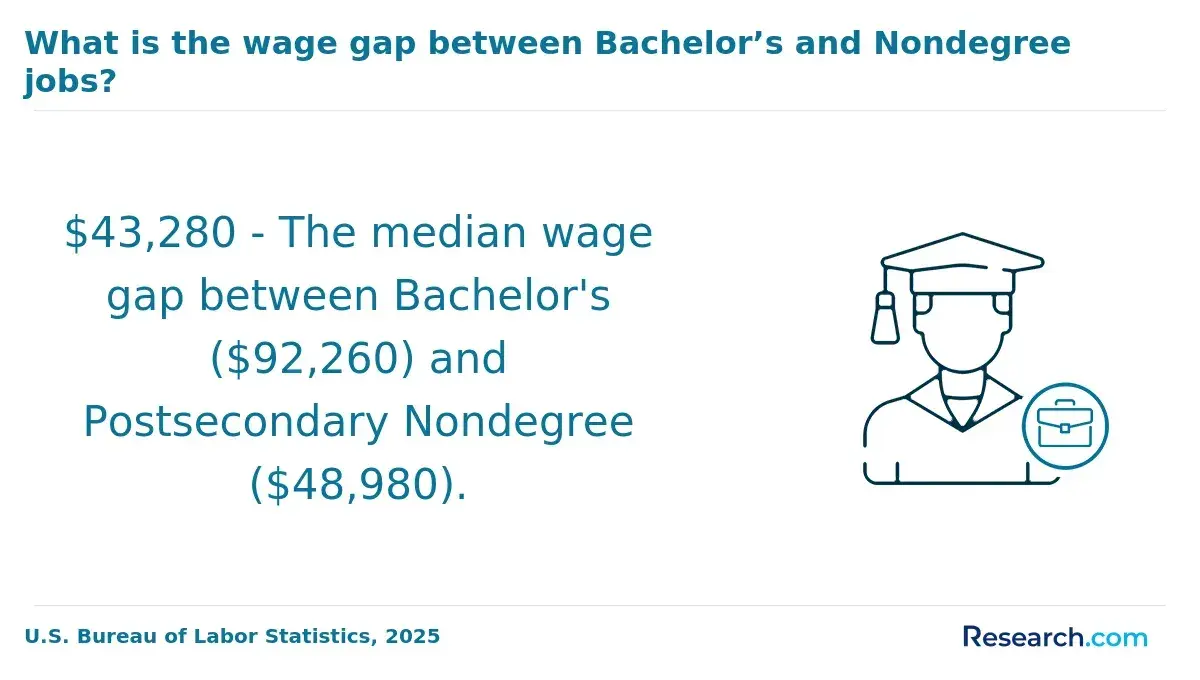
Career ROI should be assessed against both income potential and opportunity cost. For example, BLS data published in 2024 reported a May 2023 median pay of $92,740 for psychologists, while counselor roles had a lower median but faster projected growth. Those numbers are occupational benchmarks, not degree guarantees, and a DBH may support leadership or integrated care roles without qualifying a graduate for psychologist licensure.
If your interests are closer to justice-involved populations, correctional behavioral health, or legal settings, comparing forensic psychology master's programs can help clarify whether a doctorate is necessary for your intended role.
Are there fast-track or accelerated online Behavioral Health doctorate options available?
Some online behavioral health doctorates offer fast-track or accelerated formats, but "accelerated" usually means a compressed course sequence, year-round enrollment, shorter terms, or an applied final project. It does not mean the degree has fewer doctoral-level expectations.
Accelerated options work best for students who already have a relevant master's degree, professional experience, a stable schedule, and a realistic capstone or research topic. They are less suitable if you need extensive clinical placement support, are changing fields, are unsure about licensure requirements, or cannot study during summer terms.
Before choosing an accelerated doctorate, ask the school specific questions that reveal whether the fast timeline is realistic:
- How many students finish within the advertised accelerated timeline?
- Are courses available every term, including summer, or only once per academic year?
- When do students select a dissertation chair or capstone mentor?
- Are research methods, proposal development, and final project milestones embedded in coursework?
- What happens if a student fails, withdraws from, or delays one course in a lockstep cohort?
- Are residencies virtual, in person, optional, or mandatory?
A major red flag is an accelerated program that advertises speed but does not publish a clear course sequence, dissertation process, or support model. Another red flag is a program that appears fast because it is not aligned with the licensure or accreditation standards required for your career goal.
The current trend toward asynchronous coursework and virtual residencies can make accelerated pacing more manageable for working adults. Still, the most important question is not "How fast can the program be completed?" but "How many uninterrupted terms can I realistically sustain?"
Can you transfer graduate credits into an online Behavioral Health doctorate program?
Many online behavioral health doctorate programs allow graduate transfer credits, but approval is never automatic. Schools typically review course level, grade, age of credits, accreditation of the prior institution, content match, and whether the credits were already applied to another completed degree.
Transfer credit can shorten the timeline when it reduces required coursework and allows you to enter the correct sequence immediately. It may not shorten the degree if the program requires a fixed cohort sequence, minimum residency credits, or dissertation credits that cannot be waived.
Follow this process before you enroll so transfer credit is evaluated early enough to matter:
- Collect official transcripts from every graduate institution attended.
- Save syllabi for courses in research methods, statistics, diagnosis, counseling theory, leadership, ethics, assessment, and healthcare systems.
- Match each prior course to a required doctoral course and note credit hours, grade, and completion date.
- Ask whether transfer review occurs before admission, after admission, or only after enrollment.
- Request the approved transfer decision in writing, including which requirements were waived and which remain.
- Recalculate your term-by-term plan after transfer approval rather than assuming the advertised timeline still applies.
A common mistake is assuming a master's degree automatically subtracts 30 to 36 credits from the doctorate. In many post-master's programs, the master's degree is an admissions requirement, not a block of transferable doctoral credit. Another mistake is ignoring credit age limits; some schools restrict older methodology, assessment, or clinical courses even if the content appears relevant.
Is there a maximum time limit to complete an online Behavioral Health doctorate?
Yes, many universities set a maximum time limit for doctoral completion, often measured from first enrollment, candidacy, or completion of coursework. The exact limit varies by institution and program, so students should confirm it before accepting admission.
Maximum time limits matter because doctoral delays compound. If you take a leave of absence, change dissertation topics, lose access to a practicum site, or need to repeat a research course, you may still be moving toward the same deadline unless the university grants an extension. Some institutions also require students to revalidate older credits, repeat courses, or petition for continued enrollment if they exceed the limit.
Ask these policy questions early, especially if you plan to enroll part time:
- What is the maximum number of years allowed to complete the doctorate?
- Does the clock start at admission, first course enrollment, candidacy, or dissertation enrollment?
- Are approved leaves of absence excluded from the time limit?
- What happens if dissertation or capstone work continues beyond the normal sequence?
- Can students request extensions, and how often are they granted?
- Do transferred credits expire sooner than credits earned at the university?
Time-limit policies are especially important for working professionals. A part-time route may feel safer term by term, but it can become risky if the program's maximum completion window is short and the dissertation is not started early.
Students considering clinical psychology foundations before a doctorate may find it useful to compare online clinical psychology masters options, particularly if they need to strengthen prerequisites before committing to a longer doctoral plan.
How can students avoid delays in their online Behavioral Health doctorate timeline?
Students avoid delays by choosing the right program structure before enrolling, protecting weekly study time, confirming transfer and residency rules early, selecting a feasible research or capstone topic, and maintaining regular communication with faculty advisors.
The most preventable delays happen before the first course begins. Many students compare tuition and admission requirements but skip the operational questions that determine whether the advertised timeline is realistic for their lives.
Use this practical planning sequence to keep your online behavioral health doctorate on schedule:
- Build a degree map that lists every required course, credit, practicum, residency, exam, dissertation, capstone, and continuation requirement by term.
- Calculate your weekly workload using your actual job schedule, commute, caregiving responsibilities, and peak clinical or administrative periods.
- Confirm whether you can enroll in summer terms, because many accelerated timelines assume continuous enrollment.
- Choose a dissertation or capstone topic that has accessible data, realistic scope, ethical feasibility, and faculty expertise at the institution.
- Ask your employer about schedule flexibility, tuition assistance, project-site approval, reduced caseloads, or protected writing hours.
- Meet with your advisor before each registration period to confirm prerequisites, sequencing, and milestone deadlines.
- Keep documentation for transfer credits, practicum approvals, IRB submissions, committee feedback, and policy exceptions.
Also watch for red flags. Be cautious if a program cannot explain dissertation support, relies heavily on student-arranged placements without local support, advertises an unusually short timeline without year-round courses, or does not clearly state whether the degree supports licensure. The right program is not always the fastest one; it is the one whose timeline, requirements, accreditation, and outcomes match your goal.
An online behavioral health doctorate is most worth the time investment for professionals who need doctoral-level expertise for leadership, teaching, research, supervision, integrated care, policy, or advanced organizational roles. It may be a poor fit if your target job only requires a master's license, if you cannot commit to sustained writing and research, or if the program does not align with your state's licensure rules.
Other Things You Should Know About Behavioral Health
Some do, and some do not. Many online programs use virtual residencies, but others require short in-person intensives, dissertation defenses, orientation sessions, or clinical skills experiences. Always ask for the residency calendar before enrolling.
Yes, many students do, especially in applied DBH or leadership-focused programs. Full-time work is harder to combine with dissertation-heavy, clinical placement, or accelerated formats, so part-time enrollment may be more realistic.
Not automatically. Licensure depends on the degree type, accreditation, curriculum, supervised hours, internship structure, and state board rules. Confirm requirements with your state licensing board before assuming the doctorate will qualify you for a new credential.
Ask about total credits, average completion time, dissertation or capstone format, transfer credit limits, residency requirements, clinical hours, faculty advising, maximum time limits, accreditation, licensure alignment, and recent student completion outcomes.
References
- What Is An Accelerated Doctorate Degree Online? https://www.affordablecollegesonline.org/degrees/best-accelerated-doctorate-phd-programs/
- The Silent Struggle: Addressing Mental Health Challenges in PhD Programs https://precisionconsultingblog.com/the-silent-struggle-addressing-mental-health-challenges-in-phd-programs/
- Alternatives to Dissertation in PsyD Programs and their Benefits https://www.scuhs.edu/psyd-article/alternatives-to-dissertation-in-psyd-programs-and-their-benefits/
- Online and Hybrid PhD & PsyD Programs in Psychology https://www.psychologist-license.com/phd/
- How Long a Doctorate Degree Takes: Fast and Slow Doctoral Programs https://www.phds.me/ask-the-expert/how-many-years-is-a-doctorate-degree/
- Online DBH Programs – Online Doctor of Behavioral Health https://www.onlineeducation.com/healthcare/doctor-of-behavioral-health-programs
- Common PhD Challenges Faced by Doctoral Students https://academicsupervision.com/phd-challenges-faced-by-students/
- Doctor of Behavioral Health - Cummings Graduate Institute for Behavioral Health Studies https://cgi.edu/dbh/
- How Long Does It Take to Get a PhD After a Master's Degree? https://streamlinedai.app/blog/how-long-phd-after-masters
- PhD students’ mental health is poor and the pandemic made it worse – but there are coping strategies that can help https://theconversation.com/phd-students-mental-health-is-poor-and-the-pandemic-made-it-worse-but-there-are-coping-strategies-that-can-help-217717


