2027 Online Behavioral Health Degree Programs With No Application Fee and Rolling Admissions

Co-Founder and Chief Data Scientist
Choosing an online behavioral health degree is easier when you can apply without paying a fee and start sooner through rolling admissions. It also matters because demand is strong: BLS May 2024 wage data reports a $59,190 median annual wage for substance abuse, behavioral disorder, and mental health counselors, while SAMHSA's 2024-released national survey shows millions of U.S. adults continue to need mental health support.
This guide helps prospective students compare no-fee, rolling-admission programs by cost, flexibility, accreditation, and career fit.
Key Things You Should Know
- No application fee usually saves about $25 to $75 per school, but tuition, technology fees, transfer-credit rules, and fieldwork costs have a much bigger impact on total price.
- Rolling admissions means applications are reviewed continuously, but students still need to meet transcript, financial aid, course-registration, and start-date deadlines.
- BLS May 2024 data lists $59,190 as the median annual wage for substance abuse, behavioral disorder, and mental health counselors, making program quality and licensure alignment more important than application convenience alone.
Which Online Behavioral Health Degree Programs Have No Application Fee and Rolling Admissions?
Several online colleges advertise no application fee and flexible or rolling admissions for behavioral health, psychology, human services, addiction studies, or counseling-adjacent degrees. Policies can change by term, degree level, state, and applicant type, so students should confirm the fee waiver, start dates, and application timeline directly with the admissions office before applying.
The table below summarizes examples of online programs that are commonly considered by students seeking behavioral health-related degrees with no application fee and rolling or frequent admissions. Use it as a starting point for comparison, not as a substitute for checking the school's current catalog and admissions page.
| School | Example online behavioral health-related programs | Application-fee position to verify | Admissions and start-date structure | Best-fit student profile |
| Southern New Hampshire University | BA in Psychology with mental health concentration; human services-related options | Advertises no application fee for many online applicants | Rolling admissions with multiple online terms each year | Transfer students and working adults who want frequent start dates |
| Purdue Global | BS in Psychology in Addictions; BS in Human Services | Advertises no application fee | Rolling admissions with frequent online start dates | Career-focused students seeking structured online courses |
| Grand Canyon University | BS in Behavioral Health Science | Often promotes no application fee for online applicants | Rolling-style admissions with multiple online course starts | Students seeking a broad behavioral health foundation |
| Capella University | BS in Psychology; counseling- and addiction-related pathways may be available | Often lists no application fee for many programs | Frequent starts; admissions reviewed on an ongoing basis | Adult learners who want flexible pacing options |
| National University | Psychology, human behavior, and human services-related online programs | Often advertises no application fee | Year-round admissions with short course terms | Students who prefer accelerated monthly course formats |
| Liberty University Online | Psychology, addiction and recovery, and human services-related online programs | Free or waived application-fee promotions should be verified | Multiple annual start dates and rolling-style review | Students comfortable with a faith-based university environment |
The strongest choice is not automatically the school with the easiest application. A behavioral health program is more valuable when it combines verified accreditation, transparent pricing, useful transfer-credit policies, strong student support, and coursework that matches the student's career goal.
How Does Rolling Admission Work for Online Behavioral Health Degree Programs?
Rolling admission means a school reviews applications as they arrive instead of waiting for one fixed deadline. For online behavioral health programs, this often pairs with several annual start dates, which can help students begin in the next available term rather than waiting for a fall-only cycle.
However, rolling admission is not the same as unlimited time. Schools still close course sections, process financial aid on separate timelines, and may stop admitting students once a start date is full.
Students should understand the differences between rolling admissions and fixed-deadline admissions before deciding how quickly to apply.
| Feature | Rolling admissions | Fixed-deadline admissions | What it means for students |
| Application review | Reviewed as materials are received | Reviewed after a set deadline | Rolling review can shorten the wait for an admissions decision |
| Start dates | Often multiple starts per year | Often one to three starts per year | Rolling programs may fit work and family schedules better |
| Financial aid timing | May still require early FAFSA and document submission | Usually aligned with a formal term calendar | Students should not wait to complete aid paperwork |
| Course availability | Seats may fill before the advertised start date | Courses are tied to the admission cycle | Applying early can protect course choice and onboarding time |
A practical rolling-admissions timeline usually looks like this:
- Choose a target start date and ask the school for the last date to submit transcripts, aid documents, and enrollment forms.
- Request official transcripts before applying, especially if the student has attended more than one college.
- Submit the application early enough to allow review, transfer-credit evaluation, and financial aid packaging.
- Confirm course registration, orientation requirements, technology requirements, and payment deadlines before the term begins.
The common mistake is assuming "rolling" means "whenever." In reality, the best applicants use rolling admission to move earlier, not later.
How Much Can Students Save by Choosing an Online Behavioral Health Degree With No Application Fee?
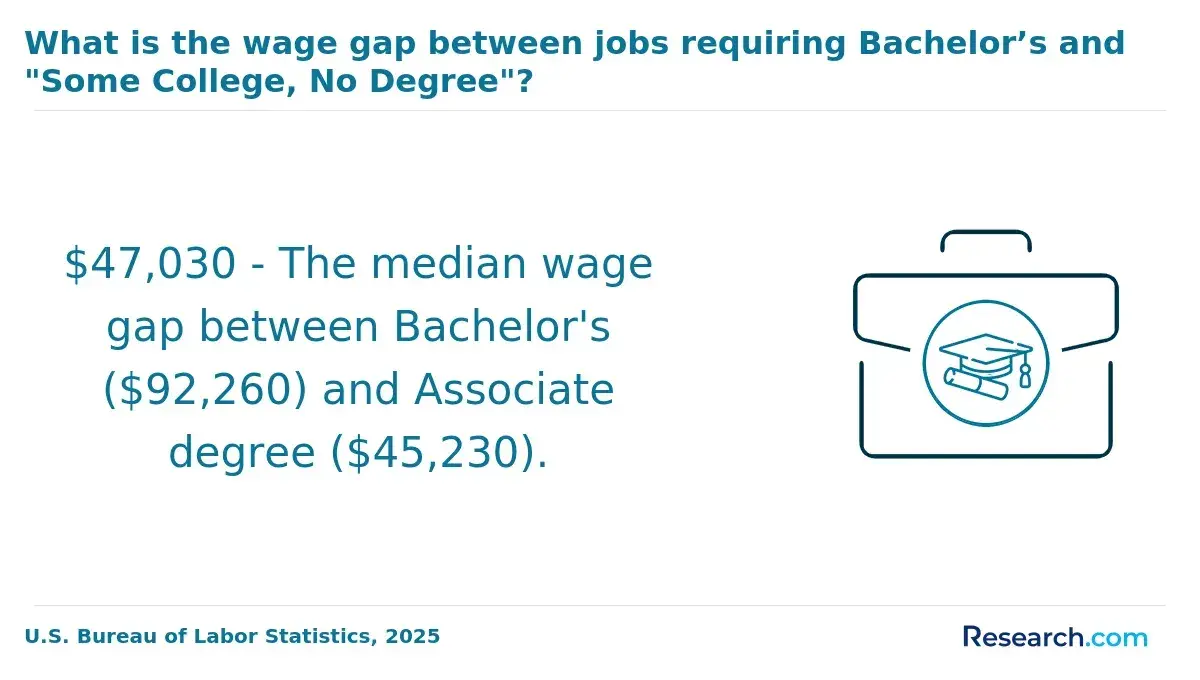
A no-application-fee policy creates real but limited savings. If a student applies to four schools that would otherwise charge $50 each, the immediate savings could be $200; useful, but small compared with tuition, textbooks, platform fees, background checks, and any practicum-related expenses.
The table below shows how application-fee savings compare with larger cost categories students should review before enrolling.
| Cost category | Why it matters | Decision tip |
| Application fee | A waived fee lowers the cost of comparing several schools | Use the savings to apply broadly, not to skip cost comparison |
| Per-credit tuition | This usually drives the largest share of total program cost | Multiply tuition by required credits after transfer evaluation |
| Technology and student fees | Online programs may charge recurring fees each term | Ask for a full fee schedule, not just tuition |
| Transfer-credit policy | Accepted credits can reduce both time and cost | Request an official transfer review before committing |
| Fieldwork or practicum costs | Some advanced or licensure-oriented programs require supervised experience | Ask whether placements, background checks, or travel create added expenses |
The application-fee waiver is most valuable when it lets students compare multiple accredited programs without paying upfront. It is least valuable when a higher-tuition program uses a free application to look affordable while charging more over the full degree.
What Are the Admission Requirements for No-Fee Online Behavioral Health Degree Programs?
Admission requirements vary by degree level. Associate and bachelor's programs in behavioral health, psychology, addiction studies, or human services are usually more accessible, while master's-level counseling, social work, or clinical mental health programs often require stronger academic preparation and more documentation.
Students comparing behavioral health with other healthcare paths should also recognize that clinical, medication-focused, and patient-care programs may have stricter prerequisites; for example, online PharmD programs typically involve more extensive science preparation than a behavioral health bachelor's degree.
Most no-fee online behavioral health applications ask for some combination of the following materials:
- Completed online application, even when the application fee is waived
- Official high school transcript, GED documentation, or college transcripts
- Minimum GPA, which may differ for first-year, transfer, and graduate applicants
- Government-issued identification and residency information
- Personal statement or goal statement for some upper-level or graduate programs
- Resume, recommendations, or interview for selective graduate or licensure-oriented programs
- English-language proficiency documentation for applicants whose prior education requires it
Applicants should also ask whether prerequisites are required before entry or simply before advanced courses. This distinction matters because a student may be admitted quickly through rolling admissions but later discover that statistics, introductory psychology, abnormal psychology, or human development must be completed before progressing.
When Should Students Apply to Online Behavioral Health Degree Programs With Rolling Admissions?
Students should apply as early as they can submit a complete file. A strong target is several weeks before the preferred start date, because transcript delays, transfer evaluations, financial aid verification, and course registration can take longer than the admission review itself.
The 2024-25 maximum Federal Pell Grant is $7,395, but eligibility depends on FAFSA data, enrollment intensity, cost of attendance, and federal rules. That makes timing important: students who apply late may still be admitted but have less time to resolve aid documents before payment deadlines.
A smart application calendar should work backward from the start date. Students can use this sequence to avoid last-minute problems:
- Eight to twelve weeks before the target start, shortlist accredited programs and confirm that the application fee is currently waived.
- Six to eight weeks before the target start, request all official transcripts and ask about transfer-credit review timelines.
- Four to six weeks before the target start, submit the application, FAFSA, and any scholarship forms.
- Two to four weeks before the target start, compare financial aid offers, enrollment agreements, and course schedules.
- Before registering, confirm withdrawal dates, refund policies, required technology, and whether any live online meetings are mandatory.
The main red flag is a school that encourages immediate enrollment before giving the student a clear cost breakdown, transfer-credit estimate, and start-date-specific course plan.
How Can Students Strengthen an Online Behavioral Health Degree Application?
Rolling admissions can make the process feel less competitive, but a complete and focused application still matters. Behavioral health programs look for students who understand the field, can handle online coursework, and have realistic goals for helping roles that may involve vulnerable populations.
Applicants can improve their chances of a smooth admission and enrollment process by preparing the materials schools use to evaluate readiness.
- Write a goal statement that connects the degree to a specific interest, such as addiction support, case management, community health, crisis services, or graduate study.
- Explain any weak grades briefly and professionally, focusing on what changed and how the student is now prepared for online learning.
- Document relevant experience, including caregiving, peer support, volunteer work, healthcare administration, military service, or social service employment.
- Choose recommenders who can speak to reliability, communication, empathy, ethics, and academic readiness.
- Prepare a realistic weekly study schedule before classes begin, especially if the program uses accelerated terms.
Students should avoid submitting an incomplete application simply because the school reviews files continuously. Missing transcripts or vague career goals can slow down admission, delay financial aid, or lead to poor course placement.
Are Online Behavioral Health Degree Programs With No Application Fees Accredited and Legitimate?
Yes, many legitimate online behavioral health-related programs waive application fees and use rolling admissions. But neither feature proves academic quality. Accreditation, state authorization, faculty qualifications, student support, and career alignment are the signals that matter most.
Students comparing behavioral health with advanced clinical nursing pathways will notice that fields with direct patient-care authority often involve programmatic standards; resources on the best DNP programs online can help illustrate how accreditation and professional outcomes shape healthcare education decisions.
For behavioral health degrees, students should verify the following before enrolling:
- Institutional accreditation from an agency recognized by the U.S. Department of Education or CHEA
- State authorization for online students in the student's state of residence
- Whether the degree is designed for general behavioral health work, graduate preparation, or a specific license
- Any in-person, internship, practicum, or supervised fieldwork requirements
- Whether the curriculum aligns with employer expectations or graduate program prerequisites
- Clear disclosures about tuition, fees, transfer credits, withdrawal policies, and student outcomes
The biggest accreditation mistake is assuming that a bachelor's degree in behavioral health automatically leads to licensed counselor status. In most states, independent counseling licensure requires a relevant master's degree, supervised postgraduate experience, and a licensing exam. Students should check their state board requirements before choosing a program for a regulated career path.
How Do Financial Aid and Total Costs Compare Among Online Behavioral Health Degree Programs?
Financial aid can make a larger difference than the waived application fee. Students should compare the net price after grants, scholarships, employer tuition assistance, military benefits, transfer credits, and payment plans, not just the advertised tuition rate.
Behavioral health programs should also be compared with nearby healthcare credentials when cost and speed matter. For example, students seeking faster entry into healthcare administration or records-focused work may also review the best medical coding programs before committing to a longer behavioral health degree.
The table below shows the cost factors that most often change the real price of an online behavioral health degree.
| Cost factor | How it affects total cost | Question to ask the school |
| Transfer credits | Can reduce the number of credits a student must pay for | How many credits will transfer into this exact program? |
| Term length | Accelerated courses may shorten time but increase weekly workload | How many courses should working adults take at once? |
| Flat-rate tuition | May help full-time students but not part-time students | Is tuition charged per credit, per term, or by subscription? |
| Books and materials | Some programs bundle materials while others charge separately | Are digital resources included in tuition or billed separately? |
| Practicum expenses | May add costs for background checks, immunizations, travel, or supervision | Are fieldwork costs required for this program or only for later licensure? |
| Financial aid deadlines | Separate aid timelines can limit funding even when admission remains open | What is the last date to complete aid documents for my intended start? |
A no-fee application is most useful when it lets students gather multiple financial aid offers. Students should compare estimated total program cost, monthly payment obligations, loan borrowing, and likely next-step education requirements before choosing.
Which Students Benefit Most From No-Fee, Rolling-Admission Online Behavioral Health Degrees?
No-fee, rolling-admission online behavioral health degrees are especially useful for students who need flexibility but still want a structured path into helping professions. The format can work well for adults changing careers, students with transfer credits, military-affiliated learners, and employees already working in social services, healthcare support, corrections, education, or community organizations.
Students whose interests are more prevention, wellness, food behavior, or public health-oriented may also compare a behavioral health pathway with a masters degree in nutrition, especially if they want to work at the intersection of lifestyle, counseling, and community health.
The students who benefit most usually share these traits:
- They want to compare several schools without paying multiple application fees.
- They need a start date outside the traditional fall semester.
- They have prior college credits and want a fast transfer evaluation.
- They can manage online coursework with limited campus attendance.
- They understand that entry-level behavioral health roles may differ from licensed clinical counseling roles.
Students should be more cautious if they need a very specific license, require extensive in-person support, are unsure about online learning, or are choosing a school only because the application is free. In those cases, a traditional-deadline program with stronger field placements, lower total tuition, or clearer licensure alignment may be the better investment.
How Should Students Choose Among No-Fee Online Behavioral Health Degree Programs?
The best choice is the program that fits the student's career goal, budget, schedule, and next education step. Application-fee savings and rolling admissions should be treated as convenience features, not proof that the program is affordable or career-aligned.
Students considering future advanced practice or clinical healthcare roles should compare behavioral health degrees with other post-licensure pathways, such as a 1 year post master's FNP online program, to understand how degree level, licensure, and scope of practice change the return on education.
A practical selection process should include the following steps:
- Define the target outcome first, such as case management, addiction services, graduate counseling preparation, social services, or nonprofit program work.
- Confirm institutional accreditation and state authorization before reviewing tuition or start dates.
- Ask whether the degree leads directly to employment, prepares for graduate study, or supports a future licensure pathway.
- Get a written transfer-credit estimate and calculate remaining credits, not just total catalog credits.
- Compare total cost after aid, including fees, books, technology, and any fieldwork expenses.
- Confirm the next three start dates, the application-completion deadline for each, and the financial aid deadline for each.
- Review online format details, including synchronous sessions, proctored exams, internships, and expected weekly workload.
- Speak with admissions, financial aid, and academic advising before signing enrollment documents.
The safest decision rule is simple: choose the no-fee, rolling-admission program only if it remains competitive after comparing accreditation, total cost, transfer credits, student support, and career relevance. If a program is vague about costs, pressures students to enroll immediately, or cannot explain licensure limitations, keep looking.
Other Things You Should Know About Behavioral Health
Mental health usually focuses on emotional, psychological, and psychiatric conditions. Behavioral health is broader and also includes habits, substance use, coping behaviors, lifestyle patterns, family systems, and social factors that affect well-being.
It can support remote-friendly roles such as care coordination, intake support, community program administration, peer-support administration, or telehealth operations. Direct counseling roles may require licensure, supervision, and state-specific telehealth compliance.
Some programs require a background check only before internship, practicum, or field placement. Requirements vary by school, placement site, and state, so students with concerns should ask early and review appeal or placement policies.
It can be, especially for students planning to pursue counseling, social work, public health, psychology, or human services graduate study. Students should compare prerequisite courses with the admission requirements of the graduate programs they may apply to later.
References
- For Students - CACREP https://www.cacrep.org/for-students/
- 2025 Most Affordable Online Colleges for Psychology Degrees https://www.onlineu.com/most-affordable-colleges/psychology-degrees
- Master of Science in Clinical Mental Health Counseling Admission Requirements | Lebanon Valley College https://www.lvc.edu/programs/master-clinical-mental-health-counseling/admission-requirements/
- College of Health and Human Services https://www.utoledo.edu/hhs/counselor-education/student-outcomes.html
- How does cost affect access to healthcare? - Peterson-KFF Health System Tracker https://www.healthsystemtracker.org/chart-collection/cost-affect-access-care/
- New Policies Affecting Access to Mental Health Care https://updates.apaservices.org/new-policies-affecting-access-to-mental-health-care
- Policy Options to Improve Access to Behavioral Health Services for Children and Adolescents https://www.macpac.gov/publication/policy-options-to-improve-access-to-behavioral-health-services-for-children-and-adolescents/
- Online Health And Human Services Associate Degree Program | Ultimate Medical Academy https://www.ultimatemedical.edu/program/health-and-human-services/
- 7 Top Online Master's in Counseling Programs: NY Schools Ranked - Counseling Degrees New York https://counselingnewyork.org/masters-programs/online-masters-in-counseling/
- Online Associate Degree in Psychology: 2026 Programs & Costs https://www.psychologist-license.com/associates/