2027 Online Behavioral Health Degree Programs With No Letters of Recommendation Required

Co-Founder and Chief Data Scientist
Finding academic references can delay an otherwise qualified applicant, especially working adults and career changers. Online behavioral health degrees may offer a simpler application process by not requiring recommendation letters, while still reviewing transcripts, GPA, and readiness for college-level work.
This matters as demand for mental health and substance-use services continues to shape the workforce; the U.S. Bureau of Labor Statistics projects substance abuse, behavioral disorder, and mental health counselor employment to grow 19% from 2024 to 2034. This guide helps you identify legitimate options, understand admissions trade-offs, and choose a program aligned with your goals.
Key Things You Should Know
- "No letters of recommendation required" means every applicant can apply without submitting references; it does not mean that letters are merely optional, waived temporarily, or unnecessary only for transfer applicants.
- Many online bachelor's-level behavioral health, psychology, counseling-support, and substance-use studies programs use transcripts, a high school diploma or prior college credit, and sometimes a personal statement or placement assessment instead; clinical graduate programs are more likely to request references.
- Compare institutional accreditation, total net price, transfer policy, curriculum, and state licensure fit before applying. The BLS projects 19% growth in substance abuse, behavioral disorder, and mental health counselor jobs from 2024 to 2034, but counselor licensure generally requires a qualifying graduate degree and supervised practice.
Which Online Behavioral Health Degree Programs Require No Letters of Recommendation?
Online behavioral health is a broad label rather than one standardized degree. It can include behavioral health, psychology, human services, addiction studies, community health, and counseling-support programs. Bachelor's programs are the most common place to find admissions processes without recommendation letters; master's programs designed for clinical counseling or licensure often use references to assess professional readiness.
The following examples represent online undergraduate pathways with publicly described streamlined or transcript-based admissions processes. Admission rules can change by term, residency status, degree level, and applicant type, so confirm the requirements for the exact program and start date before paying an application fee.
| Institution and online program type | Relevant focus | Typical no-letter admissions approach | Important career limitation |
| Southern New Hampshire University, BA Psychology | Psychology with applicable mental health-related study | Application and academic records; recommendation letters are not part of standard undergraduate admission materials | Does not independently qualify a graduate for clinical counselor licensure |
| Purdue Global, BS Psychology | Psychology and behavioral science foundation | Undergraduate application and education history; references are generally not listed as a standard requirement | Review concentration and practicum options if seeking human-services work |
| Arizona State University Online, BS Counseling and Applied Psychological Science | Applied psychology, counseling concepts, and helping professions | First-year or transfer academic admission review that does not ordinarily list recommendation letters | Graduate education is normally needed for licensed counseling roles |
| University of Cincinnati Online, BS Substance Abuse Counseling | Addiction, prevention, and substance-use counseling | Undergraduate application and transcripts; verify requirements with the program for the intended term | State credentials may impose separate education and supervised-experience rules |
These programs can suit applicants who need flexibility but still want an established university credential. A behavioral health-related bachelor's degree may lead toward behavioral health technician, case management, community outreach, peer-support coordination, intake, or social-services roles, depending on employer and state requirements. It is not interchangeable with a licensed clinical counseling degree.
If your interests lean toward healthcare administration rather than direct behavioral-health support, comparing adjacent training routes can prevent an expensive mismatch. For example, best medical coding programs may fit students who prefer records, reimbursement, and healthcare operations over client counseling.
What Are the Admission Requirements for Online Behavioral Health Degree Programs With No Recommendation Letters?
A program that omits references still evaluates whether you can succeed in its coursework. Undergraduate programs commonly use a high school transcript, GED, or previous college transcript. Transfer applicants may need to meet a minimum cumulative GPA or show satisfactory standing at their last institution. Graduate-level programs may waive letters only in limited circumstances, so applicants should not assume a bachelor's-level policy applies to a master's program at the same university.
Requirements vary, but the materials below are the most common replacements for recommendation letters and explain what each one tells an admissions office.
| Application material | What it helps the school assess | What applicants should check |
| Official or unofficial transcript | Academic preparation, coursework, GPA, and prior degree completion | Whether official records are required before enrollment or only after an admission decision |
| High school diploma, GED, or equivalent | Basic eligibility for undergraduate admission | Documentation rules for homeschooled, international, or older applicants |
| Personal statement or short responses | Goals, writing ability, motivation, and program fit | Prompt length, required topics, and whether it is required for your applicant category |
| Resume or employment history | Relevant human-services, healthcare, military, or leadership experience | Whether experience can support review but cannot replace missing prerequisites |
| Prerequisite courses | Readiness for psychology, statistics, research, or health-related coursework | Minimum grade, course-age limits, and equivalency review rules |
| Placement or readiness assessment | Need for math, reading, or writing support | Whether the result affects admission, placement, or course sequencing |
Some schools are test-optional or do not require SAT or ACT scores for many applicants. That policy does not automatically apply to placement testing, competitive scholarships, honors programs, or graduate admission. Read the degree page, university catalog, and application checklist together because the most accurate rule is the one attached to your academic level and entry term.
Before submitting an application, complete these checks to avoid a late surprise.
- Locate the requirement labeled "letters of recommendation," "references," or "professional references" on the specific program's admissions page.
- Confirm whether the policy applies to first-year, transfer, returning, and graduate applicants rather than relying on a general university admission page.
- Ask admissions in writing whether references are required, optional, or requested after initial review.
- Request transcripts early, particularly if you attended multiple colleges or need an international credential evaluation.
- Save a copy of the term-specific checklist and any written response from admissions for your records.
Are Online Behavioral Health Programs With No Letters of Recommendation Easier to Get Into?
Not necessarily. Removing references reduces application friction, but it does not reveal an institution's selectivity, academic standards, transfer-credit rules, or capacity in a particular cohort. A school may make an admission decision primarily from GPA and completed coursework, while another may use an essay, resume, prerequisite grades, or an interview. "No letters required" describes one document requirement, not the chance of admission.
Streamlined admission can be especially useful for adults who graduated years ago, changed careers, served in the military, or cannot reasonably contact former instructors. It may be less suitable for applicants seeking a licensure-track graduate counseling degree, where references can document interpersonal skills, ethical judgment, and readiness for supervised clinical training.
The distinction below helps applicants separate convenient admissions from genuinely lower standards.
| Admissions feature | What it may mean | What it does not prove |
| No recommendation letters | The school relies on other evidence of readiness | Automatic admission or low academic expectations |
| No standardized test score | Scores are not required for the standard application | No placement review, prerequisites, or GPA expectation |
| Rolling admission | Multiple application review points may be available | An unlimited number of seats or instant decisions |
| Open or broad-access admission | Entry may be accessible to a wider range of students | That all students will progress through advanced coursework without support |
| Online delivery | Coursework can be completed remotely, subject to program design | That internships, residencies, or fieldwork are fully remote |
A common mistake is choosing the application with the fewest steps while overlooking completion support, required field experiences, and career outcomes. Instead, ask for the retention, graduation, and program-completion information the institution reports, then compare it with tuition and curriculum. A program is a better fit when its entry requirements are manageable and its learning outcomes support your intended role.
What Do Online Behavioral Health Programs Evaluate Instead of Letters of Recommendation?
Admissions staff use recommendation letters as one form of third-party evidence. When a program does not request them, it commonly shifts attention to documented academic performance and the applicant's own materials. This can make the process more transparent: you can see the GPA, prerequisites, and documents being reviewed rather than depending on a recommender's availability.
For behavioral health-related study, schools may look for evidence that you can read research, communicate clearly, manage sensitive topics professionally, and complete structured online work. Relevant paid or volunteer experience can strengthen context for an application, but it usually does not replace an unmet degree, GPA, or prerequisite requirement.
Applicants can make a stronger application without overcomplicating it by focusing on the evidence a school actually requests.
- Use a clear, error-free personal statement to connect your education and experience to a realistic behavioral health goal.
- List relevant work accurately, such as client intake, case coordination, peer support, youth services, crisis-line volunteering, or healthcare administration.
- Explain any academic gap briefly and factually, then show recent evidence of readiness where appropriate.
- Submit transcripts from every required institution and resolve holds or name discrepancies before the deadline.
- Do not upload unsolicited references unless admissions confirms they will be reviewed; extra documents can create confusion rather than improve an application.
For clinical career goals, academic readiness is only one part of the equation. Licensed mental health counselor, marriage and family therapist, clinical social worker, and psychologist pathways normally involve a state-approved graduate degree, supervised experience, examinations, and other state-specific steps. A nonclinical online bachelor's can be a foundation, but applicants should map the full education sequence before enrolling.
How Can You Tell if an Online Behavioral Health Degree With No Recommendation Requirement Is Accredited and Legitimate?
Accreditation and licensure alignment matter far more than whether an application asks for references. A legitimate U.S. college should hold institutional accreditation recognized by the U.S. Department of Education or the Council for Higher Education Accreditation. Institutional accreditation supports federal aid eligibility and transfer review, although it does not guarantee that every credit will transfer or satisfy a professional licensing board.
Programmatic accreditation is especially important when a degree is intended to meet a regulated clinical pathway. For example, counseling programs may seek accreditation from the Council for Accreditation of Counseling and Related Educational Programs, while social work programs may seek accreditation from the Council on Social Work Education. A behavioral health, psychology, or human services bachelor's degree often has no profession-specific accreditor because it is not itself a license-qualifying clinical credential.
Use this verification sequence before applying. It helps distinguish a convenient, reputable admissions process from a program that makes vague or unsupported claims.
- Confirm the institution's accreditation in the U.S. Department of Education's Database of Accredited Postsecondary Institutions and Programs.
- Read the full curriculum and identify whether the degree is undergraduate, graduate, clinical, nonclinical, certificate-based, or license-eligible.
- For a licensure goal, check your state licensing board's education and supervised-practice rules before enrollment.
- Verify whether internships, practica, background checks, immunizations, site placement, or live online sessions are required.
- Review faculty credentials, student support services, refund policies, complaint procedures, and published contact information.
- Ask the school whether the online version has the same institutional accreditation and transcript designation as its campus equivalent.
Red flags include claims that a short certificate makes someone a licensed therapist, reluctance to identify an accreditor, pressure to enroll before receiving written cost information, or promises of guaranteed employment. Employers generally focus on the institution, degree level, relevant competencies, and any required license or certification - not on whether recommendation letters were part of your application.
How Much Do Online Behavioral Health Degree Programs With No Letters of Recommendation Cost?
Application simplicity does not predict tuition. Total cost depends on institution type, residency rules, transfer credits, technology charges, course fees, books, and whether fieldwork creates travel or background-check expenses. For context, College Board's 2024-25 published average tuition and fees were $11,610 for in-state students at public four-year colleges and $43,350 at private nonprofit four-year colleges. Those are national published-price benchmarks, not behavioral-health program prices or what an individual student will pay after aid.
Online programs may charge a flat per-credit rate, separate online tuition, or the same rate as campus instruction. Compare the full degree estimate rather than a single course price, and request a written breakdown that includes mandatory fees.
| Cost factor | Why it varies | Decision impact |
| Per-credit tuition | Public, private nonprofit, and for-profit institutions set different rates | Multiply by credits remaining after transfer evaluation |
| Residency classification | Some public institutions charge different in-state and out-of-state rates | Can substantially change the total for a public-university program |
| Transfer credits | Schools differ in limits and course-equivalency decisions | Accepted credits can reduce both time and tuition |
| Required fieldwork | Some programs require local placements, screenings, or travel | Creates costs beyond online course tuition |
| Books, platforms, and fees | Digital materials, proctoring, lab simulations, and graduation fees may be separate | Use a complete cost-of-attendance estimate, not tuition alone |
| Opportunity cost | Course load affects work hours and completion speed | Part-time enrollment may be more manageable but can extend the timeline |
Compare degree economics with the role you want, not simply the least expensive application. Students considering another health-related graduate route can also review a master's degree in nutrition to understand how scope of practice, required credential level, and program cost differ across helping and health professions.
Can You Get Financial Aid for an Online Behavioral Health Degree With Streamlined Admissions?
Yes. A school's decision not to require recommendation letters generally has no bearing on federal financial aid eligibility. To be considered for federal grants, loans, and work-study, eligible U.S. students complete the Free Application for Federal Student Aid and enroll in an eligible program at an eligible institution. State grants, institutional scholarships, employer tuition benefits, and veterans' education benefits have separate rules.
Financial aid is based on more than admission. Enrollment intensity, satisfactory academic progress, dependency status, cost of attendance, prior borrowing, and program eligibility can affect the final package. An online student may qualify for aid, but costs such as personal living expenses and required fieldwork can be treated differently from direct tuition charges.
Take these steps before committing to a program, particularly if you are comparing multiple offers.
- Submit the FAFSA early and review the school's aid offer alongside its net-price estimate.
- Ask whether online students are eligible for the same institutional scholarships as campus students.
- Confirm the number of credits needed for half-time status and how that affects loan eligibility and repayment timing.
- Compare grants and scholarships before accepting federal or private loans.
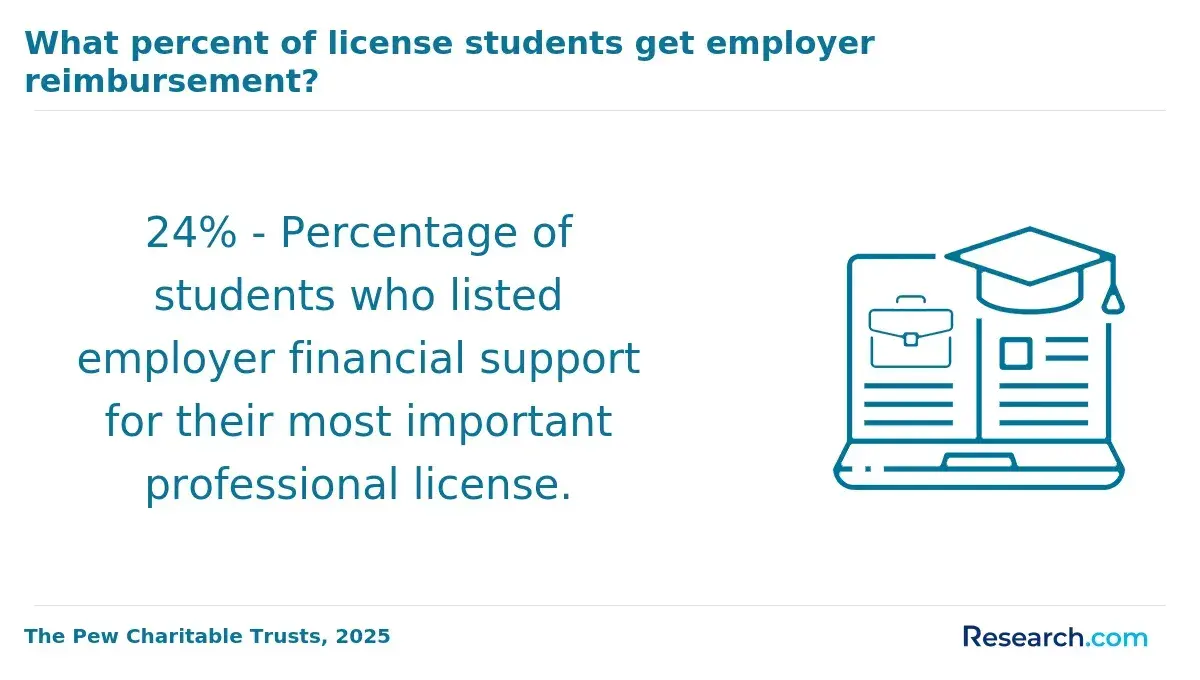
- Ask whether employer reimbursement requires a minimum grade, preapproval, or continued employment.
- For military-connected students, speak with the school's veterans benefits office before selecting courses.
Borrow only after comparing expected debt with the credential required for your target role. A bachelor's in behavioral health-related study can support entry-level and support-service work, while independent clinical practice usually requires additional graduate education. Students planning a longer healthcare education pathway should budget for each credential separately; online PharmD programs illustrate how professional-degree financing and program requirements can differ from undergraduate behavioral health study.
How Long Does an Online Behavioral Health Degree With No Letters of Recommendation Take to Complete?
Time to completion depends on the credential, prior credits, course load, prerequisite sequence, and whether required experiential learning is available when needed. A typical bachelor's degree requires about 120 semester credits. A student beginning with no transferable college credit often plans around four years of full-time study, while a transfer student with accepted general-education credits may finish sooner. Part-time online study can better fit work and family responsibilities but usually extends the calendar time.
Programs using accelerated terms may allow students to complete individual courses more quickly, but accelerated delivery does not remove credit requirements or reduce the preparation needed for behavioral health work. Students should also plan for possible practicum, internship, or capstone scheduling, which may follow a fixed sequence even in an otherwise asynchronous program.
| Credential | Typical academic length | Common purpose | Licensure consideration |
| Undergraduate certificate | Often less than one academic year, depending on credit count | Focused introduction or skill development | Rarely sufficient for independent clinical licensure |
| Associate degree | About two years full time | Entry-level support or transfer preparation | Requirements vary by employer and state |
| Bachelor's degree | About four years full time; potentially shorter with accepted transfer credit | Behavioral health support, human services, or graduate-school foundation | Usually not enough for independent clinical practice |
| Master's degree | Often two or more years, depending on curriculum and practicum | Advanced practice or a possible route toward counseling-related licensure | Must meet state and program-specific requirements |
Do not choose based on a fast completion claim alone. If your eventual goal is advanced nursing practice rather than behavioral health services, program length and clinical requirements differ substantially; comparing best DNP programs online can help clarify why advanced professional credentials often have distinct practicum and progression requirements.
Can You Transfer Credits Into an Online Behavioral Health Degree Program With No Recommendation Letters?
Usually, yes, but admission and transfer evaluation are separate decisions. A college may admit you without recommendation letters and then determine which prior credits apply to general education, major requirements, electives, or no degree requirement at all. Transfer policies often set a maximum number of credits, a minimum grade threshold, and rules about how old science, statistics, or psychology courses may be.
Transfer credit can materially affect affordability and completion time, so obtain a formal evaluation before assuming you will need only the credits shown by an unofficial calculator. Community college coursework, military training, prior learning assessments, and industry credentials may be considered under different policies.
To make a useful transfer comparison, collect the same information from each school.
- The maximum number of transfer credits accepted toward the specific degree.
- The minimum grade accepted for general education and major courses.
- Whether introductory psychology, statistics, research methods, or human-services courses meet major requirements.
- Whether a residency requirement requires a set number of credits to be completed through the new institution.
- Whether credit from nationally accredited, regionally accredited, military, or alternative providers is evaluated differently.
- The date by which official transcripts must arrive for transfer credit to apply to the first term.
Keep syllabi, course descriptions, and learning-outcome documents for major courses. They can be useful if you request a reevaluation. Avoid withdrawing from your current school or declining other offers until you receive the transfer decision in writing and understand how it changes your remaining credits.
How Should You Compare Online Behavioral Health Degree Programs That Do Not Require Letters of Recommendation?
Start with your intended outcome: entry-level behavioral health support, advancement in a current human-services role, preparation for graduate school, addiction-services work, or a different healthcare profession. Then compare programs on evidence that affects that outcome. The strongest choice is not automatically the school with the quickest application, lowest advertised tuition, or fewest documents.
This comparison framework identifies the information most likely to change your decision.
| Comparison category | What to look for | Why it matters |
| Exact admissions policy | Written confirmation that references are not required for your degree level and term | Prevents confusion between optional letters and a true no-letter requirement |
| Accreditation | Recognized institutional accreditation and, where relevant, programmatic accreditation | Supports aid, transfer review, employer confidence, and licensure planning |
| Curriculum | Psychology, ethics, cultural responsiveness, trauma-informed practice, research, statistics, and addiction coursework where relevant | Shows whether content matches the work you hope to do |
| Clinical or field experience | Internship requirements, placement support, site approval, supervision, and local travel expectations | Online coursework may still include in-person learning requirements |
| Total cost | Tuition, fees, materials, fieldwork expenses, and aid after grants | Shows the realistic financial commitment |
| Student support | Advising, tutoring, accessibility services, career services, and technical support | Can affect persistence in a remote format |
| Career and licensure fit | Published outcomes, graduate-school preparation, and state-specific disclosures | Prevents enrolling in a degree that cannot support the required credential |
Ask an admissions advisor direct, documented questions: Are letters required for my applicant type? What is the complete program cost after likely transfer credit? Is any practicum required? Does this degree meet educational requirements for my intended credential in my state? What percentage of courses are asynchronous? Clear answers are a positive sign; vague promises are not.
Also compare related advanced-career options only when they match your intended scope of practice. For registered nurses seeking a focused post-graduate nursing credential, a 1-year post master's FNP online option has a different admissions profile, clinical structure, and professional outcome than a behavioral health bachelor's degree.
An online behavioral health degree without recommendation letters can be a sound choice for organized applicants who have the academic records and career direction the school needs to review. It is a weaker choice for anyone selecting solely for convenience, overlooking state requirements, or expecting an undergraduate degree to create automatic eligibility for clinical licensure.
Other Things You Should Know About Behavioral Health
Often, yes. No-letter admissions policies can be helpful for adults without recent instructors or supervisors to contact. You may still need transcripts, proof of high school completion or prior college work, and any required placement assessment. Explain relevant work experience clearly if the application requests a resume or statement.
It can be part of the alternative review process, but it does not universally "replace" letters. Some programs require only transcripts, while others ask for a statement, resume, or prerequisite evidence. Follow the specific checklist rather than submitting documents based on another school's requirements.
Check the current admissions page for the exact degree and applicant type, then ask admissions by email whether letters or references are required, optional, or conditionally requested. Keep the written response and recheck the policy if your start term changes.
Generally, no. A bachelor's degree can prepare you for support, outreach, case-management, or graduate-study pathways, but independent therapist and counselor licenses usually require an approved graduate degree, supervised experience, examinations, and compliance with state-specific rules.
References
- 9 Mental Health Careers You Can Pursue with a BA https://www.nec.edu/news/9-mental-health-careers-you-can-pursue-with-a-ba
- How Online Counseling Degrees Are Shaping the Future of Community Mental Health https://www.standard.net/news/2025/jul/27/how-online-counseling-degrees-are-shaping-the-future-of-community-mental-health/
- Behavioral Health Workforce - Career Roadmap - Mayor's Office of Community Mental Health https://mentalhealth.cityofnewyork.us/workforce-career-roadmap
- Best CACREP-Accredited Online Master's In Counseling 2025 https://www.psychology.org/rankings/masters/online-cacrep-accredited-school-counseling-degrees/
- Online Master's in Counseling Programs - No GRE Required or GRE Waiver https://www.onlineeducation.com/counseling/faqs/gre-requirements-online-masters-in-counseling-programs
- CACREP-Accredited Online Counseling Programs https://onlinecounselingprograms.com/online-counseling-degrees/cacrep-accredited/
- For Students - CACREP https://www.cacrep.org/for-students/
- The Impact of Mental Health Provider Shortages on College Student Health - TimelyCare https://timelycare.com/blog/the-impact-of-mental-health-provider-shortages-on-college-student-health/
- Online MSW Programs No GRE Required - MasterofSocialWork.com https://www.masterofsocialwork.com/faqs/gre-requirements-online-msw-programs