2027 Best Online Behavioral Health Degree Programs at Nonprofit Universities

Co-Founder and Chief Data Scientist
Choosing an online behavioral health degree is consequential because the credential, not just the school's nonprofit status, can affect graduate-school options, licensure pathways, and job access. The U.S. Bureau of Labor Statistics projects employment of substance abuse, behavioral disorder, and mental health counselors to grow 17% from 2024 to 2034, much faster than average.
This guide helps prospective students compare nonprofit online programs by degree level, accreditation, cost, scheduling, support, and career alignment before applying.
Key Things You Should Know
- For counseling careers that require licensure, a bachelor's degree alone is usually not enough; students generally need a qualifying master's degree, supervised experience, and state-specific examination or board requirements.
- Nonprofit status is not a quality guarantee. Compare institutional accreditation, program curriculum, fieldwork arrangements, total cost, transfer policies, and student outcomes before treating a program as one of the best options.
- The Bureau of Labor Statistics projects 17% employment growth for substance abuse, behavioral disorder, and mental health counselors from 2024 to 2034, but demand does not eliminate the need to meet state licensure and employer requirements.
What Makes an Online Behavioral Health Degree Program at a Nonprofit University Different?
An online behavioral health degree examines how mental health, substance use, trauma, social conditions, prevention, and care systems affect well-being. Programs may be titled behavioral health, human services, psychology, addiction studies, community health, counseling, or social work. The title alone does not determine what graduates can do; the curriculum and degree level matter more.
Public universities are generally nonprofit, while private nonprofit universities are governed by nonprofit entities. In both settings, revenue is generally reinvested in the educational mission rather than distributed to owners. That structure can support public-service missions, research, or student services, but it does not automatically mean lower tuition, stronger online instruction, or a better return on investment.
Students should first identify the academic path that matches the role they want. The comparison below separates common program types and their usual purposes.
| Program type | Typical purpose | Common next step | Important limitation |
| Associate degree | Entry-level support, recovery, community-service, or transfer preparation | Bachelor's completion program | Usually does not qualify graduates for independent clinical practice |
| Bachelor's degree | Behavioral health support, case management, prevention, outreach, or graduate-school preparation | Employment or a master's program | Usually insufficient for counselor or therapist licensure |
| Master's degree | Advanced practice, counseling, administration, or specialized behavioral-health work | Supervised practice, licensure process, or leadership role | Licensure eligibility depends on the program and state rules |
| Doctoral degree | Psychology, research, teaching, leadership, or advanced clinical preparation | Licensure or academic practice where applicable | Requirements, residencies, and time commitment can be substantial |
Generalist programs can fit students exploring human services, while specialized programs may focus on addiction counseling, trauma-informed care, applied behavior analysis, integrated care, or community mental health. A wellness-oriented student may also compare adjacent fields, such as a masters degree in nutrition, but should choose the discipline that best matches the intended scope of practice and employer expectations.
Online study can make coursework accessible for working adults, but it is not automatically equivalent to a fully remote career pathway. Programs that include practicum, internship, laboratory training, or residency experiences may require in-person participation near the student's home or on campus.
How Can Students Verify Accreditation for an Online Behavioral Health Degree at a Nonprofit University?
Accreditation is one of the most important checks before enrolling. Institutional accreditation evaluates the university as a whole and is commonly needed for federal financial aid and credit transfer. Programmatic accreditation evaluates a particular discipline or professional program. A school can be institutionally accredited while a counseling, social work, or psychology program does not meet the specialized standards needed for a particular license.
For example, students pursuing clinical mental health counseling should investigate whether the master's curriculum aligns with Council for Accreditation of Counseling and Related Educational Programs standards and their state board's educational rules. Social work students should look for Council on Social Work Education accreditation. Psychology licensure pathways may require a different level of programmatic review, particularly at the doctoral level.
Use the following verification process before paying an application fee. It helps distinguish a legitimate online degree from one that may create transfer, aid, or licensing barriers.
- Find the institution in the U.S. Department of Education's Database of Accredited Postsecondary Institutions and Programs and confirm that accreditation is current.
- Check the accreditor's own directory, rather than relying only on a school webpage or advertising language.
- Read the program page and catalog to identify specialized accreditation, candidacy status, or the absence of programmatic accreditation.
- Compare the published curriculum with the educational requirements of the licensing board in the state where you plan to work.
- Ask admissions in writing whether online students can complete required practica locally and whether the program is designed to meet requirements in your state.
A major red flag is vague language such as "accreditation pending" without a clear status, accreditor, and timeline. Another is a school representative promising that a degree "meets licensure requirements everywhere." Licensure is state-specific, and the student remains responsible for confirming eligibility with the relevant board.
How Rigorous Are Online Behavioral Health Degree Programs at Nonprofit Universities?
A credible online behavioral health program should be academically comparable to its campus-based version, with defined learning outcomes, qualified faculty, assessed assignments, and meaningful interaction. Rigor does not mean constant live lectures; it means students demonstrate competence in ethics, assessment, communication, evidence-based practice, cultural responsiveness, documentation, and referral or care-coordination processes.
Bachelor's programs commonly include psychology, sociology, human development, statistics, research methods, crisis intervention, case management, addiction, and public-health coursework. Master's programs are more likely to include diagnosis-related concepts, counseling theories, assessment, ethics, group work, practicum, and internship requirements. Students seeking roles involving medication management or advanced nursing practice should understand that those are distinct clinical routes; compare the expectations of best DNP programs online rather than assuming a behavioral health degree leads to nursing authority.
Academic intensity varies most by degree level and experiential requirements, not by whether the delivery format is online. This overview can help students estimate the commitment involved.
| Study structure | What students usually experience | Best fit | Question to ask |
| Asynchronous online | Weekly deadlines, recorded materials, discussion posts, and assignments | Working adults needing scheduling control | Are there fixed exam windows or group meetings? |
| Synchronous online | Required live class sessions through videoconferencing | Students who value real-time discussion and routine | What days and times are attendance required? |
| Hybrid or low-residency | Online coursework plus campus or regional intensives | Students able to travel periodically | How many visits are required and who pays travel costs? |
| Field-based program | Online academics plus supervised practicum or internship | Students preparing for direct-service or licensure pathways | Who secures, approves, and supervises the placement? |
Do not mistake an accelerated term for an easier degree. Compressed courses often cover the same material in fewer weeks and can demand more reading, writing, and group work each week. Part-time enrollment can reduce weekly pressure, while full-time study may shorten completion time but make employment harder to balance.
How Much Does an Online Behavioral Health Degree Cost at a Nonprofit University?
The advertised per-credit tuition rate is only a starting point. Total cost includes the number of credits required after transfer evaluation, mandatory fees, books, technology, background checks, immunizations, fieldwork expenses, proctoring, travel, and any residency costs. Public nonprofit universities may offer lower rates to in-state students, while private nonprofit universities often charge one online rate regardless of residence.
As a broad comparison point, the National Center for Education Statistics reported average published undergraduate tuition and fees of $11,610 at public four-year institutions and $43,350 at private nonprofit four-year institutions for 2023-24. These are campus-based national averages, not prices for behavioral health online programs, so applicants should use them only to understand the public-private pricing gap rather than to estimate a personal bill.
The following cost factors are more useful than a single tuition figure when comparing specific programs.
| Cost factor | Why it changes total cost | What to request from the school |
| Transfer credit evaluation | More accepted credits can reduce remaining tuition and completion time | A written estimate of accepted credits and remaining required credits |
| Residency and fieldwork travel | Required visits may add transportation, lodging, and missed-work costs | A calendar of all in-person obligations |
| Course and technology fees | Online, lab, proctoring, and student-service fees can recur each term | An itemized fee schedule |
| Program length | Extra terms may increase fees and delay entry into the next career stage | A sample term-by-term plan for your transfer status |
| Licensure preparation | Exams, background checks, and post-degree supervision may create later expenses | An estimate of costs not included in tuition |
A lower-cost option can be the better value when it is accredited, accepts credits, provides suitable placement support, and meets the student's career goal. Conversely, a higher-priced program may be reasonable if it offers a necessary specialized curriculum or fits a student's state licensing requirements. Compare net price after grants, not sticker price alone.
What Financial Aid Is Available for an Online Behavioral Health Degree at a Nonprofit University?
Students in eligible online programs at accredited nonprofit institutions may qualify for many of the same federal aid options available to campus students, including grants, Direct Loans, work-study opportunities where available, and federal aid for qualifying graduate programs. Eligibility depends on factors such as enrollment, satisfactory academic progress, citizenship or eligible noncitizen status, and whether the program is approved for Title IV aid.
The Free Application for Federal Student Aid is the starting point. Applicants should submit it early, then compare each school's aid offer by separating grants and scholarships from loans. A larger aid package is not necessarily less expensive if most of it consists of borrowing.
Before accepting aid, ask the financial aid office how the following sources apply to online behavioral health students.
- Federal Pell Grants and state grants may help eligible undergraduate students, subject to current program and eligibility rules.
- Institutional scholarships may be based on academic record, transfer status, service commitments, or demonstrated need.
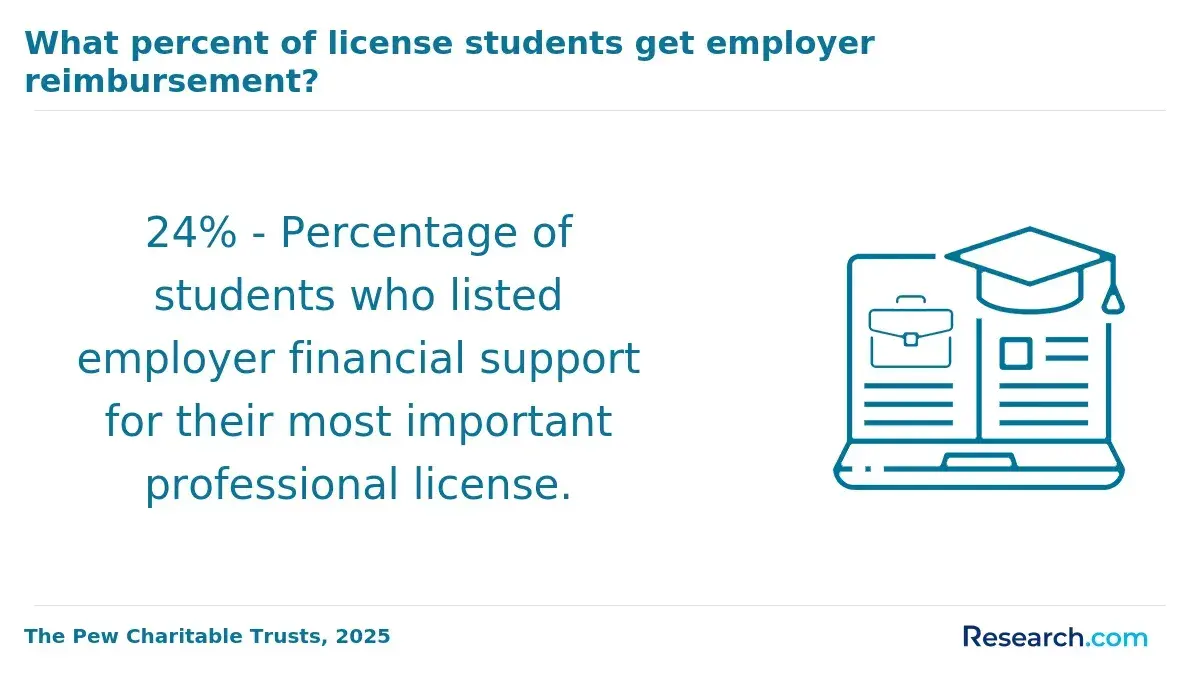
- Employer tuition assistance may be available to employees of hospitals, health systems, community agencies, insurers, or government organizations.
- Veterans education benefits and military tuition assistance may apply when the institution and program are approved.
- Federal Direct Loans can cover eligible costs, but repayment terms and total borrowing should be reviewed before enrollment.
Students comparing several health-related graduate routes should apply the same aid review to alternatives such as online PharmD programs: confirm program eligibility, estimate borrowing across the full program, and distinguish tuition financing from professional licensure costs. Avoid relying on private loans before exploring federal and institutional options, because private terms and borrower protections can differ.
How Flexible Are Online Behavioral Health Degree Programs at Nonprofit Universities?
Online programs can be flexible, but flexibility has several dimensions: when coursework is available, whether classes meet live, how quickly terms move, how often students must attend in person, and whether fieldwork can be completed locally. The best format depends on a student's work schedule, caregiving responsibilities, time zone, and career goal.
Asynchronous programs often allow students to view lessons at convenient times, yet they still have weekly due dates, collaborative assignments, and instructor response expectations. Synchronous programs can build connection and accountability but may be difficult for students who work evenings or rotating shifts. An accelerated format can shorten the calendar but generally increases weekly workload.
Students should request a recent course schedule before enrolling and confirm these details in writing.
- Whether required live sessions occur during business hours, evenings, or weekends
- Whether field placements must take place during weekday daytime hours
- Whether students may attend from their state and complete placement requirements locally
- Whether terms run in standard semesters, shorter sessions, or a cohort sequence
- Whether taking a leave, reducing course load, or changing from full-time to part-time study affects progression
A common mistake is choosing an "online" program without checking practicum logistics. For a clinically oriented master's degree, a local placement may be the least flexible part of the program even when every academic course is online.
What Student Support Services Do Nonprofit Universities Provide for Online Behavioral Health Degree Students?
Online learners need more than a learning-management system. Strong nonprofit universities typically provide academic advising, financial aid counseling, library access, tutoring or writing support, disability services, technical help, career guidance, and faculty office hours. Services vary considerably by institution and program, so students should verify that online learners receive the same access as campus students.
For behavioral health students, the most valuable support may be program-specific. This can include field-placement coordination, training in professional documentation and ethics, career coaching for human-services roles, graduate-school advising, and help navigating background checks or placement requirements.
Ask each school how it handles the support points below, particularly if you are a working adult, transfer student, or first-generation college student.
- Assignment of a dedicated academic advisor and the expected response time for questions
- Access to online library databases, research librarians, writing centers, and tutoring
- Availability of placement staff who can approve or help identify practicum and internship sites
- Career services for remote students, including résumé review, interviewing, and employer connections
- Accessibility accommodations and technical support outside standard business hours
Do not assume a school will place every student in a nearby internship. Some programs assist with affiliation agreements and approvals while requiring students to locate potential sites. That difference can affect completion time and should influence the final comparison.
Do Online Behavioral Health Degree Programs at Nonprofit Universities Prepare Graduates for In-Demand Careers?
They can prepare graduates for growing behavioral-health work, but career preparation depends on the degree level, curriculum, field experience, and any state credential requirements. Bachelor's graduates may pursue roles such as behavioral health technician, case manager, community outreach specialist, peer-support worker where separately certified, intake coordinator, or program assistant. Job titles and minimum qualifications vary by employer and state.
For the advanced counseling pathway, the U.S. Bureau of Labor Statistics reports a 2024 median annual wage of $59,190 for substance abuse, behavioral disorder, and mental health counselors and projects 17% employment growth from 2024 to 2034. This national occupation-level figure does not represent entry-level pay, guarantee employment, or apply to every behavioral health role. It does indicate sustained demand for trained professionals as communities expand mental health and substance-use services.
Students should match the degree to the work they want to perform. This comparison highlights the distinction.
| Career direction | Common educational starting point | Key preparation to evaluate |
| Community support or case management | Associate or bachelor's degree | Human-services curriculum, communication skills, local employer requirements, and internship access |
| Addiction or behavioral health counseling | Bachelor's or master's degree, depending on state and role | State credential rules, supervised hours, addiction-specific coursework, and exam requirements |
| Licensed mental health counseling | Qualifying master's degree | Program accreditation or state alignment, practicum, internship, post-degree supervision, and examinations |
| Administrative or program leadership work | Bachelor's or master's degree | Data analysis, policy, budgeting, leadership, and health-system knowledge |
Behavioral health is not the only route into the healthcare workforce. Students primarily interested in claims, records, and revenue-cycle work may find best medical coding programs more aligned with their goals than a counseling-focused degree. Compare daily responsibilities, credential requirements, and preferred work setting before committing.
Artificial intelligence and digital documentation tools are changing administrative workflows, but they do not replace the relationship-building, ethical judgment, crisis response, and coordinated-care skills central to many behavioral health roles. Programs should teach students to use technology responsibly while protecting privacy and maintaining professional boundaries.
Can an Online Behavioral Health Degree From a Nonprofit University Prepare Students for Graduate School?
Yes, an accredited online associate or bachelor's degree can prepare students for graduate study when it includes the prerequisites required by the target program. Graduate admissions committees generally consider academic record, prerequisite courses, writing ability, recommendations, relevant experience, and fit with the program. The online format is usually less important than the institution's accreditation, course rigor, and documented academic performance.
Students considering a master's in counseling, social work, public health, psychology, marriage and family therapy, or behavioral health administration should plan early. A psychology or behavioral health bachelor's curriculum may not automatically include every prerequisite, such as statistics, research methods, developmental psychology, abnormal psychology, or specific social-science coursework.
Use these steps to build a graduate-school-ready undergraduate plan.
- Identify two or three realistic graduate programs or professional pathways before selecting elective courses.
- Compare their published prerequisites with the online bachelor's degree plan and save the comparison.
- Choose research, statistics, writing, and ethics courses that strengthen graduate applications when available.
- Seek supervised volunteer, internship, or work experience that demonstrates informed interest in behavioral health.
- Confirm whether the intended graduate program leads to the state license or credential you ultimately need.
Students aiming for advanced nursing practice should not substitute a behavioral health degree for nursing education. A nursing graduate with the appropriate background may instead evaluate a 1 year post master's FNP online option, while recognizing that admission standards and scope-of-practice rules differ from behavioral health and counseling pathways.
How Should Students Compare the Best Online Behavioral Health Degree Programs at Nonprofit Universities?
There is no single best online behavioral health program for every student. The strongest choice is the accredited nonprofit program that meets the student's career target, state requirements, budget, schedule, and need for academic or placement support. A low tuition rate is valuable only if the program also leads toward the intended next step.
Create a short list of three to five programs, then compare the same information for each school. Start with nonnegotiable factors: degree level, institutional accreditation, specialized accreditation or state licensure alignment where relevant, authorization to enroll students in your state, and fieldwork feasibility.
After screening for eligibility, use this practical comparison sequence to make a final decision.
- Define the target role and identify whether it requires a degree, certification, license, supervised experience, or graduate education.
- Request a written transfer-credit evaluation and a personalized completion plan from each institution.
- Calculate total estimated cost, including tuition, recurring fees, books, travel, fieldwork expenses, and likely borrowing.
- Review a sample syllabus and course schedule to verify content, assessment methods, live-session requirements, and workload.
- Ask how practicum or internship placement works, who approves sites, and what happens if a site is unavailable.
- Compare retention, graduation, and career information published by the university, while recognizing that outcomes can vary by student circumstances.
- Speak with an advisor about support services, then keep written answers to questions about licensure, state authorization, and financial aid.
Common mistakes include assuming nonprofit status proves quality, comparing only per-credit tuition, overlooking required residencies, and selecting a degree title without checking what occupations it supports. Another red flag is pressure to enroll before the school provides clear answers about accreditation, transfer credit, total cost, or clinical placement expectations.
Public nonprofit programs may be especially attractive for in-state students seeking lower published tuition, while private nonprofit programs may offer predictable online pricing, smaller cohorts, or specialized support. Neither model is inherently better. Choose based on verified program fit and the full financial and professional path ahead.
Other Things You Should Know About Behavioral Health
Mental health refers to emotional, psychological, and social well-being. Behavioral health is a broader term that can include mental health, substance use, health behaviors, prevention, and the systems used to support care. Schools may use the terms differently, so review the actual curriculum.
Yes, some entry-level support, community-service, and technician roles may accept an associate degree, often with additional employer training or state-specific credentials. Independent counseling or therapy roles generally require more education and supervised practice.
Many nonprofit universities issue the same diploma for online and campus-based versions of an approved degree, but practices vary. Ask the registrar directly and request confirmation if this matters to you.
Many internships, clinical sites, and employers require a background check, drug screening, immunization documentation, or other compliance steps. Requirements are set by the site, employer, and state, so students should review them before enrolling in a fieldwork-based program.
References
- 2026 Nonprofit Online Colleges and Universities https://www.onlineu.com/online-schools/non-profit
- Behavioral Health (Online) - Evangel University https://www.evangel.edu/programs/behavioral-health-online-undergrad/
- Behavioral Health Internships - Children's Resource Center https://www.crcwoodcounty.org/internships
- Internships and Practicums https://www.pawnee.org/student-internship-and-practicum-opportunities.cfm
- Enrollment in Higher Education https://odphp.health.gov/healthypeople/priority-areas/social-determinants-health/literature-summaries/enrollment-higher-education
- Internships at Cummins Behavioral Health https://www.cumminsbhs.org/careers/internships/
- Internships https://careers.comphc.org/opportunities/internships/
- Online Counseling Degrees: Top Programs, Tuition & More https://www.edumed.org/online-schools/counseling-degrees/
- Behavioral Health Academy™ | Community Health Network https://www.ecommunity.com/careers/behavioral-health/behavioral-health-academy
- Advanced Degree Programs | Didi Hirsch https://didihirsch.org/education/advanced-degrees/