2027 Online BA in Psychology - Addictions for Adolescent Substance Use Prevention: Which Courses Should You Look For?
Audited and Verified:
Our Editorial and Data Verification Process
Research.com uses government datasets, official education statistics and primary institutional information to support its career and degree guides. Our review process checks factual accuracy, occupational definitions, source dates and the requirements associated with the credentials discussed.
How This Article Was Fact-Checked
Our editorial team verifies salary estimates, employment projections, education requirements and program information against original data providers and official organizations. Salary figures are checked against the relevant occupational definitions and reporting periods. Information about licensure, accreditation and required in-person training is reviewed separately.
Fact-checked and verified on:

Co-Founder and Chief Data Scientist
An "addictions" label does not tell you whether an online psychology BA will prepare you to help prevent adolescent substance use. For students considering school, community, or youth-service work, the useful test is whether the curriculum connects adolescent development and prevention science with research skills and appropriately supervised experience.
This guide identifies the courses to prioritize, explains what online programs can and cannot provide, and shows how to check whether a degree fits your intended role before you enroll.
Key Things You Should Know
- Prioritize adolescent development, substance-use science, prevention and public health, statistics, research methods, and ethics—not an addiction elective alone.
- A typical bachelor's degree requires about 120 semester credits, but transfer evaluations, course availability, and placement requirements determine your actual time and cost.
- A psychology BA can support nonclinical prevention work; it does not by itself qualify you to diagnose, provide therapy, or practice as a licensed addiction counselor.
What is an online bachelor's degree in psychology focused on adolescent substance-use prevention?
It is usually a psychology BA with relevant electives or a formally named addictions concentration, rather than a degree exclusively devoted to prevention. Adolescent substance-use prevention means applying evidence about development, risk and protective factors, families, peers, and communities to reduce the likelihood or harms of substance use. It is distinct from diagnosing or treating a substance use disorder.
Check the transcript designation: a concentration, minor, certificate, and collection of electives are not interchangeable. If your goal is a state-regulated counseling role rather than prevention education or program support, compare the curriculum with substance abuse counseling bachelor's affordability and duration, then check your state's credential rules. Neither degree title establishes licensure eligibility on its own.
What courses should an online psychology program include for addiction prevention?
The strongest course plan teaches you to understand adolescents, distinguish credible prevention evidence from appealing claims, and support programs without crossing into clinical practice. The table separates essential foundations from specialized courses; availability and prerequisites differ by school:
| Course area | What it contributes to prevention work | What to check in the syllabus |
| Developmental psychology, including adolescence | Explains developmental change, peer influence, family context, and age-appropriate communication. | Substantial adolescent content, not only early childhood or adult development. |
| Learning, social psychology, and health psychology | Connects behavior, social norms, motivation, and health decisions. | Application to groups and environments, not just individual behavior. |
| Substance use and addiction science | Introduces substances, patterns of use, risk factors, and recovery concepts. | Evidence-based, nonstigmatizing coverage of youth and co-occurring concerns. |
| Prevention science or public health | Examines school and community approaches and the difference between prevention and treatment. | Program design, implementation, and evaluation rather than awareness campaigns alone. |
| Statistics and research methods | Builds the ability to interpret studies and assess program outcomes. | Study design, measurement, confounding, and limits on causal claims. |
| Ethics, culture, and work with minors | Addresses privacy, accessibility, safeguarding, and referral boundaries. | Concrete youth-service scenarios and applicable institutional procedures. |
Sequence statistics before advanced methods or evaluation when the catalog requires it. If you can choose only a few electives, adolescent development and prevention or program evaluation generally offer a closer fit than a second treatment-oriented course. A supervised project might involve reviewing published evidence or analyzing an authorized, appropriately protected program dataset; student access to youth or client records should never be assumed.
Courses describing counseling techniques can improve referral literacy, but they do not confer permission to counsel. Students whose actual goal is psychotherapy should compare the requirements of accelerated accredited clinical mental health counseling programs rather than treating undergraduate coursework as a substitute for professional training.
Is an online psychology bachelor's degree accredited and transferable for graduate study?
Verify the institution's accreditation through the institution and its recognized accreditor. An online BA is not automatically less acceptable for graduate applications, but accreditation alone does not guarantee admission or satisfaction of a particular prerequisite. APA accreditation is not a standard accreditation designation for general psychology bachelor's programs.
For a future psychology research degree, preserve syllabi and look for statistics, methods, substantial writing, and opportunities to work with faculty. For a future counseling program, compare that program's entry requirements and professional recognition separately; online clinical counseling graduate completion options are a different educational pathway from a psychology BA. Ask prospective graduate programs whether they accept the specific statistics or methods courses you plan to take.
Online classes can make lectures and assignments easier to fit around work, but they do not make every obligation asynchronous. Group projects, live research meetings, exams, or a supervised community placement may still occur at fixed times. Campus programs may offer more immediate access to local research teams and youth-serving partners; an online program can be equally useful if it has workable supervision and placement arrangements where you live.
Compare actual schedules rather than advertised speed. Online psychology programs with faster pacing may compress coursework without reducing the time needed for prerequisite sequences or site approval. Ask who finds placements, whether local sites qualify, whether visits are required, and how students receive research feedback.
Requirements vary by institution and by whether you enter as a first-year or transfer student. Schools commonly request prior academic transcripts and may have separate standards for admission to the university and declaration of the psychology major. If you have previous college coursework, the decisive document is a degree audit showing which credits satisfy general education, major, prerequisite, elective, and residency requirements.
Send official transcripts early and request written decisions on statistics, research methods, and developmental psychology equivalencies. Accepted credits do not necessarily satisfy those requirements. If you are returning to college, guidance on psychology degree completion with transfer coursework can help you frame questions, but only the receiving institution can approve your credits and remaining course plan.
A bachelor's degree commonly totals about 120 semester credits; four academic years is a conventional full-time starting point, not a completion promise. Transfer credits, part-time enrollment, prerequisite order, and how often specialized electives run can change the timeline. Price the remaining requirements, not the advertised cost per credit alone: include mandatory fees, books or software, travel to any placement, and possible unpaid fieldwork.
For a fair comparison of lower-cost online psychology study pathways, request an individualized audit and a term-by-term tuition estimate from each school. Ask its financial-aid office how your planned enrollment level affects aid; do not assume that the lowest published tuition produces the lowest completion cost.
Relevant entry-level work may include prevention-program assistant, youth outreach worker, community education coordinator, research assistant, or human-services support worker. Duties can include preparing educational materials, coordinating referrals, supporting events, collecting permitted program data, and reporting activities to a supervisor. Employers may also require youth-work experience, background checks, or training in safeguarding and confidentiality.
Look for a placement or project that demonstrates the tasks in the job posting. An evidence review, a supervised outreach plan, or a responsibly scoped program evaluation brief is more persuasive than a concentration name alone. Justice-system diversion work may overlap with prevention, but one-year forensic psychology graduate tuition comparisons address a different specialization—not a necessary next step for youth prevention work.
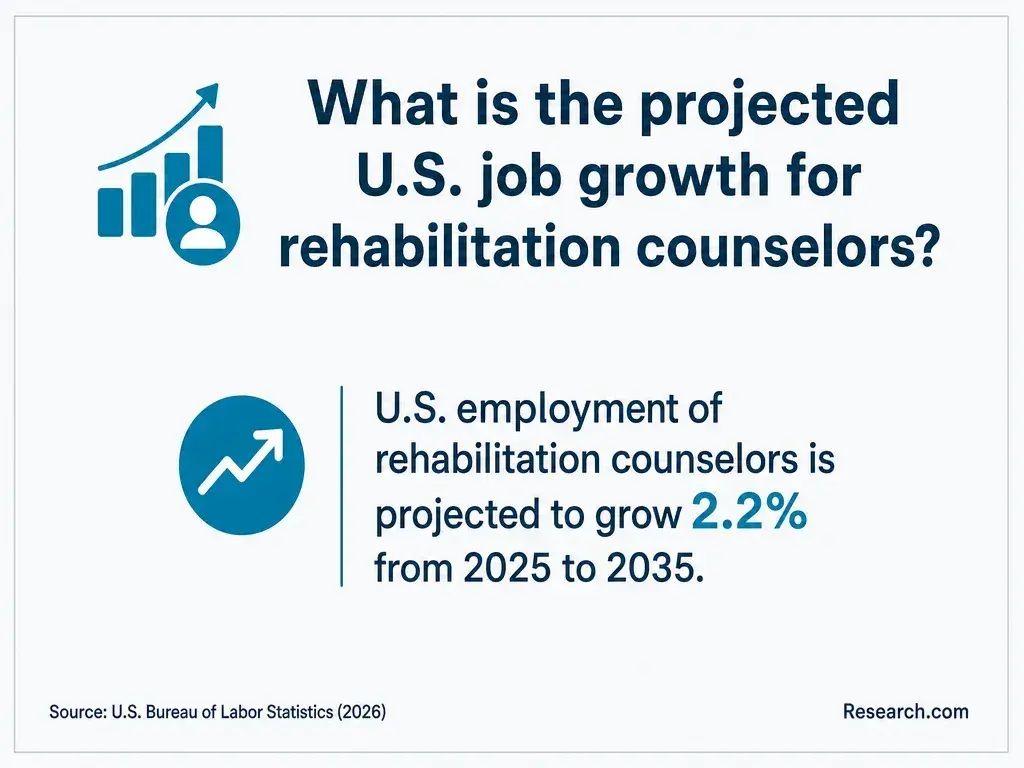
There is no reliable single salary or growth rate for "adolescent substance-use prevention" graduates: that phrase spans nonprofit, school, public-health, and research jobs with different duties and pay structures. The U.S. Bureau of Labor Statistics reports occupation-wide wages and projections, not earnings attributable to an addictions-focused BA. A substance abuse counselor figure, for example, may include workers with credentials and treatment duties that a new psychology graduate cannot perform.
Use local postings for the job titles you would actually pursue, noting required credentials, experience, hours, and salary ranges. If comparing a later counseling credential, account for the additional education and supervised practice rather than applying counselor wages to BA-level prevention jobs; the cost and length of shorter counseling master's programs are part of that separate decision.
Many nonclinical outreach and program-support positions are not licensed professions, though employers may require role-specific training. Requirements for substance-use-disorder counseling, prevention-specialist certification, and peer support vary by state and credentialing body. Before choosing electives to meet a credential, obtain its current rules for required coursework, supervised experience, exams, and permissible duties—especially when work involves minors.
A general or addictions-focused psychology master's may deepen subject knowledge without meeting a counseling license's educational criteria. If you are considering tuition-focused psychology master's program choices, check credential eligibility first; an inexpensive nonclinical degree is not a bargain if your target role requires a different professional program.
How can you choose a reputable online psychology program for addiction studies?
Shortlist programs by the courses and experiences you can actually complete, not by the prominence of "addictions" in their marketing. Before applying, ask an advisor for a sample course sequence and written answers to these questions:
- Is the addictions focus a transcripted concentration, a minor, or simply suggested electives?
- When are adolescent development, statistics, methods, and prevention courses offered, and which have prerequisites?
- Who approves local placements or projects, supervises students, and handles safeguarding and data permissions?
- What does an individualized degree audit and total remaining-cost estimate show?
- What evidence does the school publish about completion and relevant student opportunities, and whom do those figures include?
Separate the decision to fund a degree from the decision to pursue a counseling credential. If you are comparing aid options, FAFSA for online substance use counseling undergraduates provides a related starting point; confirm your own program's eligibility and costs with its financial-aid office. Choose the BA when it fills a real gap in psychology and research preparation. If you already have a degree and only need a particular prevention skill or employer-recognized credential, targeted coursework or supervised experience may be the more direct route.
Other Things You Should Know About Psychology
No. Prevention approaches differ in goals and setting, but effective planning starts with evidence, developmental fit, and the needs of the young people served - not a slogan alone.
Yes, if youth prevention is your goal. Check whether coursework applies its underlying concepts to relevant substances and changing patterns of use rather than relying on examples that never get updated.
Not without checking instructor, school or site, and applicable research-oversight requirements first. Minors' participation, consent, privacy, and safeguarding require particular care; a literature review may be a more feasible project.
Look for a clearly defined age group and outcome, an appropriate comparison, and evidence from more than testimonials. Ask whether a reported change reflects substance-use outcomes or only knowledge and attitudes.
- INTEGRATED MODELS OF SCHOOL-BASED PREVENTION | nih.gov https://pmc.ncbi.nlm.nih.gov/articles/PMC4865396/
- Alcohol, e-cigarettes, cannabis: concerning trends in adolescent substance use, shows new WHO/Europe report https://www.who.int/europe/news/item/25-04-2024-alcohol--e-cigarettes--cannabis--concerning-trends-in-adolescent-substance-use--shows-new-who-europe-report
- SBIRT: Screening, Brief Intervention & Referral to Treatment | ny.gov https://oasas.ny.gov/sbirt
- Youth Prevention Education (Evidence Based Curricula) | ncdhhs.gov https://www.ncdhhs.gov/youth-prevention-education-guide-8-1-16/open
- Substance Use Among Youth | Reducing Health Risks Among Youth | CDC https://www.cdc.gov/youth-behavior/risk-behaviors/substance-use-among-youth.html
- Mandatory Reporting of Child Abuse and Neglect | Child Welfare Information Gateway https://www.childwelfare.gov/resources/mandatory-reporting-child-abuse-and-neglect/
- Mandatory Reporting Laws - StatPearls - NCBI Bookshelf - NIH https://www.ncbi.nlm.nih.gov/books/NBK560690/
- Substance Use in Adolescence | Office of Population Affairs https://opa.hhs.gov/adolescent-health/substance-use-adolescence
- Drugs and Young People | Teen Drug Use | MedlinePlus https://medlineplus.gov/drugsandyoungpeople.html
- Screening, Brief Intervention, and Referral to Treatment | samhsa.gov https://www.samhsa.gov/substance-use/treatment/sbirt