2027 Online Art History Degree Programs With No Letters of Recommendation Required

Co-Founder and Chief Data Scientist
Applying to college can stall when you need academic or professional references you no longer have. Online Art History degree programs with no letters of recommendation required can offer a more direct application path while still reviewing transcripts, GPA, and readiness for college-level work.
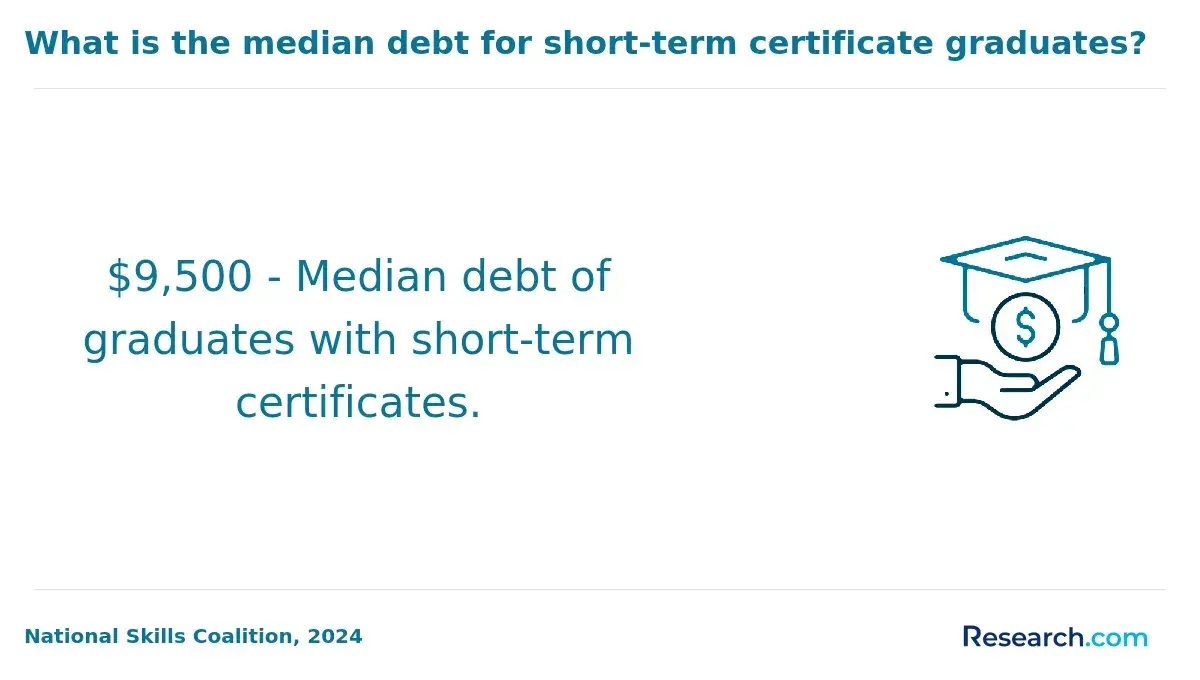
The National Center for Education Statistics reported in its 2024 Digest that millions of U.S. students study exclusively through distance education, underscoring the importance of carefully comparing online options. This guide explains how to find, verify, afford, and evaluate a legitimate program that fits your goals.
Key Things You Should Know
- "No letters of recommendation required" means the standard application does not ask applicants to submit references; it does not mean admission is automatic or that transcripts, GPA, placement requirements, or an application fee will be waived.
- Fully online bachelor's options are more common than fully online Art History master's programs with streamlined admissions. Confirm the rule for your exact degree, term, and applicant type because transfer, international, and graduate applicants may have different requirements.
- Quality matters more than application simplicity: verify institutional accreditation, total tuition and fees, course access to art-historical research resources, and transfer policies before enrolling. For context, College Board's 2024-25 average published tuition and fees for public four-year in-state students was $11,610.
Which Online Art History Degree Programs Require No Letters of Recommendation?
A small number of U.S. institutions offer online or substantially online undergraduate Art History degrees with standard admissions processes that generally do not request recommendation letters. This is most common for bachelor's and degree-completion programs; graduate-level Art History programs often use more individualized review and may still request references.
The examples below are starting points, not permanent guarantees. Admissions forms and requirements can change by entry term, residency status, academic level, or transfer status, so applicants should confirm the current checklist directly with the institution before paying an application fee.
| Institution and format | Degree option to investigate | Typical no-reference application approach | Important verification point |
| Arizona State University Online | Online Bachelor of Arts in Art History | Standard undergraduate review generally centers on academic records and admission eligibility rather than recommendation letters. | Check first-year versus transfer GPA and course-competency expectations. |
| Oregon State University Ecampus | Online Art History bachelor's pathway | Undergraduate applications commonly emphasize transcripts and prior coursework. | Confirm whether the desired art history option is available fully online for your catalog year. |
| Southern New Hampshire University | Online bachelor's program with art history study options | Streamlined undergraduate admissions typically focus on transcripts and identity documentation. | Verify whether the curriculum is a dedicated Art History major or an arts-related alternative. |
| University of Arizona Online | Online Bachelor of Arts in Art History | Undergraduate review may not list letters as a standard requirement. | Ask whether admission to the major has requirements beyond university admission. |
Use this list to identify possibilities, then read the school's program page and application checklist. A program is a true no-letter option only when its current requirements state that recommendations are not requested for your applicant category - not merely "optional," "encouraged," or waived after an advisor review.
Students who need graduate study should expect a narrower set of choices. A master's program may omit recommendations for some applicants, but that is different from publishing a universal no-recommendation policy.
What Are the Admission Requirements for Online Art History Degree Programs With No Recommendation Letters?
Most online undergraduate programs replace recommendation letters with evidence that is easier to verify directly. Requirements vary, but applicants should expect schools to assess prior academic preparation and eligibility for enrollment.
The following comparison shows the documents commonly used in place of references and what each document helps an admissions office evaluate.
| Application item | What it shows | When it may be required |
| Official high school or college transcripts | Completed coursework, grades, GPA, and academic progression | Nearly all first-year and transfer applicants |
| Online application and identity information | Residency, intended program, enrollment term, and contact information | All applicants |
| Personal statement or short responses | Academic purpose, communication skills, and context for nontraditional records | Some institutions, selective programs, or applicants seeking exceptions |
| Resume or activities record | Employment, museum work, gallery experience, military service, or community involvement | More common for adult learners and graduate applicants |
| Portfolio or writing sample | Visual analysis, research, and writing ability | Occasionally required for advanced study; less common for bachelor's admission |
| Placement or prerequisite evidence | Readiness for college writing, language study, or general education coursework | When transcripts do not clearly establish placement |
A no-letter requirement does not eliminate academic standards. Some schools publish minimum GPA expectations, while others use a holistic review of course completion and academic history. Test scores are increasingly optional at many institutions, but test-optional does not mean every applicant will be admitted.
Before applying, complete these checks so that a seemingly simple application does not produce a surprise later in the process.
- Open the admissions checklist for your exact degree and identify whether you are applying as a first-year, transfer, returning, or international student.
- Request official transcripts early, including records from every college attended, even if credits will not transfer.
- Check whether the Art History major has foreign-language, writing, studio-art, or survey-course prerequisites.
- Ask whether an essay, resume, portfolio, interview, or additional materials may be requested after initial review.
- Save a dated copy or screenshot of the current admissions requirements for your records.
Are Online Art History Programs With No Letters of Recommendation Easier to Get Into?
Not necessarily. Removing letters of recommendation reduces an administrative barrier, particularly for working adults, transfer students, and applicants who have been away from school. It does not reliably indicate a lower GPA threshold, a higher acceptance rate, less demanding coursework, or a weaker degree.
Admissions difficulty depends on the institution, available capacity, applicant pool, transfer-credit rules, and the student's academic record. A school may use broad-access admissions at the university level while requiring students to meet additional standards before entering upper-division coursework or graduating from the major.
Students should view streamlined admissions as a convenience feature rather than a quality signal. It may be a good fit if you have solid transcripts but limited access to former professors or supervisors. It may be a poor fit if you need substantial advising, a highly selective curatorial pathway, extensive faculty mentorship, or a program whose curriculum does not match your goals.
Common mistakes include assuming that no recommendations means guaranteed entry, overlooking an old college transcript, or selecting a school based only on ease of application. Avoid these errors by comparing academic support, faculty expertise, course sequencing, tuition, and career-relevant opportunities alongside admissions requirements.
What Do Online Art History Programs Evaluate Instead of Letters of Recommendation?
Without reference letters, admissions staff usually rely more heavily on materials that document academic performance and the applicant's ability to complete online coursework. For Art History, writing and research readiness matter because students commonly analyze visual evidence, interpret historical context, use scholarly sources, and produce citation-based assignments.
Schools may examine the following factors as a combined record rather than relying on one item alone.
- Overall and recent GPA, with attention to improvement or sustained performance in college-preparatory courses.
- Grades in English composition, humanities, history, art, foreign language, and other relevant courses.
- Transfer coursework and whether it meets general education or lower-division major requirements.
- A statement explaining academic goals, career interests, or circumstances affecting prior performance when the school requests one.
- Work history or community experience that demonstrates organization, communication, and independent learning habits.
- Writing samples, portfolios, or interviews when a program uses a more selective review process.
Applicants can strengthen a no-recommendation application by making the remaining materials accurate and complete. Use an optional statement to explain a gap in enrollment or a weak semester only when it adds useful context; avoid turning it into an unsupported promise about future performance. If an essay is optional, submit one only when it directly addresses your academic purpose and follows the program's instructions.
Art History is especially appropriate for students interested in museums, archives, galleries, cultural nonprofits, education, publishing, preservation, arts administration, or graduate study. The degree builds research, writing, visual literacy, and cultural-analysis skills, but many museum and curatorial roles remain competitive and may require internships, specialized experience, or graduate education.
How Can You Tell if an Online Art History Degree With No Recommendation Requirement Is Accredited and Legitimate?
Accreditation is the first legitimacy check. For most students, institutional accreditation from an accreditor recognized by the U.S. Department of Education or the Council for Higher Education Accreditation is more important than a program's easy application process. Art History generally does not require separate programmatic accreditation in the way that nursing, teaching, or counseling often does.
A legitimate online degree should appear in the institution's official academic catalog, be awarded by the accredited institution itself, and have the same transcript designation standards the school uses for its other degree programs. Employers and graduate schools usually focus on the institution, the degree earned, academic record, relevant experience, and demonstrated skills - not whether the application asked for references.
Use these practical checks before committing to enrollment.
- Search the institution in the U.S. Department of Education's Database of Accredited Postsecondary Institutions and Programs and confirm that the accreditor is recognized.
- Match the school name on the admissions materials with the legal degree-granting institution listed in the catalog.
- Confirm that Art History is an official major, not simply a loosely defined collection of art courses or a nondegree certificate.
- Review faculty biographies, course titles, library access, advising services, and policies for online students.
- Request a written breakdown of tuition, mandatory fees, technology costs, and withdrawal or refund rules.
- Ask whether online students can access internships, museum partnerships, career services, and research databases.
Red flags include pressure to enroll immediately, vague claims about accreditation, inability to provide a current catalog, unclear ownership of the degree, or promises of guaranteed employment. A legitimate school can explain its accreditation, costs, academic calendar, complaint process, and credit-transfer rules in writing.
How Much Do Online Art History Degree Programs With No Letters of Recommendation Cost?
No-recommendation admissions do not determine price. Tuition depends on whether the institution is public or private, whether it charges a single online rate, the number of credits transferred, residency rules, fees, and whether students take courses full or part time.
College Board's 2024-25 published average tuition and fees were $11,610 for in-state students at public four-year institutions and $43,350 at private nonprofit four-year institutions. Those national figures are not online Art History price quotes, but they illustrate why students should compare a program's full credit cost rather than assume online study is automatically inexpensive.
The most useful cost comparison is the estimated total price to graduation, not the advertised cost of one course. Ask each school for the number of credits required after transfer evaluation, tuition per credit, required fees, books or digital-resource costs, and whether tuition can change during enrollment.
| Cost factor | Why it changes the total | What to ask |
| Tuition per credit | Rates may differ by residency, course level, or online campus. | Is there one rate for all online Art History credits? |
| Transfer credit award | More accepted credits can reduce both time and tuition. | How many credits are likely to apply to the major and general education? |
| Mandatory fees | Technology, graduation, student-service, and course fees can add to tuition. | Which fees apply to fully online students each term? |
| Course materials | Art-history texts, image databases, and research resources may have separate costs. | What is the typical materials estimate per course? |
| Enrollment pace | Part-time study can spread payments but may increase total time enrolled. | Are tuition rates or fees locked for continuing students? |
If affordability is the main concern, compare Art History options with the broader market for a cheapest master's degree only after determining whether graduate study is necessary for your intended role. A lower-priced master's in an unrelated field may not replace the subject expertise needed for museum, research, or arts-focused work.
Can You Get Financial Aid for an Online Art History Degree With Streamlined Admissions?
Yes. An accredited online degree program can generally participate in federal financial aid if the institution is eligible and the student meets federal and school requirements. Whether a program asks for recommendation letters has no direct effect on FAFSA eligibility.
For the 2024-25 award year, the maximum Federal Pell Grant was $7,395. The amount an individual student receives depends on financial need, enrollment intensity, cost of attendance, and other federal eligibility factors, so it should be treated as possible support rather than a guaranteed award.
Students should submit the FAFSA early, then compare aid offers using net price rather than the headline scholarship amount. Grants and scholarships reduce what must be repaid; federal loans, private loans, employer assistance, veterans' education benefits, and payment plans have different eligibility rules and long-term costs.
Short courses can be useful for building a targeted skill before or alongside a degree, but they are not automatically eligible for federal aid. Review options such as 4–6-week certification programs online separately, and confirm whether any credential supports your Art History goals or qualifies for employer funding.
Before accepting aid, ask the financial-aid office whether online students face different enrollment definitions, whether repeat courses affect eligibility, and how dropped courses can change a refund or loan balance.
How Long Does an Online Art History Degree With No Letters of Recommendation Take to Complete?
A typical bachelor's degree requires about 120 semester credits and often takes four years of full-time study from the beginning. Online delivery can provide flexible scheduling, but it does not remove required credits, sequential courses, research assignments, or institutional graduation requirements.
Transfer students may finish sooner when prior coursework applies to general education and major requirements. Conversely, students who enroll part time, need prerequisite courses, or have limited course availability may take longer. A school's "accelerated" term calendar can shorten individual course sessions without reducing the total academic work required for the degree.
| Student starting point | Typical planning consideration | Best question for the school |
| New first-year student | General education and introductory survey courses make up much of the early schedule. | Can required Art History courses be completed in a predictable sequence online? |
| Community college transfer | Associate-degree and general education credits may apply, but major equivalencies vary. | Which transferred courses satisfy lower-division Art History requirements? |
| Working adult with prior credits | Part-time pacing may be more sustainable but can extend completion. | What is the recommended course load for students working full time? |
| Student considering graduate school | Language study, research methods, and a strong writing sample may require additional planning. | Does the online curriculum include preparation for Art History graduate applications? |
Students interested in advanced academic work should distinguish an undergraduate Art History degree from an online doctorate. Doctoral study is typically research-intensive, has distinct admissions expectations, and is not a quick substitute for foundational undergraduate preparation.
Can You Transfer Credits Into an Online Art History Degree Program With No Recommendation Letters?
Usually, yes. Transfer evaluation is generally separate from the recommendation-letter policy. Schools commonly request official transcripts from every previously attended college and decide which credits meet general education, elective, and Art History-major requirements.
Many bachelor's programs have a residency requirement, meaning students must complete a minimum number of credits through the degree-granting institution. A school may accept a large number of transfer credits overall while applying fewer credits to the major, so do not rely on a verbal estimate.
Before enrolling, request a formal or preliminary transfer review and ask for the result in writing. Compare the number of credits accepted with the number that actually apply toward graduation, because these are not always the same.
These questions can reveal whether a transfer-friendly claim will save meaningful time and money.
- What is the maximum number of transfer credits accepted, and what minimum number must be completed at the institution?
- Which courses transfer as direct Art History equivalents rather than as general electives?
- Will AP, CLEP, military, professional, or prior-learning credits be considered?
- Can you appeal a transfer decision by supplying a syllabus, reading list, or course assignments?
- Will transferred grades affect institutional GPA, graduation honors, or graduate-school preparation?
Transfer policies differ across disciplines and institutions. Students comparing fast-paced professional programs, including accelerated MSW programs, should not assume those policies apply to Art History; field-specific prerequisites and accreditation expectations can materially change credit decisions.
How Should You Compare Online Art History Degree Programs That Do Not Require Letters of Recommendation?
Compare programs in the order that affects your long-term options: legitimacy, curriculum, total cost, transfer value, student support, and career relevance. The absence of recommendation letters should be one filter, not the deciding factor.
A strong online Art History program should provide structured exposure to multiple periods, regions, and methods of visual analysis. Students considering museum, gallery, archives, education, or cultural-organization work should also look for internships, digital humanities opportunities, faculty mentorship, and access to research databases.
Use this comparison framework when narrowing your shortlist.
| Comparison category | What a strong option looks like | Potential concern |
| Admissions policy | Current checklist clearly says letters are not required for your applicant type. | Requirements are vague, conditional, or only described by a recruiter. |
| Accreditation | Recognized institutional accreditation and a degree listed in the official catalog. | Unclear accreditor, missing catalog, or misleading accreditation claims. |
| Curriculum | Art history surveys, global perspectives, methods, research, and advanced electives. | Few dedicated Art History courses or no clear path through major requirements. |
| Online learning design | Predictable course rotation, faculty interaction, library access, and accessible image resources. | Required courses are infrequent or online services are poorly defined. |
| Career preparation | Internship guidance, career advising, alumni examples, and support for graduate-school planning. | Guaranteed-job claims or no explanation of realistic career pathways. |
| Net cost | Written estimate covering tuition, fees, aid, transfer credit, and expected time to completion. | Only a per-credit price is provided, with fees and transfer decisions left unclear. |
As you assess career direction, compare Art History with adjacent digital and communications pathways only when they match your interests. For example, a social media marketing university option may build promotional and audience-development skills, but it is not a substitute for formal preparation in art-historical research or visual culture.
Your final step should be a short conversation with admissions and, if possible, the department. Ask them to confirm in writing that recommendations are not required, identify the next available required Art History courses, estimate your remaining credits after transfer review, and explain how online students access advising and career support.
Other Things You Should Know About Art History
Yes. Streamlined admissions can be particularly useful for adult learners who no longer have easy access to teachers or supervisors. You will still usually need official transcripts, and a school may request an explanation of prior academic history or enrollment gaps.
Usually not for undergraduate Art History admission. Art History focuses on historical and critical study rather than studio-art production. A portfolio, writing sample, or interview is more likely in selective programs, graduate programs, or art-and-design degrees.
Review the current application checklist for your applicant type, then contact admissions and ask for written confirmation. Check whether letters are required by the university, the Art History department, an honors program, scholarships, or a later graduate-school application.
The degree can support entry-level work or further study related to museums, galleries, archives, cultural nonprofits, arts administration, education, publishing, and communications. Many specialized curatorial, conservation, and academic roles may require internships, graduate education, language skills, or substantial relevant experience.
References
- How To Pay for College: 7 Smart Options in 2026 https://www.credible.com/student-loans/how-to-pay-for-college
- Financial Aid Statistics [2025]: Average Aid per Student https://educationdata.org/financial-aid-statistics
- What Can You Do With an Art History Degree? https://willamette.edu/academics/college/art-history/career-options
- Colleges That Offer Complete Financial Aid https://www.collegeessayguy.com/blog/colleges-that-offer-complete-financial-aid
- Can I Afford College? | PA State System of Higher Education https://www.passhe.edu/students/cost.html
- 2025 FAFSA Statistics | Bankrate https://www.bankrate.com/loans/student-loans/fafsa-statistics/
- Careers in Art History - For Art History https://forarthistory.org.uk/careers-in-art-history/
- Careers for Art History Majors: 15 Jobs That Use Your Degree | Extern https://www.extern.com/post/careers-for-art-history-majors-guide