
2027 Online Applied Behavior Analysis Doctorate Programs with No Dissertation Requirement

Co-Founder and Chief Data Scientist
Choosing an online applied behavior analysis doctorate without a dissertation is really a decision about format, credibility, cost, and career direction. BLS projections released in 2024 estimate psychologist employment will grow 7% from 2023 to 2033, signaling continued demand for advanced behavioral expertise.
This guide is for BCBAs, educators, clinicians, supervisors, and behavior-health professionals comparing dissertation-free doctoral paths. You will learn what "no dissertation" actually means, what replaces it, how to verify legitimacy, and when a capstone-style doctorate is a better fit than a traditional research doctorate.
Key Things You Should Know
- True online ABA doctorates with no traditional dissertation are uncommon; most legitimate options use an applied doctoral project, capstone, portfolio, or practice-based research sequence instead of removing doctoral-level scholarship entirely.
- A no-dissertation doctorate is usually best for practitioners, clinical leaders, consultants, and administrators, while a dissertation-based PhD is often stronger for tenure-track faculty or independent research careers.
- Graduate cost planning matters: federal graduate students may borrow up to $20,500 per year in Direct Unsubsidized Loans, so total tuition, fees, residencies, and project costs should be compared before enrolling.
Which Online Applied Behavior Analysis Doctorate Programs Do Not Require a Dissertation?
The direct answer is yes, some online doctoral pathways related to applied behavior analysis do not require a traditional five-chapter dissertation.
However, students should be careful with wording: many programs advertised as "no dissertation" are professional doctorates with an ABA concentration, behavior analysis emphasis, special education focus, or applied psychology orientation rather than standalone ABA PhD programs.
Because dissertation rules can change by catalog year, the most reliable way to identify a no-dissertation ABA doctorate is to verify the current academic catalog, not just a marketing page.
If you are still building eligibility for doctoral study, comparing a fastest BCBA program can also help you decide whether you should complete master's-level certification preparation before pursuing a doctorate.
The table below summarizes the most common online doctoral structures students encounter when searching for ABA-related programs with no traditional dissertation. It is meant to help you classify options before you contact admissions:
| Program type | Typical final requirement | Best fit | Important caution |
| Professional EdD with ABA or behavior-support focus | Applied dissertation alternative, capstone, improvement project, or action research project | School leaders, special education administrators, behavior intervention leaders | May not be a pure ABA doctorate; verify coursework alignment with your career goals |
| Professional psychology doctorate with behavioral emphasis | Capstone, clinical project, portfolio, or doctoral project | Practitioners who want leadership roles in behavioral health or clinical service systems | Licensure rules vary widely by state and profession |
| Doctor of Behavioral Health or related practice doctorate | Integrated care project, quality improvement project, or applied capstone | Healthcare, integrated care, autism services, and organizational behavior-health settings | May not meet expectations for ABA faculty or research-intensive roles |
| PhD in behavior analysis or ABA | Usually a traditional dissertation | Researchers, future faculty, and students who want original empirical research training | Often not dissertation-free, even when coursework is online or hybrid |
Common red flags include programs that say "no dissertation" but hide a dissertation-like requirement under another name, schools that do not publish a doctoral handbook, or advisors who cannot explain the final project rubric. A legitimate program should clearly state the final doctoral requirement, faculty supervision model, research expectations, and any in-person components.
What Replaces the Dissertation in an Online Applied Behavior Analysis Doctorate?
In a legitimate online applied behavior analysis doctorate, "no dissertation" rarely means "no research, no writing, and no final project." It usually means the program replaces an original scholarly dissertation with a structured, practice-based doctoral requirement tied to real-world behavior-change problems.
The most common dissertation alternatives differ in purpose, evidence requirements, and career value. This table compares the options you are most likely to see in professional doctoral programs:
| Dissertation alternative | What it usually involves | How it differs from a dissertation | Career value |
| Applied doctoral project | Designing, implementing, or evaluating an intervention in a school, clinic, agency, or organization | Focuses on solving a practice problem instead of producing generalizable original research | Strong for clinical leadership, consulting, program evaluation, and operations roles |
| Capstone project | A culminating project that integrates coursework, literature review, data analysis, and professional application | Usually more structured and narrower than a dissertation | Useful for demonstrating applied expertise to employers |
| Action research project | Studying a problem within one's own professional setting and using findings to improve practice | Often local and improvement-focused rather than theory-building | Valuable for educators, supervisors, and organizational leaders |
| Doctoral portfolio | A curated body of papers, assessments, case analyses, project artifacts, and reflective work | Shows competency across multiple domains instead of one long research study | Helpful for documenting advanced practice skills |
Before choosing a program, ask what evidence the final project must include. Strong dissertation alternatives often require students to review peer-reviewed literature, collect or analyze data ethically, measure outcomes, and defend decisions before faculty or a committee.
Students often make three mistakes when evaluating dissertation alternatives. Use the following checks to avoid misunderstanding the workload:
- Do not assume a capstone is short; ask for the average page length, project stages, required data sources, and number of faculty reviews.
- Do not assume "applied" means less rigorous; ask whether the project requires literature synthesis, methodology, IRB review, data analysis, and an oral defense.
- Do not assume every alternative has the same employer value; ask whether past projects align with the leadership, clinical, teaching, or consulting work you want to pursue.
Are Online Applied Behavior Analysis Doctorate Programs Without Dissertations Legitimate and Accredited?
No-dissertation online ABA-related doctorates can be legitimate, but legitimacy depends on accreditation, academic transparency, faculty qualifications, and the fit between the degree and your professional goal. The absence of a traditional dissertation is not automatically a quality problem; the real issue is whether the doctoral alternative is rigorous, supervised, and clearly documented.
Start with institutional accreditation. In the U.S., legitimate colleges and universities should be accredited by an agency recognized by the U.S. Department of Education or the Council for Higher Education Accreditation.
Programmatic recognition is more specialized: ABAI accreditation or verification may matter for certain behavior analysis programs, while psychology, education, counseling, or healthcare doctorates may fall under different professional standards.
If your main goal is BCBA preparation or behavior analysis credentialing rather than doctoral study, compare best BCBA programs separately from doctorate options. A doctorate may support advancement, but BCBA eligibility, state licensure, and employer requirements depend on specific coursework, supervised fieldwork, examinations, and regulatory rules.
Use this accreditation checklist before submitting an application:
- Confirm the institution's current accreditation status through a recognized accreditor, not only the school website.
- Read the program handbook to verify whether the final requirement is a dissertation, capstone, applied project, portfolio, or another doctoral product.
- Ask whether the program has ABAI accreditation, ABAI recognition, verified coursework, or another relevant professional review if that matters for your goal.
- Check whether the doctorate supports any state license or credential you are targeting, especially if you plan to practice psychology, counseling, education administration, or behavior analysis under state rules.
- Request written confirmation of residency, internship, practicum, supervision, and oral defense requirements.
A major red flag is a program that claims accreditation in vague terms, uses unfamiliar accreditor names, or suggests that no dissertation means a doctorate can be completed with minimal faculty review. Legitimate doctoral education should still require advanced analysis, ethical practice, scholarly writing, and evidence-based decision-making.
Are No-Dissertation Online Applied Behavior Analysis Doctorate Programs Easier to Complete?
A no-dissertation online applied behavior analysis doctorate may be more predictable than a dissertation-based doctorate, but it is not necessarily easier.
The main difference is structure. Dissertation-based doctorates often require students to design an original study, navigate committee revisions, collect data, analyze results, and defend a scholarly contribution. Dissertation-free programs usually break the final requirement into applied milestones with clearer timelines.
This matters for working professionals. A capstone or applied doctoral project may be easier to align with a current workplace, especially for BCBAs, clinical directors, autism program supervisors, school behavior specialists, and consultants who already manage intervention data.
However, the workload can still be intense because doctoral projects often require literature reviews, measurement plans, stakeholder communication, ethical safeguards, and formal presentation.
The practical difference is not rigor versus no rigor. It is research purpose. A dissertation asks, "What new knowledge can this study contribute?" A doctoral capstone asks, "How can evidence improve a real practice problem?" Both can be demanding, but they serve different goals.
Students who struggle in dissertation-free programs often underestimate these requirements:
- Advanced academic writing across multiple project drafts.
- Quantitative or qualitative data interpretation.
- Ethical review for projects involving clients, students, employees, or clinical records.
- Coordination with a workplace site or community partner.
- Faculty feedback cycles that can delay completion if drafts are incomplete.
If your main concern is avoiding open-ended research delays, a no-dissertation pathway may help. If your main concern is avoiding research and writing altogether, it is probably not the right doctoral route.
How Long Does It Take to Complete an Online Applied Behavior Analysis Doctorate Without a Dissertation?
Most online ABA-related professional doctorates without a traditional dissertation take about three to four years for students who enter with a relevant master's degree and study continuously.
Some programs may be shorter or longer depending on transfer credits, enrollment intensity, practicum requirements, residency sessions, and the scope of the capstone or applied doctoral project.
The table below shows typical completion patterns by doctoral structure. Use it as a planning guide, not a promise, because schools define credits, terms, and final project stages differently:
| Doctoral pathway | Common timeline | Why timing varies | Best for |
| Online professional doctorate with capstone | About 3 to 4 years | Course sequencing, capstone approvals, and project revisions | Working practitioners who want a structured endpoint |
| Online or hybrid EdD with applied project | About 3 to 5 years | Residency sessions, school-site research, and leadership project scope | Education and special education leaders |
| PhD with dissertation | Often 4 to 7 years | Research design, committee review, data collection, and dissertation defense | Students pursuing research or faculty careers |
| Part-time professional doctorate | Often 4 or more years | Reduced course load and extended project completion | Full-time professionals balancing work, supervision, and family obligations |
To estimate your real timeline, ask admissions for the program's required credit total, number of terms per year, project milestone schedule, and average time to completion for students entering with your background. Also ask whether missing one course sequence can delay progress by a full term or year.
Current online education trends can help and hurt completion. Flexible asynchronous courses make doctoral study more accessible for working professionals, while remote supervision tools and data platforms can simplify project tracking.
At the same time, online students need strong self-management because doctoral milestones are less forgiving than weekly coursework.
How Much Do Online Applied Behavior Analysis Doctorate Programs Without Dissertations Cost?
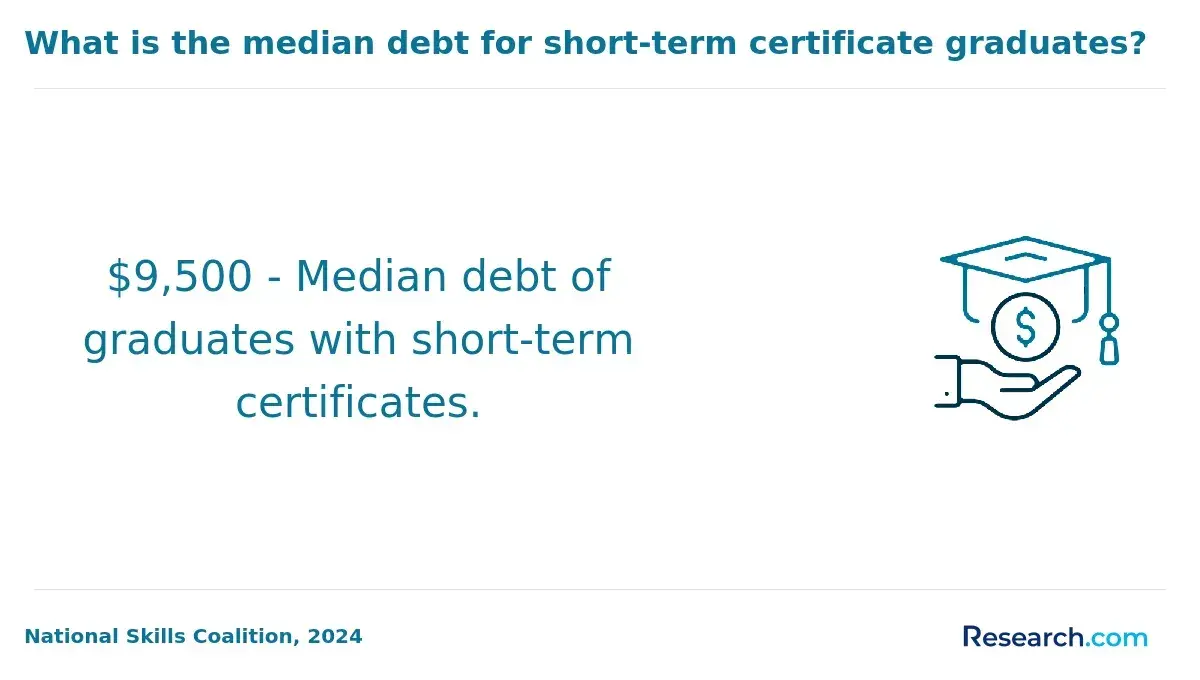
Costs vary widely because online ABA-related doctorates may be offered through public universities, private nonprofit universities, and private for-profit institutions. The biggest cost drivers are per-credit tuition, required credits, technology fees, residency travel, project-related expenses, and whether you receive employer tuition assistance.
For federal borrowing context, graduate and professional students may generally borrow up to $20,500 per year through Direct Unsubsidized Loans before considering Grad PLUS Loans.
That limit is useful because many doctoral programs cost more than the annual unsubsidized loan amount, requiring students to plan for out-of-pocket payments, employer support, scholarships, assistantships, or additional borrowing.
When comparing costs, request a full program estimate rather than relying on per-credit tuition. A clear estimate should include:
- Total credits required for students entering with a master's degree.
- Per-credit tuition and whether it changes each academic year.
- Technology, graduation, assessment, background check, and clinical or project fees.
- Residency, intensive, or campus visit costs, including travel and lodging.
- Books, software, data tools, and professional membership fees
- Whether transfer credits can reduce tuition and how many credits are allowed.
The following cost comparison shows why the final price can differ even when two programs advertise similar tuition. These are planning categories rather than universal prices:
| Cost factor | Why it matters | Question to ask |
| Per-credit tuition | Small differences multiply across doctoral credit totals | Is tuition locked in or subject to annual increases? |
| Required credits | A lower tuition rate may not save money if the program requires more credits | How many credits are required after transfer review? |
| Residency requirements | Online programs may still require in-person intensives | Are residencies mandatory, optional, virtual, or campus-based? |
| Capstone or project expenses | Applied projects may require software, assessments, transcription, travel, or site costs | What expenses have recent students paid beyond tuition? |
| Time to completion | Extra terms add tuition, fees, and opportunity costs | What is the median or typical completion time for enrolled students? |
A no-dissertation doctorate is worth the cost only if the credential supports a realistic career goal. For many students, the return is strongest when the degree helps them move into supervision, clinical leadership, higher-level consulting, program administration, university teaching outside tenure-track roles, or specialized practice. It is weaker when students borrow heavily for a doctorate that their target employers do not require or reward.
Who Benefits Most From an Online Applied Behavior Analysis Doctorate Without a Dissertation?
A no-dissertation online applied behavior analysis doctorate is usually best for experienced professionals who want to apply research to practice rather than pursue a career centered on original academic research. It can be especially useful for people who already hold a master's degree, have clinical or educational experience, and want a doctoral credential that connects directly to workplace problems.
This pathway may fit you if your goal is to lead programs, improve service quality, supervise teams, evaluate interventions, consult with organizations, or teach practice-focused courses.
It may be less suitable if you want a tenure-track research position, a heavily funded research career, or a role where a dissertation-based PhD is the expected credential.
Students from adjacent fields may also consider ABA-related doctoral work after master's training in psychology, education, counseling, or human services. For example, professionals comparing child psychology master's programs may later use ABA-focused doctoral study to specialize in behavioral assessment, autism services, school consultation, or intervention leadership.
The following groups often benefit most from a dissertation-free doctoral structure:
- BCBAs who want to move into clinical director, regional supervisor, quality assurance, or executive roles.
- Special education leaders who want to design, evaluate, and scale behavior support systems.
- Autism service professionals who want advanced training in intervention design and staff supervision.
- Healthcare or integrated care professionals who work with behavioral, developmental, or mental health needs.
- Consultants who need doctoral-level credibility but not a research-intensive PhD pathway.
You should be cautious if you are early in your career, do not yet know whether you need a doctorate, or are trying to use a doctoral program as a shortcut around certification, licensure, or supervised practice requirements. A doctorate can enhance a career, but it does not automatically replace required credentials.
How Does a No-Dissertation Online Applied Behavior Analysis Doctorate Affect Career Opportunities?
A no-dissertation online ABA-related doctorate can support career advancement, but its value depends on the role, employer, state rules, and the degree's academic fit.
Employers in clinical services, autism programs, school systems, behavioral health organizations, and consulting may value applied doctoral preparation when the role emphasizes leadership, supervision, program evaluation, and evidence-based practice.
Salary data for ABA-specific doctoral roles is difficult to isolate because the BLS does not maintain a dedicated "behavior analyst" occupation.
As a broad benchmark, BLS May 2024 wage data reported a median annual wage of $95,830 for clinical and counseling psychologists, but ABA professionals may fall under several occupational categories depending on licensure, work setting, and job duties. Use this figure only as a labor-market reference, not as a prediction for ABA doctorate graduates.
Career outcomes often depend on how you use the doctorate. In practice settings, a capstone-based doctorate may help show that you can solve organizational problems, evaluate interventions, lead teams, and translate research into service improvements. In research universities, a dissertation-based PhD may carry more weight because it documents original research training.
ABA expertise also overlaps with fields such as school psychology, developmental services, disability support, corrections, and behavioral health. Professionals exploring broader behavioral science routes, including forensic psychology master's programs, should compare whether their target roles require licensure, clinical supervision, research training, or applied behavioral intervention experience.
Technology is also changing the field. Electronic data collection, telehealth supervision, AI-supported documentation tools, and remote caregiver coaching can make behavior services more scalable, but they also increase the need for ethical oversight, privacy awareness, and careful interpretation of automated recommendations.
Doctoral programs that include data literacy and ethical technology use may be more relevant for future leadership roles.
How Do No-Dissertation Online Applied Behavior Analysis Doctorates Compare With Traditional Doctorates?
The best doctoral format depends on the work you want to do after graduation. A no-dissertation professional doctorate is not automatically inferior to a traditional doctorate, but it is designed for a different purpose. The key comparison is applied leadership versus original research preparation.
The table below compares dissertation-free and dissertation-based ABA-related doctoral pathways across the decision points that matter most to prospective students:
| Comparison point | No-dissertation professional doctorate | Traditional dissertation-based doctorate |
| Primary purpose | Apply research to real-world practice problems | Produce original scholarly research |
| Final requirement | Capstone, applied project, portfolio, or practice-based study | Dissertation with committee review and defense |
| Typical student profile | Working practitioner, supervisor, consultant, or administrator | Future researcher, professor, or scholar-practitioner |
| Timeline predictability | Often more structured around project milestones | Can be less predictable because research approval and data collection may vary |
| Research depth | Applied and practice-focused | Extensive original research training |
| Best career fit | Clinical leadership, program evaluation, consulting, administration, practice-focused teaching | Tenure-track academia, research leadership, advanced scholarly work |
A dissertation-free pathway may offer the best balance of flexibility, completion structure, and career value if your goal is applied leadership. A traditional dissertation-based doctorate makes more sense if you want to publish research, compete for research faculty jobs, pursue postdoctoral research, or build a scholarly agenda in behavior analysis.
The most common mistake is choosing based only on speed. A faster format is not better if it does not match your career goal, lacks credible accreditation, or provides too little research preparation for the jobs you want.
How Should Students Choose an Online Applied Behavior Analysis Doctorate Without a Dissertation?
Choosing an online applied behavior analysis doctorate without a dissertation requires more than finding the quickest program. You need to verify what the degree is, what the final project requires, whether the school is accredited, and whether the credential fits your intended career path.
Use the following process to compare programs in a practical way:
- Define your goal first: clinical leadership, school-based leadership, consulting, higher education, research, licensure, or career change.
- Confirm the exact degree title and concentration so you know whether you are evaluating an ABA doctorate, an education doctorate, a psychology doctorate, or a behavioral health doctorate.
- Read the current catalog and doctoral handbook to verify that there is no traditional dissertation requirement.
- Ask what replaces the dissertation, including project stages, faculty review, data requirements, oral defense, and expected timeline.
- Verify institutional accreditation and any relevant programmatic recognition for your profession.
- Check whether the program supports BCBA-D designation, state licensure, education credentials, or employer requirements if those matter to you.
- Compare total cost, not just tuition per credit, including residencies, fees, books, software, and project expenses.
- Request outcomes information such as completion patterns, sample capstone topics, alumni roles, and doctoral project expectations.
Students who are still comparing master's-level and doctoral-level routes should avoid using a doctorate to solve the wrong problem. If your immediate need is BCBA eligibility, coursework verification, or supervised fieldwork, a master's or certificate pathway may be more appropriate before doctoral study.
Before enrolling, ask admissions advisors these direct questions. Their answers should be specific and available in writing:
- Is a traditional dissertation required for my catalog year?
- What is the exact name of the final doctoral requirement?
- Does the final project require original data collection, workplace implementation, IRB review, or an oral defense?
- How many students finish the project within the advertised timeline?
- Are any residencies, intensives, internships, practicums, or campus visits required?
- Does the degree meet requirements for my intended license, certification, employer, or doctoral designation?
- Can I review sample project titles or a redacted project rubric?
Other Things You Should Know About Applied Behavior Analysis
Usually, yes. Most doctoral programs expect applicants to hold a master's degree in applied behavior analysis, psychology, education, special education, counseling, or a related field. Some may require BCBA certification, professional experience, or graduate statistics and research coursework.
Many universities do not list the delivery format on the diploma, but policies vary. Ask the school directly whether the diploma, transcript, or degree title differs for online students.
Sometimes. Schools may accept a limited number of doctoral or post-master's credits, but they usually require students to complete core doctoral courses and the final project sequence at the awarding institution.
Possibly, especially for adjunct, lecturer, professional practice, or applied program roles. Tenure-track research positions may prefer or require a dissertation-based PhD, publications, and a stronger record of original research.
References
- 5 Capstone Project Ideas for Graduate Degrees in Autism Studies https://www.masters-in-special-education.com/lists/5-capstone-project-ideas-for-graduate-degrees-in-autism-studies/
- BCBA Certification Requirements - Bluebell ABA https://bluebellaba.com/blog/bcba-without-masters-degree/
- Top Applied Behavior Analysis Graduate Programs in 2021 https://www.appliedbehavioranalysisedu.org/35-best-aba-graduate-programs/
- Association for Behavior Analysis International Accreditation Board https://accreditation.abainternational.org/accredited-programs.aspx
- Opportunities for ABA Career Advancement: ABA PhD https://www.baypath.edu/news/bay-path-university-blogs/post/opportunities-for-aba-career-advancement-aba-phd/
- A New Era of Doctoral Education: Beyond the Traditional Dissertation https://www.snu.edu/blog/a-new-era-of-doctoral-education-beyond-the-traditional-dissertation
- ABA Certification Explained: RBT, BCaBA, BCBA, BCBA-D https://onlinecounselingprograms.com/mental-health-careers/how-to-become-behavior-analyst-bcba/aba-certification-explained/