2027 Online Applied Behavior Analysis Doctorate Program Costs: Tuition, Fees, Financial Aid, and Employer Reimbursement

Co-Founder and Chief Data Scientist
An online Applied Behavior Analysis doctorate can open doors to advanced clinical leadership, research, consulting, and university teaching, but the price can be significant. NCES graduate-cost data published in 2024 shows average annual graduate tuition and required fees of $12,596 at public institutions and $29,931 at private nonprofit institutions, before living costs or loan interest. This guide is for BCBAs, educators, clinicians, and working professionals comparing online ABA doctoral programs. You will learn how tuition, fees, aid, employer reimbursement, and career payoff fit together so you can choose a program with fewer financial surprises.
Key Things to Know About Online Applied Behavior Analysis Doctorate Program Costs
- Most online ABA doctorate budgets should be built from total credits, per-credit tuition, dissertation continuation rules, residency travel, technology fees, and loan costs, not tuition alone.
- Graduate federal aid can cover substantial costs: Direct Unsubsidized Loans are capped at $20,500 per academic year, while Grad PLUS Loans may cover up to the school-certified cost of attendance after other aid.
- Employer reimbursement can materially reduce net cost, but many plans limit tax-favored educational assistance to $5,250 per year and may require preapproval, grade minimums, or a work-back commitment.
What is the average tuition cost of an online Applied Behavior Analysis doctorate program?
There is no single federally reported "average tuition" for online Applied Behavior Analysis doctorate programs because ABA doctorates are a small category spread across PhD, EdD, PsyD, and behavior analysis-focused psychology programs. The practical way to estimate cost is to multiply the required doctoral credits by the per-credit tuition rate, then add university fees, dissertation enrollment, and any required campus intensives.
For planning purposes, many online or low-residency ABA doctorate students should expect tuition-only costs to land in a broad mid-five-figure to low-six-figure range before financial aid. The exact number depends heavily on whether the program charges public in-state tuition, public out-of-state tuition, a flat online rate, or private university tuition.
The table below shows how common pricing models affect the total tuition calculation. Use it as a decision tool before you compare offers, because a lower per-credit price can still become expensive if the program requires more credits or prolonged dissertation registration.
| Cost model | How it usually works | Why it matters for ABA doctoral students |
| Per-credit tuition | Students pay for each enrolled credit hour. | This is common in online doctoral programs and makes total cost sensitive to required credits, transfer credits, and dissertation extensions. |
| Flat online tuition | Online students pay the same rate regardless of residency. | This can help out-of-state students, but in-state students should compare it against local public university rates. |
| Cohort or semester pricing | Students pay a set amount per term or course sequence. | This can be predictable if you stay on schedule, but interruptions may add cost. |
| Dissertation continuation fees | Students who finish coursework but continue dissertation work pay ongoing enrollment fees. | This is a major hidden cost if proposal approval, data collection, or committee review takes longer than expected. |
A good affordability comparison should include at least three totals: tuition if you finish on time, tuition if the dissertation takes one extra year, and tuition after expected employer or scholarship support. If you are still comparing ABA education pathways before committing to a doctorate, reviewing the best BCBA programs can help you separate master's-level certification preparation from terminal doctoral study.
Are online Applied Behavior Analysis doctorate programs subject to distance learning or technology fees?
Yes. Online Applied Behavior Analysis doctorate programs are often subject to distance learning, technology, platform, library, graduation, transcript, clinical compliance, or doctoral services fees. These charges may appear small compared with tuition, but they can add up across several years of part-time enrollment.
The most important question is whether fees are charged per credit, per course, per term, or once per program. Per-term fees are especially relevant for working professionals who spread the doctorate over a longer period, because each additional semester may trigger another administrative charge.
Ask the financial aid office for a line-item cost of attendance, not just a tuition sheet. This should clarify whether online fees cover the learning management system, remote proctoring, digital library access, advising, dissertation services, or student support.
Common fee-related mistakes include the following, and they are avoidable if you request written cost details before enrollment.
- Budgeting only for base tuition and ignoring technology, distance education, and graduation fees.
- Assuming online tuition automatically includes required campus residencies, conference-style intensives, or dissertation defense travel.
- Missing dissertation continuation charges that begin after coursework is complete.
- Comparing one school's tuition-only quote against another school's full cost of attendance.
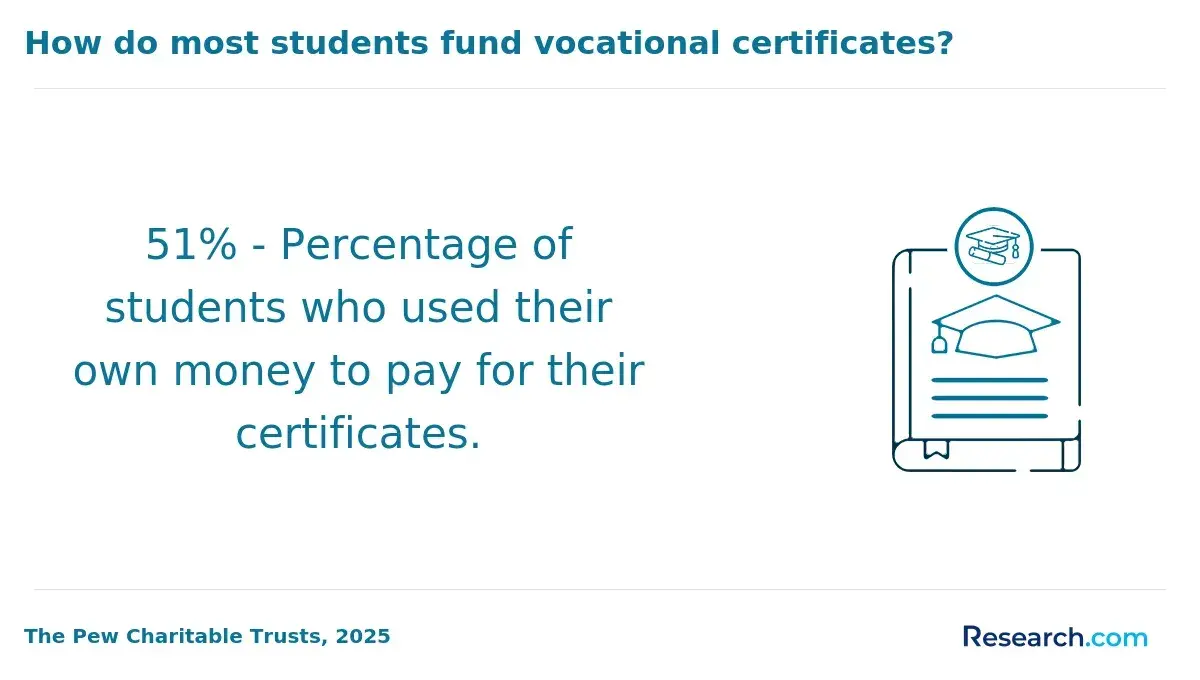
What out-of-pocket expenses should online Applied Behavior Analysis doctorate students anticipate?
The table below summarizes common out-of-pocket expenses that may not be fully covered by scholarships or employer reimbursement. The point is not to predict every student's budget, but to help you ask better questions before signing an enrollment agreement.
| Expense category | What to check before enrolling | Budget risk |
| Books and digital materials | Whether courses use required textbooks, article packets, or paid digital platforms. | Costs can recur every term and may not be included in tuition. |
| Computer and internet | Minimum hardware, webcam, microphone, secure testing, and broadband requirements. | Older devices may need upgrades for video supervision, statistics software, or remote exams. |
| Residency or intensive travel | Whether the program requires campus visits, lodging, meals, and unpaid time away from work. | A short residency can become expensive if airfare and lodging are required. |
| Research and dissertation costs | Survey tools, transcription, participant incentives, data analysis software, and IRB-related needs. | Dissertation timelines can make these costs unpredictable. |
| Professional development | Conference attendance, CE events, association memberships, and presentation costs. | Valuable for career growth, but often optional and self-funded. |
To avoid underestimating total cost, build a personal doctoral budget before applying. Use the school's cost of attendance as the starting point, then add any professional expenses tied to your career goals, such as presenting research, maintaining BCBA credentials, or attending ABA conferences.
A practical budgeting sequence can keep you from overlooking hidden costs.
- Request the full program plan, including required credits, expected course sequence, dissertation enrollment rules, and residency requirements.
- Ask whether any fees increase annually and whether the tuition rate is locked for your cohort.
- Estimate one on-time completion budget and one delayed-completion budget.
- Separate costs you can finance through aid from costs you must pay directly, such as travel deposits or equipment.
- Confirm whether employer reimbursement applies to fees, books, and dissertation credits or only to tuition.
Does in-state versus out-of-state residency status impact online Applied Behavior Analysis doctorate tuition?
Residency status can have a major effect, but it depends on the school's pricing model. Some public universities charge separate in-state and out-of-state graduate tuition even for online programs, while others use a flat online rate for all distance learners. Private nonprofit and private for-profit institutions often charge the same rate regardless of state residency, though fees and scholarship policies may vary.
For in-state students, a public university with resident graduate tuition may be the lowest-cost route, especially if the program allows part-time enrollment without excessive per-term fees. For out-of-state students, a flat-rate online program may be more predictable and sometimes less expensive than nonresident public tuition.
The table below shows when each tuition structure may make sense. It is especially useful if you are comparing public universities against private online doctoral options.
| Tuition structure | Best fit | Potential drawback |
| Public in-state tuition | Students who live in the state and can access resident graduate pricing. | May have limited online availability or residency rules that are stricter than expected. |
| Public out-of-state tuition | Students who prioritize a specific faculty mentor, research lab, or university reputation. | Can be substantially more expensive if no online discount is offered. |
| Flat online tuition | Out-of-state working professionals who want cost predictability. | May not beat the price of a strong in-state public option. |
| Private university tuition | Students seeking a specialized ABA doctorate, flexible online format, or cohort model. | Sticker price may be high unless scholarships, transfer credits, or employer support apply. |
Do not assume residency is irrelevant just because a program is online. Before applying, ask the bursar whether your tuition rate depends on state residency, whether online students can qualify for in-state tuition later, and whether relocation during the program changes your rate.
How do total costs for an online Applied Behavior Analysis doctorate compare to traditional on-campus programs?
Online ABA doctorates are not always cheaper in tuition, but they can be cheaper in total cost because they reduce relocation, commuting, parking, and opportunity costs. The biggest savings often come from staying employed while studying, especially for BCBAs, school-based behavior specialists, clinical supervisors, and educators who need income while completing a terminal degree.
On-campus doctoral programs may offer stronger access to funded assistantships, faculty labs, teaching experience, and tuition waivers. Online programs usually offer more schedule flexibility but may provide fewer campus-based funding opportunities. That trade-off matters: a fully or partially funded campus program can be less expensive than an unfunded online program, even if the online program looks more convenient.
The comparison below highlights the cost categories that tend to differ between online and traditional doctoral formats. Use it to decide whether the online premium, if any, is justified by the ability to keep working.
| Cost factor | Online ABA doctorate | On-campus ABA doctorate |
| Tuition | May be flat-rate, per-credit, or similar to campus tuition. | May offer resident tuition or funded doctoral slots. |
| Employment flexibility | Often better for full-time working professionals. | May require daytime attendance, lab work, or teaching commitments. |
| Travel and relocation | Usually lower, except for residencies or intensives. | Can include relocation, commuting, parking, and campus living costs. |
| Assistantship access | Often limited or competitive for remote students. | More common in research-intensive doctoral programs. |
| Time to completion | May be part-time and longer, increasing term-based fees. | May be more structured, but less compatible with full-time work. |
If speed is part of your affordability strategy, be careful. Faster completion can reduce fees and loan interest, but only if the pace is realistic with your job and dissertation demands. Students comparing accelerated ABA options may find the fastest BCBA program information useful if they are still deciding whether a master's-level pathway or doctorate-level pathway fits their current career stage.
Can graduate assistantships and fellowships reduce online Applied Behavior Analysis doctorate costs?
Graduate assistantships and fellowships can reduce doctoral costs, but online ABA doctorate students should not assume they will be available. Many assistantships are tied to campus-based teaching, research labs, supervision roles, or administrative work. Online students may be eligible for some remote research or teaching support, but availability varies by university, department, faculty funding, and enrollment status.
Assistantships can be valuable because they may include a stipend, partial tuition remission, or both. Fellowships are often merit-based or research-based and may not require the same weekly work commitment. For working professionals, the best option is usually funding that does not require leaving a full-time job unless the award is large enough to justify the lost income.
Before ruling out a program as too expensive, ask direct questions about institutional funding. These questions help you distinguish a program that is merely "financial aid eligible" from one that actively supports doctoral students.
- Are online doctoral students eligible for tuition waivers, assistantships, fellowships, or departmental scholarships?
- Can remote students serve as teaching assistants, research assistants, course coaches, or dissertation project assistants?
- Are awards available to part-time students, or only to full-time doctoral students?
- Does accepting an assistantship limit outside employment or require campus presence?
- Are awards renewable, and what GPA, progress, or service requirements apply?
The main red flag is vague language. If a program says funding is "available" but cannot provide eligibility rules, application deadlines, average award types, or the number of awards typically offered, treat the funding as possible rather than guaranteed.
What financial aid options are available for students enrolled in an online Applied Behavior Analysis doctorate?
Online Applied Behavior Analysis doctorate students may use several types of financial aid, but the mix depends on school eligibility, enrollment intensity, citizenship status, academic progress, and program accreditation. Start with institutional aid and employer support before borrowing, because graduate federal loans carry higher interest rates than undergraduate federal loans.
Federal Student Aid loan terms for graduate borrowers are a key cost factor. For loans first disbursed in the 2025-26 award year, Direct Unsubsidized Loans for graduate students carry a 7.94% fixed interest rate, while Grad PLUS Loans carry an 8.94% fixed interest rate. That means the amount borrowed is not the only issue; the timing of borrowing and repayment plan also affects the true cost of the doctorate.
The table below compares common funding sources for online ABA doctoral students. It focuses on how each option affects net cost and financial risk.
| Funding option | Typical role in doctoral funding | Key caution |
| Institutional scholarships | Reduce tuition directly and do not need repayment. | May be competitive, small, or limited to new students. |
| Graduate assistantships | May provide stipend support, tuition remission, or experience. | Online and part-time eligibility may be limited. |
| Direct Unsubsidized Loans | Can help cover annual graduate costs up to federal limits. | Interest accrues while enrolled. |
| Grad PLUS Loans | Can cover remaining school-certified cost of attendance after other aid. | Higher interest and fees can increase long-term repayment burden. |
| Private loans | May fill gaps when federal aid is insufficient. | Terms vary, and borrower protections are usually weaker than federal loans. |
| Employer reimbursement | Can reduce out-of-pocket tuition if the degree aligns with job needs. | Often requires preapproval and continued employment. |
A smart funding order can reduce borrowing. Consider this sequence before accepting the full loan package.
- Apply for institutional scholarships, department awards, and professional association grants first.
- Request employer reimbursement or sponsorship before the term begins.
- Use savings or payment plans for small recurring fees if doing so avoids high-interest borrowing.
- Borrow federal Direct Unsubsidized Loans before considering Grad PLUS or private loans.
- Borrow only the amount needed for direct education costs and essential living expenses.
Does employer tuition reimbursement cover an online Applied Behavior Analysis doctorate?
Employer tuition reimbursement may cover an online Applied Behavior Analysis doctorate if the degree is directly related to your current role or a documented leadership path. This is common in organizations that employ BCBAs, behavior specialists, clinical supervisors, school administrators, autism services leaders, training directors, and research-oriented program managers.
Reimbursement policies vary widely. Some employers reimburse only tuition, while others include fees and books. Some pay after grades are posted, while others pay the school directly. Many require preapproval, a minimum grade, continued employment, or repayment if you leave within a specified period.
The federal tax treatment also matters. Employer-provided educational assistance can generally be excluded from taxable income up to $5,250 per year when offered through a qualifying plan. If your employer offers more than that, ask payroll or HR how the excess amount will be treated for tax purposes.
Use employer reimbursement when the degree clearly supports your job responsibilities and when the work-back requirement is reasonable. Be cautious if the reimbursement amount is small, the program is very expensive, or the employer requires a long repayment obligation that could limit your career mobility.
Before enrolling, ask HR and your supervisor these specific questions.
- Does the policy cover doctoral-level coursework, dissertation credits, and online programs?
- Are ABA, psychology, education, or leadership doctorates considered job-related for my role?
- Is reimbursement paid before the course, after the course, or directly to the university?
- Are fees, books, software, residencies, and travel eligible?
- What happens if I change departments, reduce hours, or leave the organization?
How can working professionals negotiate employer sponsorship for an online Applied Behavior Analysis doctorate?
Working professionals have a stronger sponsorship case when they connect the doctorate to measurable employer needs. Instead of asking for help with "school," frame the degree as a talent-development investment that can improve supervision quality, staff training, compliance, research capacity, program evaluation, or clinical outcomes.
The best negotiation approach is specific, documented, and realistic. Prepare a short proposal before meeting with your supervisor or HR partner.
- Identify the business need the doctorate supports, such as expanding clinical supervision, improving staff retention, launching caregiver training, or strengthening data-based decision-making.
- Show how the program's coursework, dissertation, or research focus connects to your organization's priorities.
- Present a budget that separates tuition, fees, books, travel, and expected reimbursement timing.
- Offer options, such as annual reimbursement, direct billing, paid study time, conference support, or a dissertation project partnership.
- Propose a fair commitment, such as sharing research findings, training staff, mentoring junior clinicians, or staying for a defined period after reimbursement.
A strong sponsorship request should also reduce the employer's risk. Explain how you will maintain job performance, when courses meet, whether the program requires travel, and how you will handle dissertation demands. If your employer cannot fund tuition, ask for smaller forms of support such as flexible scheduling, professional development funds, paid conference travel, or access to de-identified organizational data for approved research.
Avoid making the conversation only about your personal advancement. Employers are more likely to help when the doctorate solves a workforce problem they already care about.
What ROI can graduates expect from an online Applied Behavior Analysis doctorate?
The ROI of an online Applied Behavior Analysis doctorate depends on your current salary, total net cost, borrowing level, completion time, and the career outcome you are targeting. A doctorate may make sense for professionals seeking senior clinical leadership, university teaching, research, consulting, executive roles in behavioral health organizations, or specialized program development. It may be less financially compelling if your goal is only to qualify for BCBA-level practice, because that credential is typically tied to graduate-level coursework, supervised experience, and exam requirements rather than a doctorate alone.
There is no federal salary category specifically for "Applied Behavior Analysis doctorate graduates," so ROI should be estimated using relevant role families rather than a single promised outcome. BLS wage data released for May 2024 reports a median annual wage of $94,310 for psychologists and $83,980 for postsecondary teachers. These figures are useful benchmarks, but they do not guarantee earnings for ABA doctorate holders because job setting, licensure, BCBA-D status, state rules, and leadership responsibility all matter.
The table below shows how different career outcomes can change the ROI logic. Use it to decide whether the doctorate supports a concrete career move rather than a general hope of higher pay.
| Career direction | How the doctorate may add value | ROI question to ask |
| Clinical leadership | May support director-level responsibilities, supervision systems, and program quality oversight. | Will the degree help you move into a role with higher responsibility and compensation at your organization or in your market? |
| University teaching | May be required or preferred for full-time faculty, research, or doctoral-level instruction. | Are you willing to pursue academic roles that may require publication, teaching experience, and geographic flexibility? |
| Research and evaluation | Can build advanced methods, dissertation experience, and applied research credibility. | Does the program provide faculty mentorship aligned with your research area? |
| Consulting | May strengthen credibility for specialized training, systems consulting, or expert work. | Do you already have a client base, niche, or business plan that can convert the credential into revenue? |
| Credential advancement | May support BCBA-D designation if other requirements are met through the Behavior Analyst Certification Board. | Will the doctoral credential change your role, or will it mostly be a title enhancement? |
A practical ROI calculation should compare total net cost against realistic income change over time. Include tuition, fees, loan interest, lost work hours, travel, and the value of employer reimbursement. Then compare that number with the salary increase or career mobility you can reasonably expect in your local market.
Students who mainly want to work with children, schools, or developmental populations should also compare doctorate-level ABA study with less expensive psychology-related options. For example, child psychology master's programs may be a better fit for some career goals that do not require a terminal ABA doctorate.
The degree is most likely to be worth it when you have a defined doctoral-level goal, a manageable net cost, relevant employer support, and a program with strong faculty alignment. It is least likely to pay off when the program requires heavy borrowing but does not clearly connect to a promotion, licensure pathway, research agenda, or leadership role.
Other Things You Should Know About Applied Behavior Analysis
Many online ABA doctorates take about three to seven years, depending on transfer credits, enrollment pace, dissertation progress, and whether the student studies full time or part time. The dissertation stage is often the biggest source of timeline uncertainty.
Sometimes. Schools may accept prior graduate credits, but doctoral transfer policies are usually strict and may limit the number, age, subject area, or grade of eligible credits. Ask for a transfer evaluation before assuming your master's credits will reduce tuition.
Yes. Federal financial aid generally requires attendance at an eligible institution that participates in federal aid programs. Programmatic accreditation, state authorization, and professional recognition can also matter for licensure, employment, and credentialing, so verify requirements with the school and relevant state or certification boards.
Not automatically. The lowest price is attractive, but you should also evaluate faculty expertise, dissertation support, completion expectations, student services, state authorization, funding options, and career fit. A cheap program can become costly if poor support extends your dissertation timeline.
References
- How Much Does a PhD Cost https://aituedu.org/how-much-does-a-phd-cost/
- Tuition Reimbursement for MHA Programs https://www.mhaonline.com/blog/mha-tuition-reimbursement
- Funding your Degree https://gradsense.org/funding-your-degree/
- Educational Funding https://phdproject.org/educational-funding/
- Employer Tuition Reimbursement Explained - Graduate Programs for Educators https://www.graduateprogram.org/blog/employer-tuition-reimbursement-explained/
- Can I get financial aid for an online degree? | edX https://www.edx.org/resources/can-i-get-financial-aid-for-an-online-degree
- Getting Your Employer to Pay for Your Online Masters https://www.onlinemastersdegrees.org/financial-aid/employer-tuition-assistance/
- How Much Does a PhD Cost? UK & Global Guide for 2026 https://www.discoverphds.com/advice/funding/how-much-does-a-phd-cost
- Average Cost of College [2025]: Yearly Tuition + Expenses https://educationdata.org/average-cost-of-college
- Applied Behavior Analyst Scholarships https://www.appliedbehavioranalysisedu.org/aba-scholarships/