2027 Online AGACNP Programs for Nurses in Hawaii: MSN Options and Acute Care Clinicals
Audited and Verified:
Our Editorial and Data Verification Process
Research.com uses government datasets, official education statistics and primary institutional information to support its career and degree guides. Our review process checks factual accuracy, occupational definitions, source dates and the requirements associated with the credentials discussed.
How This Article Was Fact-Checked
Our editorial team verifies salary estimates, employment projections, education requirements and program information against original data providers and official organizations. Salary figures are checked against the relevant occupational definitions and reporting periods. Information about licensure, accreditation and required in-person training is reviewed separately.
Fact-checked and verified on:

Co-Founder and Chief Data Scientist
For a Hawaii RN, choosing an online adult-gerontology acute care nurse practitioner (AGACNP) program is as much a clinical-placement decision as an academic one. Coursework may be remote, but supervised acute care experiences must be feasible where you live and acceptable to the school.
This guide explains how to assess MSN pathways, verify Hawaii practice eligibility, and compare the time and cost of options without mistaking an online format for a fully remote degree.
Key Things You Should Know
- An online AGACNP MSN prepares licensed RNs for advanced care of acutely or critically ill adults; it does not provide initial RN licensure or eliminate in-person clinicals.
- Confirm three separate matters before enrolling: nursing program accreditation, eligibility to complete the program while living in Hawaii, and a workable plan for approved acute care placements.
- Graduates must meet Hawaii's APRN recognition requirements. ANCC and AACN Certification Corporation offer distinct national AGACNP certification pathways, subject to their current eligibility rules.
What are online AGACNP programs for nurses in Hawaii?
An online AGACNP MSN is a postlicensure graduate track for RNs seeking the adult-gerontology acute care NP population focus. It combines online instruction with supervised, in-person clinical education. The focus is on adults with complex acute, critical, or rapidly changing conditions, rather than comprehensive primary care across the lifespan.
The right entry route depends on the nurse's existing education. This comparison identifies the award and review each applicant should expect; schools set their own entry and credit policies.
| Starting point | Route to investigate | Decisive check |
| RN with a BSN | BSN-to-MSN AGACNP track | Hawaii enrollment eligibility and clinical access |
| RN with an ADN or diploma | Eligible RN-to-MSN bridge, followed by an AGACNP track | Whether the bridge actually includes acute care NP preparation |
| MSN-prepared RN or APRN | Post-graduate AGACNP certificate or another approved graduate route | Faculty review of prior coursework and population-specific clinical gaps |
An RN starting with an associate degree can investigate ADN-to-MSN bridge programs, but an MSN bridge is useful for this goal only if it leads to an eligible AGACNP track. Existing ICU or emergency nursing experience strengthens an application; it does not replace graduate NP preparation.
Which Hawaii online AGACNP MSN programs are accredited?
Do not assume that an online program advertising enrollment in Hawaii offers an accredited AGACNP MSN. A dependable Hawaii-specific list requires confirmation of the current degree and track, the nursing program's accreditation status, and the school's permission to enroll a student located in Hawaii. No individual program is identified here as verified on all three points, so treat advertised options as candidates to check, not established recommendations.
Three organizations answer different questions. The institution can document its degree and track; CCNE or ACEN can confirm the scope and status of applicable nursing accreditation; and the school's state-authorization staff can explain Hawaii enrollment and placement restrictions. Ask the AGACNP director to confirm in writing the intended certification examinations, required campus visits, and whether the program has supported placements on your island.
Accreditation of a different graduate offering does not settle the question. For example, advanced nursing leadership doctorates online may serve a leadership goal, but a non-APRN doctorate does not establish that an institution offers accredited AGACNP preparation.
What are the Hawaii APRN licensure requirements for AGACNP graduates?
Hawaii RNs seeking to practice as AGACNPs should plan for graduate education in the appropriate role and population focus, qualifying national certification, and APRN recognition by the Hawaii Board of Nursing. Prescriptive authority is a related but separate matter to confirm before accepting a position that requires prescribing. Graduation or examination eligibility alone does not authorize APRN practice.
Before committing to an out-of-state school, ask its licensure specialist to identify how the track meets Hawaii's educational requirements and which graduates' certification pathway it supports. Check the board's current application instructions for RN license status, documentation, verification, and prescribing requirements; do not rely on a recruiter's general statement that a program "meets all state requirements."
Population focus matters after graduation, too. An AGACNP who later wants a family primary care role should ask a receiving program about a formal gap analysis and consider family NP certificate options for MSN-prepared nurses. Acute care experience or certification does not by itself add an FNP population focus.
Online delivery does not make acute care clinicals virtual. Students need program-approved sites, appropriate preceptors, faculty oversight, required patient encounters, and documented supervised hours. A school may arrange placements, help identify sites, or require students to propose preceptors; those are materially different commitments.
For a Hawaii student, the important question is not simply whether a school "provides placement assistance," but what happens if an approved opening is unavailable on the student's island. Ask the program for its written process and a realistic timeline:
- Identify acceptable adult acute care settings, patient populations, preceptor credentials, and any specialty rotations.
- Confirm who approaches sites, negotiates affiliation agreements, and approves a proposed preceptor before hours begin.
- Ask whether travel to another island or the mainland could be necessary, and who pays for travel and lodging.
- Check clinical-day scheduling, faculty evaluations, compliance requirements, and the policy if a placement falls through.
A nurse's existing hospital job is not automatically an approved NP clinical site, and paid RN shifts do not automatically count as supervised NP hours. Even programs that advertise online FNP clinical coordination options offer no assurance about an AGACNP placement: the specialty, site, and preceptor must fit acute care objectives.
AGACNP MSN curricula generally build from advanced pathophysiology, advanced pharmacology, and advanced health assessment into diagnosis and management of complex adult conditions. Students may study acute and critical care decision-making, evidence appraisal, professional practice, and transitions across hospital and post-acute settings. Supervised clinical courses assess application of that knowledge with patients.
Compare course descriptions and clinical objectives, not just course titles. Ask how the program teaches escalation, diagnostic reasoning, medication safety, and communication across care teams - and how faculty evaluate those skills. Simulation can support learning, but a school must explain its own rules for supervised direct-care experiences and any permitted simulation.
Specialty fit should drive the curriculum choice. Nurses whose intended role is primarily psychiatric treatment should compare that goal with lower-cost mental health advanced practice study rather than assume an AGACNP curriculum provides PMHNP preparation.
Most AGACNP MSN applicants need an RN license, an acceptable prior nursing degree or eligible bridge route, transcripts, and evidence of readiness for graduate clinical study. Schools may also require recommendations, a statement of purpose, an interview, and particular acute care RN experience. A school's minimum application standard is not a guarantee of admission or a clinical placement.
Check experience rules closely: a program may value ICU or emergency practice without making it mandatory, while another may specify both a setting and a minimum period of employment. Clinical sites can impose additional background-check, immunization, or onboarding requirements after academic admission.
Applicants comparing MSN and doctoral routes should distinguish each school's actual prerequisites; comparing prerequisite policies in DNP programs cannot establish eligibility for an AGACNP MSN. Request a written review if your degree is outside nursing, your RN license is from another jurisdiction, or you seek credit for prior graduate courses.
Completion time and total cost vary with entry credentials, course load, clinical sequencing, and placement availability. A published "online" timeline may assume uninterrupted progression and an approved site ready when clinical courses start. For a working Hawaii RN, delayed affiliation agreements or required travel can be more consequential than a small difference in advertised tuition.
Build a written estimate using the school's charges for your entry term. Include tuition and fees, books and technology, required visits, clinical compliance costs, interisland or mainland travel, certification and Hawaii application expenses, and any reduced earnings during clinical terms. Ask whether a missed placement triggers an additional term of charges.
Use a BSN-to-MSN program affordability guide to frame cost comparisons, then obtain an AGACNP-specific degree plan and fee schedule from each school. A less expensive general MSN is not a bargain if it does not prepare you for the acute care NP role.
AGACNP graduates commonly pursue national certification through either the American Nurses Credentialing Center's adult-gerontology acute care NP examination or AACN Certification Corporation's acute care NP examination. The credentials and eligibility rules are distinct. Confirm that your program's award, coursework, and supervised clinical preparation meet the current requirements of the organization whose exam you intend to take.
National certification supports a Hawaii APRN recognition application; it is not itself state authorization to practice. Employers may also require hospital privileges, specialty onboarding, and demonstrated competencies. Ask a prospective program which examinations recent graduates were prepared to take, rather than treating "board-eligible" as a complete answer.
Certification follows population-focused preparation, not the fastest available MSN. For instance, online MSN-PMHNP completion timelines describe a different specialty and do not offer a shortcut to AGACNP certification.
Hawaii AGACNP graduates who obtain the necessary recognition and employer credentials may pursue roles serving acutely ill adults in hospital-based services, critical care, specialty consult teams, or other settings consistent with their education and authorized scope. Actual openings depend on local employers, patient populations, privileges, and the applicant's RN background - not the degree title alone.
When evaluating a job, ask about the service's patient mix, physician and experienced NP support, orientation, call expectations, travel between facilities, and procedures or competencies the employer expects. An AGACNP moving from bedside nursing into advanced practice still needs supervised onboarding to the specific role.
If the desired job instead centers on longitudinal family primary care, a fast credential is not a substitute for the right population focus. 12-month FNP program options are relevant to that different goal, not evidence that an AGACNP graduate can enter an FNP position without additional preparation.
What salary and job outlook can AGACNPs expect?
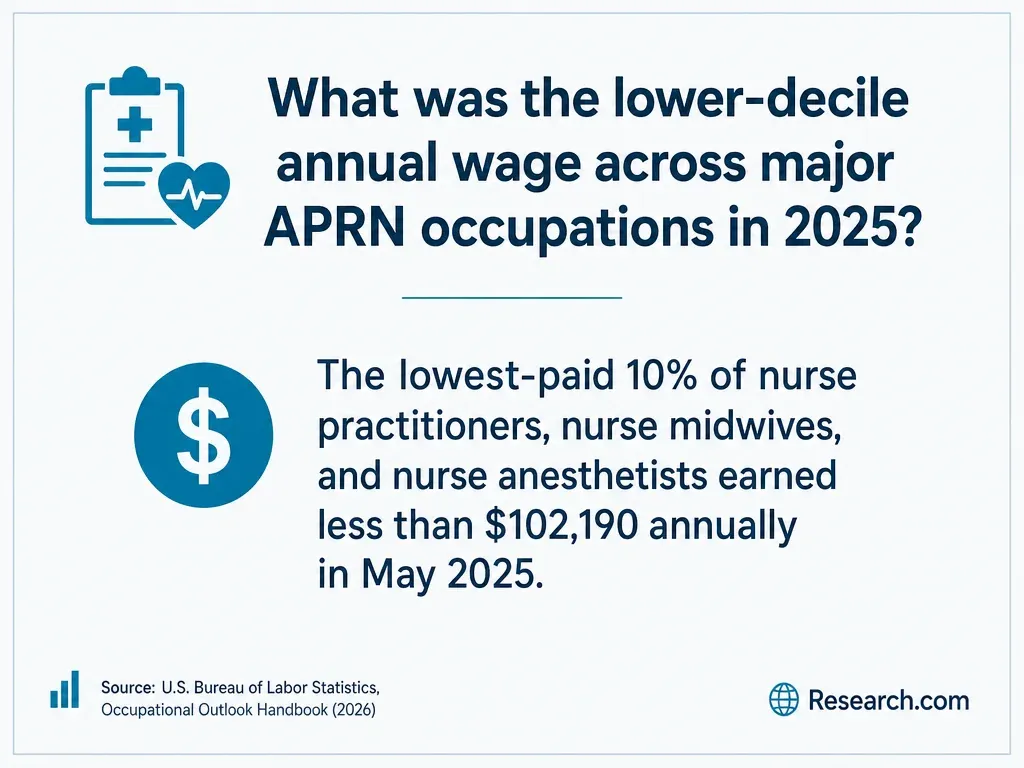
The U.S. Bureau of Labor Statistics reports wages and employment projections for nurse practitioners as an occupation, not a separate Hawaii AGACNP salary or a guaranteed starting wage for MSN graduates. Use the latest published BLS nurse practitioner figures as national context, then compare Hawaii job postings and actual offers for the setting and experience level you seek. A national occupation-wide median cannot account for a particular island's openings, call duties, or employer pay structure.
Evaluate return on education against a plausible offer, the full cost of attendance, time away from paid RN work, and whether a suitable clinical placement and job are attainable where you intend to live. Lower-cost online NP degree options are worth investigating, but price alone cannot establish AGACNP track eligibility, Hawaii practice eligibility, or local career fit.
Other Things You Should Know About Nursing
Possibly, but clinical terms may require scheduled daytime shifts, live sessions, or travel. Ask for a term-by-term schedule before relying on full-time income.
No. Practice authority depends on the patient's location, applicable licensing rules, employer policies, and the services provided.
Some offer tuition assistance, but eligibility, annual limits, approved schools, grade rules, and repayment obligations vary. Obtain the policy before enrolling.
Check the destination jurisdiction's APRN requirements and your certification status. Hawaii recognition does not automatically confer practice authority elsewhere.
- Application Forms - Advanced Practice Registered Nurse https://www.bon.texas.gov/applications_advanced_practice_registered_nurse.asp.html
- Practitioners and Prescriptive Authority - StatPearls - NCBI - NIH https://www.ncbi.nlm.nih.gov/books/NBK574557/
- Undergraduate and Graduate Tuition and Fees | Purdue Global https://www.purdueglobal.edu/tuition-financial-aid/undergraduate-graduate-tuition-and-fees/
- MSN Adult-Gerontology Acute Care Nurse Practitioner | WCU https://westcoastuniversity.edu/online-programs/msn/agacnp
- Online MSN-AGACNP Program - Specialize in Acute Care | HPU Online https://online.hpu.edu/nursing/masters-nursing/agacnp
- Graduate Clinical Placements | Master of Science in Nursing Handbook 2025-2026 https://u.osu.edu/msnursinghandbook2025/clinical-requirements/specialty-clinical-locations-and-travel/
- Clinical Placements and Learning | umich.edu https://nursing.umich.edu/academics/clinical-placements
- Tuition, Fees and Expenses | uthsc.edu https://catalog.uthsc.edu/content.php
- Adult-Gerontology Acute Care Nurse Practitioner | Walden University https://www.waldenu.edu/online-masters-programs/master-of-science-in-nursing/msn-nurse-practitioner-acute-care
- How Long Does It Take to Complete a Master's Degree Program? | California Southern University https://www.calsouthern.edu/articles/how-long-is-a-masters-degree