2027 Nursing Change Champions vs Project Managers: Different Implementation Roles
Audited and Verified:
Our Editorial and Data Verification Process
Research.com uses government datasets, official education statistics and primary institutional information to support its career and degree guides. Our review process checks factual accuracy, occupational definitions, source dates and the requirements associated with the credentials discussed.
How This Article Was Fact-Checked
Our editorial team verifies salary estimates, employment projections, education requirements and program information against original data providers and official organizations. Salary figures are checked against the relevant occupational definitions and reporting periods. Information about licensure, accreditation and required in-person training is reviewed separately.
Fact-checked and verified on:

Co-Founder and Chief Data Scientist
A new nursing practice can meet every project deadline and still fail to take hold on the unit. It can also win staff support while missing training, technology, or approval milestones. Change champions and project managers address different parts of that problem. For RNs considering implementation work - or leaders deciding whom to assign - this guide separates the roles' responsibilities, authority, preparation, and career prospects so you can match the right person and resources to the work.
Key Things You Should Know
- Change champions build frontline understanding, surface workflow barriers, and support adoption; project managers coordinate scope, schedule, dependencies, and delivery.
- A project may need one accountable manager and multiple unit-based champions, but staffing depends on its size and the time employees can actually devote to it.
- Neither title grants clinical authority. An RN license may be required for nursing-specific posts, while a graduate degree or project-management certification depends on the employer and role.
What Is the Difference Between a Nursing Change Champion and a Project Manager?
A nursing change champion is usually a clinician or trusted unit representative who helps colleagues understand, test, and adopt a proposed practice. A project manager is accountable for coordinating the work needed to deliver that change. "Champion" describes an implementation function, not necessarily a permanent job title; "project manager" may be a formal position.
The comparison below shows where each role concentrates its effort. Organizations may combine duties, but they should still name an owner for each responsibility.
| Decision point | Change champion | Project manager |
| Primary question | Will the change work in daily care, and will staff use it? | Can the approved project be delivered within its agreed constraints? |
| Typical work | Peer communication, workflow feedback, local demonstrations, barrier escalation | Project plan, milestones, resources, risks, dependencies, status reporting |
| Typical influence | Clinical credibility and relationships on a unit or team | Assigned responsibility for coordinating the project across teams |
| Measures to watch | Training reach, observed use, usability concerns, sustained adoption | Milestone completion, unresolved risks, resource use, delivery readiness |
For example, if an organization changes how it arranges clinical placements, a project manager might coordinate agreements, system changes, and deadlines while nurse champions test whether the workflow is usable for preceptors. Students should still compare FNP preceptor placement policies directly; having champions on a project does not establish that a school will secure a placement.
What Does a Nursing Change Champion Do During Practice Implementation?
Champions translate an approved change into the realities of a shift: where a task fits, what interrupts it, and which concerns require a decision from a leader. They do not simply persuade colleagues to comply. Useful feedback may show that the plan needs revision before wider rollout.
A champion's work often follows the implementation cycle:
- Before launch: review the proposed workflow with affected staff, identify likely barriers, and bring patient-safety concerns to the clinical owner.
- During rollout: model the approved process, direct colleagues to training and support, and report problems through an agreed escalation route.
- After launch: observe whether the practice is usable across shifts, gather feedback without exposing patient information, and help the team address gaps.
Education and adoption are distinct. A nurse entering practice after accelerated mental health NP certificate study, for instance, may need employer orientation to a new documentation workflow; a champion can support that workflow but cannot validate the nurse's clinical competence or authorization to practice.
What Does a Nursing Project Manager Do in Healthcare Implementation?
A nursing project manager turns an approved objective into coordinated work. Depending on the organization, that may mean defining deliverables with a sponsor, maintaining a schedule and risk log, arranging training and technical support, tracking decisions, and reporting whether the project is ready for launch. The manager connects nursing, informatics, education, quality, operations, and other affected teams.
Consider a revised onboarding process for clinicians from shorter post-master's FNP pathways. A project manager could coordinate the orientation calendar, EHR access, and handoffs between departments. The employer's clinical leaders - not the project schedule - would decide how practice readiness is assessed.
Good project delivery also includes a handoff: who owns the workflow after launch, who monitors problems, and how changes will be approved. Finishing the rollout is not proof that a clinical outcome improved.
There is no single required nursing degree for either function. An experienced RN may become a unit champion through practice knowledge and peer trust. Nursing project manager postings may favor a BSN or graduate preparation, but employers differ; relevant experience coordinating work can matter more than an additional degree.
For a champion role, look first for employer training in the proposed practice, communication, quality improvement, and how to escalate safety concerns. For a dedicated manager role, useful preparation includes project planning, budgeting, risk management, healthcare operations, informatics, and evaluation. A non-APRN MSN in leadership or informatics may fit that goal, but so may targeted coursework and progressively larger projects.
An RN with an associate degree considering associate-degree RN to MSN options should check whether a particular job actually requires graduate study. Compare the program's cost, schedule, and content with employer-supported training before committing; an MSN does not itself confer project authority or an advanced practice license.
Both roles need clinical judgment about when an operational problem could affect patient safety, plus clear communication across disciplines. Their strongest skills differ: champions need to recognize why a process fails at the bedside; managers need to see how a delayed decision affects the whole rollout.
Three skill combinations are especially useful: evidence appraisal paired with practical workflow testing; respectful peer communication paired with documented escalation; and measurement paired with an understanding of data limitations. For a project manager, add scheduling, dependency tracking, and facilitation. For a champion, add teaching in the flow of work and listening across shifts.
Clinical specialty preparation is not interchangeable with these skills. Planning a one-year FNP pathway addresses a different professional goal; even a nurse with advanced clinical training still needs implementation experience to lead a complex rollout.
Usually, no universal certification is required to be a change champion or nursing project manager. Employers set job qualifications. A nursing position may require an active RN license; a project-management position may request a credential, demonstrated project experience, or both. Certification does not expand a nurse's legal scope of practice or replace employer competency assessment.
Before paying for a credential, compare its published eligibility requirements, renewal obligations, and subject matter with actual job postings. Ask whether your employer funds the preparation and whether successful projects could establish the same readiness more directly. This cost test matters even more if you are also weighing nurse practitioner education on a budget: NP preparation and implementation certification serve different goals and should not be treated as substitutes.
For a practicing RN, a realistic first step is often a bounded unit improvement assignment: represent a shift in a workflow review, help test approved training materials, or report adoption barriers to a committee. Ask a mentor to observe how you communicate concerns and document what you contributed - not outcomes you cannot verify.
A move into project management usually requires broader coordination evidence. Seek responsibility for a small project's timeline, stakeholder meetings, risk tracking, and handoff, then apply for roles whose scope matches that experience. Nurse educator, quality, informatics, and operations work can also provide relevant exposure. A new graduate should first build clinical competence and understand unit workflows before taking responsibility for practice-change decisions.
Graduate education may support advancement, but it is not the default next step. A guide to shorter DNP programs may help an experienced nurse exploring practice-focused doctoral study; for a first champion assignment or entry-level project role, employer training and supervised project experience are generally more direct.
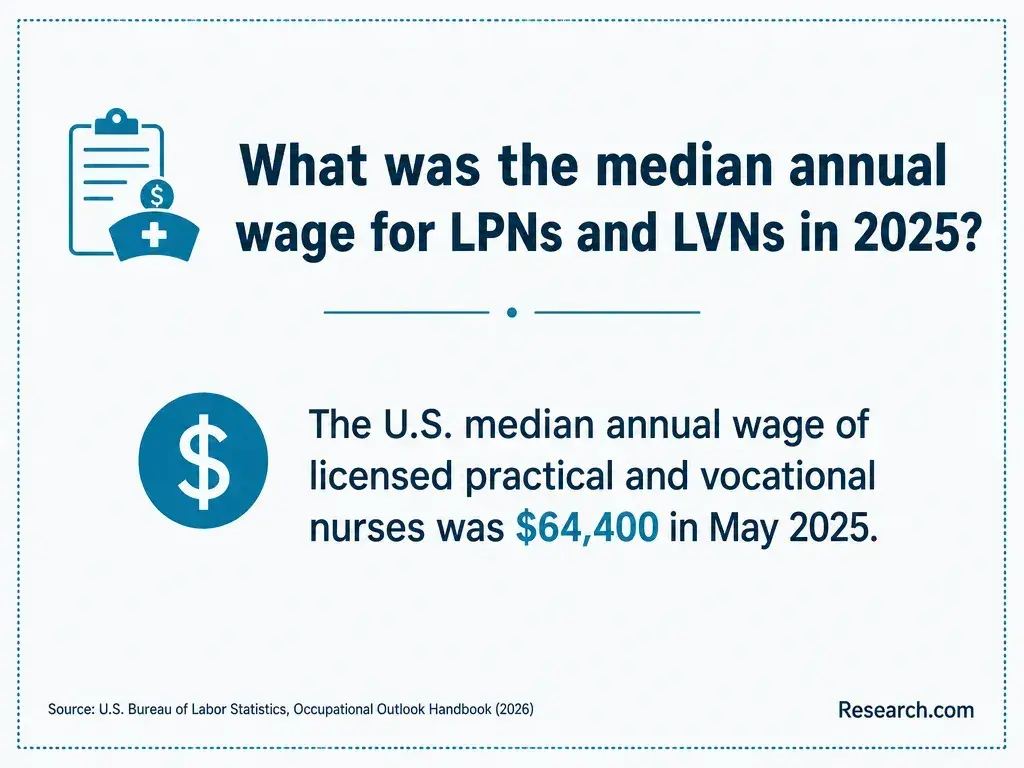
Neither "nursing change champion" nor "nursing project manager" has a single, reliable national wage series that cleanly measures these exact roles. A champion may receive no separate pay when the work is part of an RN position; a dedicated project manager may be salaried under nursing, quality, informatics, or operations. As a result, comparing two national occupation medians would suggest a precision the job titles do not support.
Use U.S. Bureau of Labor Statistics data for the underlying occupation as background, not as a promised implementation-role salary or forecast. For a real offer, compare base pay, differentials, protected project time, overtime eligibility, reporting level, and whether the job retains direct-care duties. Ask the employer for its salary range and advancement criteria.
Do not use projected NP earnings to justify a nonclinical implementation degree. Even when evaluating affordable graduate psychiatric nursing options, calculate the costs and likely employment options for that distinct clinical path rather than assuming a change champion or project manager will receive NP-level pay.
How Can Nurses Choose an Accredited Program for Implementation Leadership?
Start with the position you want, then decide whether a degree is necessary. Request several relevant job descriptions and identify the actual requirements: RN license, degree level, project experience, informatics skills, or certification. If experience is the gap, an employer-led project and focused training may be more useful than another degree.
If a degree is justified, confirm the institution's accreditation and, for a nursing program, the applicable nursing program accreditation. Check the exact track rather than assuming every program at a school has the same status. Review courses for implementation, quality measurement, finance, and change management; ask about required campus visits, group work, project access, total costs, and employer tuition assistance. A non-APRN leadership track should not be mistaken for an NP licensure pathway.
Resources on affordable nurse practitioner programs answer a different training question. Choose one only if advanced clinical practice is your goal. For implementation leadership, the better investment is the option that closes a verified job requirement at a cost and schedule you can sustain, like online DNP executive and organizational pathways.
Other Things You Should Know About Nursing
Yes, if the project is manageable and the person has protected time. Name a separate sponsor and clinical decision-maker so the combined role is not expected to approve its own safety or policy decisions.
Use the organization's patient-safety and escalation procedures promptly. Record the concern through approved channels; do not wait for a routine project-status meeting or introduce an unapproved workaround.
Yes. Describe your role, approved methods, and measures you were permitted to share. Remove patient identifiers and confidential employer information, and do not claim an outcome that was not established.
No. Its purpose and methods matter. Follow your organization's process for quality-improvement, data-governance, and research review before collecting or sharing information; do not make your own determination that oversight is unnecessary.
- Relationships between nurse managers' work activities... - PMC https://pmc.ncbi.nlm.nih.gov/articles/PMC8017674/
- CUSP Toolkit, The Role of the Nurse Manager, Facilitator Notes | Agency for Healthcare Research and Quality https://www.ahrq.gov/hai/cusp/modules/nursing/nursing-notes.html
- A Primer on Project Management for Health Care | Harvard T.H. Chan School of Public Health https://hsph.harvard.edu/advanced-learning-academy/news/a-primer-on-project-management-for-health-care/
- Implementation Champions as a Strategy to Build Capacity | unc.edu https://sisep.fpg.unc.edu/blog/implementation-champions-strategy-build-capacity/
- Project Management and Nursing Informatics | Millersville https://online.millersville.edu/degrees/nursing/msn/informatics/project-management/
- Nurse Champions: Transforming Evidence | redalyc.org https://www.redalyc.org/journal/3595/359581885014/html/
- Responsibility and Authority of Nurse Leaders | pressbooks.pub https://pressbooks.pub/leadershipandinfluencingchangeinnursing/chapter/chapter-12-responsibility-and-authority-of-nurse-leaders/
- Professional Accountability | Nurse Executive Leader Toolkit https://neltoolkit.rnao.ca/professional-accountability