2027 Most Affordable Master's Degree Programs for Adults Who Dropped Out of College

Co-Founder and Chief Data Scientist
If you left college before earning a bachelor's degree, the first question is not which master's program has the lowest tuition. It is how to finish your undergraduate degree affordably and then choose a graduate program whose full cost fits your goal.
The U.S. Bureau of Labor Statistics reports that workers with a master's degree had median weekly earnings of $1,840 in 2024, compared with $1,543 for workers with a bachelor's degree; that broad comparison does not predict an individual payoff. This guide compares ten fields and shows how to check eligibility, expenses, flexibility, and career requirements before enrolling.
Key Things You Should Know
- Finish the bachelor's degree first: Previous college attendance or an associate degree alone normally does not qualify an applicant for standard master's admission.
- Compare the bill to completion, not the advertised rate: Graduate credits, mandatory fees, prerequisites, residency costs, and aid can change which program is least expensive.
- Check whether graduate study is necessary: The Bureau of Labor Statistics reported a 2024 median annual wage of $124,910 for information security analysts, but that occupational figure is not a master's graduate salary, and the degree is not normally required for entry.
Top 10 Most Affordable Master's Degree Programs for Adults Who Dropped Out of College
Business / MBA Programs
A Master of Business Administration (MBA) is usually a practice-oriented choice for adults seeking broader management skills; an MS in management may offer a narrower curriculum. Compare the total price of required credits and fees, not just an MBA's per-credit rate. Some applicants need foundation coursework, while others can draw on prior business study. An MBA can make sense when an employer contributes to tuition or a specific role values it. For someone seeking a first business job, finishing a bachelor's degree and gaining experience may cost less and matter more initially.
Healthcare Administration & Management Programs
A Master of Healthcare Administration (MHA) or healthcare-focused MBA prepares students for administrative work rather than clinical licensure. Compare required credits, program fees, and any internship or residency expenses; an online label does not rule out fieldwork. A general MBA may offer more flexibility across industries, while an MHA provides more healthcare-specific study. Either path is most compelling when it supports an identifiable career move. Management jobs typically also require relevant work experience, so a low-cost degree alone is not a direct route to a director position.
Information Technology Programs
An MS in information technology commonly emphasizes systems, infrastructure, and organizational technology decisions. It may suit adults with technical work experience whose undergraduate major was elsewhere, although prerequisites vary. Cost-conscious applicants should check whether programming or networking foundation courses add charges before graduate enrollment. Compare an MS with a targeted certification or graduate certificate if the immediate goal is one technical skill. Ask whether courses are asynchronous and whether a capstone requires an employer project; neither feature should be assumed from "online" advertising.
Computer Science Programs
An MS in computer science can support advanced software, computing, or research goals, but it may require substantial undergraduate programming and mathematics preparation. For a returning adult without that background, prerequisite courses can make an apparently inexpensive program costly and slow. Compare thesis and non-thesis tracks against your goal: research preparation and applied software work may call for different curricula. If the aim is an entry-level developer role, weigh the full master's cost against finishing a relevant bachelor's degree and building demonstrable experience.
Cybersecurity Programs
An MS in cybersecurity usually covers security architecture, risk, or incident response. Programs differ in how much computing preparation they expect, making prerequisite costs important for career changers. Compare a technical MS with a governance-focused program based on the work you want to do, not its title alone. Some security roles value hands-on experience and industry certifications more than a graduate credential. A master's may be a better investment when it fills a specific specialization gap or when an employer helps pay for it.
Data Science / Analytics Programs
An MS in data science typically requires more statistics and programming than many business analytics degrees; an MS in analytics may focus more on applying findings to organizational decisions. Check published prerequisites before comparing tuition, since missing mathematics coursework can substantially raise the bill. Review whether the curriculum includes projects using real datasets and whether any required software has a separate cost. Adults seeking reporting or business-intelligence work may find a narrower certificate or bachelor's-level skill development more economical than a full research-intensive master's.
Education / Educational Leadership Programs
A Master of Education (MEd) may focus on teaching practice, while an educational leadership program may prepare experienced educators for administrative responsibilities. The cheapest tuition is not a bargain if the curriculum does not meet your state's certification or administrator-licensure rules. Confirm whether teaching experience, an existing license, fieldwork, or supervised hours are required. For an adult who has not yet earned a bachelor's degree or teaching credential, those earlier steps may be the larger cost and time commitment.
Counseling / Psychology Programs
An MA or MS in counseling may be designed around a particular state license; a general psychology master's may instead support research or other nonlicensed work. They are not interchangeable. Compare tuition alongside supervised practicum costs, placement support, and any in-person obligations. Before applying, check the intended state licensing board's education and accreditation rules. A lower-priced program that does not qualify you for your intended license can be the more expensive choice. Licensure ordinarily also requires steps after graduation.
Nursing Programs
A Master of Science in Nursing (MSN) generally requires nursing preparation and, for many tracks, an active registered nurse license. Adults who left college before completing nursing education need to identify an eligible undergraduate and RN pathway before comparing MSN prices. Check whether clinical placements, travel, or specialty fees increase total cost. An MSN in nursing leadership and an advanced-practice track serve different goals; advanced-practice eligibility involves additional certification and state requirements. Do not select either solely because its online tuition appears low.
Engineering Management Programs
An MS in engineering management often combines technical operations, projects, and business coursework. It can fit experienced engineers or technical professionals seeking broader responsibilities, but admission may require quantitative preparation. Compare its total credits and prerequisite costs with an MBA if management is the goal. An online option may still include team projects or scheduled meetings. Engineering management study does not replace engineering experience or confer a professional engineer license; verify whether a particular employer actually values the credential before paying for it.
Can adults who dropped out of college qualify for a master's degree program?
Yes, but standard admission normally begins after completion of a bachelor's degree from an institution the graduate school accepts. Earlier undergraduate credits can help finish that bachelor's degree; they ordinarily do not become master's-level credits. Ask a bachelor's-completion adviser to evaluate your transcript before paying for new courses, then ask graduate admissions whether your completed degree and prerequisites will meet its rules.
If graduate school is not required for your immediate goal, compare the cost and scope of online courses with certificates with the longer bachelor's-to-master's route. A certificate is not a substitute for a required degree or professional license.
What affordable degree pathways help college dropouts reach graduate school?
Start by having prospective bachelor's-completion schools evaluate prior undergraduate coursework against a specific degree plan. Compare the remaining credits, transfer rules, residency requirements, and tuition for courses you must actually take. If application costs are a concern, free application online colleges offer a place to explore options, but confirm the current application policy and degree requirements directly with each school.
After earning the bachelor's degree, consider an employer-funded master's, a graduate certificate whose credits the intended master's program explicitly accepts, or a published combined-degree pathway if you qualify. Get a written evaluation: undergraduate transfer credit, eligible graduate transfer credit, and work experience are three different things. Do not assume any of them will reduce the master's credit requirement.
How much do affordable master's degree programs cost for adult learners?
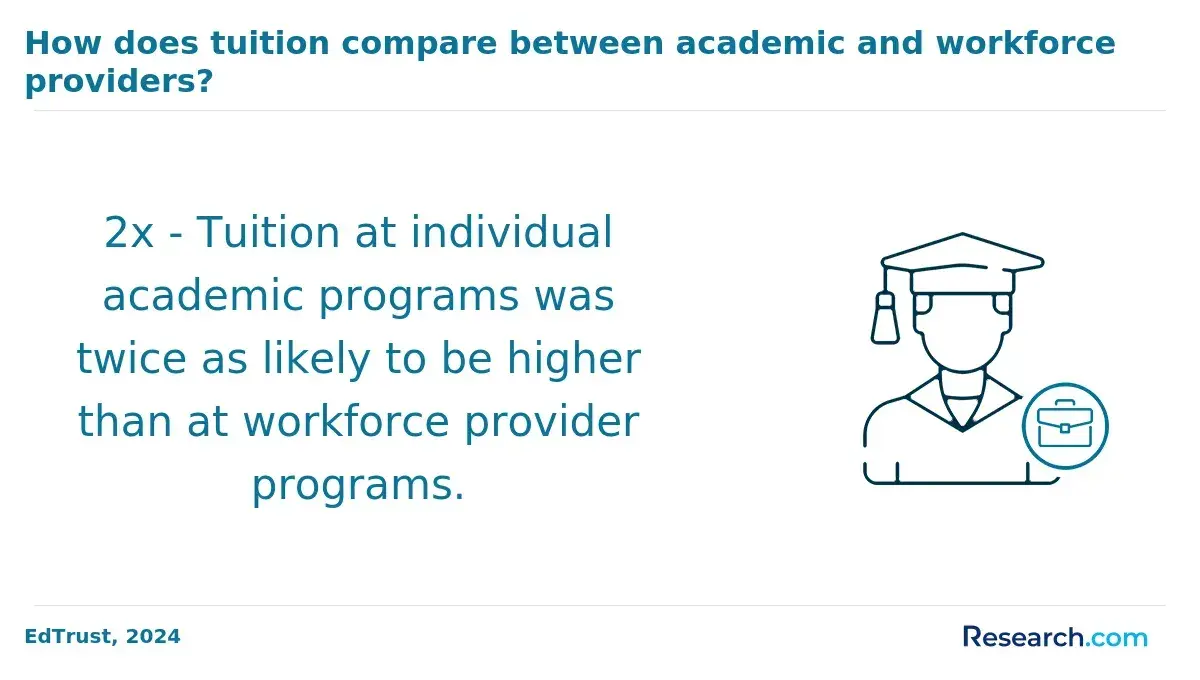
There is no reliable field-wide "cheapest" price: schools charge differently, and students begin with different prerequisites and aid. For each eligible program, calculate required graduate credits multiplied by the applicable tuition rate, then add mandatory fees and required non-tuition expenses. Separately budget for any bachelor's coursework still needed. A published tuition rate is a sticker price; your total program cost is the more useful comparison, while your cost after grants and employer benefits is different again.
The cost categories below show why two programs with similar tuition rates can produce different bills. Request a written estimate for your enrollment status and location.
| Cost category | What to compare | Why it can change the choice |
| Graduate tuition | Rate applied to all required credits | A lower rate may lose its advantage if more credits are required. |
| Mandatory and program fees | Technology, course, and differential charges | Fees can sit outside the advertised tuition rate. |
| Prerequisites | Required undergraduate or foundation courses | Missing preparation adds expense before or during graduate study. |
| In-person requirements | Travel, lodging, placement, and related costs | Online coursework may still carry location-specific expenses. |
| Funding | Grants, assistantships, employer benefits, and loans | Borrowing helps pay a bill but does not reduce its price. |
Ask financial aid staff which aid applies to your specific program and enrollment level. Part-time study can spread payments but may change aid eligibility or extend fees across more terms.
Which affordable master's degree programs offer flexible online options?
Many business, IT, cybersecurity, analytics, and some education programs offer online coursework, but delivery and price vary by institution. Counseling and nursing programs may require local placements; other fields may require scheduled meetings or campus visits. Look for the actual course schedule and placement policy, not just an "online" label. When comparing an accredited non profit university with other providers, use the same total-cost and scheduling questions for each.
Asynchronous courses can help adults with changing work hours, but they still have deadlines. Before enrolling, confirm whether you can take a sustainable part-time load, whether required courses run often enough, and who arranges any local fieldwork.
What accreditation should adults verify before choosing a master's program?
Confirm the institution's accreditation and whether it is recognized by the U.S. Department of Education for federal student aid purposes. Then check programmatic accreditation where it matters to your goal, particularly in counseling, nursing, and education. The relevant state licensing board is the authority on whether a program satisfies its education rules; institutional accreditation alone does not establish licensure eligibility.
A common costly mistake is checking only the school's general accreditation. Ask the program and licensing board about your intended state, delivery format, and any required placements before committing.
What admission requirements apply to returning adult students?
Expect to submit proof of a completed bachelor's degree and transcripts. Depending on the program, you may also need prerequisite courses, a minimum GPA, recommendations, a statement, an interview, professional experience, or a GRE or GMAT score. Graduate-school rules and a selective program's rules can differ; an undergraduate admission policy tells you little about either.
If your earlier grades are a concern, ask whether the program considers recent coursework, permits conditional admission, or offers an appropriate prerequisite route. Do not interpret an unpublished GPA cutoff as proof that none applies.
How long do affordable master's degree programs take to complete?
The answer depends on remaining bachelor's coursework first, then the master's required credits, course sequence, enrollment load, prerequisites, and culminating work. Clinical placements, practica, internships, and theses can extend the timeline. An accelerated course term describes one class, not the time needed to finish the degree.
Ask each school for a term-by-term plan based on your transcript and realistic work schedule. If you already hold graduate credits, request an evaluation showing which credits apply to this particular degree, how many graduate credits must be completed at the new institution, and which requirements remain. A graduate certificate or combined pathway saves time only when its published rules apply to you.
What careers, salaries, and job outlooks follow affordable master's degrees?
These fields connect to different occupations, not a single graduate salary. For context, the Bureau of Labor Statistics reported a 2024 median annual wage of $117,960 for medical and health services managers. That is an occupational median across workers with varied education and experience, not the expected pay for a new MHA graduate. Management roles commonly require relevant experience; some technology roles may be accessible without a master's.
Before choosing a field, compare job postings for your target role with the degree's curriculum and the qualifications you already have. Consider whether the graduate credential supplies a required qualification, a valued specialization, or knowledge you could gain more cheaply another way. Lists of most profitable majors can inform an undergraduate decision, but they cannot establish the return on a particular master's program. Labor-market demand, location, experience, and total education cost all affect the decision.
Which licenses or certifications may master's degree graduates need?
Requirements follow the occupation and state, not merely the degree title. Counseling licensure generally involves a qualifying education, supervised practice, and an examination. Nursing advanced-practice routes involve an RN foundation plus applicable certification and state requirements. Teaching and school administration credentials also vary by state. Check the relevant board before selecting courses, particularly if you plan to study online from another state.
Technology and business certifications are generally different: they may strengthen an application or meet an employer preference without being government licenses. Avoid paying for a master's on the assumption that graduation automatically confers any license or certification.
Other Things You Should Know About
Normally, no. Use eligible undergraduate credits toward a completed bachelor's degree first, then check the master's admission requirements.
They may reduce the cost of finishing your bachelor's degree. Undergraduate credits ordinarily do not count toward graduate degree requirements.
Not necessarily. Compare all required credits, fees, prerequisites, in-person expenses, and aid to estimate what you would pay to finish.
Coursework may be online, but supervised placements or other in-person requirements can still apply. Verify both the program's format and your intended state's licensing rules.
References
- Eligibility Requirements | Federal Student Aid https://studentaid.gov/understand-aid/eligibility/requirements
- College Accreditation - U.S. Department of Education https://www.ed.gov/laws-and-policy/higher-education-laws-and-policy/college-accreditation
- Adult Students | Federal Student Aid - Financial Aid Toolkit https://financialaidtoolkit.ed.gov/tk/outreach/target/adults.jsp
- School-Determined Requirements | 2024-2025 Federal Student Aid Handbook https://fsapartners.ed.gov/knowledge-center/fsa-handbook/2024-2025/vol1/ch1-school-determined-requirements
- Tuition and Fees Charts - Student Financial Services https://sfs.gsu.edu/resources/student-acct/tuition-breakdown/
- Everything You Wanted to Know About Degree Completion Programs for Adults | neumann.edu https://explore.neumann.edu/everything-you-wanted-to-know-about-degree-completion-programs-for-adults
- Tuition & Fees | National University https://www.nu.edu/admissions/tuition/
- Undergraduate and Graduate Tuition and Fees | Purdue Global https://www.purdueglobal.edu/tuition-financial-aid/undergraduate-graduate-tuition-and-fees/
- Financial Aid as An Older Student or Returning to College | Campus https://campus.edu/blog/financial-aid/how-to-find-financial-aid-when-youre-an-older-student
- College Accreditation Explained: How to Verify It & Why It Matters | America EDU https://america.edu/accreditation/